
Coffee Machine Care
Refillable Espresso Pods: The 2026 Ultimate Guide
May
Single-serve espresso feels cheap because you buy it one pod at a time. The problem shows up later, in your trash bin, in your coffee budget, and in the cup itself when convenience starts beating freshness.
Refillable espresso pods exist for one reason. A lot of people got tired of paying premium prices for tiny doses of coffee in disposable shells, then realized they could keep the machine and change the input. Done right, refillables give you better control over coffee choice, lower ongoing cost, and far less waste. Done badly, they give you leaks, weak shots, and grounds in the cup.
The difference is almost never the pod alone. It's the whole system: compatibility, grind, fill level, tamp, seal, and cleaning.
The Hidden Cost of Your Morning Coffee
About 56 billion coffee pods are discarded into landfills each year, with global capsule waste estimated at 576,000 metric tons annually, according to CoffeeGeek's analysis of pod coffee waste. That same analysis notes that individual capsules can take hundreds of years to break down in landfill conditions.
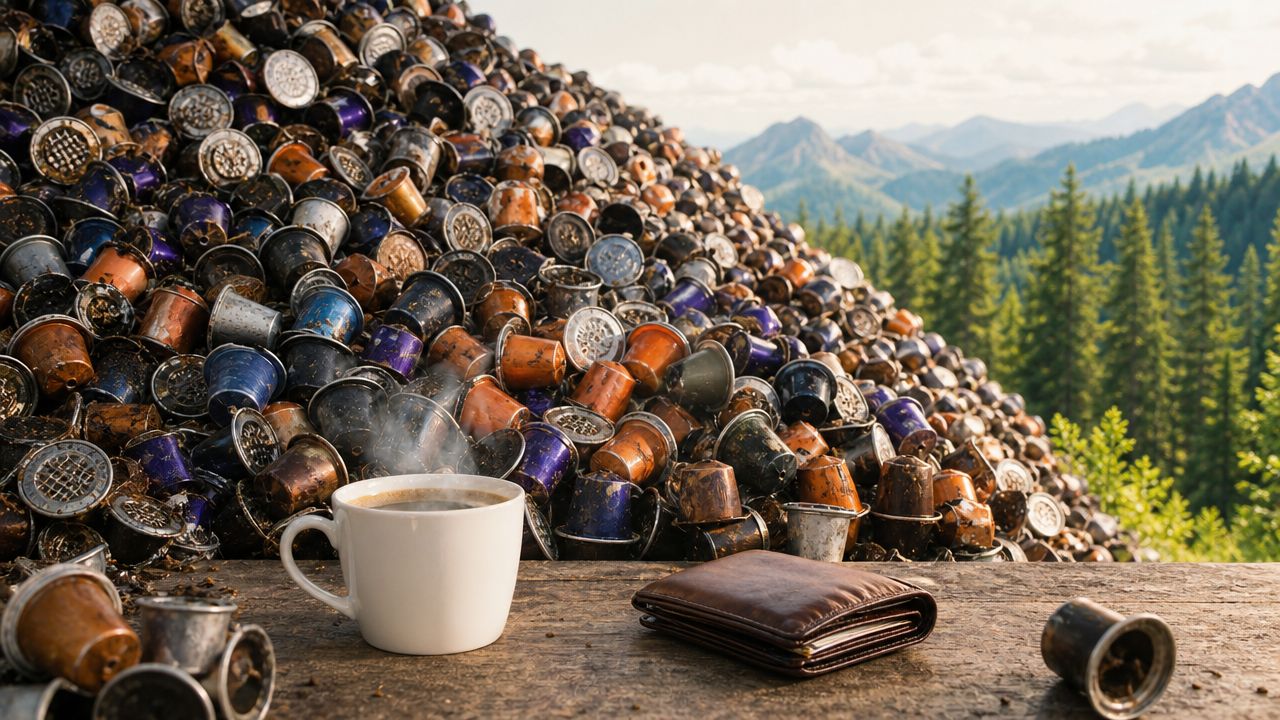
For a daily coffee habit, that waste adds up fast.
The cost problem is less obvious, but it is just as real. Disposable capsules pack a small dose of coffee into a proprietary shell, and that convenience carries a markup that many people do not notice until they compare it to buying fresh beans by the bag. The result is a routine that feels easy in the moment and expensive over time.
Why disposable capsules feel worse over time
The frustration is not only environmental. It is practical. You are buying pre-portioned coffee with no control over freshness, roast choice, or dose, and you are paying a premium for that limitation.
That's the fundamental irritation with disposable systems. The machine stays on your counter for years, but the format keeps pushing you back to tiny, single-use purchases that are hard to tweak and impossible to improve much in the cup.
For anyone who has already wondered can you refill Nespresso capsules and still get decent results, the better question is whether the current routine is delivering enough value to justify the waste and recurring spend.
Practical rule: If you drink pod coffee every day, the cheapest meaningful upgrade is often changing the capsule system, not replacing the machine.
Why refillables became the workaround
Refillable espresso pods caught on because they fix the part of pod brewing that owners complain about most. Ongoing cost, excess packaging, and limited coffee choice. They let you keep the fast workflow while changing what goes into the machine.
That does not mean refillables are automatic wins. A reusable pod only saves money and improves the cup if the setup is right. Poor grind size, overfilling, weak tamping, a bad lid seal, or sloppy cleaning can turn the whole idea into leaks and thin coffee. That is why the pod itself is only one part of the system.
There is also a clear waste benefit. Reusable-pod education materials cited in the verified data state that switching from single-use to reusable pods for one cup per day can keep 365 disposable pods out of landfill and oceans each year, while avoiding about 15 kg of greenhouse gases annually per drinker.
If you already like your machine, refillables give you a practical way out. You keep the convenience, cut the throwaway habit, and get back control over the coffee.
Understanding Refillable Pod Compatibility
Compatibility is where individuals waste money first. They assume “refillable pod” is a universal category. It isn't. A pod that works in one machine can fail completely in another because pod systems use different shapes, puncture patterns, lid designs, and brew logic.
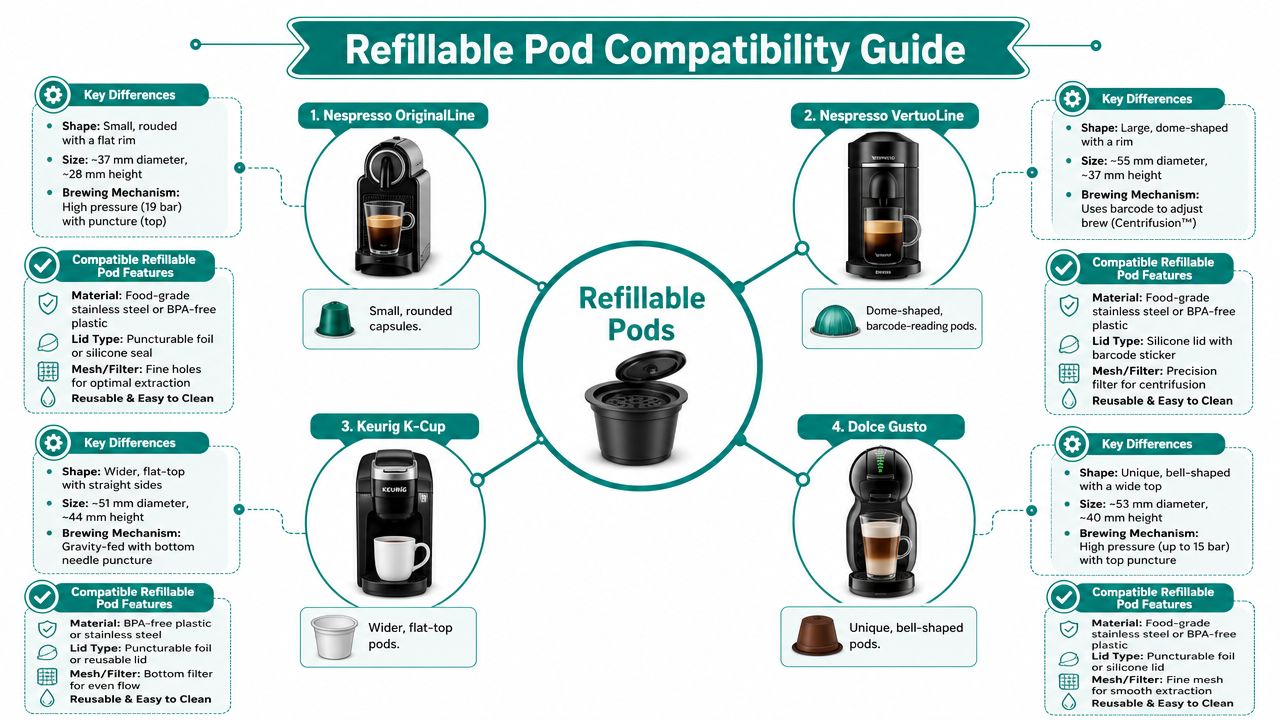
OriginalLine and Vertuo are not the same job
This is the split that confuses most Nespresso owners. For Vertuo-style refillable systems, compatibility is more mechanically constrained because the machine reads barcode and geometry cues and punctures the pod during brewing, as shown in this Vertuo reusable pod product documentation and demo. Reusable Vertuo solutions often rely on barcode stickers or reuse of existing pod shells to trigger the correct brew profile. OriginalLine reusable stainless-steel pods are simpler. The machine punctures them and brews them more like a standard espresso capsule.
That mechanical difference changes your margin for error.
- OriginalLine users usually fight brew quality variables, like grind, dose, and seal.
- Vertuo users fight machine logic first, then brew variables second.
- Bad matches usually fail fast, with poor fit, leaks, or a machine that won't brew correctly.
Other pod systems follow the same rule
Keurig, Ninja DualBrew, Dolce Gusto, and espresso capsule systems all have their own geometry and brew behavior. Some rely more on basket-style flow. Some depend heavily on lid fit. Some are forgiving. Some punish tiny errors.
If you're deciding whether your current machine is a good candidate, this guide on whether you can refill Nespresso capsules gives a useful overview of where the process is straightforward and where it gets fussy.
A refillable pod should match the machine first and your coffee preference second. People often shop in the opposite order.
What to check before you buy
Don't buy on material or price alone. Check these points in order:
Machine family
Confirm the exact brewing platform. “Nespresso compatible” is too broad if you don't know whether you own OriginalLine or Vertuo.Pod style
Some reusable pods are full stainless capsules. Others are refill kits for spent shells. Those are different workflows.Lid or seal method
A rigid cap, screw top, foil lid, or reused shell each behaves differently under pressure.Drink expectations
Some refillable setups are better for short espresso-style drinks than longer pours.
The no-nonsense truth is simple. If you hate tinkering, choose the most mechanically straightforward option your machine allows. Complexity before coffee gets old fast.
Stainless Steel vs Plastic Pods Compared
Material matters more than most product listings admit. It affects durability, seal consistency, cleaning effort, and in some cases taste neutrality. It also shapes a common objection: a lot of people don't love the idea of running very hot water through a plastic pod over and over.
What changes in daily use
Stainless steel refillable pods usually feel more solid in the hand and more stable over repeated use. Plastic pods can work fine, especially when they're designed well, but they tend to be less reassuring if you brew often and clean aggressively.
The practical difference isn't theoretical. It shows up when you wash the pod, snap or screw the lid closed, check the rim, and repeat that routine day after day.
| Feature | Stainless Steel Pods | BPA-Free Plastic Pods |
|---|---|---|
| Heat handling | Generally inspires more confidence under repeated hot brewing | Can work well, but some users prefer to avoid repeated heat contact with plastic |
| Flavor neutrality | Usually very neutral when clean | Can be neutral, but quality varies more by manufacturer |
| Durability | Often better for repeated opening, closing, and washing | More dependent on hinge and latch design |
| Fit feel | Commonly feels more rigid and precise | Can be lighter, but sometimes flexes more |
| Cleaning | Easy to rinse and scrub if the design is simple | Also easy to clean, though corners and seams vary by model |
| Upfront cost | Usually higher | Usually lower |
| Long-term confidence | Strong if the seal and dimensions are right | Strong only if the pod is well made and doesn't warp |
The plastic safety objection
People usually want a black-and-white answer. There isn't one. A properly made BPA-free plastic pod is not the same thing as a random cheap plastic insert from an unknown seller. But stainless steel is still the easier recommendation for people who want the most inert-feeling material and fewer lingering questions.
That doesn't mean every stainless pod is better. A badly machined steel pod can fit poorly, leak, or produce disappointing coffee. Material doesn't fix bad design.
What I'd prioritize: fit first, seal second, material third. But if two pods fit equally well, I'd choose stainless steel for repeated use.
Taste starts with water too
A lot of people blame the pod when the actual issue is hard water or stale water. If the machine runs mineral-heavy water, even a good refillable pod can produce flat or harsh coffee. That's why a proper water filter matters more than people think. It lets you taste the coffee rather than scale, chlorine, or off flavors from the machine.
If you're choosing between generic and more carefully made accessories, look for simple construction, easy-to-clean surfaces, and a seal design you can inspect at a glance. Fancy marketing doesn't help when the pod doesn't close cleanly.
How to Get a Perfect Brew Every Time
Weak coffee from refillable espresso pods usually comes from one of three mistakes. The grind is too coarse, the pod is underfilled, or the seal fails because coffee is sitting on the rim.
That's fixable.
Start with grind, not force
Independent reviewers of reusable Nespresso systems consistently report that grind size should be close to espresso, fine but not powdery, and that dose control is critical because underfilling produces weak, fast extractions while overfilling can prevent full sealing or create channeling, as demonstrated in this reusable pod brewing walkthrough on YouTube.
That matches real-world use. Refillable pods need enough resistance to let the machine build extraction pressure, but not so much resistance that water can't move through the puck.
The workflow that actually works
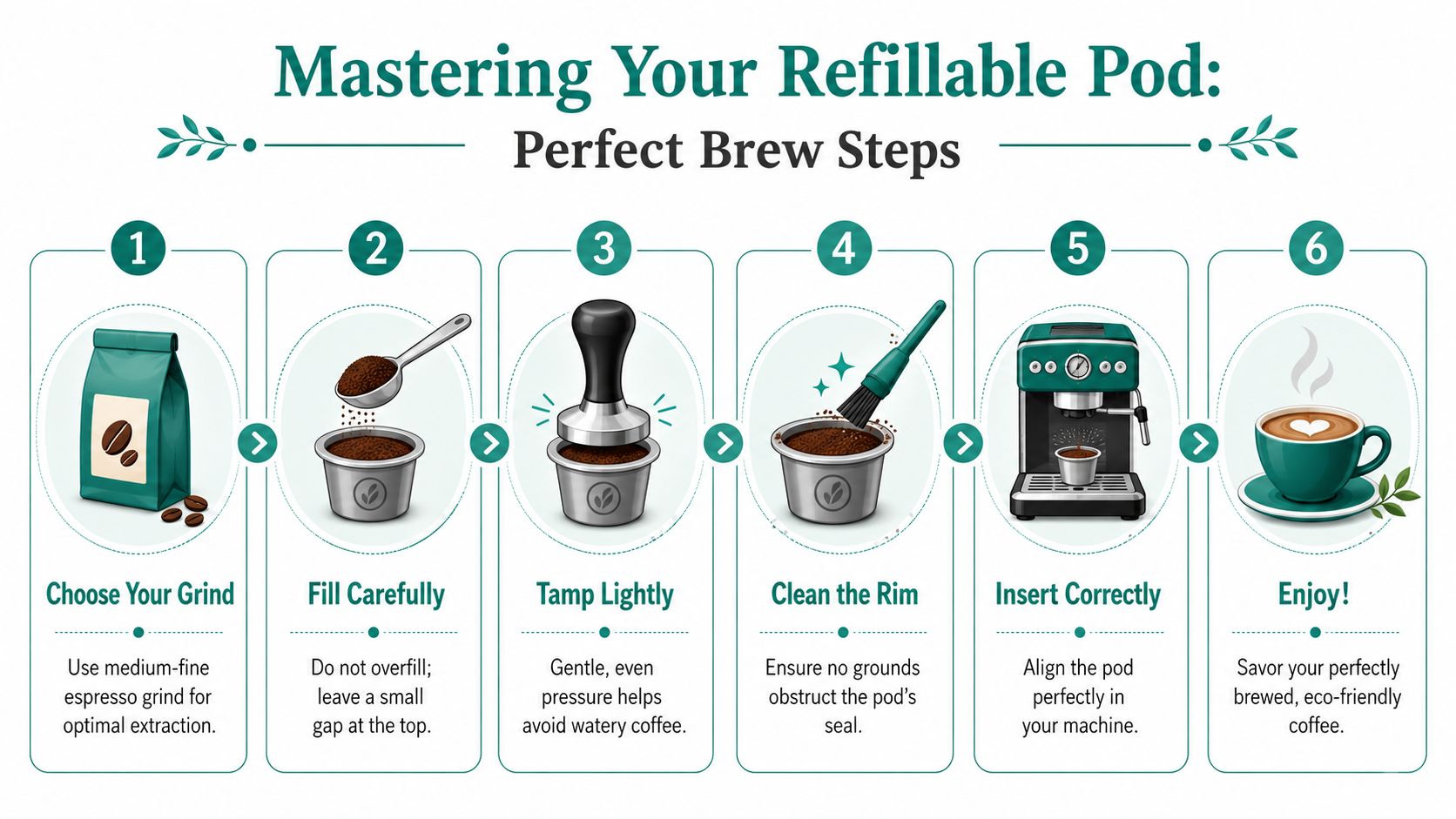
Use this sequence every time:
Choose an espresso-leaning grind
If the coffee looks like standard drip grind, it's usually too coarse. If it looks like dust, it's too fine.Fill to the pod's working volume
Don't heap coffee above the rim. Don't leave the pod half-empty. Match the internal space closely.Tamp lightly and evenly
You're creating a uniform bed, not compacting concrete.Clean the sealing edge
Grounds on the rim are one of the easiest ways to ruin a shot.Brew short before you brew long
Refillable pod setups often behave better with espresso-style pours than oversized drinks.
Here's a visual walkthrough of the process in action:
Troubleshooting by symptom
If the cup is bad, don't change everything at once.
Watery shot
Grind finer, fill a little more fully, and check that the tamp is even.Machine strains or leaks
Back off the fill slightly. Overpacking often causes pressure problems.Grounds in the cup
Inspect the seal and wipe the rim more carefully before brewing.Crema looks thin or messy
That usually points to grind and seal issues, not just bean quality.
If you want better consistency over time, use filtered water and keep the machine clean. This guide to the best water filter for an espresso machine is worth reading because refillable systems expose brew flaws faster than factory capsules do.
Clean technique beats expensive beans. A modest coffee with the right grind and seal will outperform a great coffee packed badly.
Cleaning is part of brewing
Rinse the pod after every use. Dry it well if the design needs a dry seal surface. Scrub away oils before they build up. Old coffee residue doesn't just taste stale. It also changes how lids and seals sit.
People who stick with refillables long term treat cleanup as part of the brew routine, not an afterthought.
Analyzing Cost and Waste Savings
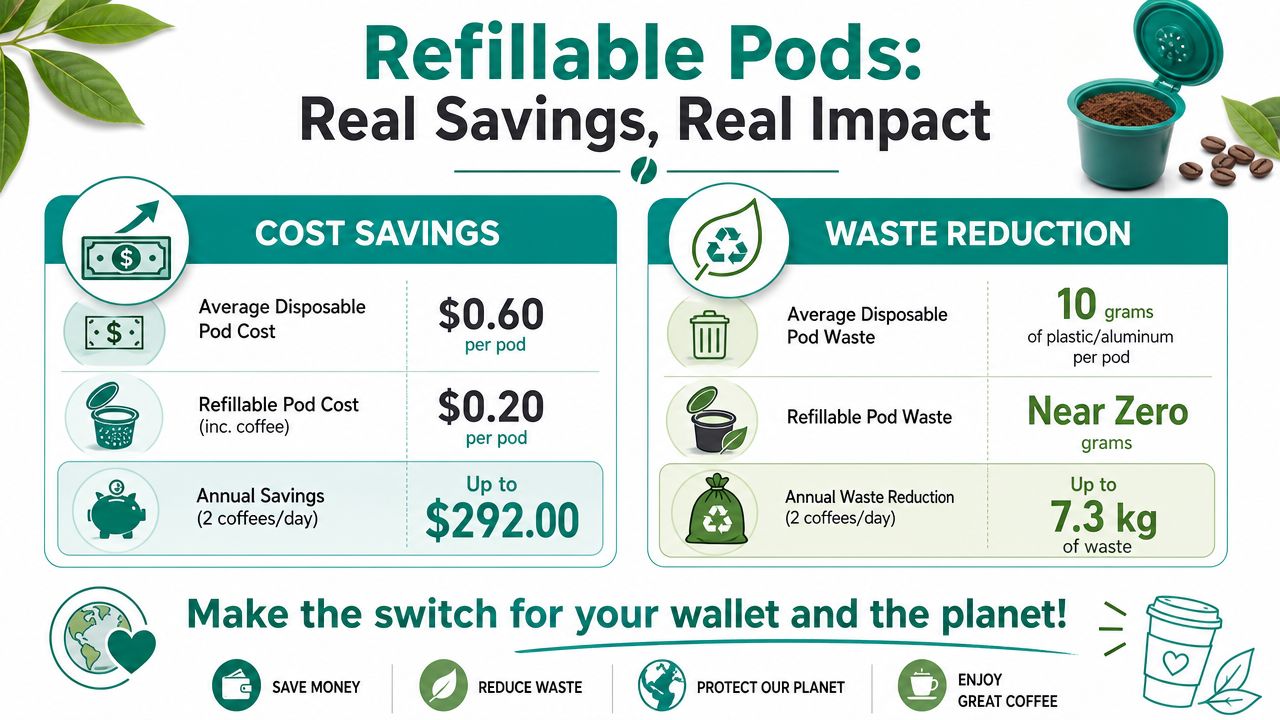
Single-serve convenience gets expensive fast. Once you compare the small dose inside a factory capsule with the price you pay per cup, refillables make financial sense for anyone who drinks espresso regularly.
Capsule systems charge a premium for pre-portioned coffee, branded packaging, and throwaway convenience. Refillable pods shift that spending toward the part that affects the cup: the coffee itself. If you already buy decent beans and own a grinder, the savings usually show up even faster.
Where the savings come from
The math is simple, but only if your routine is stable.
- You buy coffee in normal quantities instead of paying for tiny prepacked doses.
- You reuse the pod body across many brews instead of paying for a new shell every time.
- You throw away less packaging if you stick with the system long enough for the habit to matter.
That third point gets ignored in a lot of product roundups. Waste reduction only happens if the pod works for your machine and your workflow. If prep feels fiddly, shots run badly, and cleanup gets skipped, many home users drift back to disposables. That turns a reusable pod into a drawer item instead of a money saver.
Waste drops only if technique is good enough to keep you using it
A refillable pod can cut daily trash in a very visible way. One fewer capsule in the bin every morning adds up over a year, and the reduction is easy to notice without turning it into a big sustainability speech.
The catch is consistency. Bad extractions, leaking lids, and messy cleanup push people back to single-use capsules. That is why grind size, fill level, tamping pressure, and cleaning matter financially, not just for taste. A reusable system saves money only when it becomes reliable enough to replace your old habit.
If you want a closer look at the trade-offs of metal designs, this guide to a refillable stainless steel Nespresso capsule helps explain where repeat use pays off and where convenience drops.
Maintenance affects cost more than people expect
A cheap pod can become an expensive experiment if it causes repeated leaks, wasted coffee, or machine strain. That cost does not show up on the product page, but it shows up in your routine. Missed descales, coffee oils around the brew head, and stray grounds near the seal all chip away at reliability.
PureHQ Inc. sells reusable brewing accessories and universal descaling products for home coffee setups, which matters if you want one place to cover both pod use and machine maintenance.
Overlooked expense: refillables stop saving money when poor prep leads to wasted shots, extra cleanup, or machine problems.
For regular drinkers, refillables can lower cost per cup and cut household waste. They do it best as a system, not as a gadget. Get the pod fit right, use coffee that suits the basket size, keep the workflow clean, and the savings hold up over time.
Common Questions and Final Recommendations
Why is my pod leaking
Most leaks start at the rim. Coffee grounds sit on the sealing edge, the lid doesn't sit flat, and water bypasses the coffee bed. The fix is boring but effective: fill neatly, level the coffee, tamp evenly, and wipe the rim every single time.
If the leak continues, check fit before blaming technique. A pod that doesn't match your machine closely will never become reliable.
Why are there grounds in my cup
Two usual causes show up here. The grind is too fine and migrates through the system, or the seal is poor and lets water push particles where they shouldn't go. Go slightly coarser if your grind looks powdery, and inspect the lid or cap for any gap or uneven contact.
Dirty pods also make this worse. Old residue prevents clean sealing.
Are refillable pods always worse than official capsules
No. They're less forgiving. That's different.
Official capsules are built for repeatable convenience. Refillable espresso pods reward careful prep and punish sloppy prep. Once you dial in grind, fill, and sealing, the results can be very satisfying. If you never want to think about those variables, stick with disposables and accept the trade-off.
Will a refillable pod void my machine warranty
Warranty questions depend on the manufacturer and the specific issue. The practical answer is to be cautious. If a problem is tied to third-party accessories or a badly fitted refillable pod, you shouldn't assume the manufacturer will treat that the same as normal use.
That doesn't mean refillables are reckless. It means you should use pods that fit properly, avoid forcing anything closed, and keep the machine clean.
What setup makes the most sense
Typically, the sweet spot looks like this:
- Choose a pod made specifically for your machine family
- Use stainless steel if you want stronger long-term confidence
- Brew shorter drinks first while dialing in technique
- Treat cleaning and descaling as part of the system
- Skip DIY complexity if you know you hate fuss
If you're a tinkerer, refillables make sense fast. If you just want the machine to behave the same way every morning with no learning curve, they may annoy you.
The no-nonsense recommendation is to buy the simplest well-matched refillable system your machine can use, then spend your effort on grind and sealing instead of chasing gimmicks.
If you're ready to stop overpaying for disposable capsules, browse PureHQ Inc. for refillable coffee pods, filters, and maintenance supplies that support a cleaner, repeatable home brewing setup.

