
Coffee Machine Care
Reusable K Cup Tips for a Perfect Brew Every Time
May
Two cups a day can turn disposable K-Cups into a surprisingly expensive habit over a year. The savings from switching to a reusable pod are real, but so is the drop in cup quality if the setup is even slightly off.
That gap is what trips people up. A reusable K-Cup can brew rich, clean coffee, but only if the pod, grind, fill level, and machine all work together. I've tested enough reusable pods to see the same pattern over and over. The pod technically fits, the machine runs, and the coffee still comes out thin, muddy, or messy.
The usual advice stays too broad to fix that. Keurig brewers do not all deliver water the same way. Some use a single-needle system. Others use MultiStream, which changes how water spreads through the coffee bed and exposes weak pod designs fast. Brew ratio matters too. Reusable pods hold less coffee than many people expect, so strength depends on matching dose to cup size instead of filling to the top.
Get those details right, and reusable pods stop feeling like a compromise. They start producing a stronger, cleaner cup without the leaks, overflow, and stray grounds that frustrate so many first-time users.
Why Your Reusable K-Cup Is Failing You
Three failure points cause nearly every bad reusable K-Cup brew. Water cannot move evenly through the coffee, the pod fails to seal cleanly, or the pod design does not suit the brewer's puncture and spray pattern.
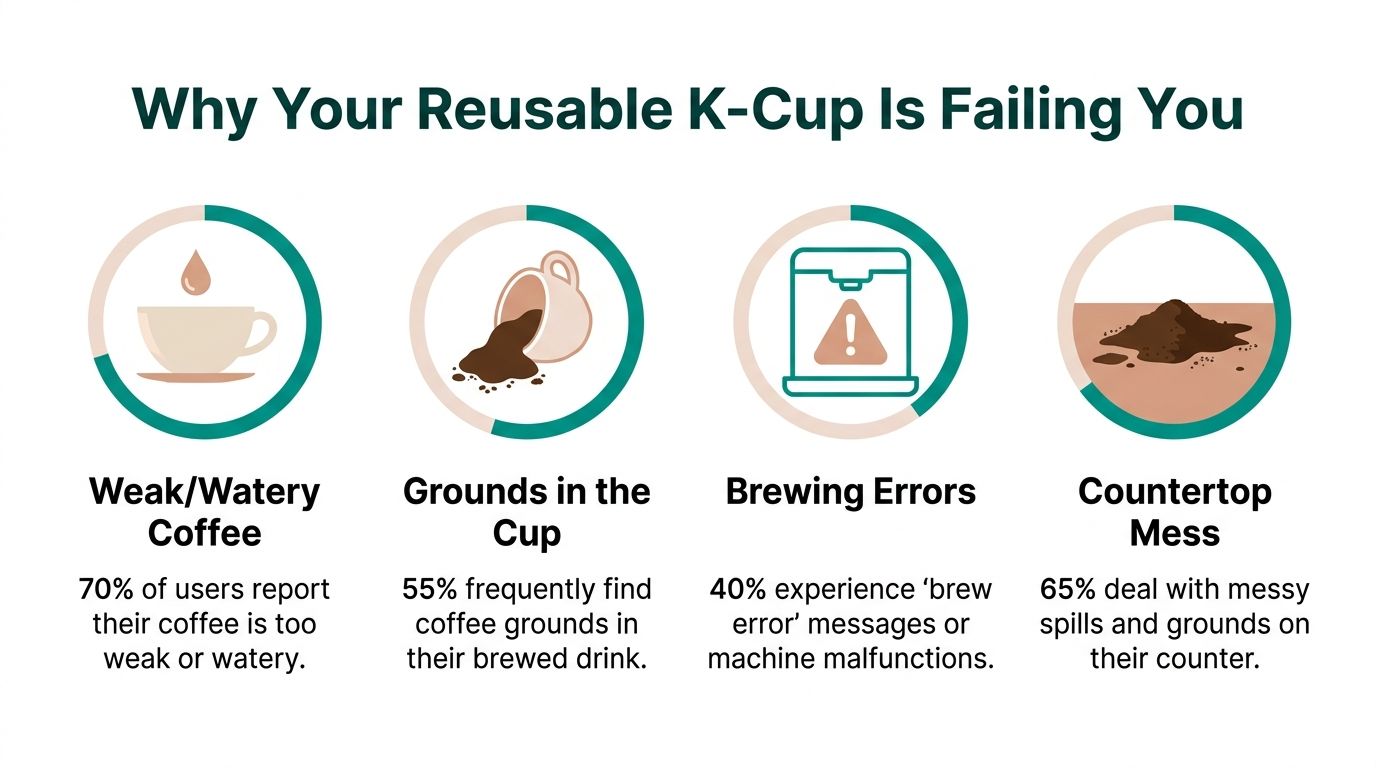
I see the same mistake all the time. A weak cup leads people to add more coffee, press it down, and hope strength improves. In a reusable pod, that usually creates a dense bed that sheds water to the sides or stalls it at the mesh. The result is familiar: pale coffee in the mug, wet grounds stuck to the lid, and splatter inside the holder.
Machine design matters more than many brewers realize. A single-needle Keurig can be forgiving with a basic reusable pod because water enters through one point and follows a simpler path. MultiStream models expose bad pod geometry fast. If the lid pattern, outlet holes, or basket shape do not spread water across the full bed, extraction turns uneven and the cup tastes both weak and harsh.
These are the failure points I check first:
- Overfilled basket: Grounds expand as they brew. Without headspace, the lid traps a swollen puck and flow gets messy.
- Wrong grind texture: Fine coffee can clog the mesh and slow the brew. Coarse coffee can let water pass too quickly. A drip grind reference for reusable pods is a useful benchmark.
- Poor pod-to-machine match: A pod can click into place and still brew badly if its top pattern does not suit MultiStream or its rim does not seat well in older single-needle brewers.
- Residue on the seal or mesh: Coffee oils, fines, and scale change how the pod closes and how water exits. Water quality plays a role too, which is part of why balanced water is crucial.
One quick diagnostic helps. If the brew runs fast and tastes weak, look at grind size, dose, and pod compatibility. If the brew runs messy and leaves sludge on top, look at overfilling, sealing, and whether the pod is restricting flow.
Reusable pods are still worth dialing in. As noted earlier, the savings versus disposable pods add up quickly. The catch is that reusable brewing has less margin for error. Once the pod matches the machine and water can move through the bed evenly, the cup gets stronger, cleaner, and far more consistent.
The Foundation of Flavor Your Coffee Grind and Dose
The biggest brewing mistake happens before the pod even goes into the machine. People focus on the brewer, but the cup is mostly decided by grind size and dose.
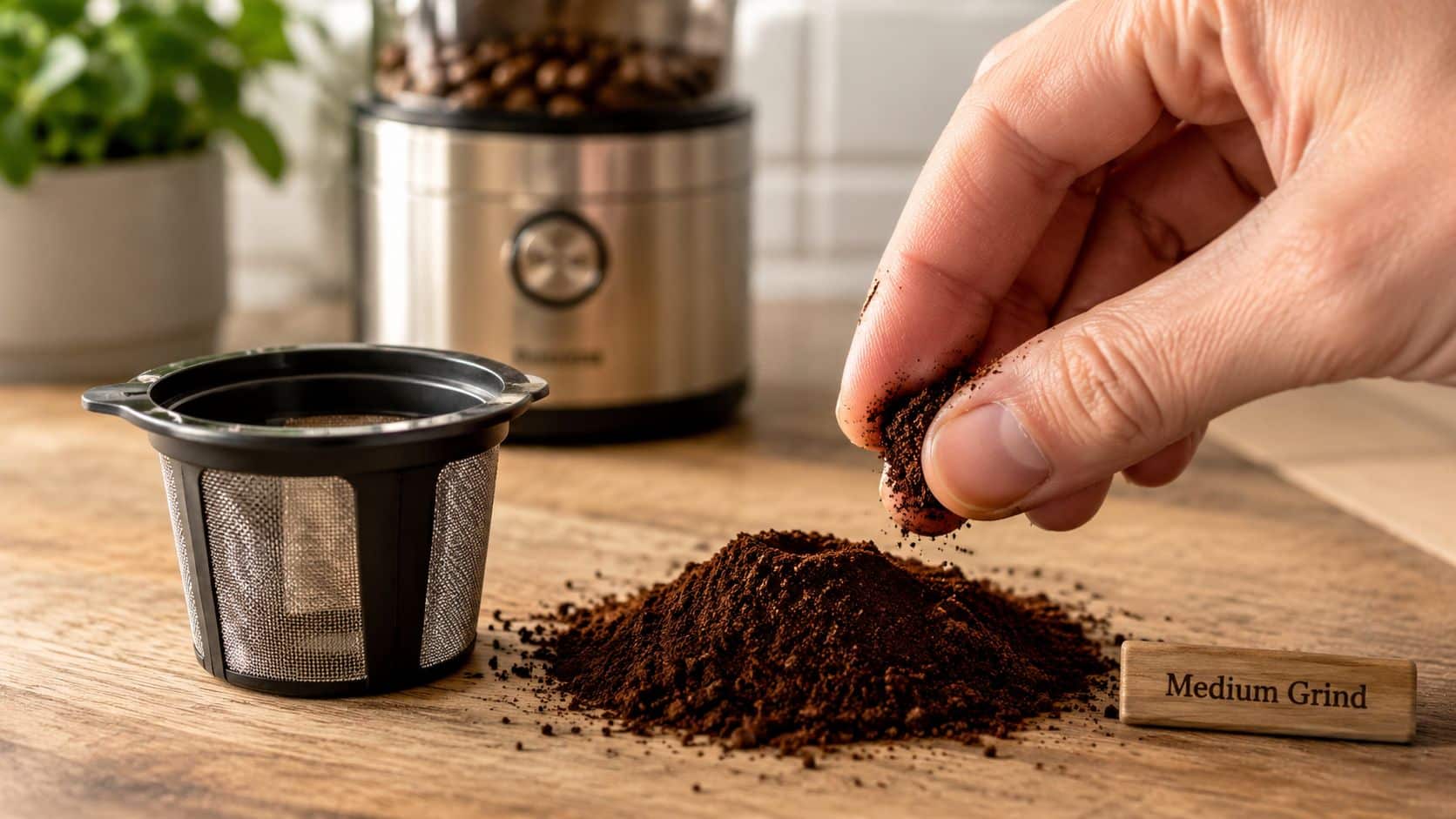
A reusable K-Cup isn't a tiny drip basket and it isn't an espresso filter. It needs a grind that lets water pass evenly through the mesh without choking the flow. In practice, a medium grind works best for most setups. If you want a visual benchmark, this drip grind guide is a useful reference point.
What works in the pod
A strong reusable brew starts with restraint. A PureHQ guide on taste and performance recommends filling the pod about two-thirds full rather than tamping, and notes that some high-capacity reusable pods hold about 12 grams of grounds, nearly double what's found in standard single-serve pods.
That matters because dose controls both strength and flow. If you pack coffee to the lid, water struggles to saturate the full bed. If you leave space and keep the grounds loose, water spreads more evenly and extraction becomes more predictable.
What does not work
Some habits almost always create trouble:
- Espresso-fine coffee: The mesh catches too much of it, which can slow the brew and push sediment through weak points.
- Tamping the grounds: Reusable pods don't reward compression the way espresso does.
- Brewing the biggest cup size every time: Larger volumes can wash a small dose into weak territory.
A reusable pod rewards even saturation, not brute force. Fill lighter than you think, then judge the cup.
Water quality matters too. Coffee extraction changes when the brewing water tastes flat or harsh, which is one reason why balanced water is crucial to cup quality, even before you tweak beans or grind.
If you like a stronger cup, start by tightening the grind slightly within the medium range and brewing a smaller size. Don't start by stuffing the pod to the top. That's the shortcut that usually causes the leak you'll be cleaning up next.
Mastering the Perfect Fill and Seal
Most reusable pod messes come from simple mechanics. Grounds on the rim, too much coffee in the basket, or a lid that closes over an uneven fill can all break the seal.
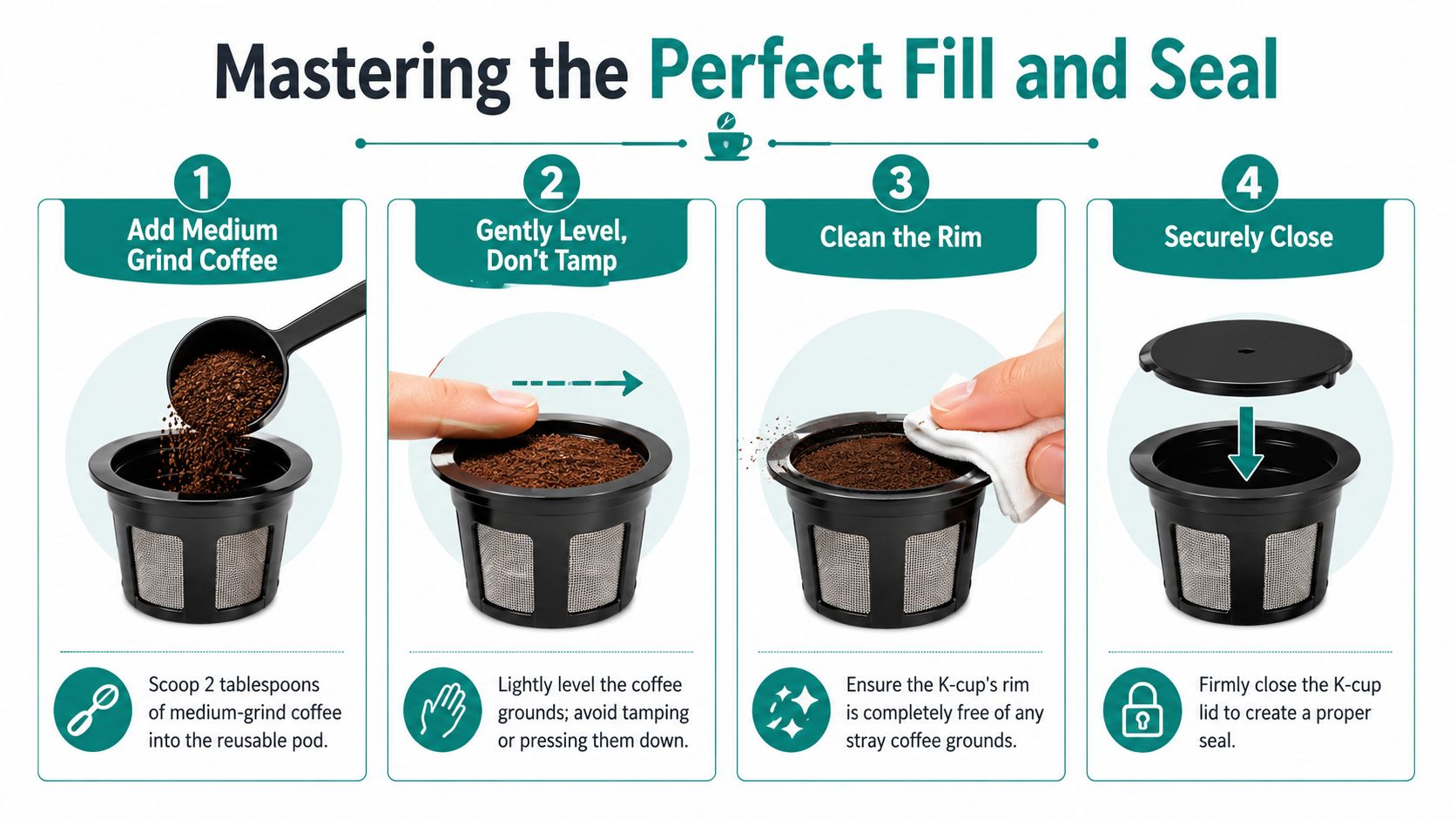
The physical routine matters here more than people expect. You want the basket filled lightly, the surface level, the rim clean, and the lid snapped shut without resistance from stray grounds.
The clean-seal workflow
Use this sequence every time:
- Add medium-ground coffee until the pod is lightly filled.
- Level the bed gently with a tap or light sweep across the top.
- Inspect the rim and remove every loose particle.
- Close the lid firmly and make sure it sits flush.
A hands-on video demonstration of reusable Keurig pods shows the two mistakes that cause the most trouble. Overfilling the lip and failing to close the lid tightly caused water to leak around the sides, while a disposable paper liner produced a visibly cleaner cup with almost no sediment.
When paper liners help
If you're chasing a cleaner cup, a paper liner is a practical fix, not a gimmick. It helps trap fine particles that mesh alone may let through, especially with coffees that produce more fines.
Here's the other benefit. Cleanup gets easier. Instead of digging wet grounds out of the mesh, you remove the liner and give the basket a quick rinse.
A visual walkthrough helps if your process feels inconsistent:
Keep the rim spotless. A single stray ground can be enough to turn a clean brew into a side leak.
One maintenance habit makes a noticeable difference over time. Rinse the basket regularly so oils and fines don't build up in the mesh and around the sealing edge. That small bit of upkeep preserves flow and keeps the lid closing the way it should.
Matching Your Reusable Pod to Your Keurig
A lot of “bad pod” complaints are really bad pod-to-machine matches. That's the hidden problem generic reusable K cup tips often miss.
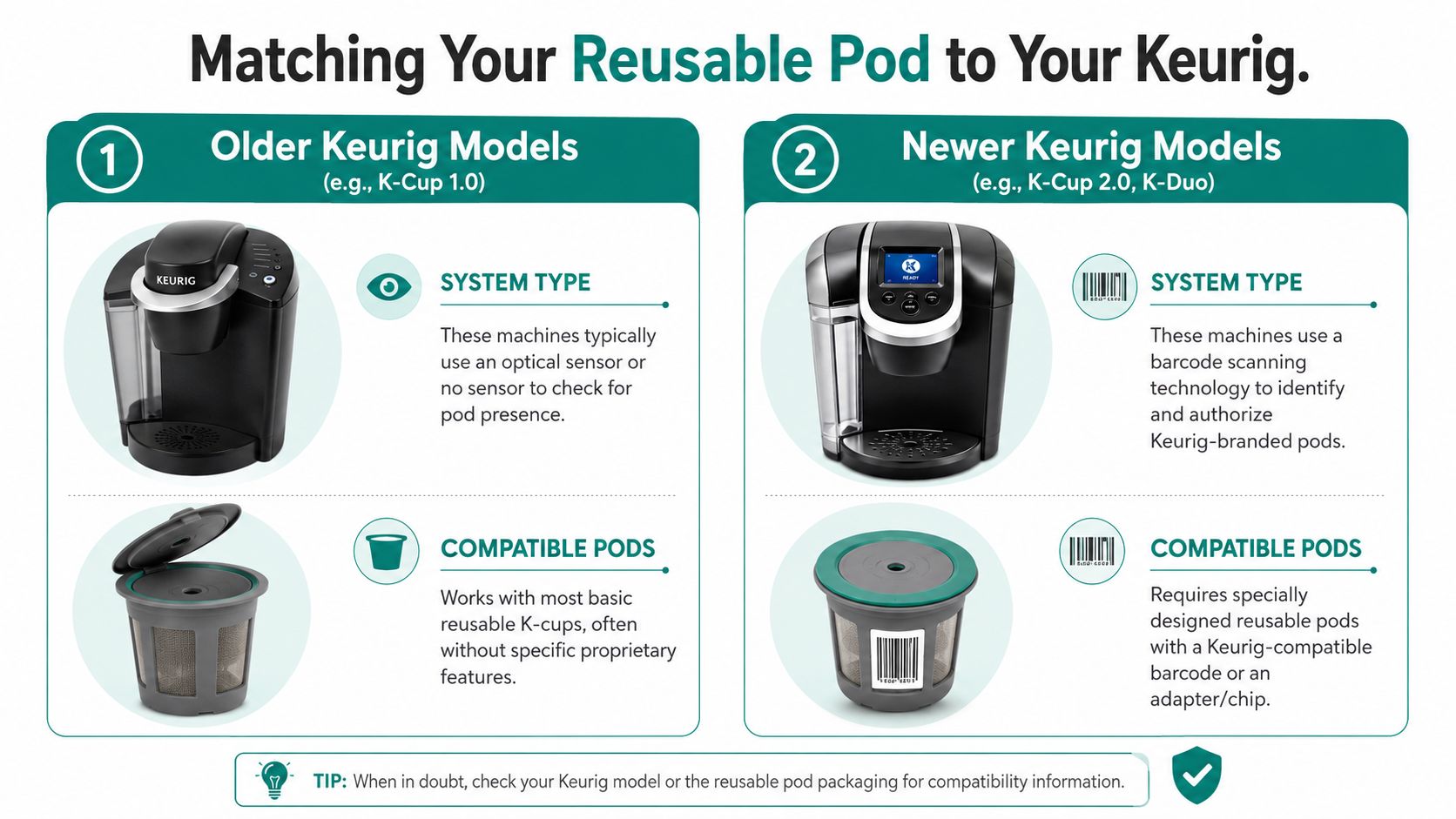
Keurig brewers now fall into two different camps. Older machines use Single Needle Technology. Newer machines such as the K-Supreme family use MultiStream, which changes how water enters the pod. If the lid pattern on your reusable pod doesn't match that system, extraction suffers immediately.
Single Needle versus MultiStream
For Keurig brewers with MultiStream technology, the reusable pod must have five puncture points that align with the machine's water distribution system. That guide identifies MultiStream models including the K-Supreme, K-Supreme Plus, and K-Slim (MultiStream version). It also explains that Single Needle models use a more traditional mesh basket with one top puncture point.
Many universal pods fall short. They may sit inside the machine, but if four water streams are blocked on a MultiStream brewer, the coffee bed won't saturate evenly. The result often tastes weak or oddly hollow.
How to check compatibility before brewing
A quick fit test saves a lot of trial and error:
- Know your brewer type: Identify whether your Keurig is Single Needle or MultiStream.
- Check the lid design: Count the top puncture points on the reusable pod.
- Confirm lid alignment: The holes have to meet the machine's needles cleanly.
- Watch the first brew: Uneven flow, leaks, or weak extraction often signal a mismatch.
If you're sorting through model-specific options, this guide to choosing the right reusable K-Cup for different Keurig models is useful because it focuses on actual brewer families rather than vague “universal fit” claims.
If you own a newer K-Supreme-style machine, compatibility isn't a minor detail. It's the whole game.
This is also the right place to address a common objection: “But the pod fits, so why wouldn't it work?” Because physical fit and brewing fit are different. The pod can lock in place and still distribute water badly. Newer Keurigs are less forgiving about that than older machines.
The PureHQ Advantage vs Generic Pods
Reusable pods aren't all built to the same standard. That shows up in three places first. Fit, filtration, and durability.
A generic marketplace pod often looks close enough in product photos. In use, the differences show up fast. Hinges loosen, lids stop closing squarely, the mesh allows more fines through, or the pod doesn't interact with the brewer as cleanly as the listing promised.
What the better designs get right
A more thoughtfully built pod usually offers sturdier materials, more consistent lid alignment, and mesh designed to balance flow with sediment control. In practical terms, that means fewer weird leaks and fewer cups ruined by sludge at the bottom.
Some stainless reusable pods also have room for optional paper liners, which gives you a useful second layer of control when your coffee throws lots of fines. That matters more than flashy marketing language.
One option in this category is PureHQ Inc., which makes reusable K-Cups, stainless refillable pods, paper liners, and descaling products for Keurig systems. That combination is useful if you want the pod and the maintenance accessories from the same product family.
PureHQ Reusable Pods vs. Generic Alternatives
| Feature | PureHQ Reusable K-Cups | Generic Marketplace Pods |
|---|---|---|
| Fit approach | Model-specific options are available for different Keurig platforms | Often sold as “universal,” with uneven real-world fit |
| Lid alignment | Designed around brewer compatibility and sealing behavior | Can close loosely or misalign in some machines |
| Filtration style | Options include stainless steel designs and liner-compatible setups | Mesh quality varies widely |
| Sediment control | Better when paired with paper liners or finer mesh designs | More likely to let fines through if mesh is inconsistent |
| Durability | Built for repeated use with coffee accessories as a core category | Quality depends heavily on seller and batch |
| Cleanup | Easier to maintain when the mesh and lid are well made | Cheap hinges and rough edges can make cleaning annoying |
| Buying confidence | Backed by a specialist accessories brand | Listings often change suppliers without warning |
The trade-off is simple. A bargain pod can work, but it usually asks more from you. You have to tolerate more inconsistency, more fiddling, and more guesswork. A better-made pod reduces those variables so your grind and dose changes produce reliable results.
Advanced Troubleshooting for Persistent Problems
If you've fixed grind, fill, and compatibility and the brewer still acts up, look at the machine itself. A surprising number of reusable pod failures start above the pod, not inside it.
When grounds spray from the top
If coffee grounds are coming out near the top of the brewer, the issue may be a worn or dirty seal around the upper needle assembly. An independent troubleshooting discussion on iFixit points to worn or dirty top grommets and pressure-management issues as common causes of grounds escaping from the top. That's why generic advice like “use medium grind” doesn't always solve the problem.
Clean the top area carefully and inspect the rubber sealing parts for residue or wear. If the pod is sealing correctly but pressure is escaping above it, the brewer needs attention.
When the coffee is still weak
Some weak cups aren't user error at all. They're a brew ratio problem.
A coffee discussion on Home-Barista notes that a reusable pod may hold only about 10 grams of coffee, which at an 18:1 water ratio supports roughly a 6 oz brew, not a full mug, according to this Home-Barista thread on reusable pod strength limits. That lines up with what many people taste at home. Push too much water through a small dose and the cup gets thin.
Try this instead:
- Brew smaller first: Use a short setting for a stronger extraction.
- Top off after brewing: Add hot water if you want a larger mug.
- Choose coffee with intention: Medium grind and a slightly fuller basket help, but only within the pod's limits.
A reusable pod can make a very good strong cup. It usually won't make a large strong cup from the same small dose.
When performance gets worse over time
If everything worked well before and then drifted downhill, maintenance is the next suspect. Mineral buildup changes water flow and pressure inside the machine. In such cases, accessories matter in a practical way. A descaling routine and occasional cleaning tablets can restore consistency when your settings haven't changed but your cup has.
For a broader list of brewer-side issues, this roundup of problems you may experience when using reusable K-Cups is worth scanning before you replace a pod that may not be the actual problem.
Brew Your Best Cup with PureHQ
Good reusable brewing is less about hacks and more about fit and physics. Use the right grind, leave room in the pod, keep the rim clean, and match the pod to the machine. That solves most of the problems people blame on reusable pods.
The last piece is expectation. Reusable pods do great work when you brew within their limits. They reward smaller, stronger extractions and careful setup. If you enjoy dialing in coffee at home, a bit of broader coffee education can make those adjustments feel a lot more intuitive.
A reusable pod should make your Keurig more flexible, not more frustrating. When the pod fits the brewer and the brew ratio fits the basket, you get the cup you were trying to make all along.
If you're ready to upgrade your setup, shop reusable K-Cups, paper liners, and maintenance accessories from PureHQ Inc. and build a cleaner, more consistent Keurig routine.


Pingback: Reusable Cup Keurig: Your Complete Guide to Refillable Pods