
Coffee Machine Care
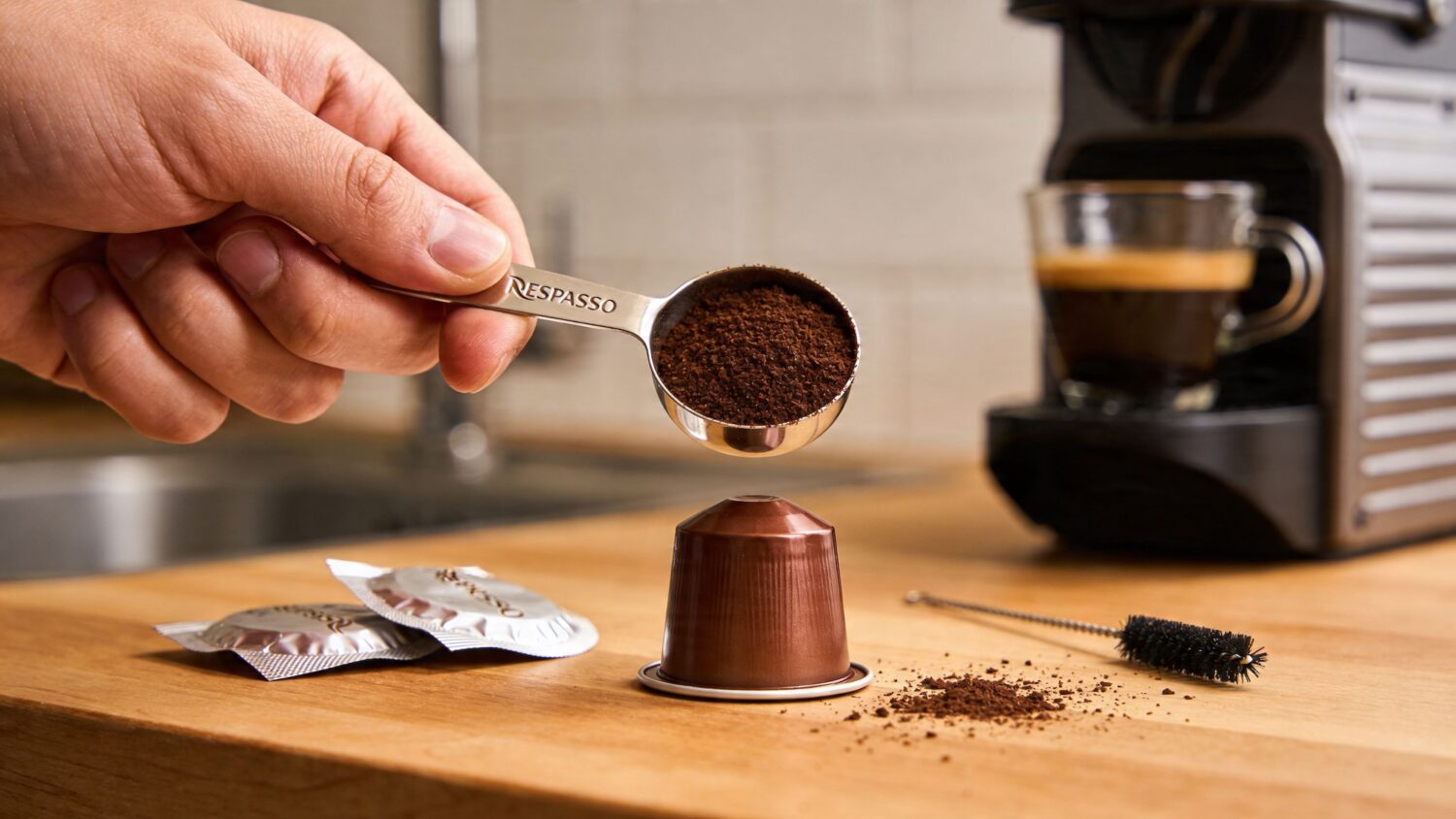
Can You Refill Nespresso Capsules? Full Guide
Apr
TL;DR: Yes, but can you refill Nespresso capsules depends on which system you own and how much effort you’re willing to put in. OriginalLine capsules and reusable pods are usually the simpler route, while Vertuo refilling can drop cost from about $1 per pod to $0.23 to $0.43, but it takes more time, creates more mess, and carries more risk if your seals fail.
Single-serve coffee feels cheap because the machine sits on your counter and the spending happens one pod at a time. The math looks very different once you start counting cups, waste, cleanup, and the occasional bad brew. That’s where refilling gets interesting. It can save real money, cut down on capsule waste, and let you use coffee you like. It can also turn a quick morning routine into a small prep job if you pick the wrong method.
The High Cost of Your Daily Nespresso Habit
A dollar a pod does not feel expensive until you drink one or two every day. Then the convenience premium stops looking minor and starts looking like a subscription you never meant to sign up for.
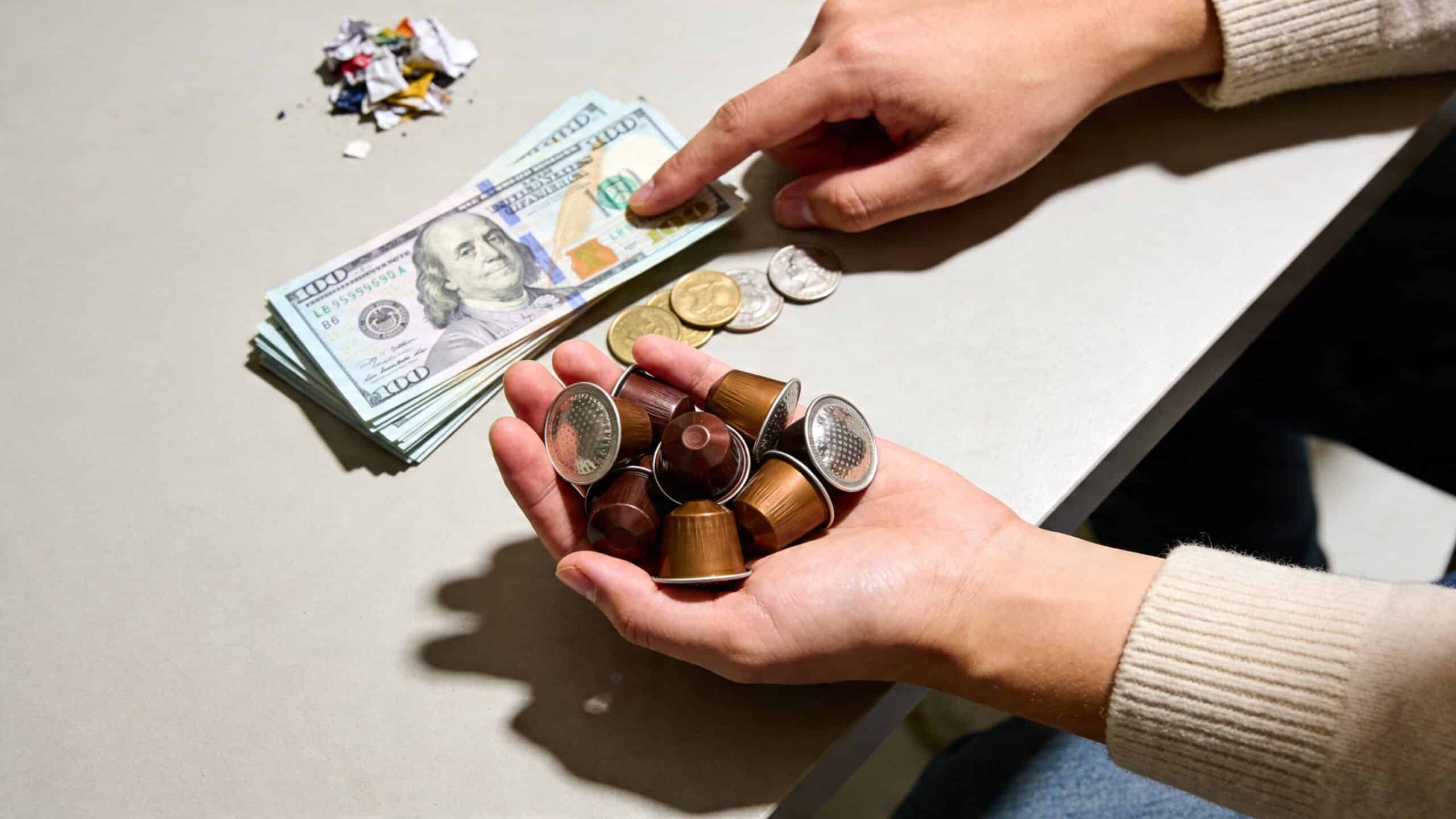
That is the part pod owners notice first. The less obvious part is what you are paying to avoid: dosing, tamping, cleanup, and inconsistency. Nespresso sells speed and predictability, and for plenty of people that trade is fair. If you are looking at refilling, though, the key question is not just whether a homemade pod costs less. It is whether the savings still feel worthwhile after you factor in prep time, spilled grounds, storage for used capsules, and the occasional bad shot from a poor seal.
Waste matters too. Ezy Coffee Pods’ refillable capsule FAQ notes that a refillable pod can be used up to 30 times each, and a 10-pack can deliver up to 300 uses. In practice, that means one reusable setup can replace a large pile of single-use capsules, especially in homes that do not consistently recycle aluminum pods.
Why the convenience premium stops feeling small
Single-serve coffee is expensive in a very specific way. You are buying small doses of coffee, pre-portioned packaging, and a routine that asks almost nothing from you.
That ease has value. So does control.
If you already buy decent beans or pre-ground espresso, the cost gap between official capsules and your own coffee gets hard to ignore over months of daily use. The catch is that refilling does not eliminate cost. It shifts cost from money to effort. You spend less per cup, but you spend more time making the system work.
For OriginalLine users, Ezy Coffee Pods says each refillable pod holds about 5 grams of coffee and is better suited to espresso or ristretto than lungo. That limitation matters. You can save money, but you may also give up some drink flexibility and some of the foolproof consistency that made the machine appealing in the first place.
Waste adds up faster than is often assumed
The environmental case gets stronger once you stop looking at one capsule and start looking at a year of coffee. A pod-a-day habit turns into hundreds of spent capsules. Two coffee drinkers in one home can burn through them quickly.
If sustainability is part of your reason for switching, read this guide to reusable coffee pods and how they compare in daily use before you buy accessories. It helps to be realistic here. Reusables can cut waste and lower coffee costs, but only if you will keep up with the cleaning, refilling, and storage. That is the trade-off many buyers underestimate.
Before You Start What Refilling Really Involves
Refilling can cut your per-cup cost, but the savings only matter if you keep doing it for weeks, not just one Saturday afternoon. In practice, the main question is whether lower coffee costs are worth the extra prep, cleanup, and added room for mistakes.
OriginalLine and Vertuo are not the same job
These two systems ask for different levels of patience.
With OriginalLine, you have two realistic options. You can reuse spent capsules with replacement foil lids, or switch to a reusable pod made for repeated use. Both approaches can work. Reusable pods are usually easier to live with because you are not constantly peeling, cleaning, and resealing a thin shell that was built for one brew.
With Vertuo, the process is fussier. You usually remove the old lid, rinse or wash the pod, dry it, refill it, then apply a new foil seal carefully enough for the machine to read and brew it properly. That can be manageable if you batch a week’s worth at once. It is a poor fit if you bought a Nespresso machine because you want coffee in under a minute with almost no cleanup.
The hidden costs are time, mess, and inconsistency
This is the part that decides whether refilling becomes a routine or a drawer full of abandoned accessories.
Refilling adds several small jobs that official capsules avoid. You need to save used pods, clean them well, let them dry, portion coffee, seal each capsule neatly, and deal with stray grounds on the counter. None of that is difficult on its own. Together, it changes the whole appeal of the machine.
The common friction points are predictable:
- Prep time adds up: Even a quick refill session takes longer than dropping in a fresh capsule.
- Mess is hard to avoid: Fine grounds stick to rims, fingers, spoons, and worktops.
- Seal quality affects the cup: A wrinkled lid or coffee dust on the rim can cause leaking, weak extraction, or a failed brew.
- Taste needs adjustment: Grind size and packing density are often underestimated by beginners.
I’ve found that people who enjoy dialing in espresso tend to tolerate this process well. People who want a fast, reliable morning coffee usually get tired of it.
Machine risk deserves a realistic look
Many guides underplay the risk to your machine. The issue is not that refilling always causes damage. The issue is that homemade variables replace a system designed to be consistent.
A refill that is slightly overpacked, badly sealed, or bent out of shape can restrict flow or send moisture and coffee residue where they should not go. That raises the chance of leaks, poor extraction, and cleanup inside parts of the machine you cannot easily reach. Warranty support is also a real consideration. If a problem is tied to third-party pods, altered capsules, or refill accessories, you should not assume Nespresso will treat it the same way as normal capsule use.
That risk is still manageable. It just means your margin for error is smaller than many refill tutorials suggest.
Who should skip DIY refilling
Refilling makes sense for a specific kind of coffee drinker. It is a worse deal for anyone who values convenience more than tinkering.
Skip it if any of these sound familiar:
- You bought Nespresso for speed: Official capsules still win on convenience and consistency.
- You dislike repetitive kitchen tasks: Refilling works better as a batch job, but it is still prep work.
- You want every cup to taste the same: Refilled pods can be good, but they are less forgiving.
- You are casual about maintenance: If descaling and cleaning already get delayed, refilling adds another source of buildup and mistakes.
If your goal is lower running cost with less hassle, a durable reusable pod is often the more practical middle ground.
A Practical Guide to Refilling Your Capsules
The method that works depends on whether you’re dealing with OriginalLine or Vertuo. Treat them like separate systems, because they are. The basic goals stay the same. Use the right grind, fill consistently, keep the rim clean, and avoid overpacking.
How to refill OriginalLine capsules or reusable pods
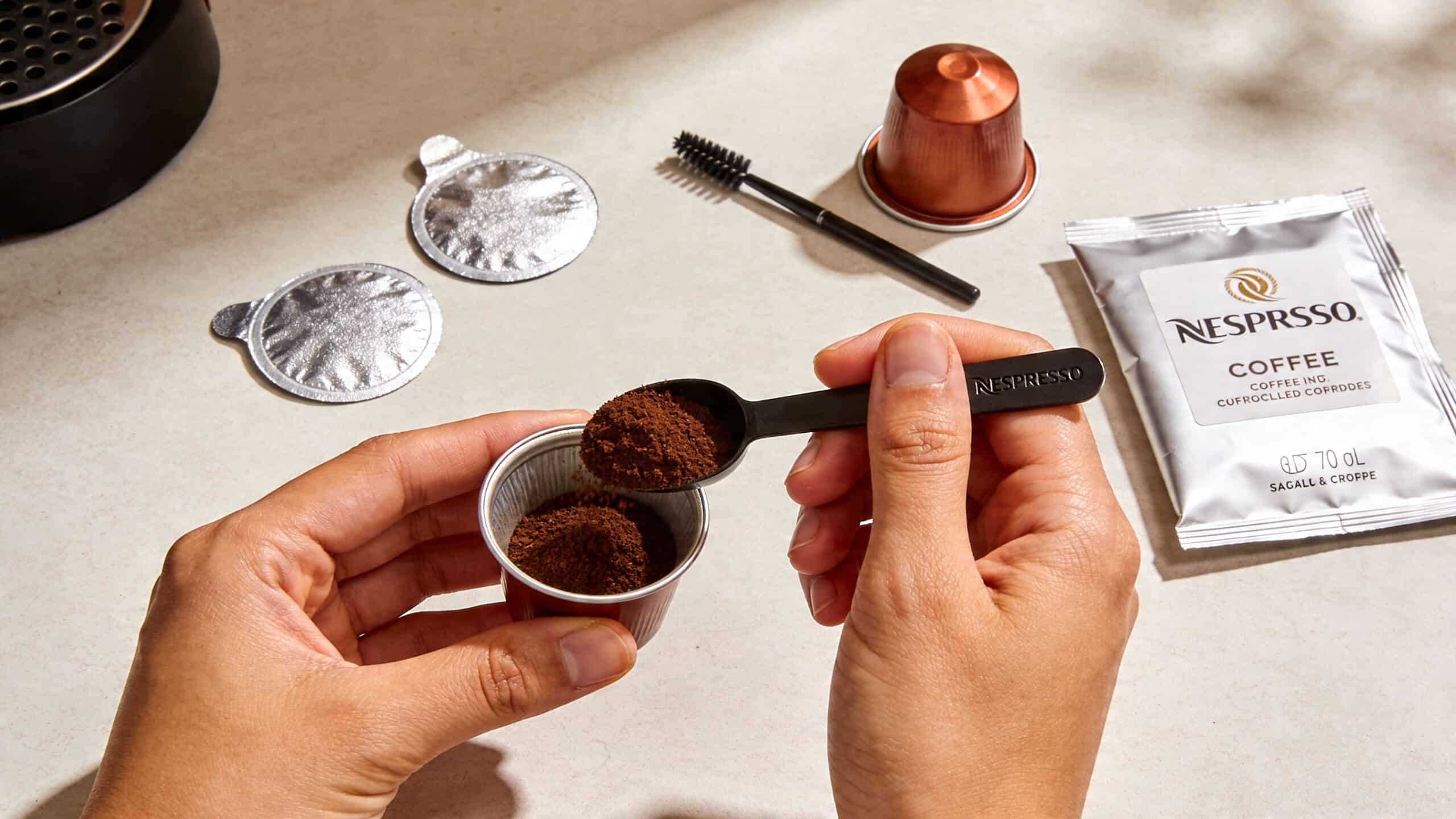
OriginalLine is a good starting point. If you’re using a stainless steel reusable pod, this practical walkthrough on YouTube gives the most useful specifics: use an espresso-fine grind of 100 to 150 microns, fill to 1mm below the rim, tamp firmly for even density, and wipe the rim clean before applying the foil lid.
The same source says overfilling causes 40% of failures, which lines up with real-world experience. People tend to think more coffee means stronger coffee. In pod systems, more often means restricted flow, leaks, or machine errors.
A good OriginalLine workflow looks like this:
- Choose the right grind: Espresso-fine works better than standard drip grind because the machine extracts fast and under pressure.
- Dose with restraint: For reusable OriginalLine pods, the referenced method uses 7 to 9g for single and 11 to 14g for lungo depending on pod style and design.
- Tamp firmly, not aggressively: You want uniform resistance, not a brick.
- Clean the rim completely: Any grounds left on the lip can compromise the seal.
Shop-floor insight: If a refill leaks, I check the rim before I blame the lid. Most failures start there.
What works better than guessing
Coffee pod refilling punishes improvisation. If your coffee tastes weak, one of three things is usually happening: the grind is too coarse, the fill is too light, or the puck isn’t packed evenly. If the machine sounds strained or throws an error, the pod is often too full.
Reusable stainless options tend to be the easier long-term setup because they’re built for repeat handling. The same YouTube source says durable steel pods can withstand 200 to 500 cycles before valve wear, which is a very different proposition from repeatedly trying to stretch a disposable shell beyond its intended use.
The video below shows the process in action and helps if you want to see the fill and seal details visually before trying it yourself.
How to refill Vertuo pods without making a mess
Vertuo refilling is less elegant, but it can pay off if you drink it every day. The usual process is to remove the old foil carefully, empty and rinse the pod, add fresh coffee, then apply a replacement foil lid. Batch prep makes this less painful than doing it one cup at a time.
A few habits help:
- Save clean, undamaged pods only. Bent rims and dented cups are bad candidates.
- Use a tidy filling station. A small spoon, a brush, and parchment or a tray help contain grounds.
- Seal carefully. The lid has to sit flat. Small wrinkles can become leaks.
- Brew a test pod before filling a big batch. One successful cup tells you more than a stack of optimistic prep.
Vertuo is the method for people who care enough to repeat a fussy process because the savings justify it. If that doesn’t sound like you, it’s better to know that now than after a week of sticky counters and underwhelming cups.
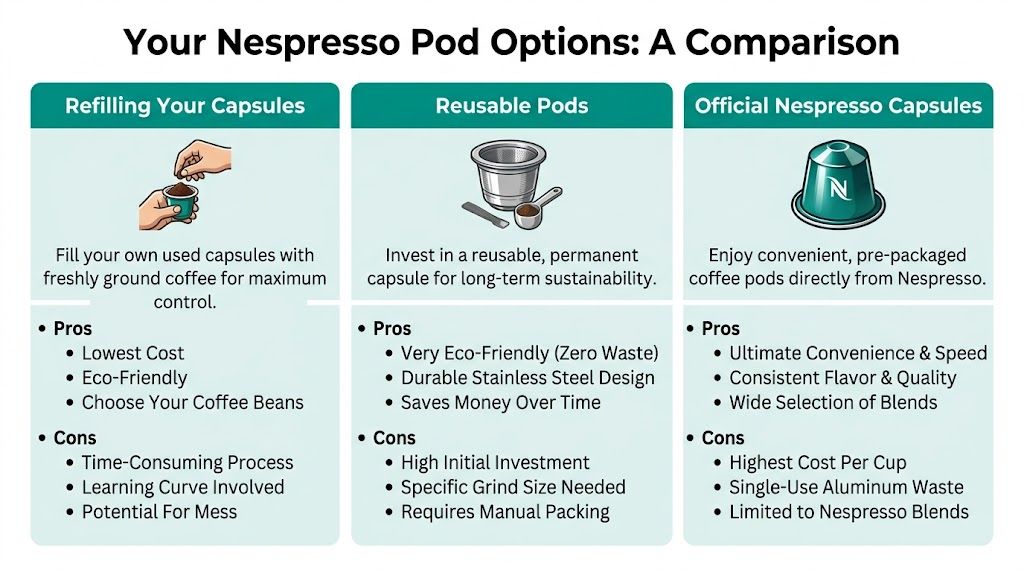
Refilling vs Reusable Pods vs Official Capsules
A daily pod habit feels cheap one cup at a time. Over months, the cost includes money, prep time, cleanup, and the wear you put on the machine when a refill goes wrong. That is why the smartest option is usually the one you will keep using without resentment.
If you’re trying to build a lower-waste kitchen beyond coffee, this broader guide to eco-friendly kitchen products helps put refillable brewing gear in context with other practical swaps.
Comparison of Nespresso Pod Options
| Attribute | DIY Refilled Pods | Reusable Stainless Steel Pods | Official Nespresso Pods |
|---|---|---|---|
| Upfront effort | Highest | Moderate | Lowest |
| Ongoing convenience | Lower | Moderate | Highest |
| Long-term cost | Lowest for many users | Lower than official pods | Highest |
| Taste consistency | Depends heavily on technique | Better once dialed in | Most predictable |
| Waste reduction | Good if you keep refilling successfully | Strong | Weakest |
| Leak risk | Higher if seal or rim prep is poor | Lower when pod fits properly | Lowest |
| Best fit for | Tinkerers and budget-focused users | Regular users who want a repeatable routine | People who want speed and no prep |
Where each option actually earns its keep
DIY refilling wins on raw per-cup cost. If you already own the machine, save used capsules, and do your prep in batches, it can be the cheapest path by a clear margin.
But cheap coffee is not always low-cost coffee in practice. Ten minutes of fiddly prep, sticky counters, wasted grounds, and the occasional bad seal can erase a lot of the appeal, especially if you only make one or two cups a day. I’ve found this is the point many people miss. The savings look clean on paper, but the routine can feel expensive in time and patience.
Reusable pods sit in the middle. You pay more upfront, but the workflow is usually more repeatable than peeling, cleaning, and resealing disposable shells. If you want to compare that option in more detail, this guide to refillable stainless steel Nespresso capsules gives a useful look at fit, durability, and what to expect from the daily routine.
The trade-off that matters most: reliability
A common objection is fit and leaks. That concern is fair.
Disposable capsules were not built for repeated use, so every refill depends on how clean the rim is, how evenly the coffee is packed, and whether the foil sits flat. Get any of that wrong and you can end up with a weak shot, grounds in the cup, or coffee spraying where it should not. One failed pod is an annoyance. Repeated bad fits can turn into a machine-maintenance problem.
Official capsules cost the most, but they are still the easiest answer if you care about speed, consistency, and keeping machine risk low. Reusable pods are often the practical middle ground for people who want lower waste and lower long-term spend without the constant trial-and-error of DIY refilling.
Official capsules make sense if you want convenience and predictable results. DIY refilling makes sense if you care enough about savings to accept mess and extra work. Reusable pods fit the middle if you want a routine you can repeat.
Pro Tips for Better Taste and a Healthy Machine
Refilling only pays off if the coffee still tastes good and the machine stays clean. If every pod takes extra effort but the shot is weak or the brew head gets dirty, the savings stop looking impressive.
Fix weak shots before you blame the coffee
Bad refills usually fail in predictable ways. A watery shot often means the grind is too coarse, the fill is too loose, or the capsule is packed unevenly enough for water to cut straight through the coffee.
Start with one variable at a time. Use an espresso-leaning grind, fill the pod evenly, and tamp lightly enough that the foil or lid can still seal flat. If you change grind, dose, and shot size all at once, it gets hard to tell what helped.
A few habits improve results fast:
- Grind a little finer: Fast flow usually points to under-resistance in the coffee bed.
- Level the fill: High spots and gaps lead to channeling.
- Use smaller drinks: Refilled pods tend to handle short espresso shots better than longer cups.
- Repeat what works: Consistency matters more than chasing a perfect setup every morning.
Keep stray grounds and scale from becoming machine problems
The mess matters more than many refill guides admit. One or two loose grounds around the capsule rim may seem minor, but repeated leaks and residue build-up can affect how the machine closes, punctures, and flows over time.
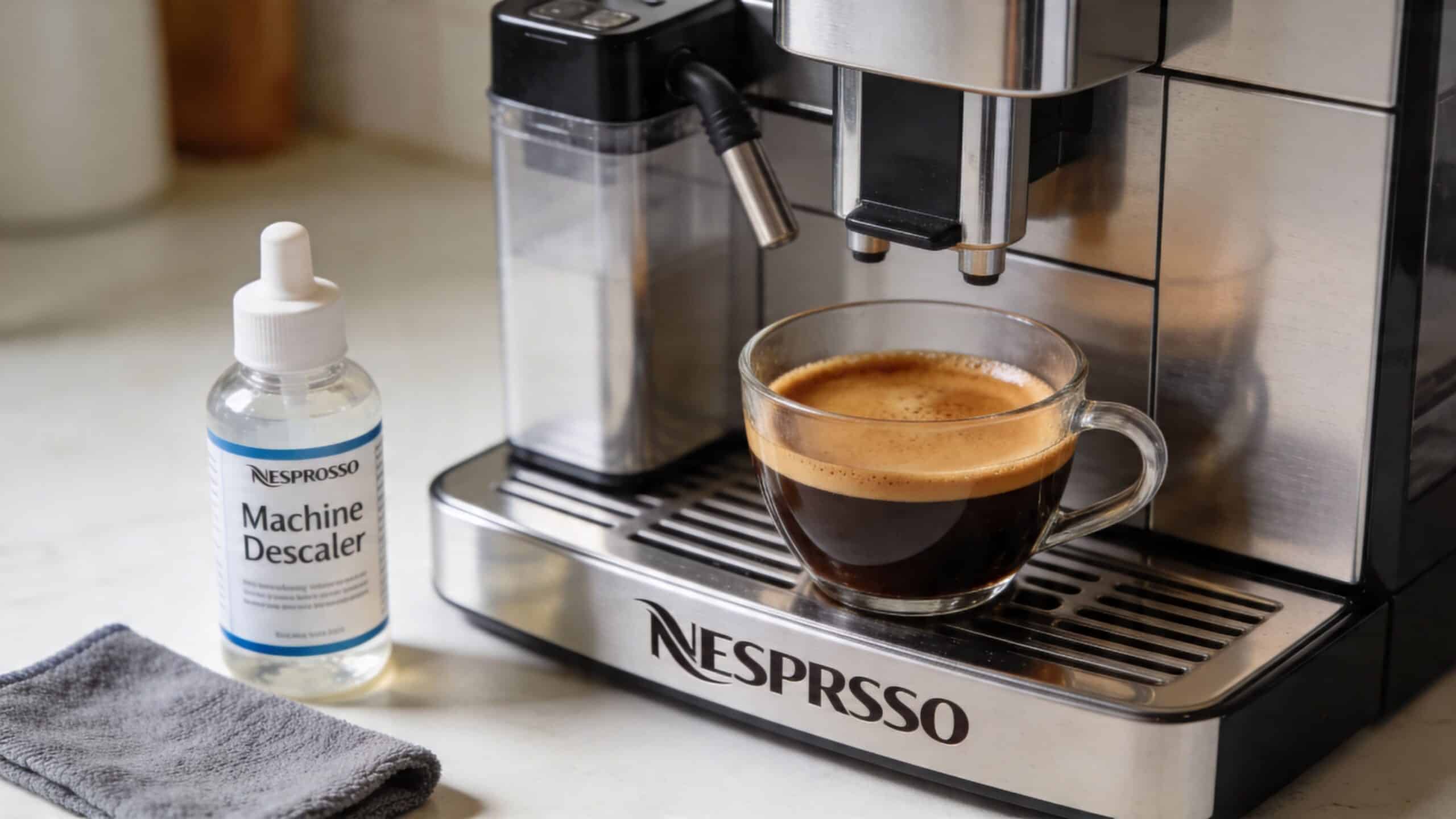
Check the pod rim before every brew. Wipe the capsule seat if you see coffee dust or oily residue. Then descale on a regular schedule, because scale changes flow and brew temperature enough to flatten flavor. A practical guide to choosing the best descaler for a coffee machine can help you pick a routine that matches how often you brew. PureHQ Inc. also sells universal descaling solutions for coffee machines, which is one option if you want a general-purpose maintenance product rather than a brand-specific cleaner.
This part is easy to skip. It is also where the hidden cost of refilling shows up. Saving money per pod does not feel as satisfying when you are cleaning coffee grit out of the chamber or troubleshooting a machine that has started dripping unevenly.
Choose the setup that asks the least from your routine
If you already know you dislike fiddly prep, repeated reuse of spent capsules usually gets old fast. The coffee can be good, but the routine is slower, messier, and more failure-prone than many people expect.
Purpose-built reusable pods are often easier to live with because the workflow is more repeatable. You still need the right grind and a careful fill, but you are working with a pod made to be opened, sealed, and cleaned many times. In daily use, that usually means fewer bad seals, fewer leaks, and less trial and error.
The best tip is simple. Pick the method you can do cleanly on a busy morning, not the one that looks cheapest on paper.
The Final Verdict Is Refilling Nespresso Pods for You
If you want the honest answer, refilling Nespresso pods is worth it for some people and annoying for others.
You should consider it if you care about lowering running cost, want control over the coffee you use, and don’t mind a bit of prep. That’s especially true if you enjoy dialing in grind, dose, and extraction the same way espresso hobbyists do. For that kind of user, the process feels less like a chore and more like part of the ritual.
You probably won’t like it if your priority is speed, consistency, and zero mess. That’s where official capsules still make sense. They cost more, but they remove almost every variable. If you want a middle path, reusable pods are often the most practical answer because they cut waste and ongoing pod spend without asking you to constantly rebuild spent capsules.
The big mistake is assuming the cheapest per-cup method is automatically the best one. It isn’t. The best method is the one you’ll keep using without resenting it. For some homes, that’s DIY refilling. For others, it’s a reusable pod. And for plenty of people, the premium for official capsules buys peace and simplicity.
If you own a Keurig rather than a Nespresso, the same logic applies. A reusable pod setup can lower waste and give you more control over your coffee. Whatever machine you use, maintenance is not optional. Clean seals, fresh water, and regular descaling do more for cup quality than is commonly understood.
If you want to cut waste and keep your brewer running clean, browse the coffee accessories and maintenance supplies from PureHQ Inc.. Their lineup includes reusable brewing accessories and universal descaling products that fit the same practical goal behind refilling. Better coffee, less waste, and fewer machine headaches.

