
Coffee Machine Care
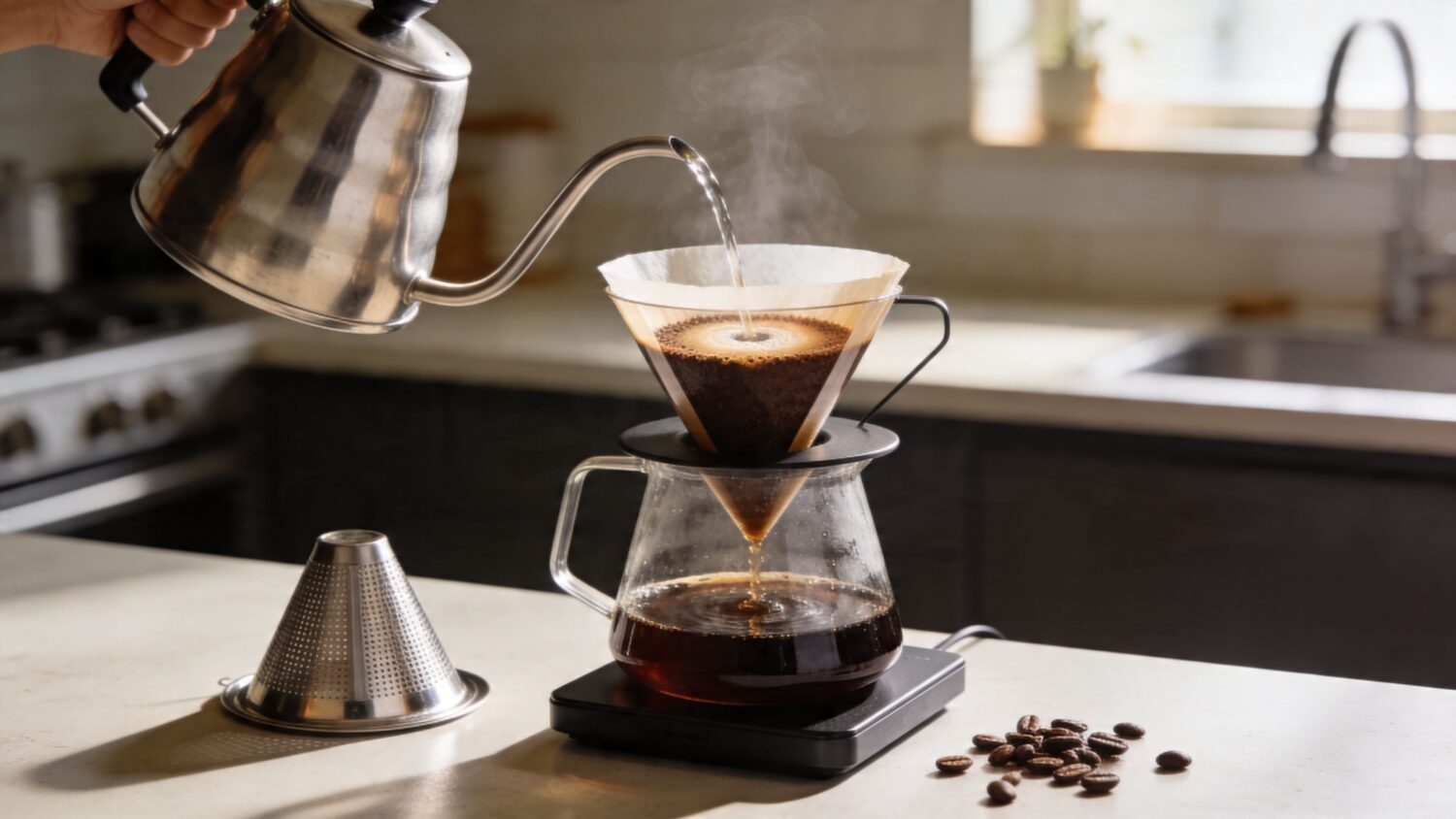
Coffee Makers with Cone Filters: Your Guide to Better Brews
Apr
You buy good beans, fill the tank, press brew, and still get a cup that tastes different from one morning to the next. One day it’s smooth and lively. The next day it’s thin, bitter, or oddly muddy. The coffee maker, the roast, or themselves are often blamed.
A lot of the time, the hidden variable is simpler than that. It’s the filter shape. In coffee makers with cone filters, the geometry of that filter changes how water moves through the grounds, and that changes what ends up in your mug.
Why Your Morning Coffee Tastes Inconsistent
You’ve probably had this happen. You use the same bag of coffee all week. You scoop the same amount. The machine sits in the same spot. Yet Monday’s brew tastes rich, and Thursday’s tastes flat.
That’s frustrating because it feels random. It also gets expensive fast. Better beans can’t fix water that moved through the grounds poorly in the first place.
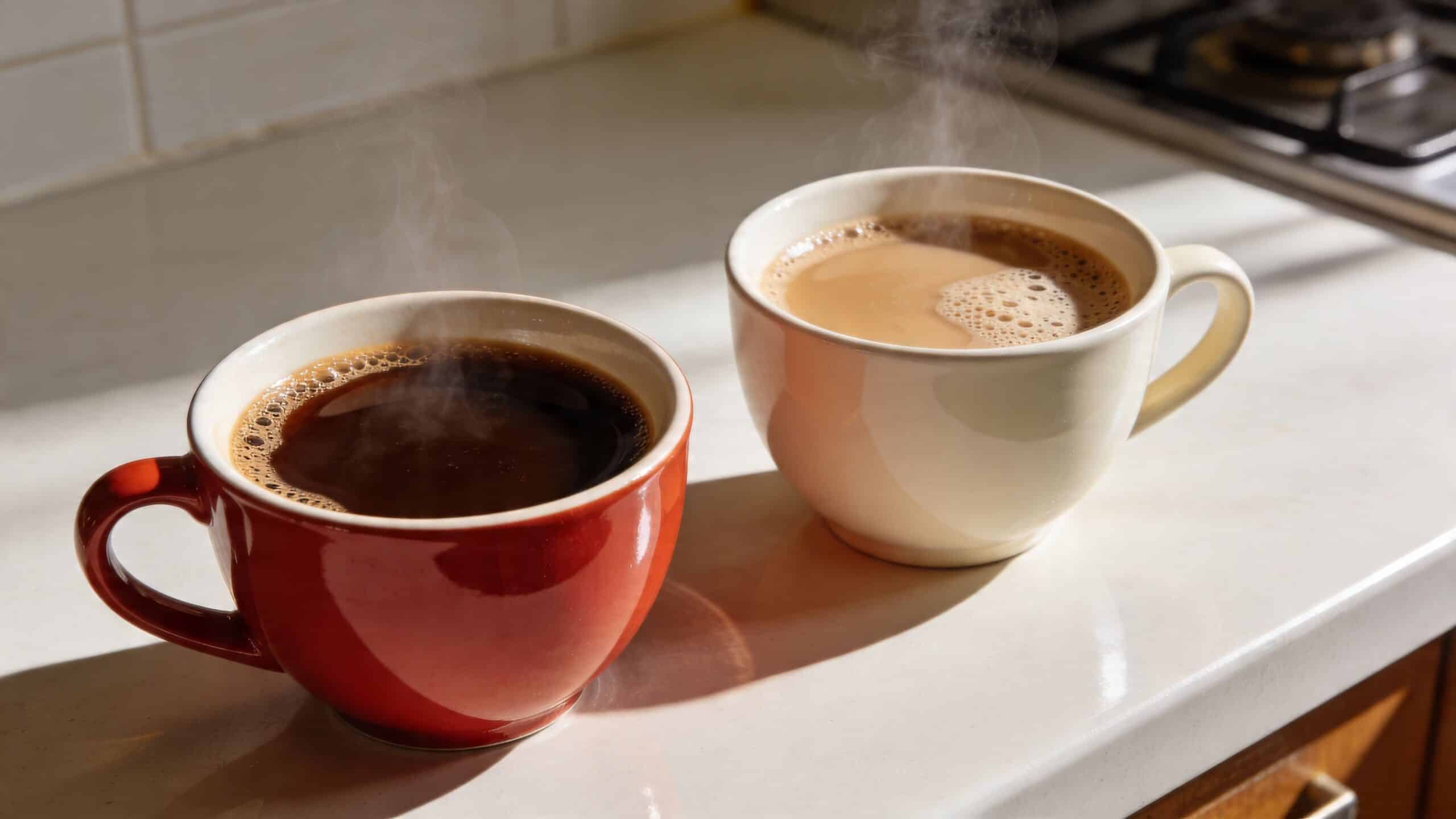
A common mistake is focusing only on the coffee and ignoring the path the water takes. If the bed of grounds gets soaked unevenly, one part can over-extract while another barely extracts at all. That’s how you end up with the weird combination of bitterness and weakness in the same cup.
If your coffee tastes different from brew to brew, start with the brew basket and filter style before replacing the machine. For many households, that’s the source of inconsistency.
For a practical reset on flavor basics, this guide on how to make coffee taste better is worth reading alongside your machine manual.
The problem usually hides in plain sight
Most drip brewers don’t look dramatic while they work. Water drips, coffee falls into the carafe, and the machine seems to do its job. But inside the basket, small differences in flow create large differences in taste.
A cone filter can help because it gives water a more controlled route through the grounds. A flat basket can still make good coffee, but it leaves more room for uneven saturation when the grind, dose, or flow isn’t dialed in well.
Bad morning coffee often isn’t a bean problem. It’s a water-path problem.
What that means in your cup
When extraction goes unevenly, you notice it as:
- Harsh finish that lingers after the sip
- Weak center where the coffee feels hollow instead of sweet
- Muddy texture from fines or poor filtration
- No clear flavor notes, even with freshly roasted beans
That’s the aha moment for a lot of people. The filter isn’t just there to catch grounds. It helps shape the brew itself.
How Cone Filters Perfect Coffee Extraction
Bad drip coffee often comes from a simple physics problem. Water takes the easiest route through the grounds, and the shape of the filter helps decide what that route looks like.
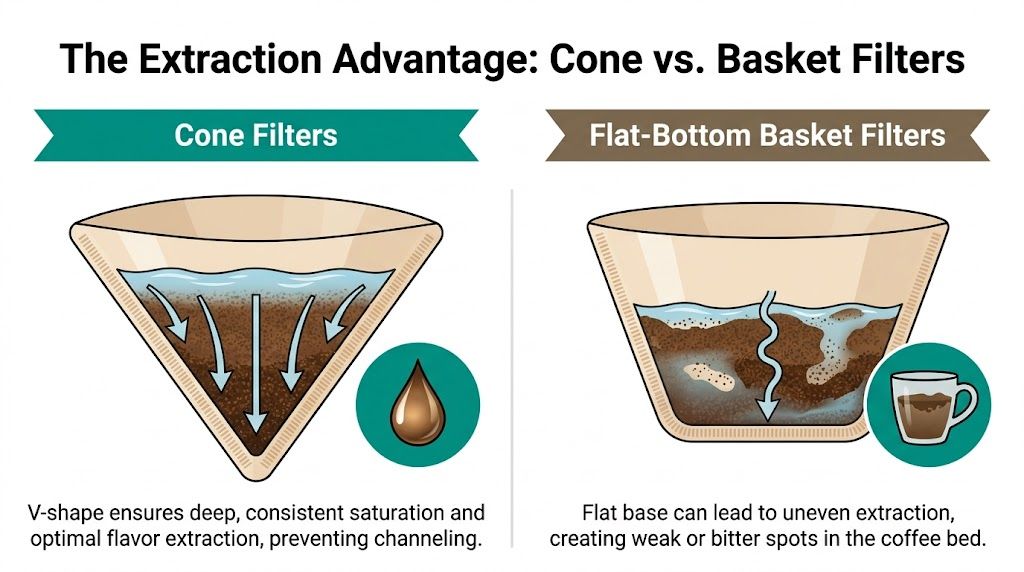
A cone filter changes the path. Instead of spreading water across a broad, shallow bed, it guides water through a deeper column of coffee. That usually gives the brew more even contact time from top to bottom, which is why cone brewers often produce a cup with clearer flavor and less of that harsh, hollow mix of bitterness and weakness.
Why the shape changes the taste
The key difference is bed depth.
In a flat basket, water has more room to spread sideways. If the showerhead does not wet the grounds evenly, some areas get overworked while other spots stay relatively dry. In a cone, the coffee bed is deeper and narrower, so water is pushed toward the center as it drains. That does not guarantee perfect extraction, but it makes uneven flow easier to control.
You can taste that difference. A well-matched cone setup tends to reduce muddiness, keep bitterness in check, and pull more distinct notes from the same beans. Lighter roasts often show more fruit or floral character. Medium roasts usually taste sweeter and more defined instead of flat.
Channeling is the problem to watch. That happens when water cuts a few fast paths through the bed and avoids the rest. If your coffee tastes sour at first sip and bitter at the finish, channeling is a likely cause. Cone filters help by narrowing the routes water can take, especially when the grind and filter fit are in the right range.
How that plays out in a real brewer
Consider rinsing sand in a wide pan versus a funnel-shaped container. In the pan, water can run around the edges and leave some material barely touched. In the funnel shape, the flow is more concentrated, so more of the material gets rinsed on the way down.
Coffee behaves in a similar way. Grounds do not all extract at the same speed, and water does not naturally distribute itself perfectly. The cone gives you a better starting geometry.
That is the useful part for home brewing. You do not need to memorize extraction charts to benefit from it. You just need to know that filter shape affects how evenly water meets the coffee, and evenness is what separates a sweet, layered cup from one that tastes both thin and rough.
Practical rule: If the same beans taste sharp, dull, and bitter all in one mug, fix the water path before blaming the roast.
What helps the cone do its job
Cone filters work best when the rest of the setup supports the shape.
What usually helps:
- A medium to medium-fine grind that slows the brew enough for full extraction without clogging
- The correct cone size so the filter sits against the basket walls instead of folding inward
- An even bed of grounds because a sloped or cratered bed encourages water to favor one side
- A clean paper or reusable filter so old oils and trapped fines do not interfere with flow
What commonly hurts results:
- Using the wrong filter size, which can collapse, bunch up, or send water around the grounds instead of through them
- Grinding too fine, which slows drawdown and can push the cup toward bitterness
- Grinding too coarse, which speeds up flow and leaves the cup weak or sour
- Buying a generic reusable cone without checking dimensions, especially if it sits too low or too loosely in the basket
If you are working with a smaller brewer, this guide to #2 cone coffee filters and fit helps clarify where size mistakes start.
Why picky coffee drinkers notice the difference
Cone brewers reward small corrections. A slight grind adjustment, a better-fitting paper filter, or a reusable cone that matches the basket properly can clean up the cup fast.
That is why coffee makers with cone filters appeal to people who are tired of inconsistent mornings. The shape does not perform magic. It gives water a more controlled route through the grounds, and that control is what brings out more sweetness, more clarity, and fewer unpleasant surprises.
Decoding Cone Filter Sizes and Materials
A lot of bad brews start with a simple mismatch. The filter looks close enough, it goes into the basket, and the machine runs. Then the coffee comes out thin one day, bitter the next, or the basket floods halfway through a full pot.
Cone filters are not interchangeable. The size and material change how water moves through the bed of coffee, and that changes taste.
Getting the size right
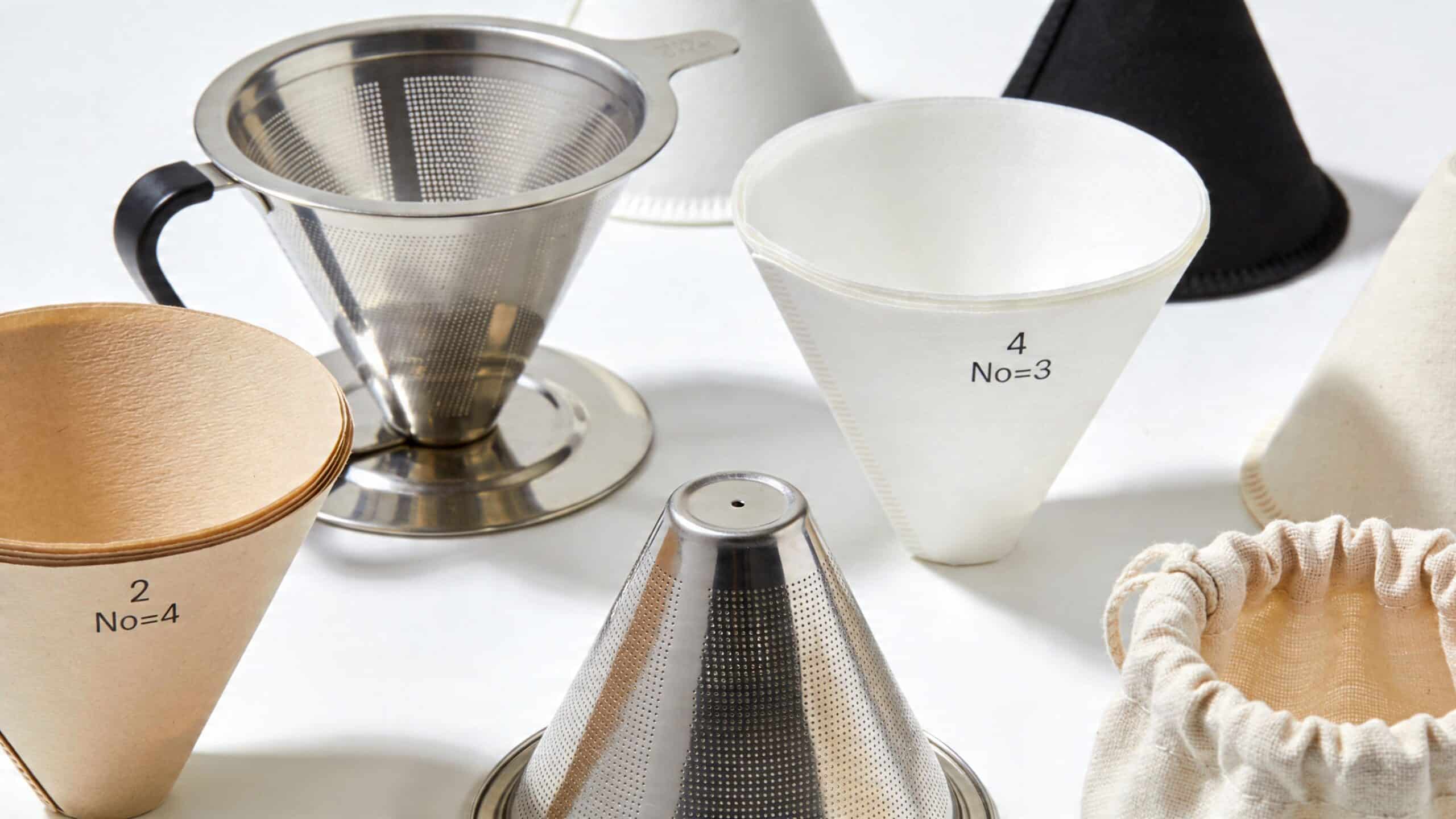
For home brewers, #2 and #4 are the sizes you will see most often. Smaller brewers usually take #2. Larger household machines commonly use #4. The right choice depends on the basket opening, the depth of the cone, and how much coffee the machine is built to brew.
Fit matters because it affects flow. A filter that is too small can pull away from the basket wall and create gaps. Water takes those gaps as the easy route. A filter that is too large can wrinkle or bunch near the bottom, slowing drawdown and leaving parts of the coffee bed overworked while other parts barely extract.
If you use a compact brewer, this guide to #2 cone coffee filter fit and sizing gives a clear picture of where size confusion usually starts.
The compatibility mistakes that cause messes
Bad fit shows up fast during brewing. You can usually spot it before you even taste the result.
Watch for these signs:
- The filter folds inward after it gets wet. Water pressure pushes grounds toward the center and leaves the outer edge under-extracted.
- The rim sits above the basket line. The lid can press the paper out of shape and break the seal against the walls.
- The cone drops too low into the basket. Grounds pack tightly at the tip, which can slow drainage and push the cup toward bitterness.
- The basket threatens to overflow on larger batches. Flow through the filter is lagging behind the machine’s water delivery.
I see this blamed on the coffee maker all the time. The actual problem is often a filter that does not match the basket geometry.
Here’s a visual walkthrough if you want to compare common filter forms and fit styles before you buy:
Paper versus reusable materials
Material changes extraction in a different way than size. Size controls how the filter sits and drains. Material controls how much resistance the water meets and how many oils and fines reach the cup.
Paper filters usually produce the cleanest cup. They trap more tiny particles and absorb some oils, which sharpens flavor separation. If a coffee has floral, citrus, or apple-like notes, paper makes those easier to taste.
Reusable metal filters let more oils through and usually more fines as well. That gives the cup more body and a heavier texture, but it can also blur delicate notes. With darker roasts, that extra body can read as richness. With some coffees, it also makes bitterness more obvious.
Cloth filters land in the middle. They often give more body than paper and a cleaner cup than metal, but they need prompt rinsing and careful drying or they start adding old flavors back into the brew.
A reusable filter can reduce waste and still make worse coffee if the mesh is too open or the cone shape does not match the basket.
White paper or natural brown paper
This choice affects flavor less than size or material, but it is not meaningless. Brown paper filters can leave a papery note if you brew straight through them dry. White paper often tastes cleaner right away.
The fix is simple. Rinse any paper filter with hot water before adding grounds. That preheats the basket, washes away paper taste, and helps the filter cling to the cone walls instead of shifting once brewing starts.
Reusable Cone Filters A Worthy Upgrade
Reusable cone filters make sense for daily brewers. You buy once, rinse after each batch, and stop throwing away paper every morning. But the phrase “reusable filter” hides a big quality gap.
The cheapest mesh filters often create the exact complaint people fear most: sludge in the cup. The better ones avoid that by using tighter mesh, stronger seams, and a shape that stays put during brewing.
Where generic filters fall short
A generic mesh cone can look fine out of the box and still perform poorly in the basket. Thin walls flex when hot water hits them. A loose rim shifts during brewing. Mesh that’s too open lets too many fines through.
That leads to three predictable problems:
- Sediment in the last sip
- Uneven extraction from poor basket fit
- Messy overflows when the filter sags
Those aren’t small annoyances. They change the cup and the cleanup.
Generic vs. Premium Reusable Cone Filters
| Feature | Generic Mesh Filter | Premium Gold-Tone Filter |
|---|---|---|
| Fit in the basket | Often loose or inconsistent | Usually designed to hold shape more securely |
| Mesh quality | Can be uneven or too open | Typically finer and more consistent |
| Cup texture | More likely to let fines through | Better at balancing body with cleaner flow |
| Durability | Thin seams can warp with repeated use | More rigid construction tends to last longer |
| Cleaning | Can trap residue in weak folds | Usually easier to rinse when shape is stable |
| Brew consistency | More dependent on careful handling | More repeatable when the fit is exact |
The objection everyone has
The initial question often posed is this. Won’t a reusable filter make the coffee muddy?
Sometimes, yes. That’s a fair objection. A cheap filter can absolutely do that.
A well-made gold-tone filter handles that trade-off better. It still allows some oils through, which adds body, but it doesn’t have to dump a layer of grit into the mug. If you want a cleaner result from a reusable setup, paper liners are the obvious compromise. They preserve fit and convenience while reducing fines.
For a detailed breakdown of the flavor and cleanup trade-offs, this comparison of reusable coffee filter vs paper is useful.
One practical option in this category is a gold-tone basket from PureHQ Inc., which the company positions for repeat use and easier cleaning in home brewing setups. For people who want a cleaner cup from a reusable filter, a disposable paper liner can also make sense.
Finding the Right Coffee Maker for Cone Filters
The filter shape helps, but the machine still decides how well that shape gets used. Some brewers dump water too fast. Others hold brewed coffee on a hot plate long enough to flatten the flavor you just worked to extract.
The strongest coffee makers with cone filters tend to get the basics right. They deliver water evenly, keep the brew stable after it drops, and make it easy to use the correct filter size every day.
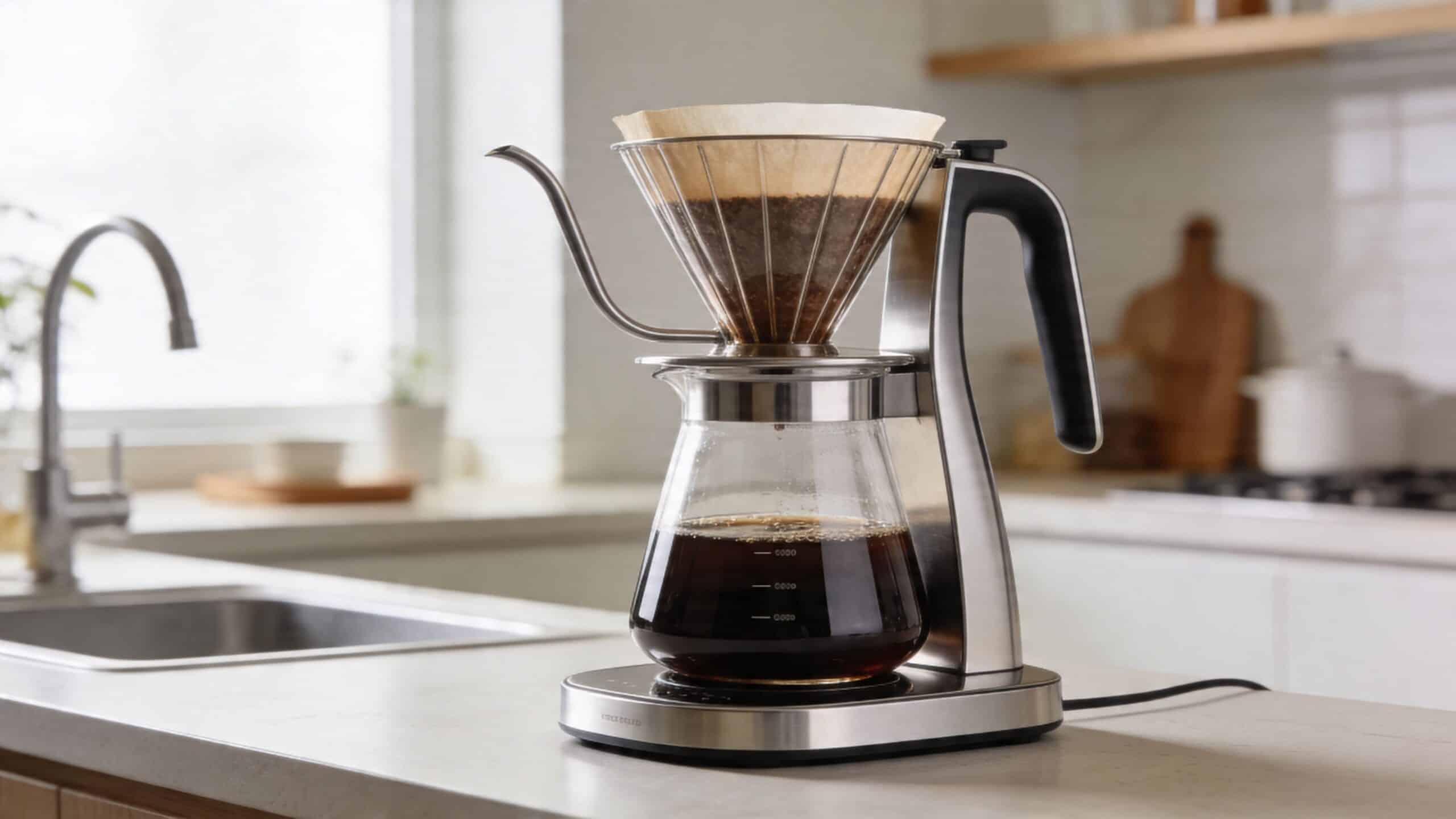
Features that actually matter
You don’t need a machine loaded with gimmicks. You do need one that supports steady extraction and doesn’t punish the coffee after brewing.
Look for these traits:
- A true cone-style basket that matches the filter you can easily buy
- Simple access for cleaning, because stale oils inside the machine ruin flavor
- Consistent water delivery over the grounds rather than one aggressive stream
- A carafe system you’ll use correctly
Glass carafe versus thermal carafe
This is one of the most important trade-offs.
A glass carafe lets you see the coffee level and often costs less. The downside is the hot plate. If the coffee sits there too long, the warmer can push the flavor toward scorched, flat, or stale.
A thermal carafe usually protects flavor better because it keeps coffee warm without cooking it. If you brew a full pot and drink it over time, thermal is often the better match for a cone brewer focused on clarity.
If you like to sip one pot over the morning, a thermal carafe protects your work better than a hot plate does.
Useful controls and which ones to ignore
Some machine features help cone filters perform better. Others just add buttons.
Features worth paying attention to:
- Brew strength control when it changes water flow or contact time, not just marketing language
- Pre-infusion or bloom settings that wet the grounds gently before the main brew
- Pause-and-pour designs that don’t disturb basket fit when you remove the carafe briefly
Features I’d treat cautiously:
- Permanent “strong” modes if they run hotter or hold the coffee longer
- Oversized baskets for small brews because half-filled large cones can behave inconsistently
- Complicated programming that makes daily cleaning harder
The best machine for you isn’t the one with the longest feature list. It’s the one that pairs a cone basket with reliable water delivery, easy maintenance, and a carafe style that matches how you drink coffee.
Essential Brewing and Maintenance Habits
A good cone brewer can still make dull coffee if the daily habits are off. Most weak home coffee comes from one of two causes: poor extraction at brew time, or a dirty machine that keeps adding off-flavors in the background.
The fix is not glamorous. It’s a short list of repeatable habits.
Start with grind and filter prep
Cone filters reward a grind that gives water enough resistance without clogging the bed. In practice, that usually means medium-fine for most drip setups. If the coffee tastes sharp and thin, go a little finer. If it tastes harsh or the brew seems to stall, go a little coarser.
A few habits matter more than is commonly assumed:
- Keep the grounds bed level before brewing
- Use the correct cone size instead of forcing a near match
- Rinse paper filters if you notice any paper aroma
- Empty and rinse reusable filters right after brewing so oils don’t dry onto the mesh
Clean brewing is not optional
Coffee filtration started as a solution to dirty, bitter brewing. Wild Kaffee’s history of Melitta Bentz explains that in 1908, she invented the first paper coffee filter using blotting paper from her son’s notebook to solve bitter, sediment-filled coffee, and the Imperial Patent Office granted protection for the invention. That shift from boiling grounds in water to clean drip brewing still points to the same lesson today. Cleaner brewing equipment makes cleaner-tasting coffee.
If your machine has old oils in the basket area or mineral buildup in the water path, the cone filter can’t save the cup on its own.
The two kinds of buildup that ruin flavor
Old coffee oils leave rancid notes behind. They cling to baskets, lids, carafes, and reusable filters.
Mineral scale narrows water passages and interferes with heat and flow. That changes extraction and can shorten the machine’s life.
Use a simple routine:
- Rinse the brew basket and filter after every batch
- Wash the carafe thoroughly, especially the lid and spout path
- Deep-clean reusable filters so trapped residue doesn’t keep seasoning tomorrow’s brew
- Descale the machine regularly if your water leaves deposits
If your tap water is hard, a water filter and a descaler are practical accessories, not extras. They help protect flow, reduce mineral taste, and keep the machine brewing the way it should.
Clean equipment doesn’t make coffee “fancier.” It removes the stale and bitter flavors that shouldn’t be there in the first place.
A small checklist that keeps coffee makers with cone filters brewing well
| Habit | Why it matters |
|---|---|
| Match the correct cone size | Prevents collapse, overflow, and side bypass |
| Adjust grind slowly | Small grind changes create noticeable taste changes |
| Clean after each use | Stops oil buildup from tainting the next brew |
| Descale on a routine | Helps maintain water flow and brewing performance |
These habits are simple, but they’re where consistency comes from. Better mornings usually come from fewer variables, not more equipment.
Brew Your Best Cup Every Morning
If your coffee tastes inconsistent, start with the often-overlooked part. The filter shape. Cone brewers give water a more controlled path through the grounds, and that usually means a cleaner, more balanced cup when the size, material, and machine all match.
That’s a key advantage of coffee makers with cone filters. They don’t make good coffee by magic. They make it easier to get the basics right, repeatably. Add the right filter, a sensible grind, and regular cleaning, and your morning cup stops feeling like a coin toss.
If you want to tighten up your daily brew routine, shop PureHQ Inc. for cone brewing accessories and maintenance essentials, including reusable filter options and descaling products that help your machine stay clean and your coffee taste the way it should.

