
Coffee Machine Care
What Is Premium Coffee: Your 2026 Guide to Quality

Jun
You grab a box of pods or a bag of coffee at the store, see words like premium, gourmet, and single-origin, and the price jumps. If you use a Keurig or Ninja at home, that can feel like a trap. You want a better cup, but you don't want to pay extra for fancy packaging and still end up with flat coffee.
That confusion is fair. Coffee labels don't all mean the same thing, and some of them are much more useful than others. The good news is that you don't need café gear or barista training to understand what premium coffee is, or to get closer to it with the machine you already own.
The Real Meaning of Premium Coffee
You are standing in the coffee aisle with your Keurig at home, trying to make one small upgrade. One bag says “premium.” Another says “gourmet.” A third talks about origin or roast date. The price climbs, but the labels do not explain much.
For everyday home brewers, especially Keurig and Ninja users, premium coffee usually means coffee that aims above basic grocery-store quality but does not guarantee top-tier standards on its name alone.
That distinction matters because “premium” sits in an awkward middle ground. It can signal better raw beans, cleaner sorting, more careful roasting, and more attention to flavor. It can also be a polished label that tells you almost nothing. Coffee packaging works a lot like food packaging here. “Premium” on a frozen pizza might mean better cheese, or it might just mean a darker box and a higher price.
So what should you do with the word?
Use it as a starting clue. Not a final verdict.
A helpful way to frame it is this: premium coffee often points to coffee that should taste cleaner, sweeter, and less harsh than low-end commodity coffee. For someone brewing with a Keurig or Ninja, that can mean fewer bitter cups, less need to hide the flavor with syrup, and a better result from the machine you already own. That is the practical payoff. You are not chasing café status. You are trying to get a cup that tastes better on a Tuesday morning without turning coffee into an expensive hobby.
Why this term confuses shoppers
“Premium” mixes two different ideas. One is actual quality. The other is marketing language.
That mix creates three common problems:
- Some brands use “premium” to signal genuine care. They may be buying better lots, roasting with more control, or offering fresher coffee.
- Some brands use it as a broad upgrade word. The label sounds reassuring, but it does not explain why the coffee costs more.
- Your machine still shapes the final cup. Better coffee helps, but water quality, pod design, grind, and brew size still decide whether that coffee tastes lively or dull.
That last point matters more than many people expect. A Keurig or Ninja is a bit like a decent set of speakers. Good input helps, but the setup still affects what you hear. If your reusable pod is overpacked or your machine is overdue for cleaning, even a strong coffee can come out flat.
Simple rule: Treat “premium” as a reason to inspect the details, not as proof that the coffee is worth the price.
Those details are usually more useful than the headline word on the bag. Look for signs that the roaster is giving you something concrete: origin information, roast date, processing notes, or a clear description of taste. If you want a more industry-facing explanation of how quality gets discussed above the basic retail level, this expert guide for café owners gives helpful context.
For home brewers, this shift in mindset can save money fast. Instead of paying extra for vague branding, you can buy coffee with stronger clues behind it and make a smarter improvement at home. Sometimes that means a better bag. Sometimes it means using filtered water, choosing a smaller brew size, or switching to a reusable pod that lets the coffee extract more evenly.
Premium coffee, then, is less about luxury and more about probability. The label may increase your odds of getting a better cup, but the details behind the label are what make that upgrade real.
Premium vs Specialty vs Gourmet Coffee
You are standing in the coffee aisle with a box of K-Cups in one hand and a bag labeled gourmet in the other. A third bag says specialty. A fourth says premium. If you use a Keurig or Ninja, that wording can feel more confusing than helpful, because you still want the same thing: coffee that tastes better in your mug without turning your kitchen into a café lab.
The useful way to sort these terms is to ask a simple question. Does the word point to a real quality standard, or does it mostly describe how the brand wants the coffee to feel?
Specialty coffee has the clearest meaning. As noted earlier, it refers to coffee that meets a formal grading standard, with 80 points or higher on a 100-point scale from trained evaluators. It also has strong momentum in the U.S. market, where specialty coffee drinking has grown enough to overtake traditional coffee in recent reporting. That matters for home brewers because specialty is not a niche word anymore. It is a signal that more companies are competing on measurable quality, not just packaging.
Premium coffee sits in the middle. It usually suggests better-than-basic coffee, but without the formal threshold that defines specialty. In practice, this is the category many Keurig and Ninja owners will shop most often, especially if they want a noticeable upgrade without paying top-shelf café prices. A good premium coffee can still make a clearly better cup at home if the beans are fresh, the roast is sensible, and the bag gives you useful details instead of vague promises.
Gourmet coffee is the loosest term of the three. It often means upscale, indulgent, or giftable. Sometimes the coffee is excellent. Sometimes the word is doing more work than the beans.
A simple comparison helps here. Specialty works like a graded exam. Premium works like a strong report card without one universal scoring rule. Gourmet works more like a nice box at a bakery. It may hold something great, but the label alone does not tell you much about what is inside.
For a deeper industry-facing look at how quality categories affect buying and service decisions, this expert guide for café owners gives helpful context.
Coffee Quality Tiers at a Glance
| Attribute | Specialty Coffee | Premium Coffee | Gourmet Coffee |
|---|---|---|---|
| Definition | Formally defined quality tier | Informal quality tier between commercial and specialty | Mostly a marketing term |
| Scoring | 80 points or above on a 100-point scale | Usually below specialty grade, but selected for cleaner quality | No official score implied by the label |
| Bean selection | Tight defect limits and careful evaluation | Better-than-standard selection, depending on the roaster | Varies widely by brand |
| Sourcing clues | Often gives clear origin details | May give origin, blend, or roast details | May give little usable information |
| What the label tells you | There is a measurable benchmark | There may be a quality upgrade | Very little on its own |
What this means in your kitchen
For a Keurig or Ninja user, this comparison is practical, not academic.
If you want the easiest shortcut, start by treating specialty as the most reliable signpost, premium as a claim that needs supporting details, and gourmet as decoration until proven otherwise. The bag should help you judge it. A good place to learn what those clues look like is this guide to how coffee bean quality shows up on the label and in the cup.
That approach can save money. You do not need to replace your brewer to get closer to café-level flavor. You need coffee that gives your machine a better chance to succeed.
- Choose specialty when you want a clearer benchmark. The term points to formal grading.
- Choose premium when the bag explains itself. Origin, roast date, and tasting notes make the claim more believable.
- Treat gourmet carefully. It may still be good coffee, but the word alone does not tell you why.
A bag that says “premium” and gives you concrete details is usually a smarter buy than a bag that says “gourmet” and leaves you guessing.
The Five Hallmarks of Genuine Quality Coffee
You see a bag that says premium, load it into your Keurig or Ninja, and hope for a café-style cup. Sometimes that works. Sometimes it tastes only a little better than the cheap stuff. The difference usually comes down to five clues you can spot before the first brew.
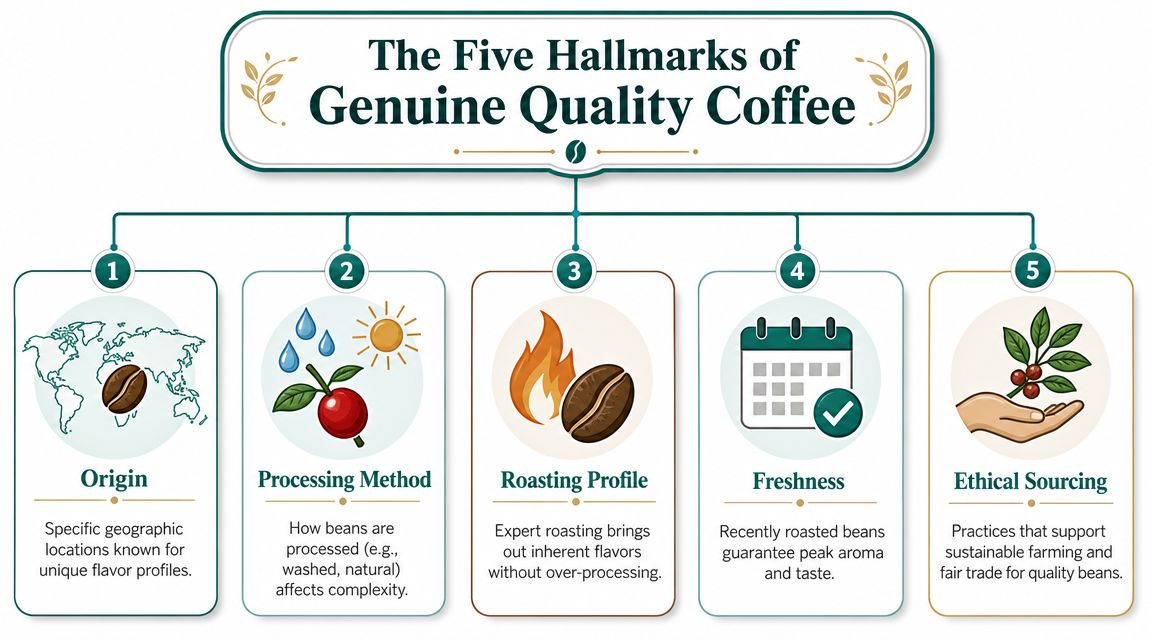
Origin shapes what the coffee can become
Coffee quality starts long before roasting. It starts where the coffee was grown, how carefully it was picked, and how much detail the seller can tell you about it.
The Japanese Coffee Co. explanation of premium coffee bean characteristics notes that higher-altitude coffees are often linked with slower cherry development, which can help preserve more complexity in the bean. For your cup, that often shows up as more definition instead of a flat, one-note taste.
You do not need a map of every coffee region. A simpler test works well. If a bag names a country, region, or farm, you have something real to evaluate. If it says only "blend" or "premium roast," you have less to work with.
For Keurig and Ninja users, that matters because these brewers do best when the coffee already has clear character. A machine cannot create detail that was never there.
Processing changes flavor before the roast ever begins
After harvest, coffee cherries have to be processed to remove the fruit and dry the seed inside. That step has a big effect on flavor.
As noted earlier, washed coffees usually taste cleaner and more defined. Natural coffees often taste fruitier, sweeter, and heavier. Two coffees from the same farm can taste surprisingly different because of processing alone.
A simple kitchen version of this idea helps:
- Washed coffee often gives you a cleaner, brighter cup.
- Natural coffee often gives you a fuller, fruit-forward cup.
- Careful processing usually signals that someone paid attention at every step.
That is useful if you brew with a reusable pod or a Ninja grounds basket. If your machine softens subtle notes, starting with a coffee that has a clear flavor direction makes it easier to notice the difference.
Roasting should clarify the bean, not cover it up
Roasting works like seasoning in cooking. Too little and the coffee can taste underdeveloped. Too much and everything starts tasting mostly of the roast itself.
Good roasting brings out sweetness, aroma, and structure that were already present in the bean. Poor roasting makes different coffees blur together. That is why a "premium dark roast" label does not tell you enough by itself.
Dark roast can still be excellent. The question is whether the roast leaves room for the coffee's original character. If every cup tastes mainly smoky or bitter, you are paying less for bean quality and more for roast impact.
Freshness decides how much flavor reaches your mug
Fresh coffee holds onto aromatic compounds that make the cup smell lively and taste interesting. As coffee sits, those compounds fade.
This point matters a lot for single-serve brewing. Keurig and Ninja machines are convenient, but they can mute delicate flavors if the coffee is already past its best window. Fresh coffee gives your brewer more to work with, which means you can get a better cup without buying new equipment.
If you want a practical way to judge what quality looks like on the bag and in the cup, this guide to coffee bean quality clues lays it out clearly.
Ethical sourcing often overlaps with better quality control
Ethical sourcing does not guarantee a great cup. It often goes hand in hand with traceability, stronger producer relationships, and more careful lot selection, all of which can support quality.
That overlap makes sense. Sellers who can tell you who grew the coffee, where it came from, and how it was handled usually know more about what they are selling. And coffee with a clear story is often easier to brew well at home, which helps you waste fewer pods, fewer grounds, and less money.
Wine and whiskey follow a similar pattern. If you like seeing how origin and craft shape flavor, this best Japanese whiskey guide shows the same idea in another drink category.
Genuine quality coffee leaves a trail. You can usually see it in the origin details, the processing method, the roast approach, the roast date, and the sourcing story before you ever press brew.
Is Expensive Coffee Really Worth the Price
Sometimes yes. Often not by itself.
People clearly are willing to pay for better coffee. The 2025 coffee market overview values the global coffee market at $138.37 billion in 2025 and projects it to reach $174.25 billion by 2030. The same source estimates the global specialty coffee market at $111.5 billion in 2025, with projections of $251.70 billion by 2033 at a 10.8% CAGR.
But your kitchen doesn't care about market size. Your cup cares about whether the coffee was brewed well.
When the higher price makes sense
A more expensive bag can be worth it when you can identify what you're paying for:
- Better selection of cleaner, more distinctive beans
- More transparent sourcing with clear origin details
- Fresher roasting and better handling
- A taste profile you prefer
If those things line up, the premium can be real.
When the premium falls apart
The bag stops being worth it when your setup cancels out the upgrade. A stale grinder, hard tap water, an overpacked reusable pod, or a dirty machine can flatten the cup fast.
That hurts single-serve brewers more than many people realize. Keurig and Ninja systems are convenient, but convenience magnifies weak brewing habits. If the water is off or the flow is restricted, expensive coffee can end up tasting ordinary.
You don't need the most expensive beans to make better coffee. You need fewer mistakes between the bag and the mug.
A smart home strategy is often cheaper than people expect. Buy coffee with real details on the bag. Then spend equal attention on freshness, water, and brew consistency. That's usually where the value shows up.
How to Brew Great Coffee with Your Keurig or Ninja
You load a pod, press brew, and hope the pricier bag you bought will finally taste different. Then the cup comes out flat, sharp, or weirdly weak. That usually means the brewer did exactly what you asked, but the setup around it was off.
The good news is simple. A Keurig or Ninja can make a noticeably better cup without turning your counter into a coffee lab. If you get the grind, fill, water, and brew size right, you can get much closer to what people mean by premium coffee while keeping the machine you already own.
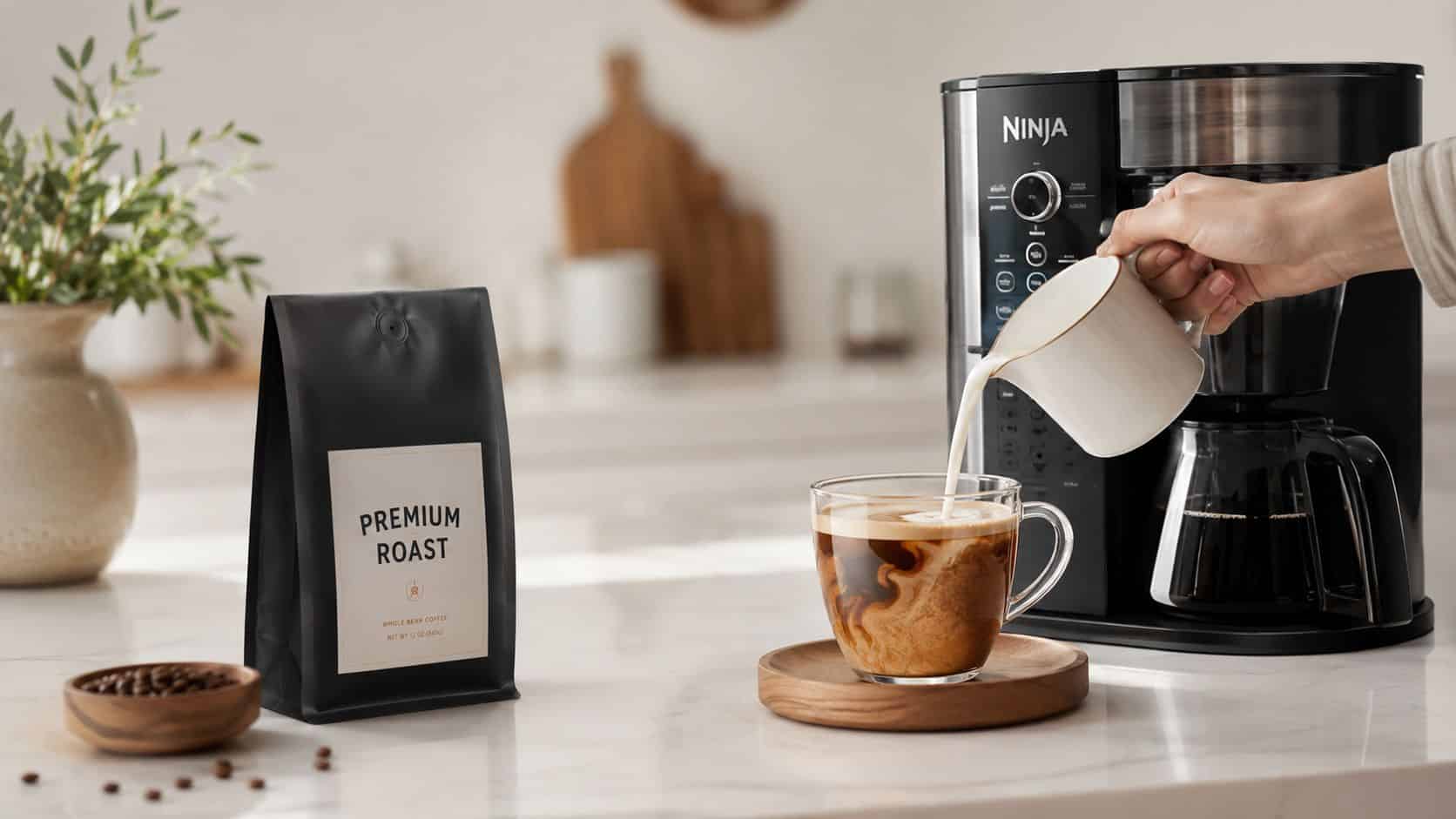
Start with the grind and pod fill
Reusable pods give you more control and cut down on waste. They also make mistakes easier to taste.
A Keurig-style pod works a lot like a small basket with limited room for water to move. If the grind is too fine, water pushes through too slowly and the cup can taste bitter or uneven. If the grind is too coarse, water slips through too fast and the coffee tastes thin. For most reusable pods, medium grind is the safest starting point.
A simple routine helps:
- Fill the pod loosely. Let the grounds sit naturally.
- Level the top. An even surface helps water reach more of the coffee.
- Leave a little headspace. Coffee needs room to expand as water hits it.
- Adjust one variable at a time. If the cup is weak, add a little more coffee. If it tastes harsh or brews slowly, use a touch less or go slightly coarser.
If you want help choosing coffee that works well in this format, this guide to ground coffee for Keurig users is a practical place to start.
Use water that tastes good on its own
Coffee is mostly water, so bad-tasting water gives you bad-tasting coffee. That sounds obvious, but it gets missed all the time.
Premium beans carry subtle sweetness, acidity, and aroma. Water with heavy minerals, chlorine, or a metallic taste can blur those details fast. If your coffee keeps tasting dull no matter which bag you buy, test with filtered water for a few days before blaming the beans. Many home brewers notice a bigger improvement from cleaner water than from spending a few extra dollars on coffee.
Match your brew size to the coffee
Single-serve machines often do better with smaller cup settings, especially when the coffee has more flavor to offer. A larger setting runs more water through the same amount of coffee, which can leave the cup tasting stretched out.
Start one size smaller than your usual setting and compare. If your machine has a strong button, try it with lighter roasts or coffees with fruitier, brighter notes. On a Ninja, brew the same coffee in both the pod side and the grounds basket if your model allows it. The pod side may win on convenience. The grounds basket often gives you more body and a fuller flavor.
This quick visual guide shows the kind of at-home setup and workflow many people use when dialing in everyday coffee:
Small habits that improve the cup and lower waste
Good coffee at home usually comes from repeatable habits, not expensive gear.
- Buy smaller bags more often. Fresher coffee usually tastes better than a giant bag that sits open for weeks.
- Use reusable pods carefully. They reduce pod waste and let you choose better coffee for less money per cup.
- Write down what worked. Coffee, fill level, and cup size matter more when you're trying to repeat a good brew.
- Keep your routine simple. Change one thing at a time so you can taste the difference.
That is the bridge between premium coffee and everyday machine brewing. You do not need a new setup. You need a setup that wastes less coffee, makes fewer brewing mistakes, and gets more flavor from the machine already on your counter.
Keep Your Machine Ready for Premium Coffee
Even excellent coffee tastes flat when it runs through a machine coated with old oils or mineral scale. That's why machine care belongs in the premium coffee conversation.
A Keurig or Ninja needs clean water paths to brew consistently. If scale builds up inside the system, water flow and brewing conditions can drift. You might notice odd bitterness, weak extraction, or cups that taste inconsistent from one day to the next.
Clean parts protect flavor
Reusable pods need a thorough rinse after every use. Old grounds cling to mesh, lids, and hinges, and yesterday's coffee oils can muddy today's cup.
Water quality matters here too. If you're troubleshooting taste, this guide to improving water quality for coffee covers the practical side of cleaner brewing at home.
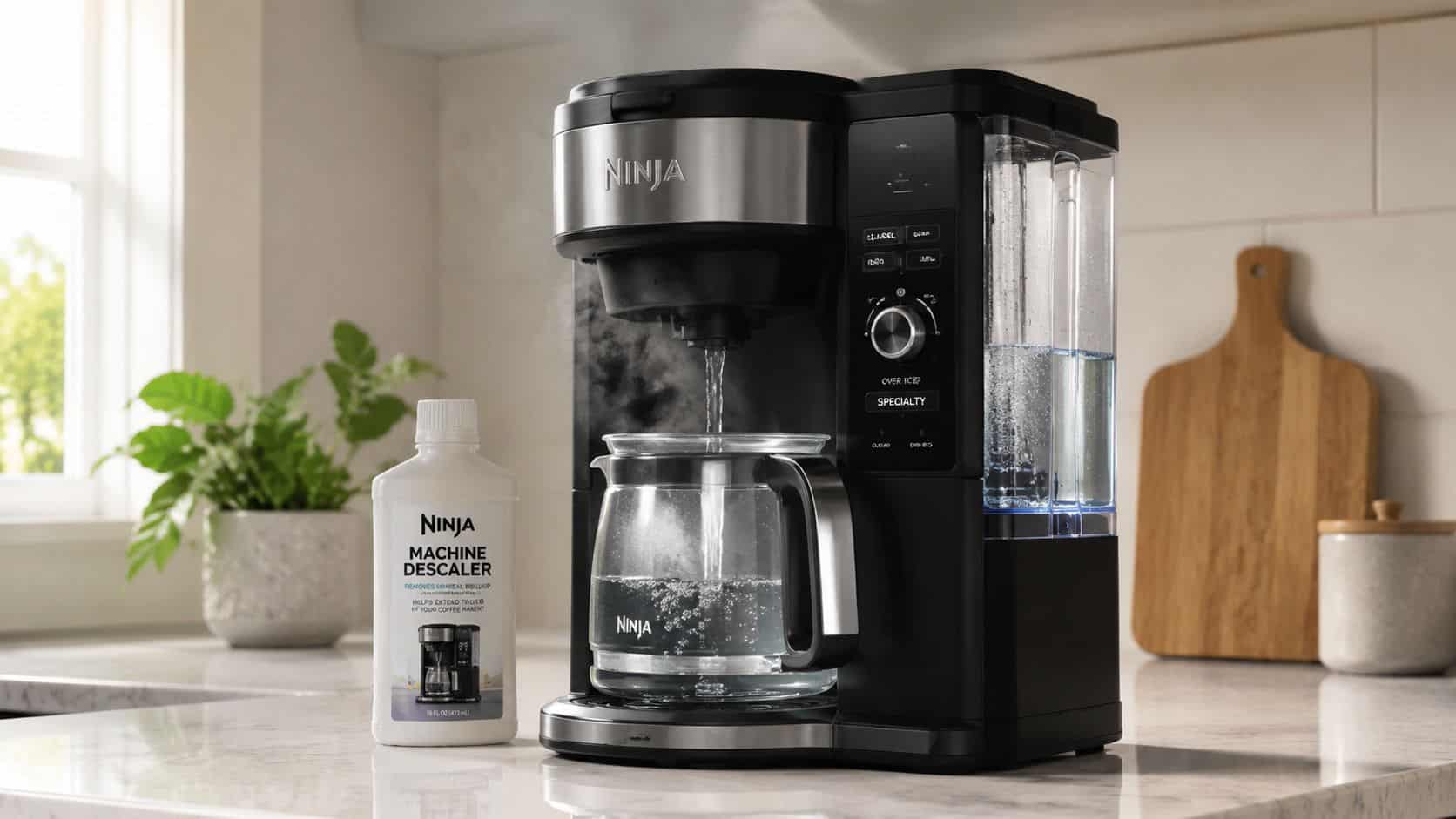
Descaling is part of taste, not just maintenance
Descaling sounds like a chore, but it protects both flavor and the machine itself. If you use filtered water, that can help reduce the problem. It doesn't replace regular maintenance.
A simple maintenance rhythm keeps things predictable:
- Rinse reusable pods right away. Dried grounds are harder to remove.
- Wipe brew areas regularly. Residue builds up faster than people think.
- Use a descaling solution as needed. This helps remove mineral buildup.
- Don't ignore off flavors. They often point to water, buildup, or old coffee residue.
A clean machine lets the coffee speak more clearly. That's the whole point of paying attention to quality in the first place.
Premium Coffee FAQs for Keurig and Ninja Owners
A few questions come up again and again once people start buying better coffee for a single-serve machine. Here are the short answers that matter most.
| Question | Answer |
|---|---|
| Will premium coffee clog a reusable K-Cup? | It can if the grind is too fine or if you pack the pod too tightly. Use a medium grind and fill the pod loosely enough for water to move through it. |
| Do I need specialty coffee to get a better cup? | No. Specialty gives you a formal quality benchmark, but many premium coffees can taste very good at home if they're fresh and brewed well. |
| Does filtered water really change the taste? | Yes. Better water often makes flavor differences easier to notice, especially with cleaner and more delicate coffees. |
| Should I use the largest cup size on my Keurig or Ninja? | Usually not for better coffee. Smaller brew sizes often taste stronger and less diluted. |
| Is “gourmet” coffee worth buying? | Maybe, but the word alone doesn't tell you much. Look for origin details, processing notes, or freshness cues instead of relying on that label. |
| Do better beans save money at home? | They can if you use them well. A reusable pod, filtered water, and a clean machine often stretch value further than blindly buying the most expensive bag. |
One common worry about reusable pods
Many Keurig owners worry that reusable pods will leak, brew weak coffee, or create a mess. Usually, the issue isn't the idea of a reusable pod. It's fit, grind, or overfilling.
If the pod fits your brewer model, closes properly, and isn't packed too tight, it can brew a strong, clean cup with less waste than disposable pods. Ninja users run into a similar issue when switching between pod and grounds modes. The machine works fine, but the coffee tastes off until the fill level and brew size are adjusted.
Better coffee at home usually comes from matching three things: the bean, the water, and the brew setup.
The simplest way to think about premium coffee is this. You're not buying status. You're buying the chance for a more flavorful cup. Whether that chance pays off depends on what you choose and how you brew it.
If you want to make your Keurig or Ninja brew better coffee with less waste, shop PureHQ Inc. for reusable K-Cups, compatible water filters, and descaling supplies that support cleaner, more consistent coffee at home.

