
Coffee Machine Care
Reusable Coffee Pods Review: The Ultimate 2026 Guide
Jun
Single-serve coffee is convenient, but convenience hides a quality problem and a waste problem at the same time. One coffee-focused industry source estimates 13 billion K-Cups are thrown into landfills each year, and it also notes that switching to a reusable pod can help a one-cup-a-day drinker avoid 365 disposable pods annually while cutting about 15 kg of greenhouse gases through that change, as explained in Crema Joe's reusable pod guide.
That statistic gets people interested in refillable pods. The first bad cup usually kills that enthusiasm. Weak brew, muddy flavor, grounds in the mug, overflow in the brewer, or a pod that technically fits but still performs badly. That's where most reusable coffee pods review articles fall short. They stop at compatibility and sustainability.
Daily use is less forgiving. A reusable pod has to brew cleanly, seal properly, rinse fast, and keep doing that week after week. If it doesn't, the money savings and waste reduction stop mattering because the cup itself isn't good enough to repeat.
Your Daily Coffee Creates a Mountain of Waste
One pod looks trivial. A year of daily pod brewing does not.
The waste problem is easy to ignore because it leaves the kitchen one small cup at a time. By the end of the week, though, single-serve brewing has already produced a stack of plastic, foil, filters, and coffee residue that had one use and no future in your machine. That is the part glossy product pages avoid. Convenience feels clean at the moment you brew, but the system depends on a constant stream of throwaway parts.
That waste burden is one reason reusable pods keep attracting interest. They cut out the repeat purchase of disposable capsules, and they let you use the same coffee you would brew any other way. If you want another practical view of the single-serve tradeoff, Cumbre Coffee's take on coffee pods is worth reading.
The catch is simple. Waste reduction only matters long term if the reusable pod earns a permanent spot in your routine.
I have seen the same pattern with cheap refillable pods over and over. Buyers start with good intentions, then run into a pod that is annoying to fill, fussy to clean, or inconsistent enough that the coffee tastes worse than the disposable capsules they were trying to replace. Once that happens, the reusable pod ends up in a drawer and the machine goes back to single-use brewing.
The day-to-day failures are usually predictable:
- Weak extraction: The pod accepts coffee, but the basket design lets water pass too fast for a full, satisfying cup.
- Sediment in the mug: Fine mesh and poor lid design can let small grounds through, especially with darker roasts or finer grinds.
- Mess after every brew: Spent coffee packs into corners, lids trap residue, and rinsing takes longer than many buyers expect.
- Performance drift over time: Hinges loosen, seals wear out, and warped parts change how the pod sits in the brewer.
That last point matters more than many reviews admit. A reusable pod is not only a waste decision. It is also a maintenance decision. If cleanup takes two minutes instead of twenty seconds, and if the pod needs regular scrubbing to keep brewing properly, that labor becomes part of the overall cost.
Some households try to reduce the footprint of single-use brewing by recycling capsules instead. That is better than throwing every pod straight in the trash, and PureHQ explains how K-Cup recycling works in practice. Recycling still leaves you buying, sorting, and disposing of a product designed for one brew at a time.
A good reusable pod changes that equation. A bad one just swaps landfill waste for weak coffee and extra sink work. That trade-off is the whole reason brew quality and upkeep matter as much as sustainability in any serious reusable coffee pods review.
Why Most Reusable Pod Reviews Miss the Point
Most reviews ask the wrong questions. They ask whether the pod fits the machine and whether it costs less than disposable capsules. Both matter, but both are low bars. A pod can click into place, brew without an error message, and still make disappointing coffee.
The category is too large for that kind of shallow review to be useful. The broader coffee pods market reached US$35.3 billion in 2024 and is forecast to hit US$71.2 billion by 2034 at 7.3% CAGR, while the global coffee capsule market was valued at over US$25 billion in 2020 and was projected to grow 7% year-on-year through 2026, according to figures summarized by Perfect Daily Grind. Buyers are putting serious money into pod-based brewing systems. Cup quality should be the center of the conversation.
Compatibility is not the same as extraction
This is a significant blind spot. Independent user testing on brewing forums has reported noticeably lower extraction with some reusable K-Cups, which means a pod can “work” mechanically while still brewing poorly, as discussed in this Home-Barista thread on reusable K-Cups.
That distinction matters more than most product listings admit. Extraction is where flavor comes from. If the pod design lets water bypass the bed of coffee, the result is often flat, sour, or watery. If the mesh is too restrictive or the grind is too fine, the machine may struggle to push water through cleanly, which leads to slow brewing, clogging, or overflow.
What a useful review should actually judge
A serious reusable coffee pods review should focus on four things.
| What to judge | Why it matters in daily use |
|---|---|
| Extraction performance | Determines whether the coffee tastes balanced or weak |
| Seal and fit | Prevents leaks, grounds in the cup, and machine errors |
| Material and construction | Affects durability, heat resistance, and how easy the pod is to clean |
| Maintenance burden | Decides whether you'll keep using it after the novelty wears off |
Good reusable pods don't just fit a brewer. They manage water flow well enough to produce repeatable coffee.
The taste issue is why people often disagree so sharply in reviews. One user fills the pod with a coarse grind and gets a weak cup. Another packs the same pod tightly with a finer grind and gets clogging. The pod didn't change. The tolerance for user error did.
The hidden criteria buyers feel but reviews rarely explain
The best reusable pods give you a narrow but workable sweet spot. They don't demand perfect barista technique, but they do reward basic consistency. That means:
- Medium-fine coffee usually works better than very coarse coffee
- Overfilling often hurts more than underfilling
- A clean rim and a clean puncture area reduce sealing issues
- Pod geometry affects flavor more than marketing copy does
That's the point most list-style reviews miss. The question isn't whether a reusable pod can brew coffee. The question is whether it can brew coffee well enough, often enough, that you'll keep reaching for it.
Reusable Pod Showdown Materials Brews and Build Quality
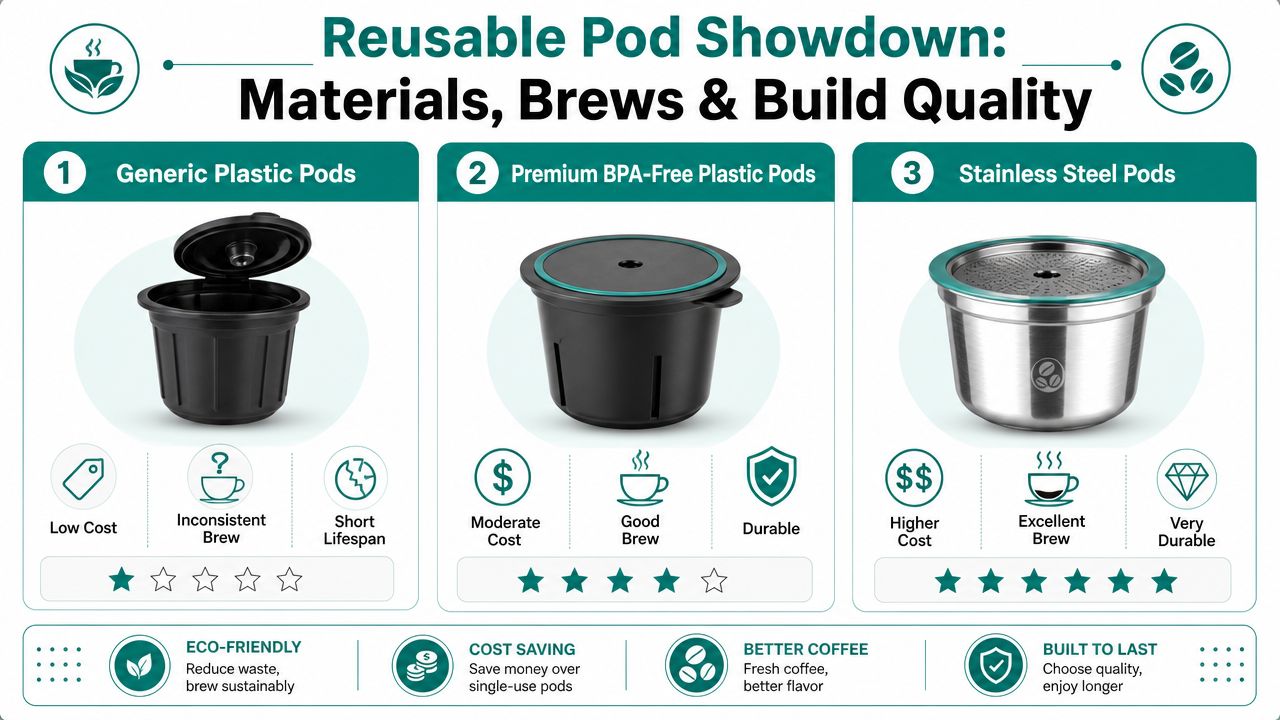
The market breaks into three broad camps. Cheap generic plastic pods, better-designed BPA-free plastic pods, and stainless-steel systems. They don't behave the same way in the cup, and they definitely don't age the same way on a kitchen counter.
Here's the side-by-side view first.
| Pod type | Upfront feel | Brew behavior | Common downside | Best fit |
|---|---|---|---|---|
| Generic plastic | Light, basic, often inconsistent | Can brew acceptably, but results vary a lot | Seal issues, flex, short lifespan | Occasional use |
| Premium BPA-free plastic | More precise fit and cleaner lid closure | Usually easier to dial in | Still needs regular cleanup | Daily users who want convenience |
| Stainless steel | Solid, rigid, heat-resistant | Often offers stronger body when dialed in well | Cleanup can take longer, extraction can still vary by machine | Users who prioritize durability |
Generic plastic pods are cheap for a reason
The low end of the category usually gets one thing right. Price. Everything else is a gamble.
These pods often rely on thinner plastic, looser hinge tolerances, and seals that wear faster. In practice, that shows up as small fit problems that become big daily annoyances. The lid doesn't close squarely. The rim traps coffee grounds. The basket flexes when you press it shut. None of that sounds dramatic until you're cleaning overflow from your drip tray.
They can still work if you're patient and if your brewer happens to tolerate them well. But they rarely give the kind of consistency that makes refillables feel easier than disposables.
Better plastic pods usually win on ease of use
A well-made BPA-free plastic pod often strikes the easiest balance for most households. It's lighter than steel, easier to rinse quickly, and less intimidating for people who don't want to fuss with brewing variables.
This is also where filter accessories can make a real difference. A thin paper liner can help catch fines, reduce sludge in the cup, and make cleanup faster because you're lifting out a puck-like spent dose instead of scraping wet grounds from a mesh basket.
- Cleaner cup: Paper liners can reduce the amount of sediment that passes through.
- Less scrubbing: They make it easier to empty grounds without digging into corners.
- Better flow control: In some pods, a liner can slightly stabilize how water moves through the coffee bed.
That doesn't magically fix a badly designed pod, but it can make a decent one easier to live with.
Stainless steel lasts, but it doesn't solve every brewing problem
Independent reviews describe stainless-steel reusable capsules as durable and heat-resistant, and note that well-made versions can be used for years while reducing waste and cost compared with single-use capsules, as covered in this independent reusable capsule review video.
That durability is real. Steel pods feel better in the hand, resist warping, and generally hold up to repeated use better than flimsy plastic. But steel is not an automatic quality upgrade in the cup. Some stainless pods still under-extract if the basket design, mesh pattern, or lid geometry doesn't work well with your machine's water delivery.
If a stainless pod gives you thin coffee, the problem usually isn't the metal. It's the flow path.
What actually works in daily use
After testing enough of these, the winners tend to share the same boring strengths:
- A lid that closes positively
- A rim that stays clean without trapping grounds
- A basket shape that doesn't choke flow
- Enough tolerance that small grind changes don't ruin the cup
One practical middle-ground option in this category is a reusable pod system from PureHQ, which offers Keurig-compatible refillable pods and paper liners for users who want easier cleanup and cleaner filtration. That setup makes sense for households that want repeatable daily use without switching to a fully stainless system.
Calculating the True Cost of Your Reusable Pod
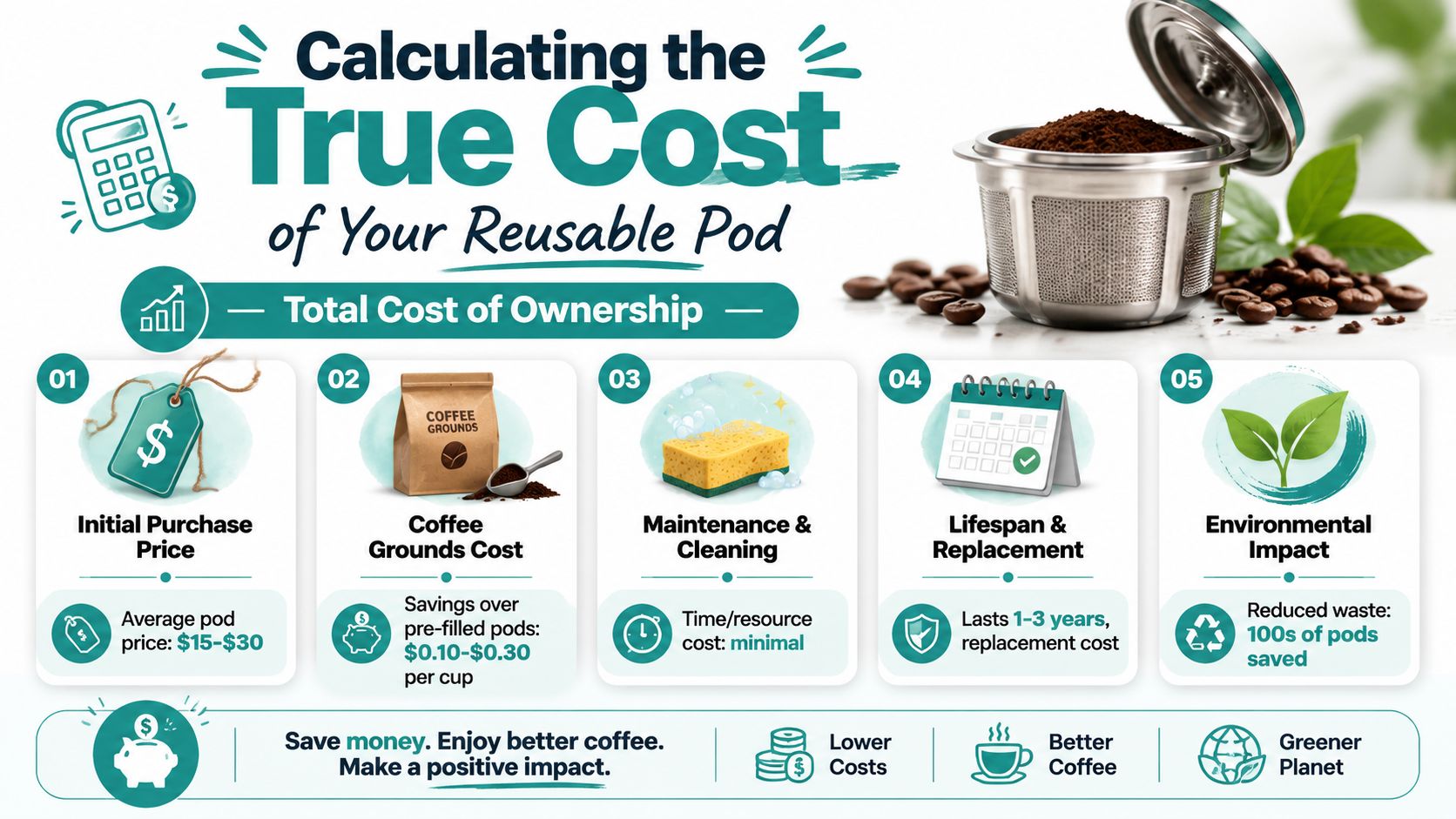
A reusable pod can save money, but only if you price the full routine, not just the pod in the cart. That means coffee, cleanup, replacement parts, descaling, and the simple question of whether the pod is easy enough to keep using every morning.
One of the better ownership-focused explainers on this topic, PureHQ's reusable coffee pod guide, puts the emphasis in the right place. Long-term cost is shaped by upkeep, residue buildup, water quality, and how the pod behaves after months of repeated use, not only by the first purchase.
The costs people forget to count
The pod is the cheap part. Friction is what gets expensive.
A pod that saves money on paper can still lose on total ownership if it takes too long to empty, traps oils in the mesh, or needs fiddly accessories to brew a decent cup. I have found that the most frustrating pods are not always the worst-built ones. They are the ones that add one extra annoying step every single day.
| Cost area | What it looks like in real life |
|---|---|
| Cleanup time | Rinsing mesh, emptying grounds, wiping the rim |
| Residue management | Coffee oils build up on pod surfaces and machine needles |
| Accessory use | Paper filters, brushes, or replacement lids for some systems |
| Machine care | Descaling and cleaning become more important if flow slows down |
Time matters here. If cleanup takes 20 seconds, few people care. If it turns into scrubbing wet grounds out of a fine mesh basket before work, the cheaper system starts to feel expensive fast.
Water quality changes the math
Hard water makes reusable pods less forgiving. Scale slows flow, throws off brew consistency, and can make a decent pod seem worse than it is. Refillable capsules depend on steady water movement through fresh grounds, so any machine weakness shows up sooner.
This short video gives a practical look at upkeep from the machine side:
Descaling belongs in the cost calculation for anyone who uses refillables daily. Cleaning solution, tablets, and the time spent running maintenance cycles are part of getting a good cup over the long haul. Ignore that, and brew quality drops before the savings feel meaningful.
The cheapest pod setup on paper becomes expensive fast if it turns your machine into a high-maintenance mess.
A realistic way to judge savings
Skip the fantasy spreadsheet. Use a test that matches daily life.
- How much cleanup will you tolerate before you start avoiding the pod?
- Will you keep up with rinsing and descaling when flow starts to slow?
- Does the pod still make a cup you want to drink after the novelty wears off?
That third point is where plenty of reviews miss the plot. Waste reduction matters, but brew quality and maintenance determine whether a reusable pod stays in rotation. If the coffee is weak or the cleanup gets old, people go back to disposables, and the low-cost promise disappears with them.
The Best Reusable Pod for Your Brewing Style
There isn't one universal winner because the right pod depends on how you brew and how much hassle you'll tolerate. The wrong way to shop is to chase the most premium-looking option. The right way is to match the pod to your routine.
If you want the fastest weekday routine
Go with a well-designed plastic reusable pod. This style usually gives the easiest fill, close, brew, dump, rinse cycle. It's the least fussy option for people who drink coffee before work and don't want a miniature extraction experiment before breakfast.
Use a coffee that's ground for drip rather than espresso-fine. Fill the basket evenly, level it off, and don't pack it hard. Most weak cups from reusable pods come from either too coarse a grind or too much empty headspace inside the pod.
If you care most about durability
Choose stainless steel. It feels better built because it usually is better built. If you brew several times a day, durability matters, and steel handles repeated opening, rinsing, and heat exposure well.
That said, be honest about cleanup. Stainless systems often ask for a little more care if fine grounds cling to the mesh. They suit users who don't mind spending a bit longer at the sink in exchange for a sturdier product.
If you want the easiest all-around balance
For most Keurig and Ninja users, the sweet spot is a well-fitting reusable pod with optional paper liners and a straightforward cleaning routine. That's why balanced systems tend to outperform extremes in real kitchens. They don't chase the absolute toughest build or the absolute cheapest price. They are more practical for daily use.
A practical accessory ecosystem matters. If you can pair the pod with paper filters, descaler, and cleaning tablets from the same source, upkeep gets simpler. You're not forced to cobble together a routine from random parts.
Here's the buyer shortcut.
- Busy household: Pick the pod that rinses quickly and seals cleanly.
- Flavor-focused user: Pick the pod with the most predictable extraction on your specific machine, even if cleanup takes longer.
- Office or shared kitchen: Favor durability and easy training. Everyone should be able to use it without guessing.
- Budget-first buyer: Avoid the very cheapest generic pod if poor fit will send you back to disposables.
The objection most people have before buying
Leaks and bad fit. That's the big one.
A good reusable pod should seat cleanly, close firmly, and leave little room for user error. If you've had a bad experience before, don't assume all refillables are the same. Many failures come from loose tolerances and poor sealing surfaces, not from the reusable concept itself.
The easiest way to improve results from day one is simple:
- Use fresh coffee
- Stay away from ultra-fine espresso grinds
- Fill below the rim
- Wipe the edge before closing
- Rinse immediately after brewing
Follow those five habits and most pod systems perform noticeably better.
Troubleshooting Common Reusable Pod Frustrations
Reusable pods fail in predictable ways. The cup turns weak, grounds slip through, or the brewer runs slow. In nearly every case, the problem comes back to three variables: grind size, dose, and flow.
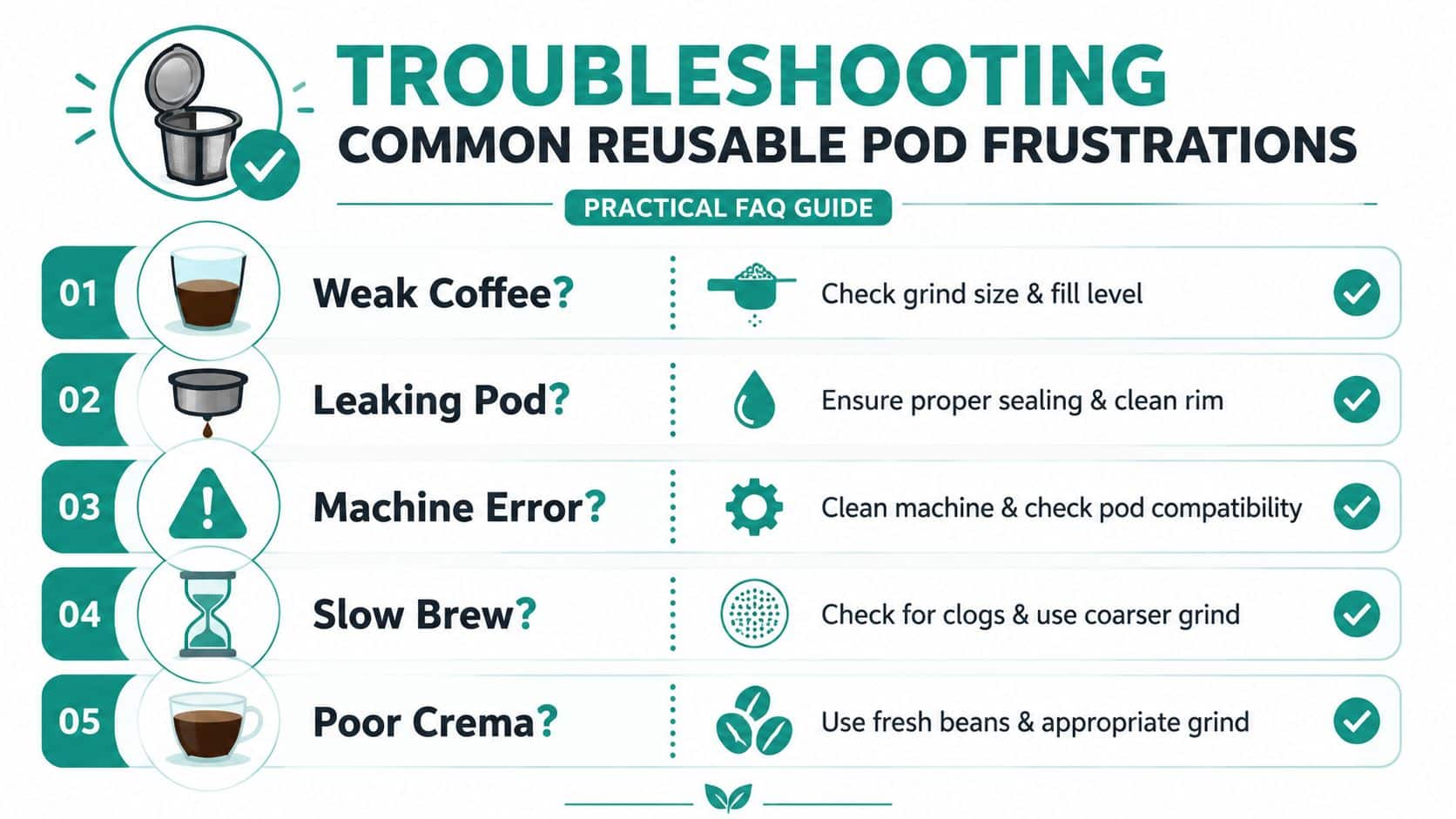
For machine-specific setup help, PureHQ has a useful guide to reusable K-Cup tips that covers fit, fill, and common user errors.
The key is to change one variable at a time. If you adjust grind, dose, and fill level in the same brew, it becomes hard to tell what fixed the cup and what made it worse.
Why is my coffee weak
Weak coffee usually means the water is moving through the pod too easily or not contacting enough coffee evenly. I see this most often with a coarse grind, an underfilled basket, or a coffee bed that is mounded on one side.
Work through these steps in order:
- Grind slightly finer
- Fill the pod evenly from edge to edge
- Reduce excess headspace inside the basket
- Close the lid without packing the grounds down hard
A tighter puck is not the goal here. Single-serve brewers need enough resistance to slow the water, but not so much that flow chokes off. Reusable pods have less built-in control than sealed disposable pods, so small grind changes make a bigger difference than many buyers expect.
A reusable pod works best with an even coffee bed and steady flow, not a compressed puck.
Why are grounds ending up in my mug
This usually points to a grind issue or a sealing issue. Fine particles can slip through some mesh designs, especially after the screen starts holding old coffee residue. Stray grounds on the rim can also prevent the lid from closing cleanly.
Check these first:
- Wipe the rim before closing: A few loose grounds are enough to create a poor seal.
- Go one step coarser: Very fine drip or espresso grinds are the usual culprit.
- Rinse the mesh right after brewing: Dried fines cling to the screen and are harder to remove later.
- Use a paper liner if your pod allows it: This often improves cup clarity and cuts cleanup time.
This is one of those trade-offs many reviews skip. The mesh pod that gives a heavier body can also let more sediment through. The cleaner cup often comes from adding a paper filter, but that adds a small ongoing cost.
Why is the machine overflowing or brewing slowly
Slow brewing and overflow usually mean restricted flow. The pod may be overfilled, the grind may be too fine, or the machine may have oil buildup in the brew path.
Start with the pod before blaming the machine.
| Symptom | Likely cause | Fix |
|---|---|---|
| Slow drip | Grind too fine or mesh partly clogged | Rinse thoroughly and grind slightly coarser |
| Overflow | Pod overfilled or brew path restricted | Lower the fill level and clean the brewer |
| Machine struggles to seat the pod | Lid misaligned or poor pod fit | Re-seat carefully and confirm model match |
If this keeps happening with the same pod and coffee, inspect the brewer itself. Reusable pods save money over time only if maintenance stays manageable. A pod that needs constant fiddling, plus extra cleaning cycles to keep the machine flowing, can erase part of that value.
Why doesn't the coffee taste as full as a disposable pod
That can be normal. Disposable pods are built around a fixed grind, fixed dose, and a tightly controlled internal shape. A reusable pod gives you more control, but it also puts the tuning work on you.
Start with the coffee. Fresh beans help, but so does picking the right grind for the pod's mesh and your machine's pressure profile. Then test one change per brew:
- Adjust grind one notch at a time
- Increase the dose slightly without overpacking
- Keep the pod screen clean
- Brew the same coffee for a few rounds before changing beans
New users often get frustrated during the first few brews because they change everything at once. Once the pod is dialed in, day-to-day use gets much more predictable, and that is the point that matters. A reusable pod is only a good long-term buy if it can deliver a repeatable cup without turning cleanup and troubleshooting into part of the morning routine.
As noted earlier, PureHQ Inc. offers reusable pods, paper liners, descalers, and cleaning supplies for brewers that need a lower-maintenance setup.

