
Coffee Machine Care
Unbleached Paper Coffee Filters: A Buyer’s Guide
Sep
A filter that looks “natural” isn't automatically healthier, and a white filter isn't automatically worse. In a comparative migration study of seven commercially available coffee papers, all tested filters were judged safe and free of relevant hazardous substances, while measured migration from the bleached sample was higher than from the unbleached samples (Vienna University of Technology research). The more useful question is how paper processing, filter structure, and brewer fit affect your coffee.
Many home brewers worry that switching to unbleached paper coffee filters will add a cardboard taste, slow the brew, cause leaks, or make a Keurig reusable pod awkward to use. Those concerns make sense. The filter sits directly between your grounds and your cup, so a small change in paper thickness or shape can alter clarity, body, sediment, and cleanup.
Why Your Coffee Filter Choice Matters More Than You Think
A brown filter can look like a downgrade if you're used to bright white paper. In practice, color alone doesn't determine brew quality. Paper thickness, porosity, microperforation, and the way the filter sits in your brewer usually matter more than whether the sheet appears tan or white.
The filter controls which coffee particles and oils reach the cup. A tighter structure can produce a cleaner, lighter-bodied brew, while a more open or perforated structure may allow more oils and fine particles through. Filter geometry matters just as much. A cone that collapses against one side of the holder won't draw water evenly, and a basket filter that doesn't sit flat can encourage bypass, where water travels around the grounds instead of through them.
What changes in the cup
You'll usually notice the filter through four practical results:
- Clarity: Paper retains many fine particles and coffee oils, producing a cleaner profile than metal filtration.
- Body: A filter with stronger oil retention can make the cup feel lighter and brighter.
- Flow: Paper grammage, thickness, and porosity influence how quickly water passes through.
- Cleanup: A correctly fitted paper filter keeps spent grounds contained and reduces the amount of residue reaching the brew basket.
Research on coffee-filter structure measured cafestol at 1.62–2.98 mg/L and kahweol at 0.73–1.96 mg/L across tested brews, with the highest diterpene levels appearing in filters with microperforations (PubMed study on filter structure and coffee diterpenes). The same research linked porosity and coffee-particle size to diterpene retention, which explains why two filters with the same color can brew differently.
Practical rule: Treat the filter as part of your brewing recipe, not as disposable packaging.
Your coffee setup also includes the serving side. If you're stocking a small office, event station, or home gathering, bulk 8 oz cups by Monopack ltd can help match cup size to the amount your brewer serves. The cup won't fix a poor extraction, but the right serving format keeps the finished brew practical and consistent.
What Unbleached Paper Coffee Filters Actually Are
Unbleached paper coffee filters are made from paper pulp that keeps its natural brown color because the manufacturer skips the whitening stage. The paper still goes through substantial processing, including pulping, forming, drying, and preparation for food contact. “Unbleached” describes one manufacturing choice. It doesn't mean the paper is raw, organic, or free from every chemical used during production.
Bleached filters receive an additional whitening or lightening treatment. Some modern products use oxygen-based processes, while older discussions often focus on chlorine bleaching. Green Seal's paper-products standard states that covered products must not be whitened or bleached through chemical processes, and where virgin pulp is bleached, chlorine and chlorine derivatives must not be used (Green Seal food-service paper standard).
That distinction helps clear up a common misunderstanding. A white filter isn't automatically a filter full of household bleach, and a brown filter isn't automatically chemical-free. A reputable filter intended for brewing should meet applicable food-contact requirements. One published product data sheet identifies coffee-filter paper as capable of complying with U.S. FDA regulations 21 CFR 176.170 and 21 CFR 176.180 (coffee-filter paper food-contact data sheet).
Why the brown color appears
The natural color comes from the paper pulp rather than a final whitening step. That can reduce processing associated with whitening, which is why unbleached paper often appeals to buyers who want a simpler material story. It doesn't prove that the product has a lower total environmental impact, because pulp sourcing, manufacturing energy, packaging, shipping, and disposal also affect the overall result.
Modern paper filtration itself began with Melitta Bentz's commercial patent on July 8, 1908. By December of that year, Bentz had founded the company that became the Melitta brand, establishing the origin of modern paper coffee filtration (history of the bleached and unbleached filter debate).
Commercially significant unbleached filters arrived much later. Swed Filter introduced unbleached coffee filters in Europe during 1988–1989, and Melitta introduced filters made from unchlorinated pulp in 1989, later adding micro-fine perforations in 1999 (Swed Filter company history). The timeline matters because unbleached paper is an evolution of the original paper-filter system, not a separate invention from 1908.
Unbleached vs Bleached Paper Filters at a Glance
Six practical questions separate a useful comparison from a color-based marketing claim: taste, environmental processing, cost, flow, particle retention, and food-contact suitability. Brown paper is not automatically safer or greener, and white paper is not automatically harsher. The right choice depends on the paper's construction and how it fits your brewer.
Unbleached vs Bleached Paper Filters Quick Comparison
| Factor | Unbleached Paper Filter | Bleached Paper Filter |
|---|---|---|
| Taste profile | May add a faint paper note if used dry. A hot-water rinse usually reduces it. | Often tastes neutral from the first brew, especially after rinsing. |
| Environmental impact | Skips the whitening stage, which can reduce one processing step. Total impact still depends on pulp, energy, packaging, transport, and disposal. | Uses a whitening stage. Oxygen-based processing and food-contact compliance matter more than the white color itself. |
| Average cost per box | Price varies with brand, format, paper grade, and package size. Less processing does not guarantee a lower shelf price. | Price varies with the same factors. Specialty shapes and branded papers can cost more regardless of whitening. |
| Brewing performance | Can brew cleanly when porosity, thickness, strength, and fit suit the brewer. | Can brew cleanly under the same conditions. Paper specifications and fit control flow, sediment, and retention. |
| Flow rate | Dense or thick paper may slow drawdown, particularly with a fine grind. | More open or thinner paper may flow faster, although the grade determines the actual result. |
| Sediment and machine cleanliness | Properly fitted paper retains grounds and many fine particles, helping limit residue in the brewer. | Provides the same basic filtration function when its structure and fit are comparable. |
A filter's color is a weak predictor of brewing behavior. In a cone or flat-bottom drip machine, fit and paper structure determine whether water passes evenly or finds a quick path around the grounds. The same principle applies to a reusable K-Cup liner. A paper liner that is too dense can slow a Keurig-style brew, while one that is too loose or poorly supported may allow fines into the cup.
The health conclusion should stay measured. Comparative migration evidence found all tested papers safe. Migration from the bleached sample measured higher than migration from the unbleached samples, but that result does not establish a broad physiological advantage for unbleached filters. (comparative coffee-filter migration study)
What you'll notice at the counter
A dry unbleached filter can give the first drops a paper-like aroma or taste. Rinsing with hot water removes much of that impression and also preheats the filter holder. A bleached filter is convenient if you want a neutral paper character without adding that preparation step. For a Keurig reusable K-Cup, a brief rinse is still useful, but avoid leaving excess water that changes the coffee-to-water balance.
Unbleached paper has a reasonable environmental advantage because it omits whitening. That advantage is limited, not a guarantee that every brown filter has a lower total impact. Check food-contact information, sourcing details where available, and disposal guidance that matches your local system.
Market demand is shifting toward unbleached, biodegradable, and compostable filter papers. A market projection estimates growth in the global coffee-filter-paper market from USD 649.2 million in 2026 to USD 979.6 million by 2036, with unbleached variants gaining share in Asia and eco-friendly materials identified as a trend (Future Market Insights coffee-filter-paper market projection). Those figures describe market direction, not proof that one paper makes better coffee or suits every brewer.
Matching Filter Shape and Size to Your Brewer
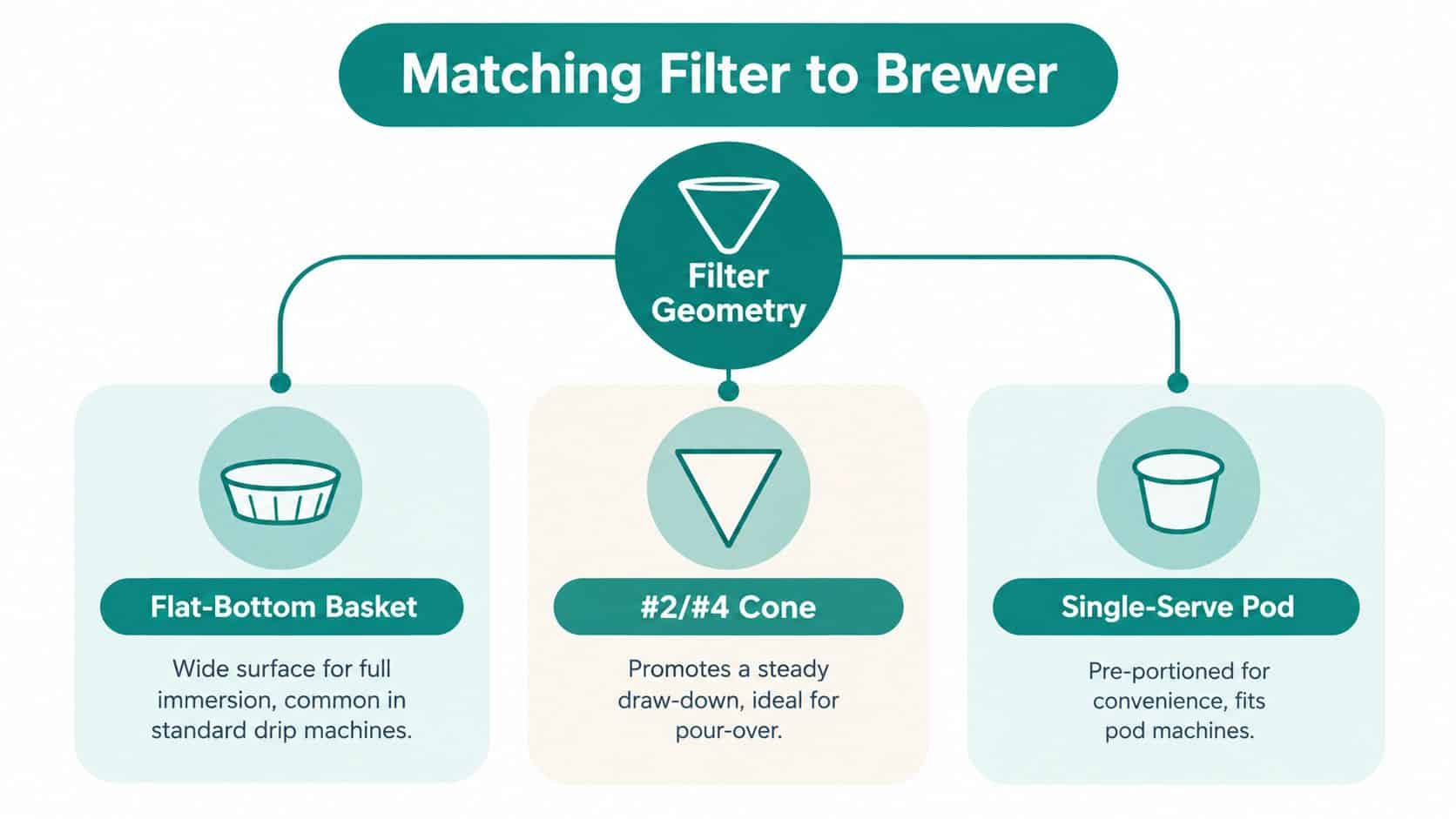
A perfect paper in the wrong shape still makes a poor filter. Basket and cone filters aren't interchangeable: basket filters suit flat-bottom drip machines, while cone filters fit V-shaped holders and use standardized sizes such as #1, #2, #4, and #6 (guide to basket and cone filter compatibility).
Flat-bottom baskets
A flat-bottom basket needs a filter with a broad base and sides that rise evenly. The paper should sit flush against the basket rather than bunching in the center. This format is common in standard automatic drip machines, including carafe brewers that use a round or fluted basket.
A cone filter folded into a flat basket can leave gaps along the edges. Water may then run down the open side, carrying fewer dissolved coffee compounds from the grounds. If you're replacing a standard basket, check whether the old filter has a flat base before ordering.
#2 and #4 cones
Cone filters need to drape around the V-shaped holder without collapsing. A #2 cone is smaller than a #4 cone, so don't assume you can fold a larger filter into place and get the same result. Oversized paper can buckle, while undersized paper may fail to reach the holder's sides.
For a visual explanation of cone geometry and common brewer pairings, this coffee-maker cone-filter guide offers a useful reference before you buy a full package.
Reusable K-Cup liners
A paper liner inside a reusable K-Cup behaves like a small basket inside a pod chamber. It needs to sit fully inside the reusable pod, leave the lid and puncture area unobstructed, and hold the grounds without folding into the water path. Skipping the liner can let more fine grounds enter the pod outlet and may make cleanup less convenient.
Confirm compatibility with the reusable K-Cup design rather than assuming every small paper filter fits every pod. Insert one filter, add a modest amount of coffee, close the lid without force, and check that the liner hasn't folded over the rim.
The simplest buying check is physical:
- Read the printed size: Match #2 or #4 to the brewer documentation, not just the shape in a product photograph.
- Check the manual: Manufacturers often identify basket, cone, or pod compatibility in the accessory section.
- Test one filter: Look for flush contact with the walls and no folded corners before opening the rest of the box.
- Run a water-only check: Watch for leaks, collapse, or unusual bypass before brewing your preferred beans.
The filter should work with the machine's geometry first. Paper color comes after that.
The Case for Making Unbleached Your Daily Default
For ordinary home drip and pour-over brewing, unbleached paper is a sensible low-regret default. It avoids the whitening stage, offers the natural brown appearance many buyers prefer, and can deliver the same clean filtration people expect from paper when the grade and fit are right.
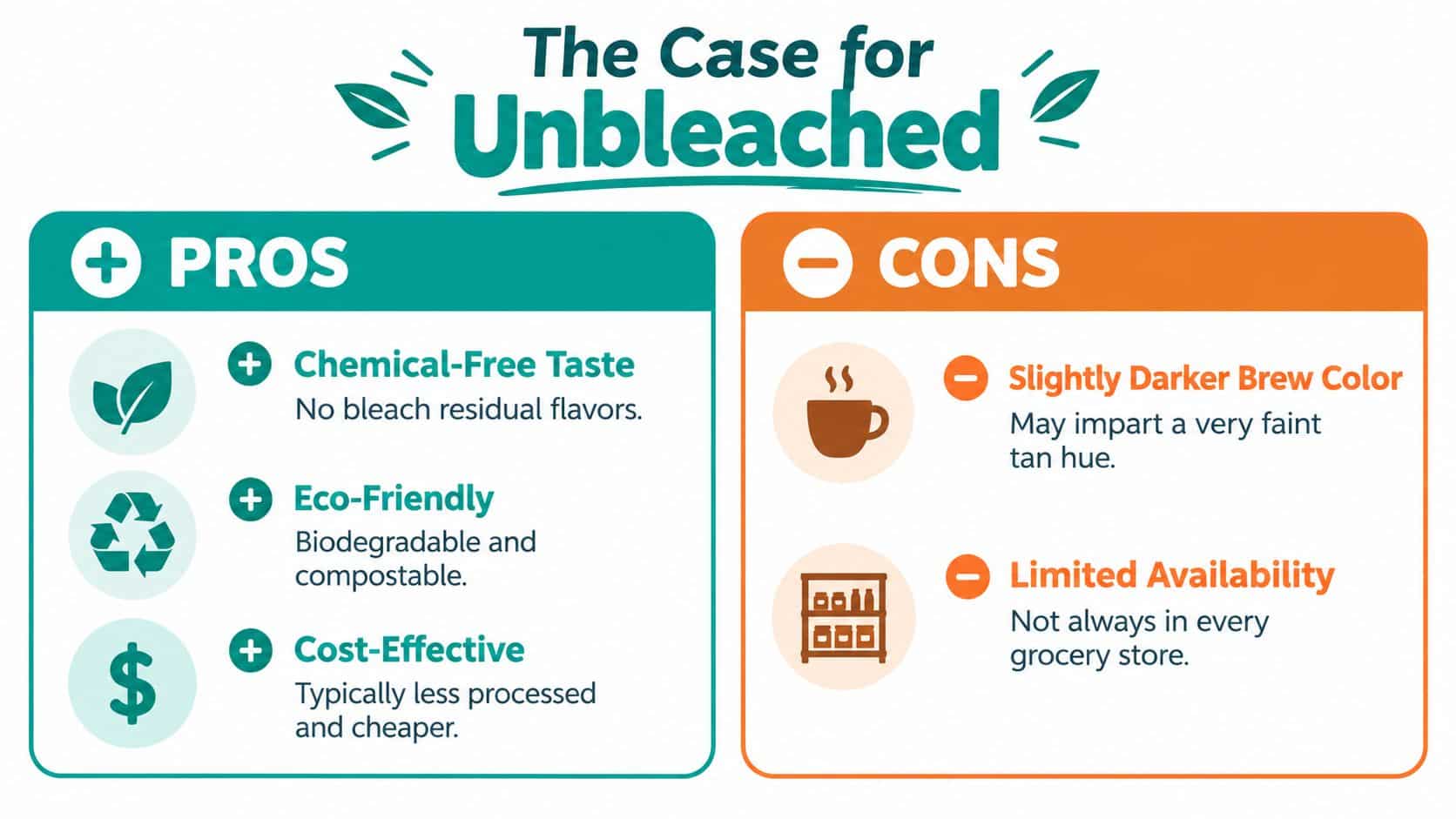
The environmental case is narrower than many product pages suggest. Skipping whitening means less processing at that stage, which supports an environmental preference for unbleached paper. But the full result also depends on the pulp source, manufacturing conditions, packaging, transportation, and whether your local waste system accepts used filters.
Why many home brewers choose brown paper
Unbleached filters suit people who want:
- A simpler processing choice: The paper keeps its natural color because the whitening stage is omitted.
- A clean, low-sediment cup: Paper retains grounds and many fine particles when it fits correctly.
- A practical composting option: Ordinary paper filters may break down in suitable composting conditions, but local rules and product materials still control disposal.
- A visible sustainability signal: The brown appearance communicates a preference for less processing, without proving every environmental outcome.
Don't buy unbleached filters because brown paper promises a guaranteed health improvement. Neutral guidance indicates that modern white filters are generally oxygen-bleached rather than chlorine-bleached, and that the health difference is usually negligible (discussion of health differences between filter types).
A sensible default is one you can use consistently, rinse easily, fit correctly, and dispose of responsibly.
Bleached filters still have advantages. They're often more forgiving when you skip rinsing, and some drinkers prefer their neutral appearance and taste. A fine stainless-steel filter can also make more sense for someone who already owns one, prefers a fuller cup, and wants to avoid buying disposable paper.
Your beverage routine may influence the decision too. If you're comparing coffee with matcha for focus or energy, a separate caffeine and L-theanine guide can help you evaluate the drink itself rather than expecting filter color to determine how you feel.
For buyers who prioritize lower-waste brewing, biodegradable coffee filters are another category to evaluate. Check the actual material and disposal instructions instead of treating “biodegradable” as a universal composting guarantee.
Paper Filters vs Reusable Mesh and Stainless Steel
Paper and metal filters don't produce the same style of coffee. Unbleached paper retains oils and fine particles, which usually creates a brighter, cleaner cup. Fine mesh and stainless steel let more oils through, giving the brew more body and sometimes more sediment.
Unbleached Paper vs Mesh vs Stainless Steel Filters
| Filter Type | Cost per Cup | Waste Profile | Flavor Result | Maintenance |
|---|---|---|---|---|
| Unbleached paper | Requires an ongoing supply of filters. The actual cost depends on package price and how often you brew. | Creates a used paper filter and grounds after each brew. Paper may be compostable under suitable conditions. | Cleaner, lighter-bodied profile with stronger oil and fine-particle retention. | Remove, discard or compost where accepted, then rinse the holder if needed. |
| Fine reusable mesh | No disposable filter purchase after the initial buy. | Reduces paper waste, while spent grounds still remain. | Fuller body, more oils, and potentially more sediment than paper. | Rinse after each use and deep-clean when residue builds up. |
| Stainless steel | Avoids routine paper use after purchase. Replacement timing depends on construction and care. | Very little filter waste, but grounds still require disposal. | Richer mouthfeel with more oils and a less paper-filtered texture. | Rinse thoroughly, clear blocked mesh, and replace if the filter becomes damaged. |
The financial comparison depends on the price of the filter, how often you brew, and whether you already own the reusable alternative. A reusable filter can reduce recurring purchases, but it adds cleaning work. Paper costs more over repeated use, yet it makes the morning routine faster and keeps grounds contained.
Choosing by the result you want
Choose unbleached paper when clarity and quick cleanup matter most. Choose mesh or stainless steel when you prefer a heavier body and don't mind rinsing grounds from the filter. Neither option is automatically more sustainable in every household, because disposal, water use during cleaning, product life, and purchasing habits all affect the result.
Reusable K-Cup liners add another variation. A paper liner inside a reusable pod can make ground removal easier and reduce fine residue in the pod, while a bare stainless refillable pod avoids disposable paper. Your decision should follow the balance you value, not a universal claim about one material.
For a closer look at the practical difference between paper and reusable designs, this reusable coffee filter versus paper comparison is a useful companion when you're deciding between convenience and long-term reuse.
How to Choose and Use Unbleached Filters the Right Way
Start with the brewer, not the color. Identify whether you have a flat-bottom basket, a cone holder, or a reusable K-Cup, then select paper made for that format. If you're comparing white products, check whether the manufacturer identifies an oxygen-based or chlorine-free process, but don't treat “unbleached” as proof that the entire product is chemical-free.
Three buying checkpoints
- Confirm the geometry: Match basket filters to flat-bottom machines and cone filters to the correct size. For a cone brewer, verify whether it takes #2 or #4 rather than folding a larger filter into place.
- Inspect the product documentation: Look for food-contact suitability, material details, and clear compatibility information. A published food-contact data sheet can be more useful than a vague “natural” claim.
- Buy a realistic quantity: Match the package count to your actual brewing routine. Store extra filters away from humidity and strong odors so the paper doesn't pick up unwanted smells.
Fit objections are easy to test. Place one dry filter in the basket and check that it touches the walls evenly without folded corners, then wet it lightly and see whether it stays stable. If it collapses, leaks, or leaves an exposed gap, the problem is probably size or shape rather than the unbleached material.
Durability improves when you rinse the filter with hot water before adding coffee. The rinse pre-wets the fibers, warms the brewer, and reduces the chance that dry paper shifts as water enters. It also helps limit the papery impression that some drinkers notice with unrinsed natural paper.
Taste concerns deserve a practical answer. If the first brew tastes papery, rinse more thoroughly and compare again before abandoning the filter. If the issue continues, try a different paper grade, because thickness and porosity can affect flavor and flow more directly than the brown color.
A simple cleanup routine
- Discard promptly: Remove the grounds soon after brewing so they don't dry into the basket or reusable pod.
- Compost cautiously: Add the used paper and grounds only where your home or local program accepts that material.
- Store sealed: Keep unused filters in a dry, sealed bag or container away from spices, detergents, and other strong odors.
- Clean the brewer: Rinse the basket, pod, or reusable liner after use, and follow the machine maker's maintenance schedule.
- Adjust one variable: If drawdown slows, try a coarser grind before changing several parts of the recipe at once.
The right unbleached filter should fit without forcing, hold its shape through brewing, and leave you with the clarity you want. PureHQ Inc. offers paper liners for reusable K-Cups, coffee filters for compatible Keurig and Ninja DualBrew setups, reusable pods, water filters, descaling solutions, and cleaning tablets for home and small-workplace machines.
Choose the unbleached paper coffee filters that match your brewer, then visit PureHQ Inc. to shop compatible paper liners, reusable K-Cup accessories, and maintenance supplies for a cleaner, simpler daily brew.

