
Coffee Machine Care
Whistle for Your Milk Cup Explained and How to Use It Safely
Sep
Have you found a phrase that sounds like a children's cup, an old drinking idiom, and a milk-steaming tool at the same time? That's exactly the problem with “whistle for your milk cup.” Search results can lead you toward language history, vintage ceramics, or modern drinkware that makes a sound while milk heats or froths.
Those results aren't describing one universally defined product. They point to three related but separate ideas: the old expression “wet your whistle,” a collectible children's mug called “Whistle for your Milk,” and functional whistle lids or steam whistles used around hot drinks. Once you separate those meanings, choosing the right object becomes much easier, especially if you care about fit, leaks, cleaning, or hot-liquid safety.
What You Actually Mean When You Search This Phrase
A reader might begin with a simple question: “Where can I buy a whistle for your milk cup?” Then the search gets messy. One result explains a centuries-old phrase, another shows a small ceramic mug with a bird-shaped handle, and another suggests a lid or steaming accessory that whistles as air or steam passes through it.
The confusion comes from the phrase's flexible history. “Whistle for your milk” sounds like a product name, but it also echoes the older expression “wet your whistle.” Collectors use the wording to identify vintage children's drinkware, while modern sellers may use “whistle” for a functional sound made by steam, air, or a small opening.
The three-result test
Use the object in front of you as the first clue.
- A phrase explanation usually discusses the mouth, throat, drinking, or Geoffrey Chaucer.
- A vintage listing usually shows a child-sized ceramic mug, sometimes with a whistling bird handle or another novelty feature.
- A modern milk tool usually mentions a lid, steam, frothing, heating, pressure, or compatibility with a pitcher or cup.
That distinction matters because each answer solves a different problem. Someone researching an antique Ross Products mug doesn't need a milk-steaming lid. Someone trying to create warm foam for a cappuccino doesn't need an explanation of medieval idioms. Someone browsing the expression's origin shouldn't assume that a novelty cup created the phrase.
Practical rule: Identify whether you want a story about language, a collectible object, or a working milk accessory before comparing products.
The safest decision path is therefore simple. First, identify the meaning behind the search. Next, check whether the item is decorative, collectible, or designed for heat. Finally, evaluate materials, dimensions, cleaning, and the way the whistle operates. By the end, you should be able to recognize the object you're looking at and avoid buying a novelty mug when you need a practical frothing accessory.
Where the Whistle Phrase Really Comes From
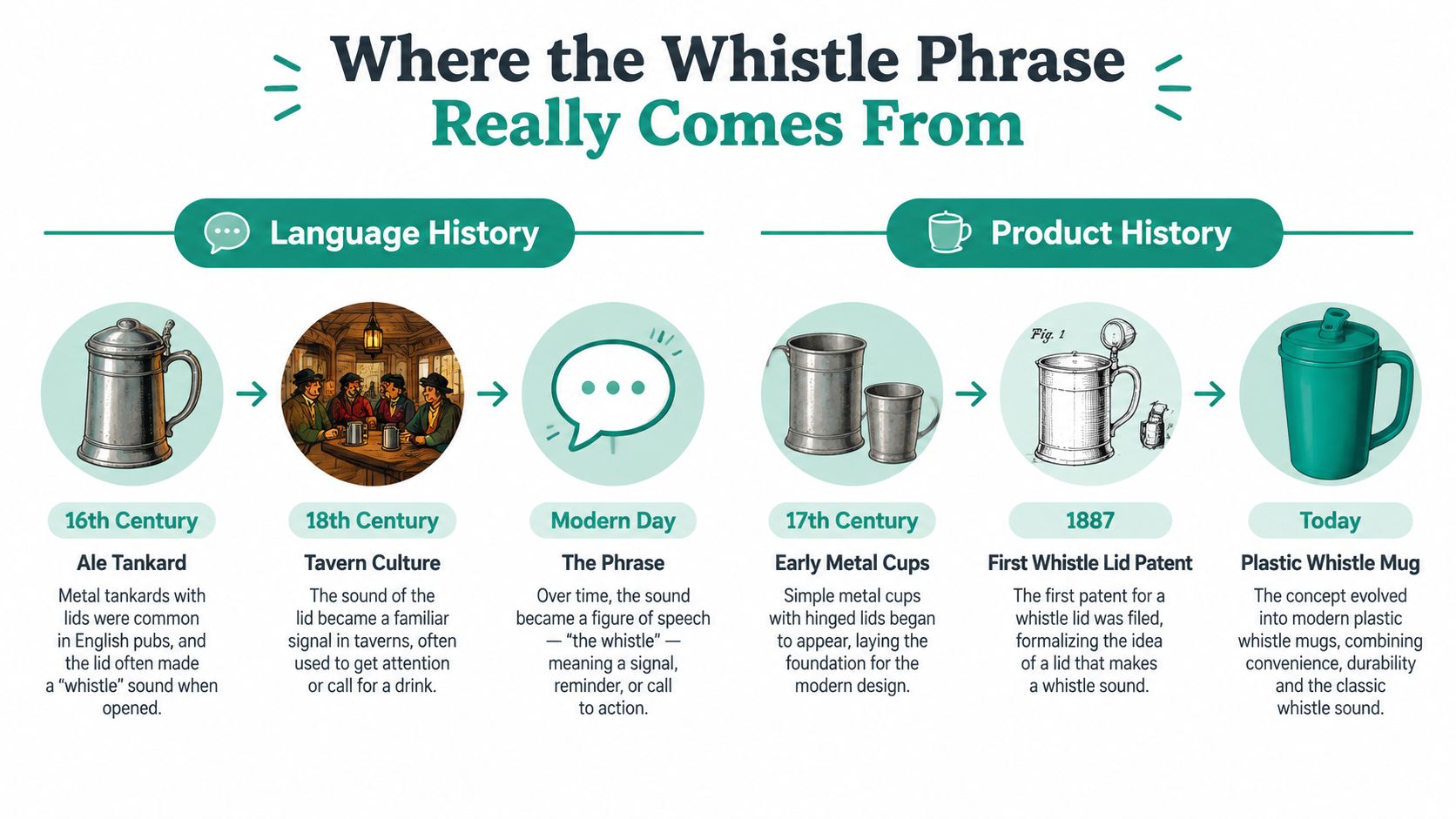
The phrase “wet your whistle” is older than the novelty milk mug. Independent language research traces the expression to Geoffrey Chaucer's The Canterbury Tales in the late fourteenth century, and one reference notes that the phrase “must surely be even older” in spoken use. The historical explanation connects “whistle” with an older figurative sense for the mouth or throat, not necessarily with a physical whistle built into a cup, as described in this etymological account of “wet your whistle”.
That distinction changes the entire story. If “whistle” refers to the mouth or throat, the phrase works as a drinking metaphor. A person wets the part of the body used to speak, sing, or whistle. The expression therefore doesn't prove that drinkers once used a special cup to request another serving.
Language history and product folklore
A popular explanation tells a more theatrical story. According to a historical discussion of cups and old sayings, a “Whistle-tankard” had a whistle attached to the brim. The drinker supposedly sounded it when the cup needed replenishing, which may have inspired the saying, “If you want more, you must whistle for it.”
That account is memorable, but it isn't settled history. The same source describes the phrase's much older language background, while another historical treatment says whistle-equipped pub cups are likely a myth and that people “most certainly wouldn't blow a whistle to get attention.” The safest interpretation is that the modern novelty mug borrows an appealing piece of folklore rather than documenting ordinary tavern practice.
Why the distinction matters
Product history begins much later. Surviving collectible listings identify “Whistle For Milk” mugs as mid-century ceramic children's cups, including a Ross Products toddler mug listed at about 3 1/2 inches tall and 3 1/4 inches in diameter in this archival collectible description. Other vintage resale examples describe 1950s children's mugs with a 10 oz capacity, placing the known commercial life of these objects within the broader early-1900s to mid-century period.
So the phrase came first, the novelty product came later, and the whistle-tankard story sits between language history and folklore. Treating those as separate layers prevents the most common mistake: assuming that a twentieth-century ceramic cup created an expression recorded centuries earlier.
Three Meanings Behind Whistle for Your Milk Cup
The quickest way to identify your intent is to compare the three meanings directly. Think of them as three doors that happen to share the same sign. One door leads to language, one to a collectible, and one to practical drink preparation.
| Interpretation | What It Is | Clue You Want This |
|---|---|---|
| The idiom | A drinking expression connected with an older figurative meaning of “whistle” | You're researching “wet your whistle,” Chaucer, or phrase origins |
| The vintage mug | A child-sized ceramic novelty cup marketed as “Whistle For Milk” | You want a collectible, a replacement mug, or a period decoration |
| The functional whistle | A lid, aperture, steam signal, or frothing feature that creates sound during use | You want to heat, froth, or monitor milk in a working drink setup |
The idiom
If your search results contain old sayings, etymology, or quotations from The Canterbury Tales, you're in the language-history category. The sound is figurative. Nothing in that interpretation requires a cup to whistle.
The collectible mug
A vintage Whistle For Milk mug is a physical novelty item. Collector listings describe child-sized ceramic examples, including a Ross Products toddler cup and vintage resale pieces from the mid-century period. Some listings show a whistling bird handle, which helps explain why the object can look more like a toy or nursery item than a normal drinking vessel. Search results remain inconsistent about whether the name identifies one brand, a product line, or a wider category of whistling bird mugs, as seen in this collector-market search for whistle milk cups.
The working milk accessory
A functional whistle belongs in a different kitchen conversation. It may use steam or moving air to create a tone, much like a whistling kettle. It may signal that pressure or heat has reached a particular point, or it may add a novelty sound. A frothing wand, by contrast, produces a hiss as it introduces air and steam into milk. That hiss isn't the same as a cup whistle, even though both sounds can appear in search results for this phrase.
The table gives you the choice point. If you're buying for display, seek provenance and condition. If you're preparing cappuccino milk, prioritize food-safe construction, correct sizing, and controlled heat rather than a charming name.
How Whistle Lids and Steam Whistles Actually Work
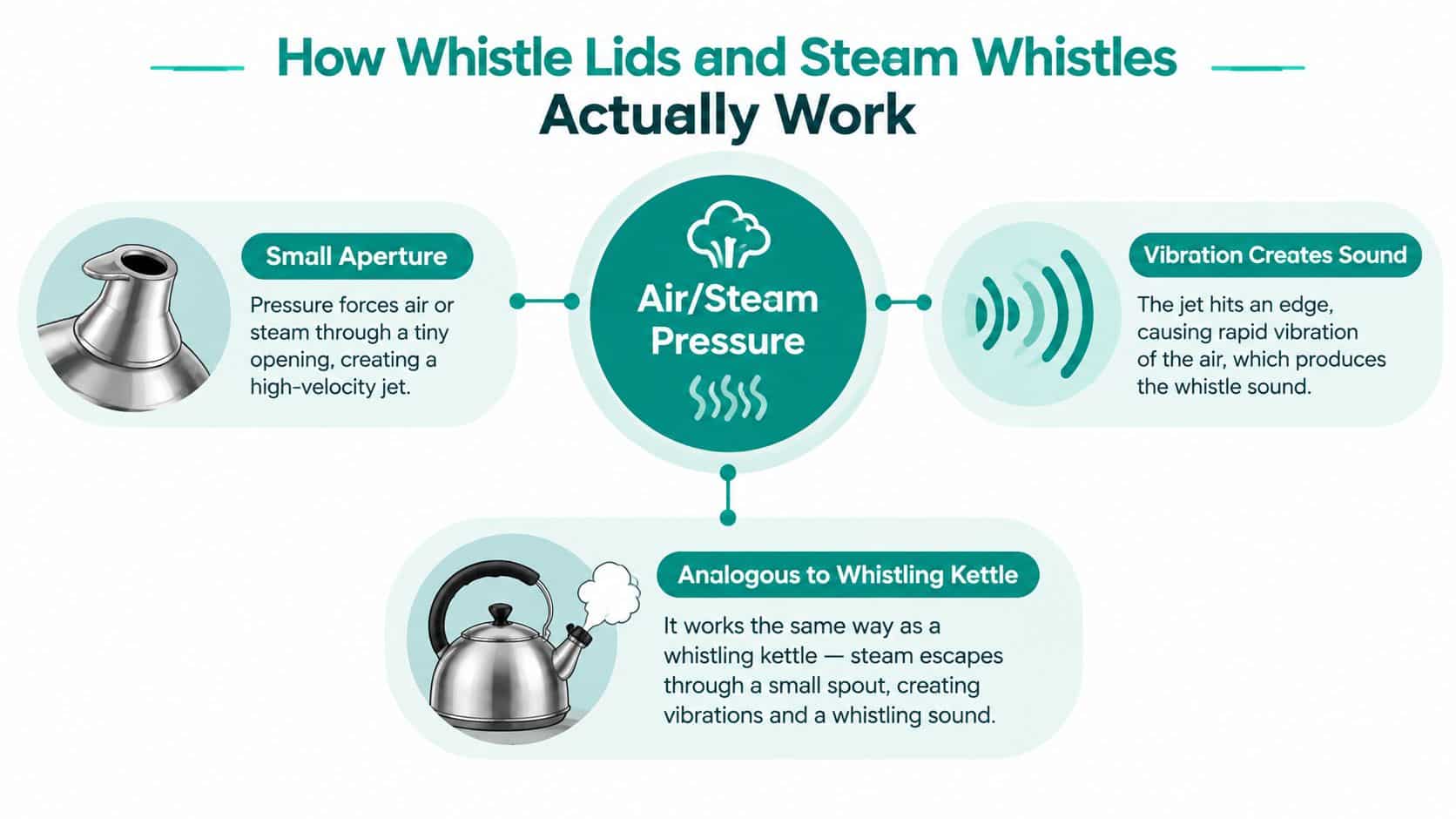
A whistle works because moving air or steam passes through a small opening and creates vibration. The opening shapes the flow, the flow disturbs the surrounding air, and that vibration becomes the sound you hear. A whistling kettle uses the same basic idea, although the temperature and pressure conditions differ from those in a small milk accessory.
From heat to sound
The process follows a straightforward sequence:
- Heat changes the air or liquid environment. A kettle creates steam as water heats. A milk system may create steam inside a wand or near a lid.
- Pressure moves air or steam. The pressure pushes the moving gas toward a narrow opening.
- The aperture shapes the flow. A small nozzle or opening directs the stream.
- The stream vibrates the surrounding air. That vibration creates the audible whistle.
A lid whistle can act as a signal. When the internal conditions reach the point needed to move air through the aperture, the user hears the tone and adjusts the heat or stops the process. The sound doesn't automatically tell you that milk has reached a safe or ideal drinking temperature, however. It only tells you that the system is producing the conditions needed for that sound.
Why frothing sounds different
A frothing wand creates sound through a different workflow. Steam enters the milk, the wand draws in or folds air, and the liquid forms bubbles and foam. The resulting hiss can become sharper when the wand introduces more air or when the milk surface sits at the wrong depth.
That sound is a process noise, not necessarily a warning signal. A user should watch the milk, control the wand position, and follow the equipment's instructions. If you're unsure which component creates the sound, this guide to coffee-pot parts can help you identify the lid, spout, valve, and other pieces before you buy a replacement.
Remember: A whistle can signal pressure, indicate a heating condition, or exist purely for novelty. The sound alone doesn't identify the product's purpose.
Comparing Premium and Standard Whistle Milk Cups
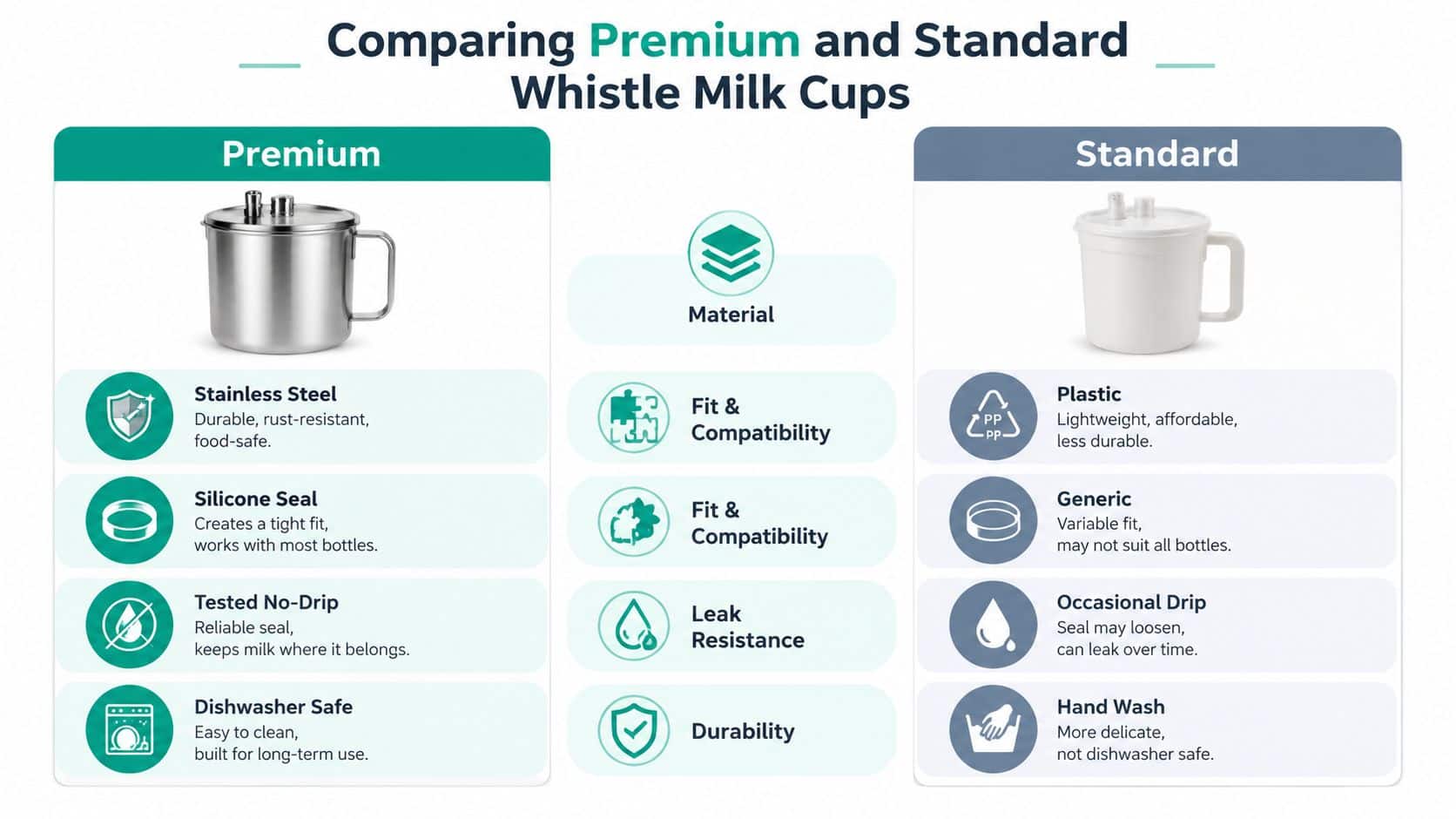
Premium and standard whistle milk cups often look similar online, but the useful differences appear at the points where a cup meets heat, milk, a lid, or a cleaning routine. A premium design may use sturdier material, a better seal, and a more consistent fit. A generic option may cost less and suit occasional decorative use, but its dimensions and construction deserve closer inspection.
| Buying factor | Premium stainless steel option | Standard plastic option |
|---|---|---|
| Material | Stainless steel can provide a firm, heat-oriented body when the product is designed for hot liquids | Plastic may suit novelty use, but heat resistance depends on the specific product |
| Fit | A defined rim and silicone seal can support a more secure lid connection | Generic lids may fit loosely or rely on approximate sizing |
| Leak resistance | A well-matched seal can reduce drips during pouring or movement | Poor fit can allow occasional leaking around the rim |
| Durability | Metal construction generally suits repeated handling when the product supports the intended heat | Plastic can be lighter, but it may scratch, warp, or crack under unsuitable use |
| Cleaning | Smooth, removable parts are easier to inspect and wash | Narrow whistle channels can trap milk residue if the design doesn't come apart |
| Whistle reliability | A correctly aligned aperture can produce a more predictable tone | A loose, blocked, or poorly formed opening may whistle inconsistently |
The leak objection
“Will it leak?” is a reasonable question. The answer depends less on the word premium and more on the contact between the lid and cup. A lid that matches the cup diameter and uses a resilient food-contact seal has a better chance of staying in place than a generic cover that only appears similar in photographs.
Before buying, check the listed cup diameter, the intended liquid temperature, and whether the manufacturer describes the lid as sealed, vented, or decorative. Don't assume that a whistle opening creates a leak-proof closure. A whistle requires a passage for air or steam, so the product's design must balance sound production with liquid control.
The durability objection
A vintage ceramic mug deserves careful handling because its value may depend on its glaze, handle, and condition. A modern stainless steel cup may make more sense for repeated preparation, but only when the product explicitly supports hot milk and the user can clean the whistle pathway. A standard plastic cup remains reasonable for display, cold drinks, or occasional novelty use when the material instructions permit it.
The right choice isn't automatically the more expensive tier. Choose premium construction when you need repeatable fit, hot-liquid compatibility, and simpler inspection. Choose standard construction when the object is mainly decorative and you can accept less certainty around sealing and long-term wear.
Smart Ways to Buy or Make Your Own Safely
Buying a whistle milk cup starts with measurement, not appearance. A lid that looks perfect in a product photo can fail if its inner diameter doesn't match your cup rim. Measure the outside and inside of the rim, check the product's fit range, and confirm whether the lid sits on top, inserts into the opening, or locks beneath a lip.
A safer buying checklist
Use these checks before placing an order:
- Confirm the purpose: Decide whether the item is for display, cold milk, warm milk, steaming, or frothing.
- Match the diameter: Compare the seller's measurements with your actual cup rather than relying on “universal” wording.
- Inspect the seal: Look for a removable, food-contact seal that sits evenly around the rim.
- Check the whistle path: Make sure the opening can be cleaned and doesn't create a hidden pocket for dried milk.
- Test before heating: Assemble the parts with cool water and check whether the lid shifts, drips, or whistles unexpectedly.
- Follow the temperature guidance: Don't heat milk in a component unless the maker specifically identifies it as suitable for that use.
A whistle shouldn't replace attention while milk heats. Steam can burn skin, hot liquid can spill, and a blocked aperture can change how pressure behaves. Keep your face and hands away from the opening, hold the handle securely, and stop using any component that cracks, loosens, or detaches.
If you're considering a DIY version
A homemade novelty cover can be tempting, but the materials need to match the job. Food-safe stainless steel and heat-rated ceramic are more appropriate starting points than unknown plastics, painted craft parts, adhesives, or decorative metals. The whistle must attach securely, remain separate from loose pieces, and avoid creating sharp edges inside the drinking area.
Do not drill a random hole into a sealed container and assume it has become a safe steam whistle. The opening, attachment, seal, and heat path all affect performance. A decorative whistle handle may be fine when it never contacts hot liquid, but that same part shouldn't be repurposed for heating without clear material guidance.
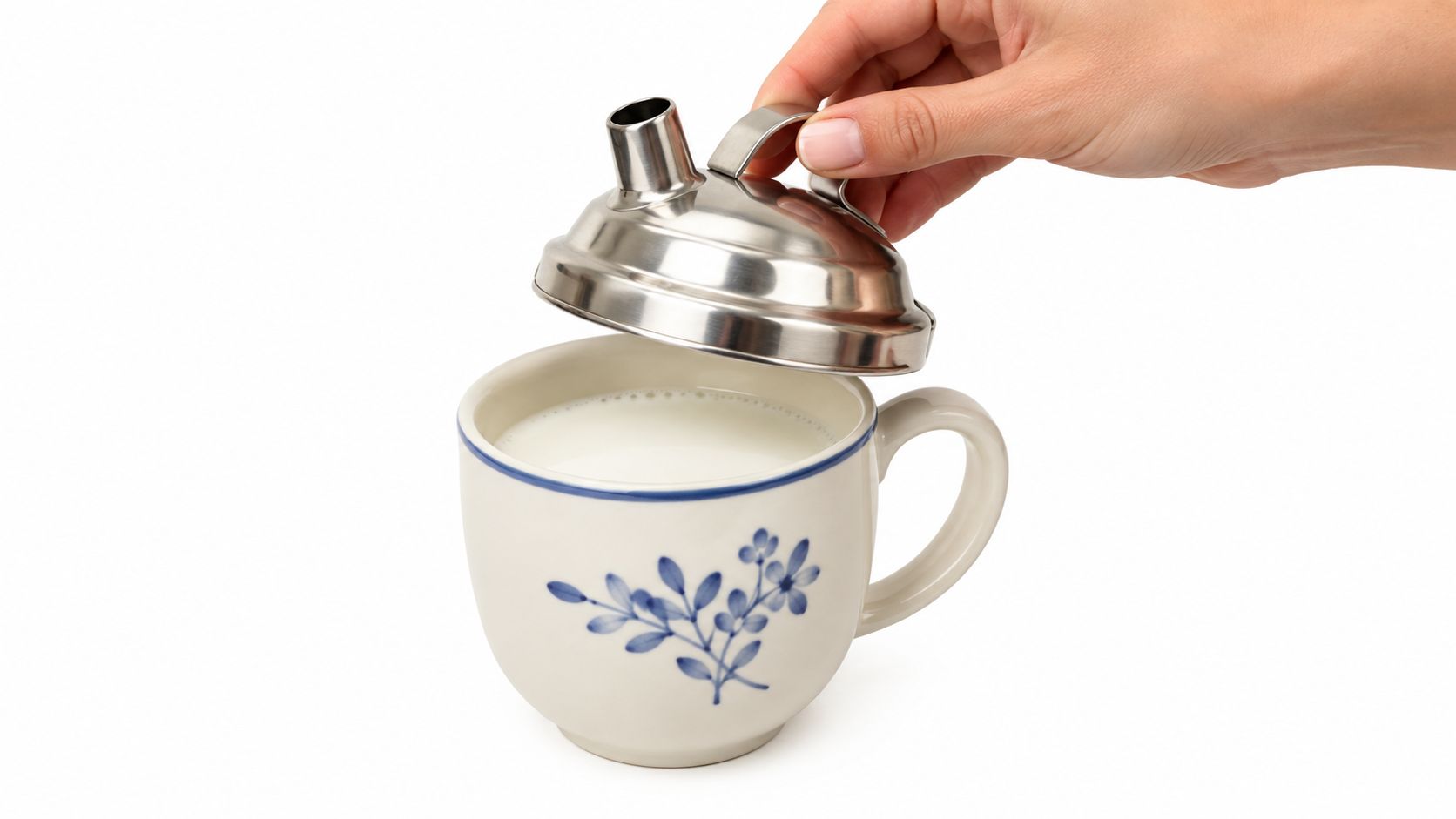
Clean the cup and whistle channel promptly after milk use. Coffee equipment also needs mineral maintenance, especially in hard-water areas. The Keurig maintenance guidance for filters and descaling specifies replacing or using Keurig Water Filters and descaling every three months or when the machine displays its Descale notification. For Nespresso equipment, the descaling procedure guidance describes a 500 ml water-tank fill with one sachet of solution, a 1-liter container under the outlet, and a two-rinse process repeated twice. De'Longhi likewise advises users to descale when prompted and use a water filter in hard-water areas in its official coffee-machine descaling guidance.
For any accessory, authenticity and material claims deserve scrutiny. This product authenticity guide offers a useful reminder to verify the maker, specifications, and seller before trusting a generic replacement with hot liquids.
Choosing the Right Whistle Option for Your Needs
Your best choice depends on the job, not the phrase printed in the listing.
Choose a vintage Whistle For Milk mug if you want a collectible children's cup, a conversation piece, or a period object. Check the ceramic condition, handle, glaze, and provenance, and treat the whistle feature as part of the novelty rather than proof of historical tavern practice.
Choose a functional lid or steam whistle if you want a signal during heating. Verify the diameter, seal, heat rating, cleaning access, and attachment method. A whistle can indicate moving steam or air, but you still need to monitor the milk and handle hot components carefully.
Choose a frothing setup if your goal is cappuccino or latte texture. A wand's hiss comes from steam and air entering the milk, so technique, wand position, and temperature control matter more than the novelty name. For material decisions, this guide to selecting coffee-accessory materials provides useful context when you're weighing stainless steel, ceramic, plastic, and seals.
If you enjoy experimenting with warm milk drinks, you might also appreciate a separate recipe idea such as this reishi and lion's mane cocoa. It belongs in the beverage-inspiration category, while the whistle cup itself remains a choice about history, collecting, or preparation.
The clearest buying rule is simple: collect the mug, use the lid, or froth with the wand, but don't confuse one category for another. Confirm the fit and material before exposing any cup or accessory to heat, then keep the milk path clean after every use.
PureHQ Inc. offers reusable coffee pods, water filters, gold-tone carafe baskets, and descaling products for cleaner, more consistent home brewing. Visit PureHQ Inc. to shop compatible coffee accessories and maintenance supplies that support your cup, brewer, and daily milk-drink routine.

