
Coffee Machine Care
How Long To Brew Coffee In French Press For Perfect Taste
May
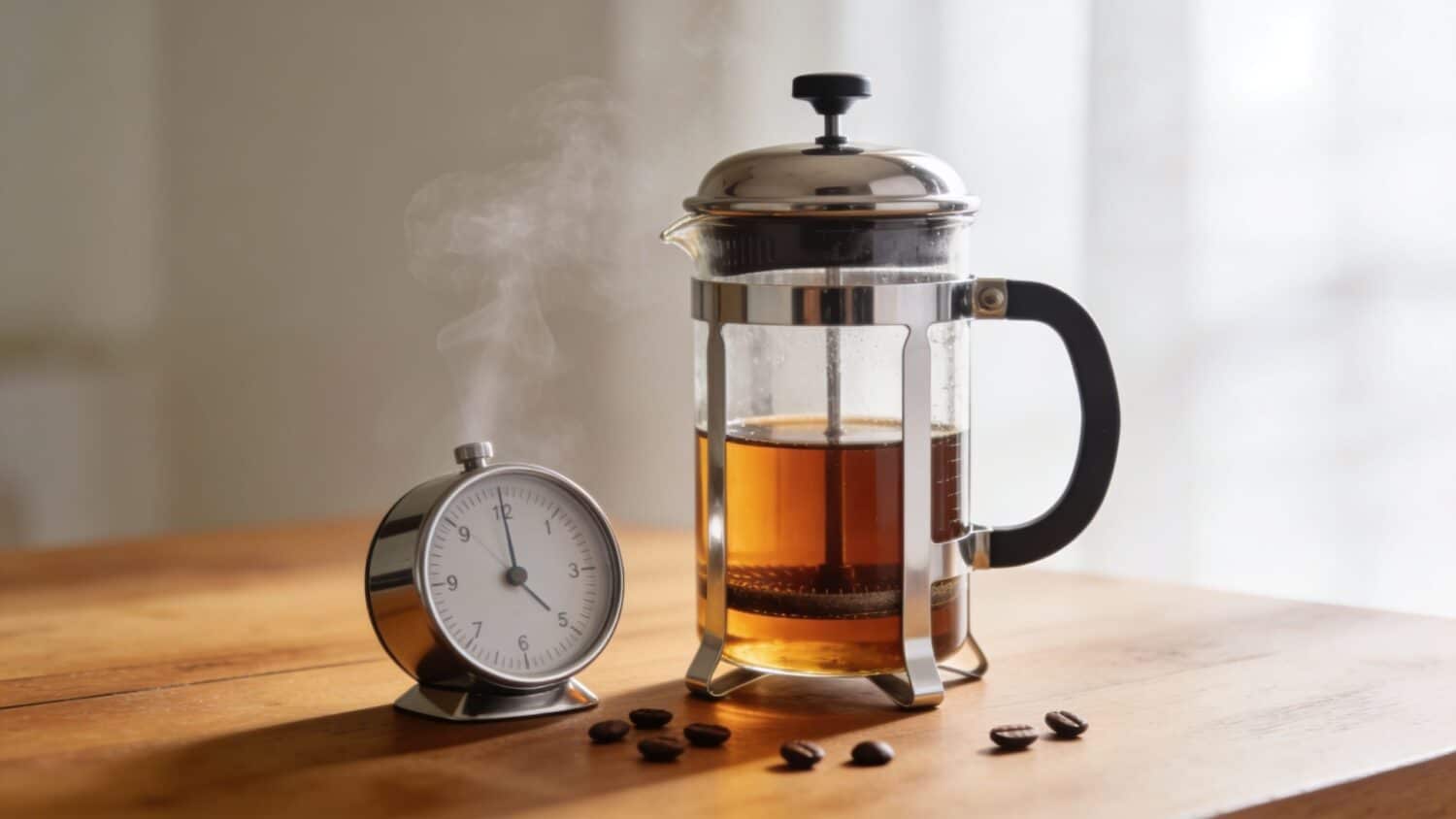
Brew French press coffee for 4 minutes as your standard starting point. That said, the perfect cup often lands a little shorter or longer depending on three things you can control easily: grind size, coffee-to-water ratio, and water temperature.
If you're standing in your kitchen wondering why one batch tastes rich and smooth while the next turns bitter, weak, or muddy, you're not dealing with a mysterious brewer. You're dealing with a brewer that exposes every small choice. French press is forgiving in one sense because the gear is simple, but it's demanding in another because steep time keeps working until you pour.
Many coffee drinkers fall into a predictable cycle. They follow the 4-minute rule once and get a decent cup, but when they repeat the process with a different bean, a different grinder setting, or slightly cooler water, the results often fail. The press itself usually takes the blame, even though the timer represents only one part of the extraction.
The good news is that how long to brew coffee in french press becomes much easier once you stop treating time as a magic number and start using it as a control. That's what turns French press from hit-or-miss into reliable.
The French Press Promise and Its Common Problems
French press makes a style of coffee that many people love for one reason right away. It tastes fuller. You get body, aroma, and texture that paper-filter methods leave behind. On a good morning, it feels simple: coarse grounds, hot water, wait, press, pour.
On a bad morning, it feels wildly inconsistent.
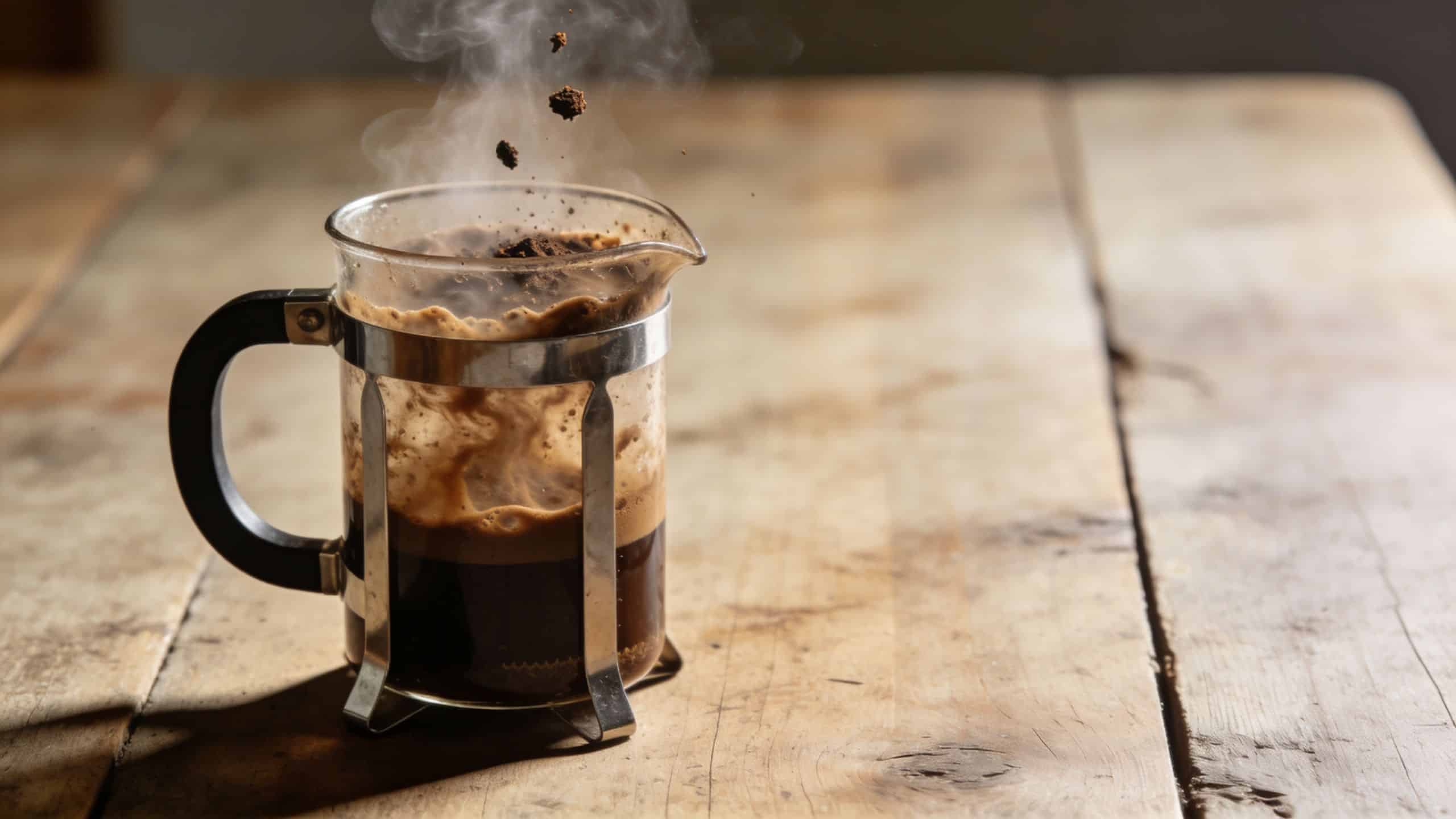
One batch comes out thin and flat, as if the water never really got inside the grounds. The next tastes sharp and dry, with that rough bitterness that lingers after the sip. Then there's the cup that looks promising until the last mouthful, when a layer of sludge lands on the tongue and reminds you that metal mesh doesn't forgive a poor grind.
What usually goes wrong
Most French press mistakes show up in a few familiar ways:
- Weak coffee: The grind is often too coarse for the chosen steep time, or the brew ratio is too dilute.
- Bitter coffee: The coffee may have steeped too long, especially with a dark roast or a grind that ran too fine.
- Muddy texture: Fines slip through the filter, or the plunge disturbs settled grounds right before serving.
- Inconsistent results: The timer stays the same while everything else changes from one brew to the next.
Practical rule: If your French press tastes different every day, the issue usually isn't the press. It's one variable drifting while the timer stays fixed.
I've found that French press frustrates people most when they think they need a secret trick. They don't. They need a repeatable process and a way to read what the cup is telling them. Bitter means one thing. Thin means another. Sludge points to a different fix entirely.
The payoff for getting it right
Once your timing matches your grind, ratio, and water temperature, French press becomes one of the most satisfying brewers to use at home. It can produce a bright, lighter-bodied cup or a heavier, deeper one without changing equipment. You just have to control the variables instead of guessing.
Why French Press Brew Time Is a Variable Not a Rule
The standard brew time matters, but time only works in relation to the rest of the brew. If you change the grind, change the dose, or pour water at a different temperature, the same timer won't extract the same cup.
Grind size controls speed
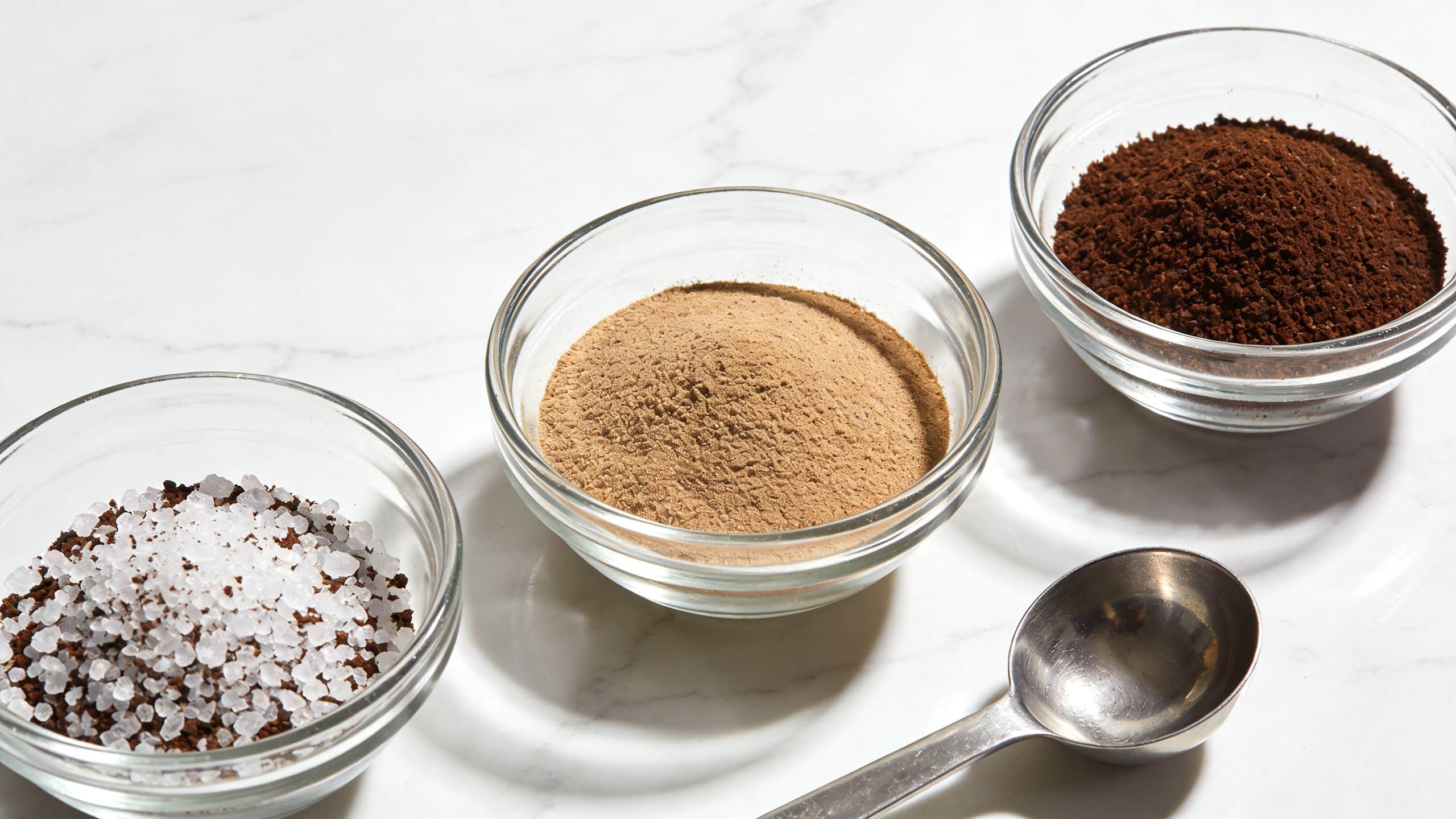
Grind size is the first lever. Smaller particles extract faster because water reaches more surface area. Larger particles extract more slowly. That means a finer grind can turn bitter on a timer that works beautifully for a coarse grind, while an overly coarse grind can taste hollow if you don't give it enough contact time.
If your grinder produces lots of dust and boulders at the same time, the timer gets harder to trust because some particles over-extract while others lag behind. A consistent coarse grind, often described as similar to coarse salt, makes timing easier to dial in. If you want a closer look at what that should resemble, this guide to the best grind for French press coffee is useful.
Ratio changes intensity and extraction feel
Coffee-to-water ratio doesn't just affect strength. It changes how the brew behaves. A denser slurry can taste heavier and may call for a different steep than a lighter recipe. That's why two people can both steep for four minutes and get very different cups if one uses a much stronger ratio.
A visual reference helps in this case. A good illustrated coffee brewing guide poster can make ratios and brew styles easier to compare at a glance, especially if you switch between French press and other methods.
Temperature and roast shift the sweet spot
Water that's too cool slows extraction and leaves flavor behind. Water in the proper brewing range pulls sweetness, body, and aromatic compounds more effectively. Roast level also changes the steep you want. According to Planetary Design's French press steeping guidelines, darker roasts may only need 3 to 4 minutes, while lighter roasts can benefit from 6 to 7 minutes at a 1:15 coffee-to-water ratio.
Dark roasts extract faster and can become harsh when you treat them like light roasts. Light roasts often need more patience to open up.
A simple way to think about it is this:
- Coarser grind: usually needs more time.
- Finer grind: usually needs less time.
- Darker roast: often benefits from a shorter steep.
- Lighter roast: often benefits from a longer steep.
- Cooler water: slows extraction.
- Hotter brew water within the proper range: supports fuller extraction.
Once you understand those relationships, the timer stops feeling arbitrary. It becomes the final adjustment, not the only one.
The Classic 4-Minute French Press Method
The classic method is still the benchmark because it works for a wide range of coffees when the rest of the setup is sensible. The National Coffee Association brewing guidance sets the immersion standard at about 4 minutes, with water at 199 to 200°F (93°C) and a coffee-to-water ratio between 1:10 and 1:16. That range gives you room to brew lighter or stronger without losing the basic structure of the method.
How to run the standard brew
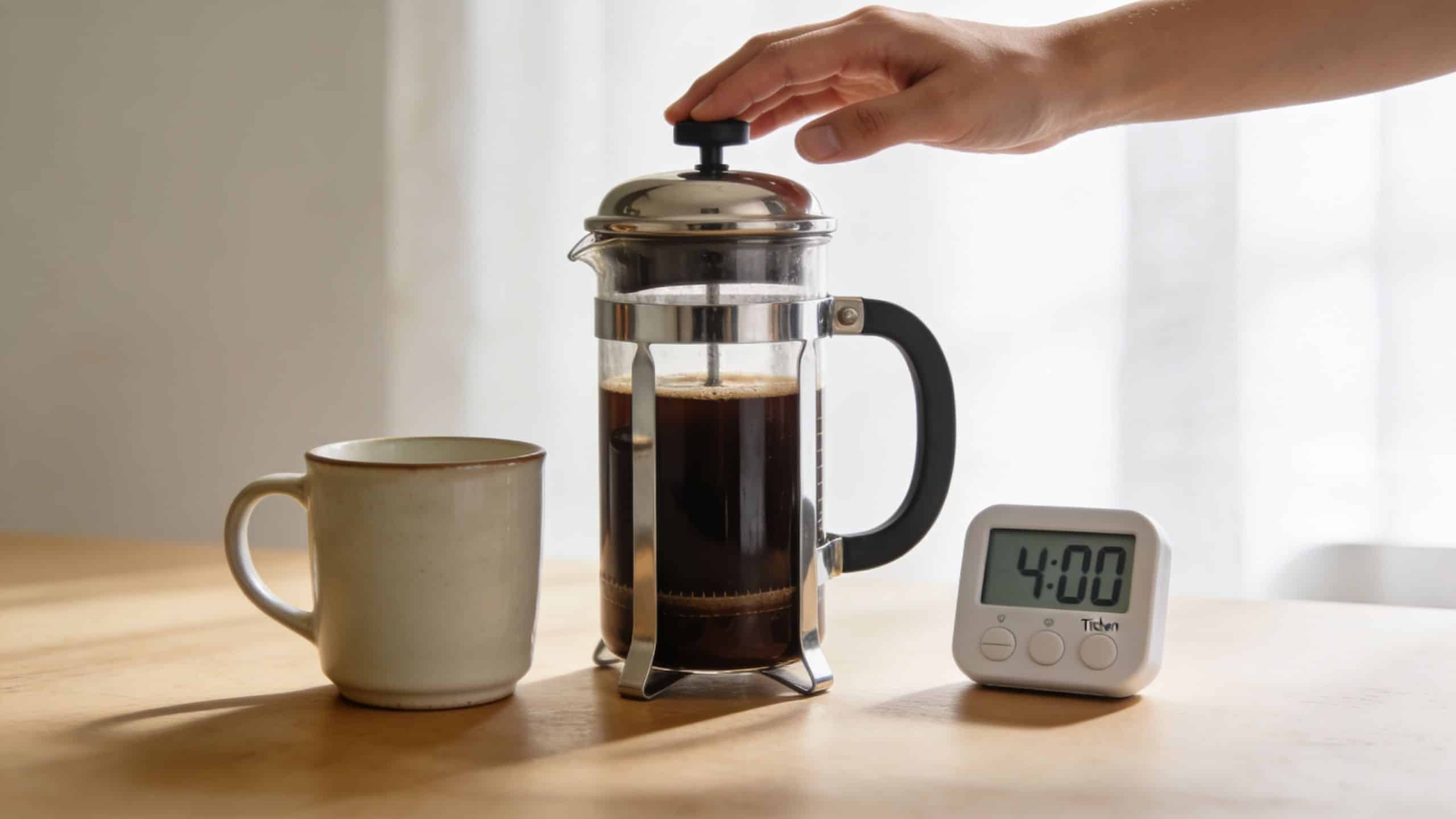
Start by preheating the empty press with hot water, then discard that water before brewing. This keeps the brewing temperature steadier once the coffee goes in. Add coarse-ground coffee, then pour in your hot water and start your timer immediately.
Let the coffee bloom briefly as the grounds saturate and release gas. A gentle stir helps wet dry pockets and evens out extraction. Then place the lid on with the plunger pulled up and let the brew sit undisturbed until the timer reaches the 4-minute mark.
When it's time to press, go slowly. A hard plunge stirs up fine particles and pushes more sediment through the mesh. The best press is controlled and steady.
What works and what doesn't
The classic method works well when your grind is consistent and your expectations match the style of the brewer. It gives you a rich cup with body and aroma. It doesn't give you the paper-filter cleanliness of a pour over, and it won't hide sloppy prep.
What usually works best:
- Use a coarse, even grind: This makes the 4-minute steep much more predictable.
- Measure your water and coffee: Staying within the NCA ratio range keeps troubleshooting simple.
- Press gently: Slow plunging reduces agitation and keeps the cup cleaner.
- Pour all the coffee out after brewing: Leaving it in the press keeps extraction going.
What tends to fail:
- Grinding too fine: The brew turns harsher and muddier fast.
- Using guesswork for ratio: You can mistake a ratio problem for a timing problem.
- Letting brewed coffee sit in the press: The last cup often tastes the worst.
If you'd like to watch the workflow before trying it, this walkthrough helps illustrate the pacing of the brew and plunge:
The small details that improve the cup
Filtered water matters more than many home brewers realize. If your kettle water tastes flat or carries mineral or chlorine notes, the coffee will too. Maintenance matters as well, especially if you use an electric kettle every day. Scale buildup changes heating performance over time, so regular cleaning with a descaling solution is a practical part of better brewing, not a separate chore.
A French press recipe can be simple and still be precise. Most bad cups come from skipping one small detail, not from using the wrong brewer.
If you're aiming for a first reliable baseline, use the classic 4-minute method before experimenting. Once that cup tastes stable, you can push shorter for brighter results or longer for heavier extraction.
Brew Time Recipes for Your Perfect Strength
The easiest way to customize French press is to decide what you want in the cup first. Some people want a brighter, lighter-bodied mug. Others want the deeper, heavier profile French press is known for. Time is part of that decision, but it works best when paired with the right ratio and grind.
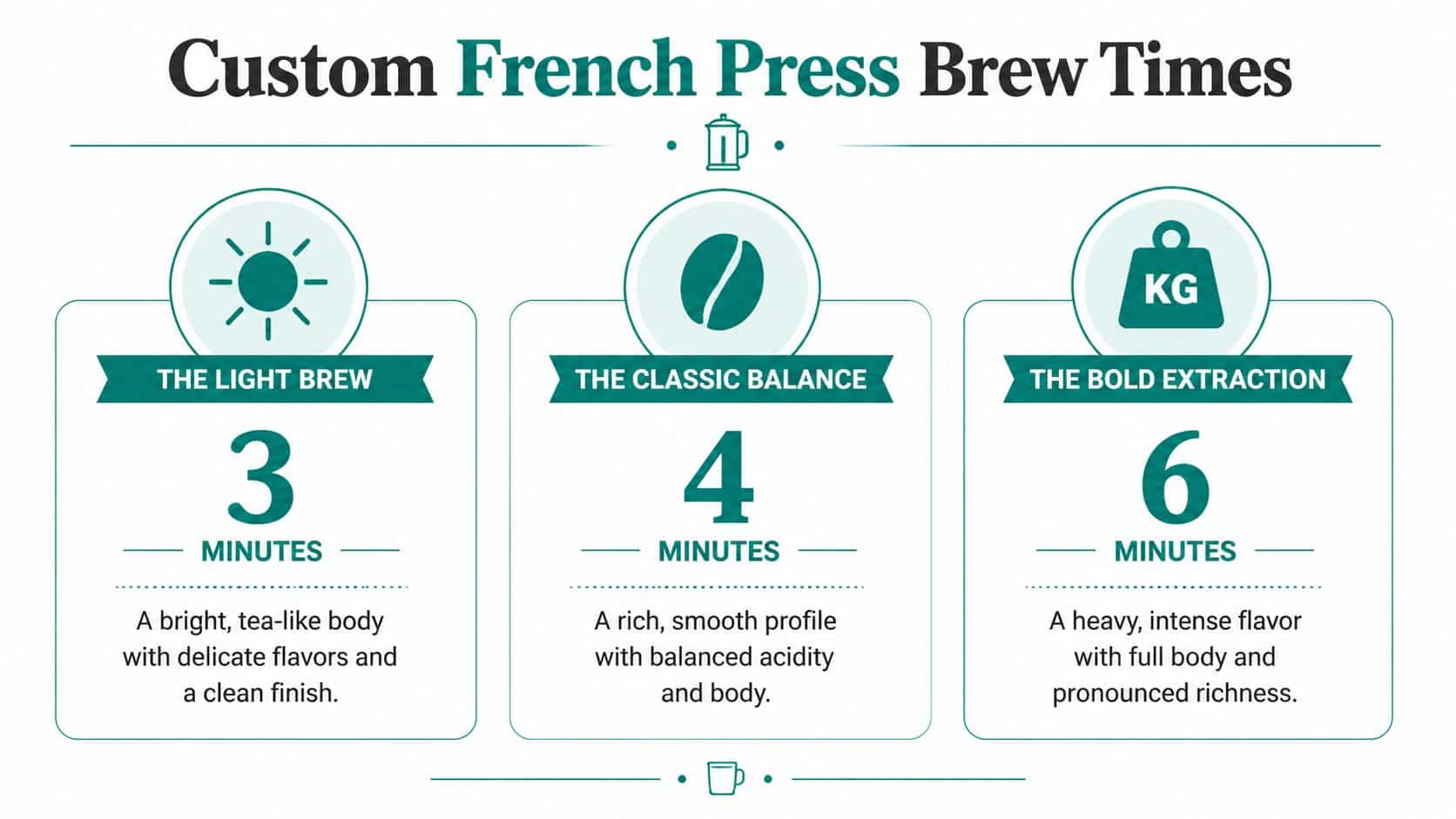
French Press Brew Time and Ratio Guide
| Strength Profile | Coffee-to-Water Ratio | Grind Size | Recommended Brew Time |
|---|---|---|---|
| Light and bright | 1:16 | Coarse, slightly finer than classic if needed | 3 minutes |
| Classic balance | 1:15 | Coarse, similar to sea salt | 4 minutes |
| Rich and bold | 1:12 | Coarse, very even grind | 6 minutes |
How to use the table without chasing your tail
Treat these as starting points, not rigid commandments. If a light brew tastes sour or empty, keep the ratio but steep longer before changing anything else. If the bold brew tastes heavy but rough, shorten the steep before reducing the dose.
The table also solves a common mistake. People often try to make stronger coffee only by brewing longer. That can work to a point, but it also risks pushing the cup into bitterness. A stronger ratio often produces a better bold cup than extending the timer with the same amount of coffee.
For a deeper look at adjusting dose before changing time, this guide on the French press coffee to water ratio is a helpful reference.
If you want more strength, change ratio first. If you want a different flavor balance, change time first.
Standard press versus cleaner-filter alternatives
One practical trade-off matters here. A standard single-mesh French press gives you more texture and more sediment. A premium press with a finer or dual-filter setup usually gives you a cleaner cup with less sludge, though some drinkers feel it trims a bit of the classic heavy body.
That matters when people say French press always tastes muddy. It doesn't have to. The brewer design influences texture, but grind quality, plunge style, and whether you decant immediately matter just as much.
An Advanced Technique for Silt-Free Coffee
Some people love French press flavor but hate the last inch of the mug. That's a fair complaint. Standard plunging can leave a silty cup even when the brew tastes good. If that's your issue, changing the steep structure works better than obsessing over the exact second you press.
The settle-before-you-pour method
A refined method based on James Hoffmann's French press approach uses an initial 4 to 5 minute steep, then has you gently break the crust and wait an additional 5 minutes for the grounds to settle. When done correctly, this approach can reduce cup sediment by up to 80% compared with a standard plunge.
The logic is simple. Instead of forcing suspended fines downward and pouring right after, you let gravity do more of the cleanup. The cup comes out clearer, and the texture is much less swampy.
Why this method fixes muddy coffee
This technique helps with the exact objection many home brewers have: "I like the taste, but I don't want mud in the bottom of the cup."
Here's why it works:
- The crust break releases trapped grounds: That helps floating material begin to sink.
- The extra rest period lets fines settle naturally: Less agitation means less sediment in the cup.
- You don't rely on the mesh alone: The filter is part of the process, not the whole cleanup system.
If your grinder throws a lot of fines, this method becomes even more useful. A more even grind still helps, and this guide to a coarse coffee grind is worth reviewing if your French press regularly tastes dusty or harsh.
Letting the brew settle is often more effective than pressing harder or pressing earlier.
Standard mesh versus premium dual-filter systems
This is also where equipment differences become meaningful. A standard French press mesh allows more oils and more sediment into the cup. That creates the classic French press body, but it also raises the chance of sludge. Premium presses with dual micro-filters aim to reduce those fines mechanically.
If you're comparing the two, the trade-off is straightforward:
| Press style | What it does well | Common drawback |
|---|---|---|
| Standard single-mesh press | Full body, classic texture, simple design | More sediment in the cup |
| Premium finer or dual-filter press | Cleaner cup, less silt, easier for sediment-sensitive drinkers | Can feel less heavy in body |
For maintenance tools, filtered water and scale control still matter around the rest of your coffee setup. If you also brew with pod or drip machines at home, PureHQ Inc. offers universal descaling solutions and cleaning tablets that fit that broader maintenance routine.
Serving and Maintaining Your French Press
The most important thing to do after brewing is simple. Pour the coffee out right away. If brewed coffee sits on the grounds in the press, extraction keeps moving and the flavor gets rougher, especially in the final cup.
That one habit fixes a surprising amount of bitterness. If you're brewing for one person, decant into your mug and a small carafe or insulated server. If you're brewing for two, serve both cups immediately instead of letting the second one wait in the press.
Keep the brewer clean enough to stay predictable
French press cleanup affects flavor more than people expect. Old oils cling to the beaker, lid, and mesh assembly, and stale residue dulls the next brew. Take the plunger apart regularly, rinse thoroughly, and wash away trapped grounds instead of just swishing water through the glass.
A few habits keep the brewer easier to live with:
- Disassemble the filter assembly: Grounds hide between the mesh and support plate.
- Rinse promptly after brewing: Wet grounds release more easily than dried ones.
- Clean your kettle too: Better water and a clean heating vessel help every brew method.
- Store it dry: Lingering moisture can leave stale odors behind.
A French press doesn't ask for much. It asks for a consistent grind, a sensible timer, and basic cleaning. Give it those, and it rewards you with one of the most satisfying full-bodied cups you can make at home.
If you want your whole coffee setup to stay consistent, shop PureHQ Inc. for practical maintenance essentials like descaling solutions, cleaning tablets, reusable brewing accessories, and water filtration products that help everyday coffee taste cleaner and more reliable.

