
Coffee Machine Care
Coarse Coffee Grind: Your Guide to a Perfect Brew
Apr
You know the routine. You buy good beans, heat the water carefully, and give your brew your full attention. Then the cup lands flat. Your French press tastes muddy and bitter. Your cold brew tastes dull. Your reusable pod coffee tastes weak, like the water rushed through and barely stopped to say hello.
Many individuals blame the beans or the brewer. In practice, the problem often starts much earlier. It starts at the grinder.
Tired of Bitter Silty Coffee? Your Grind Is the Problem
A bad cup from good beans feels personal. You did the work. You spent the money. Then your mug delivers grit at the bottom, bitterness on the finish, or a sour note that makes the whole brew feel unfinished.
That frustration is common because grind size looks simple, but it controls a lot. Americans grind over 2.5 billion pounds of coffee beans annually, French press is favored by over 20% of U.S. home brewers, and grind inconsistency contributes to taste issues in up to 70% of subpar brews. In other words, plenty of disappointing coffee starts with a grind that does not match the brew method.
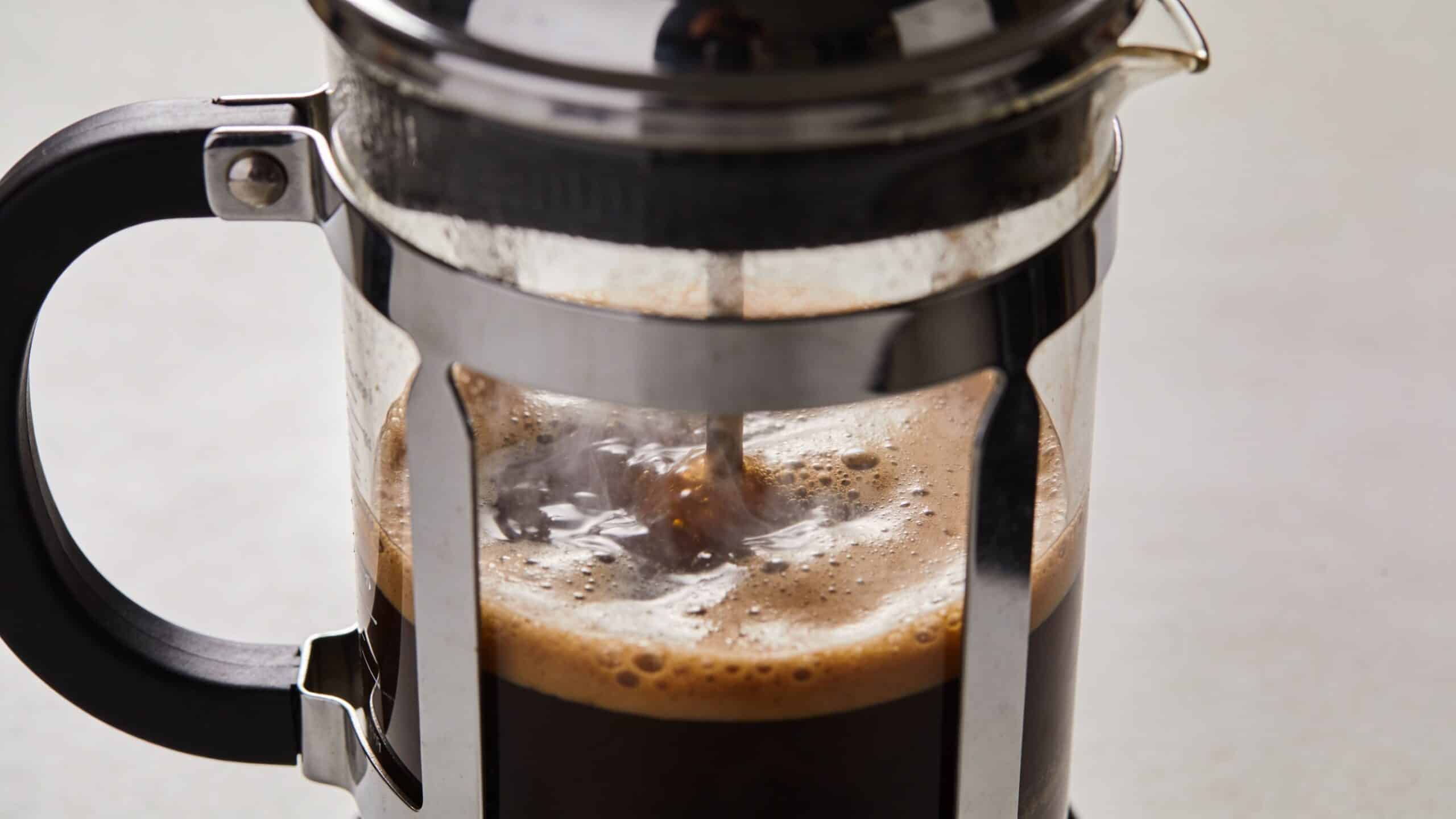
What that bad cup is telling you
Your cup usually gives clear clues:
- Bitter and sludgy: The grounds were likely too fine, too uneven, or both.
- Weak and hollow: The grind may have been too coarse for the speed of your brewer.
- Sour and sharp: Water did not pull enough flavor from the grounds.
- Cloudy with too much sediment: Fine particles slipped through where they should not have.
A lot of home brewers respond by changing everything at once. They buy a new roast. They tweak the water temperature. They shorten the brew time. They switch filters. That usually creates more confusion, not less.
The small change that changes everything
Coarse coffee grind is one of the clearest fixes for immersion brewing. It slows extraction, reduces sludge, and gives water enough time to pull flavor without dragging too many bitter compounds into the cup.
Consider the analogy of chopping vegetables for soup. If some pieces are tiny and some are huge, they do not cook evenly. Coffee works the same way. Uneven particles make one brew taste both bitter and sour at once because some grounds over-extract while others barely extract at all.
A better cup usually does not require a more expensive machine. It requires coffee particles that match the way your brewer works.
When people dial in coarse coffee grind correctly, the difference feels immediate. French press gets fuller without turning gritty. Cold brew becomes smoother. Even tricky reusable pod setups become easier to troubleshoot because you stop guessing and start controlling the main variable that drives flavor.
What Exactly Is a Coarse Coffee Grind?
If someone says “use a coarse grind,” that sounds straightforward until you look at the coffee in your hand and wonder what coarse is supposed to look like. Many brewers get stuck right there.
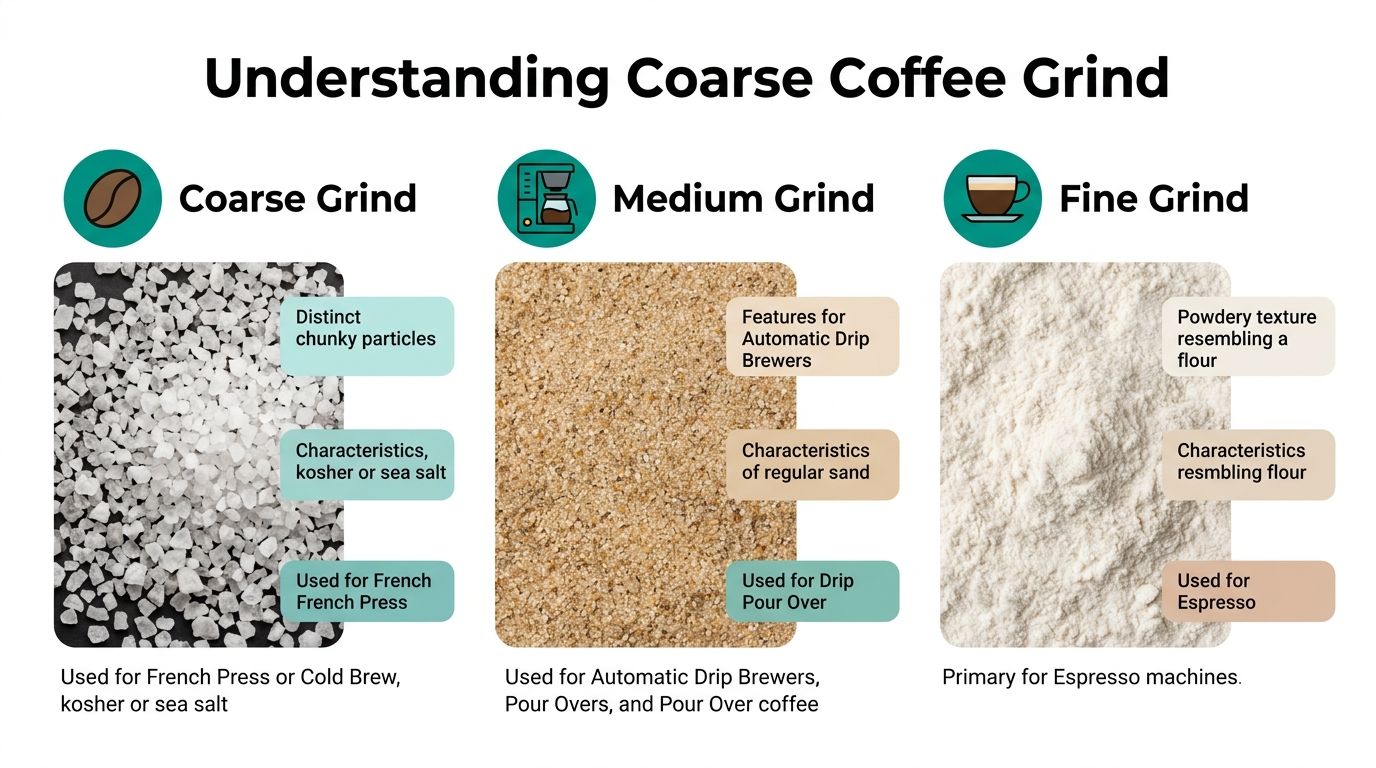
The simplest visual cue is this. Coarse coffee grind should look like kosher salt or rough sea salt. The particles should look distinct and chunky, not powdery and not sandy.
What microns mean in plain English
Coffee professionals often describe grind size in microns, which are tiny units used to measure particle size. You do not need a lab to use that information. You just need to know what the numbers are pointing toward.
That sounds technical, but the practical meaning is simple. Bigger pieces extract more slowly. Smaller pieces extract faster.
Why larger particles brew differently
A useful analogy is a block of ice versus crushed ice.
Crushed ice melts fast because it exposes much more surface to the air. A big ice chunk melts more slowly because less of it is exposed. Coffee grounds behave in a similar way when water touches them. Fine coffee exposes a lot of surface area. Coarse coffee exposes less.
That matters because water extracts flavor from the outside in.
- Fine grind: more exposed area, faster extraction
- Coarse grind: less exposed area, slower extraction
- Uneven grind: mixed extraction, mixed flavor problems
Uniformity matters as much as size
A lot of people hear “coarse” and focus only on making the grind bigger. The better goal is consistently coarse.
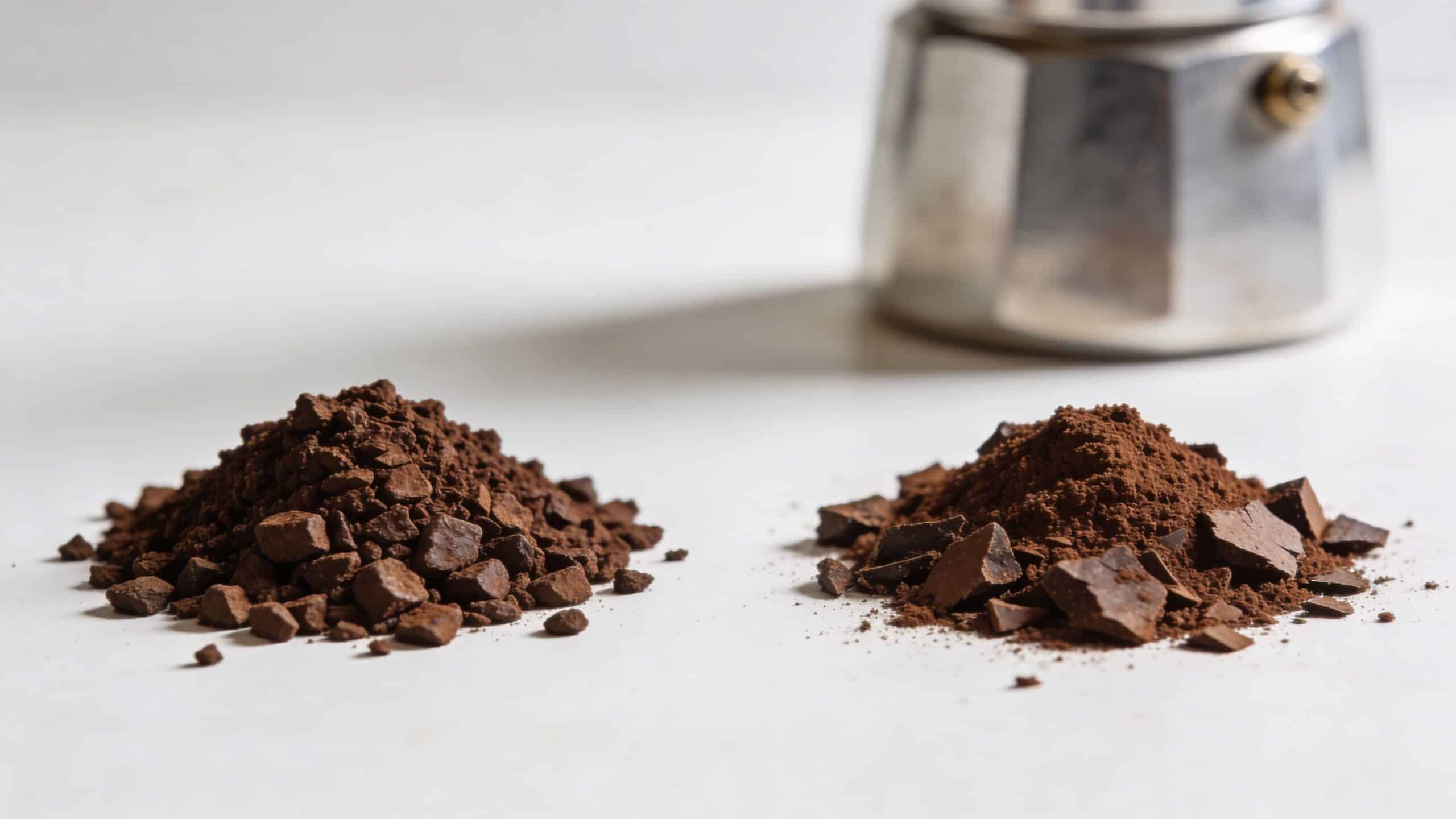
If your grinder makes dust plus chunks, the dust will over-extract and taste bitter while the chunks can stay under-extracted and taste weak or sour. That is why one bad cup can somehow taste harsh and thin at the same time.
Here is a quick visual check:
| Grind look | What it suggests | Likely cup result |
|---|---|---|
| Chunky, even, salt-like | Good coarse coffee grind | Balanced immersion brew |
| Powder mixed with chunks | Inconsistent grind | Bitter plus muddy |
| Very large, sparse pieces | Too coarse for many brews | Weak or hollow |
If your grounds look like crushed peppercorns mixed with flour, the issue is not just coarseness. It is inconsistency.
Once that clicks, the rest gets easier. Grind size is not a vague preference. It is your speed control for extraction.
The Best Brew Methods for a Coarse Grind
Coarse coffee grind is not the right answer for every brewer. It shines when water stays in contact with coffee long enough for larger particles to extract properly. That is why immersion and slower cycling methods tend to get the best results from it.
French press
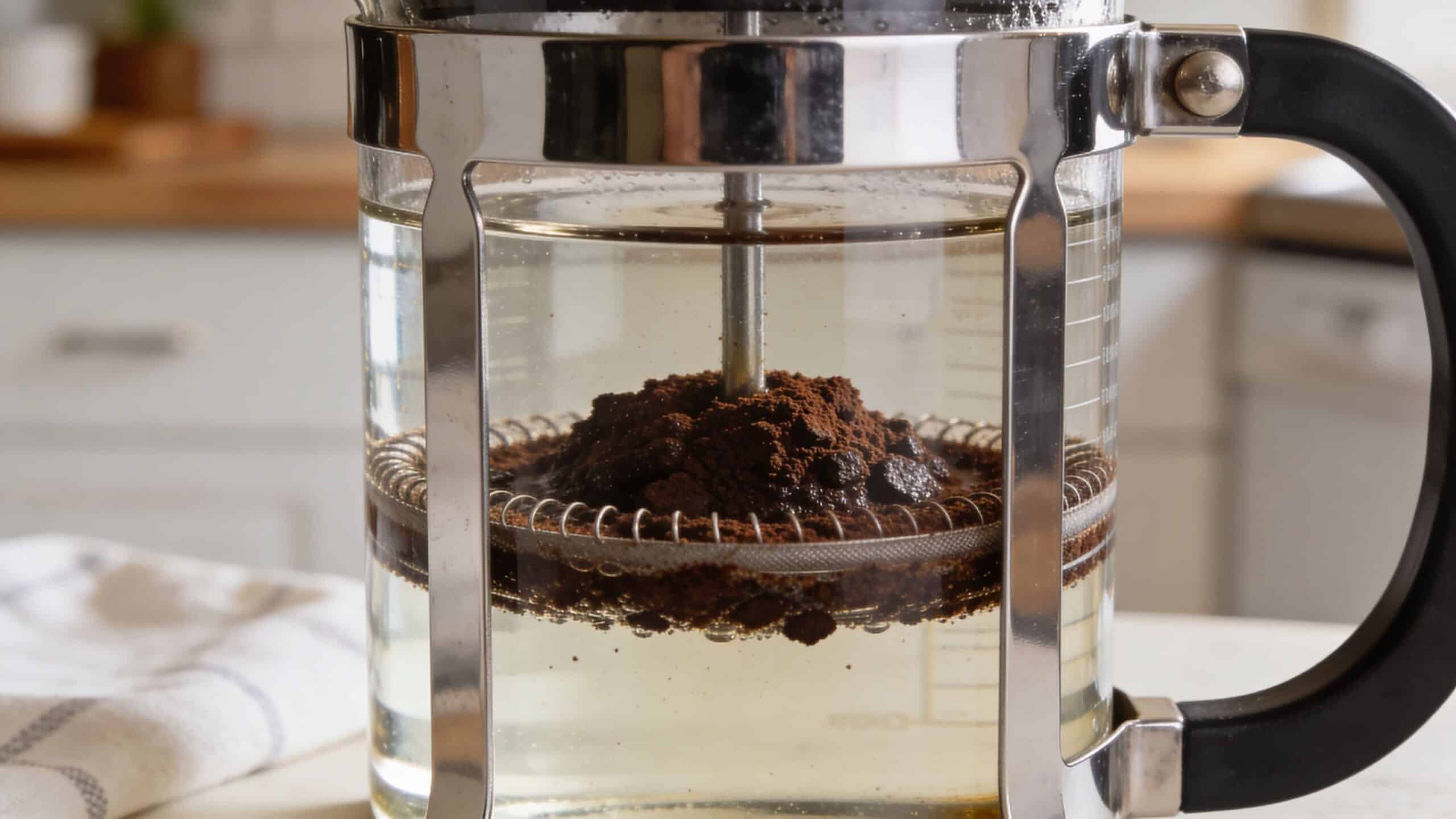
French press is the classic coarse-grind brew.
That explains why a French press brewed with drip-sized coffee often tastes messy. The mesh is not built to catch lots of fines. It holds back larger particles and lets some smaller ones through.
If you want a deeper look at dialing in this method, this guide on the best grind for French press gives a useful method-specific reference.
Why it works
French press keeps coffee and water together for several minutes. A coarse coffee grind slows that extraction enough to give you body without turning the cup harsh.
The target texture is substantial but not chunky like cracked pepper. Think salt crystals, not dust.
Cold brew
Cold brew pushes the logic even further. Because cold water extracts slowly, brewers usually go even coarser than French press.
The goal is not speed. It is control.
A coarse grind helps cold brew avoid the murky, woody taste that shows up when too many fines sit in water for a very long steep. It also makes straining easier. If your filter keeps choking during cold brew, that is often a fines problem.
What to expect in the cup
- Cleaner texture: fewer tiny particles make it through straining
- Smoother flavor: slower extraction tends to feel rounder
- Better repeatability: larger, more uniform particles behave more predictably
A short visual walkthrough can help if you are still calibrating by sight:
Percolators
Percolators are less discussed today, but they still reward coarse coffee grind.
A percolator repeatedly cycles hot water through the grounds. That repeated contact can punish fine coffee. The brew gets harsh fast because the water keeps revisiting the same particles.
Coarse grounds hold up better under that repeated exposure. They extract more slowly, so the brew has more room before it tips into bitterness.
Quick comparison
| Brew method | Why coarse coffee grind helps | Common problem if too fine |
|---|---|---|
| French press | Slows extraction and reduces silt | Muddy, bitter, gritty cup |
| Cold brew | Handles long steeping more cleanly | Sludge and harsh flavors |
| Percolator | Better for repeated hot-water cycling | Burnt or over-extracted taste |
One common confusion is thinking coarse grind automatically means weak coffee. It does not. It means slower extraction. If the brew method gives the grounds enough contact time, coarse coffee can produce a rich, satisfying cup with plenty of body.
How to Get Consistent Coarse Grinds with Your Grinder
Your grinder decides whether your recipe has a fair chance. You can have fresh beans and good technique, but if the grinder sprays out powder and chunks together, the cup will fight you.
That is why consistency matters more than grinder hype.
Blade grinder versus burr grinder
A blade grinder chops beans with spinning blades. It does not size the particles very precisely. You usually get a mix of dust and larger fragments.
A burr grinder crushes beans between burrs set at a chosen distance. That gives you much better control over particle size.
Here is the practical difference:
| Grinder type | What it does well | What usually goes wrong |
|---|---|---|
| Blade grinder | Cheap and simple | Uneven grounds, lots of fines |
| Burr grinder | More uniform particle size | Needs a little setup and adjustment |
If your coffee swings between sour and bitter from one brew to the next, the grinder may be the hidden variable.
A simple home calibration routine
You do not need fancy tools to check your grind.
- Grind a small test batch.
- Spread the grounds on a white plate or sheet of paper.
- Look for texture that resembles coarse salt.
- Check whether most pieces are close in size.
- If you see lots of dust, move one click coarser and test again.
That visual check catches problems fast. It also helps you notice whether your grinder produces a stable result or changes from batch to batch.
For a more method-specific walkthrough, this guide on how to grind coffee for a French press shows what to look for when you are tuning for immersion brewing.
What confuses people most
Many brewers assume the grinder’s labeled setting solves everything. It does not.
One grinder’s “coarse” may not match another’s. Bean origin, roast level, and grinder wear can all change the result. That is why your eyes and your cup matter more than the word printed on the dial.
Use the grinder’s coarse setting as a starting point, not a verdict.
If your grounds look mostly right but your cup still tastes off, adjust in very small steps. One click coarser or finer can be enough. Big jumps make it harder to learn what changed the flavor.
The Secret to Using Coarse Grind in Reusable Pods
Many coffee drinkers get tripped up here. They learn that coarse coffee grind works well in French press and cold brew, then they try that same idea in a Keurig or Ninja reusable pod and get a weak cup.
They conclude that coarse grind does not work in pod machines. The underlying problem is more specific. Pod systems brew fast, and fast brewing gives coarse grounds less time to extract.
Why reusable pod brewing feels different
Reusable pod brewers push water through coffee quickly. That short cycle changes the rules.
An underserved angle in coffee education is exactly this problem. Forum users in 2025 frequently reported weak brews with reusable K-Cups, and a 2025 SCA study noted that pod systems are 20 to 30% less efficient with coarse grinds, while reusable pod sales grew 25%.
That explains two common complaints:
- “My coffee is watery.” Water moved through too quickly.
- “My pod clogs when I grind finer.” Fine particles restricted flow too much.
The better target for pod systems
For reusable pods, many people get better results from a slightly finer coarse or hybrid medium-coarse approach rather than the chunky grind used for long immersion.
That means you are balancing two goals at once:
- enough resistance to improve extraction
- enough openness to keep the machine flowing cleanly
A generic plastic pod often makes that balancing act harder. Thin plastic can fit loosely, retain old oils, or feel harder to clean thoroughly over time. A sturdier reusable pod with a more dependable filter setup usually gives you a wider margin for success.
Comparison of pod setups
| Setup | Typical issue | Better use case |
|---|---|---|
| Generic plastic reusable pod | Fast flow or inconsistent fit | Occasional use, less control |
| Reusable pod with paper liner | Cleaner cup, better flow control | Daily brewing with less sediment |
| Stainless reusable pod | More durable and easier to clean | Frequent brewing and repeatability |
A paper liner can help because it adds a little flow resistance and catches more fine sediment. That often improves the cup without pushing the machine into clogging territory.
If you brew this way often, machine care matters too. Coffee oils and mineral buildup can make weak extraction and off flavors harder to diagnose, so keeping pod parts and the brewer clean saves time.
For a practical how-to, this guide on how to use coffee grounds in a Keurig is useful if you want to test grind and fill changes methodically.
The objection most readers have
The usual objection is simple. “I tried coarse grounds in my Keurig once, and it was bad.”
That experience makes sense. Coarse coffee grind behaves differently in a short pressurized cycle than in a steep-based brew. The fix is not to abandon the idea. The fix is to adapt the grind slightly, avoid overfilling the pod, and use a filter setup that slows flow just enough to improve extraction.
Once you treat pod brewing as its own category instead of copying French press settings directly, reusable pods become much easier to dial in.
Fixing Sour Bitter or Weak Coffee
Once you have a reasonably consistent coarse coffee grind, troubleshooting gets simpler. Taste becomes your map.
If the cup tastes wrong, it usually points to one of a few specific issues. You do not need to guess wildly. You need to match the flavor problem to the likely cause.
If your coffee tastes sour
Sour coffee usually suggests under-extraction.
Water did not pull enough sweetness and balance from the grounds before the brew ended. In practical terms, your grind may be too coarse for that method, or your contact time may be too short.
Try this:
- Make the grind slightly finer: especially in reusable pod setups or brews that finish quickly
- Increase brew time if your method allows: useful in immersion brewing
- Check your water flow: if water rushes through, extraction stalls early
If your coffee tastes bitter or drying
Bitterness usually points to over-extraction or too many fines.
That can happen when your grind is too fine, too uneven, or when the brew stays in contact with the coffee for too long.
A better adjustment is often small:
- grind a little coarser
- shorten the brew time
- reduce fines by improving grinder consistency
Bitter coffee is not always “strong” coffee. Often it is coffee that stayed in the extraction zone too long.
If your coffee tastes weak but not sour
Weak coffee can confuse people because they assume grind is always the first problem. Sometimes it is not.
Check your dose first. If you did not use enough coffee, the cup can taste watery even when extraction itself was acceptable. After that, look at whether the brew method is moving water too quickly through the grounds.
If there is too much sediment
Sediment points back to particle size and grinder performance.
A French press will always have some texture, but a gritty layer at the bottom usually means the coffee was too fine or too inconsistent. Reusable pod brewers can show the same issue if the filter setup lets too many fines pass through.
A quick diagnostic table
| What you taste | Likely cause | Best first fix |
|---|---|---|
| Sour, sharp | Under-extracted | Grind slightly finer |
| Bitter, harsh | Over-extracted or too many fines | Grind slightly coarser |
| Weak, watery | Low dose or fast flow | Add more coffee, then reassess |
| Gritty, silty | Too fine or inconsistent grind | Improve grind uniformity |
Do not ignore maintenance, either. Old coffee oils and scale can flatten flavor and distort what you taste in the cup. If your machine has been brewing strangely across multiple coffees, a fresh filter or a descaling routine can remove one more variable before you keep adjusting grind.
Your Coarse Coffee Grind Questions Answered
Some coarse coffee grind questions come up after the first few brews, usually when people start comparing fresh-ground coffee with store-bought options or wonder whether one grind can work for every machine.
How should I store coarse ground coffee?
Store it in an airtight, opaque container at room temperature. Keep it away from heat, moisture, and direct light.
Ground coffee loses aroma faster than whole beans, so the best habit is simple. Grind only what you need when you can. If you must pre-grind, use it promptly for the best flavor.
Can I use pre-ground “coarse” coffee from the store?
Yes, but manage your expectations.
Store-bought coarse coffee can work in a pinch, especially for French press or cold brew. The catch is consistency. Pre-ground coffee may not match your brewer perfectly, and once the bag is opened, freshness drops faster than with whole beans.
Can I use coarse coffee grind for espresso?
No. Espresso needs a much finer grind to create enough resistance for a short, pressurized extraction.
If you use coarse coffee in an espresso machine, water will pass through too quickly. The shot will usually taste thin, under-extracted, and lack the concentrated texture espresso drinkers expect.
Is one coarse setting good for every brew method?
Usually not.
French press, cold brew, percolator brewing, and reusable pods all handle water differently. Even when they all lean coarse, the ideal grind texture can shift because brew time and flow rate change the extraction pattern.
“Coarse” is a family of grind sizes, not one exact setting that works everywhere.
Why does my coffee still taste off when the grind looks right?
Because grind is the biggest control, not the only one.
Dose, brew time, water quality, filter type, and machine cleanliness still matter. If the grind is close and the cup still feels off, make one small change at a time so you can tell which adjustment helped.
Brew Your Best Cup Every Time
A good coarse coffee grind gives you control. It helps you stop treating coffee like a gamble and start treating it like a repeatable skill.
When the grind matches the brew method, your cup gets easier to read and easier to improve. French press becomes fuller and less muddy. Cold brew becomes cleaner. Reusable pod brewing starts making sense instead of feeling random. If you serve coffee on the go or think about the full drinking experience beyond the brew itself, Afida’s guide to Choosing Takeaway Coffee Cups is also a useful practical resource.
The key idea is simple. Coarse coffee grind is not just “bigger coffee.” It is a tool for controlling extraction, texture, and flavor. Once you understand that, better coffee at home gets much easier.
Upgrade your daily brew with accessories designed for cleaner extraction, better compatibility, and easier maintenance. Shop reusable pods, filters, and coffee machine care essentials from PureHQ Inc..

