
Coffee Machine Care
Best Coffee for Keurig K Cups: A Complete Guide
Jun
You bought a Keurig for speed. Then the routine got annoying. The pod drawer fills with empty cups, the flavor feels boxed in, and every “quick” coffee starts to taste like a compromise.
That's usually the moment people start looking for better coffee for Keurig K-Cups. Not just different coffee. Better coffee, with more control, less waste, and a cup that tastes like you chose it on purpose.
The Keurig Promise and the Reusable Pod Solution
Keurig solved a real problem. It made a single cup easy, consistent, and fast enough for rushed mornings and office counters. The platform also grew far beyond a narrow pod system. Keurig's ecosystem now spans more than 400 beverage varieties across 60+ brands, which helps explain why K-Cups became a mainstream habit rather than a niche format, as summarized in the Keurig overview.
The frustration starts when convenience becomes confinement. Pre-filled pods limit what you can brew, how fresh it is, and how much control you have over the final cup. If you want a local roast, a lower-acid blend, or a decaf that tastes good, disposable pods often make the choice for you.
Then there's the waste. Advocacy reporting estimates that discarded K-Cups in landfills could wrap around the planet more than 10 times, and that nearly 25% of American homes own a single-cup brewing machine, which the same reporting describes as over 75 million homes using single-use pods in practice. You can read that claim directly in the Story of Stuff advocacy report on K-Cup waste.
Why reusable pods change the experience
A reusable pod fixes more than one problem at once.
- You choose the coffee. Fresh ground coffee opens the door to roasts, origins, and blends that never appear in disposable pod form.
- You control strength. You can tune the cup by changing grind, fill level, and brew size instead of settling for whatever the manufacturer packed.
- You cut packaging waste. One durable pod replaces a steady stream of single-use cups.
- You keep the convenience. The machine still does the fast part.
Practical rule: A reusable pod only feels like an upgrade when the brew tastes better than a disposable pod. Technique matters.
That's why setup matters as much as the pod itself. The reusable route works best when you treat it like a small brewing craft, not a plastic substitute. The payoff is bigger flavor, more flexibility, and a Keurig that finally serves the coffee you want. If you're comparing formats, this guide to reusable K-Cups for Keurig is a useful starting point.
Choosing the Perfect Coffee for Your Reusable Pod
The coffee matters more than most Keurig owners think. A reusable pod doesn't magically improve stale grounds or a bad grind. It gives good coffee a chance to brew well in a single-serve machine.
Roast choice changes how the cup lands
Keurig brewing is fast. Water moves through a compact bed of grounds quickly, so the roast you choose affects how much flavor gets extracted before the cup is done.
A few practical patterns usually hold up:
- Light roasts can taste bright and aromatic, but they're less forgiving in a reusable pod if your grind is off.
- Medium roasts are the easiest place to start. They usually give the best balance of body, sweetness, and clarity in a short brew cycle.
- Dark roasts bring more roast character and can taste fuller at smaller cup settings, but they can also turn sharp if the coffee is old.
If you're trying to dial in everyday coffee for Keurig K-Cups, medium roast is the easiest baseline. After that, adjust for taste rather than labels.
Grind size is where most people win or lose
Reusable pods reward the right grind and punish the wrong one.
Too coarse, and water passes through too quickly. The coffee tastes thin, weak, and unfinished. Too fine, and the pod can clog, drip slowly, or leave sediment in the cup.
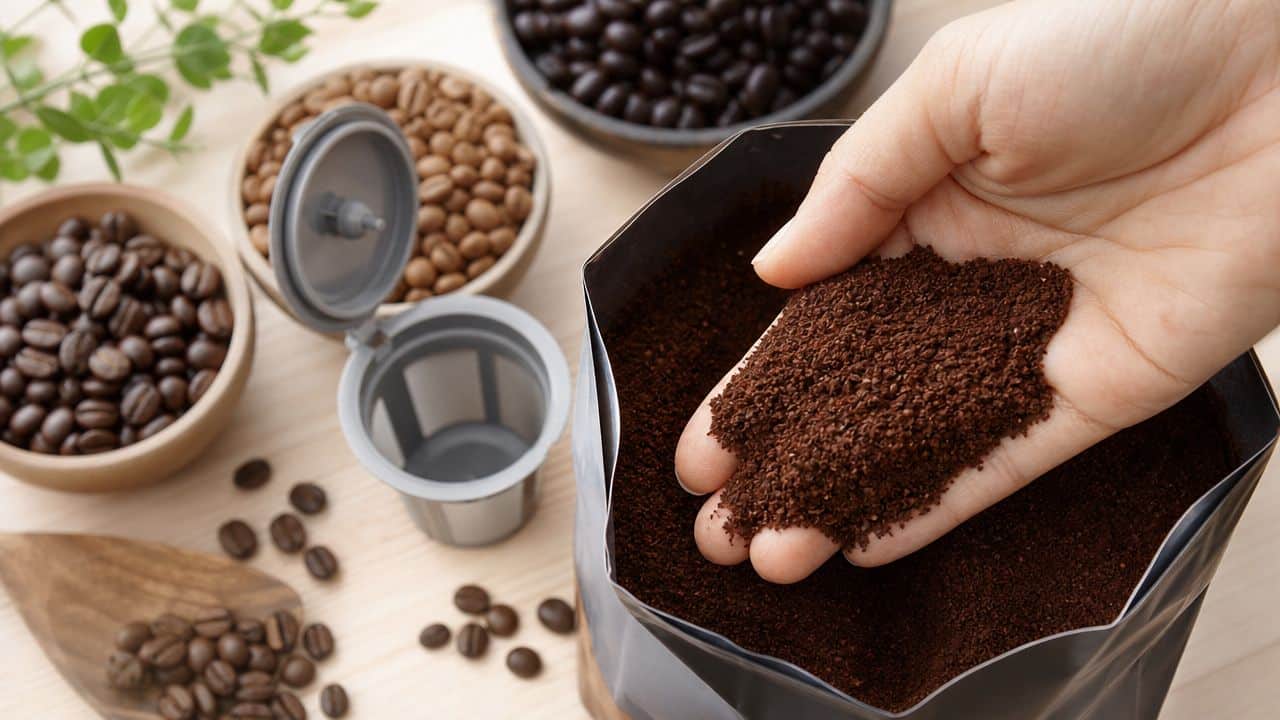
The sweet spot is usually medium grind. It should feel slightly gritty between your fingers, not powdery and not chunky. When you pinch a small amount, it should hold shape for a moment and then loosen easily.
Grounds that look right in a drip brewer can still be wrong for a reusable pod. The Keurig chamber is compact, so small grind mistakes get amplified.
Keurig says a K-Cup pod can contain 75 to 150 mg of caffeine per 8 oz cup, depending on roast strength and other factors, in its K-Cup pod support guidance. That range matters because it shows how much strength can vary even before you start customizing with your own grounds. With a reusable pod, your bean choice and brew style put far more of that control in your hands.
For a deeper look at roast and grind pairings, this guide to the best ground coffee for Keurig is worth a read.
Mastering the Fill and Pack Technique
The difference between a rich reusable-pod cup and a disappointing one is often physical, not theoretical. It's in the hand feel of the grounds, the height of the fill, and the pressure you use when you level the top.
Keurig brewing depends on a simple mechanism. The machine punctures the pod and pushes water heated to about 192°F (89°C) through the coffee bed, as explained in this Keurig K-Cup brewing overview. If the grounds are packed too tightly, water can't move cleanly through the pod. That's when you get weak brews, drips, or a messy overflow.
What the right fill feels like
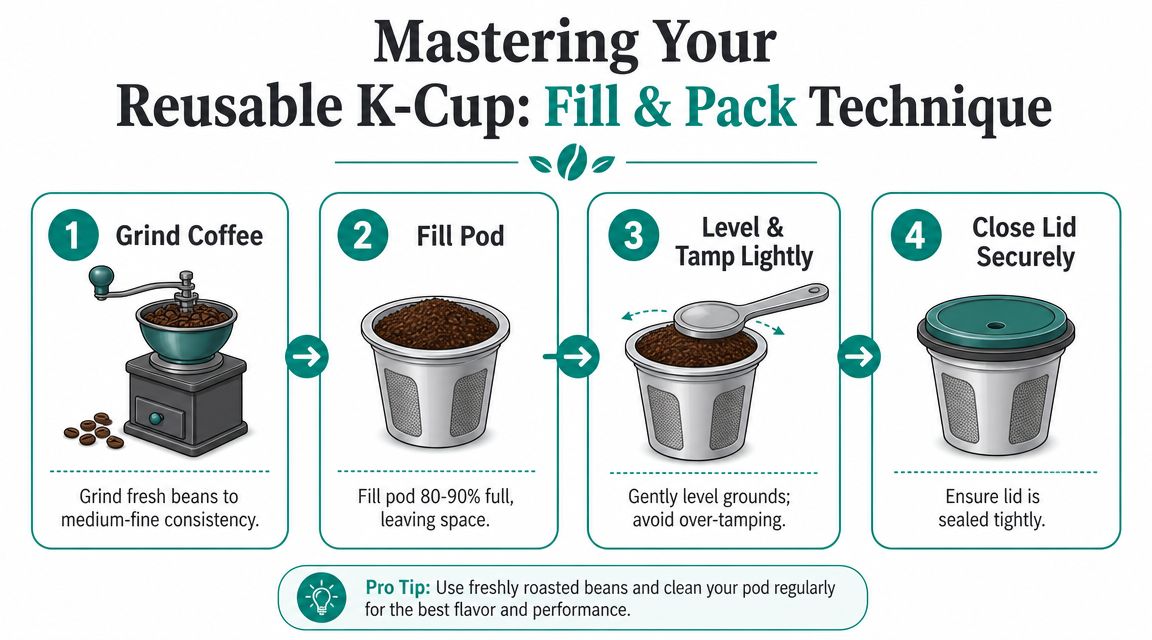
Start with dry, evenly ground coffee. Spoon it into the pod until it's nearly full, then stop and look at the top.
You want the grounds to sit high enough to create a full bed, but not so high that the lid has to crush them closed. If the lid presses hard or bows upward, you've overfilled it. If the pod looks half-empty, the water will rush through too quickly.
A good fill usually has these signs:
- The surface reaches near the top without mounding aggressively.
- The lid closes without force and doesn't scrape out a heavy ring of coffee.
- The pod feels evenly filled when you tap the side lightly.
Tamp lightly, don't build an espresso puck
This is the mistake that causes most bad reusable-pod brews. People press too hard because they want “stronger” coffee.
Keurig isn't an espresso machine. A reusable K-Cup needs a level bed, not a compressed puck. Use the back of a spoon or your scoop to smooth the grounds with a light touch. Think of it as settling, not pressing.
A proper tamp for a reusable pod looks almost accidental. Flat top, no hard compression.
If you want more body, don't crank down harder. Use a smaller brew size or choose a coffee with more inherent richness.
A simple repeatable method
Use this routine until your hands remember it:
- Fill with intention: Add grounds gradually so they settle naturally instead of forming air pockets.
- Tap once or twice: A gentle tap helps the coffee distribute inside the pod.
- Level the top: Smooth the surface so water meets an even coffee bed.
- Close and check: If the lid snaps shut cleanly, you're in the right range.
If you want a more detailed walkthrough for daily use, see this guide on how to use coffee grounds in a Keurig.
Optimizing Your Keurig for Custom Brews
A well-filled reusable pod still depends on the machine settings around it. The brewer, the water, and the maintenance routine shape the final taste as much as the beans do.
Brew smaller for fuller flavor
When a reusable pod tastes weak, the fix often starts with cup size. A smaller brew setting usually gives a fuller result because the machine runs less water through the same bed of coffee. If your brewer has a Strong option, use it when you want more concentration from the same grounds.
That combination works especially well with medium and dark roasts. It pulls more flavor without forcing you to overpack the pod.
Water quality shows up in the cup fast
Coffee is sensitive to water. If your tap water tastes flat, mineral-heavy, or slightly bitter on its own, the brewed coffee will carry that problem straight into the mug.
Filtered water usually gives a cleaner flavor and a more defined finish. It also helps reduce the mineral buildup that can affect flow inside the brewer over time. For Keurig owners, this is one of the few upgrades that improves both taste and machine behavior.
A practical setup is simple:
- Use fresh filtered water for daily brewing.
- Replace water filters as needed if your brewer uses them.
- Run descaling solution on schedule when you notice slower brewing, off flavors, or buildup signs.
If you brew often, accessories like charcoal water filters and a descaling solution aren't extras. They're maintenance tools that help your coffee stay consistent and keep the machine from becoming the problem.
Match the machine to the coffee
Not every coffee wants the same treatment. A chocolatey blend may taste better at a smaller cup size. A lighter coffee may open up a bit more when the machine is clean and the water is fresh. That's the craft side of reusable pods. You aren't locked into one factory-set result.
The good habit is to change one variable at a time. Keep the same coffee and adjust brew size. Then keep the same size and change grind slightly. That's how you learn what your Keurig does well.
PureHQ Reusable Pods vs Generic Alternatives
Not all reusable pods behave the same way in the brewer. That matters because the pod itself affects flow, sealing, sediment, and how easy cleanup feels after the cup is done.
Keurig has highlighted a shift toward plastic-free, aluminum-free, and potentially compostable formats such as K-Rounds, which underscores that pod design and materials now matter at the category level, as shown in Keurig's K-Rounds product discussion. In practical use, the value of a reusable pod depends heavily on its construction.
Where cheap pods usually go wrong
A budget pod can still work, but the weak points are predictable. Hinges loosen. Lids don't seal tightly. Mesh quality varies. Some models let too much fine sediment through, while others restrict flow enough to produce a dull cup.
That's why a reusable pod shouldn't be judged only by compatibility. It should also be judged by how repeatably it brews.
| Feature | PureHQ Premium Pods | Generic/Budget Pods |
|---|---|---|
| Filter material | Stainless steel micro-mesh design intended to hold back fine grounds while allowing flow | Mesh quality varies, which can lead to sediment or uneven extraction |
| Lid fit | Secure locking style designed for repeat opening and closing | Fit may loosen over time, which can contribute to leaks or poor puncture alignment |
| Cleanup | Easier to rinse when the grounds bed stays intact | Grounds often stick in corners or seams |
| Durability | Built for repeated use with regular cleaning | Some low-cost pods show wear faster at the hinge or latch |
| Brew consistency | More predictable when fill and grind are dialed in | Can vary from cup to cup even with the same coffee |
| Waste reduction | Long-term reuse supports lower packaging waste | A flimsy pod that fails early reduces that benefit |
Addressing the fit and leak objection
The most common objection is simple. “What if it leaks or doesn't fit my machine?”
That concern is fair. Reusable pods fail most often when the lid alignment is loose, the pod height is slightly off, or the coffee is overpacked. A better-made pod reduces those variables. It doesn't erase bad technique, but it gives the technique a stable platform.
PureHQ Inc. sells reusable K-Cups for Keurig models along with accessories like paper liners and descaling products, which makes it one practical option for people who want a refillable pod setup from the same brand ecosystem. Generic pods can still be useful, especially as backups, but they're more of a gamble on fit, flow, and cleanup.
The reusable pod isn't just a container. It's part of the brew system.
Solving Common Issues from Weak Coffee to Clogged Needles
Most reusable K-Cup problems come down to three things. Grind, fill, or maintenance. The good news is that all three are fixable without replacing your machine.
Weak or watery coffee
If the cup tastes thin, the water probably moved through too easily.
Common causes include a grind that's too coarse, too little coffee in the pod, or a brew size that's too large for the coffee bed. Start by tightening the grind slightly and brewing a smaller cup. Keep the tamp light. Pressing harder usually makes flow worse, not flavor better.
Grounds in the cup
Sediment usually points to one of two issues. The grind is too fine, or the pod isn't sealing cleanly.
Check the rim before closing the lid. Loose grounds caught on the edge can break the seal and let fines escape. If the grind looks dusty, back off to a slightly coarser texture. Some users also like paper liners inside reusable pods because they can make cleanup tidier and reduce stray sediment.
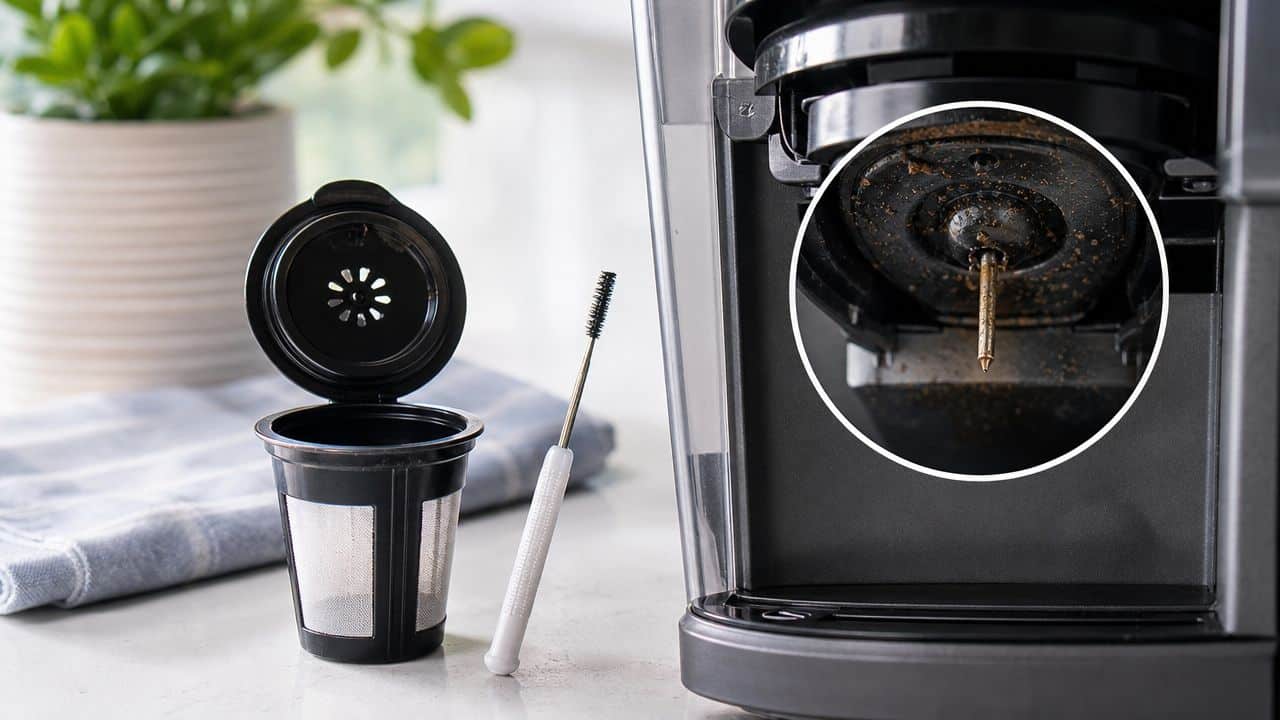
Here's a useful visual if your machine has started acting up:
Slow brewing or clogged needles
A Keurig that sputters, drips, or struggles to finish a cycle often has restricted flow. Fine grounds can contribute to that, especially if they migrate upward during puncture and brewing.
Try this checklist:
- Empty and rinse the reusable pod right after brewing so oils and fines don't harden in the mesh.
- Inspect the pod lid and rim for stuck grounds before each use.
- Clean the brew needle area carefully if flow has slowed.
- Descale the machine when mineral buildup starts affecting performance.
If your coffee suddenly turns weak after weeks of good brews, don't blame the beans first. Check the machine path for buildup.
Reusable brewing gets easy once your hands learn the right feel. Medium grind. Full but not crammed pod. Light tamp. Fresh water. Clean machine. That's the whole game.
If you want a simpler way to brew your own coffee in a Keurig without the usual guesswork, shop reusable pods, filters, and maintenance supplies from PureHQ Inc.. A good pod setup gives you more control over taste, less single-use waste, and a routine that finally makes your Keurig feel like your brewer instead of a pod dispenser.

