
Coffee Machine Care
Wholesale Coffee Accessories: A 2026 Sourcing Guide
Jul
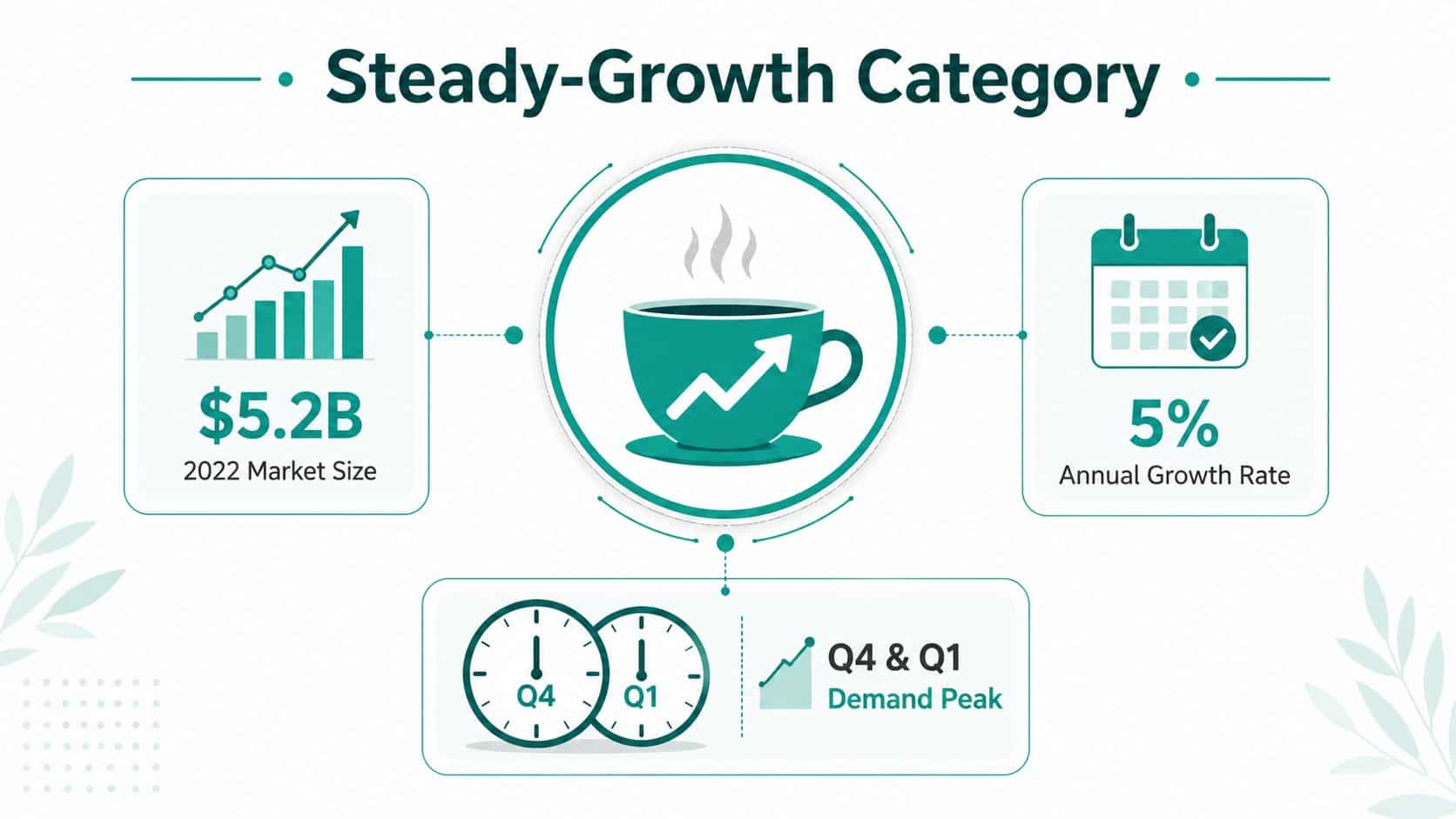
December is the pressure point in coffee accessories, with peak demand concentrated around gifting and machine add-ons, while May sits at the low end of the calendar. That seasonality matters because the category is small, steady, and reorder-driven, with market estimates putting global coffee machine accessories at about USD 125 million in 2025 and USD 172 million by 2032 at a 4.8% CAGR, while another estimate places it at USD 132 million in 2025 with 4.4% CAGR through 2033, all of which points to expansion rather than volatility SaleHoo coffee accessories trends. For wholesale buyers, that means the money is in repeat replenishment, giftable SKUs, and bundled consumables, not in hoping for a one-time machine sale.
The problem is simple. Too many wholesale pages for coffee accessories act like product dumps, not buying guides. Buyers get a wall of SKUs and almost no help on fit, maintenance cycles, or which accessories sell again after the first order.
Why Wholesale Coffee Accessories Are a Steady-Growth Category
wholesale coffee accessories make sense when you look at installed-base economics. Coffee is a huge category, with the global market at USD 245.2 billion in 2024, 63% of distribution flowing through B2B channels, and projected growth to USD 381.52 billion by 2034 at a 4.52% CAGR coffee market analysis. Accessory demand follows that machine and service footprint, because cafes, hotels, offices, and breakrooms need filters, pods, baskets, descalers, and replacement parts long after the initial equipment purchase.
The key buyer advantage is recurrence
Consumables do the heavy lifting. In the U.S. coffee-maker-accessories market, water filters, descaling solutions, and paper filters account for roughly 45% to 55% of revenue, with repeat purchase cycles of 1 to 6 months IndexBox market analysis. That is why wholesalers should treat maintenance items as core inventory, not filler. If you stock only flashy add-ons, you miss the orders that come back.
Practical rule: If an accessory touches water, filtration, or daily brewing, it belongs in your reorder plan.
Seasonality also matters. December demand spikes because accessories are easy gifts and easy machine upgrades, while spring lulls expose weak assortment planning SaleHoo coffee accessories trends. Smart buyers preload inventory before the holiday rush, then use slower months to tighten bundles and clear dead SKUs.
Don't buy from generic pages without a machine map
Most wholesale supplier pages still behave like generic tag pages, which leaves buyers guessing on compatibility. That is a mistake if you sell to homes, offices, or mixed-machine customers. A useful wholesale program maps SKUs to actual brewer ecosystems, and it tells the buyer which items are maintenance essentials versus optional extras.
For a useful outside example of how sellers think about channel execution, how to build a wholesale business on shows the value of planning inventory around repeat demand, not just catalog breadth. That logic fits this category exactly.
If you stock for Keurig buyers, you need machine-specific guidance, not vague “universal” language. Keurig coffee maker accessories compatibility and buying notes is the kind of reference buyers need before they place a wholesale order.
If you buy well here, you are not stocking novelty. You are stocking a category where machine ownership, replacement cycles, and holiday timing all support steady reorder behavior.
Matching Accessories to Machine Platforms and Use Cases
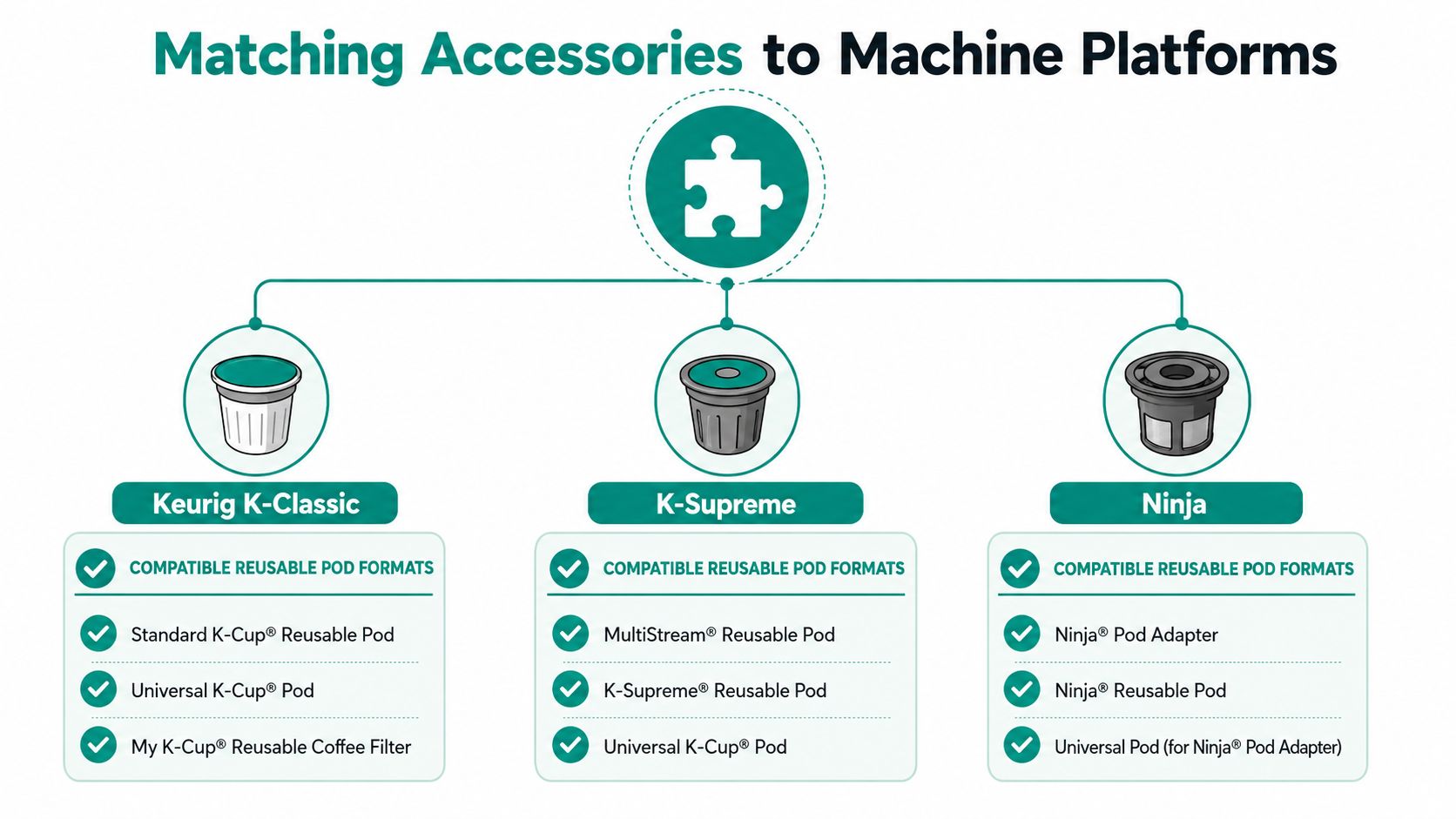
Compatibility is where wholesale buyers get burned most often. A reusable pod, a basket filter, or a descaler can be perfectly good and still be useless if it doesn't match the brewer ecosystem. Stocking for Keurig, Ninja, and Breville buyers means you need a tighter matrix than “universal” claims on a product card.
Match the accessory to the machine, not the marketing
For single-serve customers, reusable pod format matters more than the brand name on the box. A Keurig K-Classic buyer usually needs different pod compatibility than a K-Supreme buyer, and a Ninja DualBrew owner needs another fit profile again. Wholesale buyers should ask suppliers for clear compatibility notes tied to each platform, because “fits most machines” is how returns start.
Basket filters and single-serve pods solve different jobs. Basket filters support drip brewers and higher-volume workflows, while reusable pods support portioned single-serve brewing. Commercial filter specs matter too, because paper basis weight, thickness, and air permeability affect brew speed, clog resistance, and cup clarity in bulk purchasing Deer Coffee Filter technical specs.
If a supplier can't tell you what machine a part fits, assume your customers will find out the hard way.
For maintenance items, buyer behavior is simpler. Descalers, cleaning tablets, and water filters work best when they're paired to the machine family and presented as part of the service routine. A mixed office with multiple brewer brands should not be sold one vague “universal” kit. It needs a clear parts list by platform and by cleaning cycle.
Stock by use case, not just by product type
A home brewer wants convenience and a low-friction install. A breakroom manager wants consistency and fewer complaints. A multi-brand office wants compatibility and easy replenishment. That's why the same SKU can work in one channel and fail in another.
- Keurig households: Reusable K-Cup style pods, water filters, and descaling items tied to the exact brewer model.
- Ninja DualBrew buyers: Pod formats and filters that are explicitly labeled for DualBrew compatibility.
- Breville users: Water filter charcoals and cleaning items that support espresso maintenance.
- Shared office setups: Duplicate the most common consumables, then keep model-specific accessories separated by machine family.
PureHQ Inc. is one example of a supplier that organizes around compatibility, with reusable K-Cups, water filtration, gold-tone carafe baskets, and descaling solutions built for specific brewer families. That kind of catalog structure is what buyers should demand from any wholesale source.
Premium Versus Generic Accessories and Quality Verification
Cheap accessories fail in predictable ways. Reusable pods leak at the seam, basket filters tear under heat and flow, and poor descaling products can create more problems than they solve. Wholesale buyers should stop thinking in terms of unit price alone and start asking what each accessory does to the machine and the cup.
| Criteria | Premium Accessories | Generic Alternatives |
|---|---|---|
| Fit precision | Matches the machine platform closely, lowers leak risk, and reduces returns | Loose tolerances create spills, poor sealing, and inconsistent brewing |
| Durability | Holds up to repeated cleaning and daily use | Warps, cracks, or clogs sooner |
| Material safety | Uses food-contact materials with clearer quality controls | Often has weaker documentation and more finish variation |
| Filter performance | Paper specs are controlled, including basis weight, thickness, and air permeability Deer Coffee Filter technical specs | Inconsistent flow can slow brewing or affect cup clarity |
| Maintenance fit | Descaling and cleaning items are matched to machine types | “Universal” claims can be too loose for mixed fleets |
| Buyer confidence | Samples are repeatable and packaging is consistent | Samples look fine once, then drift across the next order |
Test samples like a buyer, not a shopper
Request samples before you commit to bulk. Run them through the exact brewer model your customers use, not just a similar one. Check sealing, insertion force, cleaning ease, and whether the accessory still performs after repeated use.
For commercial filters, ask for the technical sheet and compare it against the application. A paper filter with the wrong density can slow the brew or collapse under load, which creates avoidable waste in a wholesale setting Deer Coffee Filter technical specs. For reusable pods, test whether the lid closes cleanly and whether grounds escape into the cup.
Use the objection before the order
The most common objection is compatibility, and it's not theoretical. Buyers ask whether a pod leaks, whether a filter fits, and whether the cleaner will damage internals. Answer those objections with sample tests, machine-specific documentation, and plain packaging language.
Buyer standard: If a supplier won't stand behind fit on the exact platform, don't place a large order.
For a practical way to structure sample checks and acceptance criteria, testing procedures from PureHQ's blog is a useful reference point. Keep that mindset when you're comparing premium and generic options, because the cheapest inventory becomes expensive fast when it starts coming back.
Negotiating MOQs and Managing Wholesale Logistics
MOQ negotiation should start with your sales plan, not your supplier's default case pack. A small office buyer needs enough inventory to cover routine use without tying up cash in slow movers. An Amazon seller needs predictable replenishment, tight packaging control, and clear label handling so listings don't get buried under avoidable defects.
Start with samples, then talk numbers
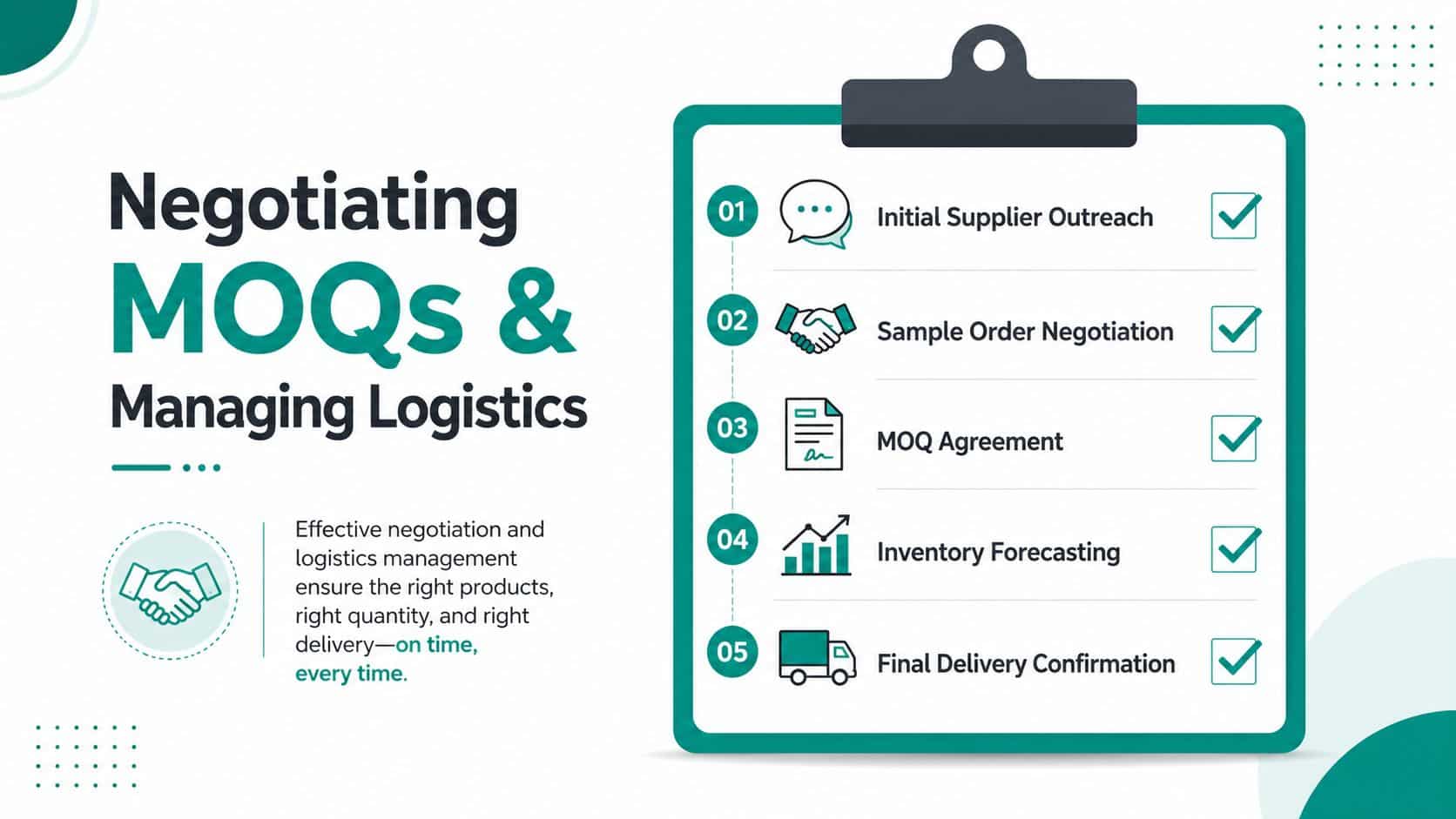
A good supplier conversation follows a simple order. Ask for samples, confirm compatibility, review packaging, then negotiate MOQ against your forecast. If the supplier pushes volume before product validation, that's usually a sign they care more about clearing stock than helping you sell.
Commercial buyers also need to think in terms of supply rhythm. Coffee accessories move with machine ownership, office turnover, and seasonal gifting, so the order size should reflect how fast the item is likely to cycle. The broader equipment market keeps expanding, including commercial coffee equipment and supplies projected from USD 27,767.52 million in 2019 to USD 35,621.44 million by 2025 at a 4.23% CAGR Commercial Coffee Equipment & Supplies market report. That's the backdrop for why replenishable accessories deserve structured inventory planning.
Keep packaging and labeling clean
Food-contact accessories need clear packaging, legible compatibility claims, and consistent case counts. Buyers should confirm whether retail-ready packaging is required, whether barcode labels are already applied, and how the supplier handles damage claims in transit. If you sell on marketplaces, a small carton error becomes a lost ranking problem, not just a warehouse issue.
Logistics rule: The cheapest unit price is worthless if the carton arrives mispacked or the labels don't match the listing.
Small office buyers and Amazon sellers approach the first order differently. The office buyer should prioritize reliability, easy reordering, and a short approved list of SKUs. The Amazon seller should prioritize search clarity, item variation control, and packaging that survives storage, prep, and shipping.
Use seasonal timing to your advantage. Build for the fourth quarter peak, then protect cash in the slow months by trimming weak lines and reordering only the consumables that move.
Why Consumables Drive Repeat Wholesale Revenue
Consumables keep the account alive after the first shipment clears. Water filters, descaling solutions, paper filters, replacement pods, and cleaning kits drive the follow-on orders that make a wholesale coffee catalog worth carrying.
Build bundles around the brewer, not the SKU
The best wholesale offer starts with the machine ecosystem and works outward. A Keurig buyer needs the compatible reusable pod, replacement filters, and a descaler that matches the brewer's maintenance cycle. A Ninja or Breville buyer needs a different mix, because compatibility and care items change with the platform.
Bundles also help buyers avoid dead inventory. If you sell a reusable pod on its own, the customer may reorder only when the old one fails. If you pair that pod with liners, cleaner, or a filter cartridge, the order value goes up and the customer has a reason to come back on a predictable schedule.
The installed base matters, but the win is the replenishment pattern it creates. U.S. coffee-maker-accessories demand is tied to a large installed base of coffee maker units, and the revenue mix leans heavily toward items that need to be replaced or refilled over time IndexBox market analysis. Wholesale buyers should build around that reality, because it favors repeat purchasing instead of one-off machine sales.
Sell the maintenance path, not just the accessory
A consumable without a maintenance plan is a missed sale. If you stock reusable pods, place the cleaner and spare liners beside them. If you stock filters, make the replacement path obvious. Buyers do not want to piece together the care routine after the machine starts brewing poorly or clogging.
That is where margin gets better. The accessory may carry the first sale, but the follow-on items usually drive the more reliable gross profit because they are easier to reorder and easier to bundle. A buyer who trusts the fit will keep coming back for the consumables that keep the brewer working.
A practical Keurig breakroom bundle is simple. Pair the compatible reusable pod with a water filter cartridge and a descaling solution. For Ninja and Breville users, match the platform-specific accessory with the cleaner and filter item that fits the machine's upkeep requirements. That approach keeps the catalog focused and reduces the chance that a buyer orders the wrong maintenance item.
For sourcing discipline, product authenticity matters when you sell consumables that touch performance and taste. Buyers inspect packaging, review photos, and compare claims fast. If the fit is vague or the quality is inconsistent, they do not reorder.
Selling Wholesale Coffee Accessories on Direct Channels and Amazon
Direct channels and Amazon reward the same thing, clarity. Buyers search by compatibility, not by vague category names, and they return items when the listing overpromises fit or underexplains maintenance. Product pages need to say exactly which brewer families they serve, what problem they solve, and what comes in the box.
Listings should answer fit questions fast
Your title, bullets, and images should make compatibility obvious. If a customer owns a Keurig K-Classic, they should not have to decode a generic listing to figure out whether the pod works. The same applies to Ninja and Breville buyers, who want machine-specific confidence before they click.
Use bundles to raise order value without adding confusion. Pair accessories with compatible filters, descaling tablets, or cleaning items so the customer sees a complete maintenance path instead of a single isolated SKU. That approach also reduces returns because the buyer gets the accessory and the care item in one order.
For authenticity and sourcing discipline, product authenticity is worth reviewing if you sell through channels where quality signals matter. Buyers on Amazon compare reviews, photos, and packaging quickly, so the listing has to work harder than the price.
Channel advice: On Amazon, a vague accessory loses to a precise one, even when the precise one costs more.
Use your customer support and FAQ pages to answer the objections that stall conversion. Leaks, fit, durability, and compatibility questions belong on the page before they become returns. Keep the language direct, and keep the claims tied to the specific machine family.
PureHQ Inc. supplies coffee machine accessories built around brewer compatibility, maintenance, and repeat use, which makes it a practical fit for buyers who stock reusable pods, filters, and descaling items. If you're sourcing wholesale coffee accessories for homes, offices, or Amazon channels, visit PureHQ Inc. and review the lineup with your machine list in hand.

