
Coffee Machine Care
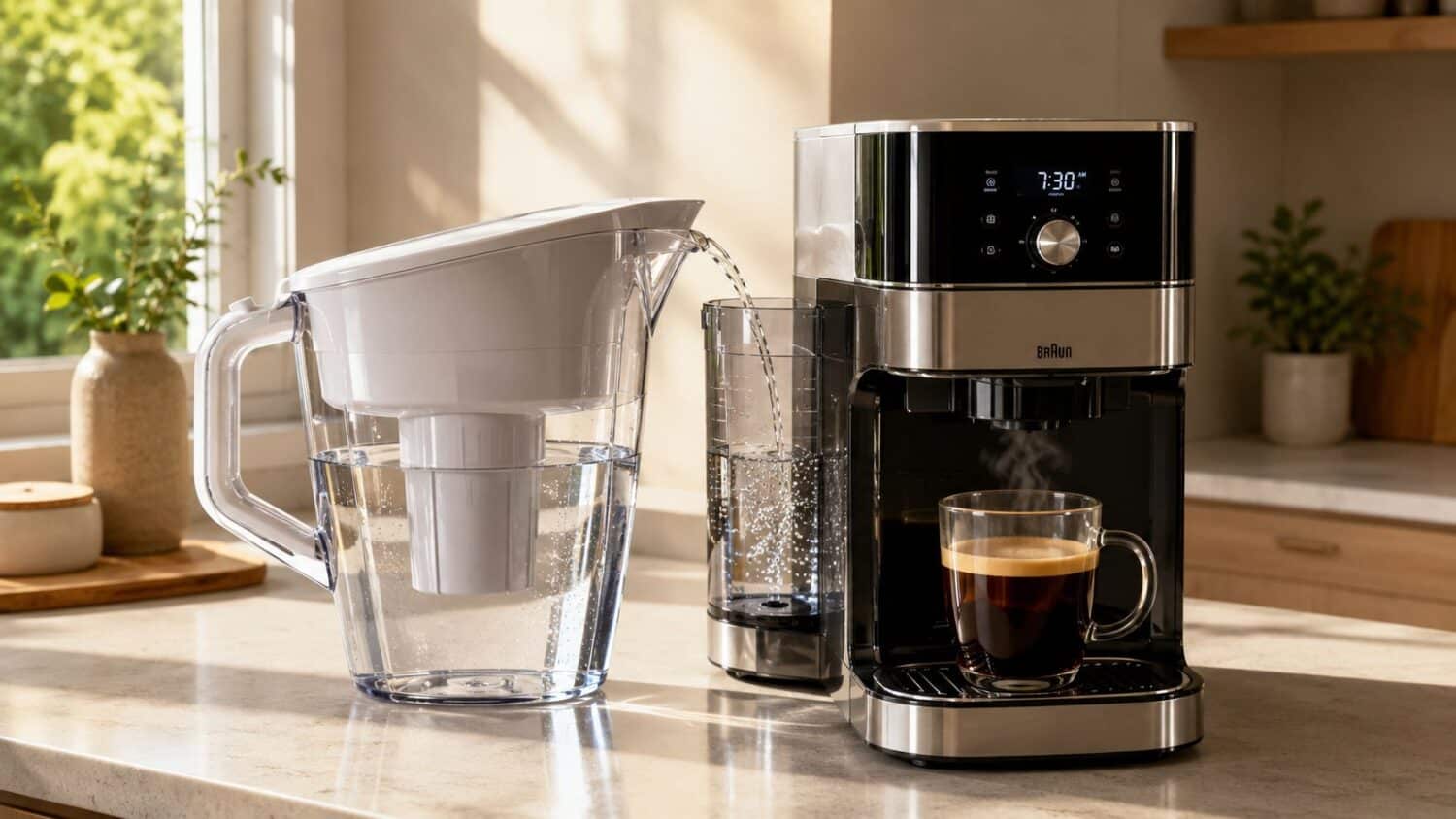
Enhance Your Coffee: Get a Water Filter Jug Large
Jun
Your coffee can taste flat even when the beans are fresh and the grinder is dialed in. In a lot of kitchens, the weak point is the water. Small pitchers make that worse because they turn every brew into a refill routine, and they tempt people to top off the machine straight from the tap just to save time.
That shortcut shows up in the cup. It also shows up inside the brewer. If you run a Keurig, Ninja, Breville, or a drip machine with a larger tank, a bigger filtered-water setup is often the simplest upgrade you can make.
Tired of Refilling That Tiny Water Pitcher?
If your coffee machine has a decent-sized reservoir, a small pitcher gets old fast. You fill the pitcher, wait for it to filter, pour part of it into the tank, then repeat because the reservoir still isn't full. On busy mornings, that extra step is exactly when people give up and use unfiltered tap water.
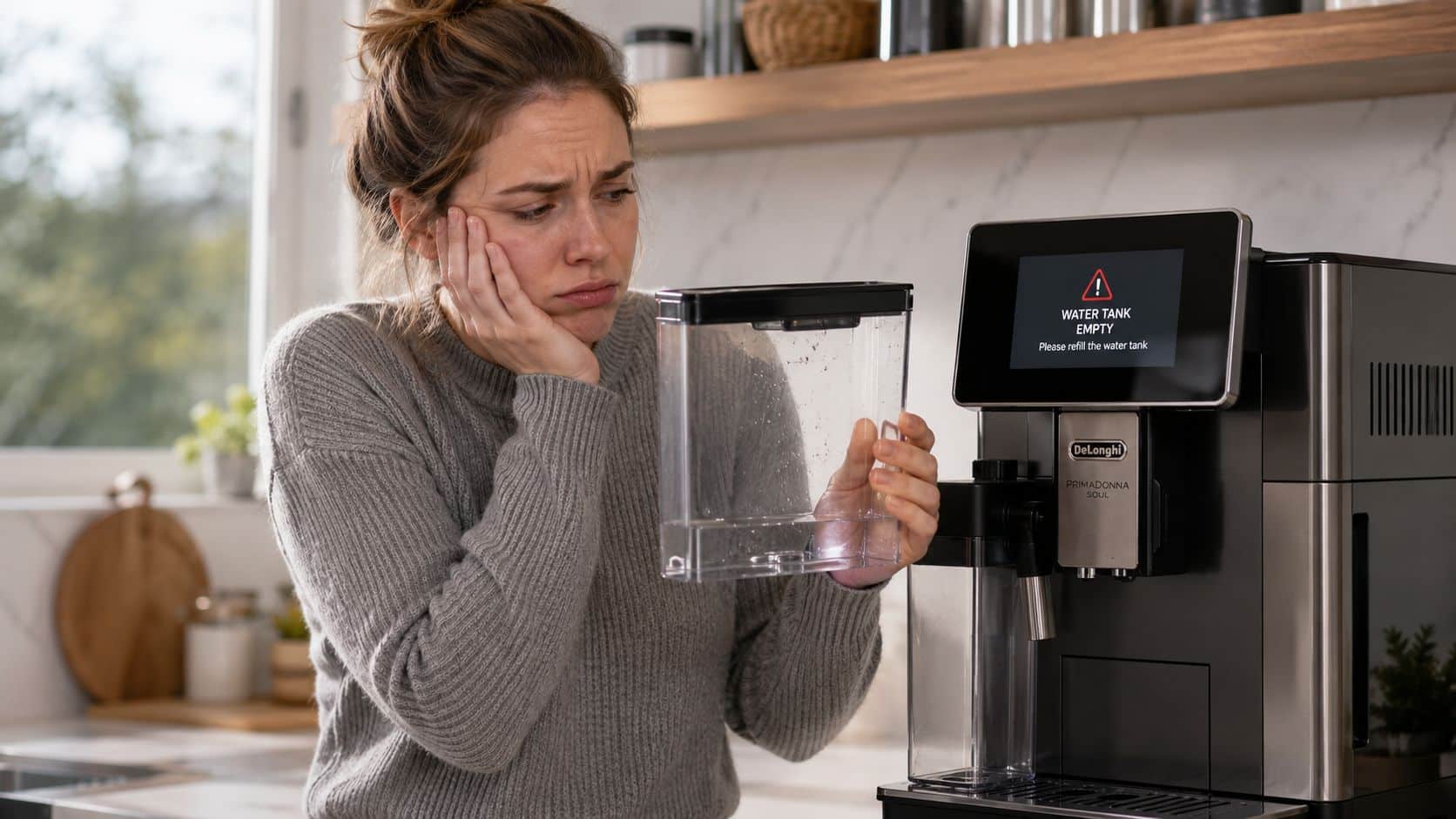
That's more than a convenience problem. Water with noticeable chlorine taste can mute coffee flavor, especially in lighter roasts and cleaner brew styles. Water that leaves mineral residue can also create scale inside heating systems, valves, and narrow internal lines. You might blame the beans, then the grinder, then the brewer, when the actual issue started at the faucet.
Why coffee machines expose bad water fast
Coffee is mostly water, so off-flavors don't hide for long. If your brew tastes dull, sharp in the wrong way, or slightly chemical, the machine may be extracting from coffee with water that already tastes off.
A large filter jug helps in two practical ways:
- It reduces refill friction so you're more likely to use filtered water every time.
- It keeps a batch of ready water on hand for brew tanks, kettles, and iced coffee prep.
- It gives shared kitchens a routine that people will follow.
Use a water setup that fits your brewer, not one that looks fine on a shelf. If the jug can't support your normal coffee volume, you'll bypass it.
If you want a broader primer before buying, Water Filter Advisor has a useful guide on understanding water filtration options that helps sort pitchers, faucet units, and other formats by use case.
What Makes a Water Filter Jug Large
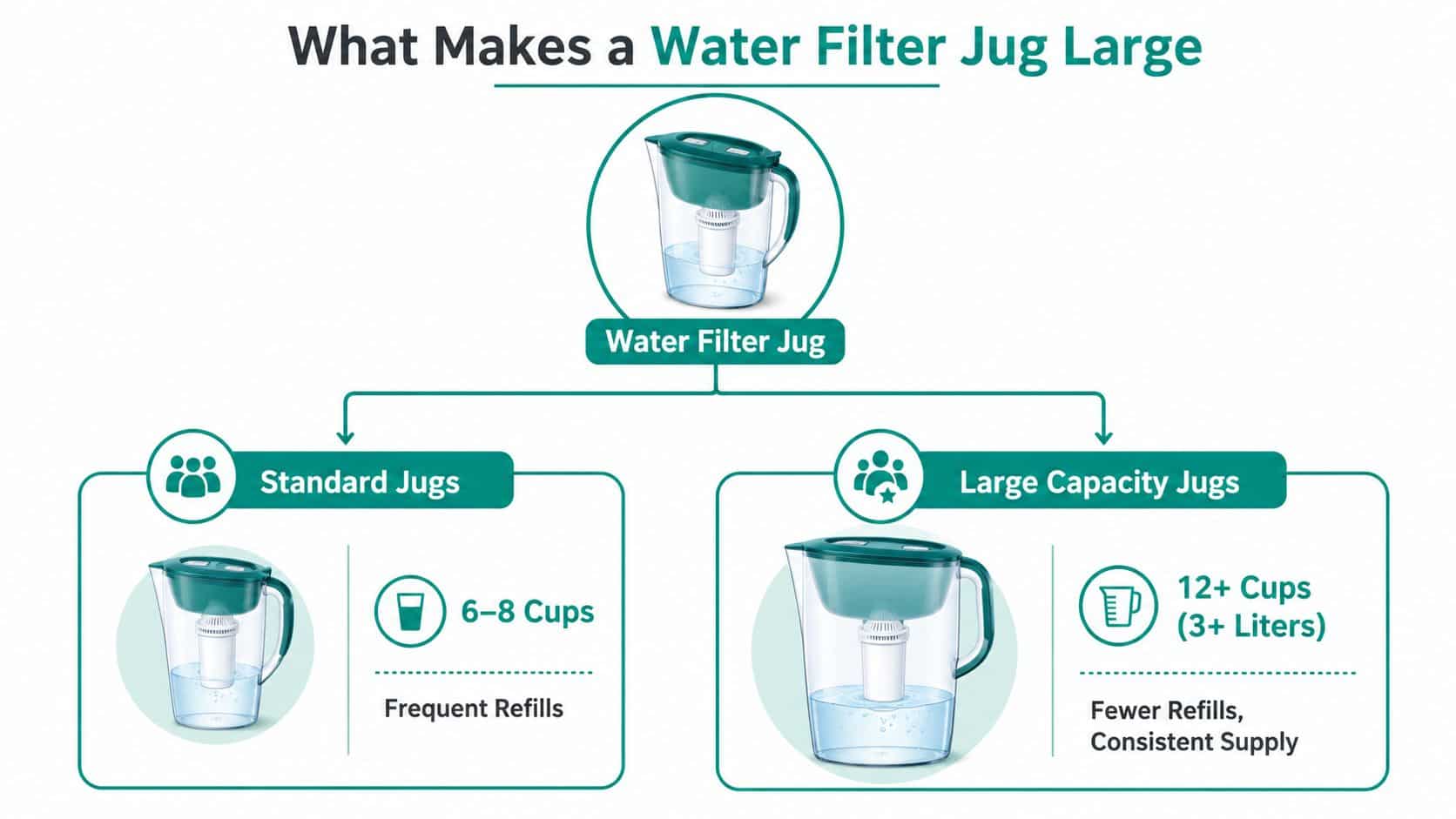
“Large” should mean more than marketing copy. In practice, it means the jug holds enough filtered water to support your actual routine without constant refills. For coffee drinkers, that usually means thinking beyond a single glass of water and planning around machine reservoirs, kettles, cold brew jars, and a second person in the kitchen.
A practical way to define large
Retail listings span a wide range, including 6–52 cup options on major shopping pages, which is exactly why “large” can feel vague if you shop by title alone instead of by use case and footprint. A better rule is simple. If the jug can cover your machine refill plus normal drinking water without forcing another immediate batch, it's functioning as a large-capacity model for your household.
Brita's pitcher lineup itself emphasizes that pitchers come in multiple sizes and formats on its water pitcher selection pages, but the more useful buying question is how many times you'll need to refill it in a normal day.
Size tiers that make sense in real kitchens
Here's the way I'd think about it:
- Small standard pitchers work for one person drinking water and brewing a modest amount of coffee.
- Mid-size jugs suit couples or anyone with a machine reservoir that makes tiny pitchers annoying.
- Large-capacity jugs fit family kitchens, serious home coffee setups, and breakrooms where people keep drawing water all day.
Bigger isn't automatically better. If the jug is so wide that it monopolizes fridge space, people stop using it. If it's too small, you're back to refilling during every coffee prep cycle.
A good large jug feels boring in the best way. It's there, it's full enough, and nobody thinks about the refill process.
This isn't a niche product category. The global water filter jug market was estimated at USD 1,096.8 million in 2026 and is projected to reach USD 1,819.7 million by 2033, a 7.5% CAGR, with North America expected to hold 39.9% of global share in 2026 according to Coherent Market Insights' water filter jug market analysis. That matters because it shows large jugs serve mainstream home and office demand, not a fringe lifestyle trend.
Decoding the Specs on Your Next Water Jug
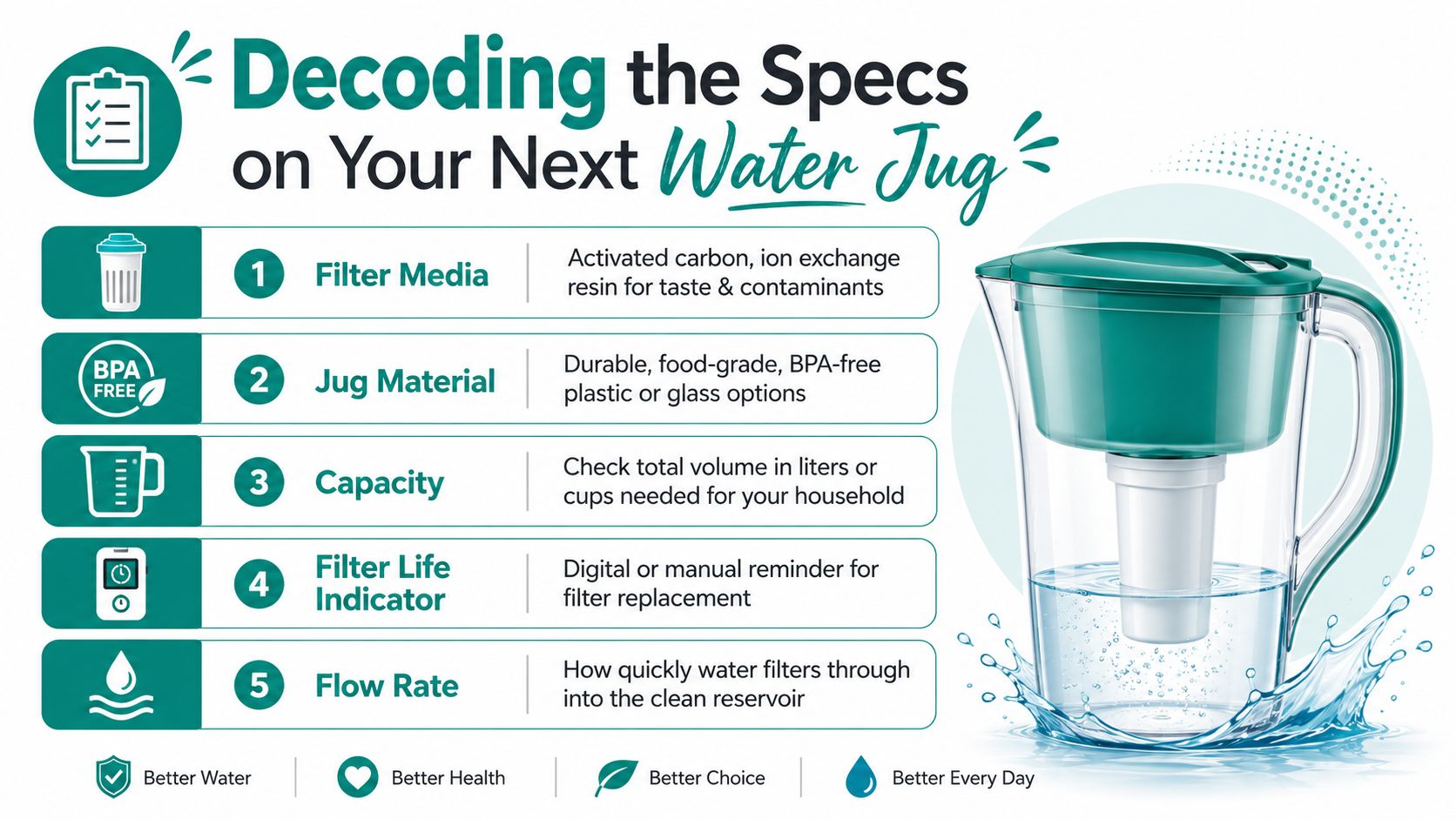
A lot of shoppers focus on capacity first and everything else second. That's backward. Capacity tells you how often you'll refill. The filter system tells you whether the water will improve your coffee experience.
What's happening inside the jug
Effective jugs use a multi-stage gravity filtration process. A preliminary screen catches larger sediment before water moves through activated carbon and ion-exchange media. A California Water Boards performance data sheet for an NSF-certified pitcher filter shows NSF/ANSI 42 certification, which specifically covers reduction of aesthetic impurities such as chlorine taste and odor, along with zinc, in that product's scope of certification on the official performance datasheet.
In plain terms, that matters for coffee because chlorine taste can make brewed coffee seem harsh or hollow. Sediment control matters because you don't want the filter media doing all the work while larger particles clog the path early.
The specs that matter most
When you compare models, focus on these points first:
Filter media type
Activated carbon is often the first thing to look for when taste and odor are your main complaint. Ion-exchange media matters when a product is designed to address dissolved contaminants within its certified claims.Certification before branding
A claim printed on a box isn't the same as a certification scope. If a jug has certification, check what the certification covers.Throughput and service interval
Large jugs are useful only if the cartridge can keep up with regular use. One large-format pitcher listing notes a service interval of about 200 fills before replacement, which is a reminder that bigger capacity doesn't erase cartridge wear. Heavy-use homes and office kitchens should pay attention to replacement planning, not just jug volume.Flow behavior
A slow filter isn't always bad. Gravity systems need contact time. What you want to avoid is a poorly designed cartridge that channels water too quickly or clogs so badly that nobody wants to use it.
What to ignore and what to verify
Don't put too much weight on words like “advanced” or “premium” unless the product also explains its media and certification clearly. Independent research on pitcher filters found that products can “vary greatly” in how they affect mineral concentrations in tap water. That's why a large jug should be evaluated as a filtration device first and a storage vessel second.
For coffee-machine owners, filter maintenance matters too. If you also use in-machine filters, PureHQ has a helpful guide on coffee maker water filter replacement that's worth bookmarking so your jug and brewer aren't working against neglected filter schedules.
Buying rule: Pick the largest jug that fits your space only after you've confirmed the filter media, certified claims, and replacement routine.
The Secret to Better Coffee Is Better Water
Coffee people love to debate grinders, burr geometry, roast level, and brew temperature. All of that matters. But if the water tastes wrong, the cup starts behind.
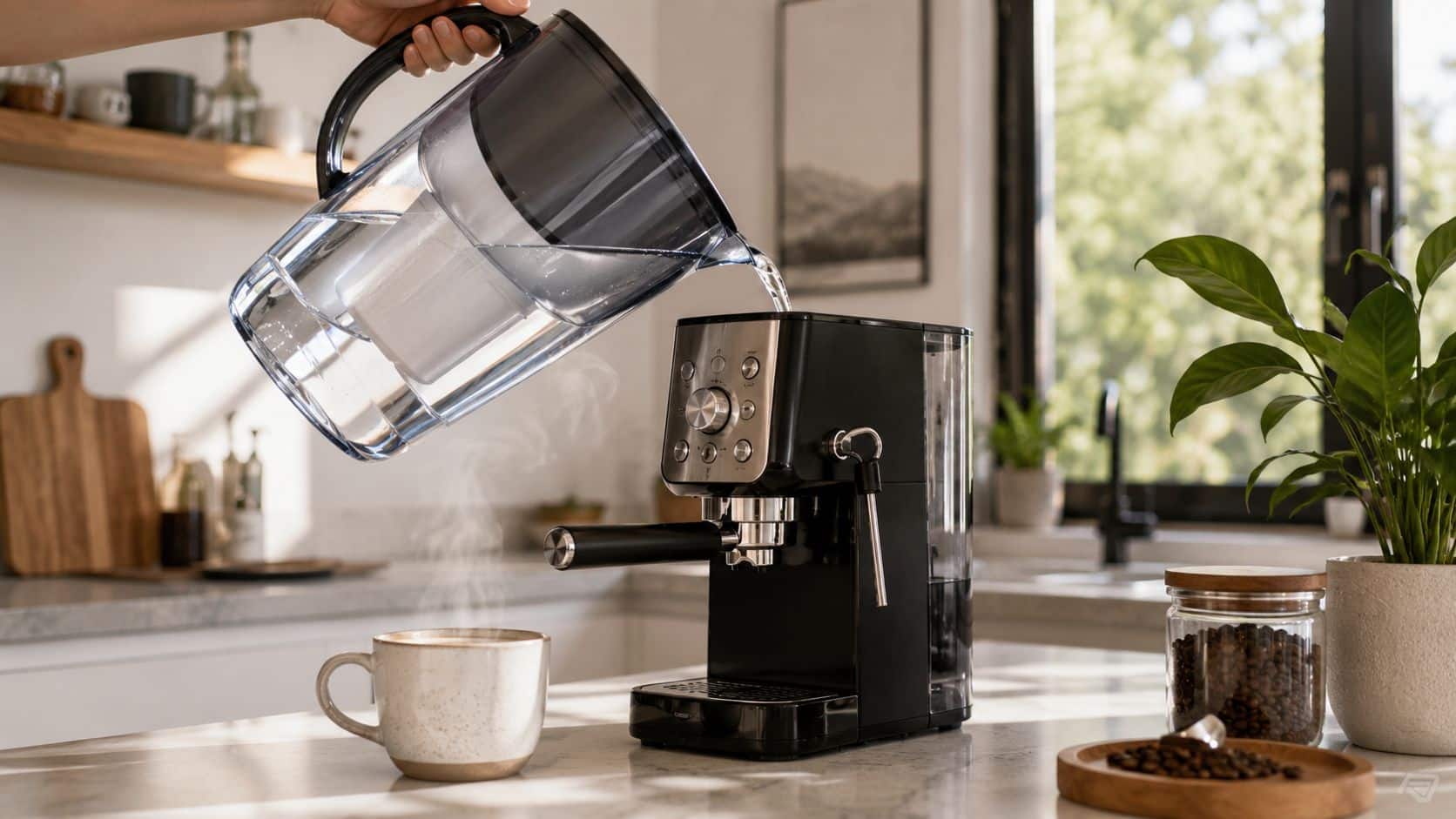
A large water filter jug helps because it removes the excuse to use tap water straight from the sink when the reservoir needs a full top-up. For pod brewers and bean-to-cup machines, that consistency matters. The coffee tastes cleaner, and your machine gets more predictable water every day.
Match the jug to the machine
Use this simple buying method before you order:
Measure your coffee machine reservoir
Fill the tank with a measuring jug once and note the amount.Check the filtered-water capacity, not just total size
Some products advertise total volume in a way that sounds bigger than the ready-to-pour amount.Aim for one-fill convenience
If possible, choose a jug that can refill your machine in one go. That's where the upgrade really starts paying off.Check handle and spout control
A large jug full of water gets heavy. If the handle is awkward or the lid shifts while pouring, daily use gets messy fast.
Better taste and less scale stress
For coffee, the immediate win is often taste. Water with reduced chlorine taste and odor gives beans a cleaner stage. You notice it most in black coffee, pour-over, and Americanos where there's nowhere for off-flavors to hide.
The machine-care side matters just as much. A filtered-water routine can reduce the amount of unpleasant buildup you see over time, but it doesn't replace regular maintenance. Descaling is still part of ownership, especially if your local water is difficult. If you want a practical routine for the water you put into the machine itself, this guide on how to improve water quality is a good companion read.
A lot of people who care about what goes into the cup also care about what surrounds the cup. If you're already dialing in a more intentional coffee routine, Maximum Health Products has an interesting piece on science-backed coffee for metabolism support that approaches coffee from the ingredient and wellness angle.
Later, after filtered water becomes your default, pair it with a descaling routine and fresh machine filters where applicable. That combination does more for long-term brewer performance than chasing every new coffee gadget.
For a quick visual refresher on filtered water use around coffee equipment, this video is useful:
Large Jugs vs Other Water Filters
A large jug solves a specific problem well. It gives you batch-ready filtered water with no installation. That makes it a strong fit for renters, shared kitchens, and anyone who wants better coffee water without modifying plumbing.
It's not the right answer for every setup. If you want water on demand from the tap, a faucet filter may feel easier. If you want a built-in solution and don't mind installation, under-sink systems offer a different kind of convenience. But for many coffee setups, a large jug hits the sweet spot between effort, flexibility, and usable batch volume.
Water filtration options at a glance
| Filtration Method | Initial Cost | Convenience | Filtration Level | Best For |
|---|---|---|---|---|
| Large water filter jug | Moderate | High for batch filling, no installation | Depends on media and certified claims | Coffee machine owners, renters, families, breakrooms |
| Small pitcher | Lower | Fine for light use, poor for large reservoirs | Depends on media and certified claims | Solo users, occasional coffee drinkers |
| Faucet filter | Moderate | High for direct fill at sink | Depends on model and certified claims | People who want quick glass-by-glass access |
| Under-sink system | Higher | Very high after installation | Varies widely by system type | Long-term setups, homeowners, dedicated kitchen filtration |
The biggest objection is size
People often ask if large jugs are too bulky for the fridge. Sometimes they are. That's why shape matters more than headline capacity. A slim, tall jug can be easier to live with than a shorter, wider one that blocks shelves and door bins.
Use a tape measure before you buy. Check three things:
- Shelf height so the jug clears the space comfortably.
- Front-to-back depth so the door closes without pressing on the handle.
- Pouring clearance so you can lift it out without bumping the top shelf.
Fridge fit kills more good purchases than filter quality. Measure first, then shop.
Why generic picks can disappoint
Independent, peer-reviewed research found that pitcher filters can “vary greatly” in how they affect water composition in the published study on pitcher-filter performance. That's the key reason not to assume a larger or more expensive jug will automatically perform better.
A standard no-name pitcher may look similar on the counter, but the practical differences show up in certified claims, cartridge design, leak resistance, lid stability, and how the unit holds up after months of daily handling. If you're comparing broader setup choices for your kitchen, this guide on how to install water filters can help you decide whether a jug or a fixed system makes more sense.
Your Questions About Large Filter Jugs Answered
How often should I replace the filter
Follow the product's stated replacement schedule. Don't guess based on looks alone. In a high-use kitchen, filter life can pass quickly because batch volume adds up faster than people expect.
Can I put the jug in the dishwasher
Check the manufacturer's care instructions. Some jugs or lids can handle certain dishwasher placements, while others should be hand-washed to protect seals, indicators, or shaped plastic parts. When in doubt, wash the reservoir by hand and keep the cartridge out.
Is a large jug better than a water dispenser
They serve different jobs. A large jug is better when you want filtered water for coffee machines, kettles, and fridge storage without taking over the counter. A dispenser makes more sense when multiple people draw water all day and permanent counter space isn't a concern.
Will a large jug leak or feel awkward to pour
Some do. Look closely at lid fit, handle shape, and whether the spout pours cleanly when the jug is full. A large model should feel stable with one confident pour into a coffee reservoir, not like a two-handed balancing act.
A good water setup does two things at once. It improves what you taste in the mug, and it reduces the chances that your machine becomes a maintenance headache sooner than it should.
If you want cleaner-tasting brews and a simpler maintenance routine, shop PureHQ Inc. for coffee machine water filters, reusable brewing accessories, and descaling products that help keep your setup running the way it should.

