
Coffee Machine Care
Stainless Steel vs Black Stainless Steel: Which Finish Wins

Sep
Black stainless steel was once the finish everyone wanted. By 2018, it represented about 25% to 30% of kitchen package sales, yet by 2025 it had dropped to fewer than 1% of kitchen packages sold, according to industry appliance-package analysis. That collapse should change how you shop.
The popular advice says to choose black stainless because it hides fingerprints and looks more modern. That advice focuses on day one. I'm more interested in year five, after children, carts, magnets, cleaning tools, replacement appliances, and daily coffee brewing have tested the surface. Standard stainless steel is the safer long-term default. Black stainless still makes sense for a design-led kitchen, but only if you accept the coating's repair risk and the finish's uncertain future.
Why This Finish Decision Matters More Than You Think
The finish you choose determines how the kitchen, rental property, office breakroom, or coffee station looks after years of use, not just on installation day. Silver and black are surface choices with different aging patterns.
Black stainless steel rose quickly, then nearly disappeared from appliance packages. The appliance-package analysis cited earlier placed it at roughly a quarter to nearly a third of kitchen package sales by 2018, then below one percent by 2025. That collapse does not make every black appliance a poor purchase. It does show why a short-lived finish trend should not be treated as a permanent upgrade.
Replacement is the harder test. A dishwasher, refrigerator, or range can fail while the rest of the kitchen remains in service. Matching black stainless across brands is difficult because manufacturers use different tones, textures, and coating systems. A replacement that looks close in a showroom may look mismatched beside older appliances under your kitchen lighting.
The finish has to survive real use
Product photography ignores the abuse appliance surfaces receive. Refrigerator doors meet hands and rings. Cookware brushes range panels. Magnets move across doors, while cleaning cloths can drag grit over the finish. In offices, carts, boxes, and rushed maintenance add more contact.
Judge the finish against five practical questions:
- Appearance: Does it still look intentional after repeated handling?
- Durability: What does a scratch expose or change?
- Cleaning: Can household members or staff clean it safely?
- Cost: Will replacing one appliance create a matching problem?
- Coffee suitability: Does it suit pods, baskets, carafes, and filter housings?
For most buyers, choose standard stainless steel. It offers stronger long-term flexibility for appliances and better food-contact confidence for coffee gear, without relying on a decorative dark layer. Choose black stainless only when its visual character is central to the room and you are prepared for gentler care, visible mismatch risk, and a less certain finish market.
What Each Finish Actually Is
The entire stainless steel vs black stainless steel debate becomes clearer once you stop treating both finishes as equivalent materials.
Standard stainless steel is a corrosion-resistant metal with a finished surface. The alloy continues beneath that surface, so a scratch generally changes the appearance without removing a separate decorative color layer. Brushed and polished treatments can show fingerprints, water spots, and marks, but the surface doesn't depend on a black coating to maintain its identity.
Black stainless steel usually starts with stainless steel and adds a dark coating or protective top layer. That layer creates the color and often improves resistance to visible fingerprints and smudges. It also creates the finish's central vulnerability. A deep scratch can pass through the dark layer and reveal bright silver metal underneath, as described in GE Appliances' support guidance.

A simple mental model
Think of standard stainless as a material and black stainless as a material plus a finish system. If you damage standard stainless, you usually have a cosmetic problem. If you damage black stainless, you can create a cosmetic problem plus a visible contrast between the coating and the exposed metal.
That distinction matters across the product categories you're comparing. Appliance doors can benefit from black stainless's smudge reduction, while coffee accessories face repeated washing, descaling, handling, and contact with hot liquids. For a broader framework on evaluating materials by use rather than appearance, see this guide to material selection.
Stainless steel also has the deeper commercial track record. An AHAM-based comparison reported that from 2010 to 2015, stainless side-by-side refrigerator shipments rose from 36% of units shipped to 61%, while bottom-mount refrigerators rose from 43% to 75%. Stainless ranges and dishwashers each increased by 23 percentage points during that period, while black stainless was still too small to appear separately in the AHAM data, as summarized by Home Depot Canada's appliance comparison.
That history gives stainless steel an important advantage. It isn't merely familiar. It has already survived the long, ordinary test of mainstream appliance ownership.
Durability, Scratch Resistance, and Food Safety Compared
If you're buying for a high-contact kitchen, scratch behavior should outrank fingerprint performance.
Standard stainless steel can show marks, but the underlying material remains the same corrosion-resistant surface. A scratch may look unattractive, especially on a polished panel, yet there's no decorative film to chip, fade, or peel. Technical discussion from Kong Fang Metal describes standard stainless as more tolerant of repeated wear because the surface isn't relying on a separate decorative coating.
Black stainless takes the opposite approach. Its dark top layer conceals oils and water spots more effectively, but a deep abrasion can expose the silver substrate. That bright line or chip creates strong visual contrast, and clean restoration is difficult because you're not polishing the same material back to its original appearance.
The key differentiator: Fingerprint resistance reduces visible smudges. It doesn't make a coated surface immune to scratches, chips, or worn edges.
The side-by-side answer
| Criterion | Stainless Steel | Black Stainless Steel |
|---|---|---|
| Scratch visibility | Marks can show, especially on polished surfaces, but they usually remain within the metal's appearance. | Deep scratches can expose bright silver metal beneath the dark coating. |
| Repairability | Light surface marks may be blended or refinished more naturally. | Coating damage can create a contrasting patch that's difficult to restore cleanly. |
| Corrosion behavior | The corrosion-resistant material continues beneath ordinary surface marks. | The stainless substrate provides the base, but coating damage remains a finish-management concern. |
| Food-contact suitability | The homogeneous material is the safer practical choice for frequently washed coffee and food-contact accessories. | Better suited to exterior appliance panels than repeatedly handled food-contact parts. |
The food-safety point needs careful wording. Black stainless appliances aren't automatically unsafe, and an exterior coating on a refrigerator door isn't the same as a coating inside a brew path. The issue is selection logic. For a refillable pod, carafe basket, drip tray, or filter housing, plain stainless avoids putting a decorative coating in a location that experiences repeated washing, heat, coffee oils, and descaling.
For cooks choosing durable metal equipment, Everti's guide to the best stainless steel for home chefs offers useful context on why stainless remains a practical kitchen material. In my own buying decisions, I use a blunt rule: if the part touches the drink, choose uncoated stainless whenever the product design allows it.
Cleaning and Maintenance for Each Finish
Black stainless requires discipline. Clean it with warm water, a soft cloth or non-abrasive sponge, and mild soap, then dry the surface rather than leaving droplets to evaporate. The care guidance for black stainless specifically warns against abrasive pads, harsh chemicals, paper towels, ammonia, vinegar, and oven cleaners because those materials can damage the finish, as detailed in this black stainless steel care document.
Wipe with the grain when the manufacturer identifies a directional grain. Use a clean cloth for drying, because a cleaning cloth that contains grit can turn a simple wipe into an abrasive pass. Don't assume a fingerprint-resistant label removes the need for care. Manufacturer-care information summarized in independent guidance confirms that fingerprint-resistant black stainless reduces visible oils and smudges, but it isn't smudge-proof.
Standard stainless gives you more margin for error
Standard stainless still benefits from warm water, mild soap, and a soft cloth. It can show fingerprints more readily, but ordinary cleaning doesn't put a decorative black layer at risk. Light marks may also blend more naturally with the brushed grain than a silver scratch blends into a dark coating.
That difference matters in a rental unit or small office. You can post cleaning instructions, but you can't control every sponge, paper towel, box, or cleaning chemical used by other people. A finish that depends on perfect technique creates more operational risk than one that tolerates routine mistakes.
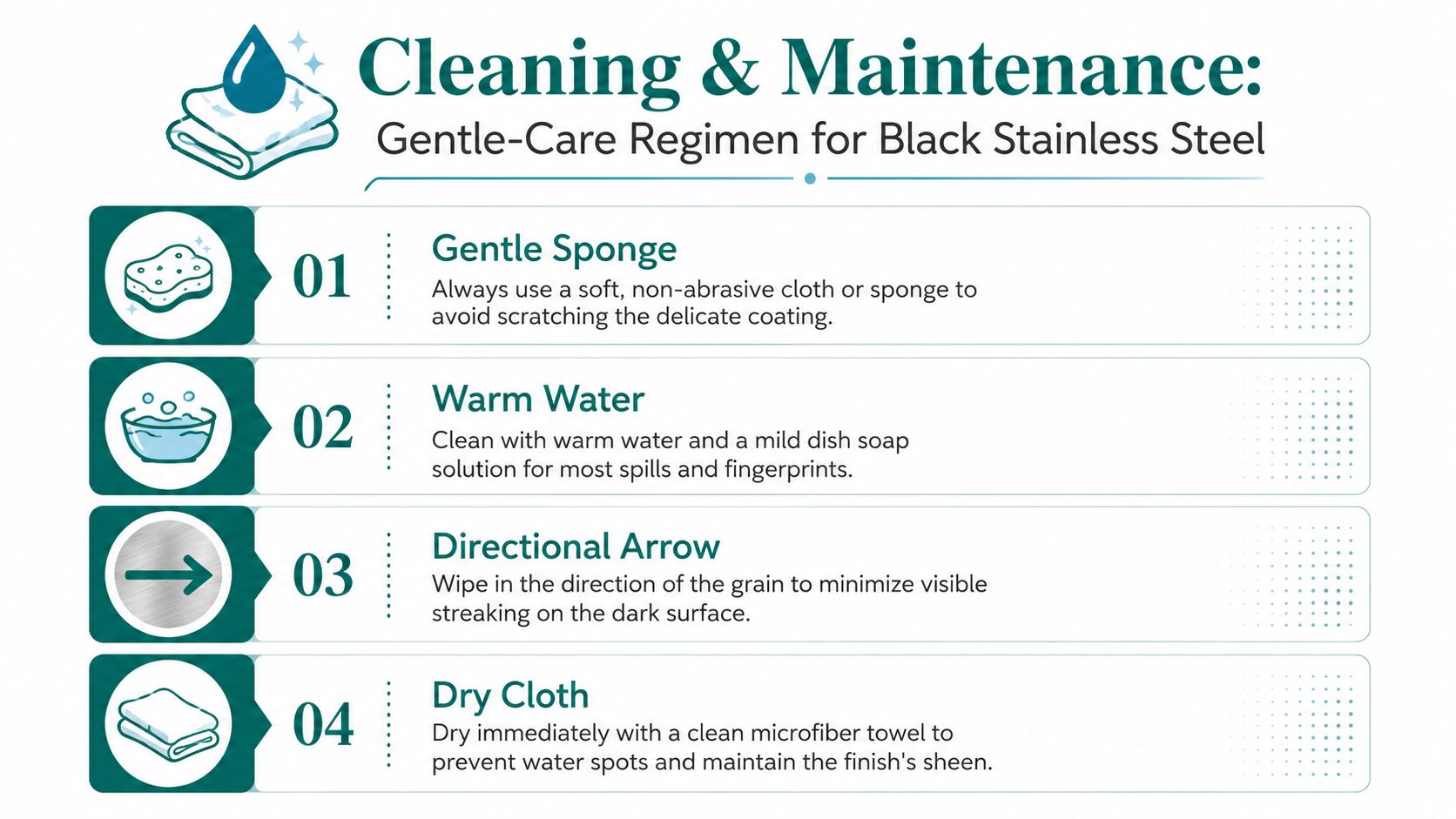
Use this quick checklist:
- Do: Start with warm water, mild soap, and a soft cloth.
- Do: Wipe in the grain direction when applicable.
- Do: Dry promptly to reduce water spots.
- Don't: Use abrasive pads, paper towels, ammonia, vinegar, oven cleaner, or harsh chemicals on black stainless.
- Don't: Treat “fingerprint-resistant” as “damage-proof.”
For coffee vessels, the same low-abrasion habit protects the surface and keeps old coffee oils from building up. This guide to cleaning coffee cups is useful for anyone maintaining mugs, carafes, and reusable brewing parts.
Cost, Resale Value, and Future-Proofing Your Choice
The cheapest finish is not always the one with the lowest ownership cost. A finish can become expensive when it limits replacement choices, makes a scratched appliance look permanently damaged, or forces you to replace a coordinated set earlier than planned.
Black stainless's market decline supplies the warning sign. An independent appliance analysis describes the finish falling from an earlier 20% to 30% share of appliance sales to below 1%, while Accio's coverage of black stainless market momentum discusses the broader decline in interest. The exact path varies by manufacturer and product category, but the direction is enough to affect a cautious buyer.

Replacement matching is the hidden bill
Suppose your black stainless dishwasher fails while the refrigerator and range still work. You may find a replacement in a similar color, but “black stainless” isn't one universally standardized shade. A new appliance can have a different sheen, grain, or undertone, leaving the kitchen visibly divided.
Standard stainless reduces that risk because manufacturers continue to offer it broadly across appliance categories. It also gives you more freedom to mix brands when availability, dimensions, or repair support matter more than a perfectly coordinated finish.
Resale adds another layer. A mainstream stainless package communicates easy replacement and broad buyer familiarity. That doesn't guarantee a higher sale price, and no finish alone determines a home's value, but stainless remains the lower-risk choice for a kitchen that needs to appeal to people with different tastes.
When is black stainless worth it?
Use this rule:
- Choose black stainless when the visual design is central, you're buying a coordinated package, and you'll protect the surfaces from abrasive use.
- Choose standard stainless when you expect staggered replacements, manage a rental or office, or care more about long-term flexibility than a spotless-looking door.
A niche finish can be worth the risk when you love it enough to maintain it. It isn't worth paying a premium just because marketing calls it an upgrade.
Choosing Finishes for Coffee Accessories and Small Appliances
Coffee gear changes the decision. A refrigerator door is an exterior panel. A reusable pod, carafe basket, drip tray, or filter housing lives in a cycle of hot water, coffee oils, rinsing, washing, and handling. For those parts, plain stainless steel wins.
The reason isn't that black is unattractive. It's that a coated finish adds a layer you don't need near the brewing process. Standard stainless keeps the same material beneath the visible surface, so repeated washing and everyday handling don't expose a contrasting silver base beneath a decorative black layer. It also gives you a more forgiving surface for small breakrooms where several people use the same machine and nobody follows a detailed care routine perfectly.
Standard stainless can show fingerprints more readily. That's a minor inconvenience on a reusable K-Cup or carafe basket, where a quick wash removes coffee residue. Durability beats concealment on gear you handle every day.

What I'd use at home
For a home brewer, choose an uncoated stainless reusable pod when you want to use ground coffee without throwing away a single-use capsule each time. A stainless mesh filter also makes sense for pour-over and carafe brewing because you can rinse it immediately and inspect it for trapped grounds.
Pair a reusable stainless pod with paper liners if cleanup slows you down. Add a universal descaling solution or machine-cleaning tablets for the internal water path, because the finish protects the outside while regular maintenance protects the inside.
If your setup includes filtered drinking water at the sink, a Water Filtration Systems mixer tap can keep filtered and ordinary water access organized in one fixture. For a deeper comparison of reusable pod materials, read this guide to stainless steel versus plastic reusable K-Cups.
What I'd use in a small breakroom
Choose stainless for shared carafe baskets, drip trays, and refillable pods. Staff can rinse the parts, wash them with mild soap, and return them to service without needing to remember that a black coating dislikes vinegar, ammonia, paper towels, and abrasive pads. In a small office, fewer care rules usually produce better real-world results.
The Verdict and How to Decide With Confidence
Standard stainless steel is the durable, future-proof default. It shows fingerprints and water spots, but it has the stronger history, greater replacement flexibility, and better tolerance for the abuse that real kitchens and coffee stations deliver.
Black stainless isn't useless. It's a design purchase. Choose it when you love the dark look, you're buying a coordinated appliance package, and you'll keep magnets, abrasive tools, carts, and careless chemicals away from the surface. Don't choose it because “fingerprint-resistant” sounds like a durability guarantee. It only addresses visible smudging, not coating damage.
Match the finish to the user
- Families and high-touch households: Choose standard stainless, preferably with a surface treatment that reduces visible smudges if the specific appliance provides one. The underlying material gives you more forgiveness when doors, handles, and panels receive constant use.
- Rental owners and landlords: Choose standard stainless. Tenants, contractors, and cleaning crews create unpredictable wear, and mainstream replacement options matter more than a distinctive finish.
- Small offices and breakrooms: Choose standard stainless for appliances and coffee accessories. Shared equipment needs simple care, not a fragile maintenance protocol.
- Design-led kitchens: Black stainless can work when the entire package is coordinated and the owner accepts that scratches may be conspicuous and difficult to repair.
- Coffee enthusiasts: Choose plain stainless for reusable pods, carafes, filter baskets, drip trays, and filter housings. Keep coatings on exterior surfaces, not in the parts that repeatedly contact your brew.
If you love the black look, mitigate the weakness instead of pretending it isn't there. Buy the full appliance group together, confirm that replacement parts and future models use the same finish, keep abrasive cleaning products out of the kitchen, and treat every scratch as a potential coating breach. If that sounds exhausting, stainless is telling you something useful.
The best stainless steel vs black stainless steel decision isn't about which finish photographs better. It's about which one still makes sense after years of cleaning, handling, repairs, and replacement. For most buyers, stainless steel wins that test.
PureHQ Inc. offers stainless steel reusable K-Cups, gold-tone baskets, paper liners, filters, and descaling solutions for cleaner brewing and simpler machine care. Visit PureHQ Inc. to shop coffee accessories that help your gear and your coffee stay at their best.

