
Coffee Machine Care
Water Filter Taste: How Filtration Shapes Your Coffee Flavor
Sep
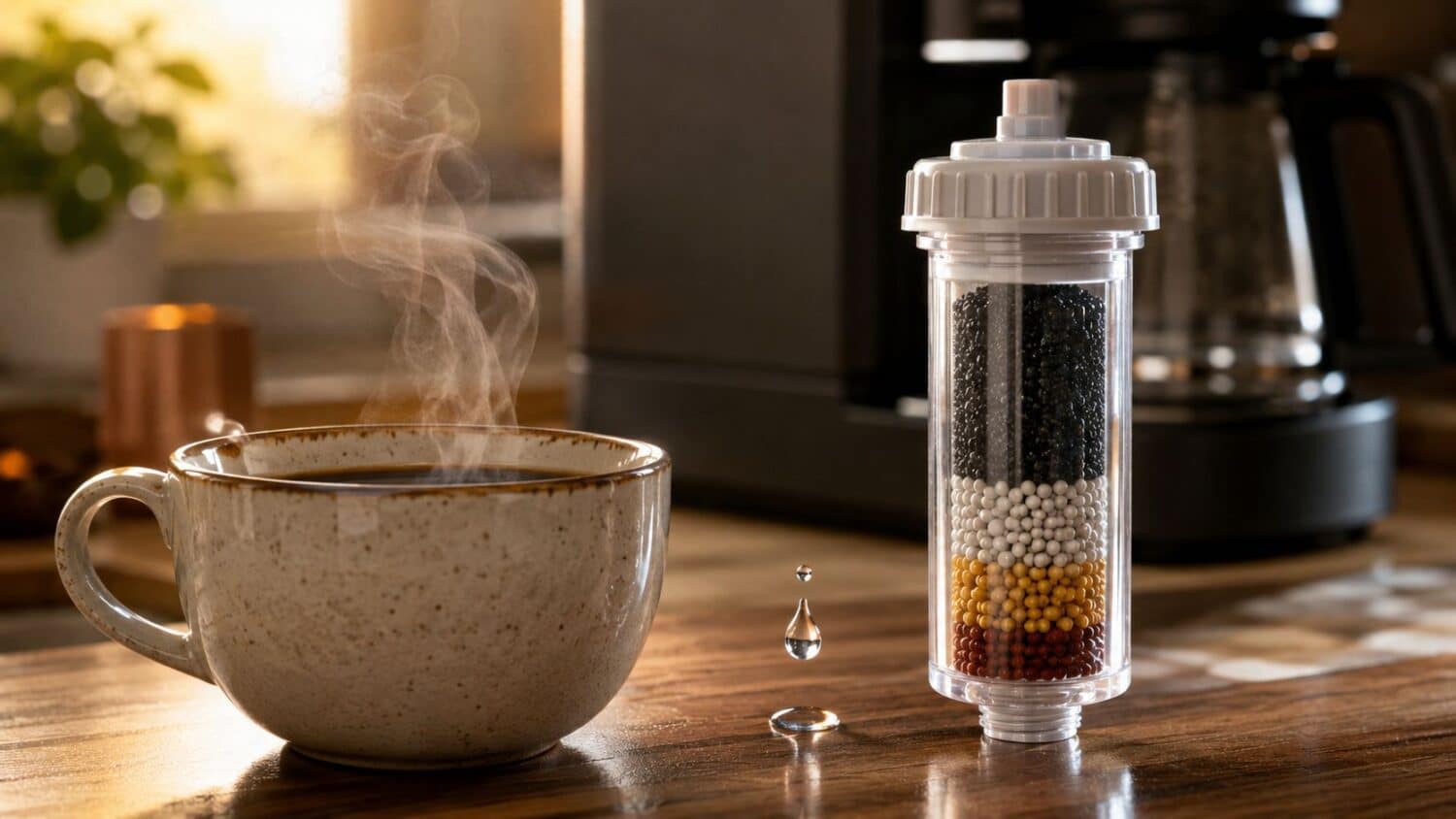
Your Keurig finishes a normal brew cycle, but the coffee tastes flat, oddly sharp, or faintly like a swimming pool. Before you blame the pod, roast, or brewing temperature, look inside the water reservoir. Water filter taste problems often begin with stale tank water, an exhausted cartridge, or mineral scale, and each one can change how coffee smells, extracts, and finishes.
Coffee needs more than clean-looking water. It needs water with the right balance of disinfectant removal and useful minerals. A filter that leaves too much chlorine can make a cup taste chemical, while one that removes nearly everything can produce coffee with little body. The practical fix starts with a simple question: what changed in the water before the coffee reached your cup?
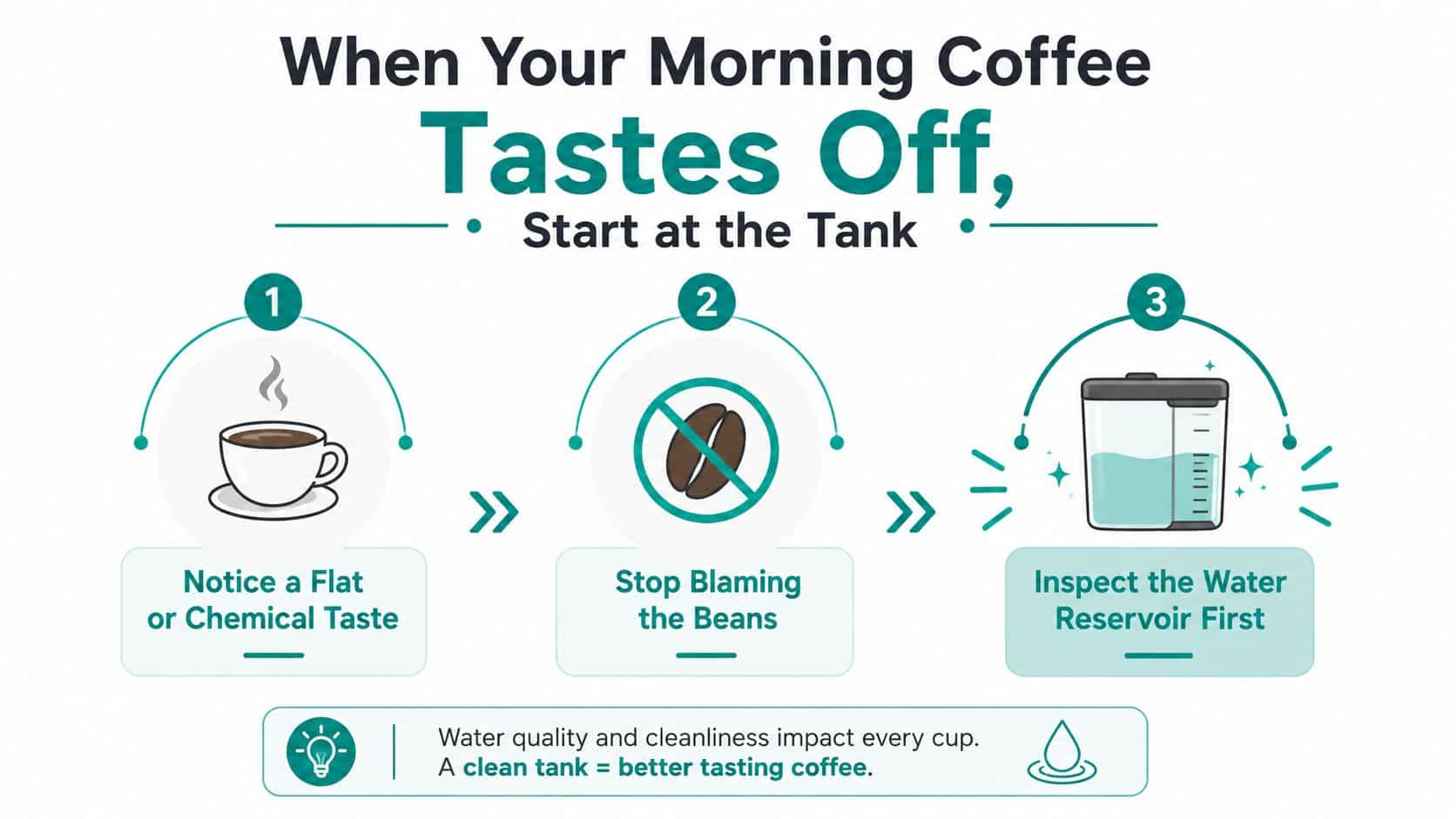
When Your Morning Coffee Tastes Off, Start at the Tank
The machine hums, the pod punctures, and the coffee pours at its usual speed. Yet the first sip tastes dull, sour, or faintly medicinal. You reach for a different pod, then another, even though the actual culprit may be the reservoir sitting beside the brewer.
Coffee is mostly water, so the tank affects both the flavor you taste and the compounds the brewer extracts. A neglected filter can stop reducing chlorine and odor compounds. Stale water can pick up tank or room odors. Mineral scale can interfere with water flow and heating, producing uneven extraction. A clean-tasting cup with very little body points toward overly stripped water, while a sharp sour cup may reflect uneven extraction from the machine or water chemistry.
Run one useful control test
Use the same pod or the same grounds twice. First, brew with the water currently in the machine. Then wash and refill the reservoir with freshly drawn, filtered water and brew again. Compare four things:
- Aroma: Does the second cup smell more like coffee and less like the tank?
- Acidity: Does the sharp edge soften, or does it become more pronounced?
- Sweetness: Can you taste caramel, fruit, or chocolate more clearly?
- Finish: Does the flavor linger cleanly, or does it leave a chemical or metallic note?
Keurig reservoirs need regular washing, not just topping up. Ninja DualBrew owners should inspect both the water tank and any installed filter. If you're comparing machines, the aqeek homepage offers another coffee-equipment resource for understanding brewer accessories and maintenance choices.
Practical rule: If the cup changes when the water changes, the tank or filter is part of the problem, or part of the solution.
Don't discard good coffee until you've made that comparison. A clean reservoir and fresh cartridge can reveal whether the beans were ever at fault.
What Tap Water Brings to Your Cup
Tap water isn't just H2O. It carries dissolved minerals, disinfectants, and sometimes compounds picked up from plumbing or storage. Those substances reach your palate directly, but they also change how coffee acids, sugars, and bitter compounds dissolve during brewing.
Calcium, magnesium, sodium, and bicarbonate can support extraction and add structure. Too much hardness, however, can mute delicate flavors and encourage scale. Chlorine can create a chemical or pool-like impression, while iron and copper may add metallic notes. Organic material and volatile compounds can contribute earthy or musty aromas.
The CDC guidance on choosing home water filters separates taste-focused filtration from filtration aimed at health-risk contaminants. NSF/ANSI Standard 42 focuses on aesthetic effects, including chlorine taste and odor, and the CDC notes that filters in this category can improve water taste and smell. One NSF-listed drinking system reports 97.4% chlorine reduction under Standard 42 testing, which illustrates why chlorine removal often drives a noticeable change in a coffee cup.
Start with the water you actually have
Check your local water-quality report before choosing media. Then consider building plumbing, seasonal changes, and how long water sits in an open reservoir. A TDS meter can show the total amount of dissolved solids, but it can't identify whether those solids are calcium, sodium, chloride, or another compound.
| Compound or condition | Likely taste or brewing effect |
|---|---|
| Chlorine | Chemical, medicinal, or pool-like aroma that can mask coffee sweetness |
| Calcium and magnesium | Support extraction, but excess hardness can contribute to scale and a heavy cup |
| Sodium | Can change perceived flavor and, at higher levels, create a salty impression |
| Iron or copper | May add metallic taste |
| Organic compounds or volatile compounds | Can create earthy, musty, or otherwise persistent odors |
| Very low mineral content | Can produce a thin, sharp, or low-body cup |
EPA guidance says that people who object to chlorine taste can leave water in an uncovered pitcher in the refrigerator overnight, and it also identifies filters as effective for removing chlorine from tap water. The PureHQ guide to improving water quality offers a useful starting point for thinking about source water before selecting a cartridge.
The target isn't the purest possible water. It's clean, balanced water that removes distracting odors while retaining enough mineral content to support extraction.
How Different Filter Media Change Flavor
Filter media don't all solve the same problem. Choosing a cartridge by brand alone can leave you with a cleaner glass of water but a weaker coffee, or with chlorine still present because the media didn't match the disinfectant.
Activated carbon is usually the first taste-focused option. Its porous surface adsorbs chlorine and many odor compounds, while generally leaving much of the source water's mineral balance in place. That makes carbon useful for coffee drinkers who want cleaner sweetness without removing all hardness. Alaska's environmental guidance specifically identifies granular activated carbon filters as a way to remove chlorine taste and odor.
Ion-exchange media work differently. They exchange selected ions, often reducing calcium and magnesium associated with hardness. That can limit scale, but aggressive softening can also change the cup's body and balance. Specialized ion-exchange materials may target particular metals, but the cartridge must be rated for the relevant water issue.
Reverse osmosis uses a semipermeable membrane to reduce a much broader range of dissolved solids, including minerals, salts, and metals. The reverse osmosis water filtration guide provides a useful overview of why RO systems involve more components and maintenance than a basic carbon cartridge. Sediment filters belong upstream. They catch particles, but they don't remove dissolved chlorine or improve dissolved flavor on their own.
| Filter media | Targets | Leaves or changes | Best use |
|---|---|---|---|
| Activated carbon | Chlorine and many odor compounds | Usually preserves much of the mineral profile | Taste and odor improvement |
| Ion exchange | Hardness ions and selected metals | Changes ionic balance and can soften water | Hard water and scale management |
| Reverse osmosis | Broad dissolved solids, salts, minerals, and metals | Produces very low-mineral water | Broad reduction where source water justifies it |
| Sediment filtration | Particles and suspended material | Leaves dissolved compounds largely unchanged | Protection before other media |
The Alaska Department of Environmental Conservation describes RO as more thorough but also more complex to install and maintain than GAC filtration. For chlorine-focused coffee problems, a carbon cartridge is often the more proportionate starting point. For readers investigating carbon specifically, this guide to filters that remove chlorine explains why media selection matters more than a generic “filtered” label.
Why Filtered Water Can Make Coffee Taste Worse or Better
A filter can improve the water's smell while making the coffee less expressive. That happens when filtration removes the mineral support that coffee needs for balanced extraction.
Coffee-industry guidance from SCA-aligned water filtration advice by Sucafina describes magnesium as helpful for extracting fruity, acidic, and sweet notes, while calcium tends to emphasize rounder, heavier flavors. Too much calcium can create a chalky mouthfeel. The same guidance recommends roughly 45 to 85 ppm total dissolved solids for coffee preparation, so “more filtered” isn't automatically “better brewed.”
A 2024 coffee study reported that sodium content in extraction water affects coffee's clean taste, adding another reason to judge the cup rather than chase a single purity target. Reverse osmosis water without remineralization may taste clean in a glass but produce a thin, sharp, or hollow cup because the water has little mineral structure or buffering.
Compare the likely outcomes
| Filter type | Hardness after | Chlorine removed? | Cup character |
|---|---|---|---|
| Carbon-focused cartridge | Retains much of the source hardness | Designed to reduce chlorine when certified for that claim | Cleaner aroma, preserved body, brighter sweetness |
| Ion-exchange softening | Lowers calcium and magnesium | Depends on the media and design | Softer water, potentially lighter body |
| RO without remineralization | Very low dissolved mineral content | Yes, as part of broad reduction | Clean but potentially thin, sharp, or flat |
| RO with remineralization | Adds selected minerals back after membrane treatment | Yes, as part of broad reduction | More structured than untreated RO, depending on the final balance |
Generic pitcher filters can exchange calcium for sodium, which changes the water without necessarily improving extraction. A brewer-engineered cartridge that reduces chlorine while retaining part of the hardness profile may suit coffee better when the source water is already moderate.
Run a side-by-side test rather than relying on the water's glass flavor. Filtered water beats tap when chlorine or odor dominates the cup. It can hurt the cup when it removes so much mineral content that the brew loses sweetness, body, and balance.
Optimizing Keurig and Ninja Brewers for Better Taste
Your machine's reservoir and filter holder create a small water system of their own. The cartridge can perform correctly on paper, but poor seating, a dirty tank, or an empty filter slot can still send the wrong water into the brew path.
Keurig checks that matter
Pull the reservoir out and wash it regularly. Wipe the lid gasket, where residue and biofilm can collect, then rinse thoroughly before refilling. Use the charcoal filter slot if your model includes one. Running the machine with an empty slot leaves the water untreated even though the brewer still appears to operate normally.
Keurig owners may encounter compatible filter lines for the K-Classic, Keurig 2.0, K-Supreme, K-Slim, and K-Duo Gen 2 and Essentials chassis. Match the holder and cartridge to the exact machine rather than assuming every Keurig filter fits every reservoir.
Ninja DualBrew checks
Ninja DualBrew systems use a side-reservoir filter format such as CLTFUSE04 or CLTFUSEU. Soak the filter before its first installation according to the machine's setup requirements, then seat it flush in the holder. A cartridge that sits crooked can allow water to bypass the media.
The same water can also taste different across brewers because their brew profiles differ. Keurig pod brewing sits near 192°F, while Ninja brewing can peak higher, so temperature and contact conditions change how the water expresses acidity, bitterness, and aroma.
PureHQ offers compatible charcoal filter options for Keurig and Ninja DualBrew configurations, along with reusable pods and maintenance accessories. Those products address different parts of the brew path, so choose the filter for the tank and the pod or basket for the coffee chamber.
A cartridge shouldn't leak just because it's compatible, but fit remains a reasonable objection. Check the holder shape, gasket, and seating position before brewing, and replace any damaged seal instead of forcing a loose cartridge into place.
The Diagnosis Problem Behind Bad Filter Taste
People often call every unpleasant cup a bean problem. A chlorine note gets blamed on the roast, sharp acidity gets blamed on freshness, and an earthy plastic flavor gets blamed on the brewer. In each case, the water deserves a direct test before you change the coffee.
The first clue is the taste itself. Chlorine points toward an exhausted or mismatched cartridge. Sharp acidity with low body can indicate water that has been softened or demineralized too aggressively. Earthy or plastic notes may come from a fouled tank, old water, or a cartridge that needs attention.
Use a short triage routine
- Smell the reservoir: Empty, wash, and sniff the tank before refilling it. Persistent odors can remain even when the water looks clear.
- Check cartridge age: Compare the installation date and rated capacity with your actual use. A spent adsorption medium can allow the original taste to return.
- Measure TDS if available: Use the reading as a broad comparison, not as an identification tool. TDS won't tell you which minerals or salts are present.
- Brew a control cup: Use bottled spring water for one test, then compare the result with your current filtered water. The control helps isolate water from coffee and machine variables.
The most useful filter test is a taste comparison with one variable changed.
The Keurig water-filter troubleshooting guide can help identify installation, replacement, and maintenance mistakes. Don't assume a lower TDS reading guarantees a better cup. As the earlier coffee-water guidance shows, water can taste exceptionally clean and still lack the mineral balance that gives coffee body.
Maintenance Habits That Keep Taste Consistent
Buying a filter solves only the first part of the problem. Taste consistency depends on what you do with the reservoir, holder, cartridge, and machine after installation.
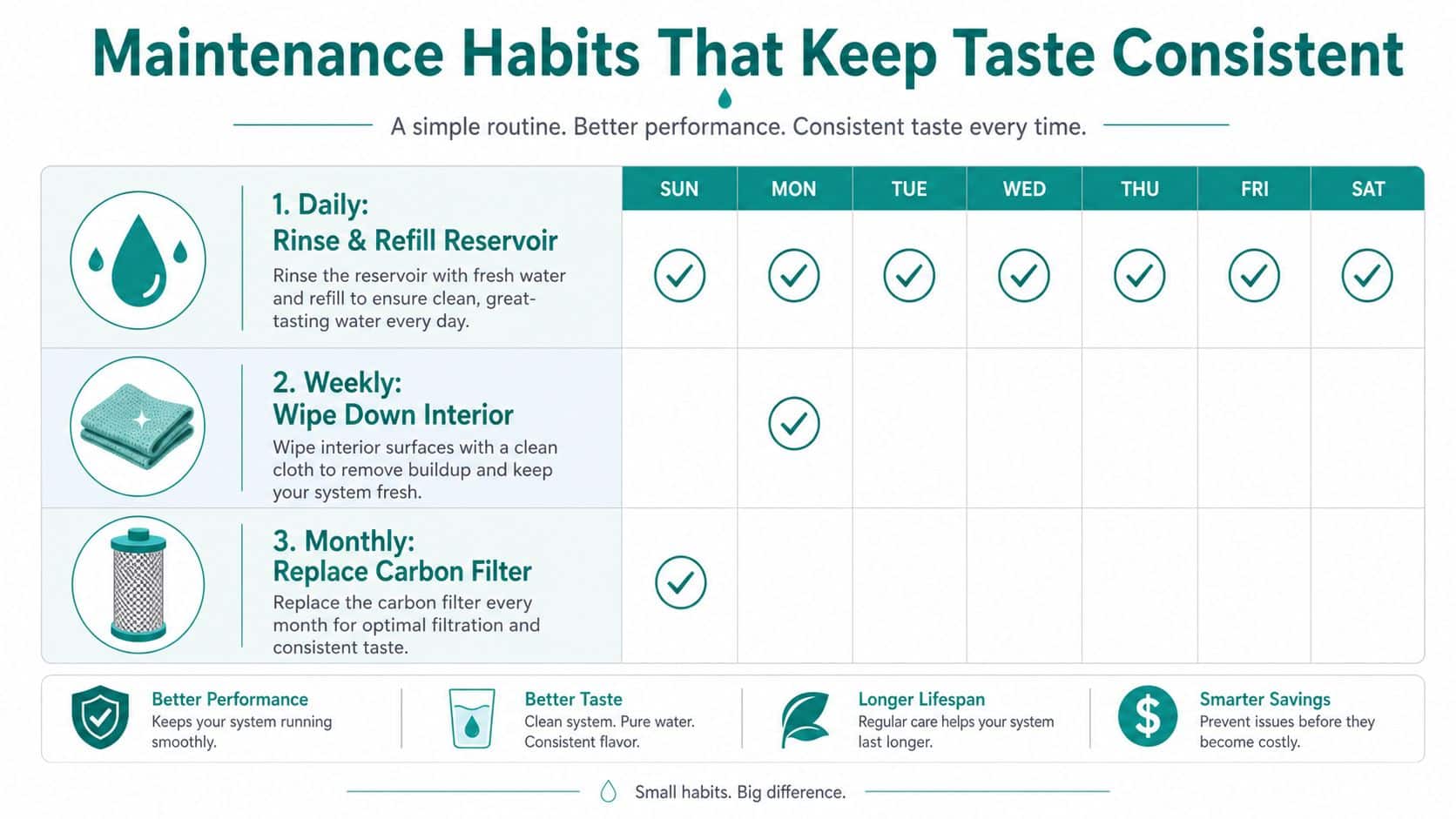
Use a simple routine that separates daily contact with water from deeper monthly maintenance.
- Daily rinse and refill: Empty water that has been sitting in the reservoir, rinse the tank, and refill it with fresh water. Don't keep topping up old water indefinitely.
- Weekly interior wipe: Clean the reservoir walls, lid, gasket, and filter holder with a soft cloth. Rinse away any cleaning residue before brewing.
- Monthly cartridge review: Check the installation date, rated capacity, and current flavor. Replace the carbon cartridge when its specified capacity or service interval ends, or sooner if chlorine taste returns.
- Scheduled descaling: Use a manufacturer-approved descaling solution or citric-acid-based cleaner when scale begins affecting flow, heating, or flavor. Rinse thoroughly afterward.
Harder water creates more scale, so the machine may need descaling more often even when the carbon filter still improves taste. A carbon cartridge reduces taste and odor compounds, but it doesn't eliminate every mineral responsible for scale. Descaling and filtration perform different jobs.
Replace by evidence, not guesswork
Taste is a useful warning signal, but it shouldn't be your only one. Keep a note of when you install each cartridge and follow the manufacturer's gallon or calendar guidance. If the water begins tasting chemical again, the cartridge may have reached its adsorption limit, or water may be bypassing the media.
Use descaler and cleaning tablets as separate maintenance tools. A descaler addresses mineral buildup inside the water path, while a cleaning tablet helps remove coffee residue where it can affect aroma and finish. Keeping both on hand makes it easier to correct the actual cause instead of replacing every component at once.
Putting It Together for Better-Tasting Coffee
A better cup comes from matching three variables: the source water, the filter media, and the brewer's condition. Chlorine and odor compounds call for taste-focused carbon filtration. Hardness and scale may justify ion exchange or a separate softening strategy. Broad dissolved-solid concerns may justify RO, but low-mineral water needs careful evaluation for coffee.
Set a replacement reminder when you install the cartridge. Tie it to the manufacturer's stated gallon capacity or calendar interval, then move the date earlier if taste changes or the local water supply becomes more sediment-heavy. Keep the reservoir clean so an aging tank doesn't confuse your filter diagnosis.
Confirm the change in the cup
Make a blind side-by-side with the same coffee. Ask someone else to label the cups if possible, then compare aroma, acidity, sweetness, body, and finish. If the filtered cup improves, keep the setup consistent. If it tastes flatter, test spring water or a less aggressive filter before concluding that the coffee is defective.

For many Keurig and Ninja owners, the practical next step is a compatible charcoal filter that reduces chlorine and sediment while avoiding unnecessary removal of the minerals that support extraction. PureHQ Inc. carries compatible filter lines for those brewer families, plus reusable pods, carafe baskets, descaling solutions, and cleaning tablets that support the rest of the brew system.
Choose the media for the problem you can taste, then keep the cartridge fresh.
Don't change beans first. Wash the tank, install the correct filter, brew the same coffee, and compare the result. That small test tells you whether water filter taste is the missing piece in your morning cup.
PureHQ Inc. offers compatible water filters for Keurig and Ninja brewers, along with reusable pods, descalers, and cleaning accessories designed for consistent home coffee. Visit PureHQ Inc. to match your machine with the right filter and start your next brew with cleaner-tasting, better-balanced water.


Pingback: Coffee Charcoal Filters for Better Brews