
Coffee Machine Care
Stainless Steel Rod Pods: How to Use and Care
Oct
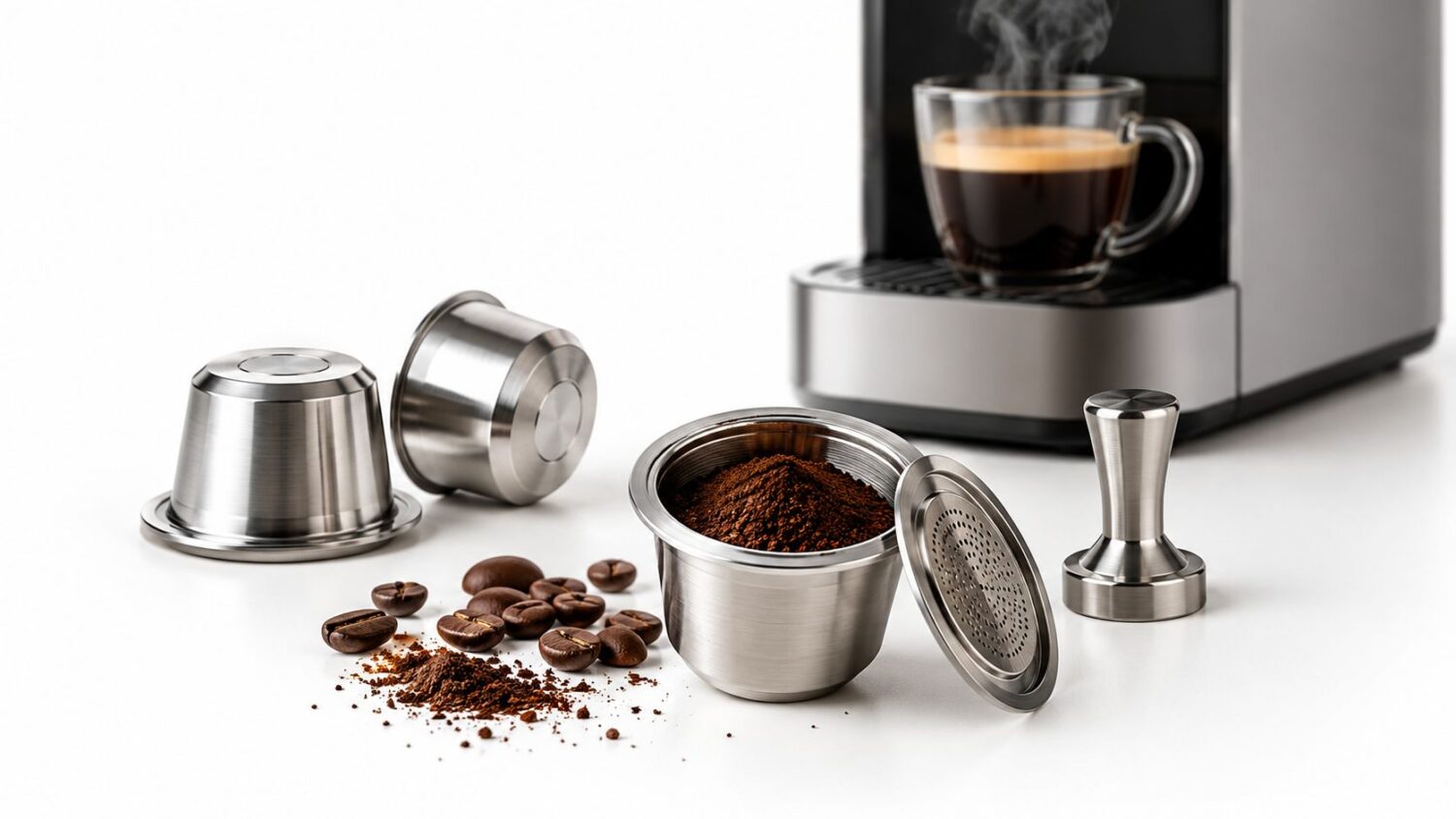
A reusable coffee pod is only as good as its material, fit, and cleaning routine. Stainless steel has become the baseline premium choice in the reusable-pod category because it can be refilled with any ground coffee and is positioned as a durable alternative to single-use capsules, including systems such as Keurig and Nespresso, according to market research on coffee pod materials. The overlooked part is maintenance. A stainless pod can improve consistency and reduce waste, but poor filling, bad alignment, coffee residue, and mineral buildup can still ruin the cup.
The phrase stainless steel rod pods usually belongs to carp-fishing equipment, while coffee makers use terms such as reusable pods, refillable K-Cups, and stainless steel coffee filters. This guide uses the requested phrase where relevant, but focuses on the coffee accessory that sits inside a Keurig, Ninja, Breville, or similar brewer.
Why Your Morning Coffee Might Be Problematic
A morning coffee ritual often looks harmless. You fill a reusable capsule, close the brewer, press a button, and assume that replacing disposable plastic with a refillable option has solved the waste problem. The overlooked question is what material repeatedly meets hot water, coffee oils, and pressure inside that capsule.
Plastic reusable pods can work, but they introduce more variables than a well-built stainless steel pod. The plastic may flex, the lid may lose its seal, and the filter area can deform or clog. Those problems affect the brew before taste enters the conversation. They can also make it difficult to know whether a weak or inconsistent cup comes from the coffee, the machine, or the pod itself.
Practical rule: Choose the pod for the heat, pressure, and geometry inside your brewer, not only for its appearance on the shelf.
The material guidance for coffee-machine components explains why food-contact coffee parts commonly use 304 or 316 stainless steel. These grades resist corrosion and help limit leaching during repeated exposure to moisture and heat. Coffee-machine components can encounter brewing temperatures of 90–96°C and acidic coffee oils with a pH of 5.0–5.5, so the material choice matters over repeated use.
That doesn't mean stainless steel is automatically perfect. A pod with a poor lid, badly placed filter, or incompatible rim can leak or fail to puncture correctly. A cheap stainless body paired with weak hardware may perform worse than a carefully designed hybrid pod. Material solves one part of the problem. Construction and maintenance solve the rest.
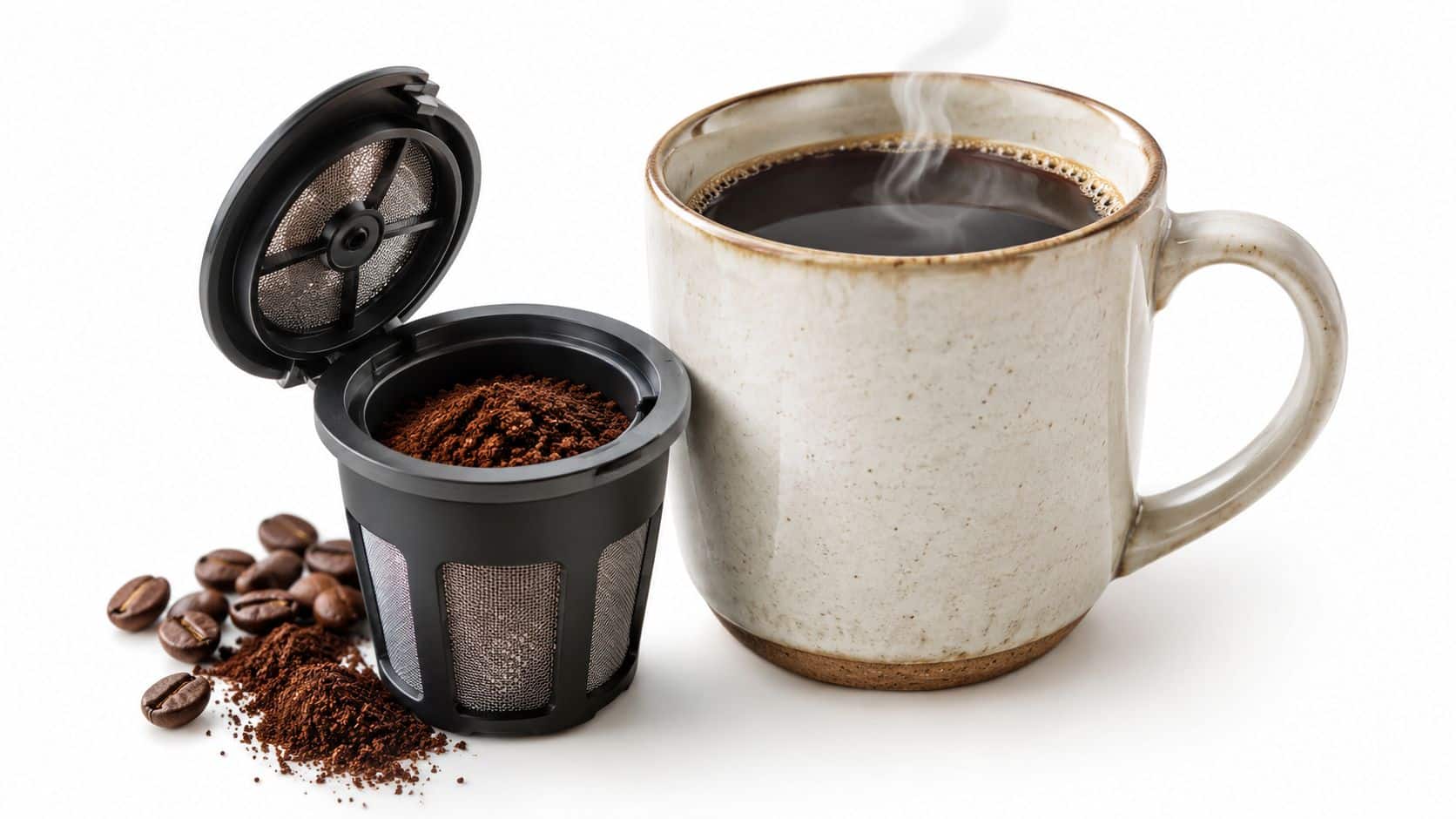
For daily drinkers, the practical concern is simple. You want a refillable pod that stays stable under brewing conditions, doesn't carry yesterday's oils into today's cup, and fits the machine without forcing the lid or needle into the wrong position. Stainless steel is useful because it offers a durable foundation, but it only earns its keep when you use and clean it correctly.
Filling Your Stainless Steel Rod Pods Correctly
The best stainless pod can't rescue an uneven coffee bed. Most weak cups and many bitter cups begin before the brewer starts, with an inconsistent fill that sends water through the easiest path instead of across the whole bed.
Start with freshly ground coffee when possible. Use a grind that is suitable for your machine's normal single-serve cycle, then adjust gradually if the cup tastes thin or harsh. Coffee that's too fine can slow flow and encourage clogging, while coffee that's too coarse can let water pass quickly without extracting enough flavor.
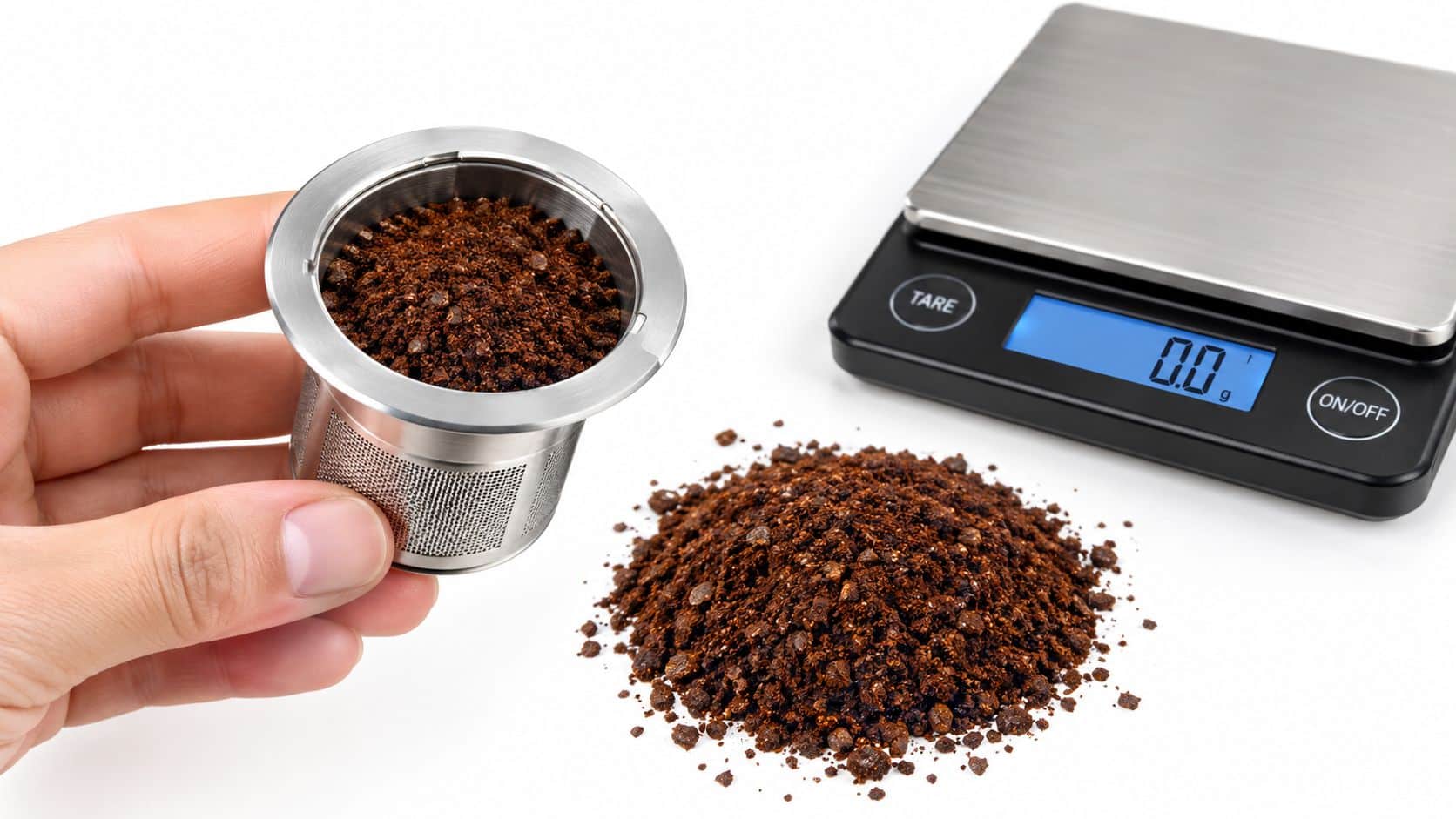
Build an even coffee bed
Use a scale if you want repeatable results. The exact dose depends on the pod's internal capacity and the brewer's water volume, so copying a generic scoop measurement can overfill one model and underfill another. Fill the basket loosely, tap it gently to settle the grounds, and leave enough room for the lid or screen to close without compressing the coffee against the top.
Don't tamp a reusable pod like a portafilter. A firm, uneven press can create a dense patch that resists water while the surrounding grounds wash out. Instead, level the surface with a finger or straight edge and apply only light, even pressure if the design calls for it.
Overpacking creates two common failures. The brewer may struggle to push water through the bed, and the compressed coffee can press against the lid or filter. Under-packing produces a fast, pale cup because the water finds too little resistance. The useful target is a level bed that sits securely below the closure.
Adjust by taste, not guesswork
A darker roast often needs gentler extraction, while a light roast may benefit from a slightly finer grind or a fuller, more deliberate brew. Change one variable at a time. If the cup tastes weak, first check the fill level and grind before adding more coffee. If it tastes bitter or the flow slows, reduce the dose slightly or move coarser.
The pod's filter geometry also matters. A narrow outlet or fine mesh can behave differently from a broad perforated basket, even with the same coffee. Keep a brief note of the grind, dose, and result for your preferred bean. That small record turns a frustrating refill routine into a repeatable recipe.
Use the following sequence each morning:
- Inspect the pod: Confirm that the filter and lid are clear.
- Fill evenly: Distribute the grounds across the basket rather than creating a mound.
- Level gently: Avoid hard tamping unless the manufacturer specifically requires it.
- Lock without force: A lid that needs excessive pressure usually signals overfilling or poor fit.
- Taste and adjust: Change grind, dose, or brew volume individually.
The video below shows the kind of hands-on preparation that helps identify uneven filling and closure problems before they become a bad cup.
Stainless Steel vs Plastic Pods Worth the Investment
The price question is fair. A stainless steel refillable pod usually costs more at checkout than a basic plastic or hybrid alternative. The value appears only when the pod continues to fit, seal, and clean easily after repeated brewing.
An independent analysis of reusable K-Cup pods estimated the stainless steel segment at $1.53 billion in 2025, with a 63.8% market share, and estimated that premium stainless pods can withstand 500 to 1,000 brewing cycles. The same analysis placed plastic hybrids at 200 to 400 cycles before seal degradation becomes a problem. These are market estimates, not a guarantee for every product, but they explain why durable stainless construction attracts daily users. See the analysis of reusable K-Cup stainless pods for the underlying figures.
| Factor | Stainless steel pod | Plastic or hybrid pod |
|---|---|---|
| Durability | Resists repeated heat and handling when the body, lid, and filter are well made | May flex, deform, or lose seal performance sooner |
| Cost per use | Higher initial price, potentially spread across many brewing cycles | Lower entry price, but replacement timing varies |
| Heat resistance | Suitable for repeated hot-water exposure when the grade and construction are appropriate | Depends heavily on the plastic blend and design |
| Chemical exposure concern | Food-contact stainless options are commonly selected for corrosion resistance and repeated use | Material quality and heat exposure vary by product |
| Environmental effect | Refillable design reduces reliance on disposable capsules | Reusable versions reduce waste, but shorter service life can reduce that benefit |
| Flavor preservation | Easy to rinse and less likely to retain oils when maintained properly | Scratches, residue, and seal wear can affect consistency |
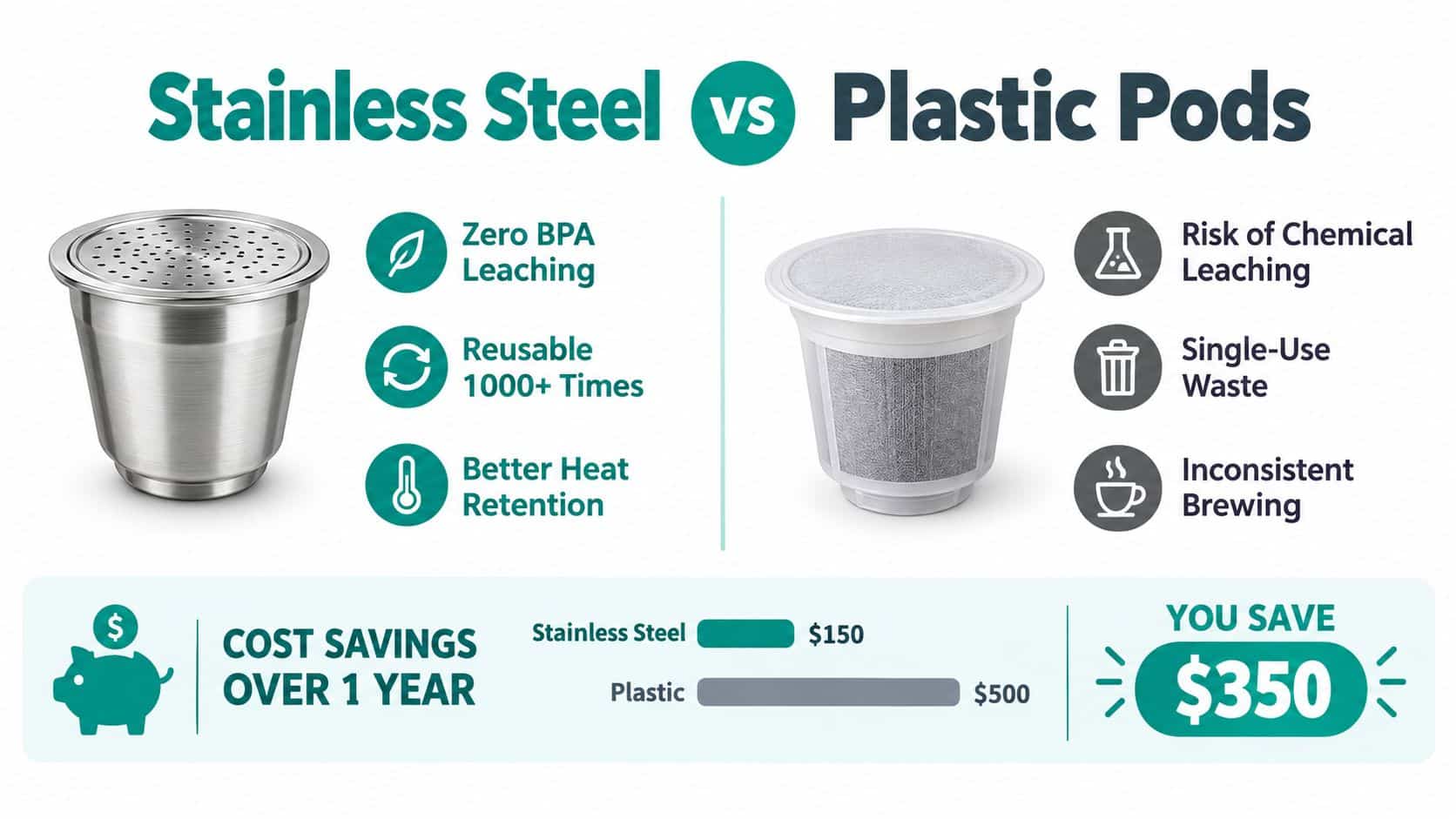
There isn't a responsible way to promise that every stainless pod saves a fixed dollar amount within a fixed period. Coffee prices, brewing frequency, and replacement habits vary, and the supplied evidence doesn't establish a universal payback calculation. The stronger argument is operational: a pod that survives more cycles and accepts the ground coffee you already buy can reduce repeat purchases and disposable waste over its service life.
Material comparisons also help clarify expectations. The discussion of stainless vs carbon steel cookware is useful because it shows why corrosion resistance and upkeep matter more than a product's label alone. For coffee equipment, a smooth surface, dependable closure, and accessible filter are more valuable than a polished finish by itself. A stainless steel reusable coffee filter can be a sensible alternative when a full pod isn't the right shape for your brewer.
Machine Compatibility and Brewing Setup
Compatibility is where many otherwise good reusable pods fail. The word “universal” doesn't guarantee a correct fit. A pod must match the brewer's cavity, rim, lid clearance, needle position, and internal water path.
The guidance on stainless rod geometry and mounting fit makes the broader point clearly. Support systems need the right spacing, centerline height, and mounting geometry. Coffee pods follow the same practical rule. Strong material can't correct poor alignment.
Keurig systems
Keurig owners should identify the exact brewer family before buying. K-Classic, K-Slim, K-Supreme, K-Duo, and Keurig 2.0 machines can use different lid, needle, and pod-compartment arrangements. A pod that fits a K-Classic may not seat correctly in a K-Supreme or K-Duo. Check the product's stated compatibility rather than relying on the capsule's outside diameter.
Place the empty pod into the chamber before filling it. The lid should close without force, the pod should sit level, and the machine's puncture points should meet the intended openings. If the brewer requires a separate adapter or reusable-pod holder, install that component before testing with coffee.
Ninja DualBrew
Ninja DualBrew machines can accept different formats depending on the model and brewing mode. Confirm that the reusable pod is intended for the single-serve side, not the carafe basket. The pod must sit below the lid and leave the needle path unobstructed.
Breville and Cuisinart
Breville and Cuisinart products span several brewing formats. Some use K-Cup-style compartments, while espresso-style machines use a portafilter or a different capsule geometry entirely. A refillable K-Cup cannot substitute for an espresso basket because both products hold ground coffee.
Test an empty pod first. Look for a level seat, free lid movement, and a clean puncture path. Then run a water-only cycle if the machine permits it. That test can reveal fit and flow problems before coffee grounds make diagnosis difficult.
Cleaning and Maintenance for Peak Performance
Stainless steel is corrosion-resistant, not rust-proof. Chloride salts, sulfides, contact with dissimilar metals, and neglected residue can cause discoloration or corrosion. The manufacturer cleaning guidance for stainless steel recommends regular soap-and-water cleaning and prompt stain removal to reduce the risk of permanent pitting.
Rinse the pod immediately after brewing. Open the lid, empty the grounds, and flush water through the filter from both sides. A soft brush can clear the mesh, but don't use a metal pick that enlarges holes or bends the screen.
Use a simple care rhythm
After each brew, rinse away grounds and coffee oils. Let the pod dry fully before closing it or placing it in a drawer. Trapped moisture creates an unpleasant smell and leaves residue ready to enter the next cup.
During a deeper weekly clean, separate removable parts if the design allows it. Soak them in a manufacturer-approved solution, brush the filter gently, and rinse until no cleaner remains. Avoid abrasive powders and rough scouring pads. Scratches give residue more places to collect and can make future cleaning harder.
Descale the machine according to its maintenance needs. Mineral deposits can restrict water flow, change the brew behavior, and leave a dull taste. Descaling the pod alone won't remove deposits inside the brewer's internal water path. PureHQ's guide to cleaning reusable coffee pods offers a practical reference for keeping the accessory free of old oils and grounds.
Inspect the parts people overlook
Check the lid seal, hinge, filter mesh, and any mixed-material fasteners. A stainless basket can remain intact while a silicone seal hardens or a plastic collar cracks. Rinse promptly after salt exposure or unusually dirty water, and dry the pod instead of leaving it submerged.
A clean pod should smell neutral and allow water to pass through its filter without obvious obstruction. If the mesh remains dark after cleaning, or the brewer's flow changes despite a consistent coffee fill, replace the affected component rather than increasing pressure or grinding finer.
Solving Common Problems and Extending Pod Life
Most complaints about reusable pods fall into four groups: leaks, poor fit, weak coffee, and premature wear. Each symptom points to a different cause, so replacing the whole setup immediately can waste money.
Leaks usually start at the closure
A leaking pod may be overfilled, unevenly seated, or carrying grounds across the rim. Empty it, clean the sealing surface, and refill below the closure line. Check whether the lid closes flat. If the seal looks flattened, torn, or permanently loose, cleaning won't restore it.
Don't force the brewer shut. Excess pressure can distort the lid or place the pod out of alignment with the puncture needle. A correct fit should feel secure without requiring the machine handle to act as a clamp.
Poor fit is a geometry problem
If the pod rocks, sits high, or blocks the lid, stop using it until you confirm compatibility. The issue may involve the brewer model, an adapter, the pod's rim, or the needle position. Compare the product's stated compatibility with your exact Keurig, Ninja DualBrew, Breville, or Cuisinart model.
The same principle applies to material selection. The stainless steel chemical compatibility reference is useful when you need to understand how stainless interacts with cleaners, salts, and other materials. A corrosion-resistant body still needs compatible seals and sensible cleaning products.
Weak coffee needs a controlled adjustment
Weak coffee doesn't always mean the pod is defective. Check that the basket isn't underfilled, the grind isn't too coarse, and the machine is dispensing the expected amount of water. Change one factor, brew again, and record the result. Adding more coffee to an already restricted filter can create a slow, bitter brew rather than a stronger balanced one.
If the cup remains thin with a sensible fill and a clear filter, test the brewer with its standard capsule or basket. That comparison separates a pod problem from a machine problem.
Know when to retire the pod
Replace the pod when the filter has split, the lid no longer seals, the body has warped, or corrosion has created deep pitting. Surface discoloration can sometimes respond to prompt cleaning, but structural damage should not be polished away and returned to service.
Store the pod dry, with removable parts separated where practical. Keep it away from abrasive tools and avoid stacking heavy objects on the lid. PureHQ Inc. offers stainless refillable pods, reusable K-Cup accessories, filters, descaling solutions, and cleaning tablets for compatible coffee systems, so you can match the pod with the maintenance items your brewer needs.
Visit PureHQ Inc. to shop stainless refillable coffee pods, compatible filters, descaling solutions, and cleaning tablets for a setup that stays easier to brew with and easier to maintain. Choose the pod for your exact machine, keep the filter clear, and build the rinse and descale routine into your daily coffee habit.

