
Coffee Machine Care
Reusable Coffee Cups: A Guide for Keurig & Ninja Users
May
Single-serve coffee feels tidy in the moment. Brew, toss, move on. But the waste adds up fast. Industry estimates suggest up to 150 billion K-Cups are produced yearly, and most end up in landfills because their multi-material construction is hard to recycle.
That stat changes how reusable coffee cups should be discussed for Keurig and Ninja owners. Most articles stay focused on café tumblers and takeaway lids. The bigger everyday opportunity often sits on your kitchen counter or in the office breakroom: replacing disposable pods with a reusable one that fits your machine, cleans easily, and gets used.
For most home brewers, the switch isn't about chasing perfection. It's about cutting waste without making your morning coffee annoying. If the reusable option leaks, leaves sludge in the cup, or takes too long to rinse, it won't last in your routine. If it fits well, brews cleanly, and works with the coffee you already buy, it usually sticks.
The Problem with Your Daily Coffee Pod Habit
The waste problem with single-serve brewing isn't abstract. It's repetitive. One pod in the morning doesn't feel like much. A habit does.
A disposable pod asks you to pay for convenience over and over. You buy the coffee, the packaging, and the one-time use container each time you brew. Then you throw away a pod that usually combines materials in ways local recycling systems don't handle well. That makes the “easy” option expensive in two directions: more trash, and less flexibility in the coffee you can use.
The overlooked waste stream at home
Reusable coffee cups get plenty of attention in café culture because they're visible. You carry them into a shop. People see them. Home pod waste is quieter, so it gets ignored.
But for Keurig and Ninja users, the daily friction happens at home:
- You run out of the pod flavor you like. Then you buy another box instead of using the ground coffee already in your pantry.
- You pay for pre-portioned packaging. Convenience has a markup, even when the actual cup of coffee is basic.
- You throw away a used pod every brew. The bin fills with a product designed for one short cycle.
Practical rule: If a coffee habit creates a piece of trash every single time you brew, that's the first place to look for a reusable swap.
Why this matters beyond waste
The convenience of disposable pods also narrows your choices. You're locked into what comes prefilled. Reusable pods reopen the door to fresher ground coffee, decaf options you like, and easier adjustments to strength.
They also make small offices more sensible. A breakroom can burn through a surprising pile of pods in a week, and nobody wants to be the person constantly emptying the trash.
The practical fix is simple. Keep the brewer. Swap the throwaway part.
Why Switching to Reusable Pods Makes Sense
Reusable coffee cups and pods only work if they become routine. That matters because the environmental benefit does not start at the first use. A reusable coffee cup must be used between 20 to 100 times to become more sustainable than a disposable one, and reusable cups still account for less than 5% of coffee sales.
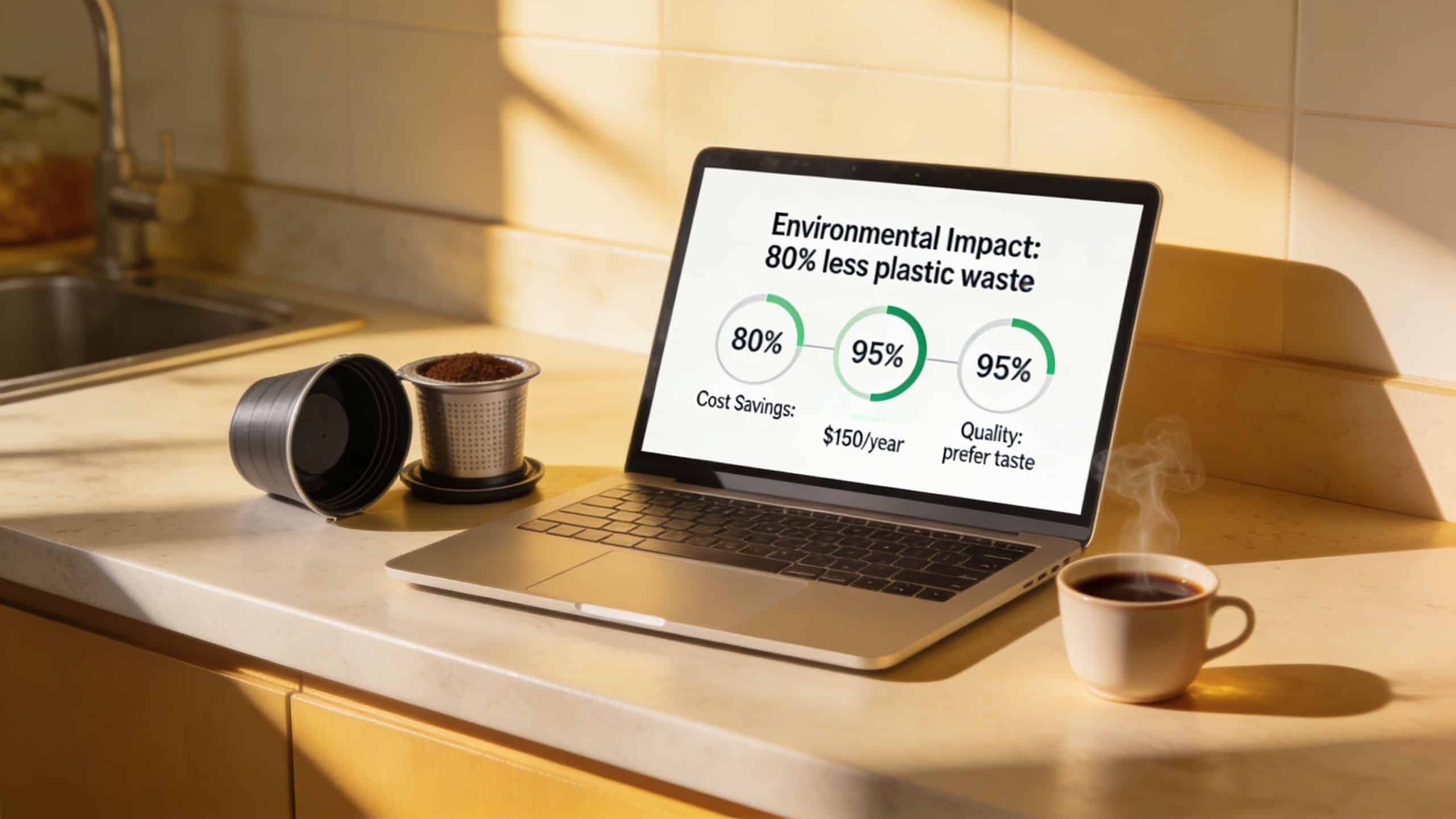
That sounds like a warning, but for single-serve machine users it's encouraging. Home brewers tend to repeat the same action every day in the same place. You don't need to remember a takeaway cup on your way out the door. You just keep the reusable pod near the coffee maker and refill it.
The break-even point is easier at home
Takeaway reusable cups have to solve for lids, portability, spills, and washing habits. A home pod has a simpler job. Fill it, brew it, rinse it, repeat.
That matters in practice because consistent home use is easier than café use. If you brew daily, you hit meaningful reuse quickly. The hardest part is not the environmental math. It's making the pod easy enough to clean that you won't abandon it after a week.
A few habits help:
- Store it beside your grounds: If you have to hunt for it, you won't use it.
- Empty it right after brewing: Wet grounds release more easily than dried ones.
- Keep a second pod if two people brew back to back: That removes the “I'll clean it later” failure point.
Waste and cost move together
A reusable pod cuts packaging waste and changes how you buy coffee. Instead of buying coffee trapped inside single-use plastic and foil components, you can buy the roast you prefer and portion it yourself.
That shift usually improves control as much as sustainability. You can make stronger coffee with a finer grind, lighten it up for afternoon cups, or switch beans without being limited by pod inventory. Families who already try to cut repeat household waste often use the same logic in other categories. A good example is sustainable labeling for families, where one reusable system replaces a steady stream of disposable fixes.
The simplest sustainable habit is the one that asks for the fewest extra decisions.
For Keurig and Ninja owners, that's why reusable pods tend to work better than many reusable cup habits. The brewer stays the same. Your routine barely changes. The trash can changes a lot.
Stainless Steel vs Plastic Reusable Pods
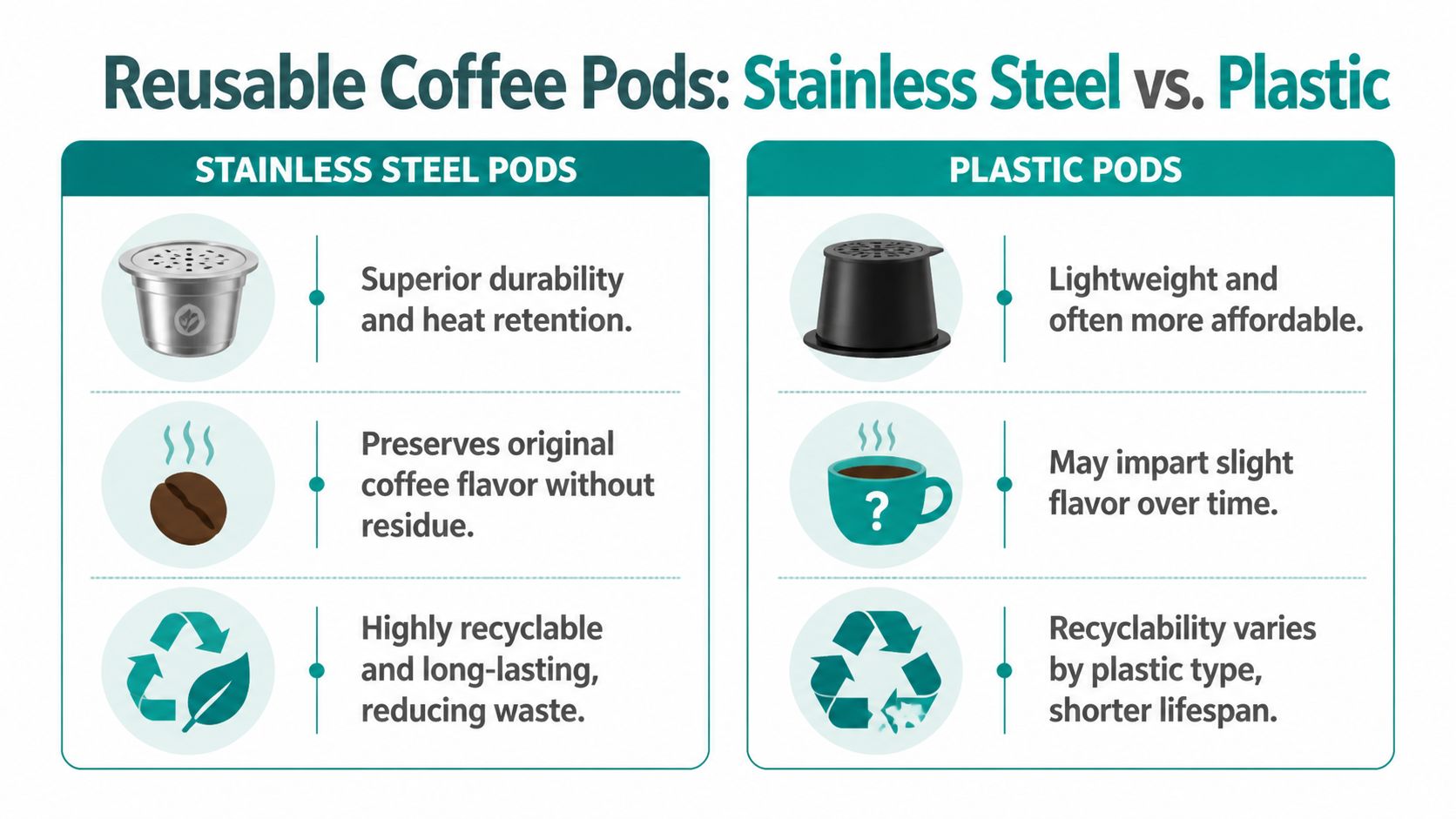
Material choice shapes whether a reusable pod feels like a smart upgrade or a fussy compromise. Most buyers end up deciding between stainless steel and plastic. Both can brew coffee. They don't age the same way, clean the same way, or make the same long-term case.
Life Cycle Assessment data shows that after one year of daily use, a stainless steel reusable cup is responsible for 2.24 kg of CO₂ equivalent, compared to 4.8 kg for daily disposable cups. That doesn't mean every steel pod is automatically the right pick, but it does support the logic behind choosing a durable material you'll keep using.
What stainless steel does better
Stainless steel usually wins on longevity. A well-made pod resists cracking, doesn't absorb coffee oils the same way softer materials can, and holds up better to repeated rinsing and brushing.
That matters more than people expect. Reusable pods fail in ordinary ways. Hinges weaken. Mesh bends. Plastic threads wear. If the pod starts fitting loosely or staining badly, people drift back to disposables.
Stainless steel also tends to feel more stable in use:
- It keeps its shape better: A rigid body helps the lid and seal line up consistently.
- It handles repeated cleaning well: That's useful if you brew several times a day.
- It usually tastes cleaner over time: Coffee oils are easier to remove from a non-porous metal surface.
For a deeper look at trade-offs, this breakdown of stainless steel vs plastic reusable K-Cups and safety is worth reading.
Where plastic still has a place
Plastic reusable pods are often lighter and cheaper upfront. If you're unsure you'll stick with refilling, that lower barrier can be appealing.
They can still work well if the design is solid. The problem is inconsistency. Generic plastic pods vary a lot in lid fit, mesh quality, hinge strength, and how easily they trap old coffee residue. Some brew fine for a while, then start causing small annoyances that pile up.
Those annoyances are usually what kill adoption:
- Grounds in the cup
- A lid that stops snapping securely
- Staining or lingering odor
- Warping after repeated hot-water contact
Buy for the fifth month, not the first week. Reusable gear has to survive routine, not just the unboxing.
My practical take
If you brew often and want one pod to become part of the machine, stainless steel is usually the better long-term answer. If you're testing the idea and care most about a lower upfront cost, plastic can work, but only if the fit is reliable and the mesh is fine enough to hold back sediment.
The material decision often comes down to this: plastic saves money at purchase, stainless steel saves hassle over time.
How to Choose the Right Pod for Your Keurig or Ninja
Compatibility decides almost everything. A reusable pod can be well built and still fail if it doesn't sit correctly in your brewer. Keurig owners especially run into this when they move between older Classic-style machines, 2.0 brewers, K-Supreme models, or slim and duo formats. Ninja DualBrew users have the same issue. The pod has to match the brew chamber and lid clearance, not just the brand name on the front.
The first filter for any purchase is simple: buy for your exact machine family, not “works with most.”
Start with fit before features
Look for model-specific wording that clearly names your brewer line. Broad compatibility claims often create the messiest experiences.
A few checkpoints matter:
- Keurig K-Classic and similar brewers: These usually need a reusable pod sized for the standard K-Cup holder shape.
- Keurig 2.0 machines: These often need a pod built to work with that system's dimensions and sensor expectations.
- Keurig K-Supreme and related MultiStream brewers: These require a design that fits the newer brew setup properly.
- Ninja DualBrew: Pods need to seat correctly so water flows through evenly rather than bypassing the grounds.
If you're buying for a shared kitchen or breakroom, write the exact machine name on a note before shopping. That prevents the common mistake of buying “close enough.”
Addressing the biggest objection
Many coffee drinkers worry about two things: leaks and coffee grounds in the mug.
That concern is fair. Cheap reusable pods often fail here. The fix is design, not luck. Look for a secure lid connection, a mesh filter fine enough to hold back sediment, and a shape that doesn't wobble inside the holder. If the pod shifts during brewing, extraction gets sloppy fast.
Paper liners can help if you want cleaner cleanup or a crisper cup with less fine sediment. They're also useful for darker roasts that leave more oils behind in the mesh. This is one place where accessories earn their space in the drawer.
Pod Comparison
| Feature | Disposable K-Cup | Generic Plastic Reusable | PureHQ Stainless Steel Reusable |
|---|---|---|---|
| Daily waste | Single-use pod discarded after each brew | Reused | Reused |
| Coffee flexibility | Limited to prefilled pod options | Uses your own grounds | Uses your own grounds |
| Fit consistency | Usually consistent for branded pods | Varies by seller and mold quality | Built for named machine compatibility |
| Cleaning | No cleaning, but constant trash | Requires rinsing, may stain over time | Requires rinsing, typically easier to keep odor-free |
| Durability | One-time use | Moderate, depends on hinge and plastic quality | Strong long-term durability from metal body and mesh |
| Cup clarity | Consistent but fixed by pod design | Can allow sediment if mesh is coarse | Usually cleaner if mesh and fit are well made |
| End-of-life | Difficult to recycle in practice | Depends on plastic type and local rules | Stainless steel component is easier to recycle |
| Best for | Maximum convenience, maximum repeat waste | Testing reusable brewing on a budget | Frequent brewers who want a durable everyday option |
If you manage coffee for a small office, washing method matters too. Centralized washing of reusable K-Cups can improve environmental impact by 15% to 30% compared with individual home washing. That makes a shared pod system more practical than many people assume, especially if you also keep up with descaling and routine machine care.
A good buying checklist
Before you click buy, make sure the pod checks these boxes:
- Machine match: Your exact Keurig or Ninja line appears in the compatibility details.
- Secure lid: It should close firmly without feeling flimsy.
- Fine mesh: This reduces grit and improves extraction consistency.
- Simple cleanup: Fewer parts usually means the pod gets reused more often.
- Accessory support: Paper liners and a brush help if you want easier cleanup.
If you're pairing a reusable pod with better maintenance, a descaler is a smart add-on because old mineral buildup can make any pod brew worse than it should.
Keeping Your Reusable Cup Clean and Fresh
A reusable pod only saves money and waste if you keep using it. Bad cleanup habits are what usually end that plan. Old coffee oils cling to mesh, fine grounds dry into corners, and yesterday's residue turns today's cup bitter.
The fast daily routine
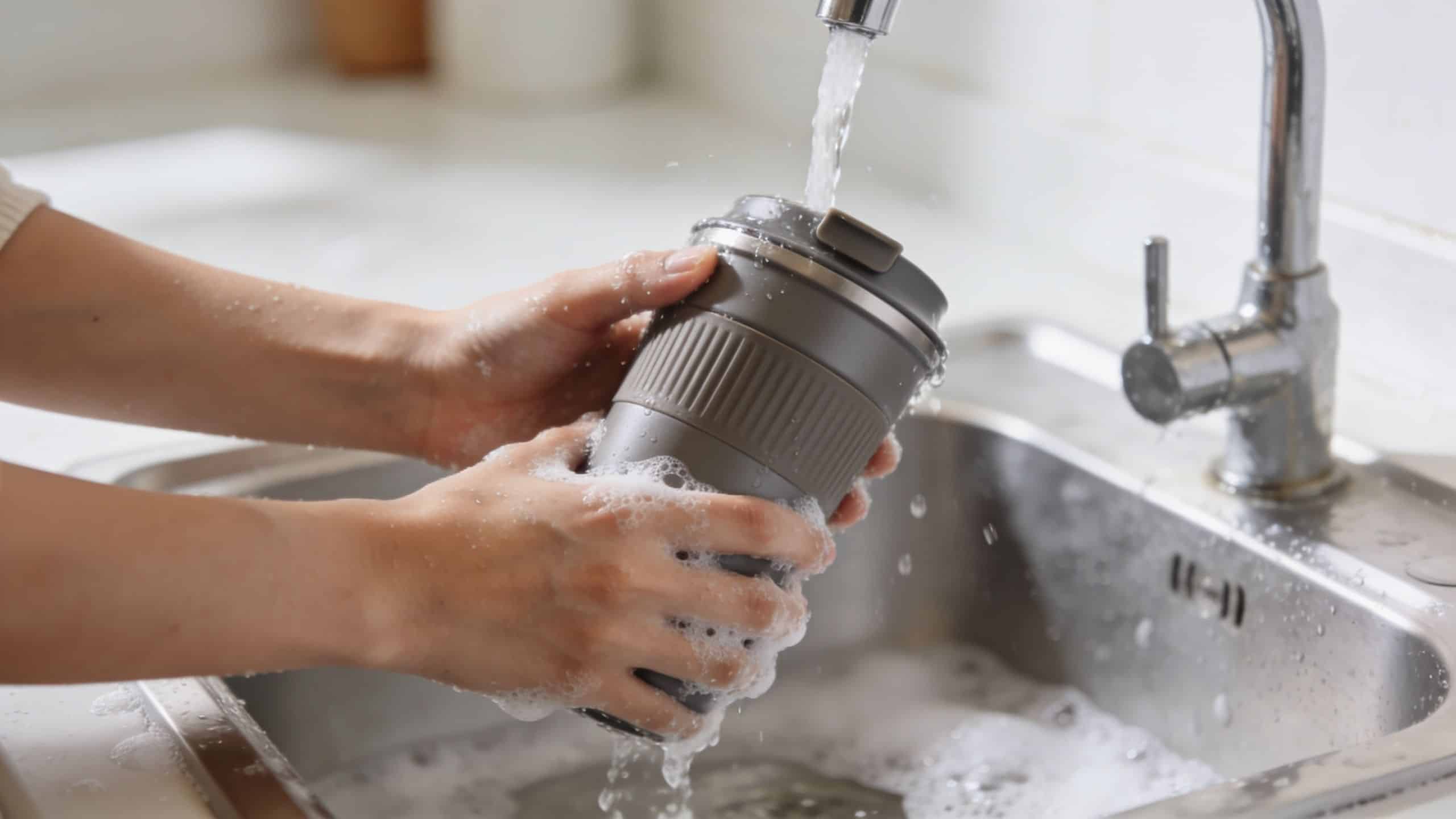
Daily cleaning doesn't need to be a project. It needs to happen before the grounds dry into place.
Use this rhythm:
- Knock out the grounds right after brewing.
- Rinse the pod under warm water.
- Brush or rub the mesh gently if fines stick.
- Leave it open to air dry.
That alone prevents most odor and flavor problems. If you also carry brewed coffee in a tumbler, keeping that vessel clean matters too. If you need a separate drinkware option for iced coffee or commuting, Browse POPvault tumblers for an example of a reusable cup format that suits cold drinks better than a pod-focused setup.
Deeper cleaning when flavor gets dull
If your coffee starts tasting muddy or the pod looks dark around the mesh, give it a deeper clean. Warm soapy water works for routine buildup. Occasional soaking helps when oils hang on.
Machine cleanliness matters just as much as pod cleanliness. Water scale inside the brewer can flatten flavor and slow flow, so it helps to follow a full maintenance routine such as this guide on how to clean a Ninja coffee maker.
A quick visual guide can help if you're building a new routine:
Clean the pod fast, descale the machine on schedule, and your coffee stays closer to the flavor you paid for.
Frequently Asked Questions About Reusable Pods
Are reusable pods actually recyclable at the end of life
Sometimes. It depends on the material. Mixed-material cups with silicone lids and bamboo-fiber bodies have recycling rates often cited as low as 9% globally because contamination and material separation are difficult, while 100% stainless steel pods are highly recyclable through standard metal recycling streams.
That doesn't mean every product marketed as “eco” closes the loop equally well. If end-of-life recycling matters to you, simpler materials usually make the stronger case.
Will a reusable pod save money
Usually, yes, because you stop paying for single-use pod packaging and switch to your own ground coffee. The exact savings depend on what coffee you buy and how often you brew, so it's better to think of this as a repeatable cost-control move rather than a fixed dollar claim.
The strongest savings show up when you stick with the routine. A reusable pod that sits in a drawer saves nothing.
Will it void my machine warranty
Warranty terms vary by manufacturer, so check your manual and brand support materials. In practice, the bigger issue is usually not warranty language but fit and usage. A poorly fitting pod can create weak brews, splashing, or grounds in the cup.
If you're troubleshooting those issues, this guide to problems you may experience when using reusable K-Cups is useful.
Do reusable pods make coffee taste better
They can, because you're not limited to prefilled pod choices. You can use fresher grounds, pick a roast you prefer, and adjust the fill level to suit your mug size and strength preference.
The pod itself doesn't magically improve coffee. Better beans, the right grind, and a clean brewer do.
What's the smartest setup for most people
For most Keurig and Ninja owners, the practical setup is simple: a machine-specific reusable pod, your preferred ground coffee, and a maintenance habit that keeps the mesh and brewer clean. If you want one product-based example, PureHQ Inc. offers reusable K-Cups and related accessories for several Keurig and Ninja models, along with paper liners and descaling products that support day-to-day use.
The larger point is straightforward. Reusable coffee cups get most of the attention, but reusable pods are often the easier win for single-serve brewers. They cut recurring waste, give you better control over your coffee, and fit into a routine you already have.
If you're ready to make your Keurig or Ninja routine less wasteful and more flexible, shop reusable pod and maintenance accessories from PureHQ Inc.. Choose the model that fits your brewer, pair it with the coffee you already enjoy, and turn your daily cup into a habit that wastes less and works better.

