
Coffee Machine Care
Quality Assurance Processes for Small Manufacturers
Aug
Monday morning in a small coffee-accessory shop can turn fast. A few reusable K-Cups already shipped, two customers have written in about lid fit, and nobody can prove which lot came off which machine, which is how a simple rerun turns into returns, rework, and a bad review trail that lingers longer than the product itself.
That's the trap with quality assurance processes in a small shop. When the team relies on memory, sticky notes, and “we'll catch it at the end,” quality stops being a system and becomes a guess. The businesses that stay calm under pressure build QA upstream, where the work happens, and they use it to prevent the repeat problems that eat margin and trust.
Why Small Coffee Accessory Makers Need Real QA
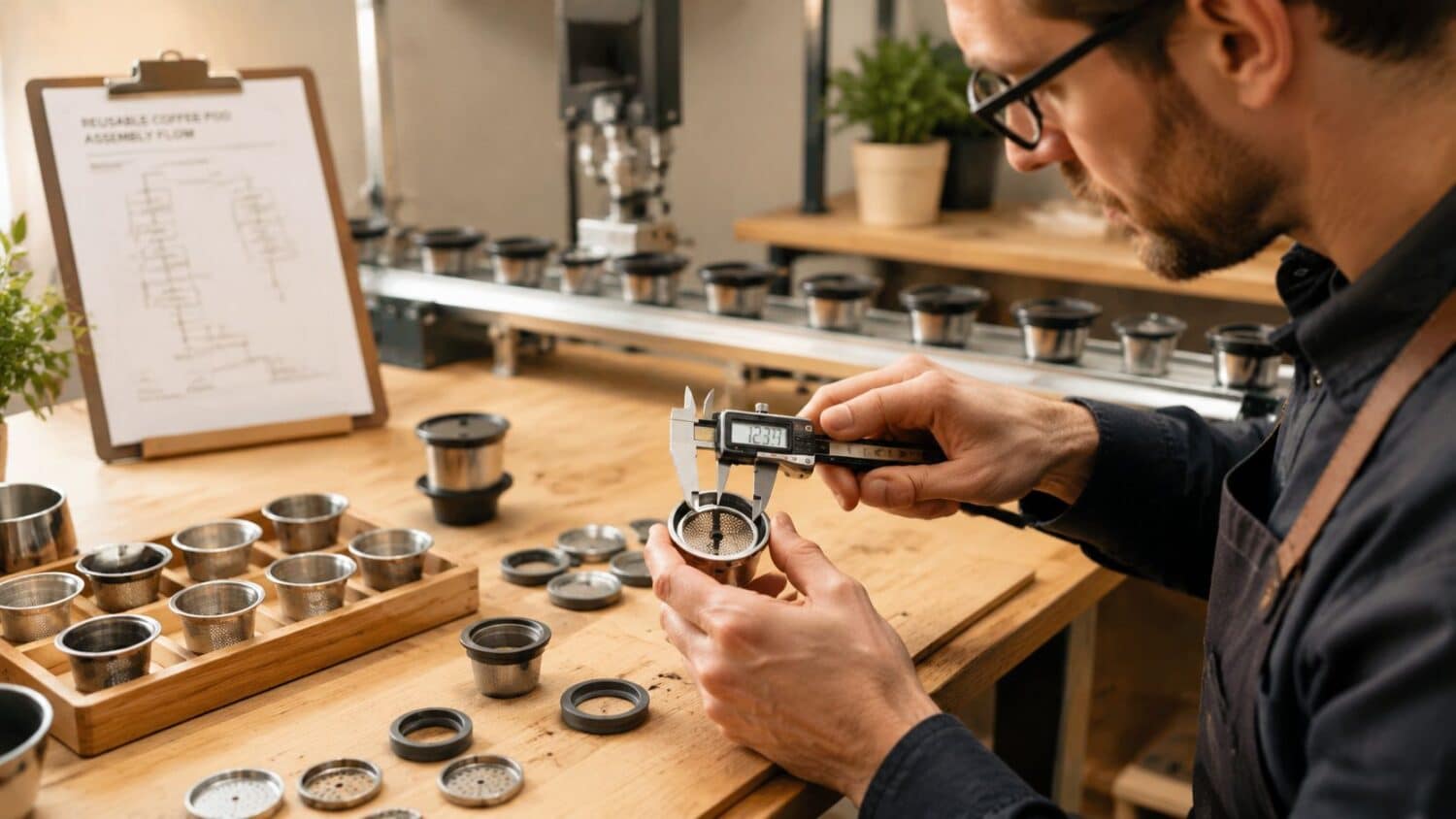
A small U.S. coffee-accessory shop doesn't need giant-factory language to understand quality risk. If a run of reusable K-Cups ships with borderline lid fit, the customer doesn't care that the issue happened in stamping, trimming, or packing. They just know the pod leaks, doesn't seat cleanly, or feels flimsy in their brewer, and that complaint lands on your desk, not on the machine.

The hidden cost of informal quality habits
Informal quality usually looks harmless at first. Someone says, “We'll eyeball it,” another person remembers which die was acting up, and the team keeps moving. Then a return email comes in, the packing slip is gone, and no one can tell whether the issue came from the machine, the material lot, or the assembly shift.
That's exactly where small teams get hurt. Quality assurance became a formal discipline because manufacturers moved away from end-of-line inspection and toward process control, and by the 1920s and 1930s statistical process control had already shifted QA from defect detection to defect prevention, as described in the Office for Statistics Regulation's quality assurance guidance. In a coffee-accessory shop, that same idea applies when you're trying to keep a reusable pod, a paper liner, or a descaling tablet consistent from one batch to the next.
Practical rule: if you can't trace a complaint back to a lot, a machine, and a check record, the process is still too loose.
Why the same problem keeps coming back
A shop without real QA often “solves” the visible defect and leaves the cause untouched. The lid gets tightened, the box gets re-labeled, or the bad units get scrapped, but the process still drifts the next week. That's why a mature QA setup matters even when the team is small, because it creates memory outside people's heads.
The economic case is hard to ignore. One industry statistics source reports that 85% of manufacturing defects are caused by issues in quality control processes, and the average cost of a product recall due to quality issues is about $10 million, according to WorldMetrics quality control statistics. You don't need a national footprint to feel that pain. Even a small run of returned pods can swamp a lean team if the root cause isn't contained quickly.
A coffee-accessory maker also has to care about reputation, because the customer is often buying a replacement part, not a novelty. If the first purchase fails, the second one is already in doubt. QA is what keeps that doubt from spreading.
What Quality Assurance Processes Actually Mean
Quality assurance processes are the planned actions that make a product likely to meet requirements before it ever reaches the box. That's different from inspecting finished units and hoping the bad ones are obvious. The most useful way to think about QA is as a controlled system, one that defines the standard, builds the work around it, checks the output, and feeds lessons back into the process.
Closed-loop definition: QA is a closed-loop control system that defines requirements, turns them into controlled procedures and training, executes work under controlled conditions, then monitors deviations, complaints, and KPIs so the team can trigger root-cause analysis, CAPA, and change control.
QA, QC, and testing are not the same thing
Quality control measures what came out. QA designs the conditions that make the right output repeatable. Testing sits inside that wider system, because it verifies whether a product or process meets the standard at a given point in time.
A thermostat and a thermometer make the distinction easy to remember. The thermometer tells you the temperature, while the thermostat helps set and hold it. In a small shop, QA is the thermostat. QC is the thermometer. If you only measure after the fact, you're still reacting to drift instead of preventing it.
Where a small maker can actually control quality
For a coffee-accessory line, QA shows up in three places that are fully within reach. First, incoming materials need specs, because stainless steel mesh, food-grade silicone, paper, and citric acid all vary more than commonly assumed. Second, in-process controls need to happen while the pod is being stamped, the liner is being cut, or the tablet is being pressed. Third, finished-good verification needs acceptance criteria, so the team knows when a batch is ready.
The U.S. Bureau of Reclamation's quality-management guide is useful here because it lists QA as inspection, monitoring, sampling, destructive and non-destructive testing, peer and independent reviews, and third-party verification, with statistical methods and empirical observation woven into the process (Reclamation QA-QC guide). That breadth matters for small shops too. QA isn't one event. It's a system of checkpoints that keeps the product honest.
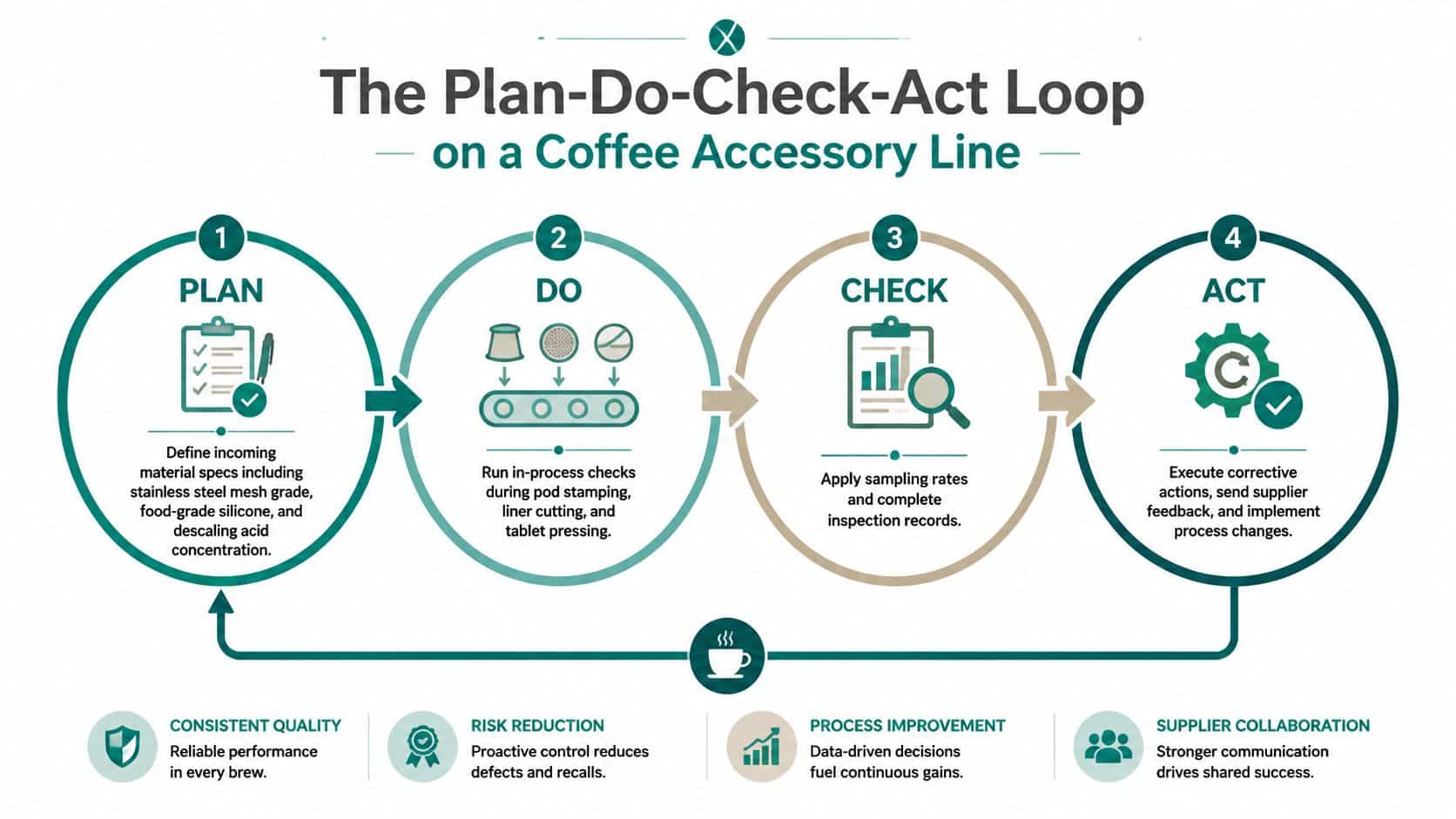
The Plan-Do-Check-Act Loop on a Coffee Accessory Line
A small team can run Plan-Do-Check-Act in a week if the work is specific. The point isn't to create a polished binder. The point is to make the process visible enough that the next person can repeat it without guessing.
Plan sets the standard before production starts
Planning starts with material specs, not with the first finished part. If a pod uses stainless steel mesh, the team defines what acceptable mesh looks like. If a liner is cut from paper stock, the team defines size, thickness, and fit. If a descaling tablet depends on a citric acid blend, the team defines concentration and particle-size expectations before the press runs.
That planning step is also where supplier qualification belongs. A supplier can ship on time and still drift on material consistency, and a small shop feels that drift quickly because there isn't much inventory cushion. The safer move is to decide what “good” means before a pallet reaches the bench.
Do puts the controls into the work
The “Do” stage is where the line follows the written procedure under controlled conditions. On a reusable pod line, that might mean checking stamp depth during production, confirming liner dimensions during cutting, and verifying tablet press settings while the run is active. The Iowa State concrete paving guide uses the same logic in its Plan-Do-Check-Act sequence, where teams create process structure, train people, measure quality characteristics, collect data, and implement the best changes afterward (Iowa State QC for concrete paving).
Check and Act close the loop
“Check” means the team samples, records, and reviews what happened. That's where inspection records matter, but only if they're tied to a defined rule. “Act” means someone changes the process, resets the tool, gives supplier feedback, or updates the work instruction.
A good QA loop doesn't end with “we caught it.” It ends when the cause is removed and the next batch has less room to drift.
Mature QA vs Generic Inspection Compared
A small coffee-accessory shop learns quickly that end-of-line inspection is the cheap-looking option until it starts missing the same problems over and over. It uses less paperwork and fewer training hours, but it also waits until material has already been cut, molded, filled, or packed before anyone notices a defect.
A mature QA program looks for drift while the batch can still be corrected. Generic inspection usually finds the issue after a customer complaint, a return request, or a bad marketplace review has already landed in the inbox. That difference shows up fast on a reusable K-Cup line, because a fit issue that slips past the bench tends to repeat across the same models until the process gets tightened.
| Criterion | Mature QA Program | Generic Inspection |
|---|---|---|
| Defect detection timing | Catches drift during incoming material checks, in-process checks, and sample verification | Catches defects at the end, after production is already complete |
| Customer pain it solves | Reduces leaks, poor fit, weak seals, and inconsistent tablet performance before shipment | Mostly reacts after the customer notices the problem |
| Cost of caught defect | Lower, because bad input or setup can be corrected early | Higher, because labor and material are already sunk |
| Recall and return risk | Lower, because the process is monitored and corrected upstream | Higher, because the same issue can ship repeatedly |
| Best use case | Repeatable production with known failure modes | One-off screening when process maturity is still low |
A better test is whether the check prevents repeat failure or just documents it. If a control only records what went wrong, the process is still too loose. That is also why quality standards matter at the shop-floor level, because they define what a stable process is supposed to look like, not just what a finished box looks like. This lines up with broader quality standards that set expectations for process maturity and consistency.
For marketplace pressure, order defect rate explained is a useful reference, because it shows how repeated misses get punished even when the product seems minor on its own.
Mature QA takes more discipline up front, and that is the trade-off. In return, the shop gets fewer surprises, clearer traceability, and less time spent fighting the same problem twice. Generic inspection feels lighter until the same complaint comes back again.
Core Components and KPIs Worth Tracking
A small coffee-accessory maker does not need enterprise software to measure quality well. It does need a written quality plan, controlled procedures, training records, incoming-material specs, in-process sampling rules, finished-good acceptance criteria, complaint handling, and monthly management review. On a small line, that stack gives the team proof that the process holds together, instead of just proving everyone stayed busy.
The metrics that actually tell you something
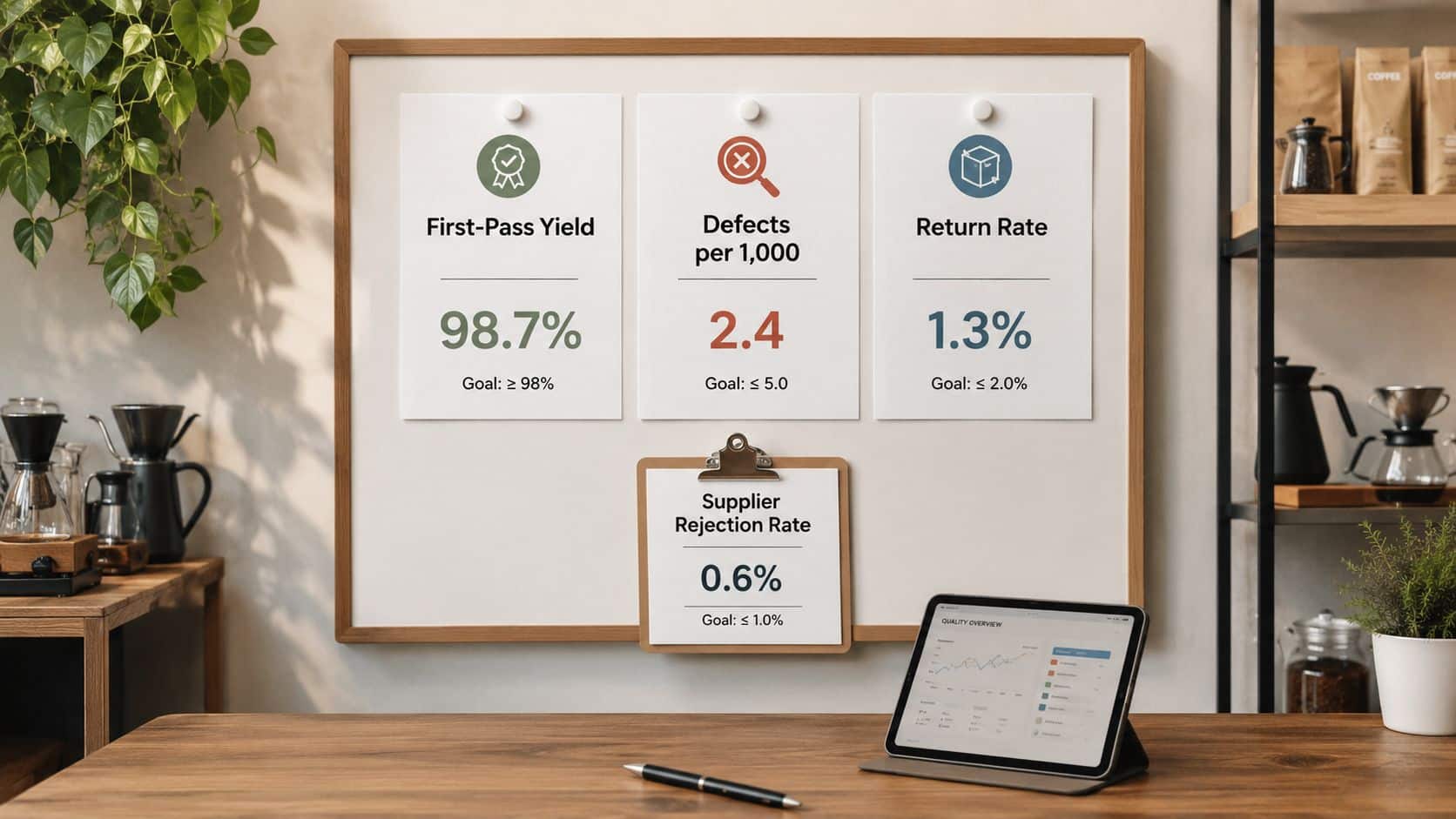
On a bench-level QA board, first-pass yield is usually the first number I look at. It shows how many units move through without rework, so if it starts slipping, the process is drifting even when the cartons still look fine. Defect rate per 1,000 units helps a small team catch patterns that a simple pass or fail count hides, especially when the same small miss keeps showing up in a different form.
Customer return rate matters because returns tell you what escaped the bench. For a mature reusable-pod line, a return rate under 0.5 percent is a reasonable internal target when the process stays tight and complaints are handled consistently. Supplier rejection rate tells you whether your incoming checks are protecting the line or just creating paperwork for someone to file.
Practical rule: if a metric does not change a decision, it does not belong on the dashboard.
What good and bad numbers usually mean
A strong QA program usually shows stable first-pass yield, predictable batch release timing, and a complaint log that names the failure mode instead of repeating “defective.” A weak one shows last-minute rework, rushed releases, and supplier disputes that never turn into a changed spec. The number itself matters less than the trend and the response.
If you want a plain-English guide for marketplace-style failure tracking, order defect rate explained connects quality behavior to customer-facing consequences. In a small shop, that same discipline keeps the team from celebrating shipped volume while hidden process noise keeps building.
A simple dashboard can cover the basics
- Incoming rejection rate: flags supplier drift early.
- In-process sampling pass rate: shows whether the line is staying in control.
- Finished-good acceptance rate: confirms the batch met the standard before packing.
- Complaint closure time: shows whether the team is learning fast or just filing emails.
Those four measures are enough for a lean operation to see whether the system is healthy. More metrics are not better if nobody uses them to make a decision.
A clean dashboard also needs a place to compare what the shop sees with how the process is being tested. For that, a practical reference on testing procedures for quality checks helps tie the numbers to sampling, acceptance limits, and the checks that keep a small line from drifting without notice.
Real World QA Wins on Reusable Pods and Descalers
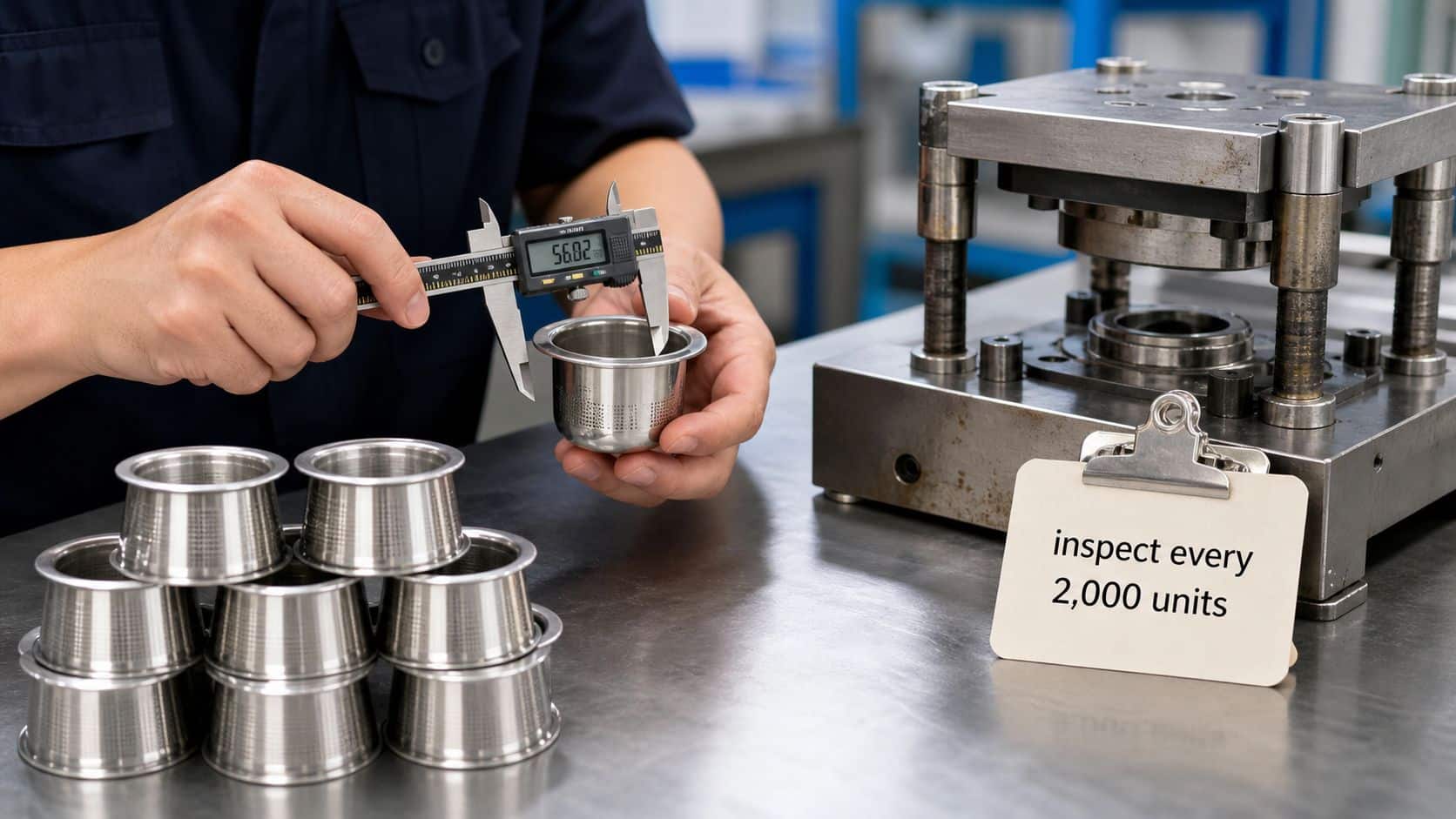
A reusable pod line once kept seeing a lid-fit issue that appeared random until the team looked at the right records. The problem turned out to be stamping-tool drift after 8,000 cycles, and the fix was straightforward, add a dimensional check every 2,000 units and schedule a tool reset before the press wandered far enough to create another batch of borderline pods. That's the kind of result a real QA loop produces, because it turns a vague complaint into a controlled change.
Complaint coding catches patterns that eyeballing misses
Another shop kept hearing that descaling tablets dissolved unevenly. The complaint log didn't just say “bad tablet.” It coded the failure mode, which made the pattern visible. The team traced the issue to a batch of citric acid with off-spec particle size, then added incoming particle-size verification so the same problem couldn't sneak back in with the next delivery.
That's where complaint handling earns its keep. A loose inbox full of customer frustration won't tell you much. A coded complaint system creates a trail from user pain back to the exact input or setup that caused it.
The underlying quality logic is the same as the more formal guidance on QA and testing procedures in the testing procedures reference, where verification only works when the method is clear and the result is recorded consistently. That's true whether the product is a pod, a liner, or a descaler.
Why these wins matter in a small shop
Small manufacturers can't absorb repeated misses the way large plants sometimes do. A single recurring issue can consume shipping labor, customer support time, and inventory faster than the team expects. QA wins matter because they prevent the same repair from becoming a permanent chore.
The best part is that the fix is often boring. Set a checkpoint. Write the threshold. Record the result. Change the process. That's not flashy, but it's how a small operation keeps moving without constantly reopening the same problem.
Common QA Mistakes Small Makers Should Avoid
The biggest QA failures in small shops usually come from good intentions, not bad people. Someone wants to move fast, save paperwork, or trust a supplier that's “always been fine.” The result is usually the same, hidden drift that only shows up after the product is already in the customer's hands.
Mistaking paperwork for control
A common symptom is a folder full of forms that nobody reads until something breaks. The hidden cost is simple, the team documents failure after the fact and never changes the setup that caused it. The corrective action is to move QA upstream, so specs, training, and in-process checks happen before units pile up.
Automating a vague process
Another mistake is buying automation before the process is even defined. If the team hasn't agreed on what acceptable mesh, silicone, or tablet consistency looks like, automation just speeds up confusion. The fix is to document the process first, then automate only the repetitive, high-risk checks that are already understood.
Tracking only defect counts
A line can look “fine” while rework, complaints, and tool drift rise. The corrective action is to track reliability measures too, especially the ones that show whether the process is staying in control rather than merely producing output. Defect counts alone can hide unstable process behavior.
Trusting suppliers without verification
A supplier can be dependable for months and still shift on material consistency. The symptom is a run that suddenly behaves differently even though the work instructions didn't change. The fix is to qualify the supplier, verify incoming material, and treat source quality as part of your own process.
One more mistake shows up in a lot of growing operations, and it's the most expensive one. Teams wait to review quality until management is already frustrated, then act like the review itself is the solution. It isn't. Review only works when it changes the next batch.
A 90 Day QA Starter Plan and Where to Shop
A small coffee-accessory maker can build a real QA system in 90 days without hiring new staff. Weeks 1 to 4 are for documenting the quality plan and incoming-material specs. Weeks 5 to 8 are for in-process sampling, finished-good acceptance records, and basic traceability. Weeks 9 to 12 are for complaint handling and a monthly management review that leads to changes.
A workable rollout without the overhead
Start with the products that are easiest to measure. Reusable K-Cups and stainless steel refillable pods need fit, seal, and finish checks. Disposable paper liners need dimension and placement checks. Descaling tablets and solutions need incoming-material review and batch consistency checks. Those are the same places where a small team can catch drift before the shipment leaves the bench.
The wholesale coffee accessories guide is useful if you're thinking about assortment planning alongside quality, because quality gets easier when the line isn't constantly changing under you. A stable product mix lets the team learn the process instead of resetting it every week.
If your operation also sells filters or maintenance items, bundle them into the same quality review so packaging, fit, and instructions stay consistent. That keeps the customer experience cleaner and reduces the odds of a support issue that starts with the machine and ends with your product.
PureHQ Inc. supplies reusable K-Cups, stainless steel refillable pods, disposable paper liners, and descaling tablets and solutions built for everyday coffee use. If you're tightening your own quality assurance processes, visit PureHQ Inc. to shop accessories that fit real machines and support a cleaner, more consistent brew.

