
Coffee Machine Care
Ninja Coffee Maker Warranty: A Complete 2026 Guide
May
Your Ninja coffee maker quits on the exact morning you don't have time for it. The screen stays dark, the brew cycle hangs, or water moves everywhere except into your mug. Then you start asking the question most owners ask too late: what does the ninja coffee maker warranty cover, and what do you need to do to get a real answer instead of a scripted brush-off?
That's where difficulties often arise. The machine may still be within warranty, but the difference between a fast replacement and a rejected claim often comes down to details that aren't obvious from the packaging. Coffee makers fail in messy ways. Some issues point to a defect. Others look serious but turn out to be scale buildup, debris, or skipped cleaning, which companies often treat very differently.
I've seen the same pattern over and over. Owners focus on the broken result, but support teams focus on documentation, maintenance history, and whether the failure sounds like misuse, neglect, or a genuine manufacturing problem. If you understand that gap before you call, you're in a much stronger position.
Your Ninja Coffee Maker Stopped Working Now What
A typical failure starts small. The machine brews slower than usual, the carafe fills halfway, or the pod side starts acting erratic. Then one day it stops altogether, and now you're staring at a machine that wasn't cheap, wondering if you tossed the receipt and whether support will make you jump through hoops.
That frustration gets worse when the problem feels random. You cleaned the obvious parts. You unplugged it. You tried another outlet. It still won't brew, or it leaks, or it powers on but doesn't complete the cycle. At that point, one might either panic and buy another machine too fast, or start a claim without the paperwork and lose time.
Practical rule: Don't contact support first. Gather your evidence first.
What to do in the first hour
Before you assume the machine is dead, do three things in order:
- Confirm the symptom. Is it not powering on, not pumping, not heating, leaking, or stopping mid-brew?
- Take photos and a short video. Show the control panel, reservoir, brew basket area, and the actual failure.
- Find your purchase record. Email confirmations, retailer receipts, and order history screenshots all help.
Those basics matter because warranty conversations usually become much easier when you can show exactly what the machine is doing.
What not to do
A lot of claims get weaker because owners make the machine harder to evaluate.
- Don't disassemble the housing unless support tells you to.
- Don't throw away accessories that came with the unit.
- Don't describe everything as “broken”. Be specific about what happens.
- Don't wait too long if you think you're still inside the warranty period.
If you already feel stuck, it helps to reach out to a support team that deals with coffee accessory and compatibility questions every day. The PureHQ contact page is a useful place to start for accessory-related guidance and product support questions while you sort out whether your issue is a machine defect or a maintenance problem.
Decoding Your Ninja Warranty Coverage
It's common to hear “limited warranty” and assume it means the company will fix anything that stops the coffee maker from working. That's not how it usually plays out. A limited warranty generally centers on defects in materials or workmanship, not every problem that shows up during ownership.
The baseline most buyers should expect
For most buyers, the practical baseline is a 12-month warranty. On Ninja Kitchen's warranty page, the company states that “all of our Ninja Kitchen products have a 12 month warranty” and that the warranty covers repair or replacement, including parts and labor, for that period. The same page says direct purchases are automatically registered, while third-party purchases can be registered online within 28 days.
That gives you the first big checkpoint. If your machine is within that period and you have proof of purchase, you're in the zone where a claim is at least worth pursuing.
What limited warranty means in practice
A warranty claim usually goes more smoothly when the issue sounds like a defect and not a maintenance lapse.
Problems that may fit warranty coverage more naturally include:
- Power failure when the machine won't turn on despite normal setup
- Electronic malfunction such as controls not responding as intended
- Brewing failure tied to internal malfunction after basic user checks are ruled out
- Parts failing under normal use when there's no sign of abuse or neglect
Problems that often run into resistance include cosmetic damage, wear on removable pieces, or damage that looks tied to user handling.
A coffee maker can stop brewing for reasons that feel catastrophic to the owner but still look routine to a warranty team.
The exclusions that catch people off guard
Many claims falter due to specific warranty conditions. Warranty language often excludes damage tied to misuse, neglect, and non-genuine parts, and it may also exclude normal wear items. That means the support agent may care less about how annoying the failure is and more about what likely caused it.
A realistic way to consider it:
| Issue type | More likely treated as warranty matter | More likely treated as owner responsibility |
|---|---|---|
| Internal defect | Yes | No |
| Control failure | Often | Rarely |
| Mineral buildup | Rarely | Often |
| Clogs from debris | Rarely | Often |
| Wear on removable components | Sometimes not | Often |
If you want to compare your accessory coverage expectations with a smaller brand's policy, the PureHQ warranty page is a useful contrast in how warranty terms can be written more plainly for replacement accessories.
How to File a Successful Warranty Claim
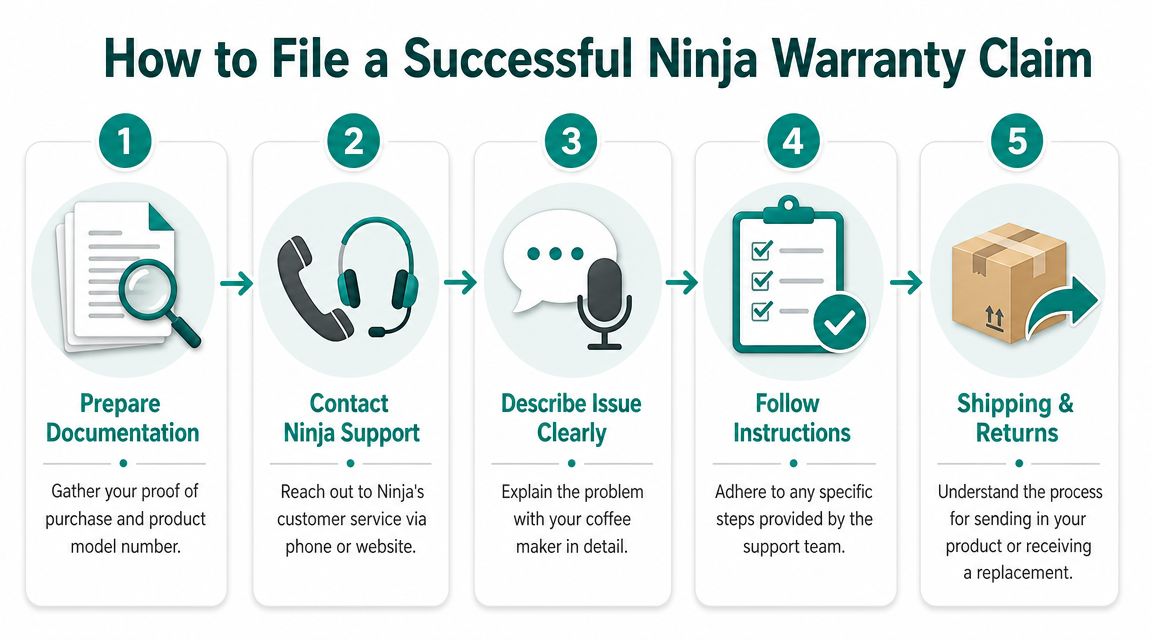
Most failed claims don't fail because the owner is wrong. They fail because the owner is unprepared. Support teams ask simple questions, but if you don't have the model number, receipt, registration status, and a clean description of the fault, the process slows down fast.
Gather the documents before you call
Have everything in one place. That means digital copies, not a vague idea that the receipt is “somewhere.”
Use this checklist:
- Proof of purchase. Retail receipt, online order confirmation, or account order history.
- Model identification. Photograph the sticker or plate on the machine.
- Serial number. Capture it clearly so you don't have to re-read it on a call.
- Failure evidence. Short video of the issue, especially for leaks, startup failure, or interrupted brewing.
- Cleaning history. If the issue involves brewing performance, note when you last cleaned or descaled it.
Describe the problem like a technician would
This part matters more than people think. “It doesn't work” invites a long troubleshooting loop. A precise description gives support fewer places to stall.
Try this format:
- What the machine does
- When it started
- What you already checked
- Whether the issue is consistent or intermittent
For example: the machine powers on, begins the brew cycle, then stops before dispensing a full cup. The issue happens every time. You checked the outlet, cleaned removable parts, and refilled the reservoir.
Claim strategy: Use neutral, specific language. Don't exaggerate. Don't guess at the cause unless you have clear evidence.
A video walkthrough can help if you want to see the process mindset in action:
What support is likely to ask you
Expect some version of the following:
- where and when you bought it
- whether you registered it
- whether the machine has been descaled or cleaned
- whether you use original or compatible accessories
- whether the issue began suddenly or gradually
That last point is important. Sudden failure can sound more like a defect. Gradual decline often leads support toward maintenance questions.
A practical filing sequence
Use this order if you want the least friction:
| Step | What to do | Why it helps |
|---|---|---|
| 1 | Photograph receipt and machine label | Saves time during support contact |
| 2 | Record short symptom video | Shows the issue without overexplaining |
| 3 | Write a one-paragraph fault summary | Keeps your call or chat focused |
| 4 | Contact support through the official channel | Starts the claim cleanly |
| 5 | Save every message and case number | Makes follow-up much easier |
One mistake that hurts claims
Owners often start cleaning aggressively after the machine fails, then contact support later with no evidence of the original problem. Clean removable parts if needed, but document the issue first. If the machine leaks from the base, films up with mineral residue, or flashes odd behavior, get that on record before the symptom changes.
Protecting Your Warranty with Smart Maintenance
This is the part most official warranty pages don't explain clearly enough. A large share of brewing complaints sit in the gray zone between “machine defect” and “machine wasn't maintained.” That gray zone matters because it often decides whether support treats your case as a warranty issue or a user-care issue.
Ninja's troubleshooting guidance for brewing problems commonly points owners toward power checks, reservoir checks, blockage checks, pod debris, and descaling first, and warranty terms exclude damage tied to neglect or non-genuine parts, which is why Ninja troubleshooting guidance on not brewing matters so much when you're trying to understand how a claim may be evaluated.
The real fight is maintenance versus defect
If your coffee maker stops brewing, your first instinct may be to assume a pump or heater failed. Sometimes that's true. But many everyday issues come from mineral buildup, coffee residue, or blockages that develop slowly and show up as weak brewing, no brewing, or inconsistent output.
That doesn't mean every brewing issue is your fault. It means you need to show that you treated the machine responsibly before asking the manufacturer to treat it as defective.
Keep a simple maintenance trail. A descaling note on your phone and a saved order for cleaning supplies can help you sound organized and credible if support starts asking questions.
What works and what doesn't
A lot of owners ask whether third-party accessories automatically void warranty coverage. In practice, the bigger issue isn't the logo on the accessory. The bigger issue is whether the accessory contributed to damage, fit problems, debris, or abnormal strain on the machine.
That's why quality matters.
- A well-made reusable pod or filter can be fine if it fits correctly and doesn't shed material or jam the brew system.
- A poor-quality accessory can create avoidable problems that are hard to separate from user-caused damage.
- No maintenance at all creates the worst position of all when the machine starts underperforming.
If you need a basic cleaning routine for these machines, this guide on how to clean a Ninja coffee maker lays out the practical habits that help prevent the common failures owners later try to submit as warranty claims.
Maintenance Impact on Warranty & Machine Health
| Action | Proper Maintenance (Using Quality Accessories) | Neglect (Using Cheap Accessories or None) |
|---|---|---|
| Descaling | Helps keep water flow consistent and supports a stronger claim if problems continue | Mineral buildup can mimic machine failure |
| Brew basket and pod area cleaning | Reduces debris-related clogs | Grounds and residue can block water flow |
| Using compatible accessories | Lowers fit and leakage risk | Poor fit can create mess, jams, or stress on parts |
| Keeping records | Makes support conversations easier | Leaves you guessing when asked about upkeep |
A common objection about accessories
Some owners worry that using a reusable filter, descaler, or compatible water filter automatically puts their warranty at risk. That's too broad. The smarter question is whether the product fits properly, is intended for that machine type, and is used without causing damage.
One option in that category is PureHQ Inc., which sells coffee machine accessories such as reusable pods, water filters, and descaling products for home brewers. Used correctly, those kinds of maintenance items can help owners keep the machine clean and brewing properly. They are not a substitute for the manufacturer's warranty, but they can reduce the odds of performance issues that support may classify as maintenance-related.
Navigating Repairs When Your Warranty Expires
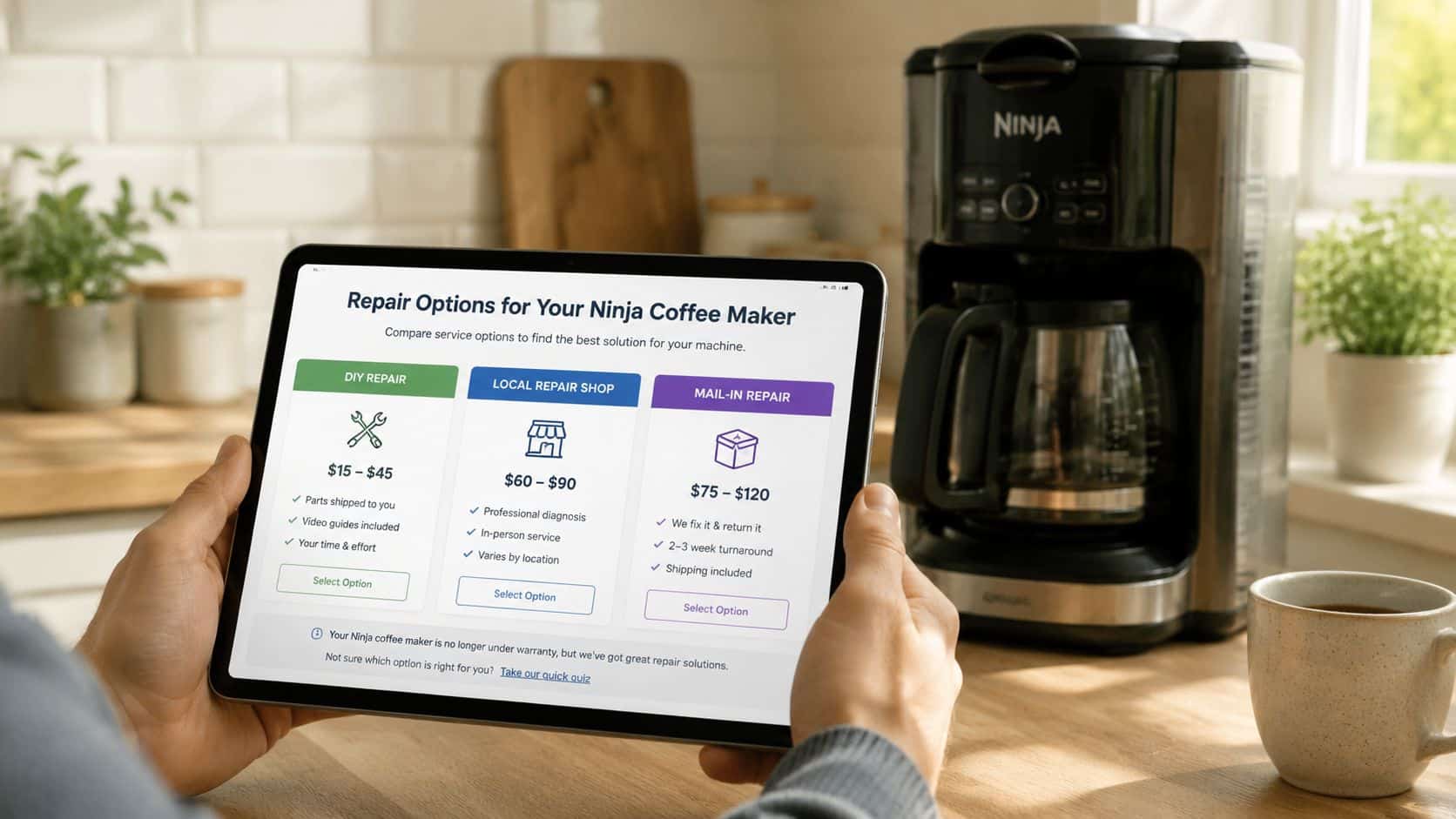
Once the warranty window is gone, the decision changes. You're no longer asking, “Can I get this covered?” You're asking, “Is this machine worth fixing, and who should touch it?”
Your three real options
There are usually three paths.
| Option | Upside | Downside |
|---|---|---|
| Official manufacturer route | Clear brand-specific process | May be limited depending on model and issue |
| Local appliance repair shop | Human diagnosis and local turnaround | Not every shop wants small coffee appliances |
| DIY troubleshooting | Fast and inexpensive if the issue is simple | Risk of making the problem worse |
When each option makes sense
Official support makes sense when the machine has a clear electronic or brewing-system issue and you want the manufacturer's guidance first. Even out of warranty, it's worth asking what they can offer for your specific model.
A local repair shop makes more sense when the machine has a leak, switch issue, or a problem an appliance technician can inspect without waiting on corporate channels. Call before carrying the machine in. Some shops won't service smaller countertop brewers.
DIY makes sense only for basic cleaning, descaling, external seal checks, and other low-risk steps. If you're opening the housing without a service manual or replacement parts plan, you can quickly turn a salvageable machine into a dead one.
If the symptom is simple, start simple. If the machine leaks from the base, trips power, or smells hot, stop using it and move straight to professional evaluation.
A useful way to think about parts
One practical obstacle with out-of-warranty repair is parts availability. That's not unique to Ninja. It happens across appliance categories. If you've ever dealt with hot water units, the same principle applies. Parts access often decides whether a repair is realistic, which is why a resource like genuine Zip unit parts Australia is useful as a broader example of how genuine parts availability shapes repair decisions.
The takeaway is simple. If parts are hard to source, repair becomes less attractive. If the problem is minor and parts are available, repair can still make sense.
Your Final Warranty Checklist and Next Steps
By the time someone looks up the ninja coffee maker warranty, the machine has already failed and the morning is already ruined. That's fine. You can still make the next move cleanly if you treat the issue like a case file instead of a rant.
Final checklist
- Find your proof of purchase before you contact support.
- Photograph the model and serial information on the machine.
- Record the symptom clearly with a short video.
- Write down what the machine does and what you already tried.
- Be honest about maintenance if the problem involves brewing performance.
- Avoid disassembly unless you're clearly outside warranty and accepting the risk.
- Compare repair options calmly if coverage has expired.
The big takeaway
The strongest claims usually come from owners who do two things well. They document the failure, and they avoid turning a maintenance problem into a warranty argument that support can reject in a minute.
The other lesson is even more practical. The easiest warranty claim is the one you never need to file because the machine stays clean, scaled correctly, and free of avoidable accessory-related problems.
If you want to protect your current setup or your next one, focus on the boring habits that keep coffee makers alive: regular descaling, proper cleaning, and accessories that fit the machine they're supposed to fit.
If you want to keep your brewer running with fewer clogs, cleaner water flow, and less avoidable wear, shop accessories and maintenance supplies from PureHQ Inc.. Their lineup includes reusable coffee accessories, filters, and descaling products that can help support cleaner, more consistent brewing at home.

