
Coffee Machine Care
Keurig Reuse Cup Guide: Brew Better, Leak Less
Oct
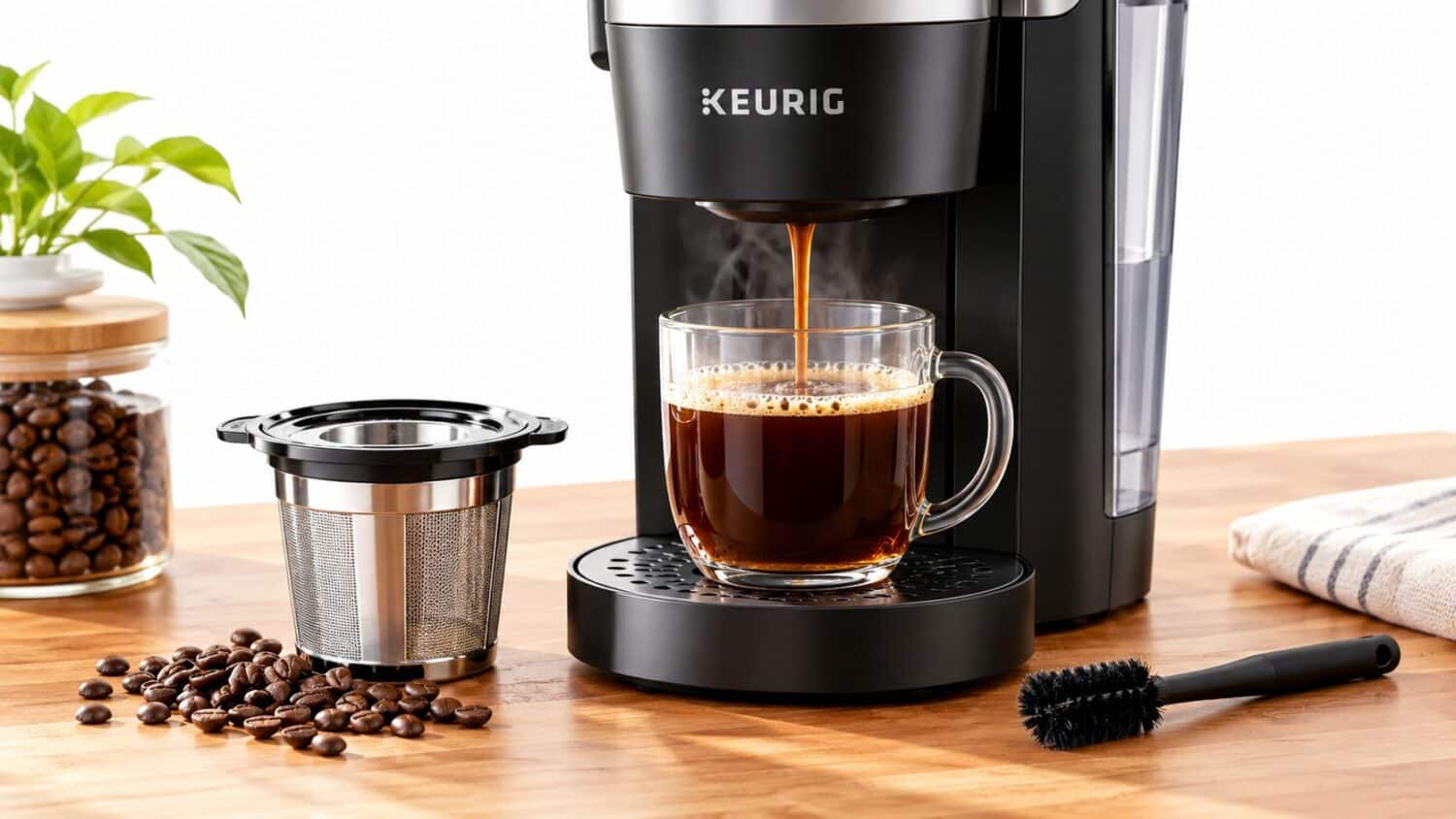
A reusable K-Cup is the practical answer for reducing single-use waste, but it only works well when the pod matches your brewer and you control the grind and fill. Nine billion coffee pods ended up in landfills in 2014, so the effort is worth taking when you want a cleaner daily routine without giving up ground coffee.
That number changes how I look at a refillable Keurig cup. The accessory isn't just a way to avoid buying proprietary capsules. It gives you control over the coffee, creates less dependence on single-use packaging, and can produce a fuller cup when you set it up correctly. It can also create a leaky, watery mess when the lid geometry, grind, or dose is wrong.
Why Your Morning Coffee Deserves a Reusable Cup
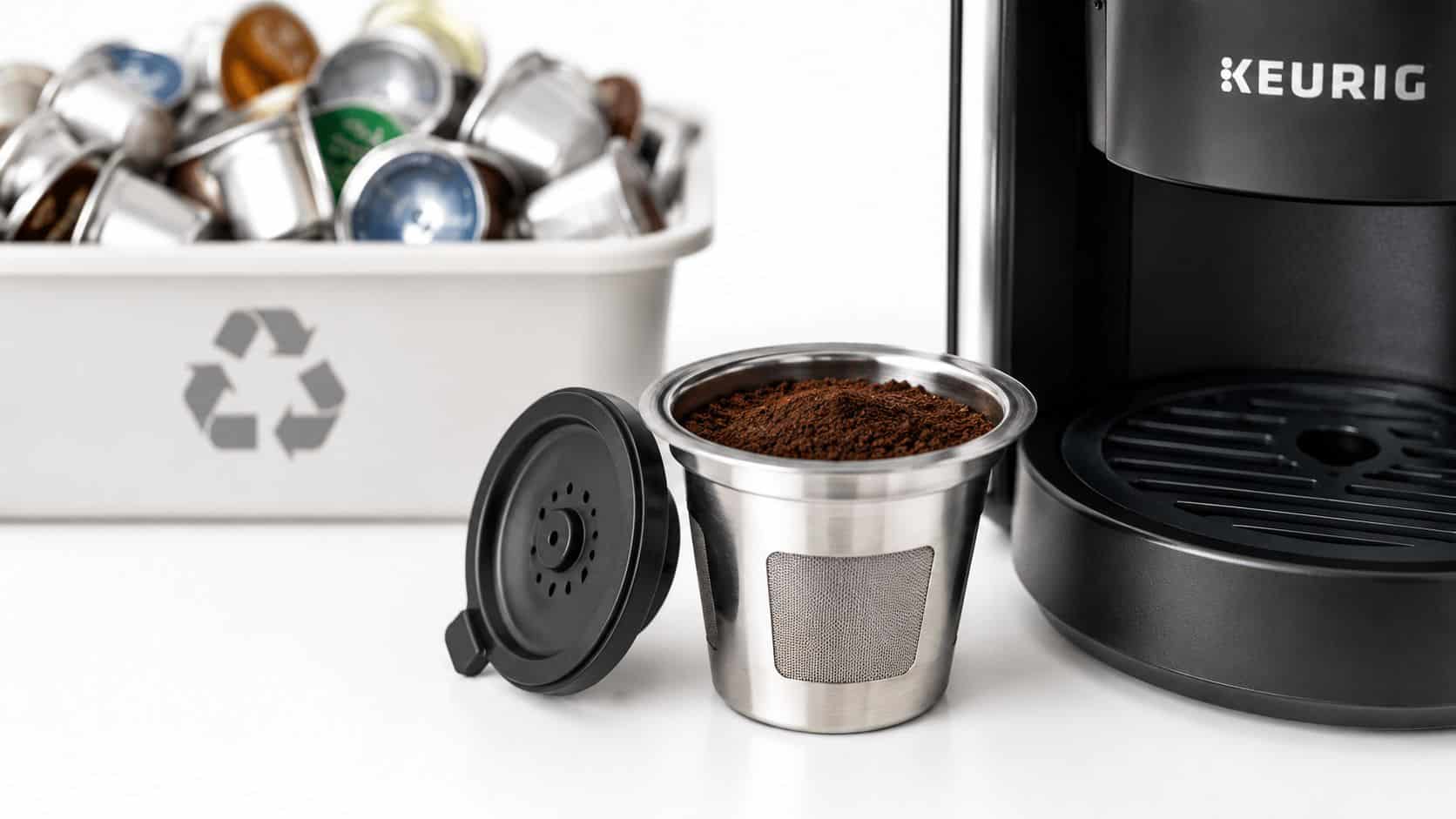
A reusable K-Cup solves a very specific problem: it lets a pod brewer use loose ground coffee instead of requiring a sealed capsule for every cup. The environmental pressure behind that choice is substantial. A 2020 peer-reviewed life-cycle assessment estimated that 9 billion coffee pods went to landfills in 2014, a figure documented in the life-cycle assessment summary.
That doesn't mean every reusable cup automatically has a lower total impact. You wash it, use water, and eventually replace it. Still, reuse removes the disposable pod from each brewing cycle and gives you a practical way to buy coffee in formats you already prefer. For households that care about waste and want more control over coffee quality, that trade-off deserves serious consideration.
The market changed because users wanted choice
Keurig first launched its reusable My K-Cup accessory in late 2005, then removed it in August 2014 when the Keurig 2.0 system initially rejected My K-Cup pods. After strong consumer backlash, Keurig brought the reusable pod back in 2015, according to the Keurig history overview. That timeline matters because reusable cups grew from more than a savings accessory. They also addressed a compatibility dispute between consumers and a proprietary brewing system.
By 2015, Keurig's ecosystem had expanded to hundreds of varieties across dozens of brands, while industry coverage reported that almost one in three American homes had a pod-based coffee machine. A refillable cup therefore offered something branded capsules couldn't: the ability to use a favorite local roast, decaf, blend, or older bag of beans without searching for a matching capsule.
Keurig has also moved its disposable pod line toward recyclability. The company says 100% of its K-Cup pods were recyclable by the end of 2020, and it reported an 18% reduction in plastic in nearly all pods compared with the original design in its K-Cup pod sustainability history. Those changes make the choice less simplistic. Reusable cups reduce repeated packaging, while recyclable pods can offer convenience with a different maintenance burden.
Practical rule: Choose reuse for control and waste reduction, but judge the result by the whole routine, including cleaning, fit, and machine care.
Choosing the Right Reusable K-Cup for Your Machine
Compatibility comes before coffee. Keurig's own My K-Cup reusable coffee filter is designed as a universal reusable filter for Keurig brewers, but “universal” doesn't mean every lid design behaves identically in every brew head. Check the model name and the needle arrangement before buying, using this model compatibility guide.
Identify the brew head first
Open the handle and look into the pod chamber. A traditional brewer with one primary puncture needle generally uses a classic single-hole reusable cup. The K-Classic is the straightforward example. Older standard-style machines usually accept a classic universal filter when the cup sits at the correct height and the lid seals properly.
Newer multi-needle models need more attention. K-Supreme, K-Slim, and K-Duo Gen 2 brewers use a MultiStream injector that requires a reusable lid with a matching five-hole pattern, as documented in field testing of five-hole reusable K-Cup compatibility. The holes need to line up with the injector. If they don't, the machine can spray, seal poorly, or saturate the grounds unevenly.
The K-Duo name alone isn't enough to identify the right cup because versions can differ. Confirm the exact generation and inspect the brew head rather than relying only on the product title. A cup that physically drops into the chamber can still sit too high, block the lid, or direct water incorrectly.
Match the pod to the coffee you actually drink
A stainless steel refillable pod makes sense if you want durability and easy rinsing. A reusable cup with a compatible adapter can help on models that need a different seating arrangement. Disposable paper liners can simplify cleanup, though they add a consumable to the routine.
For mornings when you don't want to refill a cup, keep a compatible backup such as these nutty medium roast coffee pods. They also provide a useful flavor reference when you're adjusting a reusable setup. The important purchase decision remains mechanical: classic single-needle cup for classic brewers, five-hole MultiStream cup for the listed newer models.
The Perfect Fill, Grind Size and Coffee Ratios
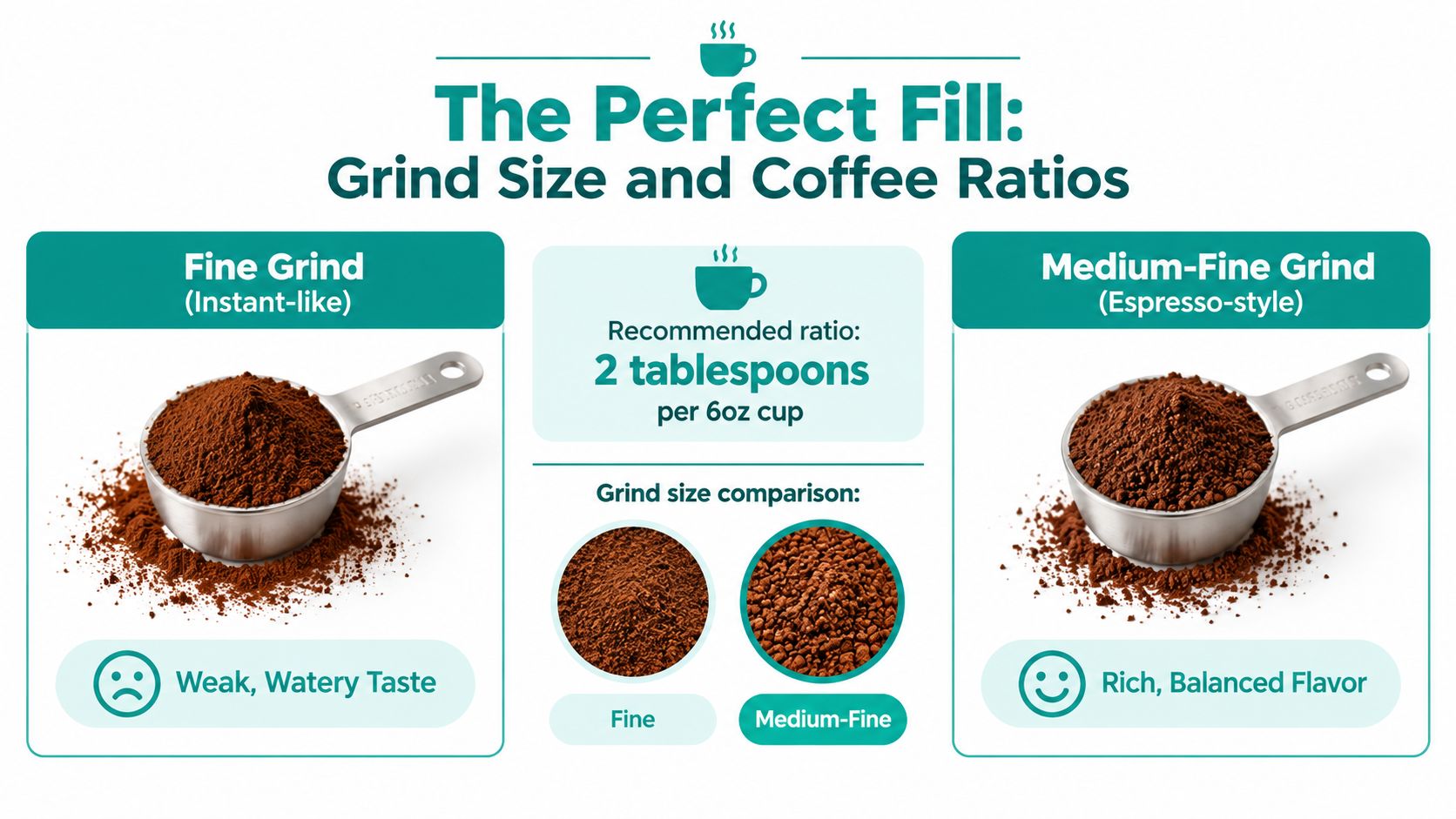
Most weak reusable-cup coffee comes from one of three mistakes: too little coffee, too coarse a grind, or too much water for the amount of grounds. A practical fill target is about 12 to 16 grams of ground coffee, filled nearly to the top, according to independent testing summarized by reusable K-Cup brewing guidance.
Start with a nearly full basket, but don't compress the grounds into a hard puck. Level them gently so water can move through the bed. Overfilling can restrict flow and clog the filter, while underfilling leaves the brewer with too little coffee to support a strong extraction.
Adjust one variable at a time
Grind size controls the balance between flow and extraction. A grind that's too coarse lets water pass quickly and can produce a thin cup. A grind that's too fine slows the flow, encourages clogging, and can leave sediment, particularly in brewers with tighter water paths.
Use this sequence:
- Begin with a medium grind. Brew the same coffee at the same cup setting so you have a stable baseline.
- Increase the dose toward 12 to 16 grams if the cup tastes hollow and the basket isn't already crowded.
- Move slightly finer when the coffee remains weak after an adequate fill.
- Move coarser or reduce the dose if the brew drips slowly, sprays, or leaves a muddy layer.
- Avoid hard tamping. A gentle level is enough. Firm pressure can turn a workable coffee bed into a blocked filter.
Larger mug settings can expose a hidden problem. Standard reusable pods are typically sized for about 7 to 8 ounces, so brewing a larger volume without changing the dose can dilute the result, as discussed in guidance on using coffee grounds in a Keurig. When the coffee tastes weak, check the water volume before blaming the beans.
| Brewing choice | Reusable K-Cup | Standard single-use pod |
|---|---|---|
| Coffee selection | You choose the roast, grind, and blend | The manufacturer controls the coffee and dose |
| Dose control | You can adjust the fill within the basket's limits | The dose is fixed by the pod |
| Flow sensitivity | Grind and fill affect speed and strength | The sealed format controls the bed more consistently |
| Waste routine | You empty and wash the cup | You remove the lid, empty or compost grounds, and handle the pod |
| Main failure point | Fit, clogging, or overfilling | Packaging waste and local recycling limits |
Cleaning and Maintenance for Long-Lasting Brews
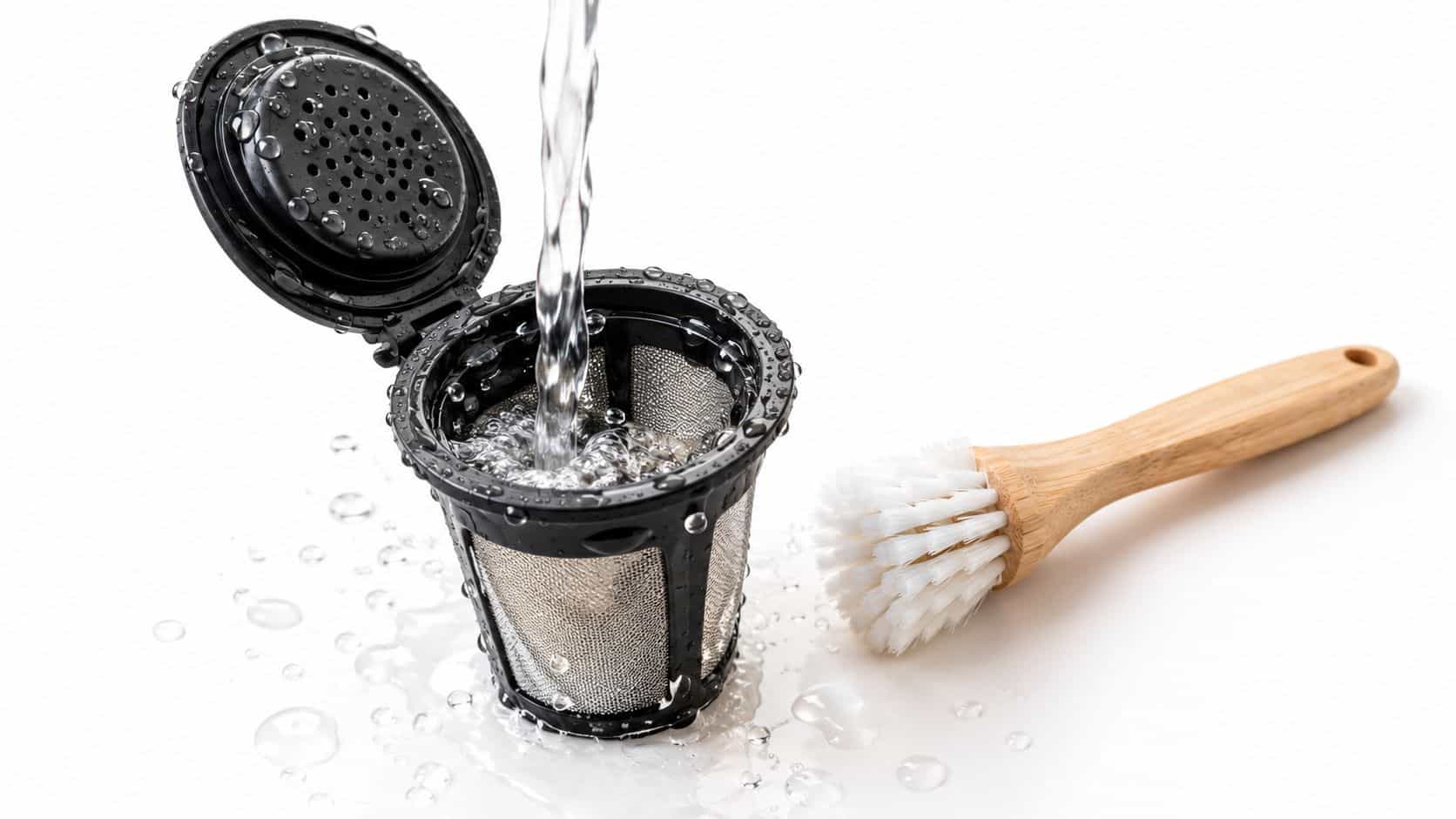
A refillable cup needs a small cleaning habit. Rinse it immediately after brewing so wet grounds don't dry inside the mesh, then wash the basket, lid, and sealing surfaces with warm soapy water during your regular deeper clean. Pay special attention to the filter screen because fine particles and coffee oils can slow the flow.
Keep residue out of the brewing path
Don't leave used grounds sitting in the pod. Residue can affect the next cup's flavor and make the screen harder to rinse clean. A soft brush helps clear the mesh without deforming it, while a strong stream of water can remove particles caught around the lid.
The machine also needs attention. Mineral buildup inside the brewer can slow water movement and make a good coffee setup look faulty. A universal descaling solution, cleaning tablet, or replacement water filter can support the wider maintenance routine, especially when the machine's flow changes even after the reusable cup is clean.
For a broader coffee-maker cleaning reference, use these Cartograph Coffee brewing tips. Their guidance fits the practical principle that cleaning should cover both the removable accessory and the brewer carrying the water.
Run a plain water cycle after cleaning products and follow the instructions supplied with your machine and descaler. Don't use an abrasive tool on the mesh, and don't force a lid that no longer sits flat. A warped seal is a replacement problem, not a scrubbing problem.
A short video can help you visualize the rinse and cleaning sequence:
Troubleshooting Leaks and Weak Coffee Issues
Leaks usually point to a mechanical mismatch, not bad coffee. On a classic brewer, check that the reusable cup sits level and that the lid hasn't warped. On a K-Supreme, K-Slim, or K-Duo Gen 2, inspect the five-hole arrangement before changing your grind. A standard single-hole lid can look perfectly normal and still fail against a MultiStream injector.
Start with the symptom
| What you see | Likely cause | First correction |
|---|---|---|
| Water sprays around the top | Lid pattern or seal mismatch | Confirm the brewer's needle pattern and use the matching pod |
| Brew runs very slowly | Fine grind, overfill, or blocked mesh | Clean the screen, reduce the dose, or move coarser |
| Coffee tastes watery | Coarse grind, low fill, or excessive water volume | Fill closer to the top and adjust the grind gradually |
| Grounds appear in the mug | Damaged filter or overly fine coffee | Inspect the mesh and use a less powdery grind |
| Cup works once, then leaks | Residue on the rim or a shifted seal | Rinse the rim and reseat the lid carefully |
A five-hole lid isn't a cure for every leak. The cup must also sit at the correct height, the rim must remain clean, and the filter must not be packed so tightly that pressure finds a path around the seal. If the machine has recently been descaled or moved, check the pod chamber for displaced residue before changing accessories.
When coffee is weak, change the dose or grind before buying a different roast. A setup that can't move water evenly won't become consistent through branding alone.
Premium construction and generic alternatives both have a place. A well-matched stainless steel pod may offer a stable lid and durable mesh, while a low-cost generic can work well when its geometry matches the brewer. The deciding factors are fit, seal quality, screen design, and cleanability, not the word “universal” on the package. For lid-specific diagnosis, consult this guide to reusable K-Cup lids.
Get the Most Out of Your Brewing Experience
A reusable K-Cup rewards attention in a way a sealed pod doesn't. You choose the coffee, set the fill, adjust the grind, and decide whether the result needs more body or faster flow. That learning curve is also the benefit because the Keurig becomes a more flexible brewer instead of a machine limited to fixed capsules.
The sustainability choice deserves equal honesty. Keurig says its recyclable K-Cup format uses polypropylene #5, with 75% of a pod by weight composted and the remaining 25% recycled in its cited sustainability materials, as outlined in the company's sustainability information. Local recycling acceptance still varies, and the company's recycling guidance tells users to peel the lid, empty or compost the grounds, and stack empty pods before using its mail-back program, as explained in its K-Cycle at-home recycling guidance.
That makes the choice practical rather than ideological. Reuse can reduce repeated packaging and give you custom coffee control, while recyclable pods may suit people who value speed and don't want to wash a filter. Either route works better when you keep the machine clean and manage water quality.
PureHQ Inc. offers reusable K-Cups for Keurig systems, including options for MultiStream brewers, along with water filters, paper liners, cleaning tablets, and universal descaling products. Those accessories address the two recurring problems in this routine: keeping grounds contained and keeping the brewer's water path clear.
Match the pod to your needle pattern, start near the 12 to 16 gram fill target, adjust the grind patiently, and rinse the cup after every brew. That combination does more for consistency than chasing another capsule brand.
Shop PureHQ Inc. for reusable K-Cups, compatible MultiStream options, water filters, liners, and descaling supplies for a cleaner, more dependable Keurig routine. Choose the pod that matches your brewer, then build your morning setup around the coffee and maintenance habits that produce the cup you actually want.

