
Coffee Machine Care
Reusable K Cup Lids: Save Money & Reduce Waste
May
Independent sustainability commentary has estimated that 13 billion K-Cups were being thrown away annually. That number changes how a single morning brew is viewed.
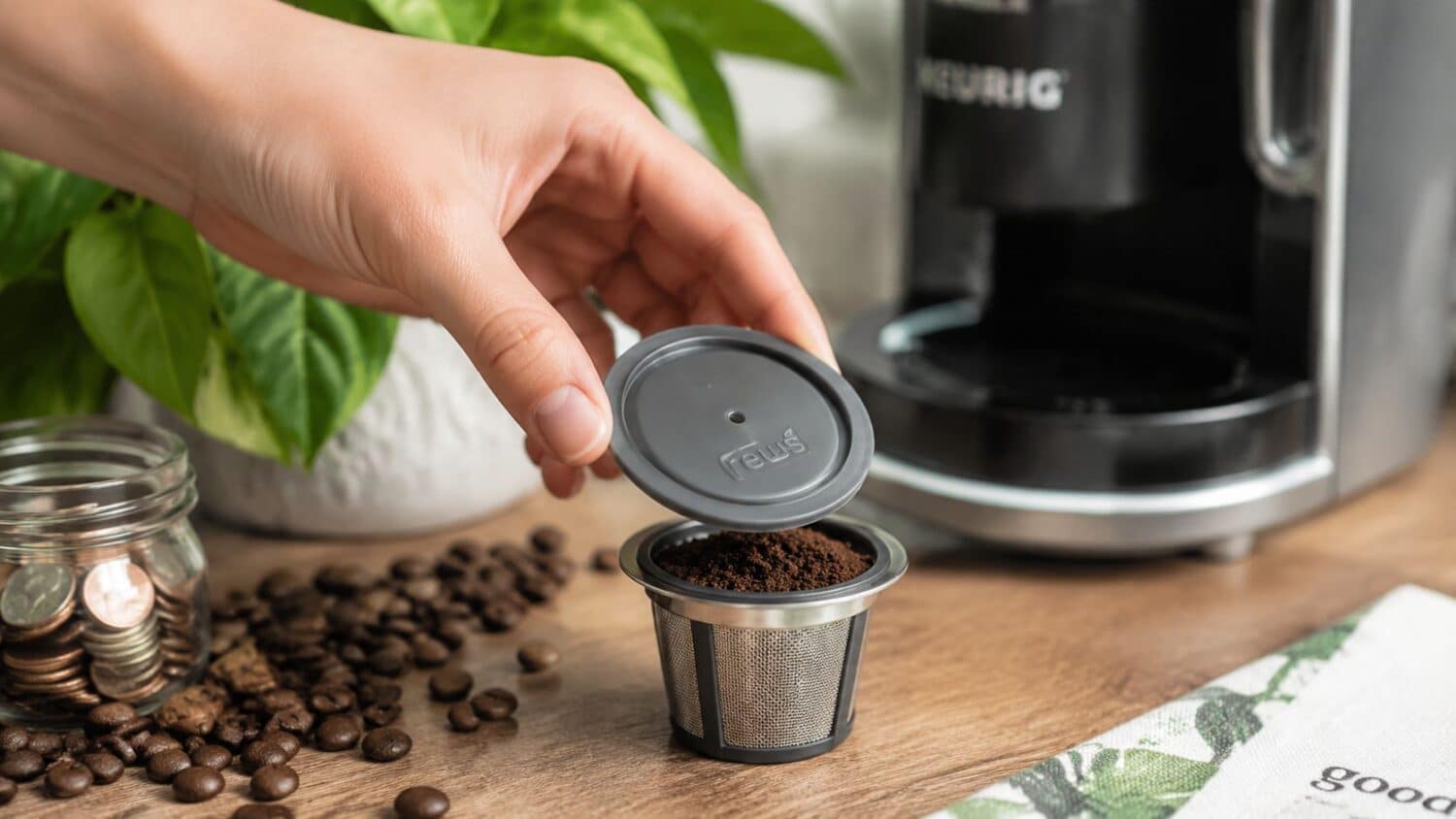
The convenience is real. Drop in a pod, press brew, move on. But convenience gets expensive and wasteful fast when you use disposable pods every day, especially if you drink more than one cup. That's why reusable K-Cup lids became more than a niche coffee hack. They gave Keurig owners a way to keep the machine they already like while cutting down the stream of used pods piling up in the trash.
Individuals typically don't start looking for reusable K-Cup lids because they want a project. They start because they're tired of two things: throwing away pod after pod, and paying for coffee that often tastes flatter than the beans they'd choose themselves. If that sounds familiar, it helps to look at practical options for dealing with pod waste alongside a better refill setup.
The Hidden Cost of Your Morning Coffee
Billions of K-Cups have been discarded each year in the U.S., as noted earlier. That sounds abstract until it shows up in a kitchen trash can, one pod at a time, every single morning.
The money side is easier to miss because it gets spread across routine purchases. A box here, another box there, and soon a brewer that was supposed to simplify coffee is locking you into buying pre-filled plastic cups at a premium. For people who brew daily, or brew more than once a day, that recurring cost adds up fast.
Why disposable pods wear on regular Keurig users
Heavy pod users usually run into the same three annoyances:
- You keep paying for packaging: Each cup includes the coffee, the pod, the lid, and the convenience markup.
- You get limited coffee choice: Good local roasts, fresher decaf, and the exact grind you prefer are harder to use in a disposable-pod routine.
- You throw out a surprising amount of waste: One pod looks minor. A daily habit does not.
A Keurig does not become a bad machine just because disposable pods are expensive and wasteful. In many cases, the smarter fix is keeping the brewer and switching to a refillable setup.
If pod waste is already bothering you, it helps to look at practical ways to reduce K-Cup trash without replacing your machine.
Why reusable lids matter
Reusable lids solve the expensive part and the waste part only if they solve the brewing part too. That trade-off gets ignored in a lot of advice. Plenty of generic reusable options look fine out of the box, then start leaking around the rim, flex under pressure, or produce weak coffee because the seal and flow are off.
That is why the actual comparison is not disposable pods versus any reusable option. It is disposable pods versus a reusable system that seals properly and brews consistently.
A good lid lets you keep the convenience of the machine you already own while using coffee that tastes like the beans you bought. A bad lid creates a different kind of waste. Lost coffee, watery cups, messy cleanups, and the familiar frustration of having to brew a second cup to get one you want.
How Reusable K Cup Lids Work
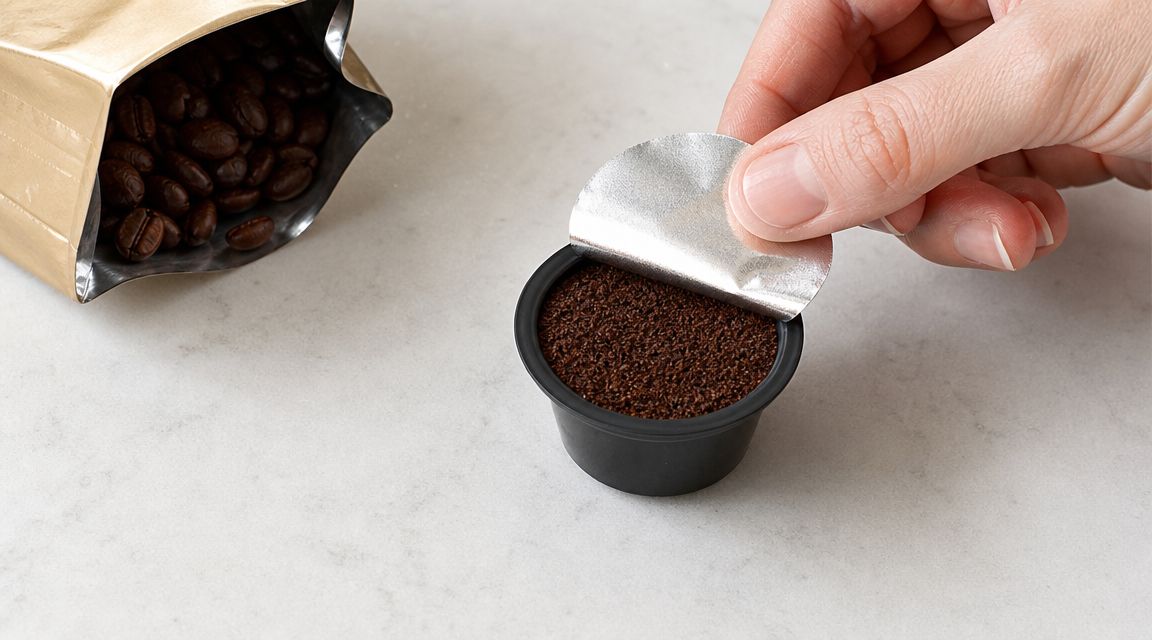
A reusable lid turns a pod from a throwaway container into a refillable brewing chamber. The simplest way to think about it is this: it makes your pod act like a small personal canister that you load with your own coffee, seal, brew, empty, and use again.
The two common approaches
Most setups fall into one of these categories:
Refill-and-seal lids
You keep or reuse a pod body, fill it with ground coffee or tea, then apply a replacement lid. This approach feels closest to using a standard pod.Dedicated reusable pods with built-in lids
These are self-contained pods, usually with a hinged or snap-fit top. You fill them directly, close the lid, and brew.
Both can work. The difference is consistency. Refill-and-seal systems can give a very familiar pod-style brew. Dedicated reusable pods are usually easier to repeat day after day because everything is designed to work as one unit.
Why lid design affects the cup
A reusable lid doesn't just hold grounds in place. It has to cooperate with the brewer's puncture system and water flow pattern. Keurig's My K-Cup Universal Reusable Filter uses 5 holes to work with multistream technology, which matters because the brew head relies on multiple pierce points for controlled flow.
If the lid is too stiff, too thick, poorly aligned, or missing the right openings, several things can go wrong:
- Water bypasses the coffee bed
- Extraction turns thin
- Grounds escape into the cup
- The machine can't deliver even flow
That's why a reusable lid that “fits” isn't automatically a good lid. It also has to puncture cleanly and allow the machine to move water the way it was designed to.
A reusable pod should disappear into the routine. If you have to wrestle the lid shut, reposition it every time, or guess whether the needles made contact, the design is already failing.
What good operation looks like
A solid reusable K-Cup lid does three jobs well:
| Job | What you want | What failure looks like |
|---|---|---|
| Seal | Lid closes flat and stays closed under pressure | Drips, spray, or side leakage |
| Puncture response | Needles penetrate where they should | Partial piercing and uneven brewing |
| Flow support | Water moves through the grounds evenly | Weak coffee or pooling in the pod |
When people say a reusable pod “just works,” they usually mean those three things are handled properly. That's the standard worth chasing.
Unlocking Real Savings and Sustainability
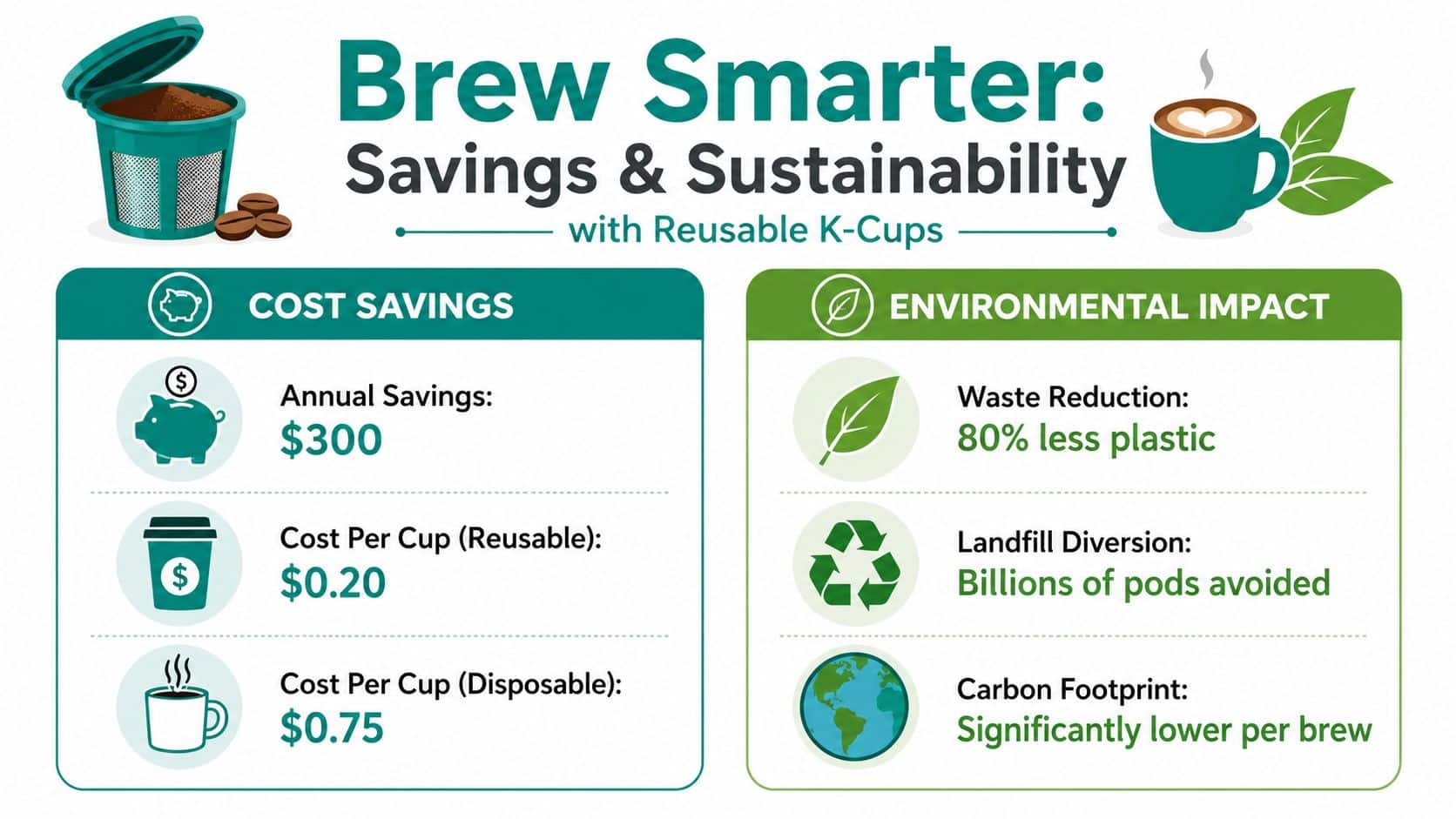
The strongest case for reusable K-Cup lids isn't theory. It's that they let you keep a familiar coffee routine while cutting down the amount of disposable material tied to every cup.
The practical savings people actually notice
Once you switch to refillable pods or reusable lids, you stop shopping by branded pod flavor and start shopping by coffee quality. That usually gives you more control over both taste and budget.
The savings come from a few simple shifts:
- You buy ground coffee instead of individually packed servings
- You reuse the pod body instead of replacing it every brew
- You avoid paying for convenience packaging over and over
I wouldn't put an invented dollar figure on that, because savings depend on what coffee you buy and how often you brew. But in real use, frequent Keurig drinkers usually notice the difference quickly, especially in households or small offices where the machine runs all day.
For a grounded walkthrough of where those savings come from, this guide on how to save money with reusable K-Cups for Keurig is a useful companion.
Sustainability gets better when the habit is easy
Reusable lids matter because they reduce waste at the point of use. That's where disposable pods create the most visible problem. When you refill instead of toss, you extend the life of the pod body and send less material into the trash stream.
The benefit isn't only about the bin under your counter. It also changes how much packaging has to be produced, shipped, stocked, and discarded to support the same daily coffee habit. That's one reason reusable systems fit into the larger conversation about lower-waste coffee service and even greener packaging solutions for hospitality, where operators try to cut unnecessary single-use material without making service clunky.
Choice is the underrated advantage
For a lot of coffee drinkers, the biggest upgrade isn't environmental. It's sensory.
Reusable lids let you brew:
- Fresh ground coffee from your preferred roaster
- Decaf without hunting for a decent pod option
- Tea or specialty blends that don't come in pod form
- Different roasts for different times of day
The easiest way to improve single-serve coffee is often not a new machine. It's using coffee you actually chose.
That freedom matters more than people expect. Disposable pods lock you into whatever grind, roast level, and age the manufacturer packed. Reusable systems give that control back to the person brewing.
Choosing the Right Lid Material and Design
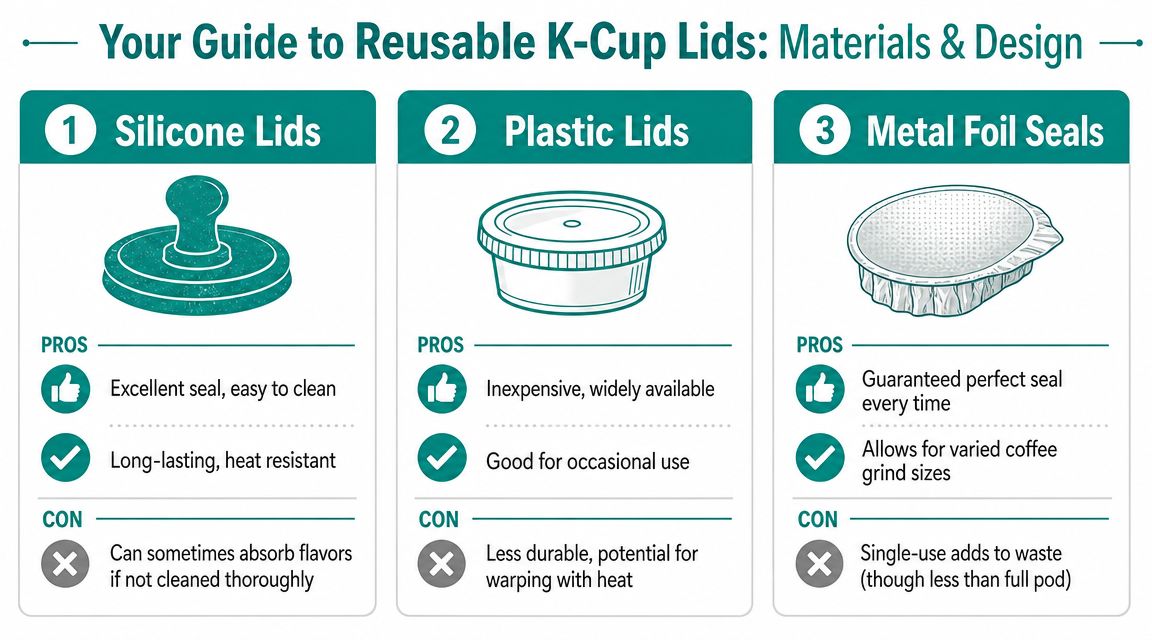
Material choice decides whether your reusable setup feels smooth or annoying. Two lids can look almost identical online and perform very differently once heat, pressure, oils, and repeated washing enter the picture.
What each material does well
Silicone lids usually seal well because they flex slightly under pressure. That flexibility helps them sit snugly on the pod rim, and they're generally easy to wash. The downside is that lower-grade silicone can hold onto odors if you don't clean it thoroughly.
Plastic lids are common because they're inexpensive and widely available. For occasional use, they can be fine. For daily brewing, the weak point is longevity. Some generic plastic lids start to feel loose, warp slightly, or lose sealing confidence after repeated heat cycles.
Foil replacement lids create a clean top seal for refill workflows. They're convenient when you want something close to the original pod experience. But they're still consumables, so they reduce waste less than a fully reusable lid or pod.
Mesh quality matters more than the listing title
A lot of buyers focus on the lid and ignore the basket. That's a mistake. The filter mesh does as much for brew quality as the lid does for sealing.
GoodCups describes a reusable option with dual-mesh 304 stainless-steel construction and a 360° lid, which highlights the right design priorities. Fine, stable mesh helps keep sediment out of the cup. It can also support a fuller extraction when water moves evenly through the grounds.
The trade-off is maintenance. Finer mesh traps more oils and fines, so it needs a real rinse, not a lazy splash under the tap.
Maintenance note: If your reusable pod starts brewing slower over time, don't assume the coffee changed. Check the mesh first. Oils and fines often clog performance before the lid fails.
A practical buying checklist
Use this when comparing reusable K-Cup lids and pods:
- Seal quality first: Look for a lid that closes flat and doesn't rely on force to stay shut.
- Food-contact materials: BPA-free parts, food-grade silicone, and stainless steel are the baseline to look for.
- Cleaning access: If you can't easily get into the corners, hinge area, or mesh, you won't keep it clean.
- Fit by machine family: A lid that works in one Keurig line may behave differently in another brewer.
- Mesh stability: Flimsy mesh often leads to sediment, warping, or inconsistent flow.
A broader look at stainless steel vs plastic reusable K-Cups and which is safer can help if you're stuck between material types.
What usually works best
For regular use, the most reliable setups tend to combine a secure lid with stainless steel filtering. They're not always the cheapest option up front, but they usually create fewer headaches over time.
If you only brew occasionally, a simpler plastic setup may be enough. If you brew every day and care about taste, easier cleaning, and long-term fit, better materials usually justify themselves.
Troubleshooting Leaks and Weak Coffee
Most complaints about reusable K-Cup lids come down to three things: bad sealing, bad filling habits, or bad maintenance. The pod gets blamed first, but the actual issue is often simpler.
Start with the basics that prevent most failures
Before you troubleshoot, make sure your daily routine isn't creating the problem.
Fill below the top edge
If grounds touch the sealing rim, the lid can't sit flush.Use an appropriate grind
Too coarse often tastes weak. Too fine can choke flow or create sludge.Seat the pod carefully
If the pod sits crooked, the needles may pierce unevenly.Clean the lid and rim every time
A few stray grounds can be enough to cause drips.Rinse the mesh thoroughly
Old coffee oils restrict flow and flatten flavor.
If you want a quick visual walkthrough before diagnosing your own setup, this video helps:
If it leaks
Leaks usually come from the top seal, the pod rim, or overfilling.
Check these first:
- Lid alignment: The lid should sit evenly all the way around.
- Debris on the rim: Grounds or dried coffee film break the seal.
- Damaged edge: A nicked rim won't seal consistently.
- Overpacked coffee: If you compress the grounds too tightly, pressure rises and finds a weak point.
One practical fix that helps more than people expect is cleaner filling. A scoop or funnel keeps grounds off the rim and speeds up prep. In that category, PureHQ Inc. offers reusable K-Cup accessories that include a scoop funnel for cleaner filling, which addresses one of the most common causes of leaking in refillable pods.
If the coffee tastes weak
Weak coffee can come from the pod, but it can also come from your machine condition or the coffee itself.
Try this diagnosis path:
| Symptom | Likely cause | What to do |
|---|---|---|
| Thin body | Grind is too coarse | Go slightly finer |
| Watery flavor | Not enough coffee | Increase dose without overfilling |
| Fast brew time | Water is bypassing grounds | Recheck lid fit and pod seating |
| Slow but weak brew | Mesh is dirty | Deep-rinse the filter area |
For a broader machine-side explanation, My Nivona's guide to watery coffee is useful because many weak-cup symptoms overlap across brewers even when the pod system differs.
If grounds end up in the cup
Grounds in the cup usually point to one of these issues:
- Mesh damage or poor mesh quality
- Coffee ground too fine for the filter design
- Lid not closing fully, which disrupts flow
- Worn pod parts that no longer hold shape
This is also where regular machine maintenance matters. If scale builds up inside the brewer, water delivery becomes less consistent, and that can exaggerate extraction problems you'd otherwise barely notice. Using a compatible water filter and descaling on schedule helps the pod perform the way it's supposed to. It's not glamorous, but a clean brewer and a clean reusable pod almost always beat endless tinkering with grind and fill.
Compatibility concerns people ask about most
The main compatibility issue isn't just brand name. It's brew head design and how the pod interacts with it.
If you use machines such as:
- Keurig K-Supreme
- K-Duo
- Ninja DualBrew
you need a reusable pod or lid system that matches that machine's puncture and flow behavior. A reusable pod that sort of fits can still brew badly. If a product listing is vague about compatibility, that's usually a warning sign.
Why PureHQ Pods Outperform Generic Alternatives
Cheap reusable pods usually fail in the same two places. They leak around the rim, or they brew a thin cup because water slips past the coffee instead of through it. After testing enough off-brand options, I've found that most of the frustration comes from loose fit, weak lid tension, and baskets that change shape after repeated heat cycles.
PureHQ pods stand out for a practical reason. They address the failure points that make generic pods annoying to live with.
Where generic pods lose ground
No-name pods often look fine out of the box. The problems show up after a week or two of normal use. The lid starts closing less cleanly. The rim catches stray grounds. The basket flexes more than it should. Small flaws like that lead to bypass, inconsistent flow, and a cup that tastes different from one morning to the next.
The usual weak points are:
- Seal inconsistency: minor fit issues lead to leaks or under-extraction
- Thin construction: the pod can flex, which changes how water moves through the coffee
- Hard-to-clean corners: trapped oils and fines build up faster
- Vague compatibility claims: the pod fits in the machine, but does not brew well in it
What a better pod does differently
A premium reusable pod earns its keep by removing the usual guesswork. The lid closes cleanly. The seal stays steady after repeated use. The filter manages fines without choking flow. Cleanup takes a rinse and a quick brush, not a full inspection every morning.
That difference shows up in daily use.
| Feature | PureHQ Reusable Pods | Generic/No-Name Pods |
|---|---|---|
| Seal fit | Precision-focused fit for repeat use | Often inconsistent from unit to unit |
| Materials | Built for repeated brewing and cleaning | Can feel thin or warp sooner |
| Brew consistency | Designed to reduce leaks and weak extraction | More likely to vary cup to cup |
| Cleaning | Easier to maintain with coffee oils in mind | Hinges, mesh, or corners may trap residue |
| Compatibility clarity | Product-specific guidance is typically clearer | Listings are often vague or overly broad |
| Daily use experience | Lower-fuss workflow when filled correctly | More trial and error |
That last row matters most in real kitchens. A reusable pod should save money and cut waste without adding extra troubleshooting before caffeine. Generic options often cost less upfront, but the trade-off is more fiddling with grind size, fill level, rim cleaning, and lid alignment. PureHQ pods make more sense for anyone who wants a refillable setup that works the same way on Monday as it does on Friday.
For a reusable option built around fit, repeatable brewing, and easier maintenance, shop the reusable pod and maintenance accessories from PureHQ Inc..

