
Coffee Machine Care
Carafe for Keurig 2.0: A Complete Brewing Guide for 2026
May
You bought a Keurig for speed. Then real life happened.
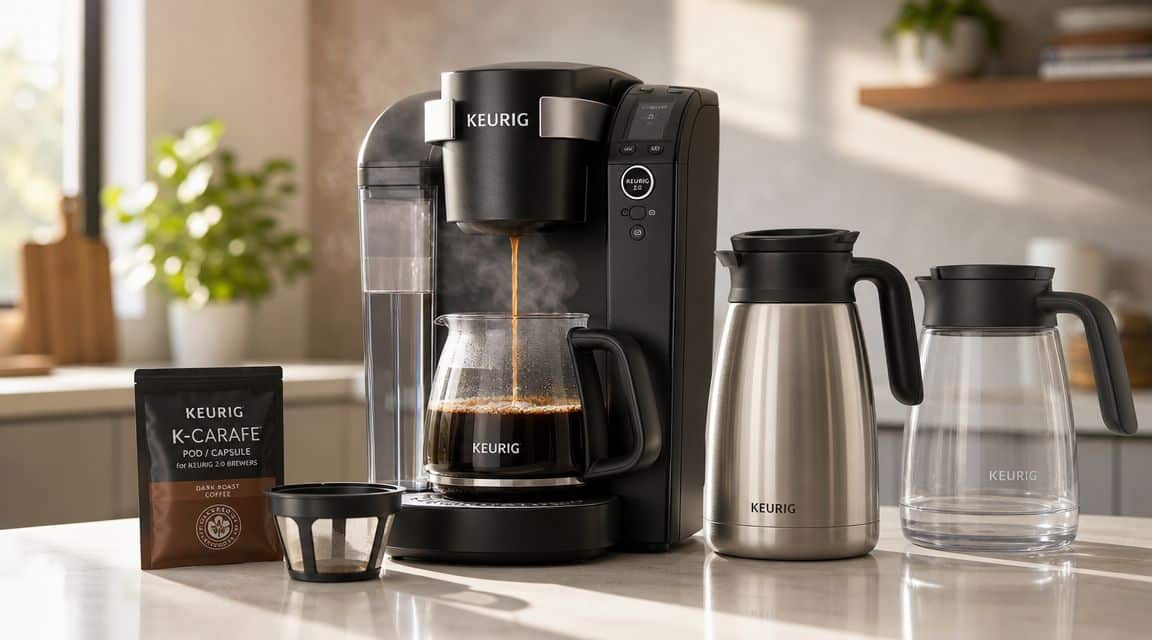
Someone stays over. Family shows up. Two people want coffee now, not one cup every few minutes while you play barista beside a machine that was supposed to make mornings easier. That's where a carafe for Keurig 2.0 sounds like the obvious fix, until the brewer throws a compatibility warning, the replacement carafe doesn't sit quite right, or a reusable insert makes a weak pot.
Most owners don't need more basic setup instructions. They need straight answers about what works, what triggers errors, and when a cheaper accessory becomes an expensive annoyance.
The End of the Single-Cup Bottleneck
A lot of Keurig owners hit the same wall. The machine works fine when you're brewing one mug before work. It becomes awkward the second you need coffee for more than one person.
You start a cup. Then another. Then another. By the time the last person gets theirs, the first person is already halfway done. That's the single-cup bottleneck, and it's exactly why so many people start looking for a carafe setup after living with the machine for a while.
The frustrating part is that the Keurig 2.0 carafe feature should solve this neatly, but many people never get a smooth experience from it. They buy a replacement carafe that physically fits but doesn't brew cleanly. They try a reusable insert that seems close enough, then get uneven output or an error message. They assume the brewer is unreliable when the cause is usually compatibility, positioning, or the accessory itself.
Where most setups go wrong
The problem usually isn't the idea of carafe brewing. It's the gap between how people shop for accessories and how the Keurig 2.0 behaves.
A standard single-serve Keurig is forgiving. Carafe mode isn't. It asks more from the machine and more from the accessory. If the fit is off, if the insert doesn't cooperate with the system, or if the carafe isn't seated the way the brewer expects, you feel it immediately.
Practical rule: If your Keurig 2.0 works well for single cups but struggles with carafe brews, start by questioning the accessory and the setup, not the brewer.
That's also why reusable options get a mixed reputation. They can be excellent, but only when they're designed around the machine's quirks instead of just mimicking the shape of a K-Carafe pack. If you're already exploring reusable options for single-serve brewing, this guide on reusable coffee pods gives helpful context on how Keurig compatibility issues usually show up.
What a good carafe setup should do
A worthwhile carafe setup should make your brewer feel more flexible, not more fussy. In practice, that means:
- It should fit cleanly: No wobble, no awkward tray contact, no guessing.
- It should brew predictably: You shouldn't have to babysit every pot.
- It should reduce hassle: If cleanup and troubleshooting outweigh the convenience, the accessory isn't doing its job.
- It should match your habits: Some people want disposable convenience. Others want to use their own grounds and cut waste.
If you're trying to turn your Keurig 2.0 into something that handles both solo mornings and group coffee without drama, the carafe system can do it. You just need to understand what the machine is looking for.
Understanding the Keurig 2.0 Carafe System
Keurig didn't add carafe brewing as a minor extra. It changed the whole role of the machine.
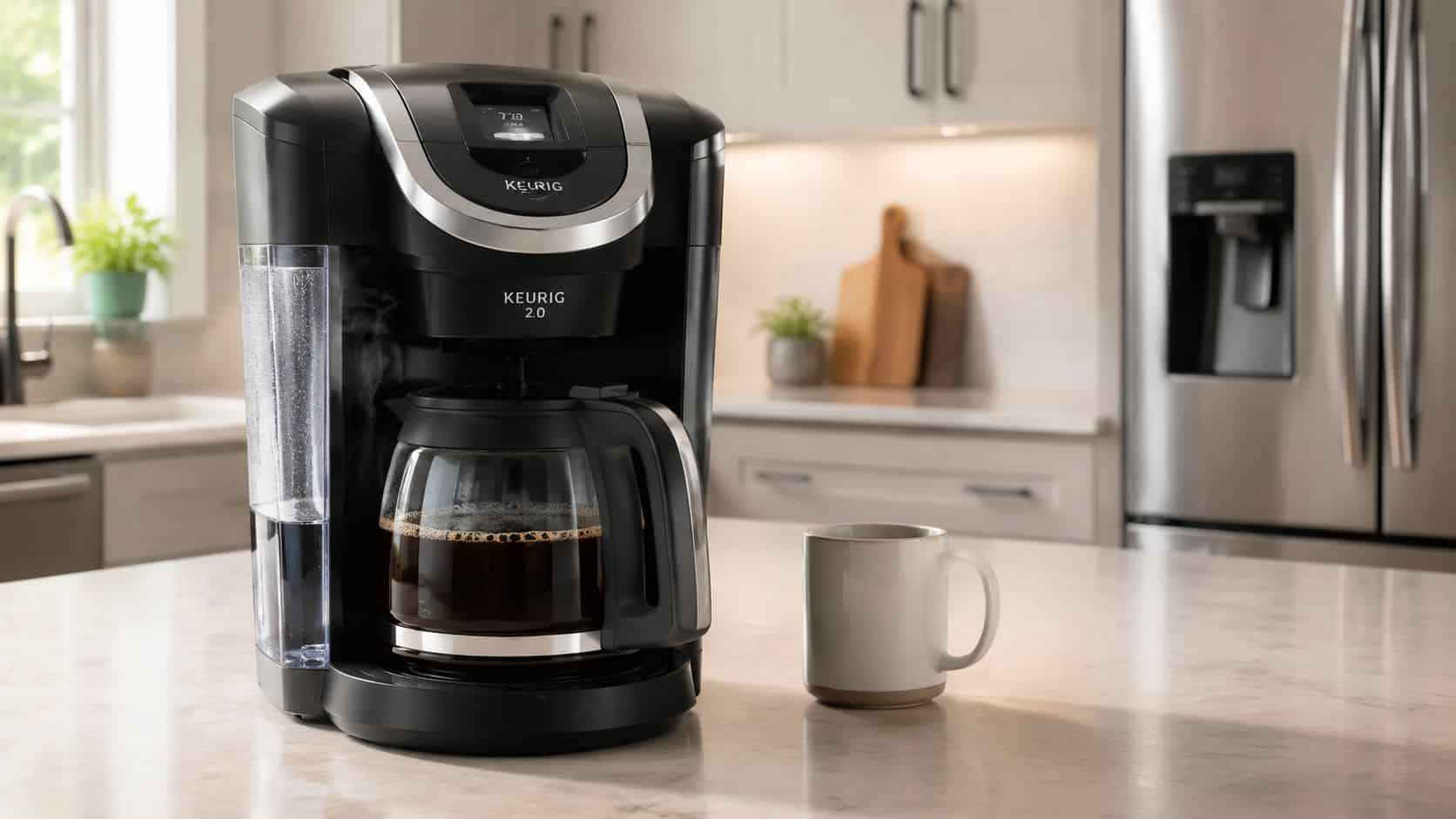
According to an industry review of the Keurig 2.0 platform, the system introduced K-Carafe brewing with packs that could hold up to 26 grams of coffee for a 4-cup brew, and the K550/K500 models paired that with an 80-ounce reservoir. That was the moment the Keurig 2.0 stopped being only a single-serve appliance and became a hybrid brewer for both individual cups and small-batch coffee.
Why the machine acts so picky
The Keurig 2.0 carafe system isn't just a bigger pod and a bigger pot. The brewer was built around pack recognition.
Keurig Canada says K-Carafe packs were developed specifically for use in the Keurig 2.0 system. That matters because the machine is designed to distinguish between standard single-cup brewing and carafe brewing. When people ask whether a random replacement insert or third-party carafe is “interchangeable,” they're usually asking a more important question: will the machine recognize it and brew correctly?
That's where confusion starts. A part can look close enough and still fail in real use.
What the sensor changes in everyday use
Once you understand the sensor logic, a lot of strange behavior makes sense.
Here's what the Keurig 2.0 system effectively cares about:
- Pack type: The brewer expects a compatible carafe-format solution for carafe mode.
- Physical alignment: The pack has to sit correctly in the brew head.
- Brew path expectations: Carafe brewing uses a different workflow than a single mug.
- Accessory cooperation: The carafe and insert need to work with the machine's design, not just fit the opening.
That's why some aftermarket parts feel inconsistent. They may work occasionally, then fail when the lid doesn't register cleanly or the brewer interprets the setup as incompatible.
The Keurig 2.0 rewards exact fit. It doesn't reward “close enough.”
Why owners still get tripped up
The Keurig 2.0 was built as a more controlled ecosystem than earlier Keurigs. If you've ever wondered why carafe mode feels less forgiving than regular K-Cup brewing, that's the reason.
For buyers, this means the right question isn't only “Will this fit my machine?” The better question is “Was this accessory built with the Keurig 2.0 carafe workflow in mind?” If the answer is unclear, expect trial and error.
Choosing Your Carafe and Reusable Filter
Here, many consumers waste money. They assume any carafe-shaped replacement or reusable insert made for “Keurig carafe” will behave the same.
It won't.
Some accessories solve the actual problem. Others only solve the visual one. They look compatible in a product photo, but they don't account for how the Keurig 2.0 detects packs, how the tray geometry affects brewing, or how multi-cup flow exposes weak seals and poor alignment.
Start with the real decision
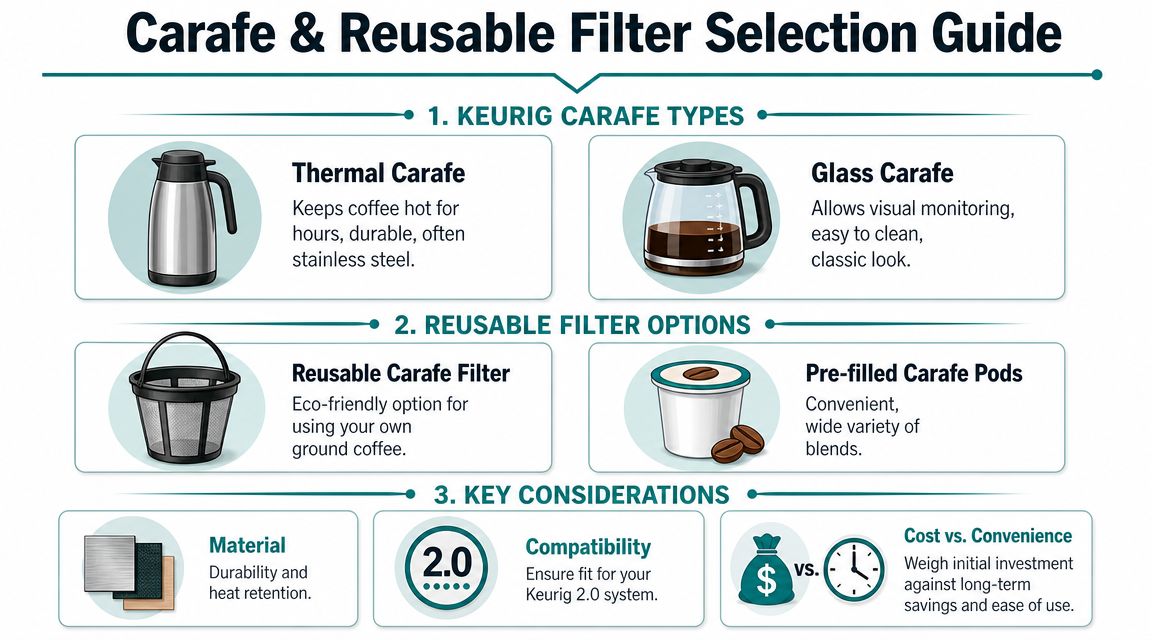
You're usually choosing between three paths:
- Official Keurig carafe parts and approved-format brewing
- Generic third-party replacements
- A better-made aftermarket setup with a reusable filter approach
If you're comparing machines and accessories more broadly, this overview of Keurig coffee makers with carafe helps place the 2.0 setup in context.
Carafe Options for Keurig 2.0 Compared
| Feature | Official Keurig Carafe | Generic Third-Party Carafes | PureHQ Carafe & Reusable Filter |
|---|---|---|---|
| Designed around Keurig 2.0 system | Yes | Varies, often unclear | Intended for Keurig-compatible reusable brewing setups |
| Fit confidence | Usually strongest when matched to the right model family | Inconsistent. Some fit physically but not cleanly in use | Better choice when you specifically want reusable brewing rather than a random universal part |
| Risk of compatibility confusion | Lower | Higher | Lower than unbranded generic options when bought for the exact brewer use case |
| Reusable ground coffee option | Not the main advantage | Sometimes offered, quality varies | Core use case |
| Common objection | Costs more and may limit flexibility | Can trigger fit, leak, or recognition complaints | Requires cleanup after brewing |
| Best for | Owners who want the closest match to original workflow | Buyers focused only on upfront price | Owners who want reusable brewing with a more deliberate accessory choice |
OEM vs generic vs a quality aftermarket option
The official route is usually the least confusing. If you want the Keurig 2.0 to behave as close to original intent as possible, OEM-style components remove a lot of guesswork.
Generic accessories are where most complaints come from. The issue isn't that every third-party part is bad. The issue is that many listings don't explain model-family fit, lid behavior, or how the brewer reacts when the accessory is slightly off. That's why people end up with leaks, weak coffee, or “not recognized” errors instead of a simple morning brew.
A more deliberate aftermarket option can make sense when you specifically want reusable brewing and you're willing to choose by design quality instead of lowest price. That's where a product like a PureHQ reusable carafe filter setup enters the conversation. It's not a magic fix for every machine problem, but it's a different category from the no-name “universal” parts that create most of the frustration.
A simple buying framework
Use this filter before you buy:
- Choose OEM if you want the closest thing to stock behavior and don't want to troubleshoot.
- Choose a high-quality reusable setup if you want to use your own grounds and you're comfortable rinsing and cleaning after each brew.
- Avoid vague “universal” listings if the product page doesn't clearly address Keurig 2.0 use, fit, or detection concerns.
Buyer's shortcut: If the listing talks only about “fits many Keurig models” and says nothing useful about Keurig 2.0 behavior, assume you're taking a gamble.
How to Brew a Perfect Pot with Your Carafe
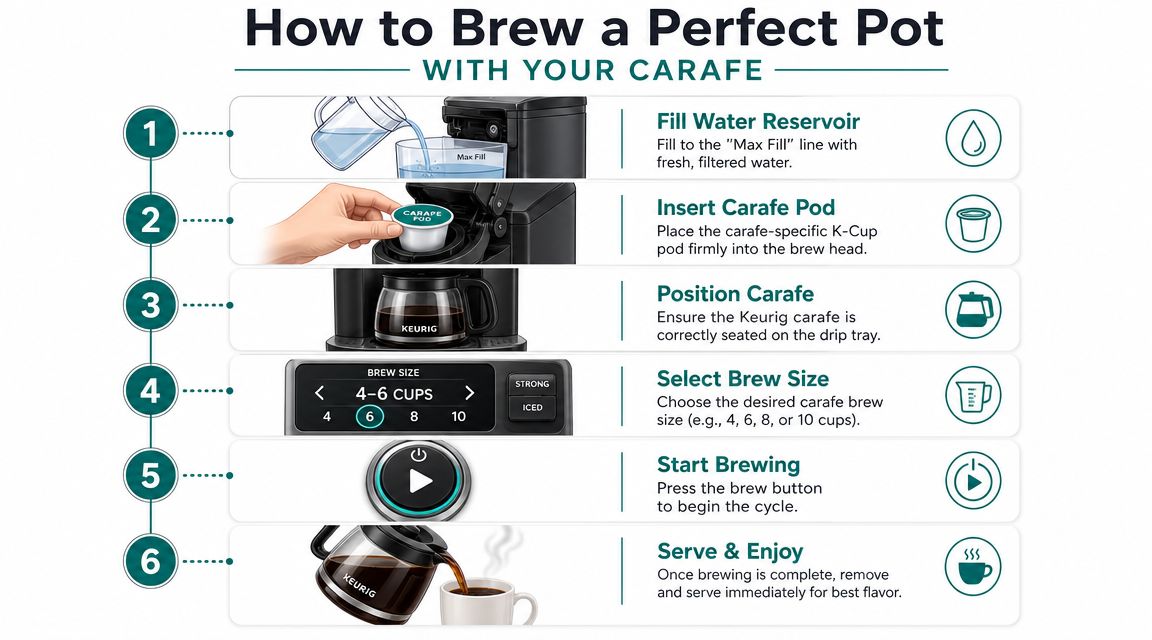
A successful carafe brew on the Keurig 2.0 comes down to setup discipline. Most weak or incomplete pots happen before the brew button is ever pressed.
Instructional videos on the Keurig 2.0 carafe workflow show that the brewer depends on specific tray positioning and correct fill level, and if the carafe placement or reservoir level is off, the machine can miss the intended output volume or brew inconsistently, making carafe mode more sensitive than standard K-Cup use, as demonstrated in this Keurig 2.0 carafe setup walkthrough.
Get the machine ready first
Before you think about coffee, set up the brewer physically.
- Fill the reservoir properly: Carafe mode asks more from the machine than a single mug. If water is low, don't expect a complete brew.
- Adjust the tray for carafe use: The removable tray or sliding platform matters. A carafe that isn't sitting where the brewer expects can throw off the whole cycle.
- Seat the carafe carefully: Don't eyeball it from above and assume it's fine. Place it squarely.
If your home water tastes flat or mineral-heavy, this is also the point where a fresh filter helps. Cleaner water improves flavor, and routine descaling keeps the brewer from drifting into slow, uneven performance over time.
Brew with a reusable insert the right way
If you're using a reusable carafe insert, your coffee choice and fill habits matter more than they do with a prefilled pod.
A good routine looks like this:
- Add your ground coffee without packing it tightly.
- Keep the fill level sensible. Overfilling often causes more trouble than stronger flavor.
- Close and insert the reusable pod so it sits firmly.
- Select the correct carafe brew setting.
- Let the machine finish completely before moving the pot.
You can also get extra context from this guide to brewing the perfect cup and carafe with a reusable Keurig setup.
A reusable insert gives you control, but it also removes the built-in consistency of a factory-filled pack. That means your grind, fill level, and cleanup habits show up in the cup.
Here's a visual walkthrough for anyone who prefers to see the workflow in action:
What improves flavor and what hurts it
For stronger, cleaner carafe coffee, focus on a few boring details. They matter more than fancy beans.
- Use fresh water: Old reservoir water dulls flavor.
- Keep the reusable filter clean: Old oils make fresh coffee taste muddy.
- Don't rush placement: A crooked carafe leads to bad brewing more often than people think.
- Avoid chasing strength by overfilling: That usually creates extraction problems, not better coffee.
If your coffee tastes weak, many people blame the Keurig 2.0 itself. In practice, the bigger culprit is usually a poor reusable insert, a mismatch between grind and flow, or sloppy setup around the tray and carafe position.
Troubleshooting Common Carafe Brewing Problems
When a Keurig 2.0 carafe brew goes wrong, the symptom usually points to one of three causes. Recognition trouble, positioning trouble, or a reusable insert that adds more hassle than value.
Sources discussing reusable K-Carafe-style capsules note that some versions can hold up to 28 grams of coffee for multi-cup brewing, but they also point out that buyers still face unanswered questions around cleaning effort, compatibility headaches, and the total cost of ownership versus easier alternatives, as discussed in this reusable K-Carafe capsule analysis.
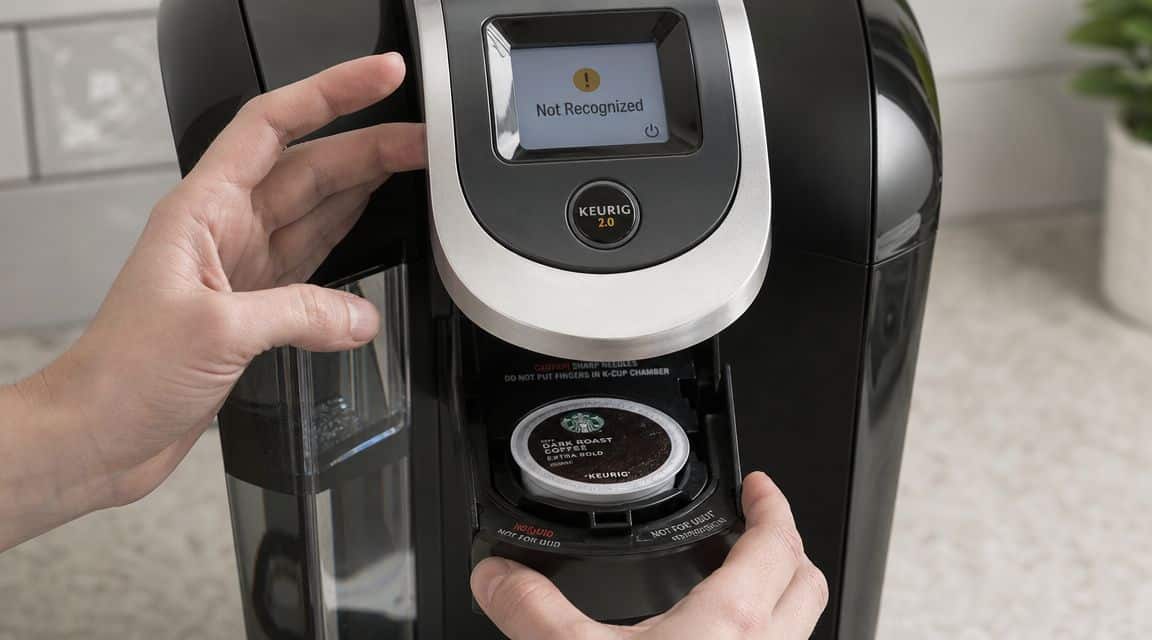
The brewer says the pack isn't recognized
This is the complaint that often sends users searching online.
If the machine won't recognize the setup, the root cause is usually one of these:
- The insert isn't compatible: It may fit the chamber but not cooperate with the brewer's detection behavior.
- The lid area is dirty: Coffee residue can interfere with a clean read.
- The insert is warped or seated poorly: Small misalignment matters in the 2.0 system.
Try removing the insert, cleaning the rim and seating area, and reinstalling it carefully. If the same error keeps returning, the accessory is the more likely problem than the machine.
The coffee tastes weak
Weak carafe coffee usually comes from user setup, not a failed brewer.
Common reasons include:
| Problem | Likely cause | What to do |
|---|---|---|
| Watery brew | Too little coffee or poor reusable insert flow behavior | Increase coffee modestly and confirm the insert is built for carafe brewing |
| Thin flavor | Old oils or stale grounds | Clean the filter thoroughly and use fresher coffee |
| Uneven strength | Carafe not positioned well during brewing | Re-seat the carafe and confirm tray setup before starting |
The machine brews the wrong amount
This one often feels random, but it usually isn't.
If the brewer underfills or behaves inconsistently, check the physical setup first. Carafe mode is more sensitive to tray position and placement than single-cup mode. A slight error in how the carafe sits can throw off the result.
If your Keurig 2.0 behaves perfectly with regular K-Cups but turns erratic in carafe mode, treat the carafe setup like a fitment problem until proven otherwise.
The reusable route feels like too much work
That objection is fair.
Reusable carafe brewing can save waste and give you more coffee choice, but it also adds cleanup. If you already dislike rinsing filters, dealing with grounds, or checking alignment, a reusable insert may feel like friction instead of freedom.
That doesn't mean reusable is a bad choice. It means you should be honest about your habits. If convenience matters more than flexibility, stick closer to the original workflow. If control matters more, choose a well-made reusable system and accept the maintenance that comes with it.
Upgrade Your Brew and Reclaim Your Counter
A Keurig 2.0 with the right carafe setup can replace a lot of morning frustration. It handles solo cups when you want speed and small-batch brewing when one mug isn't enough. That flexibility is the whole point.
The catch is that the Keurig 2.0 was never an open, carefree accessory platform. Reviews of the system noted its pack-reading technology, the requirement for Keurig-brand packs with specific markings, and K500-series pricing that ranged around $149, $169, and $199, which shows how deliberately Keurig positioned the line as a more controlled premium ecosystem, according to this historical review of the Keurig 2.0 platform. That history still shapes how replacements and reusable accessories behave today.
What actually makes sense for most owners
If you want the least amount of fuss, buy the closest match to the original carafe workflow.
If you want more control over your coffee and less dependence on prefilled formats, a higher-quality reusable setup makes sense. Just don't confuse “aftermarket” with “generic.” A thoughtful reusable accessory can work well. A random universal part often turns the Keurig 2.0 into a troubleshooting project.
The cleanest decision
Choose based on how you drink coffee, not on the lowest sticker price.
- Go simple if you mainly want reliability.
- Go reusable if you want to use your own grounds and don't mind cleanup.
- Skip vague universal listings if they don't address Keurig 2.0 compatibility clearly.
A good carafe for Keurig 2.0 should make your machine more useful, not more annoying. It should help you serve several people without crowding your counter with a second brewer. And it should let you enjoy the machine you already own instead of working around its limits every morning.
If you're ready to stop guessing and get an accessory setup built for everyday Keurig use, shop PureHQ Inc. for reusable coffee filters, carafe brewing accessories, water filters, and descaling supplies that help keep your brewer running cleanly and your coffee tasting better.

