
Coffee Machine Care
Best Keurig Coffee Makers With Carafe
May
You’re probably here because your current Keurig works fine until more than one person wants coffee. One pod for you is easy. Four cups for family, guests, or a slow weekend morning turns into a line at the machine, a pile of used pods, and a kitchen routine that feels much clumsier than it should.
That’s where keurig coffee makers with carafe start to make sense. They solve a real problem: you still get the convenience of a quick single cup, but you can also brew a pot when the day calls for it. The catch is that most buying guides stop at features. They tell you the machine can brew a carafe. They rarely tell you what it’s like to own one after months of daily use, what tends to annoy people, and which accessories help instead of creating new problems.
The End of One-Cup-at-a-Time Brewing
Single-serve brewing is great right up to the moment it isn’t. A weekday morning with one mug is simple. A Saturday with two adults, a guest, and somebody asking for coffee to go is when the limits show up fast.
You brew one pod. Then another. Then another. Someone wants decaf. Someone wants a fuller mug. Someone else asks why the coffee isn’t ready yet. The machine that felt convenient suddenly becomes the bottleneck on your counter.
That tension explains why so many shoppers look at Keurig’s dual-format brewers. Keurig isn’t a niche player in this category. Consumer Reports says Keurig accounted for 74 percent of all single-serve K-Cup coffee makers purchased by its members between 2024 and mid-2025, which is why the brand’s carafe models matter so much when you’re choosing an upgrade (Consumer Reports on Keurig K-Cup coffee makers).
Why the usual upgrade still disappoints
The frustrating part is that many people replace a basic single-serve machine with another single-serve machine that has a few more buttons. That doesn’t fix the core problem. It just gives you a nicer way to brew one cup at a time.
A carafe-capable Keurig changes the routine in a more practical way:
- Weekday flexibility: Brew one cup before work without measuring a full pot.
- Family use: Brew a carafe when multiple people want coffee within the same half hour.
- Less counter clutter: One machine can cover pod brewing and drip-style brewing.
- Better use of ground coffee: You’re not locked into pods for every situation.
Practical rule: If your machine regularly serves more than one person in the morning, single-serve convenience stops being enough.
The real hesitation people have
Most buyers aren’t confused about the idea. They’re worried about the ownership experience.
They want to know if the carafe side makes weak coffee. They worry the machine will take up too much space. They wonder whether reusable accessories will fit properly, leak, or leave grounds everywhere. And they’re right to ask, because those trade-offs are more important than marketing terms on the box.
The right Keurig dual brewer can make mornings easier. The wrong one gives you a larger machine with more parts to clean, more surfaces to descale, and a hot plate or basket system you’ll resent using. That difference usually comes down to choosing the right model for your space and being realistic about maintenance from day one.
How Keurig Dual Coffee Makers Work
A Keurig dual brewer combines two brewing paths in one machine. One side handles K-Cup pods for single servings. The other side brews ground coffee into a carafe. That sounds simple, but it helps to understand how the machine manages both jobs.
One reservoir, two brewing styles
The pod holder and the carafe basket are often observed. The bigger point is the water system. These machines typically pull from one shared reservoir and route water to either the pod side or the carafe side depending on your selection.
That setup is convenient because you aren’t filling separate tanks. It also means water quality and scale buildup affect both brewing modes, which becomes important later.
According to Keurig Coffee Blog’s overview of carafe models, some K-Duo models provide up to 16 brewing combinations by pairing four single-serve sizes of 6, 8, 10, and 12 oz with four carafe size options. The same source notes that reservoirs can hold up to 72 ounces, which cuts down on constant refilling.
What the extra features actually do
Feature lists can be vague, so it helps to translate them into outcomes:
- Single-serve size options: These let you choose a shorter, stronger cup or a larger mug without guessing.
- Carafe size options: Useful when you want less than a full pot and don’t want stale leftover coffee sitting on the plate.
- Programmable auto-brew: Helpful if your routine starts at the same time every day.
- Pause and pour: Lets you grab a cup before the full carafe finishes, though it’s still better not to make that your default habit.
- Strong brew settings: These usually slow the brew profile or alter the process to push a bolder result.
Why Multistream matters on the cup side
Multistream Technology is one of the more useful upgrades because it addresses a common weakness in pod brewing. Basic pod systems can channel water through one area of the coffee puck. That can leave parts of the grounds under-extracted.
With Multistream, the machine spreads water more evenly across the pod. In practical terms, that usually means a cup that tastes more balanced and less thin, especially when you brew larger sizes.
Even saturation matters more than most buyers think. A machine can brew fast and still leave flavor behind if water doesn’t move through the grounds evenly.
What doesn’t work as well
No Keurig dual brewer is perfect. Plastic or glass carafe systems are convenient, but they can lose heat faster than people expect, especially compared with thermal setups. Hot plates keep coffee drinkable, but they can flatten flavor if the coffee sits too long.
That’s the central trade-off with keurig coffee makers with carafe. You gain versatility. You also take on more parts, more cleaning, and more need for good habits if you want the machine to stay consistent.
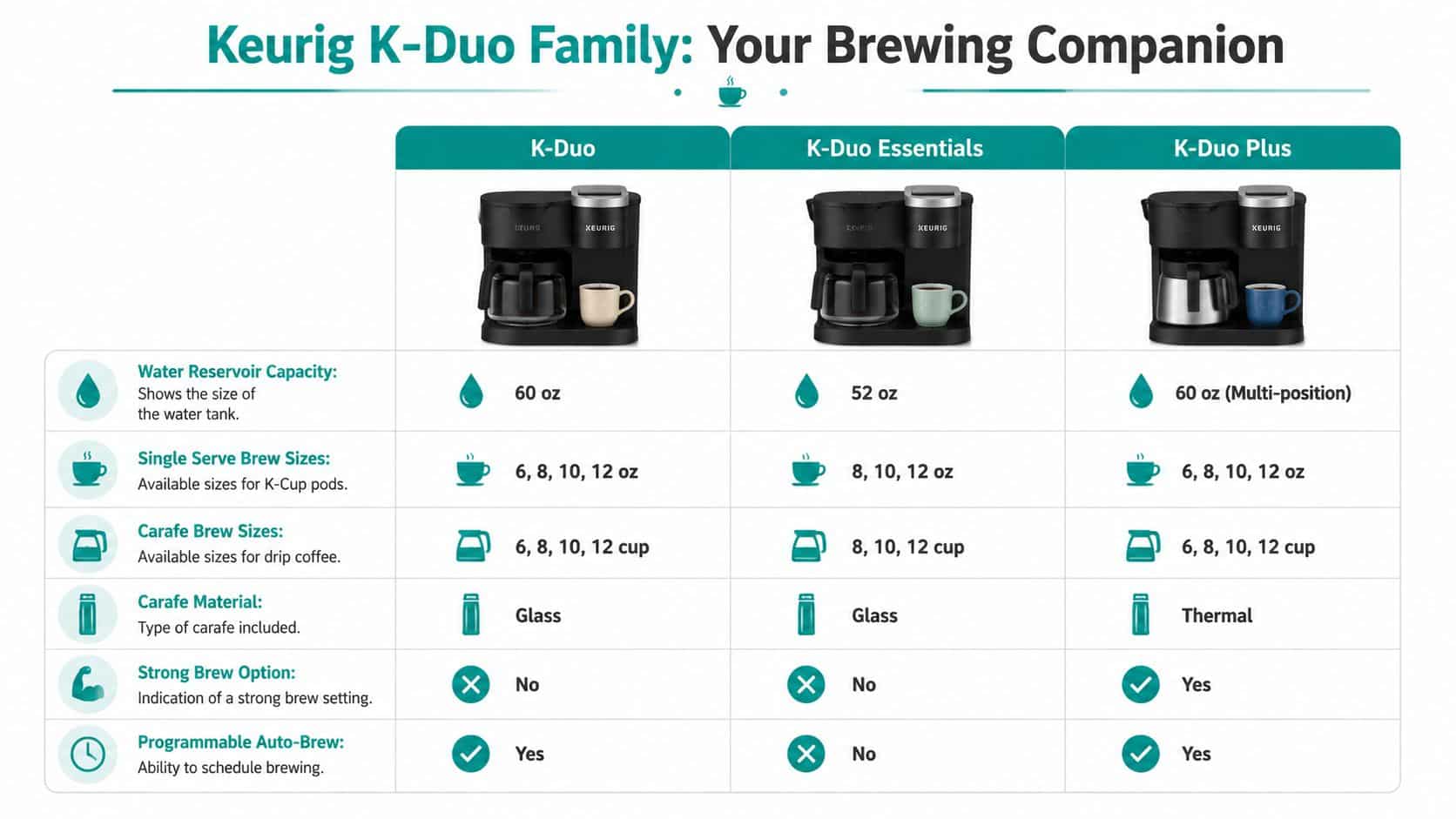
Keurig K-Duo Model Comparison
If you’ve narrowed your search to the K-Duo family, the practical choice usually comes down to K-Duo Essentials, K-Duo, or K-Duo Plus. They all solve the same problem, but they do it in different ways.
Keurig K-Duo Feature Comparison
| Feature | K-Duo Essentials | K-Duo (Standard) | K-Duo Plus |
|---|---|---|---|
| Water reservoir capacity | 52 oz | 60 oz | 60 oz (multi-position) |
| Single serve brew sizes | 8, 10, 12 oz | 6, 8, 10, 12 oz | 6, 8, 10, 12 oz |
| Carafe brew sizes | 8, 10, 12 cup | 6, 8, 10, 12 cup | 6, 8, 10, 12 cup |
| Carafe material | Glass | Glass | Thermal |
| Strong brew option | No | No | Yes |
| Programmable auto-brew | No | Yes | Yes |
What those differences mean in a real kitchen
The K-Duo Essentials is the simpler option. It’s a better fit if you want the carafe function without paying for every convenience feature. The trade-off is reduced flexibility. Fewer brew sizes matter if you’re picky about cup strength or if different people in the house prefer different mug sizes.
The standard K-Duo is often the most balanced choice. It gives you the broader size range and programmable auto-brew, which is useful if you want the machine to behave more like a traditional drip brewer in the morning. For many households, this is the model that feels complete without becoming fussy.
The K-Duo Plus makes the strongest case for people who care about placement and heat retention. Its multi-position reservoir is more important than it sounds. On a crowded counter, being able to place the tank where it fits best can be the difference between a machine you enjoy and one you keep bumping into. The thermal carafe also avoids some hot-plate frustrations.
Standard model versus generic alternatives
A lot of shoppers don’t just compare K-Duo models. They compare them with a cheaper generic dual brewer or with a basic single-serve machine plus a separate drip maker. Here’s the short version.
| Buying option | What works | What usually gets annoying |
|---|---|---|
| K-Duo Essentials | Covers pod and carafe brewing in one machine | Fewer brew options, simpler controls |
| K-Duo Standard | Better everyday flexibility for mixed households | Larger footprint than a basic pod brewer |
| K-Duo Plus | Better placement flexibility, thermal carafe, stronger feature set | Higher cost and more to learn upfront |
| Generic dual brewer | Lower initial price | More hit-or-miss compatibility, weaker fit and finish, less predictable accessory support |
| Separate pod machine plus drip machine | Maximum specialization | More counter space, more cords, more cleaning |
A common objection about fit and refilling
One objection comes up constantly: rear-mounted reservoirs are annoying to refill. That’s true in tight kitchens. If the machine sits under cabinets or near a wall, pulling it forward every time gets old fast.
That’s why the physical design matters as much as brew settings. A movable or more accessible tank can make daily use far smoother than a spec sheet suggests. If you’re leaning toward the Essentials line, it’s worth reading a model-specific breakdown like this K-Duo Essentials guide before buying, especially if your counter space is limited.
Buy for your kitchen, not for the product page. The machine that fits your routine beats the one with the longest feature list.
Which model usually fits which buyer
- K-Duo Essentials: Better for budget-focused buyers who still want both brew formats.
- K-Duo Standard: Better for households that use both pod and carafe brewing regularly.
- K-Duo Plus: Better for smaller kitchens, office counters, or anyone who cares about placement and keeping a pot warmer without a hot plate.
The best choice isn’t always the top trim. It’s the model whose compromises you’ll notice the least after months of use.
Protecting Your Investment from Hidden Problems
Most reviews focus on day-one performance. They talk about setup, brew sizes, and whether the first pot tastes decent. Long-term ownership is where keurig coffee makers with carafe separate into two groups: machines that stay easy to live with, and machines that slowly become annoying because the owner treated them like a sealed appliance.
The maintenance issue standard reviews skip
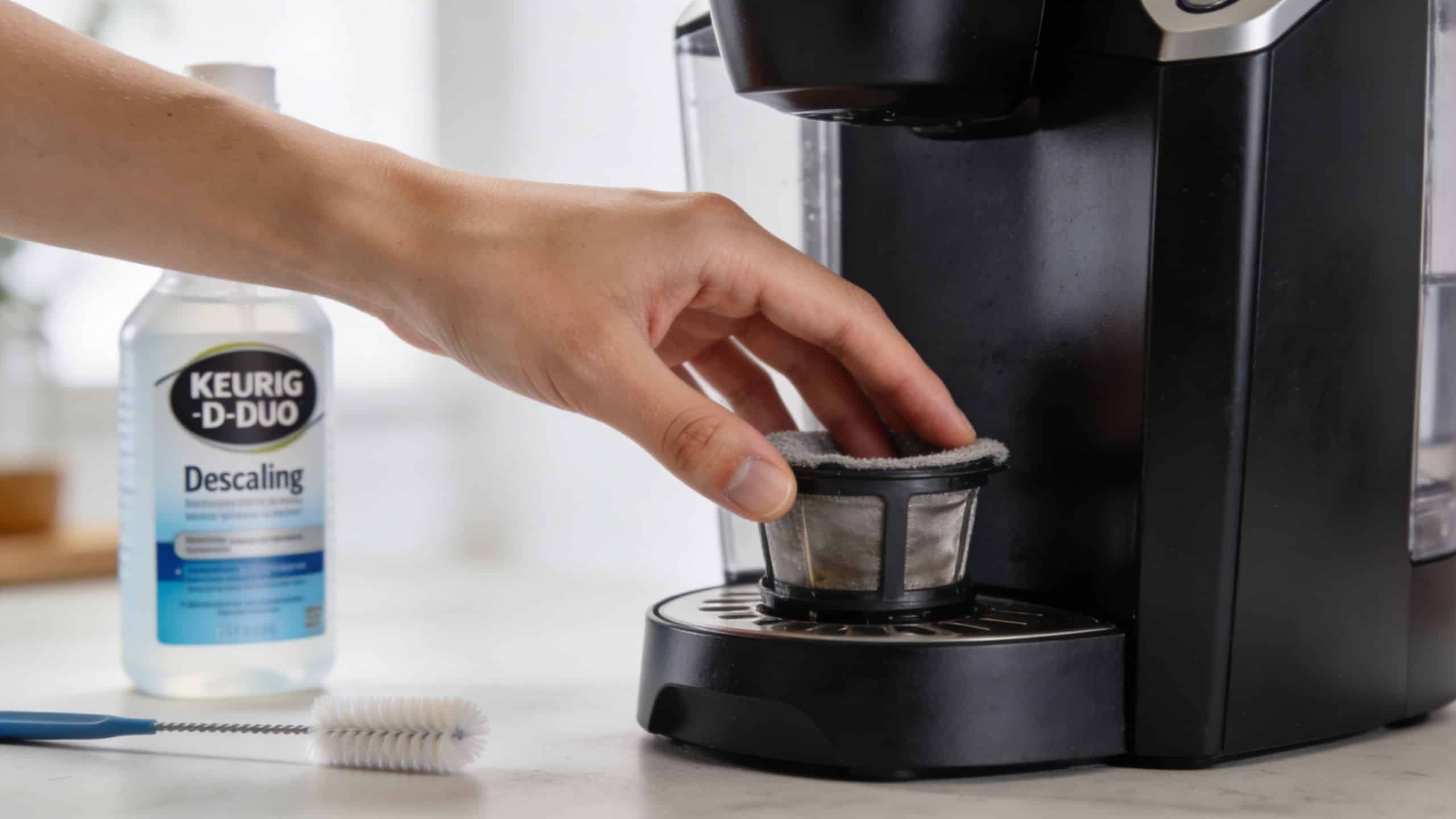
Dual brewers don’t just have more functions. They have more paths for water, more surfaces that collect residue, and more chances for scale to affect performance. The shared system is convenient, but it also means neglected maintenance shows up in more than one place.
Long-term user reporting and testing discussed in this Keurig maintenance video points to a familiar pattern: without proper care, K-Duo carafe mechanisms can develop issues that don’t show up when the machine is new, and hard water requires more frequent descaling. The same source says independent tests suggest universal citric acid-based descalers can remove scale more effectively than some first-party solutions.
What neglect usually looks like
You usually won’t see one dramatic failure first. You’ll notice behavior changes.
- Slower brewing: Water doesn’t move through the system as cleanly.
- More noise: The pump sounds strained or uneven.
- Carafe-side messiness: Grounds or residue collect where they didn’t before.
- Inconsistent taste: One day the cup tastes normal, the next day it tastes flat or slightly off.
- Hot plate frustration: Coffee sits too long because the brew schedule no longer feels reliable.
A K-Duo rarely goes from perfect to broken overnight. It usually gets less consistent first.
Care habits that actually matter
Daily maintenance doesn’t need to be obsessive. It does need to be regular.
Keep the brew basket cleaner than you think you need to
Carafe baskets trap oils and fines. A quick rinse isn’t always enough, especially if you brew darker roasts or use fine pre-ground coffee. Letting that residue sit changes flavor and can slow flow over time.
Descale based on your water, not your mood
If your tap water leaves mineral spots on kettles, faucets, or shower glass, your coffee maker needs attention sooner, not later. Descaling on a fixed casual schedule works for some people, but water quality should drive the decision.
Don’t ignore reusable accessory buildup
Reusable pods and mesh baskets save money and reduce waste, but they need a thorough clean. A pod that looks clean can still hold oils in the mesh, and those oils can make future brews taste stale.
For a broader machine-care routine, this coffee maker maintenance guide is useful because it focuses on the habits that prevent recurring performance issues rather than just cleaning what’s visible.
A short walkthrough can help if your machine is already showing symptoms:
The long-term ownership cost most people miss
The expensive part of owning a dual brewer usually isn’t the purchase price. It’s replacing parts early, fighting through weak performance, or giving up and replacing the machine because maintenance got delayed too long.
A good descaling routine and cleaner filters don’t feel exciting, but they’re what keep a carafe brewer from turning into a short-lived convenience. If you want one machine to handle pods and pots well, maintenance isn’t optional. It’s part of the buying decision.
Unlocking Better Taste with Reusable Accessories
Reusable accessories are where a Keurig carafe setup can become either smarter or more frustrating. Used well, they give you better control over coffee choice, reduce waste, and make the machine more economical. Used badly, they create weak cups, leaks, and sediment in the mug.
Why people give up on reusable pods too early
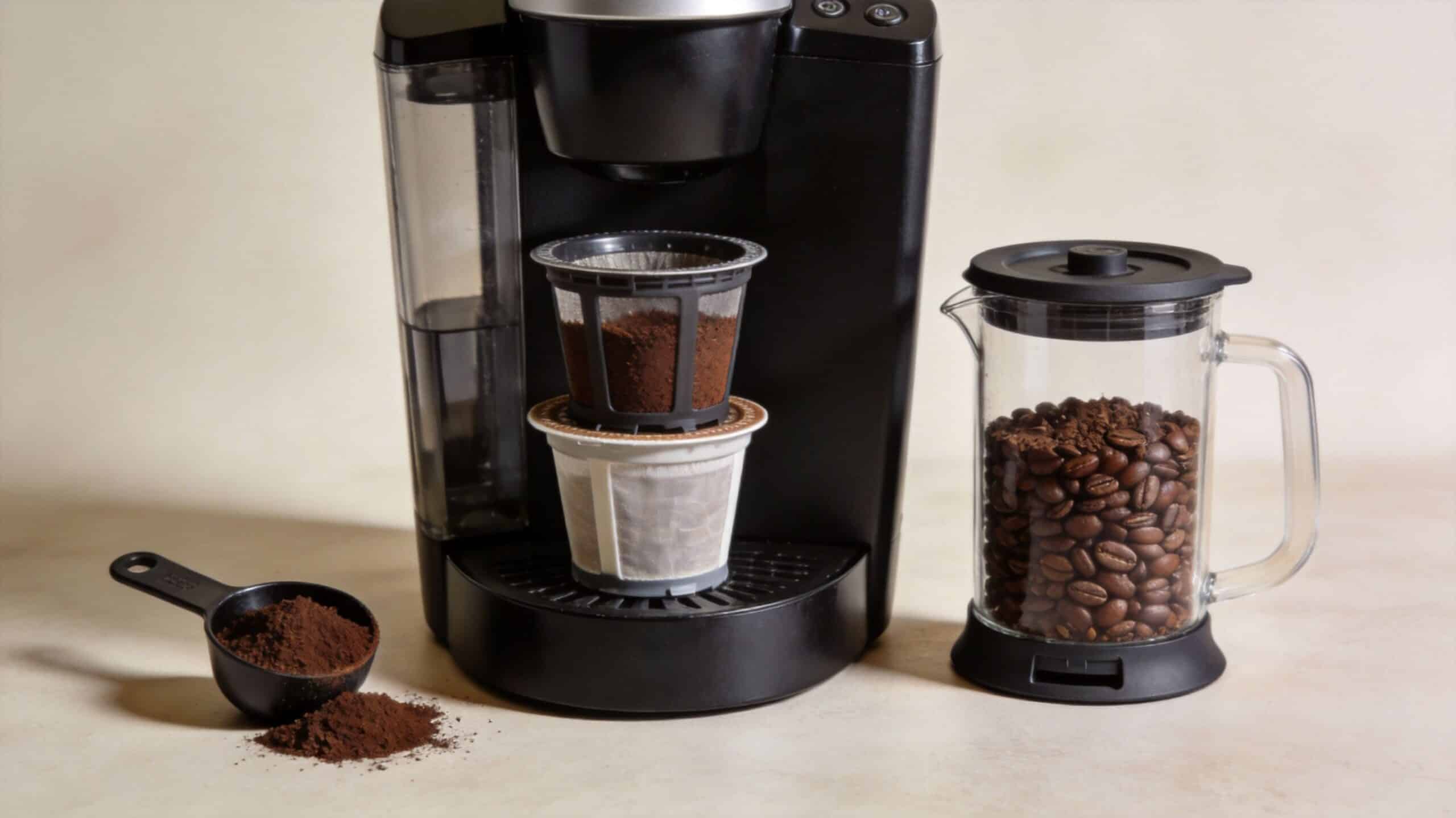
Most complaints about reusable K-Cups come from a few predictable mistakes. The grind is too fine. The pod is overfilled. The lid seal isn’t seated properly. Or the reusable pod itself is flimsy enough that fit becomes inconsistent from brew to brew.
That’s why “reusable pod” isn’t one category in practice. Build quality matters. Mesh quality matters. The way the lid closes matters. A cheap pod can make someone think reusable brewing doesn’t work, when the accessory is the problem.
What works better than a bare reusable pod
With newer features like Brew Over Ice appearing on models such as the K-Duo Essentials, accessory choice matters even more. The K-Duo Essentials product listing notes this style of brewing, and the supporting data says reusable pods paired with paper liners can improve flavor retention by up to 25 percent while also reducing waste for regular coffee drinkers.
That lines up with real-world use. A stainless reusable pod with a liner tends to produce a cleaner cup than a loose-fill mesh pod on its own because the liner helps manage fines and makes cleanup easier.
Reusable accessories versus generic options
| Accessory type | What usually works | Common failure point |
|---|---|---|
| Stainless reusable pod | Better durability, more consistent fit, easier cleaning | Can still brew weak coffee if overfilled or ground too fine |
| Thin plastic reusable pod | Lower upfront cost | Warping, poor seal, inconsistent extraction |
| Gold-tone carafe basket | Convenient for daily use, no paper filter required | More oils and fines in the cup if not cleaned well |
| Reusable pod with paper liner | Cleaner cup, simpler cleanup | Slightly more setup each brew |
| Generic off-fit accessory | Can be tempting on price | Leaks, bad alignment, grounds in cup |
If a reusable pod leaks or brews weak coffee, don’t assume the whole idea is flawed. Check the fit, the grind, and whether the pod was designed for your exact machine family.
A practical setup for people who want better results
For most K-Duo owners, the easiest way to make reusables work is a simple approach:
- Use medium-ground coffee: Fine espresso-like grinds tend to clog mesh and slow flow.
- Don’t pack the pod tightly: Water needs space to move through the grounds.
- Choose a rigid pod body: A stable shape helps the brewer seal correctly.
- Add liners when you want a cleaner cup: They reduce sediment and cut cleanup time.
- Rinse immediately after brewing: Dried coffee oils are much harder to remove later.
If you want model-specific compatibility help before buying accessories, this guide to reusable K-Cups for Keurig is a useful starting point.
One contextual option in this category is PureHQ Inc., which makes stainless refillable pods, paper liners, gold-tone carafe filters, and descaling products for Keurig systems including K-Duo variants. That kind of setup makes sense if you want one accessory system for both better taste and simpler maintenance rather than mixing unrelated generic parts.
The iced coffee catch
Iced settings are appealing, but they punish sloppy accessories. If the pod doesn’t seal well or the coffee is under-extracted, the ice exposes the weakness immediately. The result tastes watery, not refreshing.
For iced coffee, reusable gear works best when it brews slightly stronger and keeps fines under control. That’s one place where liners and a well-fitted pod make a visible difference in the cup.
Which Keurig Carafe Model Is Right for You
The right machine depends less on brand loyalty and more on how coffee is brewed in your home or office. Most buyers don’t need the most advanced model. They need the one that causes the fewest annoyances after the novelty wears off.
Choose based on your routine
If you mostly drink coffee alone during the week but occasionally want a pot on weekends, the K-Duo Essentials makes sense. It covers the basics without asking you to pay for features you may never use. It’s the practical entry point for someone who wants carafe flexibility without overcomplicating the counter.
If your household switches constantly between pods and ground coffee, the standard K-Duo is the safer choice. It feels more adaptable day to day, especially when different people want different serving sizes and you want the machine to handle both quick cups and larger brews without friction.
If your kitchen layout is awkward or you hate hot plates, the K-Duo Plus is easier to justify. The reservoir flexibility matters in smaller spaces, and the thermal carafe suits people who want brewed coffee to hold better without sitting on a heating element.
Match the machine to your tolerance for maintenance
This part matters more than most shoppers expect.
- Low patience for upkeep: Pick the model with the layout you’ll clean and refill consistently.
- Frequent use of ground coffee: Plan on regular basket and pod cleaning from the start.
- Hard water at home: Treat descaling as routine ownership, not emergency troubleshooting.
- Interest in iced coffee or custom beans: Budget for reusable accessories that fit correctly.
The simplest buying advice
Buy a dual brewer if you routinely need both convenience and volume. Skip it if you only ever brew one mug and rarely host. The carafe side is worth it when it gets used. If it doesn’t, it just adds parts.
The smarter purchase often isn’t just the machine. It’s the machine plus a maintenance plan and the right reusable accessories from the beginning. That combination usually does more for day-to-day satisfaction than chasing one extra feature on the brewer itself.
If you want your setup to work better from day one, shop PureHQ Inc. for compatible reusable K-Cups, carafe filters, paper liners, and descaling supplies that help Keurig carafe brewers stay cleaner, taste better, and hold up longer.

