
Coffee Machine Care
Coffee Plastic Filter Guide: Safety, Taste, and Care
Oct
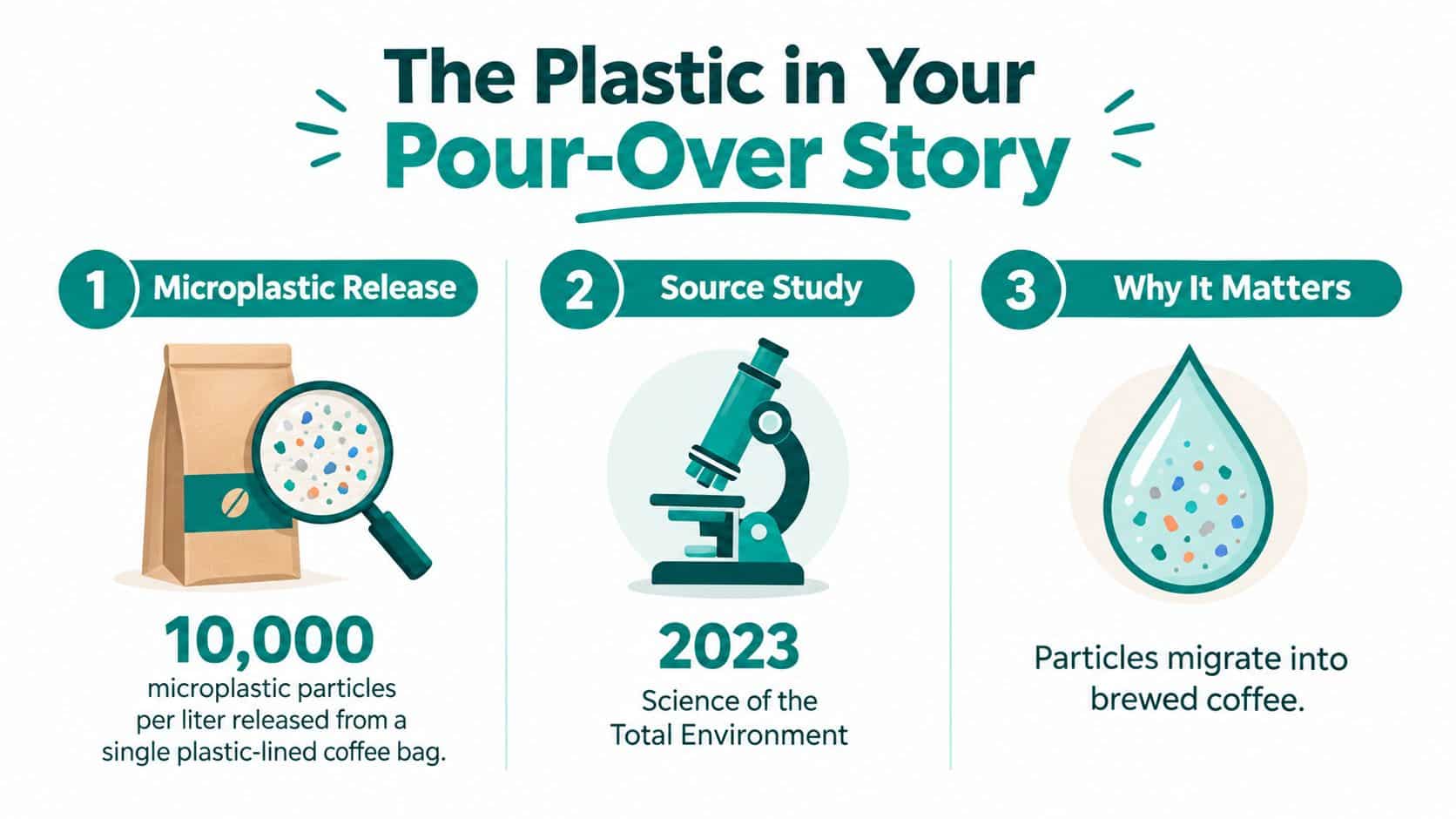
A single plastic coffee bag steeped in 95°C water for five minutes released more than 10,000 microplastic particles into one litre of coffee, according to a study published in Science of the Total Environment and indexed by the National Library of Medicine. That result doesn't prove your reusable coffee basket creates the same exposure, but it does make one point impossible to ignore: the material touching hot coffee deserves scrutiny.
The right question isn't just whether a coffee plastic filter is labelled BPA-free. You need to know whether the brew path uses polypropylene, nylon, polycarbonate, stainless steel, paper, or a combination of materials. You also need to consider temperature, contact time, mechanical wear, cleaning, and the age of the filter.
My short verdict is direct. A basic plastic basket makes sense for occasional brewing and many standard drip machines. A stainless-steel filter is the stronger long-term choice for daily brewing and anyone who wants to minimise plastic in the hot zone. Paper remains the cleanest option for sediment and oil control. The details matter more than the label.
The Plastic in Your Pour-Over Story
The plastic coffee bag in that laboratory test wasn't the same product as a molded drip basket or reusable K-Cup. Its lining used a different construction, and laboratory conditions don't reproduce every home brewer. Still, the test used hot water, prolonged contact, and coffee brewed under conditions that resemble the heat stress found in everyday brewing.
A drip brewer sends hot water through a basket and grounds before the coffee reaches the carafe. A single-serve machine pushes heated water through a pod, while a pour-over cone holds hot water against the filter and coffee for several minutes. Each setup creates a different contact pattern, but all of them can expose polymer surfaces to heat, acidity, water movement, and repeated use.
That doesn't justify panic. It does justify looking beyond the phrase BPA-free. A plastic filter can avoid BPA and still contain another polymer that experiences mechanical wear or sheds particles after repeated heating. The relevant question is what touches the water, how long it remains in contact, and whether the part has started to scratch, cloud, pit, or warp.
A long history of changing filter materials
Coffee filtration predates disposable paper. The documented history of coffee filters reaches back to 1782, when Johann Georg Krünitz described blotting paper inside a tinned metal cone. Cloth filter bags appeared in a 1894 patent, and Melitta Bentz received a patent for a commercial paper filter on July 8, 1908, for a 94 mm round filter disk.
That sequence matters because filter design has always balanced convenience, cleanliness, taste, and waste. Plastic baskets didn't appear in isolation. They became part of the move toward permanent, machine-specific filters that users could rinse and reuse.
For a more technical look at how material decisions affect coffee equipment, see this guide to material selection. The practical takeaway is simple: don't judge a filter by its marketing name. Trace the entire brew path.
What a Coffee Plastic Filter Actually Is
A coffee plastic filter usually isn't a paper-like sheet made entirely from plastic. It's more often a molded basket, pod shell, or structural housing that holds coffee grounds while water passes through openings or a separate mesh insert.
Polypropylene carries much of the load
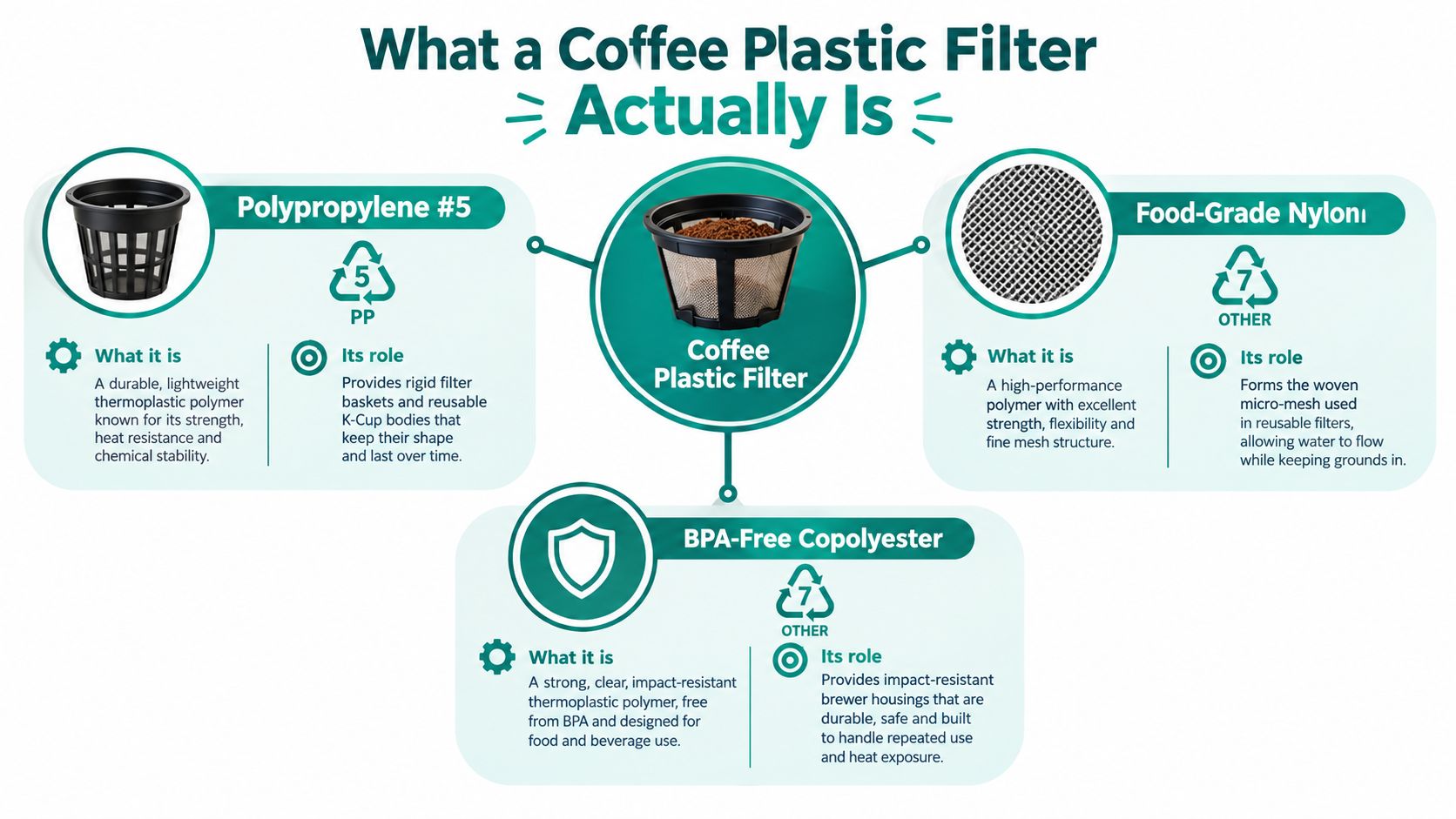
Polypropylene, commonly identified by recycling code #5, appears in rigid filter baskets and reusable K-Cup-style bodies. The material can form the basket itself, the pod shell, or a support frame around a finer filter. In a drip machine, the basket sits beneath the showerhead and above the carafe. In a pod brewer, the shell holds the grounds inside the machine's puncture and water-injection path.
The basket may look sturdy, but the water doesn't only contact the perforated base. It can also contact the sidewalls, seams, lid, support ribs, and any plastic around the mesh. A buyer who checks only the filter screen misses much of the actual hot zone.
Nylon and polycarbonate appear in different places
Food-grade nylon commonly forms woven fine mesh. The mesh sits between the grounds and the brewed coffee, where its opening size affects sediment retention and flow. Nylon offers flexibility and fine filtration, but repeated heating and mechanical cleaning can wear delicate strands.
Polycarbonate has been used in older machine housings, brew cones, and other impact-resistant components. Current products may use different copolyesters or polymers, so you shouldn't infer the material from appearance alone. Ask the manufacturer for the polymer grade and intended food-contact use.
“Food-grade” means the manufacturer has specified a material for food-contact use under relevant conditions. It doesn't mean the part lasts forever, contains no plastic additives, or cannot shed material after abuse. Recycling symbols identify a resin category, not a complete safety certificate.
Filter opening size also matters. This explanation of micron ratings and filter placement helps clarify why a finer barrier catches more particles but can restrict flow. Coffee filters don't use the same design logic as every water filter, but the basic relationship between opening size, flow, and retention still matters.
A drip brewer usually applies steady gravity flow. An immersion brewer keeps hot water against the filter for longer. A pressure brewer forces water through a compact puck and stresses the pod, mesh, lid, and housing more aggressively. For a practical overview of permanent coffee filters, focus on the entire assembly rather than the basket material alone.
The Honest Trade-Offs of Plastic Filters
Plastic remains popular because it solves practical problems. It weighs little, resists dents, costs less to manufacture than stainless steel, and can be molded to fit a specific machine. Those advantages are real. So are the compromises.
Plastic generally produces a neutral-tasting brew when the material is clean and intact. The trouble begins with maintenance. Coffee oils can remain in scratches, seams, and mesh pores, and old residue can mute the brightness of a fresh coffee. Stainless steel also needs cleaning, but its hard surface is less vulnerable to scoring than many plastics.
A plastic basket is usually easier to handle than a thin metal filter and less fragile than glass or ceramic. Nylon mesh can produce more body than paper because it allows more oils and fine particles through, while a tight metal mesh can deliver a similar full-bodied style with a different durability profile.
| Factor | Plastic Filter Reality | What It Means for You |
|---|---|---|
| Taste | Neutral when clean, but residue can remain in scratches and mesh | Inspect and clean it instead of assuming reusable means maintenance-free |
| Cleanup | Light and convenient, but surfaces can stain or score | Use gentle tools and avoid treating the basket as indestructible |
| Cost | Often cheaper to replace than premium metal assemblies | A sensible entry point for occasional or shared brewing |
| Durability | Rigid polypropylene usually handles use better than delicate nylon mesh, while stainless steel tolerates harsher long-term service | Replace worn plastic instead of stretching its service life |
| Particle concern | Risk depends on heat, contact time, wear, age, and cleaning exposure | Reduce plastic contact in the hot zone if that priority matters to you |
The price of a reusable filter varies widely by machine, construction, and brand. I wouldn't promise a fixed payback period because pod use, paper purchases, coffee consumption, and filter life differ from household to household. Compare the replacement cost with your actual brewing habits instead.
The more useful comparison is between convenience now and material control over time. Office users and occasional brewers may value a light, inexpensive basket. Daily home brewers may care more about stable flow, easy inspection, and a filter that remains smooth after repeated cleaning. This reusable coffee filter versus paper comparison is useful when your priority is waste reduction, cup clarity, or cleanup rather than price alone.
BPA, Microplastics, and the Safety Question
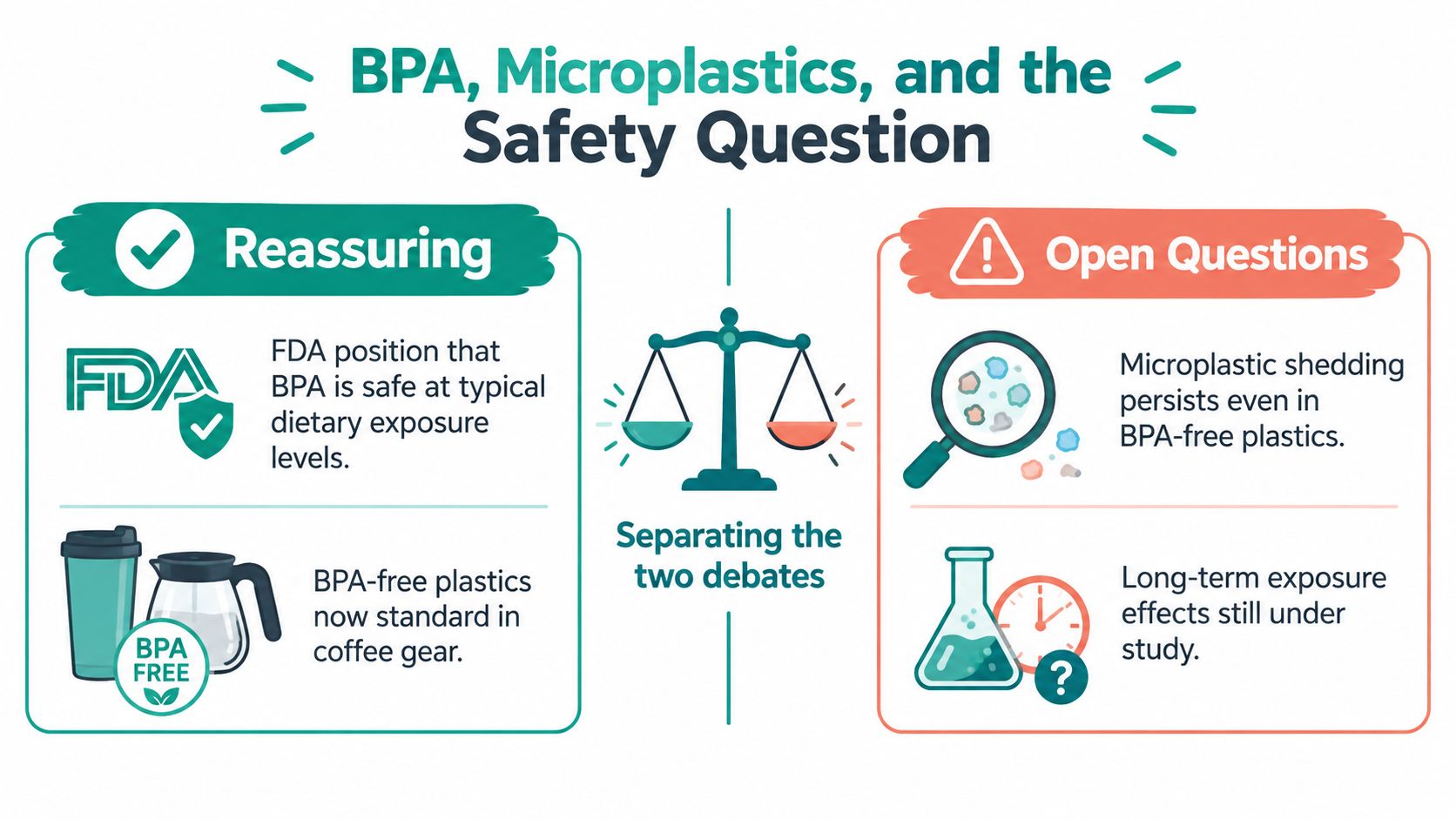
BPA and microplastics are different questions. BPA concerns a chemical used in some plastics and the possibility of migration into food or drink. Microplastic shedding concerns particles released through wear, abrasion, or degradation. Removing one concern doesn't automatically remove the other.
The FDA's current BPA position says BPA is safe at the levels currently occurring in foods and continues to support approved food-contact uses in containers and packaging. That statement addresses BPA exposure. It doesn't certify every BPA-free polymer for every brewing condition.
Heat changes the risk calculation
Hot water, pressure, agitation, and repeated thermal cycles put more stress on plastic surfaces. Industry guidance for coffee-machine parts identifies heat-resistant polymers such as polypropylene and polycarbonate for beverage-path components, with brewing temperatures often exceeding 200°F / 93°C. The same guidance emphasises thermal stability, regulatory compliance, and the construction of the filter medium.
Thin mesh, worn seams, recycled polymer blends with unclear specifications, and parts that have become cloudy or scored deserve closer inspection. A filter doesn't become unsafe just because it has been used, but visible deterioration tells you that the material has experienced wear.
Practical rule: BPA-free is a useful specification, not a complete purchasing decision.
The sensible response is controlled use. Buy a filter whose manufacturer identifies the material and food-contact purpose. Hand-wash when practical, keep abrasive pads away from the surface, and replace parts that warp, pit, crack, or develop a persistent chemical odour. If your machine repeatedly drives water above the range specified for the filter, choose stainless steel or paper instead.
Plastic vs Stainless Steel vs Paper and Mesh
The best material depends on what you want in the cup and what you tolerate in maintenance. No filter wins every category.
| Material | Heat Tolerance | Taste Impact | Cleanup | Avg Lifespan | Microplastic Risk |
|---|---|---|---|---|---|
| Plastic | Suitable only within the maker's stated brewing range | Neutral when clean | Easy, but scratches and stains can retain residue | Variable, based on wear and thermal cycling | Low but nonzero when polymer contacts hot water |
| Stainless steel | Strong tolerance for repeated brewing heat | Usually allows more body than paper | Oils need regular removal | Typically suited to long-term reuse | Avoids plastic in the filter medium, though the wider machine may still contain plastic |
| Paper | Handles normal brewing heat as a disposable medium | Produces a cleaner cup with less oil and sediment | Fastest cleanup because you discard the filter | Single-use | Paper may include plastic binders or heat-sealed strips, so check construction |
| Nylon mesh | Designed for fine reusable filtration | More body and sediment than paper | Requires thorough rinsing and periodic soaking | Depends heavily on mesh wear | Plastic mesh can shed particles under repeated near-boiling exposure |
Stainless steel is my daily-brewer recommendation when you want to reduce plastic contact and keep a reusable filter for the long haul. Paper is the better call when clarity, low sediment, and simple cleanup matter more than reuse. Fine nylon mesh sits between those options, giving Chemex and Hario users more body without the full sediment of a coarse metal filter.
A standard plastic basket remains perfectly reasonable for occasional use, cooler brew paths, travel, and machine-specific systems where compatibility matters more than material purity. Replace it before it warps or becomes heavily scored. Don't keep using a worn basket because it technically still fits.
Machines and Pods That Actually Fit
Compatibility causes more disappointment than filter material. A reusable pod can be well made and still fail if the lid sits too high, the puncture points miss, or the basket prevents the brewer from closing.
Keurig K-Classic, K-Select, and K-Elite owners should verify whether the reusable K-Cup fits the brewer's pod holder and lid clearance. Keurig 1.0 and 2.0 systems don't always accept identical pod shapes, so a listing that says “Keurig compatible” isn't enough. Check the exact brewer family before buying.
Drip-machine owners face a different trap. Cuisinart, Mr. Coffee, and Hamilton Beach baskets can differ in diameter, taper, support tabs, and capacity. An eight-cup basket and a twelve-cup basket may look similar in a product photo while locking into different supports. Measure the original basket instead of guessing from the carafe label.
PureHQ's reusable K-Cup lineup provides a real-world example of a product designed for Keurig 1.0 and 2.0 brewers, using BPA-free polypropylene and a commercial-grade plastic body. It shows why the useful product details are the brewer generation, polymer, and physical fit, not just the word “reusable.”
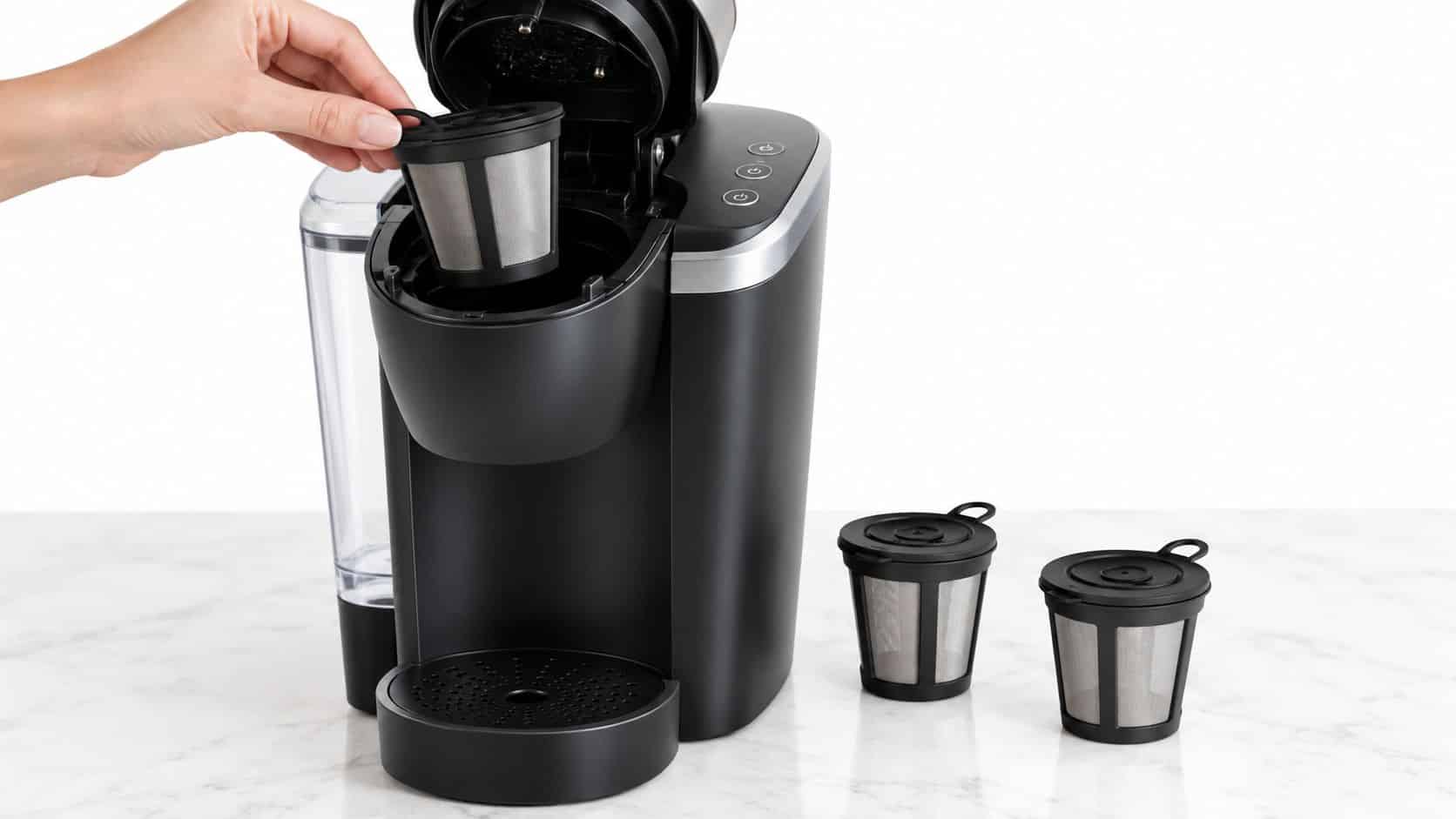
Check the fit before you place the order
- Measure the original basket. Record its rim, depth, taper, and support points.
- Confirm lid clearance. A pod that closes under force can leak or deform.
- Read the temperature specification. Don't use a filter outside its stated thermal range.
- Look for the polymer grade. A transparent material description is better than a vague BPA-free claim.
- Test the first brew with water. Check for drips, overflow, and a secure lock before adding coffee.
For a visual explanation of reusable pod placement, use the following demonstration after checking your machine model.
Machines that repeatedly push water above 205°F are a poor match for an unspecified plastic filter. High-temperature espresso boilers and Turkish cezve brewers also belong in a different equipment category. Use the filter designed for the brewer, not the one that happens to fit the opening.
Cleaning and Maintenance That Actually Works
A reusable coffee plastic filter fails through neglect before it fails through ordinary brewing. Coffee oils cling to mesh and corners, and old residue can alter flavour even when the filter looks clean.
Start with a rinse immediately after every use. A reusable-filter manufacturer's maintenance instructions recommend rinsing, air drying, and a deeper clean every 3 to 5 uses with mild dishwashing detergent. Those instructions also say not to use a dishwasher for that filter.
Independent coffee-equipment guidance recommends rinsing reusable filters with hot water after each use, soaking them in detergent when oils build up, and giving them a longer detergent bath at least weekly. Follow the filter maker's instructions first because mesh, seals, and plastic grades vary.
A practical routine
- After brewing: Empty the grounds, rinse every surface, and leave the filter open to air dry.
- During the week: Inspect the mesh, lid, rim, and seams. Use a soft brush, not a metal tool.
- When oils build up: Soak the filter in mild detergent, rinse thoroughly, and brew plain water before making coffee.
- For the machine: Descale according to the brewer's instructions. Citric acid or white vinegar may suit some machines, but the manual controls the concentration and procedure.
- For neglected mesh: Deep-clean the pores rather than forcing them open with a sharp object.
- For damaged plastic: Replace clouded, cracked, pitted, warped, or heavily scored parts.
Don't use abrasive pads. They create grooves that trap oils and make the surface harder to clean. A persistent odour after washing, visible scoring around the water path, or a change in fit is a replacement signal, not a challenge to scrub harder.
Weekly checklist: rinse, air dry, inspect the mesh, inspect the lid and seams, soak if oily, descale when the machine calls for it, and replace the filter when wear changes its surface or fit.
Making the Right Call for Your Brew Setup
Choose a basic plastic basket when you brew occasionally, share a machine at work, travel, or use a standard drip brewer within the filter's stated temperature range. It keeps the purchase simple and works well when you clean it promptly and replace it after visible wear.
Choose stainless steel or a durable metal mesh filter for daily brewing when you care about long service life, fuller body, and less plastic in the hot filtration zone. Choose paper when you want the cleanest cup, the least sediment, and the fastest cleanup. If you brew at very high temperatures or want no polymer contact at all, skip plastic.
Keurig owners who want to move beyond disposable pods without switching to a metal pod can consider a BPA-free reusable K-Cup with a stainless-steel mesh insert, provided the product matches the brewer generation. Keep paper liners available for guests and for mornings when cleanup needs to be immediate. A compatible water filter, descaler, or cleaning tablet also makes sense if you want the brewer and reusable filter to stay consistent.
Coffee brands that manage recurring orders can also explore subscription tools for coffee brands, especially when customers regularly need coffee, paper liners, or maintenance supplies.
The recommendation is straightforward: buy plastic for fit and convenience, stainless steel for long-term daily use, and paper for clarity and easy disposal. Whatever you choose, match the material to the machine and maintain it instead of treating “reusable” as “maintenance-free.”
PureHQ Inc. offers reusable K-Cups, paper liners, stainless-steel refillable pods, water filters, descalers, and cleaning tablets for compatible coffee machines. Visit PureHQ Inc. to choose a filter that fits your brewer and pair it with the maintenance accessories that keep your coffee tasting clean.

