
Coffee Machine Care
Coffee Maker Paper Filter Guide for Better Brews

Sep
A paper filter can do more than keep grounds out of your mug. A 2025 Swedish research summary reported that paper-filtered drip coffee contained about 1/15th of the cafestol found in workplace machines without filters, and estimated that drinking 3 cups a day, 5 days a week could lower LDL cholesterol by 0.58 mmol/L. The result depends on the brewing setup and consistent filter use, but it changes the way you should view this inexpensive accessory. (Swedish research summary)
A coffee maker paper filter also controls water movement through the grounds. Its shape, thickness, fiber structure, and fit influence contact time, sediment, extraction, and the risk of an overflow. Choose the wrong filter, pair it with a permanent basket, or ignore a slow-draining paper, and your machine can turn a simple morning brew into a bitter, muddy mess.
The Hidden Health and Flavor Benefits of Paper Filters
Paper filtration matters for two separate reasons. It can reduce the amount of coffee oil that reaches the cup, and it can produce a cleaner, more repeatable brew than a coarse metal mesh. Those benefits overlap, but they aren't identical. A filter that improves clarity won't automatically fix an overly fine grind, and a filter chosen for health reasons still has to fit the brewer correctly.
Why filtration changes the cup
Coffee oils and fine particles contribute body, but too much suspended material can make a cup taste heavy, gritty, or muddled. Paper captures more of those small solids than many permanent metal filters, so the finished coffee generally reads cleaner and lets delicate flavor distinctions stand out. The filter also slows and distributes water as it passes through the coffee bed, which makes it part of the extraction system rather than a passive strainer. (Coffee filter mechanics)
That distinction explains why replacing a paper filter with a permanent basket can change a familiar recipe. A metal mesh may allow more oils and fines into the carafe, while a dense paper can restrict flow enough to extend contact with the grounds. If your coffee tastes bitter or dry after switching filters, the filter may have altered flow without any change to your beans or water.
Practical rule: Treat the filter as a brewing variable. If you change its shape or density, reassess the grind and drainage instead of blaming the coffee immediately.
The health discussion needs the same precision. The Swedish summary compares paper-filtered drip coffee with workplace machines without filters, not every brewing method or every coffee drinker. The reported LDL estimate also uses a specific pattern of consumption, so it shouldn't be presented as a guaranteed outcome for an individual. People managing cholesterol should follow medical advice, while coffee drinkers can recognize paper filtration as one practical way to reduce cafestol exposure in the stated setup.
For a fuller comparison of disposable and reusable approaches, see this guide to reusable coffee filters versus paper. The useful question isn't whether one material wins universally. It's whether the filter matches your priorities, including clarity, oils, cleanup, waste, and machine compatibility.
How Paper Filters Evolved Into Precision Brewing Tools
The disposable paper filter became important because it solved a practical household problem. Before paper, brewers relied on cloth, metal, or direct-boil methods that could leave more sediment and required more ongoing handling. German inventor Melitta Bentz is widely associated with the modern disposable coffee filter. She filed her patent application in June 1908, received patent publication on 8 July 1908, and commercialized a filter described as a 94 mm round filter disk. (Coffee filter history)
A later milestone came in 1937, when Bentz patented the cone-shaped paper filter used in dripper-style brewing. That geometry became familiar in household and small-office coffee makers because it funnels water through a concentrated coffee bed while supporting a disposable brewing process.
Why wet strength matters
A dry filter can look sturdy and still fail once saturated. Manufacturers produce coffee-filter papers with high wet strength so the paper retains its structure under hot-water loading and remains manageable when you remove the spent grounds. One technical source notes that wet strength should retain at least 15% of dry strength, while some high-wet-strength papers retain up to 50%. (Coffee-filter paper technical data)
The same source lists coffee-filter papers with basis weights around 35 to 58 g/m², thickness around 6.7 to 10.2 mm per 80 sheets, tensile strength above 13 to 27 N, and filtration times of 25 to 45 seconds by the Herzberg method. These specifications don't tell you which paper will taste best by themselves. They show the balancing act: the sheet must resist tearing and collapse without restricting drainage so much that the brew stalls.
A premium filter earns its place when that balance remains consistent from one sheet to the next. A flimsy generic filter may still produce coffee, but fold-over, tearing, or uneven seating can create bypass, channeling, and grounds in the basket.
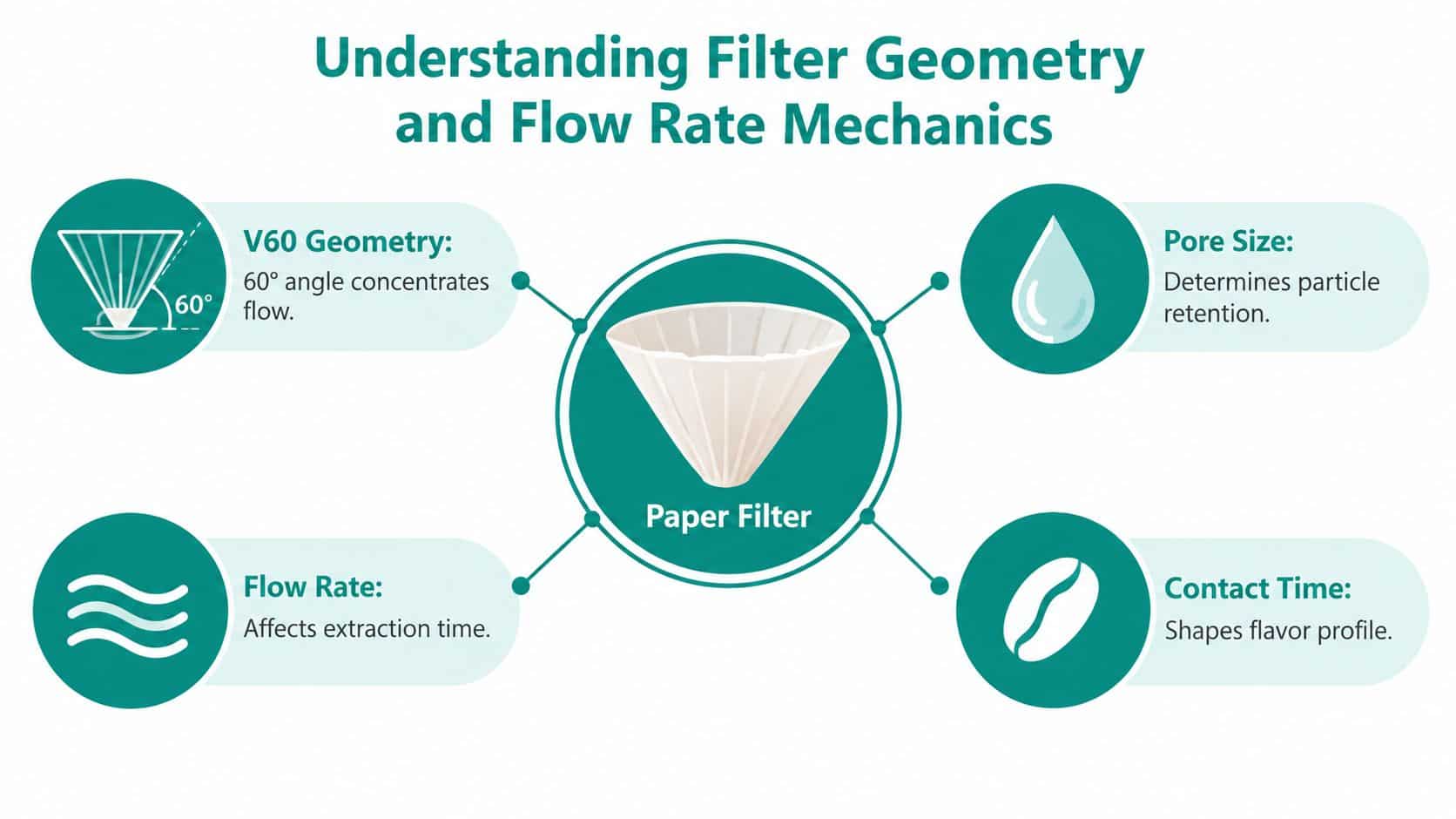
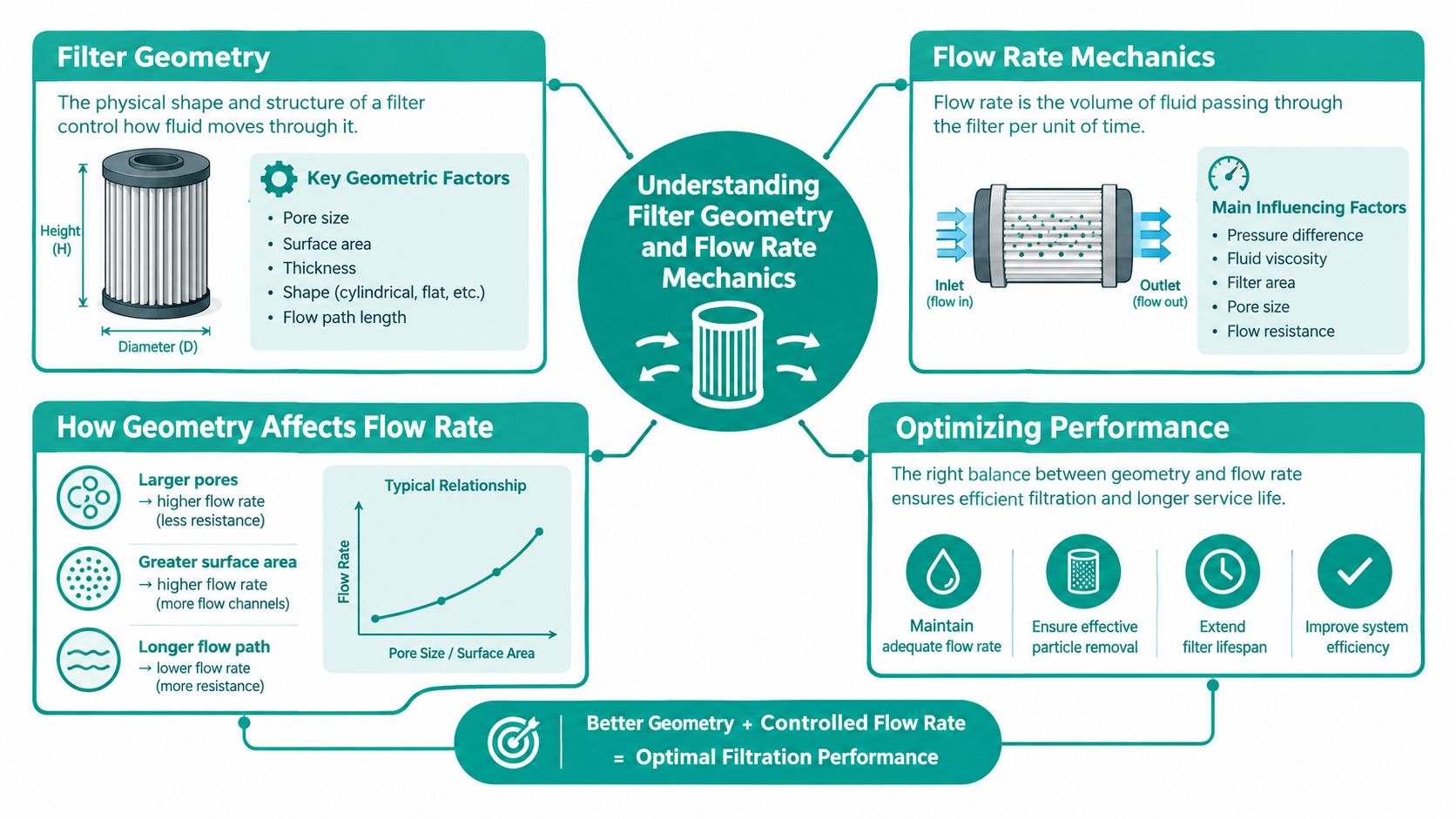
Understanding Filter Geometry and Flow Rate Mechanics
A paper filter is an active flow regulator. Its geometry and permeability work with the coffee bed to control resistance, contact time, and the amount of sediment reaching the carafe. A tighter sheet or finer pore structure slows drainage and may increase extraction. A more open sheet can shorten contact time, but may also let more oils through and produce a heavier cup.
The variables that control drainage
Thickness adds resistance. A coffee-filter patent reports an optimal base-paper thickness of 0.26 to 0.30 mm and warns that filtration speed can suffer when machine-direction tensile strength exceeds 30 N/15 mm or transverse-direction tensile strength exceeds 15 N/15 mm. Its example filter measures 0.28 mm thick and takes 51.0 seconds per 100 cc for water permeation. (Coffee-filter geometry patent) These figures illustrate the trade-off. Paper must remain stable under flow without restricting drainage enough to stall the brew.
Creping changes surface area and flexibility. The uneven surface can reduce direct contact between paper and fines, helping preserve drainage as particles collect. It does not guarantee a faster brew. Pore structure, fold pattern, brewer ribs, and the position of the coffee bed all affect the result.
Fiber choice changes porosity and oil passage. Longer-fiber pulps such as bamboo or abaca are typically more porous than shorter-fiber eucalyptus pulp. A more open structure can allow more oils through and give the cup greater body, while tighter paper generally supports cleaner separation from sediment. Paper construction therefore affects flavor as well as flow, not just filtration. (Coffee-filter paper mechanics)
Modern hybrid brewers make shape especially important. A cone placed in a flat basket may leave unsupported sections, while a flat filter forced into a cone can fold inward and restrict drainage. Match the filter profile to the basket, then check that the sides remain open against the brewer's support ribs. This guide to coffee filter cones explains how different shapes sit inside their brewers.
How to troubleshoot the cup
Use the finished brew as evidence:
- Slow drainage and dry bitterness: Coarsen the grind or choose a more permeable filter. Excess resistance can keep water in contact with the grounds too long.
- Thin, sour, or weak coffee: Check for overly open paper, a coarse grind, or a filter that is not seated correctly.
- Muddy texture: Confirm that the paper is intact at the side seam and that grounds are not sitting above the rim. If the sheet is sound, coarsen the grind slightly before blaming the filter.
- Uneven flavor: Ensure the filter sits flat and that water reaches the full coffee bed.
Neither cone nor flat geometry is universally superior. The practical choice is the shape your machine supports and your recipe can drain consistently.
Comparing Bleached Versus Unbleached and Premium Options
The white-versus-brown choice creates unnecessary anxiety because shoppers often associate whitening with harsh chemicals. Modern bleached coffee filters are commonly whitened with oxygen-based methods rather than elemental chlorine, so the legacy dioxin concern tied to older chlorine bleaching doesn't apply to most current U.S. and EU filters. Current guidance also treats both bleached and unbleached filters sold for food contact as generally safe, while the practical taste difference often comes down to paper character and preparation. (Bleached versus unbleached filters)
Unbleached paper keeps its natural brown appearance and may contribute a papery note if you skip rinsing. Bleached paper generally has a whiter appearance and often produces less noticeable paper flavor, although manufacturing quality, thickness, and the coffee itself still matter. Rinsing either type with hot water can remove loose paper flavor and help the sheet settle against the basket.
Premium versus standard paper coffee filters
| Feature | Premium Oxygen-Bleached Filters | Standard Generic Filters |
|---|---|---|
| Wet strength | Designed to resist tearing and collapse when saturated | May vary from sheet to sheet |
| Flow consistency | More controlled paper density and pore structure can support repeatable drainage | Uneven density can create faster or slower sections |
| Taste preparation | Usually offers a clean starting point after a hot-water rinse | May require more attention to paper flavor |
| Fit and shape | More precise folds and formed seams can help the filter sit correctly | Inconsistent dimensions can cause fold-over or bypass |
| Disposal | Disposable paper simplifies removal of grounds | Disposable paper also creates ongoing waste |
| Best use | Repeatable drip and pour-over brewing where flow matters | Budget brewing when the size and shape fit reliably |
The table doesn't mean every generic filter performs poorly. Some affordable papers work well in a particular machine. The problem appears when a low-cost filter has the wrong dimensions, weak seams, or a density that slows drainage enough to trigger a backup. Price matters less than matching the paper to the brewer and getting consistent results.
A clean machine remains part of the equation. Mineral buildup can interfere with water delivery, while residue in the basket or carafe can add unwanted flavors. PureHQ's unbleached paper coffee filter guide is useful when you want to compare natural paper with bleached options without reducing the decision to appearance alone.
Watch the comparison visually, but remember that a video can't replace the dimensions and instructions for your specific brewer.
Avoiding Compatibility and Clogging Issues in Modern Brewers
The most common filter complaint is often blamed on paper quality when the actual issue is compatibility. A filter can be perfectly sound and still overflow if it doesn't match the basket's diameter, cone angle, or support structure. Hybrid machines make the mistake easier because one appliance may accept pods, a permanent filter, and a paper-lined basket, but not all combinations at the same time.
The double-filter mistake
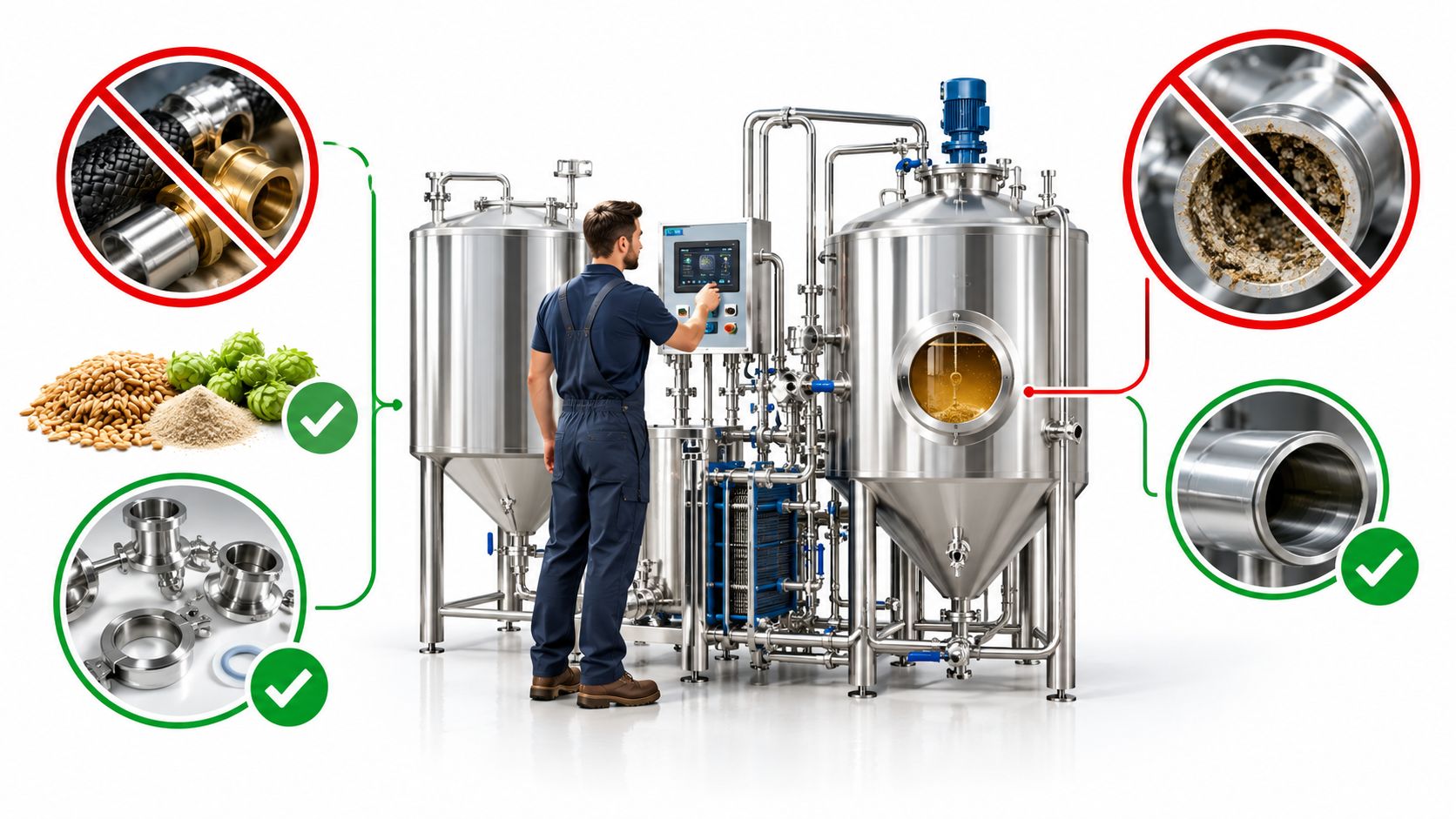
Manufacturer FAQs for Ninja DualBrew and other brewers warn that users shouldn't place a paper filter inside a permanent filter because the combination can cause backing up and clogging. The same guidance identifies a #4 cone paper filter for the relevant basket. (Coffee-filter compatibility guidance)
The mechanism is straightforward. The permanent basket already restricts flow through its mesh, and the paper adds another resistance layer. Grounds can collect between both surfaces, water can rise faster than it drains, and the basket can back up into the machine or spill over the rim.
A reliable fit check
Before brewing, inspect the paper and basket together:
- Confirm the shape. A cone filter belongs in a cone-shaped basket, while a flat-bottom basket needs its matching style.
- Check the size. The rim should sit securely without collapsing inward or extending so far that it folds over the outlet.
- Seat the seam. Press the paper into the basket so the base and side seam follow the basket's contour.
- Rinse with hot water. A quick rinse removes papery flavor and helps the sheet adhere to the basket walls.
- Use one filtration layer. Don't add a paper filter to a permanent basket unless the manufacturer explicitly allows that setup.
A filter that looks slightly too large may still brew, but a fold-over edge can create a weak point and divert water around the grounds. A filter that looks too small may leave exposed coffee at the sides, which encourages bypass and uneven extraction.
If drainage slows suddenly, stop the machine rather than adding a coarser grind and hoping for the best. Remove the filter, inspect the outlet and basket, and verify the model's recommended shape before trying again.
Optimizing Your Brewing Protocol for Paper Filtration
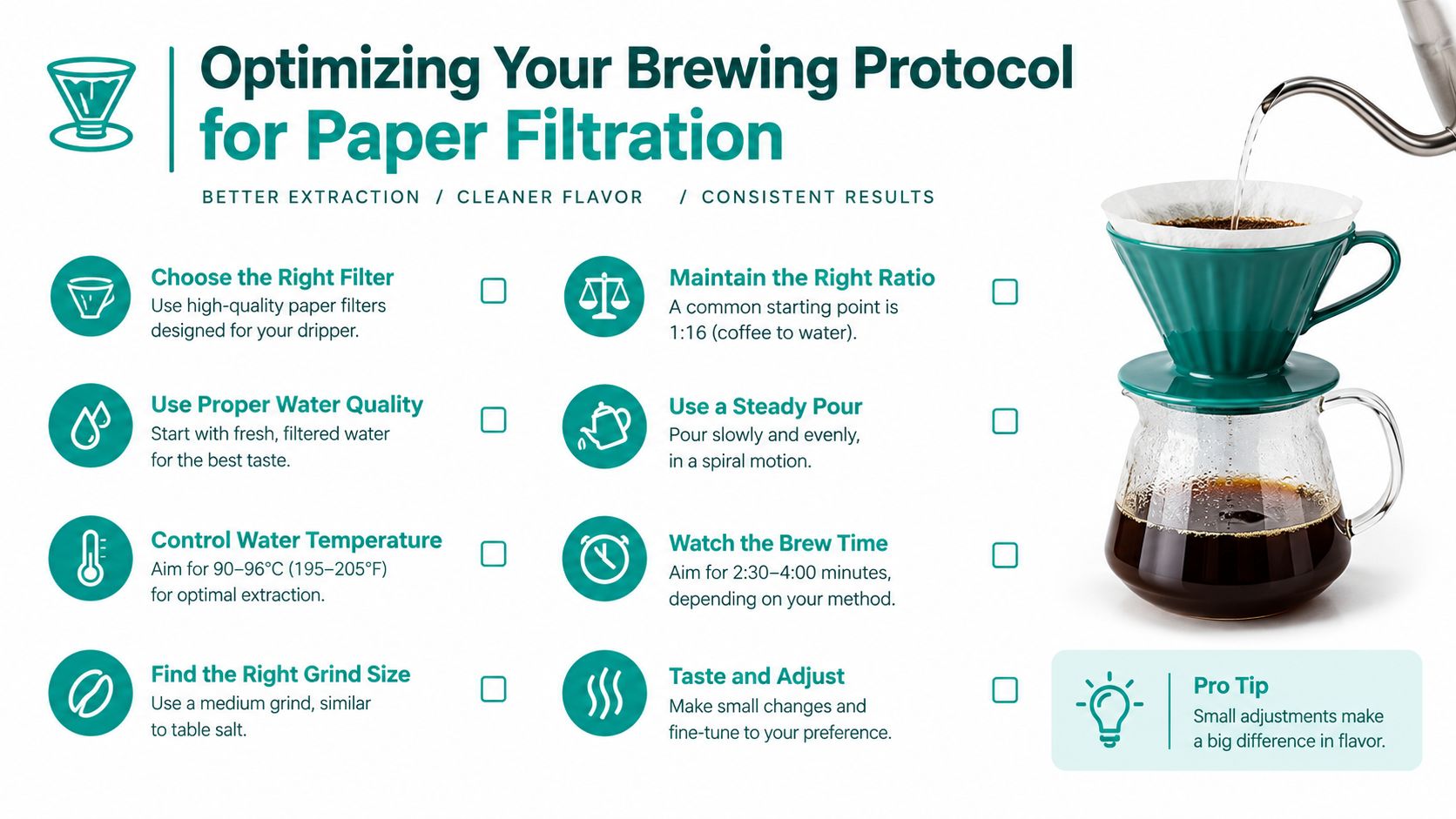
A good filter can't rescue a recipe that changes every morning. Water temperature, grind size, dose, saturation, and pour volume all affect the way the paper regulates flow. Keep those variables stable first, then adjust the filter when the cup still needs refinement.
A repeatable starting recipe
A major coffee brand's pour-over guidance uses water at about 95°C, a medium grind similar to coarse sand, about 12g of coffee per cup, a 30-second bloom, and a final output of roughly 180ml. (Paper-filter brewing protocol)
Use that protocol as a controlled baseline:
- Rinse the paper: Wet the entire filter, then discard the rinse water. This warms the brewer and removes much of the paper's dry taste.
- Add the grounds: Keep the bed level so water doesn't find one easy channel.
- Bloom for 30 seconds: Add enough water to wet the grounds, then wait. The pause helps saturation before the main pour.
- Pour steadily: Continue in controlled additions rather than flooding one spot. Keep the water distributed across the bed.
- Taste before changing the paper: If the coffee is harsh, adjust grind or flow first. If it is muddy, inspect the filter fit and consider a tighter paper.
A paper filter can make an automatic brewer more repeatable, but it can't correct a blocked outlet or mineral-heavy machine. Clean the basket and carafe regularly, and use the brewer's maintenance process when scale affects water delivery.
For readers building a consistent morning coffee brewing routine, recording the grind, filter style, and taste makes small changes easier to evaluate. You don't need laboratory equipment. A simple note about slow, fast, bitter, sour, clear, or muddy is enough to identify patterns.
Elevating Your Daily Brew with the Right Accessories
The filter sits at the center of a larger system. Beans provide the soluble material, water carries it through the grounds, the paper controls flow and retention, and the machine determines how evenly it delivers that water. When one part changes, the rest of the setup may need a small adjustment.
For Keurig and Ninja DualBrew owners, disposable paper liners for reusable pods can simplify cleanup and reduce the amount of loose sediment entering the brewing path. Gold-tone carafe baskets offer a reusable option for compatible drip systems, while descaling solutions and cleaning tablets address residue and mineral buildup. Check the machine model before buying, because a useful accessory is still the wrong accessory if its basket or pod dimensions don't match.
Build a setup that stays consistent
A practical routine looks like this:
- Choose the correct paper: Match the cone or basket shape and confirm the brewer's size requirement.
- Prepare the sheet: Fold seams where needed, seat the paper fully, and rinse it with hot water.
- Protect the flow path: Keep the permanent basket, outlet, and carafe clean, and don't double-filter unless the manufacturer permits it.
- Pair the filter with suitable coffee: If you're looking for a dependable supply of beans, you can find Amor Prohibido bulk beans and use the same filter recipe while you assess the flavor.
Paper filters are disposable, but their convenience comes with ongoing material use. Reusable components can reduce repeated pod waste, while paper liners can make spent grounds easier to remove. The sensible choice depends on whether you prioritize cleanup speed, waste reduction, cup clarity, or the machine's intended brewing method.
PureHQ Inc. offers disposable paper liners for reusable K-Cups, compatible accessories for selected Keurig and Ninja DualBrew systems, gold-tone carafe baskets, refillable stainless steel pods, and universal descaling and cleaning products. Those accessories address the practical problems covered here, including fit, cleanup, filtration, and machine maintenance.
Visit PureHQ Inc. to shop compatible coffee filters, reusable pod liners, carafe baskets, and descaling supplies for a cleaner, more controlled brew. Choose the accessory that matches your brewer, then use consistent paper preparation and maintenance to make every cup easier to repeat.

