
Coffee Machine Care
Your 2026 Starter Guide to Coffee Bar Accessories for Home
Jun
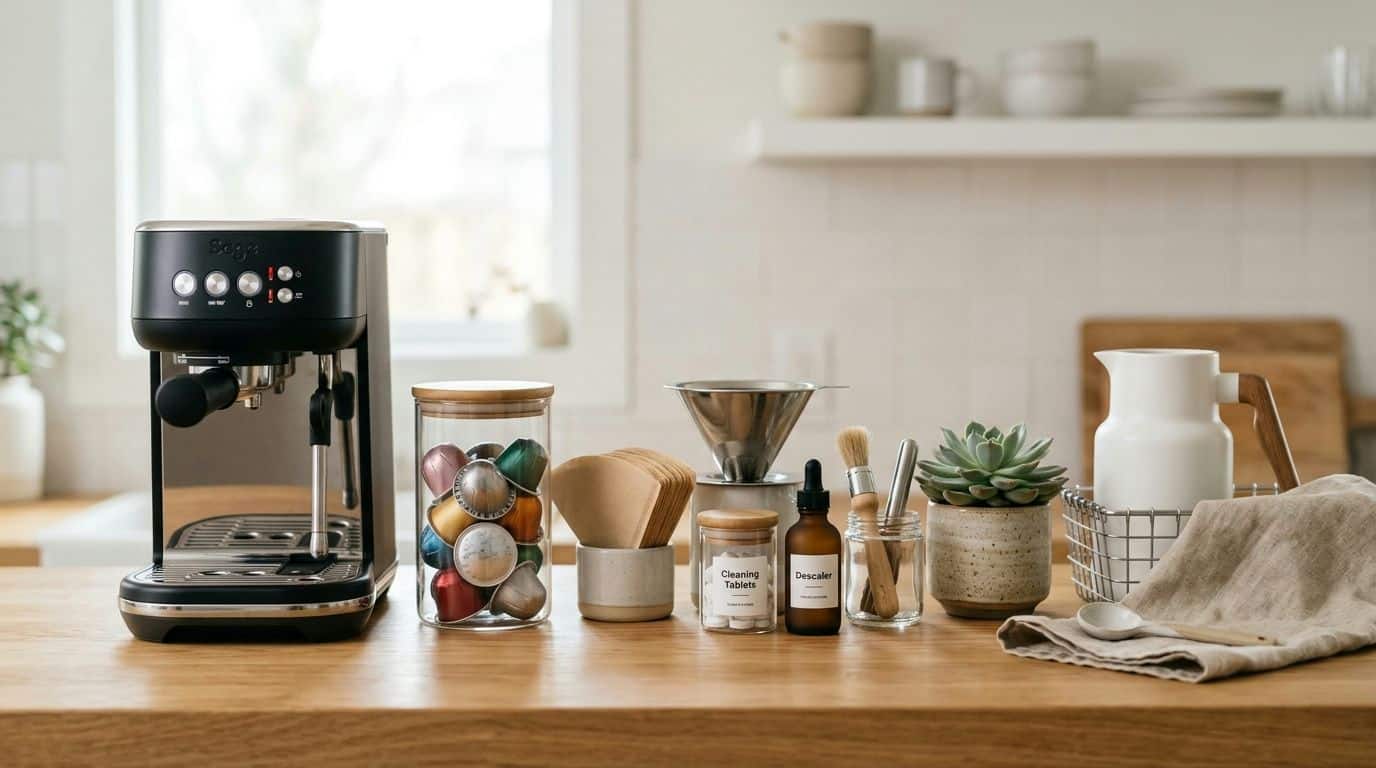
Your coffee setup probably looks fine until you use it half-awake on a weekday. Then the problems show up fast. Pods spill in the drawer, the scoop goes missing, the machine starts tasting a little flat, and cleanup feels bigger than the cup you're trying to make.
That's why the problem isn't a lack of coffee gear; it's the absence of an efficient system. The most useful coffee bar accessories for home aren't the flashy extras. They're the tools that make brewing, cleaning, and storing everything easier every single day.
From Cluttered Counter to Dream Coffee Bar
A lot of home coffee corners grow by accident. You buy a machine, then a box of pods, then a filter, then a mug rack, then a cleaning product after the brewer starts acting up. Before long, one small patch of counter holds five different jobs and does none of them well.
That's frustrating because the space is usually small to begin with. In practical home design, many dedicated coffee stations are built into just 1-2 feet of counter space, yet that same footprint still has to hold brewing tools, storage, and maintenance supplies, as noted in this home coffee bar planning guide. Small space isn't the main problem. Random setup is.
The good news is that you don't need a full remodel. You need to stop thinking of the coffee corner as decor and start treating it like a workflow.
A tidy coffee bar works better when each item earns its spot: brew, store, or clean.
That shift changes your buying decisions. Instead of grabbing whatever accessory looks nice, you start asking better questions. Does this reusable pod fit my machine? Where will filters live so I can grab them fast? Can I clean the brewer without dragging supplies out from three different cabinets?
If your kitchen already feels crowded, this broader guide to decluttering for urban residents can help you rethink what stays on the counter and what should move elsewhere.
A dream coffee bar at home usually isn't bigger. It's clearer. You know where the coffee goes, where the used parts land, and where the cleaning supplies live. That's what makes the morning feel easy instead of annoying.
The Three Pillars of a Perfect Coffee Station
A functional coffee bar has three jobs. It has to help you brew well, keep the machine healthy, and keep the space usable. When one of those jobs gets ignored, the whole setup feels harder than it should.
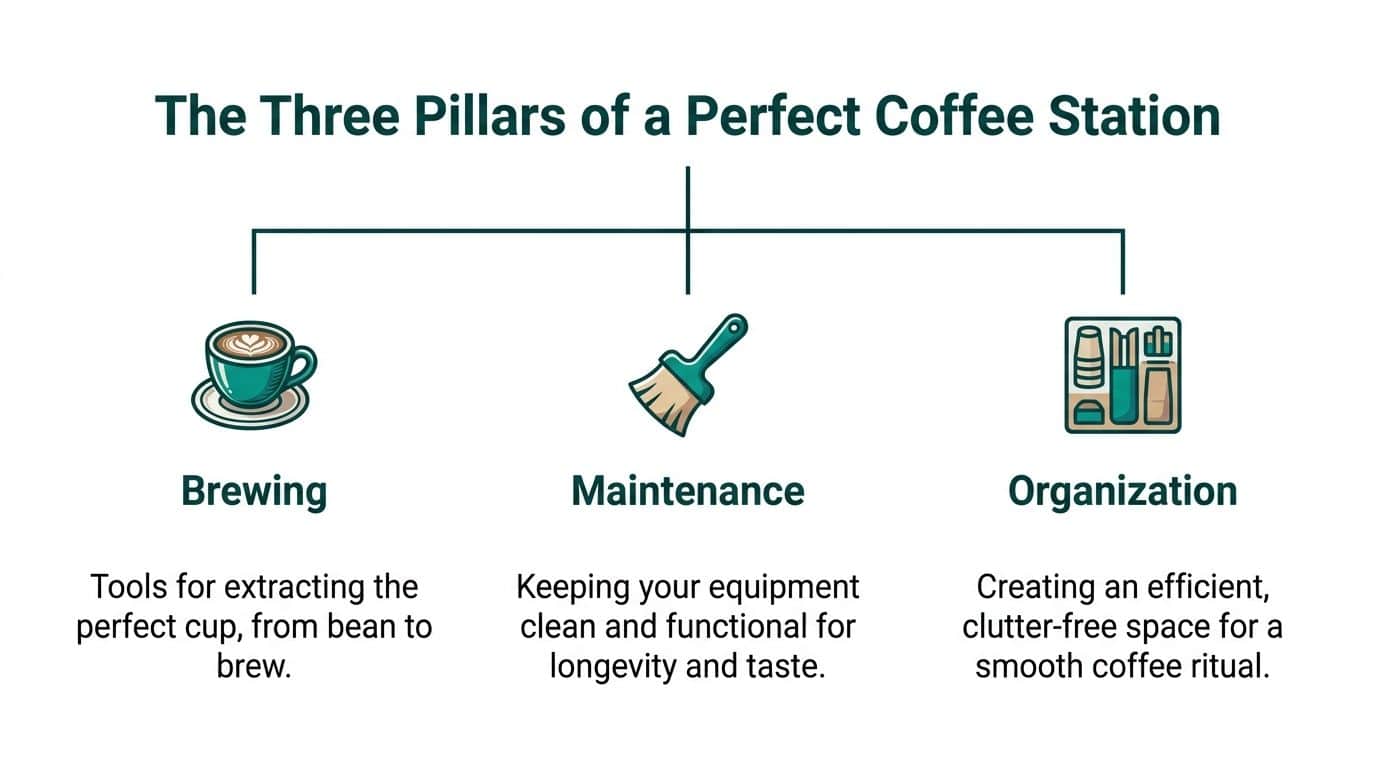
Brewing tools that affect the cup
Brewing accessories are the pieces that touch the coffee-making process directly. Think reusable pods for Keurig or Ninja systems, gold-tone carafe baskets, paper liners, and replacement filters for brewers that need them.
These tools matter because they shape your daily trade-offs:
- Reusable pods help you use your own ground coffee and cut down on throwaway waste.
- Paper liners can make reusable pod cleanup easier when you want less mess.
- Gold-tone baskets give drip users a reusable option for full-pot brewing.
- Water filters support cleaner-tasting brews from the start.
If coffee comes out weak, muddy, or full of grounds, the issue often starts here.
Maintenance items that protect the machine
A brewer can look clean on the outside and still perform poorly. Mineral buildup and coffee oils collect in places you can't see, and flavor suffers long before the machine fully fails.
That's where descaling solution, cleaning tablets, and machine-specific water filtration come in. They're not glamorous, but they do work that decorative accessories never will.
Practical rule: If an accessory improves taste, prevents buildup, or makes cleanup easier, it belongs in your coffee system more than another mug sign does.
Organization tools that remove friction
Organization is what turns a pile of accessories into a routine you can repeat easily. The most effective setups keep the daily-use items close and hide the rest.
A few examples:
- Open storage works for mugs, daily pods, and the scoop you grab every morning.
- Closed storage works for backup supplies, descaler, and extra filters.
- Vertical storage works for hooks, rails, and shelves when counter space is tight.
People often shop for coffee bar accessories for home as if these are separate categories. They're not. Brewing, maintenance, and organization support each other. A reusable pod is more useful when liners are nearby. A descaler gets used when it's stored where you can see it. A neat drawer saves time because you stop hunting for parts before caffeine.
Choosing Your Sustainable Brewing Accessories
The accessory choices that affect daily satisfaction the most usually sit right at the brewer. Here, people try to save money, reduce waste, and improve flavor all at once. It sounds simple until they buy a reusable pod that leaks, fits poorly, or leaves wet grounds everywhere.
Recent consumer and industry reporting described in this coffee bar accessory guide points to continued growth in reusable and lower-waste coffee formats, while also noting that households still care a lot about convenience and cleanup. That tension is real. Households want less waste, but they don't want a fiddly routine before work.
Reusable or disposable isn't the whole question
A better question is this: what kind of mess and maintenance are you willing to manage?
Reusable pods can make a lot of sense if you want to use your own grounds and cut down on single-use waste. But a cheap pod can create new problems. A weak seal can let water flow around the grounds instead of through them. A rough hinge or flimsy lid can make the pod annoying to open, fill, and rinse. Poor mesh design can clog or let sediment through.
Disposable options feel easier because cleanup is faster. The trade-off is obvious. You throw more away, and you stay tied to pre-filled formats.
For many homes, the practical middle ground is a reusable pod plus optional paper liners. Liners won't remove all cleanup, but they can reduce the stuck-grounds problem that makes some people give up on reusable brewing. If you want a broader look at lower-waste pod choices, this overview of eco-friendly coffee pods is a useful starting point.
What to check before you buy
Compatibility matters more than marketing language. A reusable pod that works well in one brewer may fit poorly in another. That's especially important when you're buying for popular machine families such as Keurig, Ninja, or Breville-style systems.
Use this quick filter before adding anything to your cart:
- Check the seal: The lid should close securely without feeling warped or loose.
- Check the basket shape: It should sit correctly in the brewer so water hits the coffee as intended.
- Check the mesh quality: Too open can mean grounds in the cup. Too restrictive can mean slow flow and weak extraction.
- Check cleanup reality: If it has awkward corners or a hard-to-rinse hinge, you'll feel that every morning.
- Check machine fit: “Universal” claims often need a closer look.
If you've ever thought, “Reusable pods just make bad coffee,” the real issue may have been a poor design match with your machine.
PureHQ reusable pods vs standard generic options
One option in this category is PureHQ's reusable pod lineup, which is made for specific machine families including certain Keurig and Ninja models, alongside other accessories such as paper liners and gold-tone baskets. That's more useful than a generic “fits all” approach when your main concern is fit and routine cleanup.
| Feature | PureHQ Premium Pods | Standard Generic Pods |
|---|---|---|
| Machine fit approach | Model-specific compatibility focus | Often marketed broadly as universal |
| Build intent | Designed for repeated home use | Can vary widely by seller and batch |
| Cleanup support | Can be paired with matching paper liners | Liners may be unavailable or inconsistent |
| Coffee workflow | Part of a broader accessory system | Usually sold as a standalone item |
| Buyer confidence | Easier to match with related accessories | More trial and error |
That table doesn't mean every generic pod is bad. Some work well. But the common objection about reusable pods is valid: fit and durability can be hit or miss. If you've dealt with leaks, overflow, or weak coffee, that objection deserves attention before you buy again.
A simple brewing setup that stays practical
For most households, a sensible starter setup looks like this:
- A machine-compatible reusable pod for your main brewer.
- A small pack of paper liners if you want easier cleanup on rushed mornings.
- A storage container or drawer section that keeps grounds, pods, and scoop together.
That combination supports sustainability without turning your coffee station into a maintenance project.
Protect Your Machine and Perfect Your Flavor
Coffee drinkers often blame beans when the brewer itself is the problem. If your machine starts making dull, bitter, or inconsistent coffee, internal buildup may be affecting the brew path.
Scale and coffee oils do different damage
Two kinds of residue usually matter most.
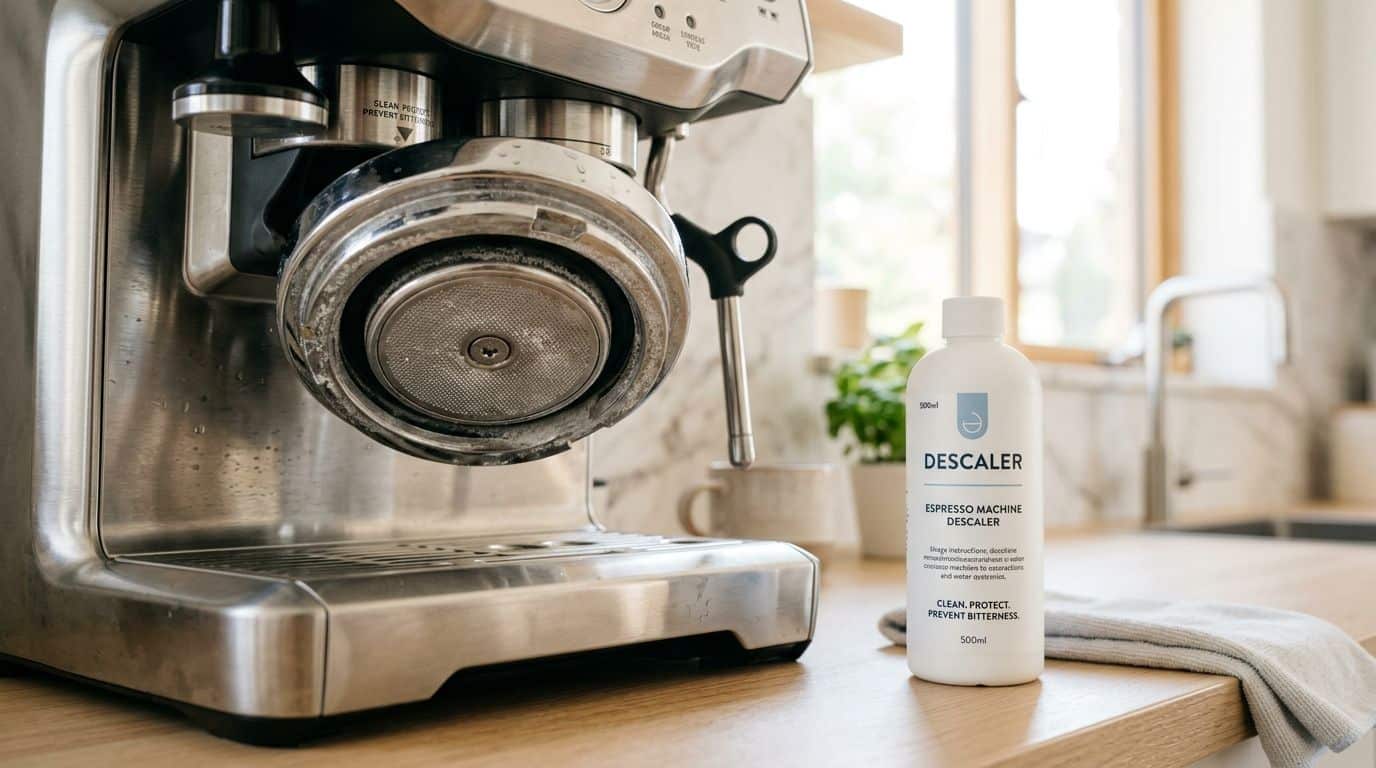
Mineral scale comes from water. It can build up inside the machine where you can't see it. That buildup can interfere with water flow and heating. Coffee oils come from brewing itself. They collect in brew chambers, baskets, and parts that touch coffee repeatedly.
That's why maintenance products aren't interchangeable:
- Descaling solution targets internal mineral deposits.
- Cleaning tablets help remove coffee oils and residue from brewing components.
- Water filters or charcoal filters help improve the water going in, which supports better flavor from the start.
A lot of people skip this because the machine still turns on. But “still works” and “brews well” aren't the same thing.
The routine that keeps things easy
You don't need a complicated maintenance ritual. You need a simple habit that matches how often the machine gets used. Heavy daily use needs more attention than occasional weekend brewing. Shared office machines usually need supplies stored nearby, or nobody remembers to clean them until there's a problem.
If you've got a stubborn warning light or want a straightforward walkthrough, this guide to choosing a descaler for a coffee machine can help you understand what descaling products do and how they fit into routine care.
Worth remembering: Descaling fixes water-related buildup. Cleaning tablets fix coffee residue. They solve different problems.
A short visual walkthrough can also make the process less intimidating:
Why flavor improves when maintenance improves
People usually notice maintenance benefits in the cup before they notice them in the machine. Water moves more predictably. Old residue stops hanging around in the brew path. Fresh coffee tastes more like itself instead of picking up stale or bitter notes from yesterday's oils.
A charcoal water filter helps at the front end. Descaler helps inside the machine. Cleaning tablets help where coffee touches the brewer most directly. Together, those accessories do more for cup quality than most impulse gadget purchases ever will.
Organizing Your Coffee Bar for a Smooth Workflow
A good coffee station should let you move in a short loop. Reach for coffee. Brew. Drop used parts where they belong. Wipe the area. Done. If you're crossing the kitchen to find filters or opening three cabinets to clean one pod, the setup is working against you.
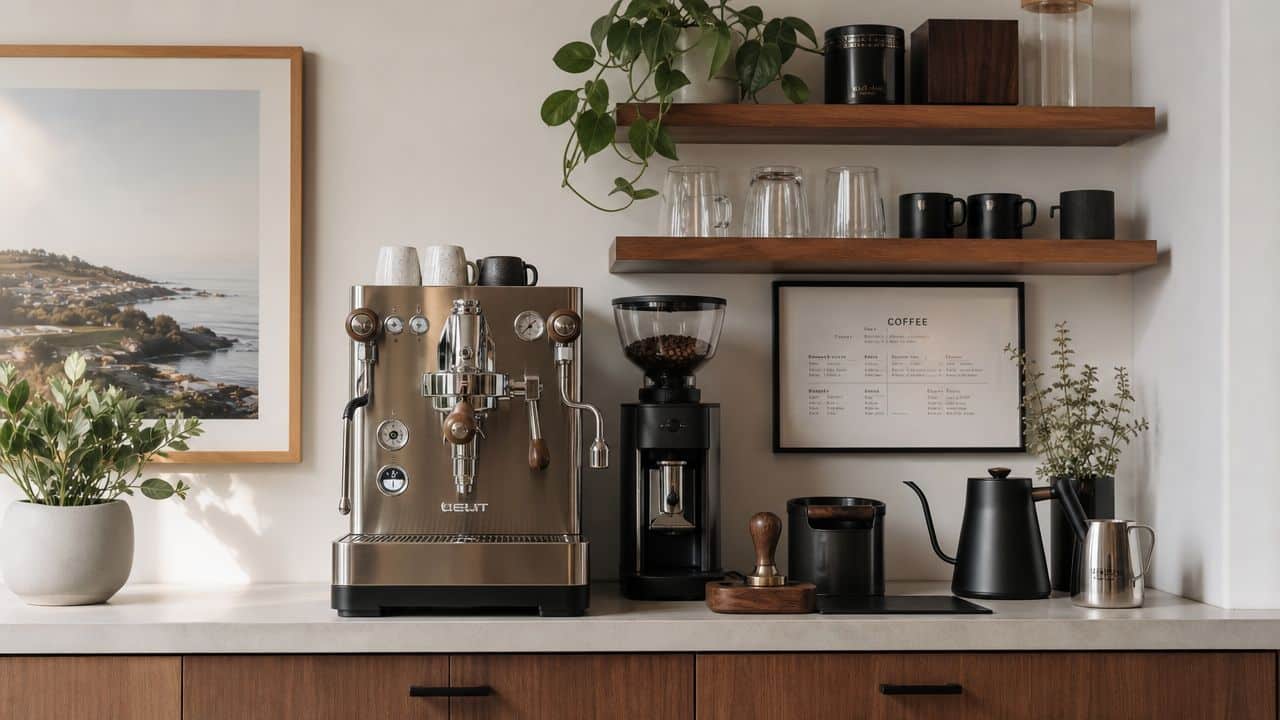
Practical coffee-bar design advice consistently points to accessibility and workflow over decoration. Keeping frequently used items within arm's reach, combining open and closed storage, and using vertical space can reduce clutter and shorten the distance between brew steps, especially in small kitchens, according to this home coffee bar workflow article.
Set up by motion, not by looks
Start with the actions you repeat every day. Most home coffee bars need zones for these tasks:
- Brew zone for the machine, pods or grounds, and the mug you use most.
- Prep zone for scoop, liners, sugar, or stirrers.
- Cleanup zone for a knock spot, rinse bowl, towel, or access to nearby sink items.
- Backup zone for extra filters, descaler, and unopened coffee.
That last zone matters because maintenance supplies often create clutter when they don't have a home. Keep them nearby, but not in the prime real estate right around the brewer.
Small-space layouts that actually work
If your counter is tight, use structure instead of spreading sideways.
A few smart options:
- Rolling cart: Good for renters or shared spaces. You can create a dedicated station without permanent changes.
- Wall hooks or rails: Useful for mugs, measuring spoons, or small baskets.
- Drawer organizers: Helpful for pods, liners, and tea or sweetener packets.
- Cabinet plus tray setup: Put the machine on a tray and store refill items directly above or below it.
If you want ideas specific to pod brewers, this roundup of Keurig coffee maker accessories can help you think through which items deserve the limited space closest to the machine.
Keep the daily-use items visible. Hide the backup stock. That single decision makes a coffee bar feel calmer almost immediately.
The simplest test for your layout
Make one cup and pay attention to what annoys you.
Did you reach too far for the mug? Did used pods or grounds have nowhere obvious to go? Did you move the sugar to get to the filters? Those little interruptions reveal which accessory belongs closer, higher, or out of sight.
A smooth coffee bar doesn't look empty. It looks intentional.
Your Smart Starter Plan for a Better Brew
If you're building from scratch, don't try to buy every accessory at once. Start with the items that fix daily friction first.
This often means a reusable brewing accessory that matches the machine, plus a maintenance product that keeps the brewer running clean. Those two purchases usually affect routine cost, cleanup, and flavor more than decorative upgrades.
Buy in this order
Here's a practical way to prioritize:
Brewing accessory first
Choose a reusable pod, gold-tone basket, or machine-compatible filter that matches how you already make coffee.Maintenance accessory second
Add descaler, cleaning tablets, or water filtration so the machine doesn't undermine the coffee you're buying.Organization accessory third
Finish with a tray, drawer organizer, or compact storage setup that keeps the station easy to use.
Bundles can help if they combine products you would use together. The value isn't just price. It's also that matched accessories remove guesswork. A pod with compatible liners or a machine with the right filter replacement is easier to live with than a collection of random pieces.
If you're refining the drinking side of the setup too, this guide to choose your ideal coffee cups can help you think through cup style, lids, and everyday use without treating mugs like an afterthought.
The right coffee bar accessories for home should save time, reduce waste, and make your kitchen feel simpler. If an accessory adds clutter, creates cleanup drama, or only looks good in photos, skip it. The best home coffee setup is the one you'll still enjoy using on a rushed Monday.
If you're ready to build a coffee bar that works like a system, shop accessories from PureHQ Inc. for reusable pods, filters, descalers, liners, and maintenance items designed for everyday home brewing.

