
Coffee Machine Care
Cleaning Tablets for Washing Machine: The 2026 Guide

Jun
You wash a load of towels, open the door, and get hit with a damp, stale smell that has no business coming from a machine meant to clean things. Then the clothes come out looking clean but smelling off. That's the moment it becomes clear the problem isn't the laundry. It's the washer itself.
Cleaning tablets for washing machine maintenance are popular for a reason. They're simple, low-mess, and built for a maintenance cycle instead of a full disassembly. But the useful truth is more nuanced than “drop in a tablet and forget it.” A tablet can help with hidden buildup inside the drum and plumbing. It can't replace every manual cleaning job, and using the wrong product can create a fresh set of problems.
That Musty Smell From Your Washing Machine Is Not Your Imagination
You pull out a load of clean shirts, hold one up, and catch a sour, damp smell that was not there before the wash. A day later the towels smell stale again. That pattern usually points to residue and moisture inside the machine, not a detergent problem and not "just how front-loaders smell."
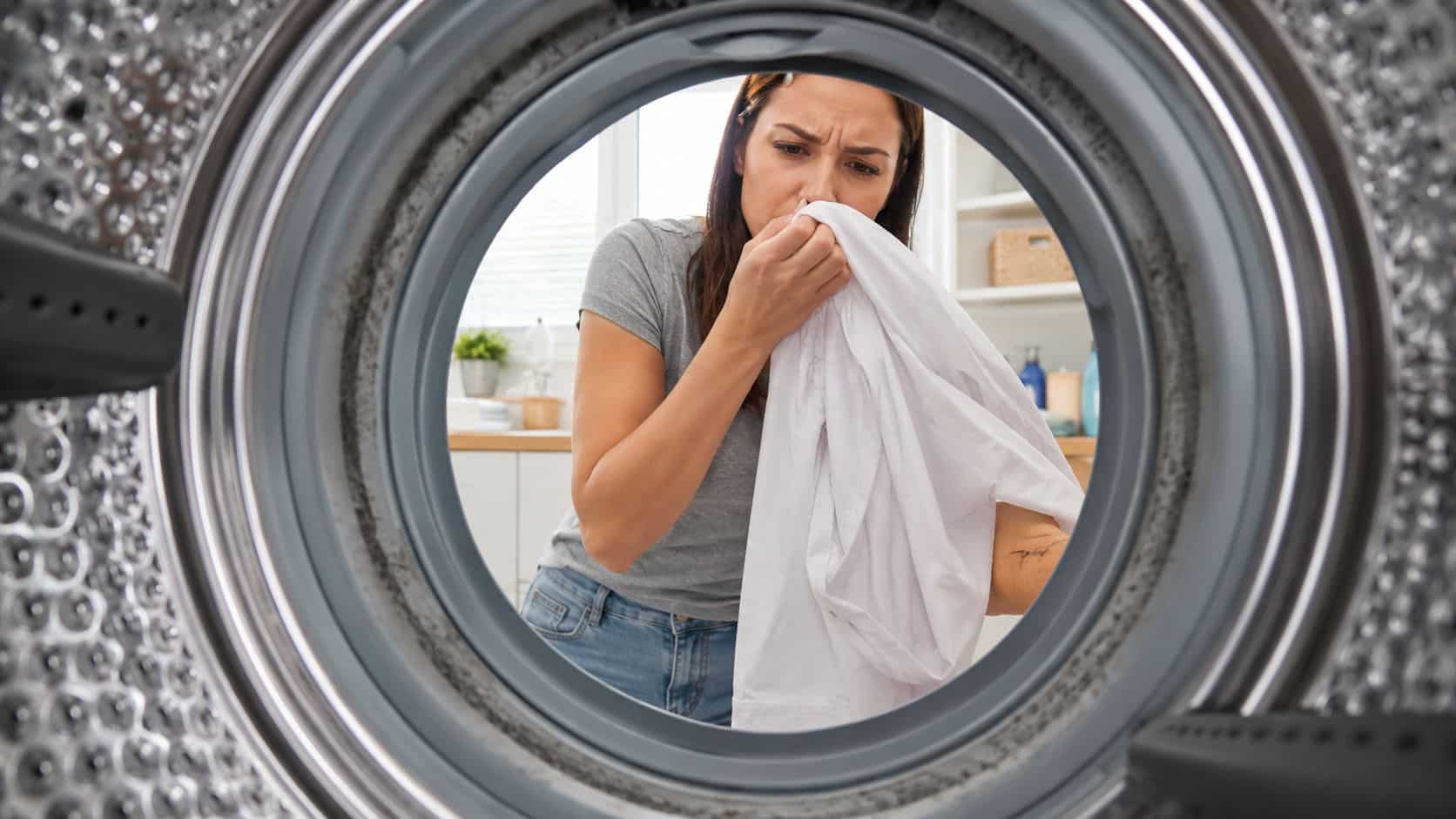
I see this a lot in homes where the washer gets heavy use, cold-water cycles are common, or fabric softener is part of the routine. The drum may look clean enough, but odor usually starts in places people do not inspect often. Door gasket folds, detergent paths, the outer tub, and the drain area can all hold a mix of soap film, body oils, lint, and standing moisture. Add hard-water minerals and that residue grabs even more grime.
What usually causes the smell
The visible drum is only part of the machine. The odor source is often deeper:
- Residue in hidden wash paths: Detergent, lint, and soil move through internal parts that never get wiped by hand.
- Moisture around seals and low spots: Front-load door gaskets stay damp for hours if the door is shut right after a cycle.
- Mineral buildup from hard water: Scale gives soap scum and organic residue rough surfaces to stick to.
- Product overuse: Too much detergent or softener leaves behind a film that bacteria and mildew feed on.
If mildew odor has spread beyond the appliance itself, this practical LA homeowners' guide to mildew can help you sort out whether the smell is staying in the washer area or migrating into nearby materials.
Why tablets became the go-to format
Washer-cleaning tablets caught on because they simplify a maintenance job that people tend to put off. You drop one into an empty machine, run the recommended cycle, and let the cleaner circulate through parts you cannot reach with a cloth. That convenience matters, especially for busy households that will not take apart a washer just to chase odor.
There is a catch. Tablets clean internal buildup well, but they do not scrub the rubber gasket, clear packed debris from a drain filter, or fix the residue left by using the wrong product. I also still see people try dishwasher tabs as a shortcut. That is a bad bet. Dishwasher detergents are made for a different kind of soil and a different rinse pattern, and they can leave behind excess suds or harsh residue in a washer.
A better plan is simple: use a washer-specific tablet on schedule, wipe the gasket, check the dispenser drawer, and leave the door open after loads so moisture can escape. If you want a similar example of why appliance-specific cleaners matter, the same principle shows up with cleaning tablets for coffee machines, where the right formula targets buildup without creating new problems.
Practical rule: If clean laundry smells dirty, the machine needs maintenance. Start there before you change detergent, rewash clothes, or add more fragrance.
That is why cleaning tablets for washing machine care make sense for routine upkeep. They are easy to use and low-mess. They just work best as one part of a realistic maintenance routine, not the whole routine.
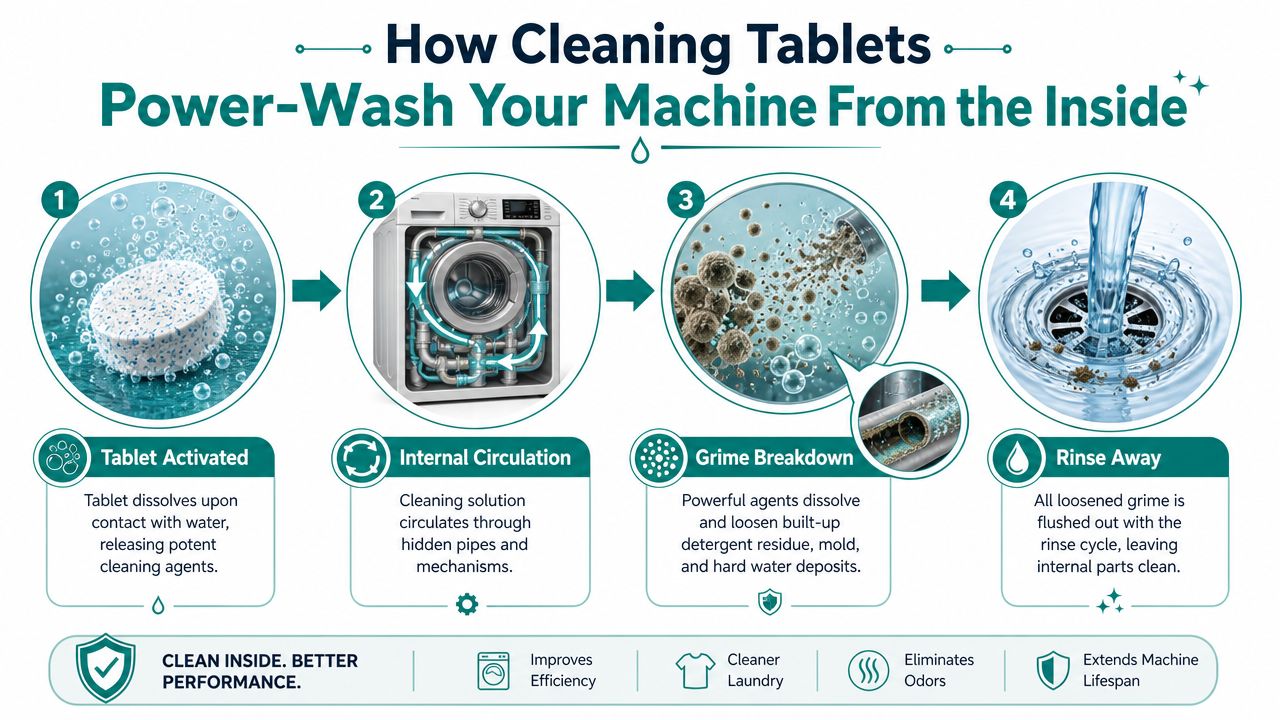
How Cleaning Tablets Power-Wash Your Machine From the Inside
A good washer tablet isn't just compressed soap. It's closer to a targeted cleaning system that activates during the cycle and moves through areas you can't reach with a rag.
What's inside the tablet
The chemistry behind washer cleaning tablets is usually built around oxygen bleach and alkali builders. A well-known tablet type discussed in a washer-cleaner compatibility thread is basically sodium percarbonate plus sodium carbonate, which are core ingredients used in oxygen-bleach cleaning systems. The same discussion also points to citric acid and enzymes as common additions that help tackle both odor-causing residue and mineral scale in one dose, as described in this washer-tablet ingredient discussion.
Here's the simple version of what those ingredients do:
- Sodium percarbonate: Releases oxygen during the wash and helps break apart organic grime and odor sources.
- Sodium carbonate: Raises alkalinity, which helps loosen greasy sludge and detergent film.
- Citric acid: Targets mineral deposits, especially in homes with hard water.
- Enzymes: Help break down leftover soils that plain rinsing won't fully remove.
Why that matters in real use
Think of the cycle as an internal rinse with extra bite. Water carries the dissolved cleaner through the drum, pipes, and hidden surfaces where residue tends to hang on.
That's also why vinegar isn't a full replacement. It may help with some odor and some scale, but it doesn't combine the same residue-breaking, deodorizing, and descaling actions in one pre-measured dose.
A washer tablet works best when you treat it as internal maintenance, not as a miracle for every visible stain or mold patch.
If you've ever cleaned a coffee machine, the logic feels familiar. A purpose-built cleaner reaches internal pathways better than a generic kitchen workaround. The same maintenance mindset shows up in this guide on cleaning tablets for coffee machines, even though the appliance is different.
Your Step-by-Step Guide to a Flawlessly Clean Washer
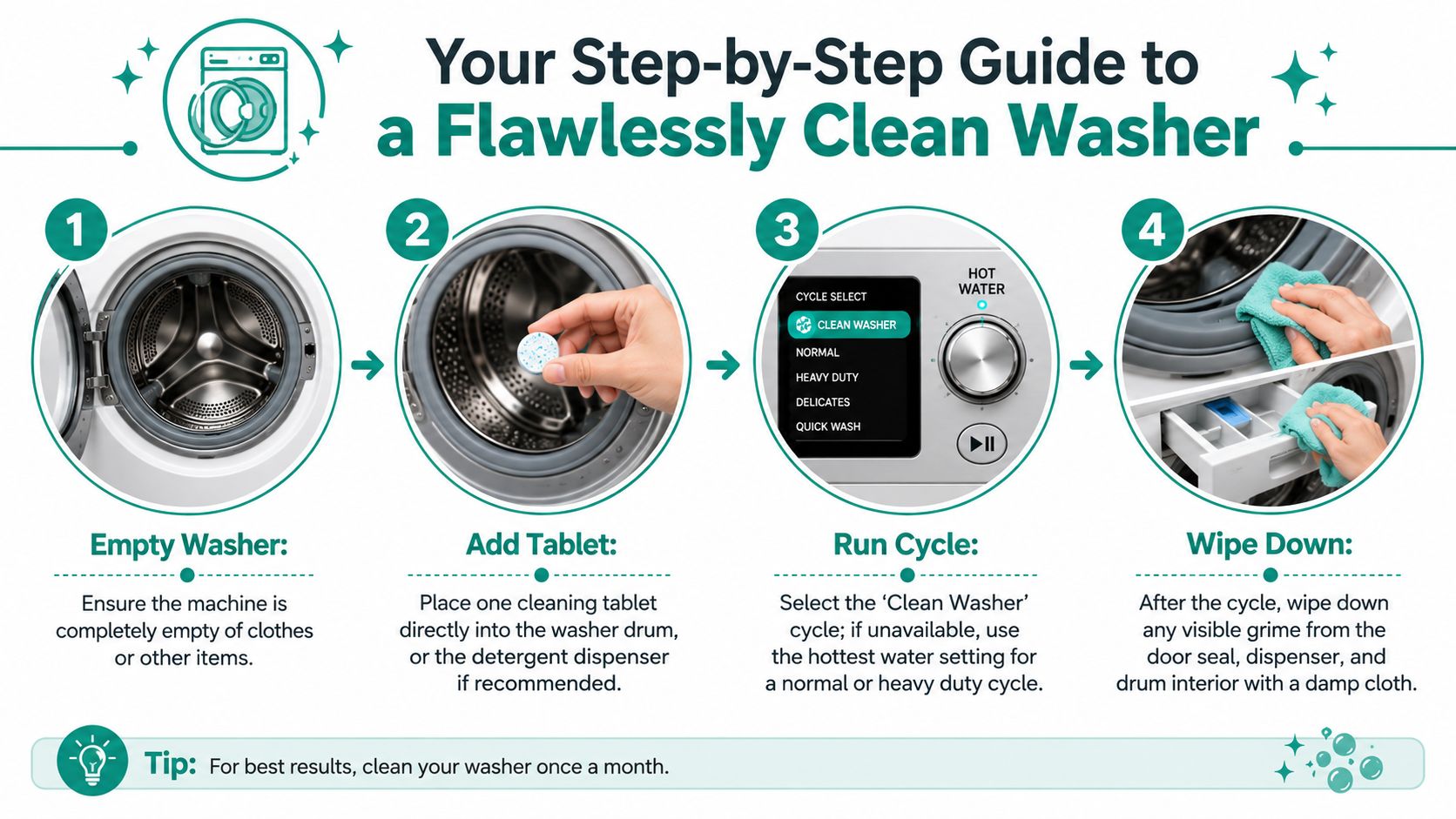
You finish a load, open the door, and get that stale, swampy smell instead of a clean-laundry smell. In a lot of homes, the fix is simple, but the method matters. A tablet can clean the inside of the machine well if you run it the right way and clean the spots the cycle cannot reach on its own.
The basic tablet-cleaning routine
Empty the washer completely
Run the cleaning cycle with no laundry inside. The cleaner needs full contact with the drum and internal parts, not a pile of towels soaking it up.Place one tablet where the label says
Many washer tablets go straight into the drum. Some brands use the detergent drawer instead. Follow the product directions instead of assuming all tablets work the same way.Choose the right cycle
Use Tub Clean or Clean Washer if your machine has it. If not, run the hottest, longest empty cycle your washer allows. Heat and contact time help the cleaner break down buildup more effectively.Wipe down the parts the cycle loosens
When the cycle ends, wipe the drum, door glass, gasket, lid rim, and detergent drawer. That quick pass removes loosened residue before it settles back onto the surfaces.
For routine upkeep, many washer-cleaner brands suggest using a tablet about once a month or after a stretch of regular loads. If your machine already smells musty, needs extra rinses, or leaves a film on the door glass, start with one cleaning cycle and inspect the usual trouble spots before deciding whether it needs another round.
Here's a visual walkthrough if you prefer to see the process in action:
Front-load vs top-load details
Front-loaders usually need more hands-on cleanup after the cycle. The gasket traps water, lint, hair, and detergent slime, so a tablet alone will not finish the job.
- For front-loaders: Pull back the rubber gasket folds and wipe deep into the creases. Clean the detergent drawer too, then leave the door and drawer slightly open so the interior can dry.
- For top-loaders: Wipe under the lid, around the rim, and along any bleach or softener dispensers where splashes dry into residue.
If you want a broader maintenance walkthrough beyond tablets alone, this guide to cleaning washing machines covers the surrounding routine well.
One smart add-on for hard water homes
Hard water changes the job. A tablet can keep routine buildup under control, but stubborn scale around the drum, dispenser, or internal water path may need a separate descaling product used on its own schedule. That is the same maintenance logic people use with coffee equipment, especially when they compare a Keurig descaling solution alternative with generic shortcuts.
One last point from service work. Do not substitute a dishwasher tablet in a washing machine. It is a common shortcut, but it is not made for washer conditions, and the residue or oversudsing risk is not worth it.
Clean the machine before the smell gets bad. Regular maintenance is easier than trying to strip out months of grime in one go.
PureHQ Tablets vs Generic and DIY Alternatives
People usually choose between three routes: a branded washer tablet, a cheaper generic tablet, or a DIY mix such as vinegar and baking soda. The right choice depends on what you want solved and how much guesswork you're willing to tolerate.
Washer Cleaning Options Compared
| Feature | PureHQ Tablets | Generic Tablets | DIY (Vinegar + Baking Soda) |
|---|---|---|---|
| Ease of use | Pre-measured and simple to run | Usually simple, but directions vary | Requires measuring and a bit more trial and error |
| Residue and odor focus | Designed for washer maintenance cycles | Can work well, but formula quality varies | Better for light freshening than stubborn internal buildup |
| Mineral scale help | Often built as an all-in-one cleaner | Varies by formula | Limited compared with purpose-built tablets |
| Compatibility confidence | Made for washing machine conditions | Check HE and model compatibility carefully | Depends on your machine and how you use it |
| Mess factor | Low | Low | Higher than tablets |
| Consistency | Predictable dose each time | Less predictable across brands | Depends on user method |
The dishwasher tablet shortcut is a bad bet
One of the most common misuse questions is whether you can substitute a dishwasher tablet. Consumer forum discussions show that people ask this often, but washing-machine service personnel explicitly warn against it. The concern is simple: dishwasher tablets are not designed for a washing machine's conditions and can lead to residue or foaming problems, according to this consumer discussion on washer vs dishwasher tablets.
That objection matters because people often assume “a cleaning tablet is a cleaning tablet.” It isn't.
- Wrong foam profile: Washers, especially HE models, don't tolerate the wrong detergent behavior well.
- Wrong residue pattern: A product made for dishwashers may not rinse cleanly in a washer cycle.
- Wrong expectation: Saving a few dollars doesn't help if you create a smell, sudsing, or cleanup problem.
For the same reason, I don't recommend judging appliance cleaners by kitchen hacks alone. A purpose-built product is usually the safer call when the cleaner has to move through seals, pumps, and internal water paths. That logic also shows up in other maintenance categories, such as this look at a descaling solution alternative for brewers.
What Cleaning Tablets Do and Do Not Clean
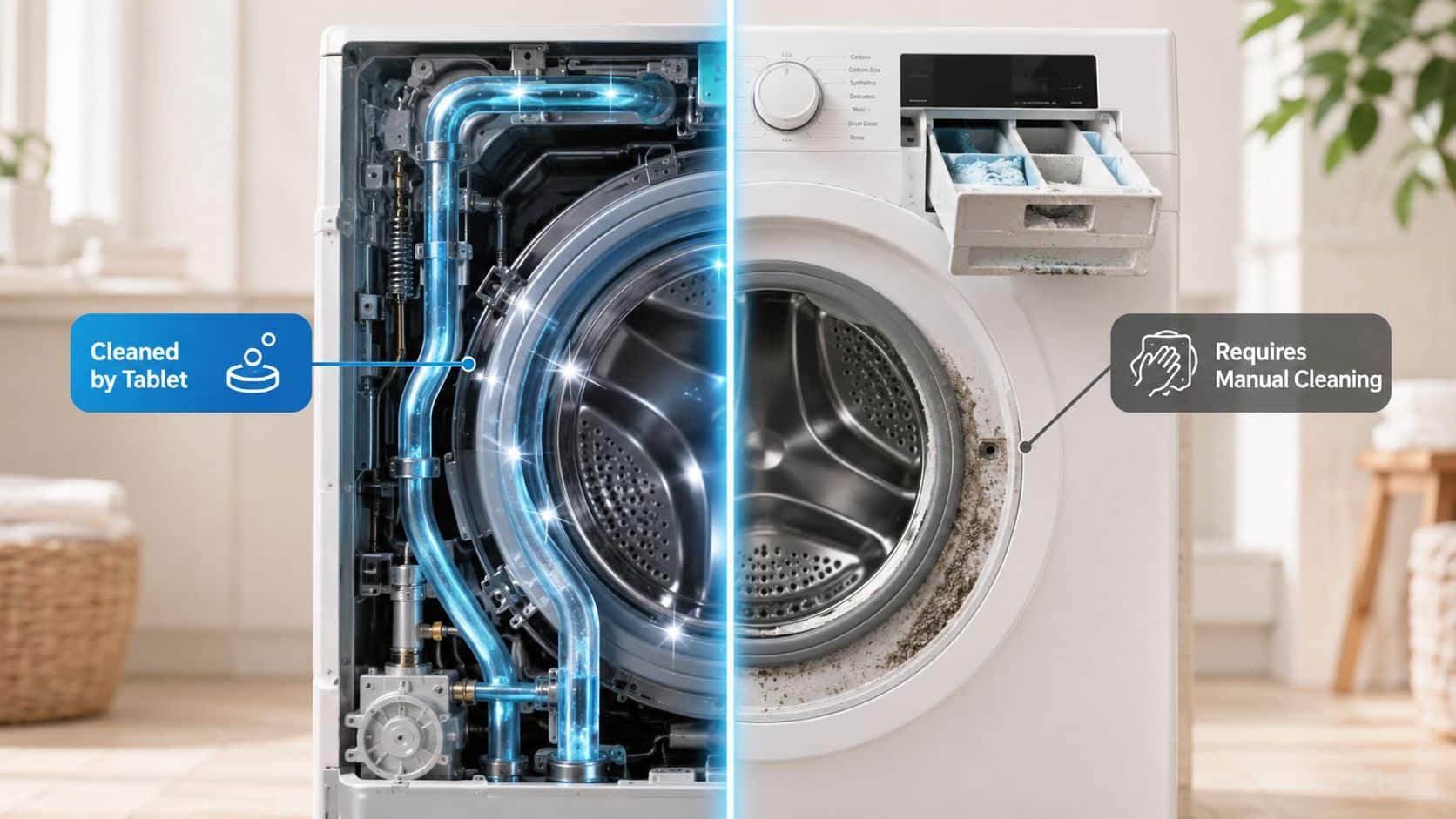
A common source of frustration arises: People run a tablet cycle, see some improvement, and assume the product failed because the machine still has grime in obvious places. In many cases, the tablet did its job. It just didn't do every job.
What tablets clean well
A tablet cycle is strongest where water can circulate freely:
- Inside the drum
- Around the outer tub
- Through internal lines and wash pathways
- On residue you can't easily reach by hand
That's the key value of cleaning tablets for washing machine care. They reach hidden internal surfaces without requiring disassembly.
What still needs your hands
Independent cleaning guidance makes an important point that many product pages gloss over. Areas like the gasket, detergent drawer, and drain filter still need manual cleaning to prevent mold and mildew. In other words, tablet-only care is incomplete, as shown in this washer cleaning guidance video.
Here's the practical checklist:
- Rubber door gasket: Pull back the folds and wipe out moisture, slime, lint, or black spotting.
- Detergent drawer: Remove it if your machine allows that, then rinse and scrub away caked soap.
- Drain or pump filter: Check the manual first, then clear lint, coins, hair, and debris.
If a part doesn't get strong water flow during the clean cycle, don't assume the tablet handled it.
That's why the best washer routine combines both methods. Use the tablet for hidden internal cleanup. Use a cloth and a quick manual check for the places that stay damp, trap debris, or never get fully flushed.
Your Simple Routine for a Permanently Fresh Washer
The cleanest washers don't usually belong to people doing heroic deep-clean sessions. They belong to people following a short routine that keeps buildup from getting established.
A routine that actually works
Use this pattern:
- Monthly internal clean: Run a washer-cleaning tablet cycle on an empty machine.
- Weekly moisture control: Wipe the gasket or lid area and leave the door ajar after laundry.
- Occasional manual check: Pull out the dispenser and inspect the filter before they get nasty.
This approach works because each step targets a different problem. The tablet handles hidden residue. Airflow reduces lingering moisture. Manual checks catch the areas no tablet can fully finish.
Why product quality still matters
Modern washing machine cleaning tablets are commonly positioned as biodegradable, phosphate-free, and septic-safe formulations, and the U.S. EPA's Safer Choice program highlights cleaner formulations that aim to balance effectiveness with environmental considerations.
If you already maintain other home appliances on a schedule, you know the pattern. Consistency beats rescue cleaning. The same idea shows up in this coffee machine maintenance checklist. Small maintenance habits prevent big annoyance later.
A washer doesn't need constant attention. It needs regular attention. If your machine smells musty, leaves laundry stale, or has visible residue around the door and drawer, start with a tablet cycle and pair it with a manual wipe where it counts.
PureHQ Inc. makes practical maintenance products for everyday appliances, including cleaning and descaling supplies designed to simplify routine care. If you're ready to stop the musty-washer cycle and make monthly maintenance easier, shop the washer-cleaning options from PureHQ Inc..

