
Coffee Machine Care
Refillable Coffee Pods for Tassimo: Your 2026 Guide
Jun
You bought a Tassimo because it was easy. Drop in a T DISC, press a button, get coffee without thinking about dose, grind, or cleanup. Then the downside starts to grate. You keep buying machine-specific pods, you keep throwing them away, and you realize convenience has locked you into a very narrow system.
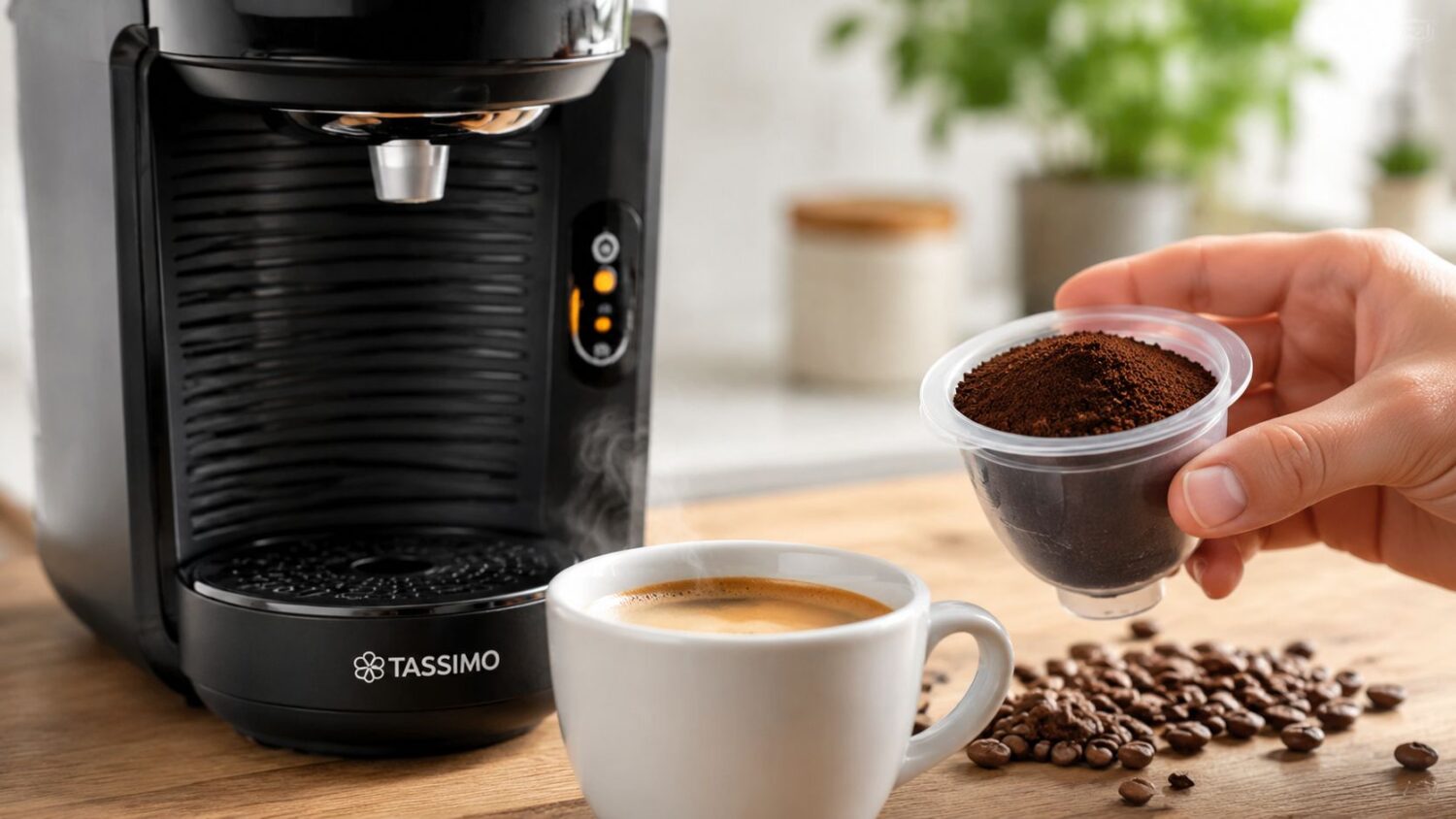
That's why so many people start looking for refillable coffee pods for Tassimo. The idea is obvious. Use your own coffee, cut waste, and stop being tied to the official disc lineup. But Tassimo isn't like a basic pod brewer, and that's where a lot of buyers get frustrated. With this machine, fit is only half the battle. A key issue is whether the reusable pod works properly with the barcode-driven brew logic that Tassimo uses to decide how much water to dispense and how long to brew.
The Tassimo Pod Problem You Know Too Well
If you've owned a Tassimo for a while, you probably already know the pattern. The machine itself is simple. The ecosystem isn't. You don't just need a pod that physically fits. You need one that works inside a proprietary brewing system that was designed around branded T DISCs.
That's why refillables look so appealing. The environmental case is strong. According to this reusable Tassimo pod guide, one reusable pod can replace hundreds or even thousands of single-use pods over its lifetime. For a lot of households, that's the whole reason to bother.
The waste issue also feels more personal once you see the pile of used pods add up in your kitchen bin. If you're already trying to cut packaging and plastics across the home, these actionable strategies for UK homes are worth a look because they put coffee waste in the wider context of everyday habits.
Why the search for an alternative gets frustrating
The problem is that many shoppers assume refillable means simple. On other systems, that can be true. On Tassimo, it often isn't.
You'll see product listings that promise compatibility, easy use, and savings. Then you read reviews and find the same complaints repeating:
- Weak coffee: The brew runs, but the cup tastes thin.
- Leaks or bad sealing: The pod closes, but not tightly enough.
- Inconsistent results: One cup is decent, the next is watery.
- Machine errors: The pod fits, but the machine doesn't behave normally.
The annoying part isn't that refillable pods exist. It's that many buyers don't learn about the barcode issue until after they've already ordered one.
If you've also wondered whether pod systems are ever as recyclable as brands imply, this breakdown on the truth about K-Cup recycling is a useful reality check. It's not about Tassimo specifically, but it highlights the same reason reusable options keep attracting interest in the first place.
How Refillable Pods Work With the Tassimo Barcode System
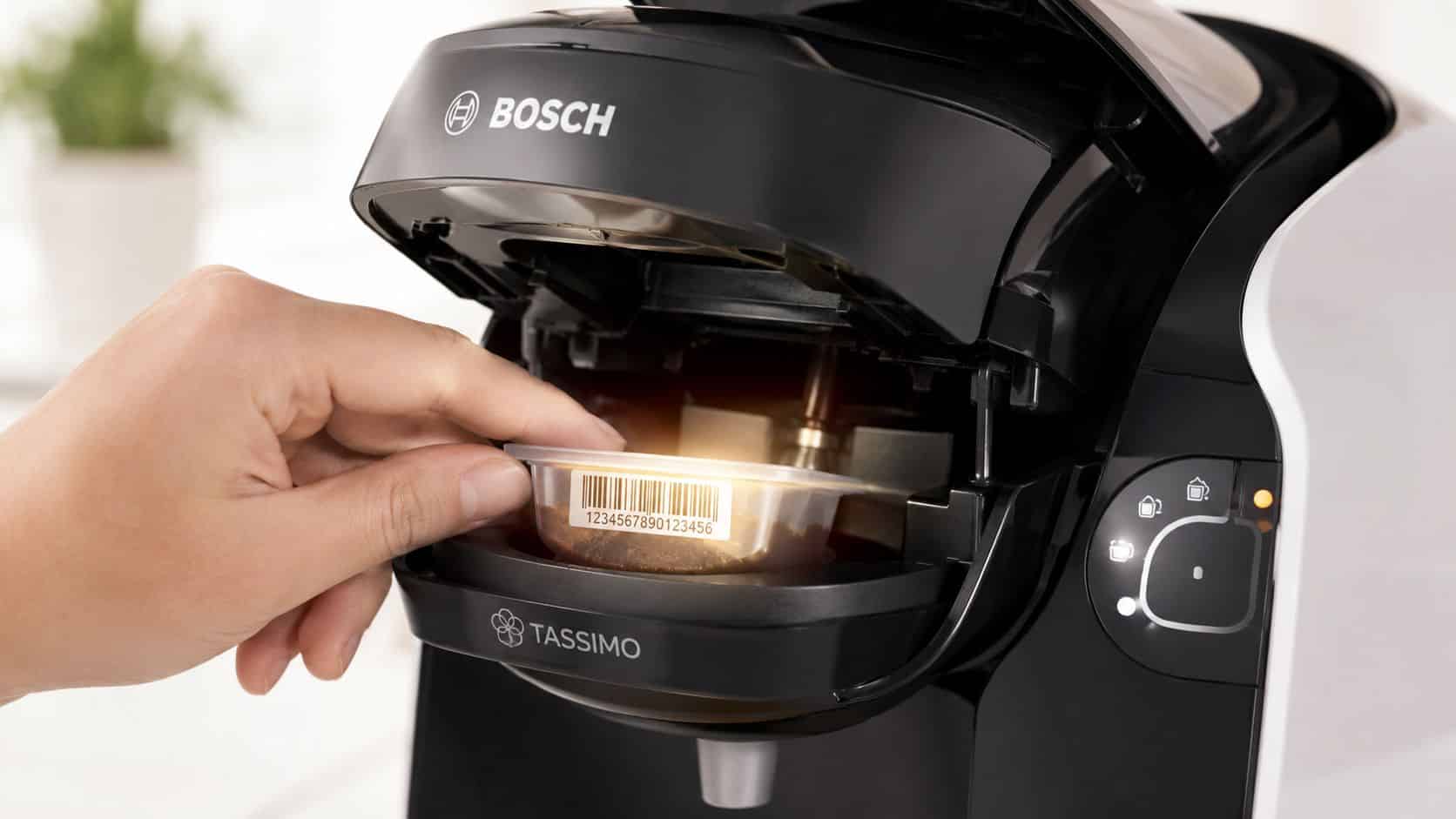
Tassimo is different from many single-serve brewers because it doesn't just puncture a pod and push through a fixed amount of water. According to official TASSIMO support and maintenance guidance, the machine reads the barcode on every T DISC before dispensing to control water dosage and brew time.
Think of that barcode as a recipe card. It tells the machine what drink it's looking at and how to brew it.
What the barcode actually changes
Brew quality in Tassimo isn't only about the coffee inside the pod; the machine's programmed behavior shapes the cup too. If a refillable pod doesn't preserve that barcode interaction correctly, the machine can brew the wrong volume, run the wrong cycle, or fail to recognize the pod as expected.
That's the part many generic listings gloss over. They focus on fit, not function.
A lot of newer reusable-pod buyers understand this instantly once they compare it with other systems. If you've used Keurig-style refillables before, this article on a refillable K-Cup for Keurig 2.0 shows the contrast well. Keurig compatibility has its own quirks, but Tassimo's barcode dependency adds another layer.
How refillable pods try to solve it
Most refillable Tassimo designs do one of two things:
- They preserve or reproduce barcode behavior so the machine reads the pod and starts a programmed cycle.
- They rely on a fixed-use approach that works acceptably for certain drink sizes but may not match the intended behavior of official discs across machines.
That's why “compatible” is too vague on its own. A pod can be physically compatible and still give mediocre coffee.
Practical rule: If a refillable pod listing doesn't clearly explain how it handles Tassimo barcode operation, assume you're taking a gamble on consistency.
The best way to think about refillable coffee pods for Tassimo is this. They are not simple drop-in replacements for every official drink. They are aftermarket tools that ask you to accept some setup, some experimentation, and some compromise in exchange for more control.
Official T-Discs vs Reusable Pods A Head-to-Head Comparison
A refillable pod isn't automatically “better.” It's better only if your priorities are lower waste, more coffee choice, and a willingness to dial things in. If your top priority is pressing a button and getting the same result every time, official discs still have the advantage.
The cost side often serves as the initial point of interest. Third-party reusable Tassimo-compatible capsules commonly sell for about $12.99 to $45.00, with examples including 60 mL and 180 mL options, according to these reusable pod listings. That gives you a real upfront baseline, but it doesn't answer the full question because savings depend on how often you use the pod, how much coffee you waste while dialing it in, and whether the pod holds up well over time.
Tassimo T-Disc vs. Refillable Pod
| Feature | Official Tassimo T-Discs | Refillable Tassimo Pods |
|---|---|---|
| Brew setup | Designed for the machine's intended workflow | Requires more user input and setup |
| Consistency | Usually the easier option for repeatable cups | Depends heavily on pod design, coffee, and technique |
| Coffee choice | Limited to the branded range available for Tassimo | Lets you use your own ground coffee |
| Waste | Creates ongoing single-use pod waste | Reduces reliance on single-use pods over time |
| Upfront cost | Lower entry cost per purchase pack, but recurring | Initial pod purchase runs about $12.99 to $45.00 |
| Convenience | Fastest and least fussy | Slower because you fill, seal, empty, and clean |
| Brew control | Machine-led | User-led, but constrained by the Tassimo system |
| Risk of weak cups or leaks | Lower when using intended discs | Higher if grind, seal, or barcode handling is off |
The objection people raise first
Consumers don't object to the idea of reusable pods. They object to bad coffee.
That's a fair concern. Refillable pods often produce disappointing results when buyers treat them like an exact replacement for an official disc. They aren't. They work more like a compact brewing chamber that has to cooperate with a machine designed around barcode-controlled drinks.
What works:
- Users who enjoy testing coffees and adjusting technique
- Households trying to reduce single-use pod waste
- People willing to trade some convenience for flexibility
What usually disappoints:
- Buyers expecting factory-disc consistency on the first cup
- People who hate cleanup
- Anyone who wants a true one-button experience
If you're still comparing brewing systems more broadly, Chef Shop's 2026 coffee machine guide is useful because it helps frame where pod convenience sits relative to more traditional coffee makers.
Refillable pods make the most sense for the Tassimo owner who wants more freedom, not the one who wants less involvement.
Getting the Perfect Brew from Your Refillable Pod
Most refillable Tassimo pods have a coffee capacity of around 9 to 12 grams, which means the chamber is small and the brew is sensitive to grind size and tamping. That same product-spec guidance notes that the limited chamber can make it easier to end up with under-extraction or clogging if the fill and grind are wrong, as shown in these refillable Tassimo pod specifications.
Start with the grind, not the machine
The coffee grind is critical for most cups. If the coffee is too fine, the small chamber can choke. If it's too coarse, the water moves through too easily and the cup comes out weak.
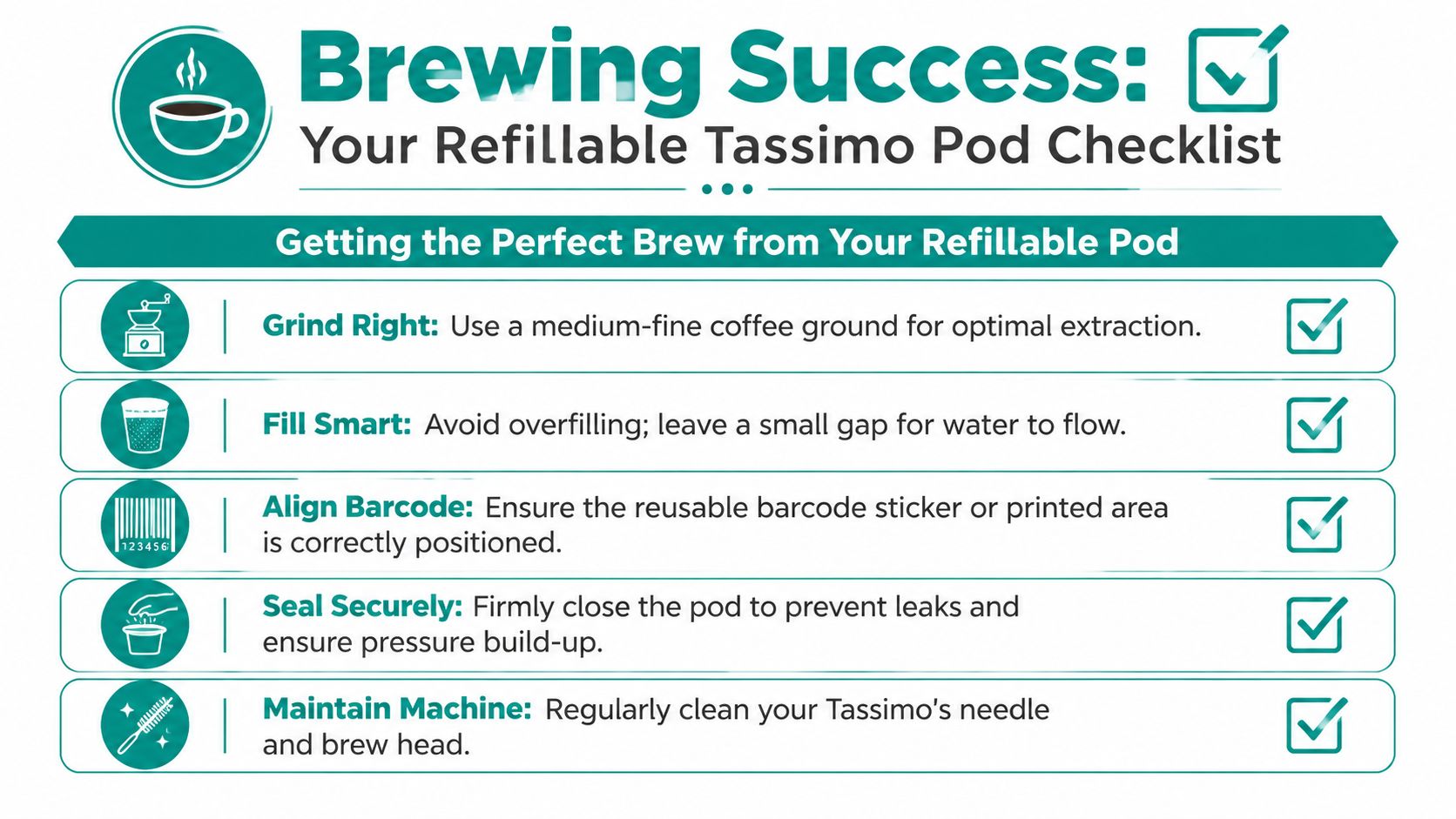
Use this checklist as your starting point:
- Grind right: Aim for a medium-fine grind rather than powdery espresso-fine grounds.
- Fill smart: Fill the pod without packing it to the lid. Leave a little space so water can move through the coffee bed.
- Align the barcode area: If your pod uses a barcode sticker or printed section, make sure it sits where the machine can read it.
- Seal securely: A poor seal often shows up as leaking or thin coffee.
- Clean the brew area: Old residue around the needle or brew head can make a decent pod look defective.
For anyone still dialing in taste, this guide to the water-to-coffee ratio helps with the broader brewing logic, even though Tassimo itself limits how much control you have.
A repeatable method that usually works better
Use the same coffee for several test brews before changing brands. Change one variable at a time.
- Fill the pod to a consistent level.
- Level the grounds gently.
- Don't tamp hard. A light press is usually safer in a small pod chamber.
- Close the pod firmly.
- Check that the barcode area is clean and correctly positioned.
A quick visual walkthrough helps if you're new to these pods:
If your first cup is weak, resist the urge to overpack the pod immediately. Grind size is often the real culprit.
Troubleshooting Common Refillable Pod Problems
When refillable coffee pods for Tassimo fail, they usually fail in predictable ways. That's good news because predictable problems are easier to fix.
Weak and watery coffee
Start with the basics. The pod may be underfilled, the grind may be too coarse, or the coffee bed may be so loose that water runs through without enough contact time.
Try tightening your process before blaming the pod. Use a slightly finer grind and a more even fill. Keep the coffee level consistent from brew to brew so you can tell what changed the result.
Leaks during brewing
Leaks usually come from one of three things. The pod isn't sealed properly, the lid area has grounds caught in it, or the pod is overfilled and can't close under pressure.
Check the seal line closely. Wipe away stray grounds before closing the pod. If the pod still leaks after that, the issue may be wear in the sealing parts or a poor-quality aftermarket design.
Machine errors or failed recognition
The strict nature of the Tassimo barcode system becomes evident. If the machine doesn't read the pod properly, the brew can stall, behave oddly, or not start as expected.
Clean the barcode area if your pod uses one. Make sure it sits in the intended orientation. If recognition remains inconsistent, the problem may not be your coffee at all. It may be the pod's barcode implementation.
Sometimes the pod isn't the problem. A dirty brew head or scale buildup in the machine can make every cup seem worse and every pod seem less reliable.
Protect Your Machine and Perfect Your Coffee
Refillable pods can be worth it. They give you more freedom over the coffee you use, they cut down on single-use waste, and they can make a proprietary system feel less restrictive. But they ask more from you. You need the right grind, a careful fill, a reliable seal, and a pod design that cooperates with Tassimo's barcode-driven brewing logic.
That's the trade-off in plain terms. Official discs are easier. Refillable pods are more flexible. The right choice depends on whether you value convenience more than control.
The maintenance part people ignore
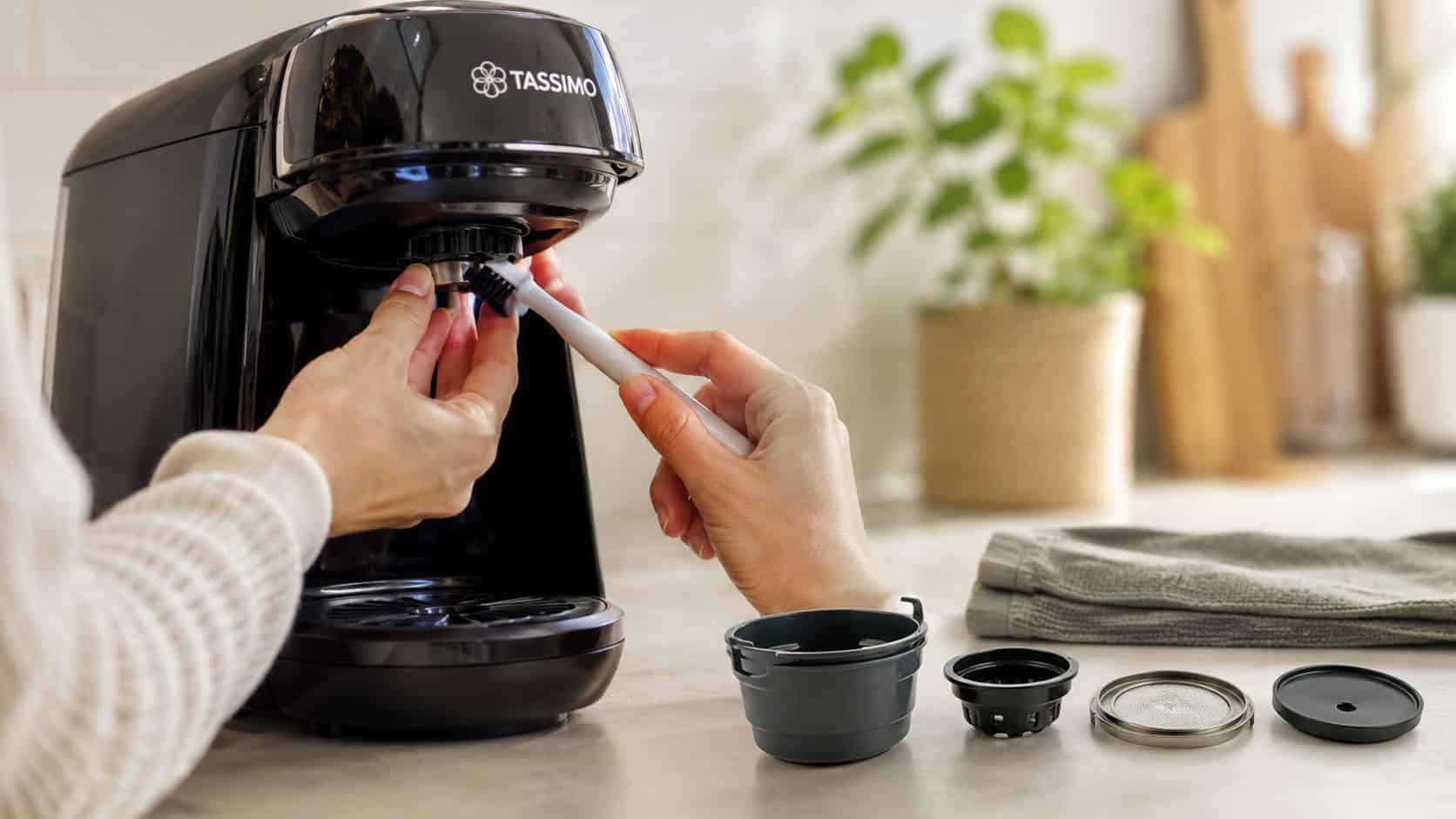
Even a well-designed refillable pod won't perform well in a neglected machine. If the brew head is dirty or mineral buildup is affecting flow, taste and consistency both suffer. That's why regular cleaning matters whether you use official discs or aftermarket refillables.
A clean setup also helps the machine stay pleasant to use day to day. If you care about how your brewing corner looks as much as how it performs, these timeless kitchen decor ideas pair nicely with the more practical side of maintaining a coffee station.
A small brush for the brew area, regular rinsing of the pod parts, and routine descaling all make a bigger difference than commonly realized. If your cups suddenly get worse, maintenance should be one of the first suspects.
Refillable coffee pods for Tassimo aren't magic. They're a practical aftermarket workaround for a locked-down system. Buy with realistic expectations, learn the barcode limitation before you order, and you'll have a much better chance of getting a cup you enjoy.
If you want to keep any coffee machine running cleaner and tasting better, shop PureHQ Inc. for practical brewing accessories, reusable pod solutions, and maintenance essentials like descalers and cleaning tablets. A clean machine and the right accessories make every cup easier to get right.

