
Coffee Machine Care
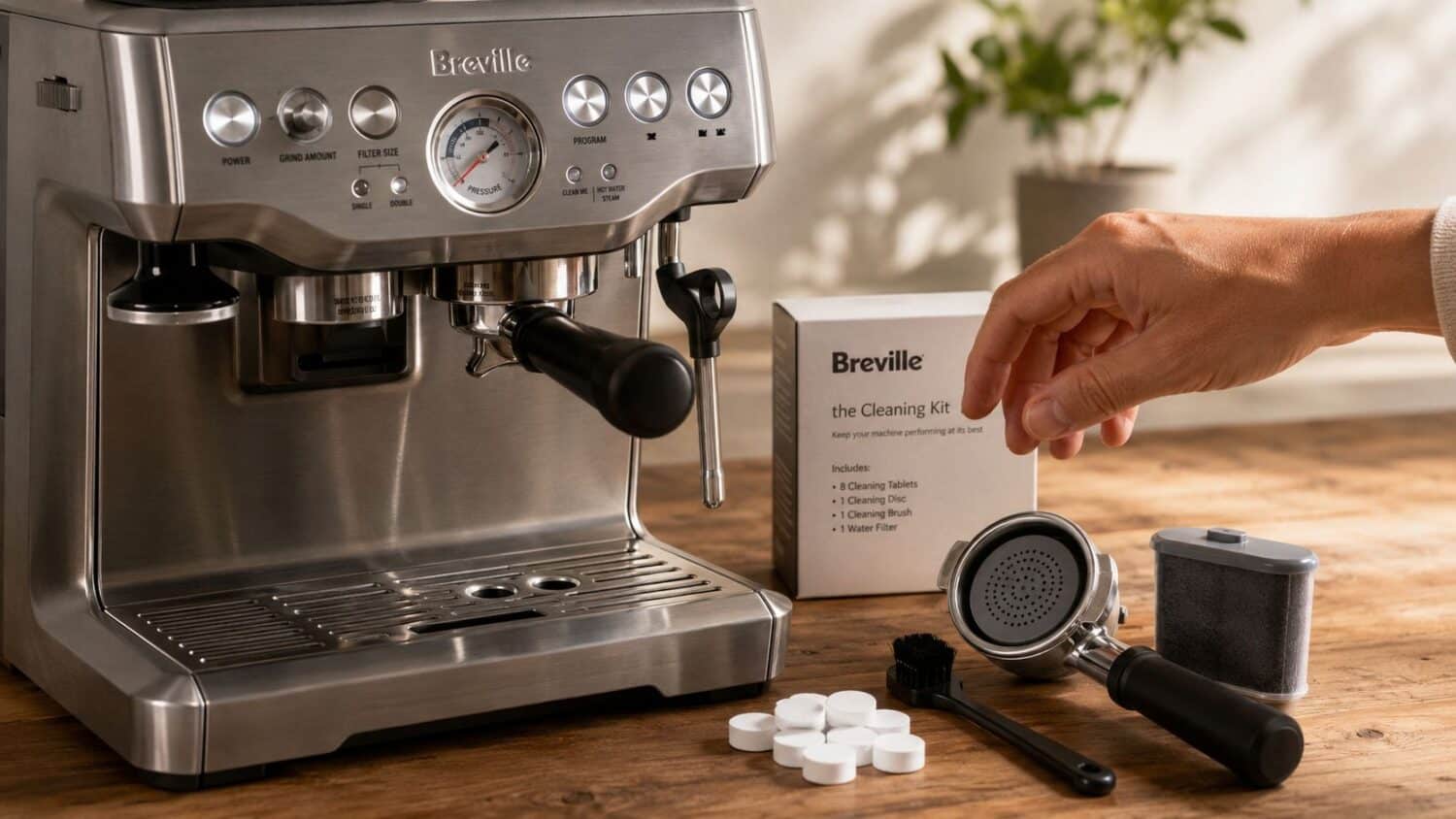
Master Your Breville Espresso Machine Cleaning Kit
Jun
You know the moment. Your grinder setting is unchanged, your beans are fresh, your puck prep is fine, and yet the shot tastes flat, bitter, or oddly hollow. Most Breville owners blame coffee first. In practice, the machine is often the actual problem.
A Breville espresso machine cleaning kit matters because espresso machines don't get dirty in one dramatic event. They drift out of spec a little at a time. Coffee oils bake onto the brew path. Grounds collect around the shower screen. Minerals settle where you can't see them. If you only react when the clean light appears, you're already behind.
The fix isn't complicated. The hard part is knowing which task solves which problem. Backflushing handles coffee oils in the brew path. Descaling targets mineral buildup inside the water system. Manual cleaning takes care of the residue that neither cycle reaches well on its own. Once you separate those jobs, maintenance stops feeling like a chore and starts feeling like normal machine care.
Why Your Morning Espresso Tastes Off
A Breville machine rarely starts making bad coffee for no reason. More often, old coffee oils and residue change the flavor long before anything looks obviously dirty. The espresso starts tasting harsher, the finish gets muddier, and milk drinks lose some of the sweetness they had when the machine was cleaner.
That's why a cleaning kit isn't just a nice extra. It's part of keeping the machine brewing the way it should.
Breville's own cleaning and maintenance guidance sets a useful benchmark. If you make 2 to 5 cups per day, you should clean most parts once a week, while the grinder and water tank usually need attention every two to three weeks. For home users, that's the clearest sign that routine cleaning is not occasional upkeep. It's normal operation.
What usually goes wrong first
The first issue is usually oil buildup, not some major machine fault. Espresso leaves behind sticky residue in the group head, basket, and portafilter. That residue turns every fresh shot into a blend of today's coffee and yesterday's leftovers.
A lot of people respond by changing beans, adjusting grind, or lowering dose. Sometimes that helps for a day. It doesn't solve the source of the problem.
Practical rule: If your technique hasn't changed but flavor suddenly feels dull or bitter, clean the brew path before you chase grind settings.
Why guessing makes maintenance harder
Most owners either over-clean the wrong parts or ignore the important ones. They rinse the basket daily, which is good, but skip the deeper cleaning that removes oils from inside the machine. Or they descale when what they need is a backflush.
A proper Breville espresso machine cleaning kit gives you a repeatable process. It turns “my coffee tastes off” into a checklist with a clear fix. That's what makes it useful over the long term. Not because the tools are exciting, but because they keep small problems from becoming expensive ones.
Unboxing Your Kit What Each Component Does
A cleaning kit can look more technical than it is. Once you know what each piece does, the whole thing becomes straightforward.
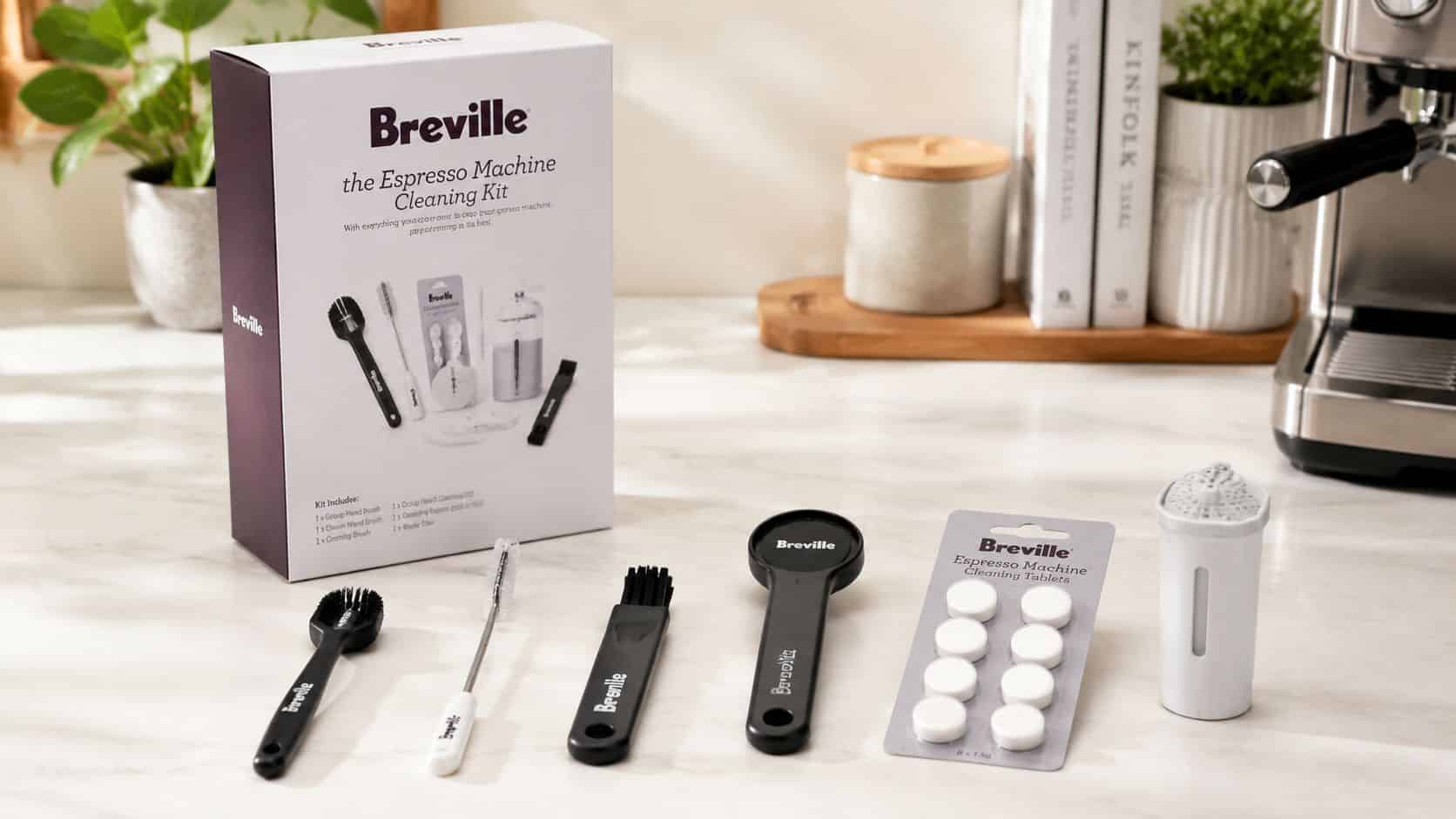
The core idea is simple. Different messes need different tools. Coffee oils, loose grounds, and mineral scale don't respond the same way, so one product won't do every job well.
The parts that matter most
- Cleaning tablet. This is for the brew path. It dissolves coffee oils and residue that plain water won't remove well.
- Cleaning disc or blind filter insert. This sits in the portafilter and blocks normal flow so the machine can push cleaning solution back through the group head during a backflush.
- Brush. This helps scrub around the group head, gasket area, and shower screen where packed grounds tend to cling.
- Water filter. This sits in the tank and helps with water quality. It doesn't replace descaling, but it supports a cleaner machine.
- Descaling solution. This is separate from the tablet. It's for mineral buildup in the internal water system, not coffee oil in the brew path.
If you want a better sense of how tablets fit into the broader maintenance routine, this guide to cleaning tablets for coffee machines is a useful companion.
The common mix-up that causes trouble
The biggest mistake is using the right product in the wrong job. A tablet is not a descaler. A descaler is not a backflush cleaner. People often treat “cleaning” as one single task, then wonder why taste issues or scale warnings keep returning.
The fastest way to make maintenance easier is to stop calling everything cleaning and start naming the task. Backflush. Descale. Brush. Filter swap.
That distinction matters because each component in the kit exists for a reason. Once you understand that, the kit stops feeling like a box of accessories and starts functioning like a maintenance system.
The Backflushing Cycle to Deep Clean Your Group Head
Backflushing is the job that most directly improves espresso flavor. It clears coffee oils from the group head and brew path, which is where stale residue does the most damage to taste.
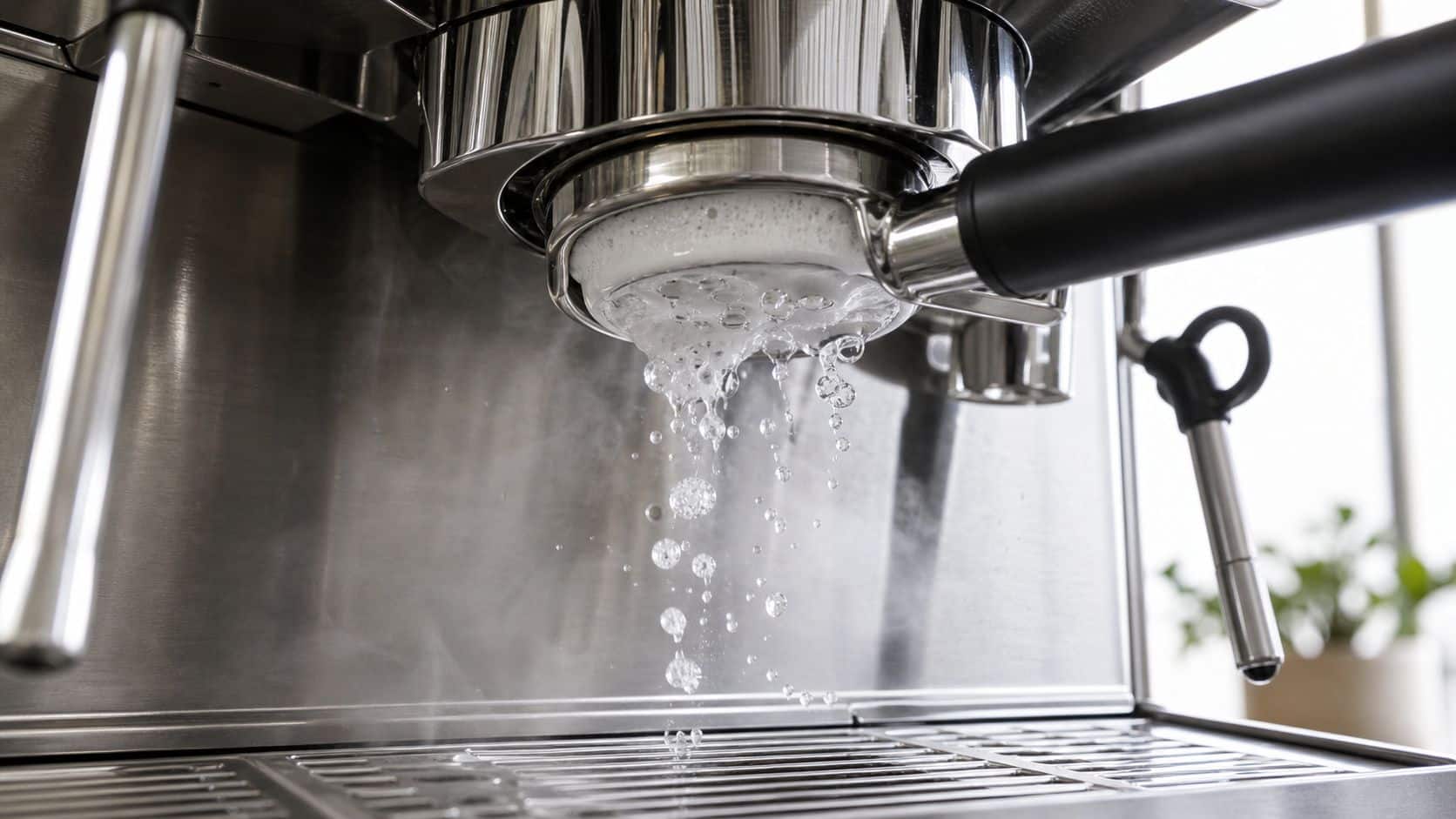
If you've never done it before, it sounds more intimidating than it is. In reality, it's a short, contained process.
How to run the cycle
Start with the machine warmed up. Insert the cleaning disc into the portafilter basket and place one cleaning tablet on top. Lock the portafilter into the group head as if you were about to pull a shot.
Then trigger the machine's cleaning cycle using the button sequence for your model. If you're unsure about the order, model-specific help from this guide on cleaning a Breville espresso machine can help you confirm the basics.
Breville's cleaning process video notes that the automatic clean cycle takes approximately 5 minutes and the machine beeps three times when it finishes. Breville also says you should check whether the tablet has fully dissolved after the first cycle and repeat the cycle if needed.
What to do after the cycle
Don't stop the moment the beeps end. Remove the portafilter, inspect the basket, and rinse away any leftover cleaner. Then flush the machine with plain water so you're not pulling your next shot through detergent residue.
A simple finish looks like this:
- Remove and rinse the portafilter
- Check for any tablet residue
- Run plain water through the group head
- Wipe the shower area if loose grounds remain
Here's a quick visual reference before you try it on your own:
What works and what doesn't
What works is letting the machine complete the full cycle, then flushing thoroughly with fresh water. What doesn't work is stopping early, skipping the rinse, or assuming one partial cycle counts as a full clean.
A second mistake is treating backflushing as the answer to every maintenance issue. It isn't. It's excellent for coffee oils. It does very little for internal scale.
If shots taste stale or bitter, backflushing is usually the first maintenance move. If heating or water flow feels off, think beyond the brew path.
Descaling and Filter Swaps for Machine Longevity
Backflushing and descaling solve different problems. Confusing them is one of the main reasons Breville owners fall into a maintenance loop where the machine never feels fully clean.
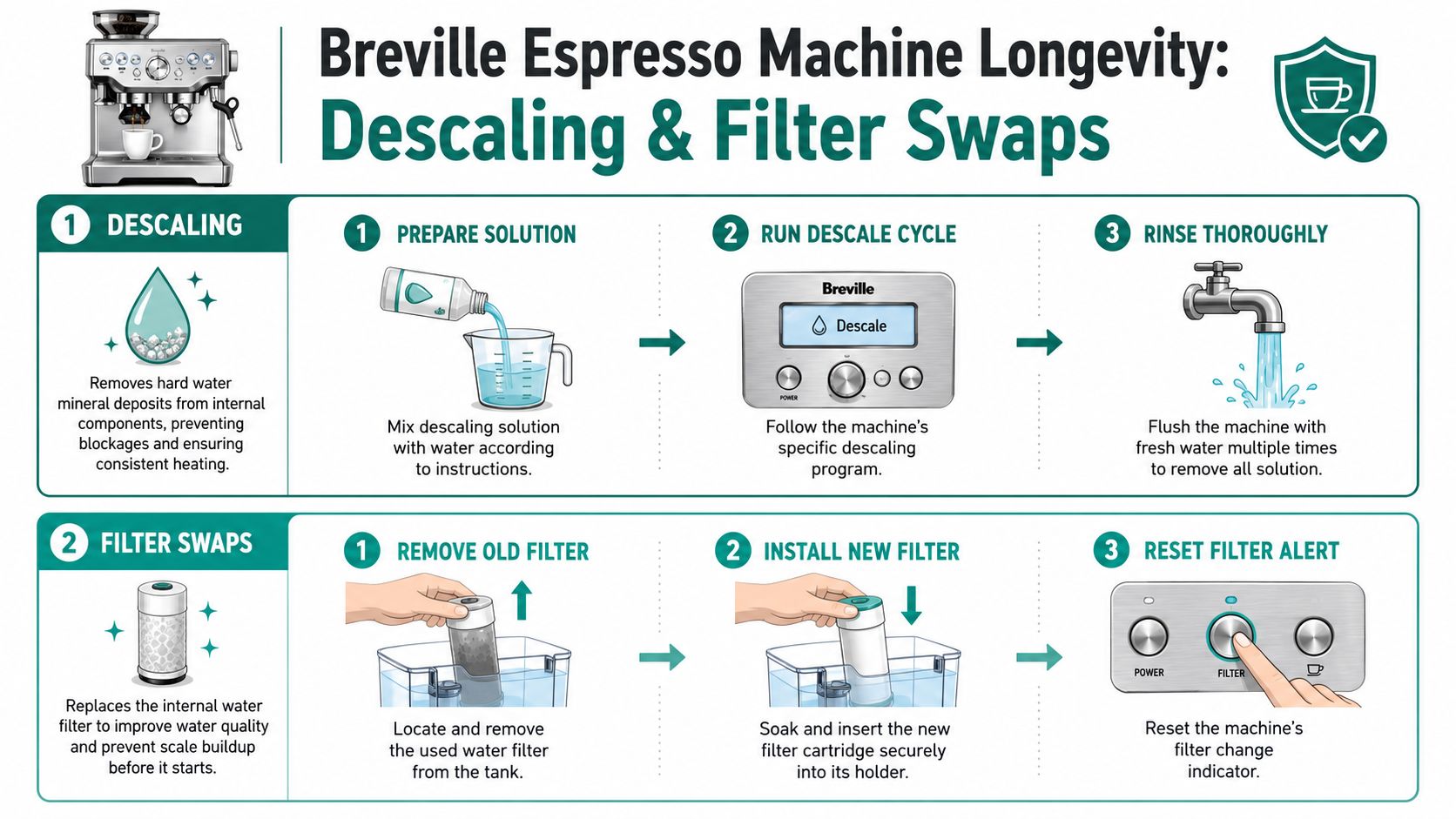
Backflush for oils, descale for minerals
A backflush cleans the brew path. It deals with coffee oils, residue, and buildup around the group head and related valves. Descaling works inside the water system. It targets mineral deposits left behind by your water.
That's why a machine can be spotless around the portafilter and still have internal scale. It's also why fresh-tasting espresso can still come from a machine that needs descaling less urgently than it needs a backflush.
Where filters fit in
Water filters help upstream. They support water quality before that water moves through the machine. They are useful, but they do not eliminate the need to descale.
A good routine uses both approaches:
- Descaling solution removes mineral buildup already inside the machine.
- Water filter replacements help reduce what enters the system next.
- Manual tank cleaning keeps the reservoir from becoming the neglected part of the workflow.
If you want a practical walkthrough of the descaling side, this article on how to descale an espresso machine is a good reference.
The sustainable way to think about it
Waiting for one dramatic “deep clean day” makes maintenance harder. A longer-lasting routine is lighter and more regular. You handle brew-path oils with backflushing, minerals with descaling, and tank-side prevention with filter swaps.
That's the value of a Breville espresso machine cleaning kit. It supports a system instead of a one-time rescue.
For homes that want fewer separate supplies on hand, some compatible kits combine brew-path tools with descaling items, and PureHQ also offers a Breville-compatible option with citric acid descaling solution, a brush, and a microfiber cloth. That kind of bundle is useful if you want one place to start, but it still helps to treat each task as separate maintenance.
Breville vs PureHQ Choosing the Right Cleaning Kit
Once you know what each maintenance task does, the next question is usually whether to buy Breville-branded supplies or a compatible kit. That's a fair concern. Espresso owners don't want leaks, poor fit, or parts that feel vague and improvised.
Breville's own cleaning supplies shop makes it clear that Breville sells maintenance products directly, while independent sellers also package tablets and filters into bundled kits. The trade-off is straightforward. Official supplies remove compatibility guesswork. Compatible kits often package more of the routine into one purchase.
The real objection is compatibility
The smart objection isn't “Is third-party always bad?” It's “Will this fit my machine properly?” That matters most with cleaning discs and water filters. A poor seal makes backflushing less effective. A sloppy filter fit turns a simple maintenance step into an annoyance.
Here's the practical comparison.
| Feature | Breville Official Kit | PureHQ Compatible Kit |
|---|---|---|
| Brand match | Direct from Breville | Designed as a compatible alternative |
| Compatibility confidence | Simplest choice if you want official supplies | Depends on buying the correct model-specific compatible parts |
| Bundled maintenance approach | Often purchased as separate maintenance items | Often easier to buy as a broader maintenance bundle |
| Risk of poor fit | Lower perceived risk because it's brand-matched | The main concern, so model fit matters more before purchase |
| Value over time | Straightforward but may require multiple separate purchases | Useful if you want tablets, filters, and related maintenance items together |
Which option makes sense
Choose Breville if you want the official route and don't mind buying within that ecosystem. Choose a compatible kit if you want a broader maintenance bundle and you've confirmed fit for your machine model.
If water quality is part of your decision, it also helps to find your ideal water filter replacement so you're not focusing only on tablets while ignoring the reservoir side of maintenance.
A compatible kit isn't automatically risky. An unverified fit is risky. Those are not the same thing.
Your Breville Cleaning Schedule and Troubleshooting
A good maintenance routine should be boring. That's a compliment. If you're guessing each time, the system is too complicated.
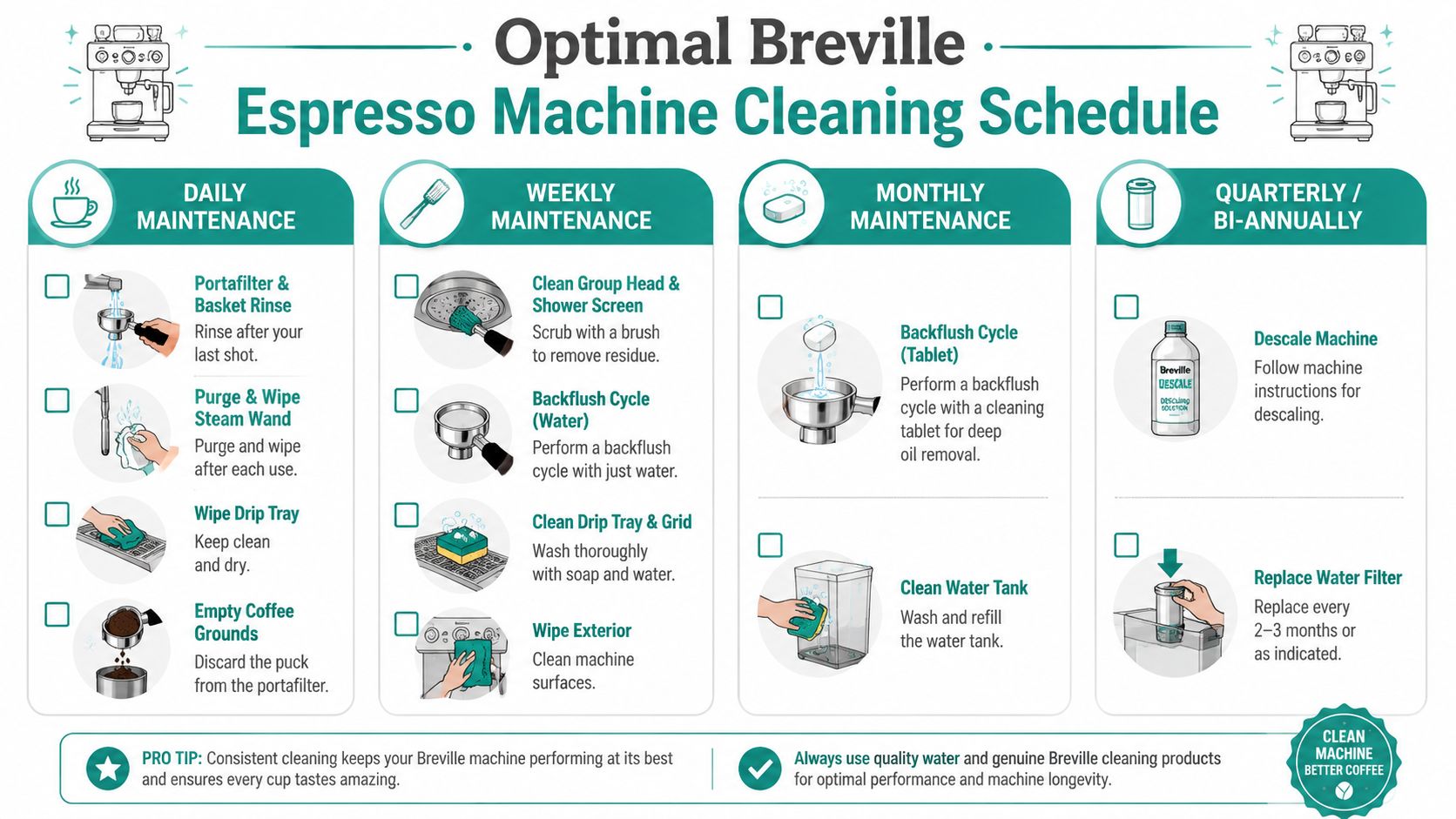
A routine that's easy to keep
Use this as a practical baseline:
Daily
- Rinse the portafilter and basket after your last drink.
- Purge and wipe the steam wand right after milk use.
- Empty loose grounds and standing water so residue doesn't sit overnight.
Weekly
- Brush the group head area to remove packed coffee debris.
- Run a backflush as part of brew-path cleaning.
- Wash removable parts that collect splash and residue.
Every few months
- Descale the machine based on your water conditions and use.
- Replace the water filter so prevention keeps pace with cleaning.
Quick fixes for common problems
If the machine still seems off after cleaning, the issue is often procedural rather than mechanical.
| Problem | What to check |
|---|---|
| Clean alert stays on | Run the cycle again if the tablet didn't fully dissolve or if the process was interrupted |
| Coffee tastes strange after cleaning | Flush more fresh water through the system before brewing again |
| Cycle won't start | Check tank seating, water level, and whether the portafilter is locked in properly |
| Machine feels clean but coffee still lacks clarity | Look at descaling and water filter replacement, not just backflushing |
The biggest maintenance mistake is treating one successful cleaning session like a permanent reset. Espresso machines reward consistency more than intensity.
If your machine needs a fresh set of maintenance supplies, shop a compatible cleaning and filter setup from PureHQ Inc. and turn the next clean into part of your normal coffee routine, not a repair project.

