
Coffee Machine Care
Keurig & Ninja: Ultimate Efficiency Improvement Guide
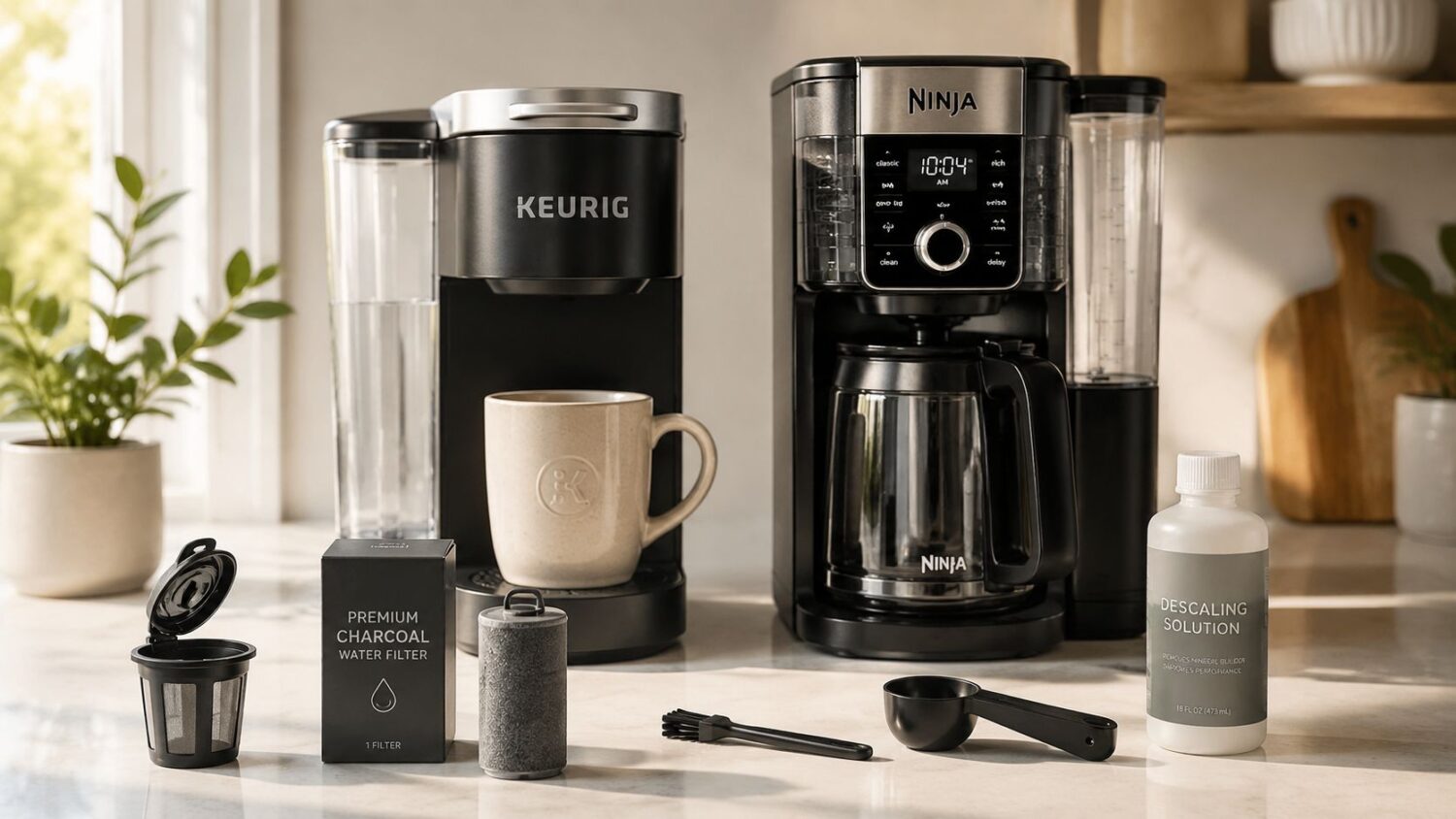
Jun
You know the moment. It's early, you hit brew, and your Keurig or Ninja answers with a weak sputter instead of a clean stream. The cup takes too long, the coffee tastes flat, and now you're wondering whether the machine is dying or you're just stuck with mediocre mornings.
That is often treated as a taste problem. It's usually an efficiency improvement problem. A coffee maker that brews slowly, leaks around a pod, or leaves grounds where they don't belong is telling you the system is out of balance. Water quality, pod fit, cleanup habits, and routine maintenance all stack up. Small mistakes don't stay small for long.
The frustrating part is that coffee owners don't get much practical guidance on how those tiny habits affect long-term performance. Research highlighted by ICF's discussion of behavior-aligned energy efficiency gaps notes that small-appliance users often lack clear guidance on how routine actions like filter changes or operating habits affect reliability and total cost of ownership. That gap is real in coffee. You feel it every time your machine acts “off” but no one tells you what to fix first.
That Morning Cup is Costing You More Than You Think
At 7 AM, nobody wants to troubleshoot a coffee maker. You want a button, a clean brew, and a cup that tastes the way it should. Instead, a lot of owners get a slow pour, a watery cup, or that odd moment when the machine sounds like it's straining.
That doesn't happen out of nowhere. In daily use, coffee machines lose efficiency in quiet ways. Water minerals build up. Coffee oils cling to pod holders and needles. Reusable pods get packed inconsistently. People keep brewing through the warning signs because the machine still “works,” just not well.
The hidden cost isn't only money
The biggest drain is friction. A machine that needs extra rinse cycles, leaves mess behind, or forces you to rebrew a cup steals time and attention every day. That's why random tips don't help much. You need a repeatable system.
Practical rule: If your brew slows down, tastes weaker, or gets messier, assume the workflow needs attention before you assume the machine is finished.
That's also why so many owners bounce between disposable pods and reusable ones. They want less waste and more control, but if the routine gets messy, they quit. If that sounds familiar, a better reusable coffee pod workflow can solve more than convenience. It can make brewing faster and more consistent.
Convenience marketing skips the maintenance reality
Manufacturers understandably sell speed and simplicity. What they don't spell out clearly is how a few tiny habits determine whether the machine keeps delivering that convenience. Leave water sitting too long, ignore scale, overfill a pod, or skip cleanup around the seal, and the machine starts compensating. You see the result as weak coffee, drips, clogs, or inconsistent volume.
A good coffee routine fixes the machine and the cup at the same time.
- Better flow: Clean water paths let the machine brew at a steadier rate.
- Better taste: Fresh water and cleaner parts reduce stale or muddy flavors.
- Less hassle: A clean pod routine cuts grounds on counters and in cups.
- More reliability: Preventive care usually beats emergency cleaning.
A coffee maker doesn't need heroic rescue sessions. It needs a few simple tasks done on time.
That's the shift that matters. Stop thinking in isolated tips. Start thinking in systems. When you do, your machine stops feeling unpredictable.
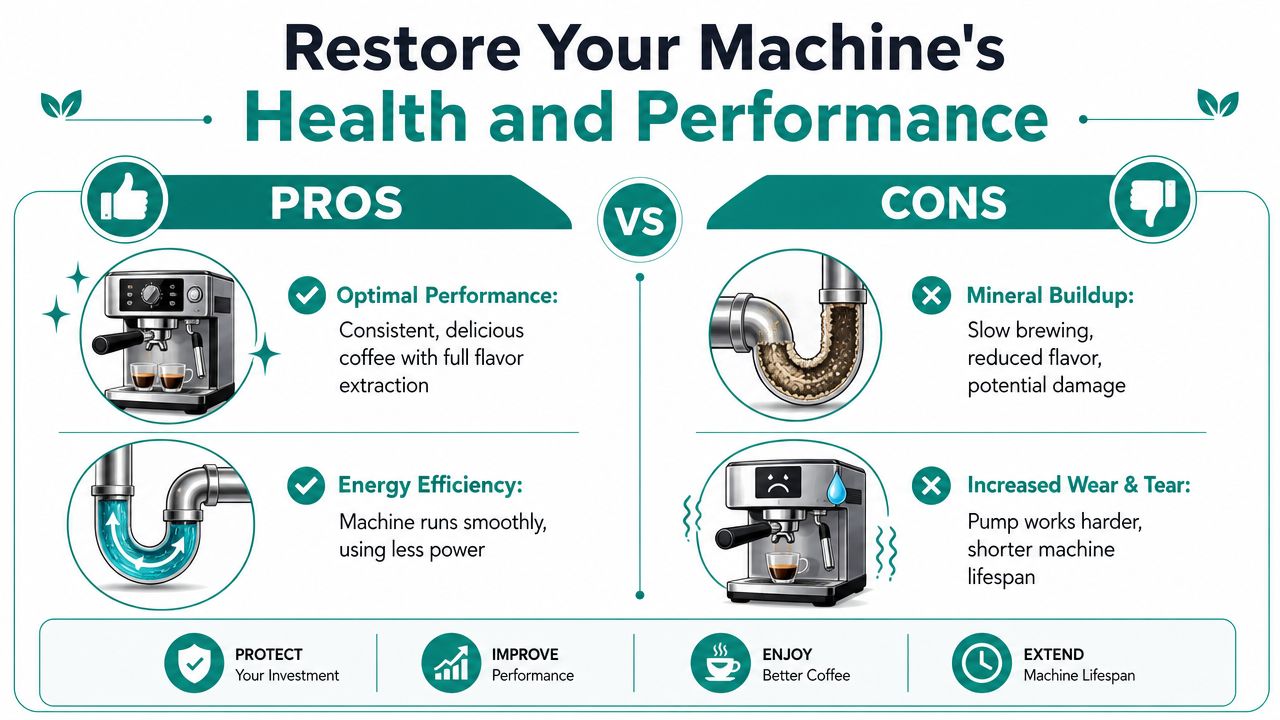
Restore Your Machine's Health and Performance
Mineral scale is the enemy most owners ignore until the machine starts acting stubborn. If you use hard water, minerals settle inside the machine over time. They narrow water paths, coat heating surfaces, and make the pump work harder than it should.
Coffee oils create a second problem. They collect on pod holders, puncture areas, lids, and brew-path surfaces. The result is slower brewing, off flavors, and messy extraction.
Start with defense
Your first job is to reduce what enters the machine in the first place. Filtered water helps because it lowers the burden on the internal components. That matters for both performance and taste.
A premium charcoal filter is usually the easiest maintenance upgrade because it asks almost nothing from you once it's in the routine. It won't replace descaling, but it can make the machine less vulnerable to the minerals that create the biggest headaches.
For a machine-specific maintenance baseline, this Keurig coffee maker maintenance guide covers the parts most owners forget to check.
Then use offense
Descaling is the direct fix for scale that has already formed. If the machine has started brewing slowly, running louder, or producing coffee that seems less hot than usual, descaling is often the first high-value move.
Here's the simple version that works:
- Empty the machine fully: Remove old water and any used pod.
- Run descaling solution as directed: Let it move through the brew path instead of only sitting in the tank.
- Pause when needed: Giving the solution contact time helps dissolve buildup.
- Flush with fresh water thoroughly: You want the machine rinsed clean before the next cup.
- Clean removable parts separately: Pod holder, drip tray, and reservoir need attention too.
If a machine suddenly “gets old,” scale is often the first suspect.
What works and what doesn't
Some habits help immediately. Others just feel productive.
| Approach | What usually happens |
|---|---|
| Regular water filtration | Fewer mineral-related problems entering the machine |
| Scheduled descaling | Restores flow and helps brewing consistency |
| Quick rinse after the last brew | Reduces stale residue and buildup |
| Only wiping the exterior | Machine looks better, internal problems continue |
| Waiting for obvious failure | Cleanup becomes harder and performance keeps slipping |
If you run a busy household or small breakroom setup, keep descaler and replacement filters on hand instead of treating them as emergency purchases. That small bit of prep is one of the easiest ways to protect uptime.
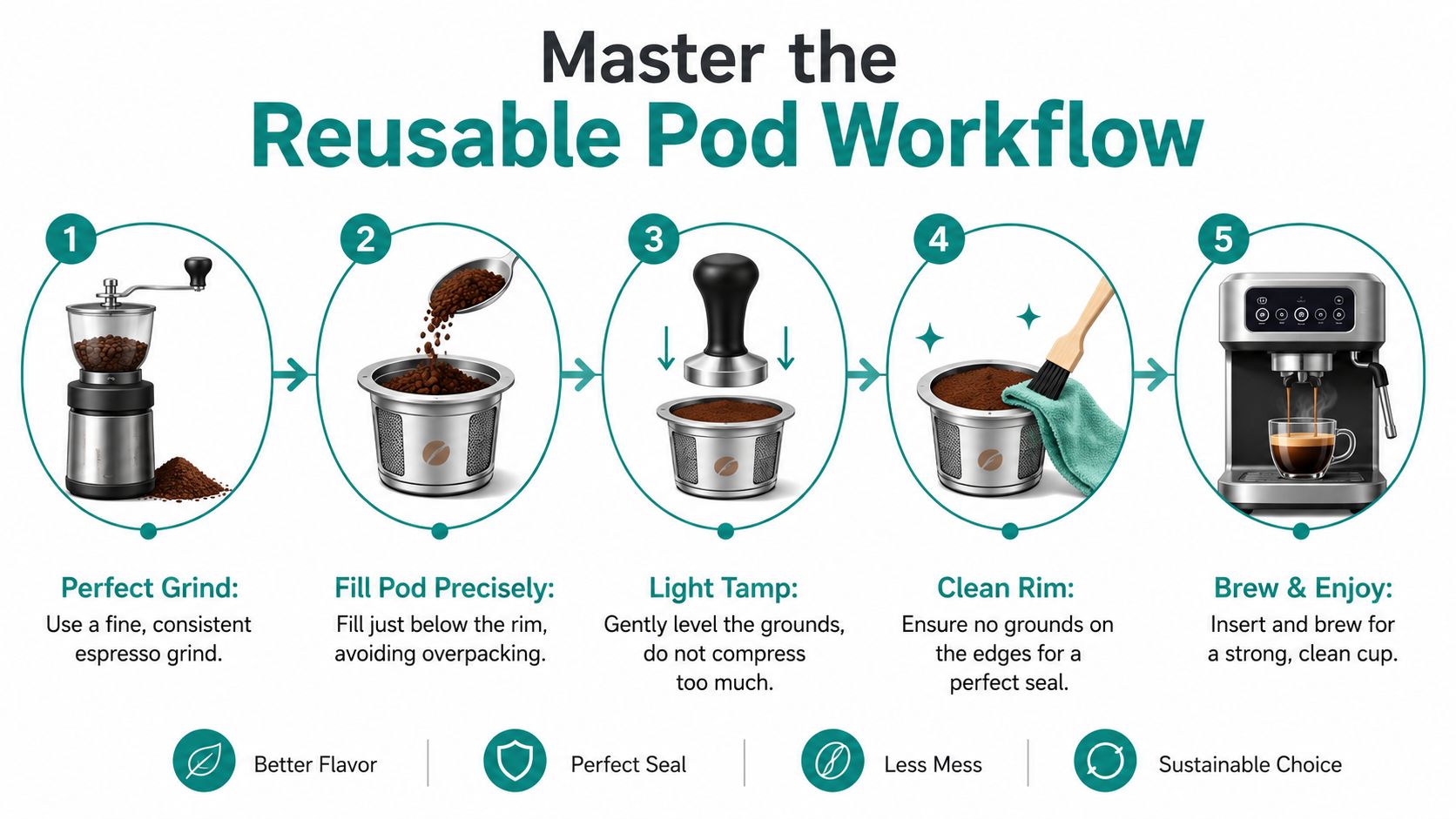
Master the Reusable Pod Workflow
Reusable pods save waste and give you control over the coffee you use. They also frustrate people fast when the cup comes out thin, the pod leaks, or cleanup takes longer than brewing. The problem usually isn't the concept. It's the workflow.
The fastest path to better results is consistency. Reusable pods reward repeatable habits much more than improvised ones.
The pod fails when the prep is sloppy
Most weak reusable-pod coffee comes from one of three mistakes. The grind is off. The pod is overpacked. The rim isn't clean enough to seal properly.
A practical setup looks like this:
- Use a medium grind: Think table salt, not powder. Too fine can clog. Too coarse can run watery.
- Fill below the rim: Leave space so water can move through the grounds instead of fighting a compacted puck.
- Tamp lightly: You're leveling, not compressing for espresso pressure.
- Wipe the edge clean: Grounds on the rim can create leaks or a bad seal.
- Rinse right after use: Dried coffee is always harder to remove.
This short visual walkthrough helps if you want to see the workflow in action:
Build a station, not a scramble
The people who stick with reusable pods usually stop treating them like a one-off task. They create a tiny brewing station. Grounds go in one spot. Empty pods go in another. A small brush or cloth stays nearby. Cleanup becomes part of the brew, not a separate chore.
That matters because friction kills good habits. If your pod routine sends you hunting for filters, scoops, or somewhere to dump wet grounds, you'll eventually default back to convenience.
Reusable pods become easy when every motion has a home.
Disposable paper liners can also make the workflow cleaner. They won't replace proper filling or rinsing, but they do reduce mess and speed up emptying the pod. For people who want the flavor control of fresh grounds without scraping wet coffee from mesh every morning, that's a very practical middle ground.
What good reusable brewing looks like
You know the workflow is dialed in when these things happen consistently:
- The brew starts cleanly
- The cup tastes full instead of hollow
- The lid closes without forcing it
- The pod empties without a fight
- Your counter stays mostly clean
That's the true win. Reusable brewing shouldn't feel like a sustainability penalty. It should feel like a smoother, smarter way to make coffee.
The PureHQ Advantage Over Generic Pods
A lot of reusable pods look similar in product photos. In actual use, they don't behave the same. As a result, the “why is this leaking?” complaint usually begins.
Cheap generic pods often fail in boring, predictable ways. The lid doesn't close tightly. The hinge loosens early. The pod shape sits a little off in the brewer. Water finds the path of least resistance, which means a weaker extraction, stray grounds, or drips around the pod instead of through it.
Fit and seal decide the cup
This is the objection worth addressing directly. People say reusable pods “don't work,” but in many cases they've only tried a poorly fitted one. A reusable pod has to seat correctly and seal reliably. If it doesn't, the brewer can't push water through the coffee as intended.
That's why pod design matters more than most shoppers expect.
| Feature | PureHQ Reusable Pod | Generic Alternative |
|---|---|---|
| Fit | Precision-engineered for compatible Keurig and Ninja models | Can vary, sometimes loose or inconsistent |
| Seal | Tight-sealing lid with silicone O-ring to help prevent leaks | Seal quality often varies |
| Brewing result | More consistent water flow through grounds | More likely to leak or channel |
| Durability | Built for repeated use and easier cleaning | Hinges and lids may wear sooner |
| User experience | Cleaner brewing with fewer fit issues | More trial and error |
A well-designed reusable pod can solve the exact issues that turn people off reusable brewing in the first place. If you've dealt with leaks or machine errors, a better-fitting reusable K-Cup for Keurig K-Supreme and K-Supreme Plus is the kind of upgrade that makes the system feel normal instead of fussy.
Cheap upfront can mean expensive daily use
No, a generic pod doesn't always fail on day one. That's what makes them annoying. They often work just well enough to keep you guessing. Then one cup is fine, the next is weak, and the third leaves grounds in the mug.
A reusable pod should disappear into the routine. If you keep thinking about it, the design is probably the problem.
The practical test is simple. Ask whether the pod saves time after the first week. If it still feels messy, inconsistent, or delicate, it isn't efficient. It's just cheaper at checkout.
Your Simple Routine for Lasting Efficiency
The best coffee setups don't rely on memory or motivation. They rely on routine. That's true in kitchens, small offices, and breakrooms. Structured systems outperform ad hoc effort in almost every kind of improvement work. Industry meta-research summarized by TeamStage reports that organizations using formal project management reach original goals or intent at a 73% rate, while projects without structured management fail at roughly 70%, and the same summary says a disciplined cycle such as Plan-Do-Check-Act can double the odds of sustaining gains.
That sounds corporate, but the lesson is simple. Coffee care works better when you stop relying on “I'll clean it when I remember.”
Use a simple PDCA loop at home
You do not need a spreadsheet. You need a repeatable rhythm.
Plan
Pick the small tasks that protect performance. Keep fresh filters, descaler, and any pod liners or cleaning brushes where you brew.
Do
Run the routine on schedule. Rinse after the last use of the day. Fill reusable pods the same way each time. Descale before the machine becomes obviously sluggish.
Check
Pay attention to the clues. Is brew time changing? Does the coffee taste dull? Are there more leaks, splashes, or grounds than usual?
Act
Adjust one variable at a time. Change the filter. Clean the pod seal. Descale. Tweak grind size. Don't change five things and hope one worked.
A routine you can actually keep
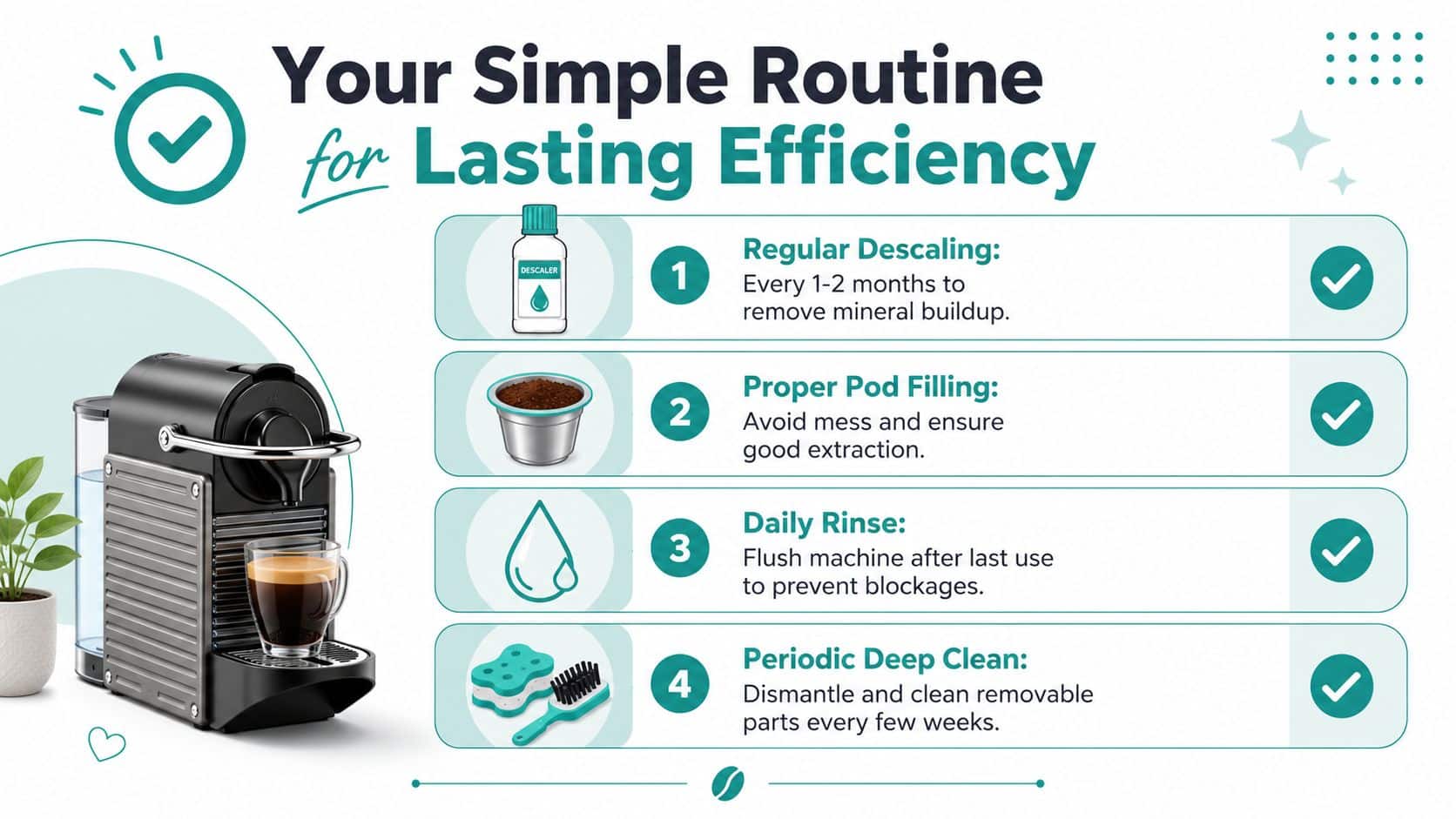
Here's a no-nonsense maintenance rhythm that works for most Keurig and Ninja owners:
- Daily rinse: Run water through after the final cup and rinse the reusable pod.
- Frequent wipe-down: Clean the pod area, rim contacts, and drip tray before residue hardens.
- Periodic deep clean: Remove and wash the parts that come off easily.
- Scheduled descaling: Don't wait for a warning sign if your water is hard.
- Filter replacement: Change water filters on a set schedule you can remember.
If you manage a shared machine in a workplace, the same thinking scales well. The Vendmoore guide to vending efficiency is useful because it frames beverage service as an operational system, not just a stocked machine. That's exactly the right mindset for keeping a coffee station reliable.
The goal isn't perfection. The goal is a machine that stays easy to use.
Once the routine is in place, everything gets easier. Better coffee. Fewer clogs. Less waste. Less guesswork.
If you want the tools that make this system easier to keep, shop PureHQ Inc. for reusable K-Cups, water filters, descalers, paper liners, and other coffee machine accessories built for cleaner brewing and more reliable daily performance.

