Coffee Machine Care
Universal Cleaning Agent: What It Actually Does
Oct
A household product study found that no tested cleaner reached the defined threshold of at least 85% soil removal from ceramic surfaces, while bleach-based and commercial products achieved at least a 5.00-log10 reduction of tested bacteria under the study's disinfection conditions. The lesson is uncomfortable but useful: visible cleanliness and disinfection aren't the same result. (Peer-reviewed household-product study)
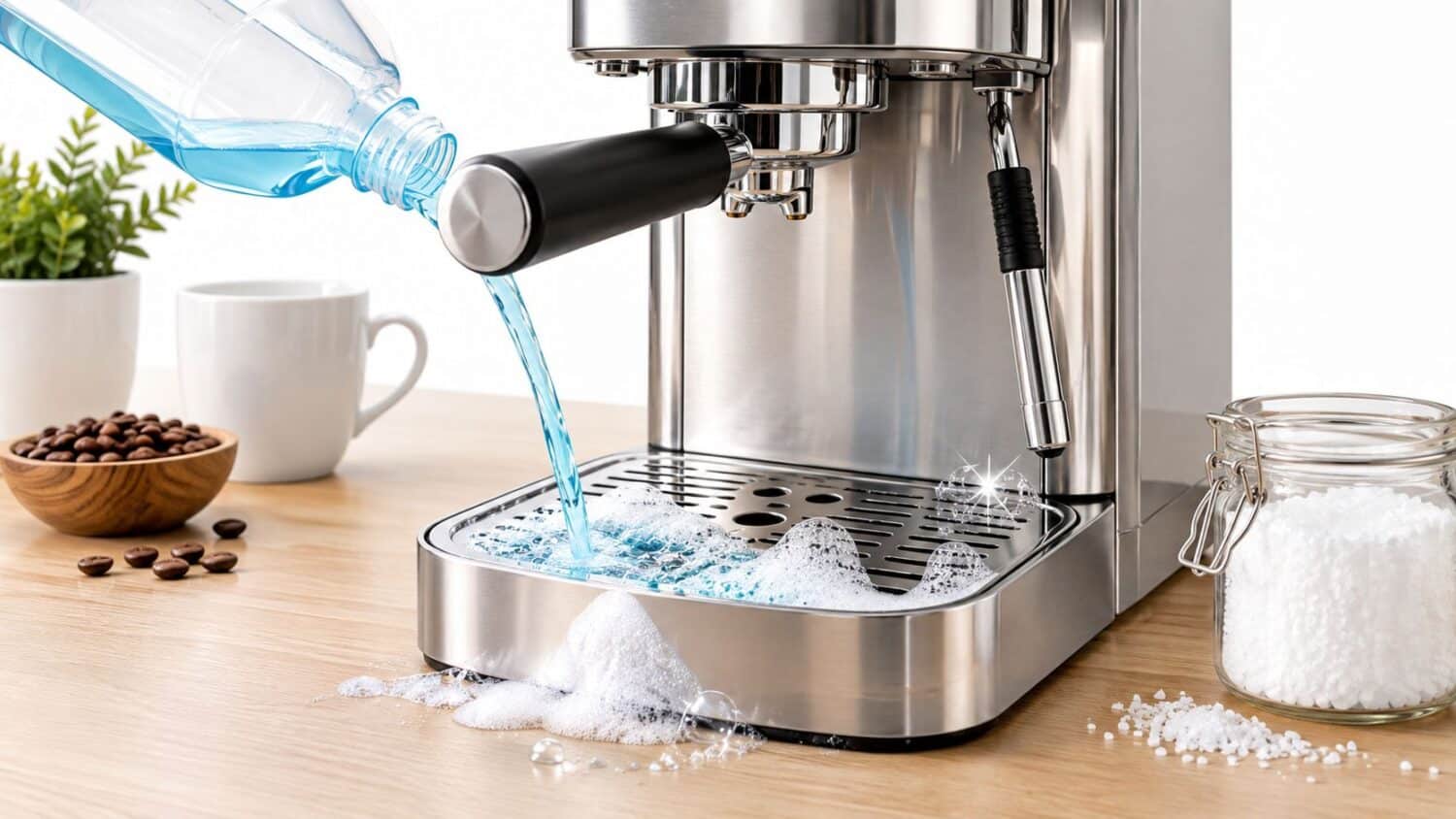
That distinction matters even more inside a coffee machine. Coffee oils, milk residue, and syrup are organic soils. Mineral scale is an inorganic deposit. A universal cleaning agent can be useful for the first group, but it isn't automatically designed for the second, and it certainly isn't automatically a disinfectant.
The Hidden Cost of One-Product Cleaning Myths
A coffee machine rarely fails because its owner forgot to wipe the outside. More often, trouble begins when someone pours the wrong chemistry into the wrong path. A general cleaner may lift oily coffee residue from a pod holder or drip tray, yet leave mineral scale inside the heater and water lines. The machine still looks clean from the outside while its internal passages become increasingly restricted.
The scale of the underlying chemistry helps explain why product labels can create confusion. Global surfactant consumption reached approximately 17.6 million metric tons in 2023, with a value of about $46.9 billion, and household detergents remain the most important application. The same broad surfactant technology appears in household, institutional, dishwashing, and industrial products, but manufacturers adjust formulations for soil type, material compatibility, safety, and contact conditions. (S&P Global surfactant analysis)
Why the label creates false confidence
“Universal” usually means a product handles several accessible surfaces or soil types reasonably well. It doesn't mean one formula can dissolve every deposit in every component. A detergent that loosens coffee oils isn't automatically capable of dissolving carbonate scale, and a descaler designed for mineral deposits may be unsuitable for exterior finishes, rubber parts, or food-contact components unless the instructions specifically allow those uses.
The cost of the mismatch appears gradually:
- Restricted water flow: Scale can narrow internal passages and reduce consistent water movement.
- Poor extraction: A machine with obstructed heating or brew paths may produce uneven results.
- Persistent taste: Inadequately rinsed cleaner or loosened residue can affect the next cup.
- Component stress: Owners may run longer cycles or use more aggressive chemistry when the original product was not suitable.
Practical rule: Choose a product by the deposit you need to remove, not by the number of surfaces printed on its label.
Coffee owners also face a legitimate purchasing problem. Keeping a cleaner, a descaler, filters, and replacement maintenance parts on hand feels less convenient than buying one bottle. But convenience disappears when a machine needs repair, a seal swells, or a brew path retains residue. The safest definition of universal is therefore limited: broad surface use, not universal chemical compatibility.
What Universal Cleaning Agents Actually Are
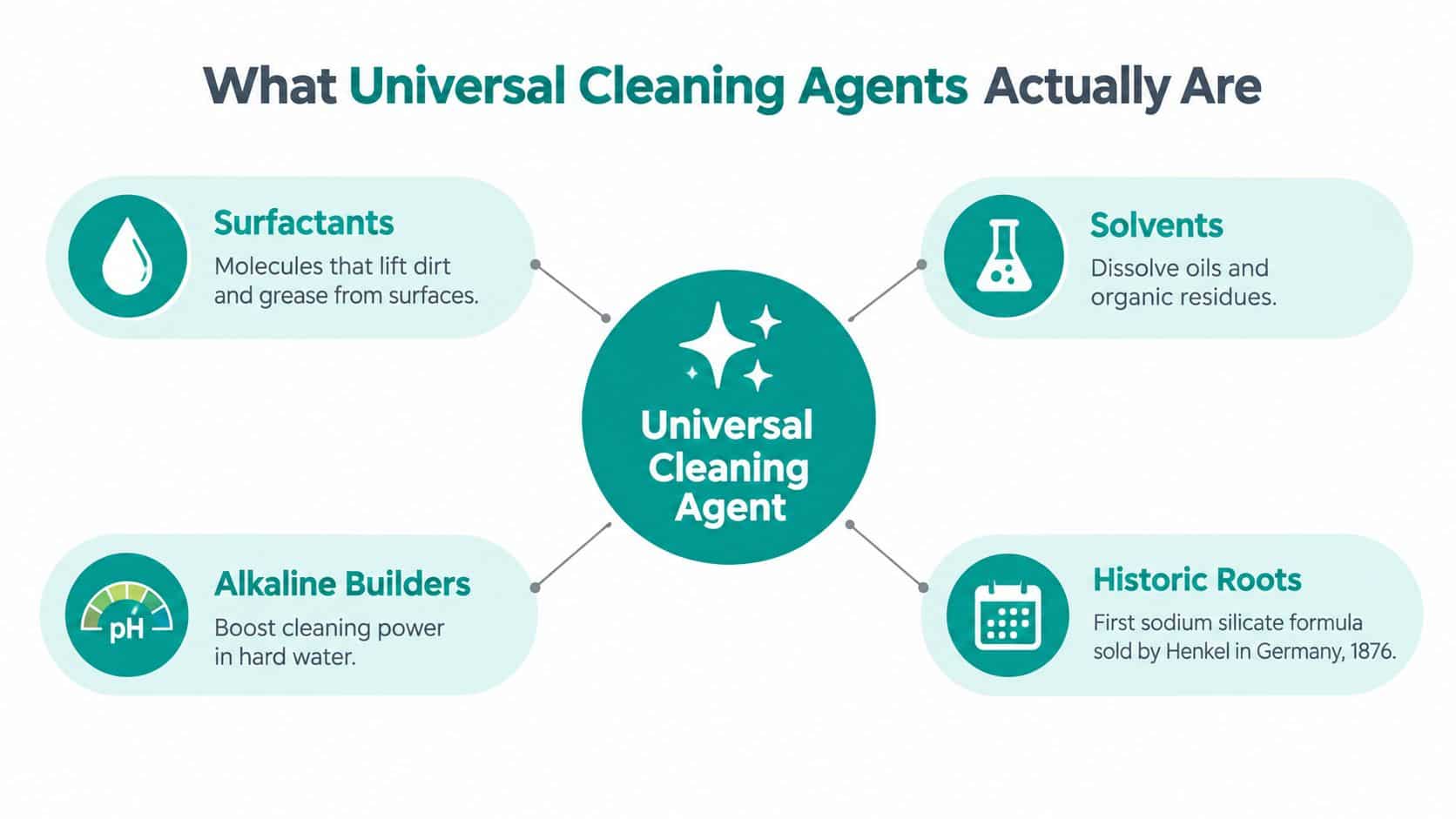
The modern universal cleaning agent is usually a formulated system, not one magical chemical. It may combine surfactants with builders, solvents, preservatives, and other ingredients selected to improve performance across several everyday soils.
The concept has historical roots. In Germany in 1876, Henkel sold a sodium-silicate-based product marketed as a “universal detergent,” called Universalwaschmittel. Later, Dreft, introduced in the United States in 1933, became the country's first synthetic household detergent and used alcohol sulfates instead of soap. Synthetic detergents based on sodium dodecylbenzene sulfonate followed in 1939, alongside later alkylbenzene sulfonate formulations. (Detergent history and chemistry)
The parts that do the work
Surfactants improve water's contact with a surface. They loosen oily soil and help keep removed particles suspended, so the residue doesn't settle back onto the component. That makes them useful for coffee oils on brew baskets, pod holders, drip trays, and accessible machine surfaces.
Solvents can help dissolve organic residues, depending on the formula and concentration. Builders support cleaning performance, including in hard water, while preservatives help keep the product stable during storage. The exact balance determines whether a cleaner is mild enough for repeated surface use or too aggressive for a particular seal, coating, or metal.
The important limitation is chemical rather than semantic. Surfactants lift and suspend soil, but they aren't automatically mineral-dissolving acids or specialized scale-control agents. A cleaner can therefore perform well on coffee oils while performing poorly on deposits created by hard water.
For facilities that need a separate antimicrobial process, documented procedures matter more than a broad product name. A resource on disinfecting SOPs for busy facilities can help teams distinguish routine soil removal from controlled disinfection.
Cleaning vs Descaling – The Critical Difference
Cleaning and descaling may both send liquid through a coffee machine, but they target different deposits. Cleaning removes organic residue, including coffee oils, milk residue, and syrup. Descaling removes mineral deposits, particularly scale associated with hard water and calcium carbonate.
A universal cleaning agent belongs primarily in the first category. Use it on removable, accessible parts when the product label and machine instructions permit it. Use a dedicated descaler for the internal water path when the manufacturer specifies descaling. A product that handles one task shouldn't be judged as a failure because it wasn't formulated for the other, but it mustn't be marketed as a substitute.
| Maintenance task | What needs removal | Suitable approach | What a general cleaner may do |
|---|---|---|---|
| Pod holder or brew basket | Coffee oils and loose residue | Mild cleaner, water, and thorough rinsing | Often useful when compatible |
| Drip tray | Coffee residue and surface soil | Surface cleaning followed by rinsing | Usually appropriate for accessible parts |
| Internal water path | Mineral scale | Dedicated manufacturer-compatible descaler | Not a reliable scale treatment |
| Exterior housing | Dust, splashes, and light soil | Damp cloth or approved surface cleaner | May help, but material compatibility matters |
| Path requiring a disinfectant claim | Tested microbial target | Registered disinfectant used exactly as labeled | No automatic disinfectant status |
The controlled household-product study cited at the opening reinforces the need for separate benchmarks. It evaluated soil removal and microbial reduction as different endpoints, and the products didn't perform identically across those tests. (Study of cleaning and disinfection performance)
For Keurig, Ninja, Breville, and Cuisinart machines, don't assume that a product safe for the outside is suitable for the reservoir or brew path. Start with the owner's manual, identify whether the task is oil removal or scale removal, and follow the prescribed rinse procedure. For Keurig owners, this guide to descaling a Keurig machine for better coffee taste addresses the mineral-deposit problem separately from routine cleaning.
Safe Usage for Your Specific Machine
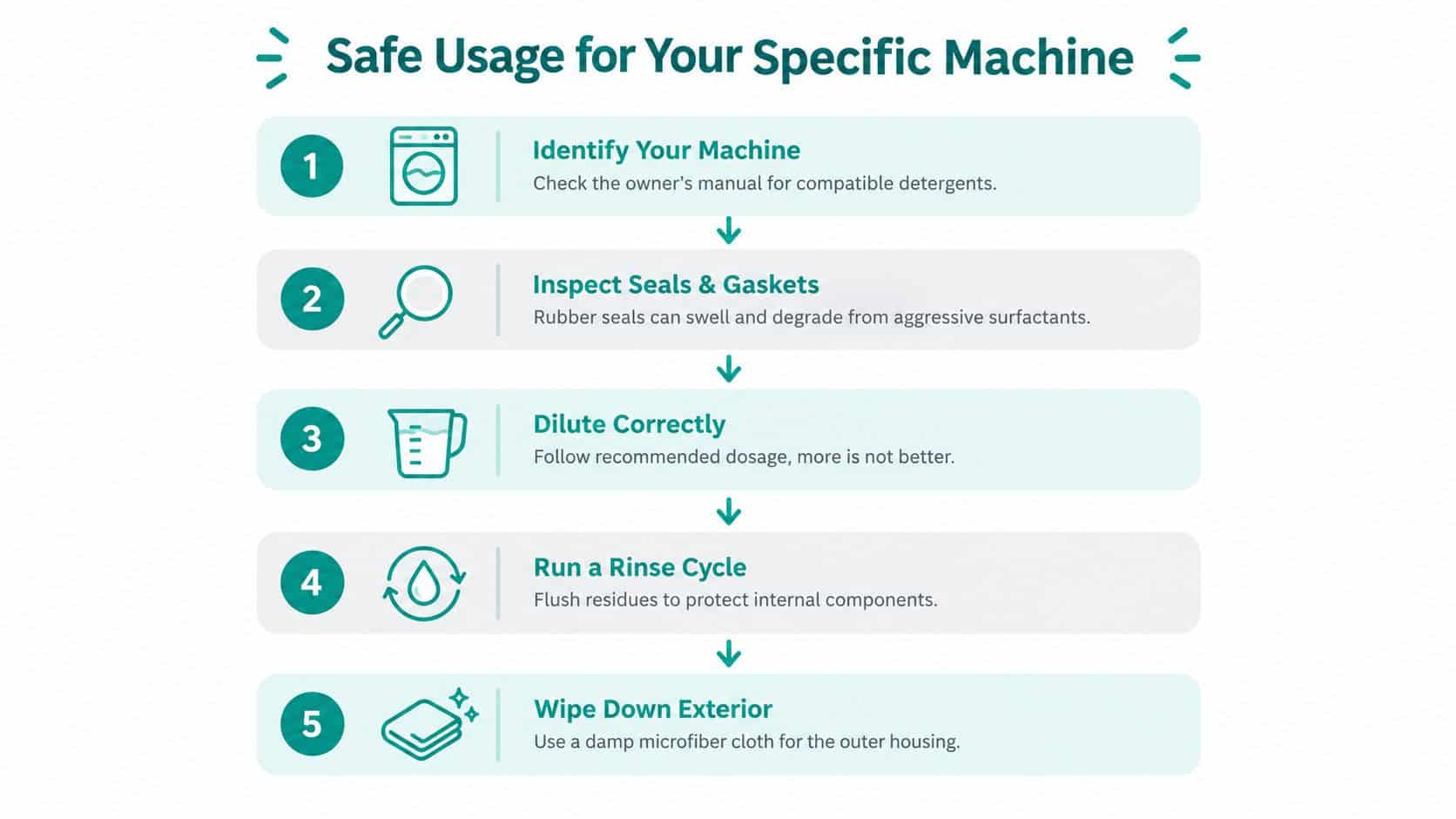
Safe maintenance starts with the machine manual, not the word “universal.” Manufacturers may specify compatible cleaners, dilution requirements, removable components, and rinse cycles. Those details matter because a formula that works on a plastic drip tray may not belong inside a heater, reservoir, gasket, or coated exterior.
A controlled sequence
Identify the component and the soil. Remove the pod holder, brew basket, drip tray, or other user-serviceable part if the manual allows it. Decide whether you're removing oily residue, mineral scale, or a suspected microbial hazard.
Clean removable parts first. Apply a mild, compatible cleaner with warm water to accessible parts. Keep the solution off electrical controls and avoid soaking components unless the manufacturer permits it.
Rinse until no residue remains. Detergent residue can affect taste, and vague rinsing instructions create unnecessary uncertainty around food-contact equipment. Use the machine's specified rinse cycle for internal paths, then follow any additional plain-water flush instructions.
Descale separately. Use the recommended acid-based descaler for internal mineral deposits. Don't substitute a general cleaner because it is already under the sink.
Inspect before brewing. Check seals, gaskets, valves, and surfaces for swelling, cracking, discoloration, or residue. If a component looks damaged, stop using the machine until you identify a compatible replacement or service procedure.
Machine-specific caution
Keurig and Cuisinart owners should pay particular attention to removable pod components, needles, reservoirs, and water-contact parts. Ninja DualBrew users should separate pod-side cleaning from carafe and brew-basket maintenance. Breville owners need to distinguish cleaning tablets for coffee oils from water-filter and descaling procedures used for the hydraulic system.
Don't leave a surfactant solution sitting on rubber seals or gaskets longer than the label allows. Conversely, don't treat every stainless-steel component as immune to acids or oxidizers. This stainless-steel chemical compatibility guide is useful when a machine includes exposed or internal stainless-steel parts.
The CDC separates cleaning from disinfecting and advises cleaning with soap and water before applying an appropriate disinfectant. It also stresses that users must verify compatibility with the specific surface, including hard, soft, or food-contact materials. (CDC cleaning and disinfecting guidance)
Never combine cleaners. The CDC warns against mixing bleach with ammonia or other cleaners, and such combinations can cause serious injury or death. (CDC bleach safety guidance) Use one product at a time, ventilate the area, and complete the required rinse before introducing another maintenance chemistry.
Disinfection Claims and Contact Time Rules
A surface can look spotless and still lack a validated disinfectant treatment. Conversely, a disinfectant can inactivate susceptible microbes while doing a poor job removing greasy coffee soil. Cleaning and disinfection answer different questions, so a universal cleaning agent shouldn't inherit a disinfectant claim merely because it leaves a surface looking fresh.
The U.S. Environmental Protection Agency requires an EPA-registered disinfectant to remain visibly wet for the label's specified contact time. If the label requires 10 minutes and the surface dries after 5 minutes, the user must reapply enough product to keep it wet for the full interval. (EPA registered-disinfectant guidance)
That rule creates a practical problem for small machine parts. A pod holder or drip tray may dry quickly, while a user may assume that spraying and wiping immediately is enough. It isn't enough to support the label claim unless the product instructions specify that method and the surface remains wet for the required interval.
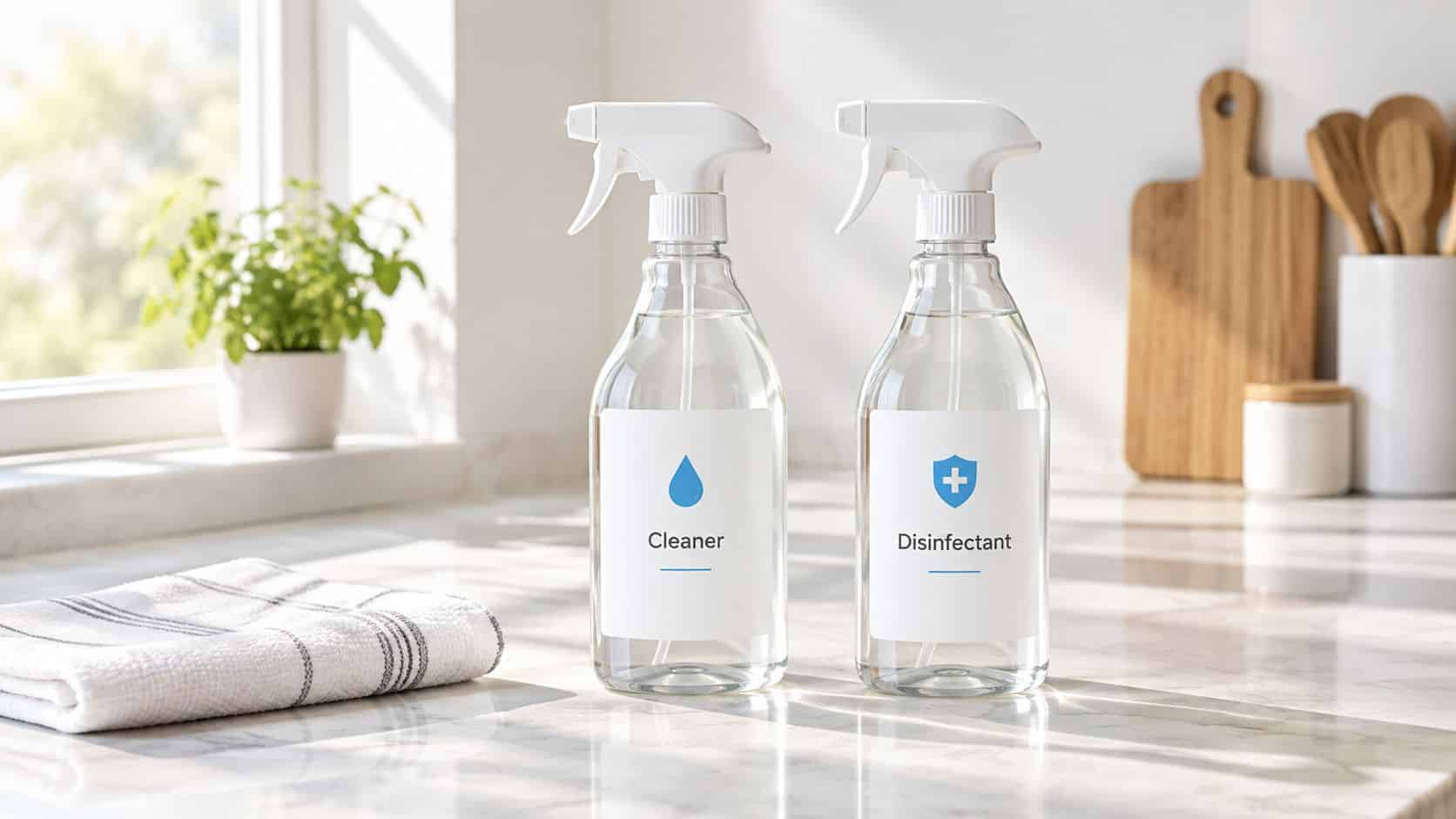
Stronger isn't automatically safer
A peer-reviewed evaluation of household products against SARS-CoV-2 found that bleach remained effective at dilutions as weak as 1:200, dishwashing detergent at dilutions as weak as 1:500, and alcohol-containing solutions at concentrations of at least 40% by volume in that test system. Vinegar didn't show comparable inactivation there. These findings don't make every detergent antiviral, because efficacy depends on the active ingredient, concentration, soil load, surface coverage, and wet contact time. (Peer-reviewed antimicrobial evaluation)
For routine coffee-machine care, physical removal of oils and deposits, followed by thorough rinsing, is usually the relevant maintenance objective. A Canadian infection-prevention position statement reported through BBC Future says antimicrobial products haven't shown additional benefit over plain soap and water in community settings, while household cleaning-product exposure has also raised respiratory-health concerns in a review of 77 studies. (BBC Future review of household cleaning products)
If you need pathogen control, choose a product with an applicable label, confirm the surface is approved, and follow the wet contact time. For a plain-language explanation of EPA contact time requirements, focus on the label's tested interval rather than the product's marketing language.
Choosing the Right Maintenance Products
The right maintenance shelf is organized by job. Keep a compatible universal cleaning agent for coffee oils and accessible surface soil. Keep a dedicated descaler for mineral deposits in the water path. Use filters to manage water quality where compatible, and reserve disinfectants for situations that genuinely require a validated antimicrobial claim.
EPA's Safer Choice program provides a more meaningful environmental and ingredient screen than labels such as “green” or “natural.” The program evaluates every ingredient against human-health and environmental criteria, requires ingredient disclosure, and assesses finished-product performance and packaging. EPA also identifies surfactants as ingredients that can harm aquatic life and inorganic phosphate builders as contributors to algae blooms and oxygen loss in waterways. Certified products must be free of inorganic phosphate builders and meet restrictions on volatile organic compounds and packaging. (EPA Safer Choice criteria)
A practical buying matrix
| If you need to… | Choose… | Avoid assuming… |
|---|---|---|
| Remove coffee oils | Compatible cleaning tablet or mild cleaner | That it will dissolve mineral scale |
| Remove hard-water deposits | Manufacturer-compatible descaler | That a detergent is an equivalent substitute |
| Reduce incoming water impurities | Compatible water filter | That filtration replaces machine cleaning |
| Clean removable parts | Product approved for those materials | That internal components share the same compatibility |
| Disinfect a surface | Registered product with the correct label | That visible cleanliness proves disinfection |
PureHQ Inc. offers universal cleaning tablets intended to dissolve oily residue in compatible Keurig, Ninja, Breville, Cuisinart, and other coffee machines, along with universal descaling solutions, water filters, reusable pods, and related maintenance accessories. Use those products according to the machine and product instructions rather than treating a tablet as a replacement for descaling.
If a blockage extends beyond the coffee machine or you need professional help with household plumbing, guidance on trusted drain cleaning can help separate routine maintenance from a problem that needs a specialist. The same principle applies here: diagnose the deposit first, then select the chemistry.
PureHQ Inc. offers coffee-machine cleaning tablets, descaling solutions, water filters, and reusable brewing accessories for Keurig, Ninja, Breville, Cuisinart, and compatible systems. Visit PureHQ Inc. to choose maintenance products matched to oily residue, mineral scale, and your machine's specific brewing setup.

