
Coffee Machine Care
Charcoal Filter Car Guide: What It Does and How It Works
Oct
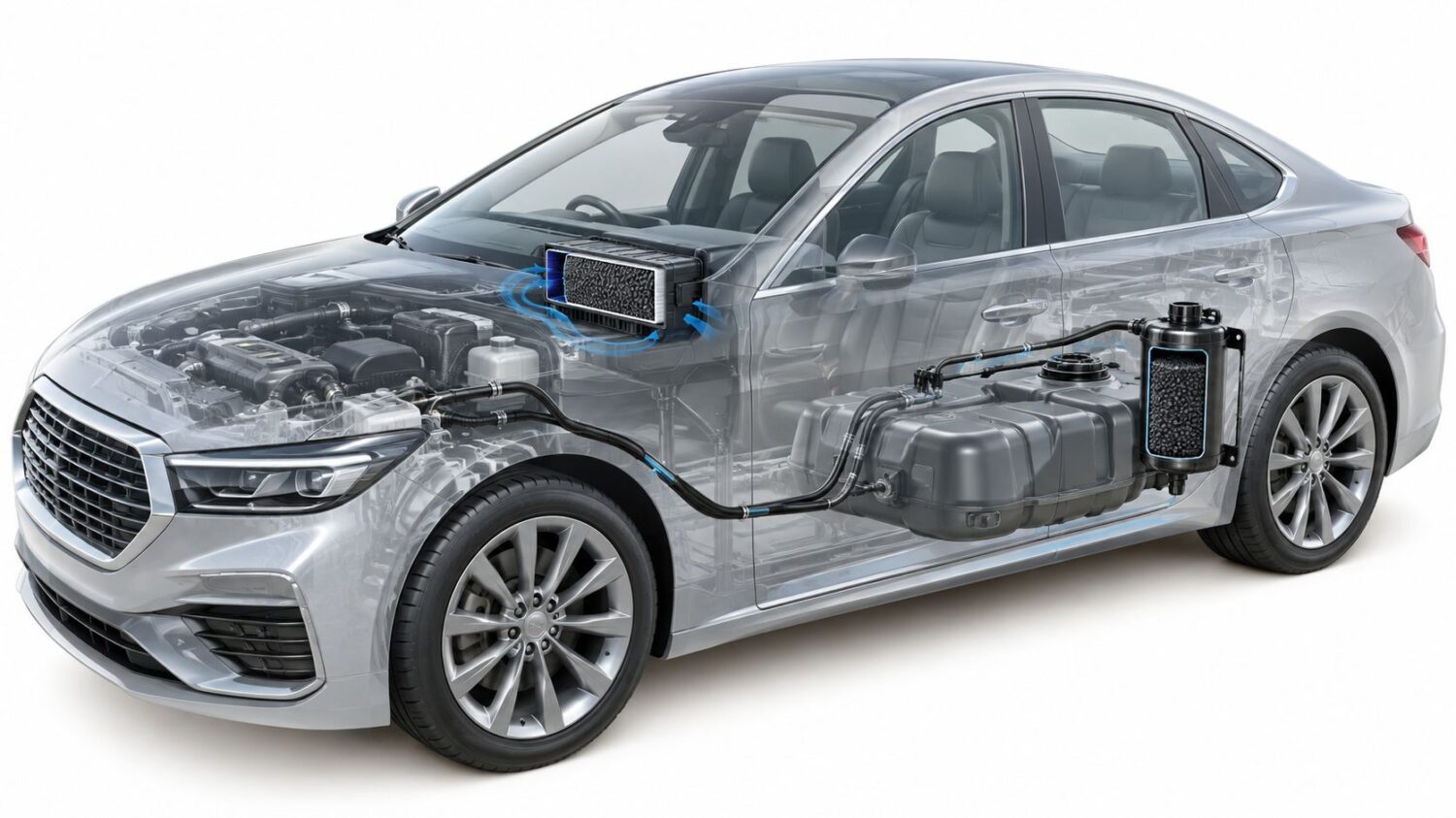
A car's activated-carbon canister is designed to hold approximately 30–40 grams of hydrocarbon vapor, then release it into the engine to burn during normal driving, according to Concawe's engineering guidance. That fact changes how you should think about a “charcoal filter car.” You aren't dealing with one universal filter, but two different components that use carbon for two different air-quality jobs.
One component controls gasoline vapor from the fuel system. The other treats air entering the passenger compartment. Confusing them can lead you to replace a cabin filter when the check-engine light points to an EVAP fault, or expect a cabin filter to capture fine smoke particles because its label says charcoal.
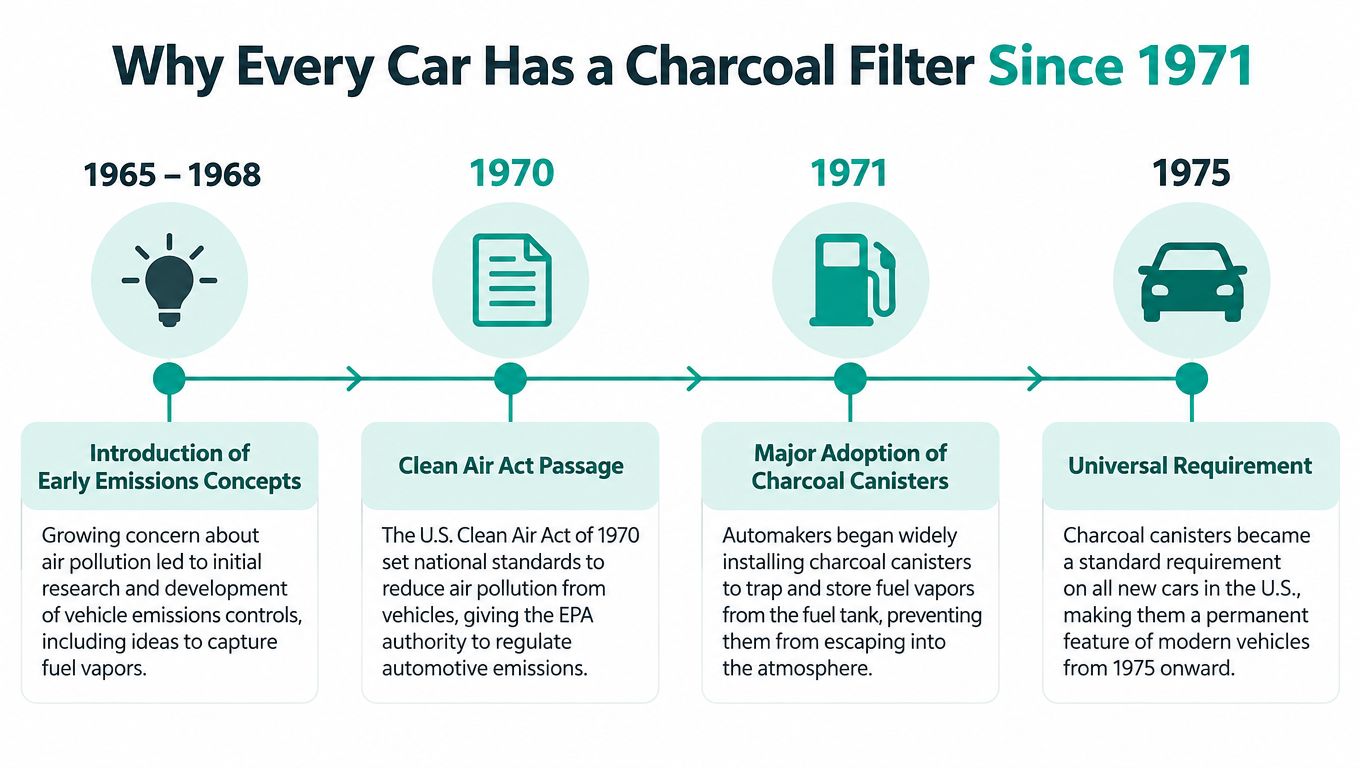
Why Every Car Has a Charcoal Filter Since 1971
The federal evaporative-emissions test procedure was finalized on June 4, 1968, and the first nationwide standard applied to 1971 model-year vehicles at 6 grams per test, according to the EPA historical summary. In certification testing for 1971 vehicles, 107 of 131 vehicles, or 82%, emitted less than 1.0 gram under the applicable test conditions. Manufacturers were already performing far below the initial limit, so the benchmark tightened to 2 grams per test for 1972 vehicles.
That history matters because the automotive charcoal canister wasn't a decorative upgrade. It became a foundational emissions-control device. Research into evaporative emissions had been underway since 1958, with activated-charcoal control development dating to about 1960, and the EPA records that all current automobiles since 1971 use one or more carbon-filled canisters for hot-soak and diurnal fuel vapors.
One word, two vehicle components
The phrase charcoal filter car usually points to one of two parts:
- EVAP canister: Stores gasoline vapors from the tank and fuel-system vents. It doesn't clean air for passengers.
- Activated-carbon cabin filter: Treats incoming ventilation air. It doesn't control fuel vapor emissions.
Activated carbon also appears in coffee-machine water filters and other household applications, which makes the technology familiar to many readers. The principle is related, but the media, airflow path, contaminants, and maintenance requirements differ. A water filter interacts with liquid, while an automotive cabin filter handles incoming air and an EVAP canister manages fuel vapor.
The distinction becomes important during diagnosis. If you smell gasoline outside the vehicle or see an EVAP diagnostic code, inspect the fuel-vapor system. If odors enter through the vents, inspect the cabin filter and HVAC system. For a useful overview of how emissions systems are checked, Speedy Smog explains emissions rules in practical terms.
What Activated Carbon Actually Does Inside a Filter
Activated carbon works through adsorption, not absorption. Adsorption means molecules attach to the surface of a solid. The carbon doesn't act like a sponge that pulls pollutants into a liquid-filled interior. Instead, hydrocarbon molecules contact the carbon and remain on its enormous internal surface.
The pore structure creates that surface. The technical description of activated-carbon automotive filtration reports that activated-carbon surface area can reach approximately 3,000 m²/g. A compact bed can therefore present a vast contact area to passing vapor.
Why pore size changes performance
The carbon bed contains several pore scales, and each contributes differently:
- Micropores below 2 nanometres provide strong hydrocarbon adsorption.
- Mesopores of roughly 2–50 nanometres support adsorption and purge-driven desorption.
- Macropores help vapor diffuse through the pellet bed.
This hierarchy matters because capture alone isn't enough. The EVAP system must also release stored vapor under controlled conditions. During engine operation, a purge valve allows fresh air to move through the canister. That airflow carries desorbed hydrocarbons into the intake, where the engine combusts them.
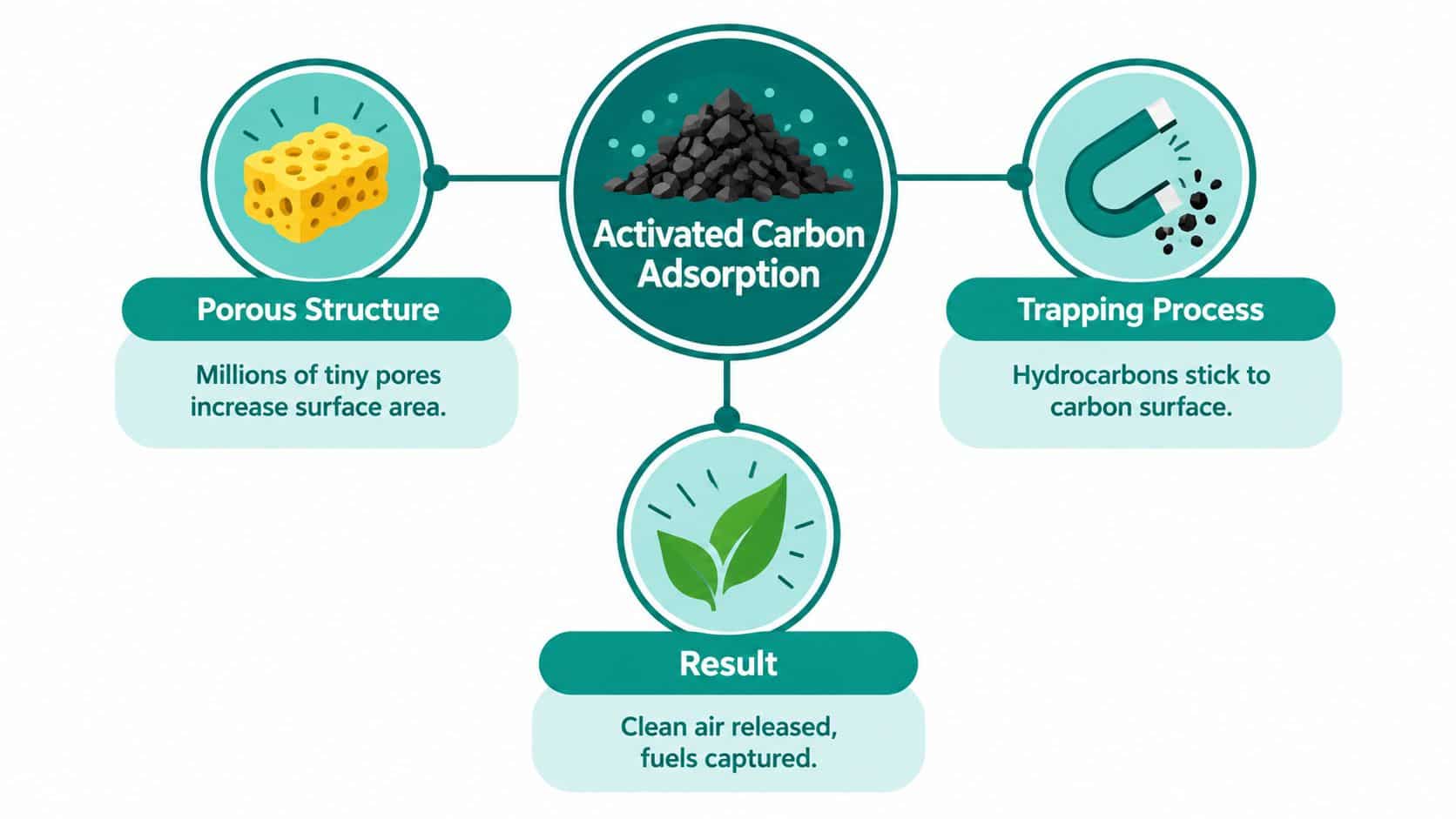
A charcoal water filter uses the same broad adsorption idea, but it operates in a different fluid path. Readers familiar with replacing a coffee-machine cartridge can use this mental model: carbon provides surfaces that hold unwanted compounds, but the vehicle determines whether vapor is later purged into the engine or whether the cabin filter must be replaced after its gas-adsorption capacity declines. Further background on the material is available in activated-carbon filtration guidance.
Regeneration separates the two jobs
An EVAP canister is built for repeated adsorption and purge cycles. It isn't a disposable filter that traps vapor once and stays full. A cabin filter also contains carbon, but the ventilation system doesn't provide the same controlled regeneration cycle. Its gas-phase performance can therefore decline as pollutants load the carbon, even when the filter still looks intact.
That difference explains why visual inspection alone can mislead you. Clean-looking carbon can lose useful adsorption capacity, while a damaged EVAP canister can cause trouble through cracked housings, failed connections, or inadequate purge flow.
The Two Charcoal Filters Hiding in Your Vehicle
A vehicle can contain an activated-carbon filter near the fuel system and another inside the ventilation system. They may share a material, but they don't share a location, purpose, or failure diagnosis.
The EVAP canister
The activated-carbon EVAP canister connects to the fuel tank and vent system, commonly near the tank or elsewhere in the fuel-system plumbing. The EPA describes how hydrocarbon vapor contacts the carbon bed and adsorbs instead of venting directly into the atmosphere, then leaves the bed when the engine draws purge air through it.
This component captures gasoline vapor, not liquid fuel, cabin dust, pollen, or smoke particles. A saturated or damaged canister, disconnected hose, or failed purge valve can contribute to fuel odors and evaporative-emissions problems even when the engine seems to run normally. The EPA explanation of fuel-vapor storage shows why the canister belongs to the emissions system rather than the air-conditioning system.
The cabin air filter
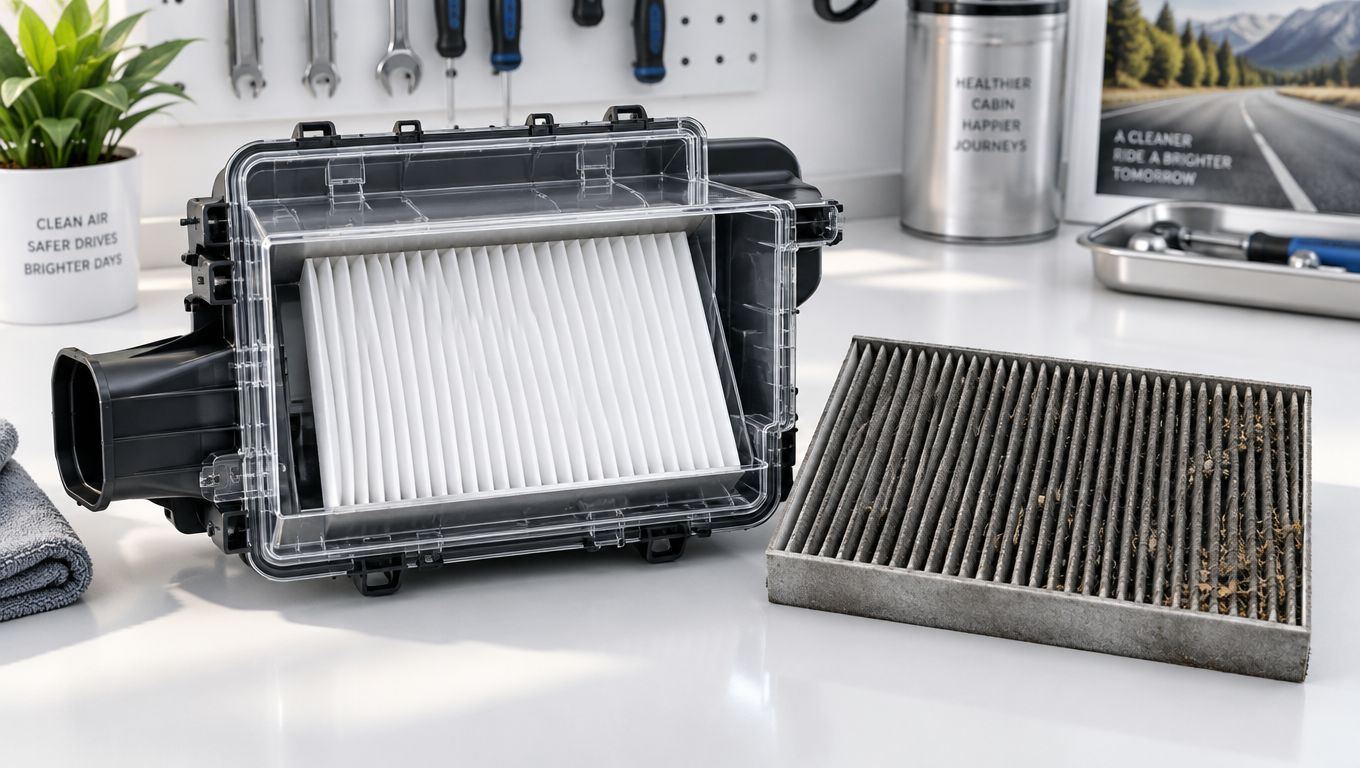
The activated-carbon cabin filter sits in the ventilation path, often behind the glove box or beneath the hood cowl, although the exact location varies by vehicle. It can adsorb some gases and odors in incoming air while its particulate layer captures particles according to the filter's construction.
It doesn't control gasoline vapor from the tank, and it doesn't automatically provide HEPA-level protection against smoke particles. A clogged filter commonly reduces airflow, while an aged carbon layer may lose gas-removal performance before the blower noticeably struggles.
Diagnostic rule: Fuel smell around the vehicle points you toward the EVAP system. Persistent odor from the vents or weak airflow points you toward the cabin filter and HVAC system first.
The two systems also matter during emissions inspections. A damaged EVAP canister or hose can affect evaporative-emissions compliance, while a dirty cabin filter normally affects passenger comfort and ventilation rather than tailpipe or EVAP testing. For a practical explanation of inspection items, review these pass or fail criteria explained.
This visual walkthrough can help you identify the cabin-filter housing and distinguish it from fuel-system components:
Comparing a Quality Carbon Filter to a Generic Replacement
A premium activated-carbon cabin filter should earn its place through construction, fit, and documented application, not through the word “charcoal” alone. A generic replacement may still provide basic particle filtration, but a thin or inconsistent carbon layer may offer less gas-phase capacity.
| Feature | Premium Activated-Carbon Cabin Filter | Generic Carbonless Paper Filter |
|---|---|---|
| Odor control | Uses an activated-carbon layer to adsorb some incoming gases and odors | Primarily relies on the particulate media and offers little dedicated gas adsorption |
| Gas-phase protection | Intended to reduce selected gaseous pollutants when the filter and HVAC settings support that result | Not designed as a carbon-based gas-control component |
| Particle filtration | Depends on the pleat design and filter rating | Depends on the paper-media construction and particle size |
| Fit | Vehicle-specific dimensions and a stable sealing frame help limit bypass | A loose or distorted fit can allow air around the media |
| Humid conditions | A well-supported frame and media can resist deformation better | Damp, loaded paper can lose shape or airflow more readily |
| Maintenance value | More useful for drivers concerned about traffic odors and gases | Reasonable for drivers focused mainly on basic dust and pollen capture |
The table doesn't mean every premium filter performs identically or every generic filter fails. Independent testing across commercially available cabin filters found particle-filtration efficiency for 0.3–0.5 micrometre particles ranging from 50% to 90%, as reported in the Copernicus vehicle-cabin testing summary. Filter construction and particle size materially affect the result.
The fit objection is legitimate
A customer who asks whether a cheaper filter can leak has identified a real concern. A warped frame, compressed edge, or incorrect application can leave gaps around the filter, allowing unfiltered air to bypass the media. Carbon dust or loose material can also create a mess in the blower housing if the filter lacks adequate support.
Choose a quality activated-carbon cabin filter when you drive in dense traffic, notice recurring exhaust odors, or care about gas-phase protection as well as particles. A standard paper filter may be adequate when your priority is basic dust control and the vehicle's application fits securely.
The best upgrade still needs a clean HVAC housing and correct installation. If your car uses maintenance items for its other filtration systems, keep compatible cleaning tablets or descaling products on hand, but don't substitute a water-filtration cartridge for an automotive cabin filter.
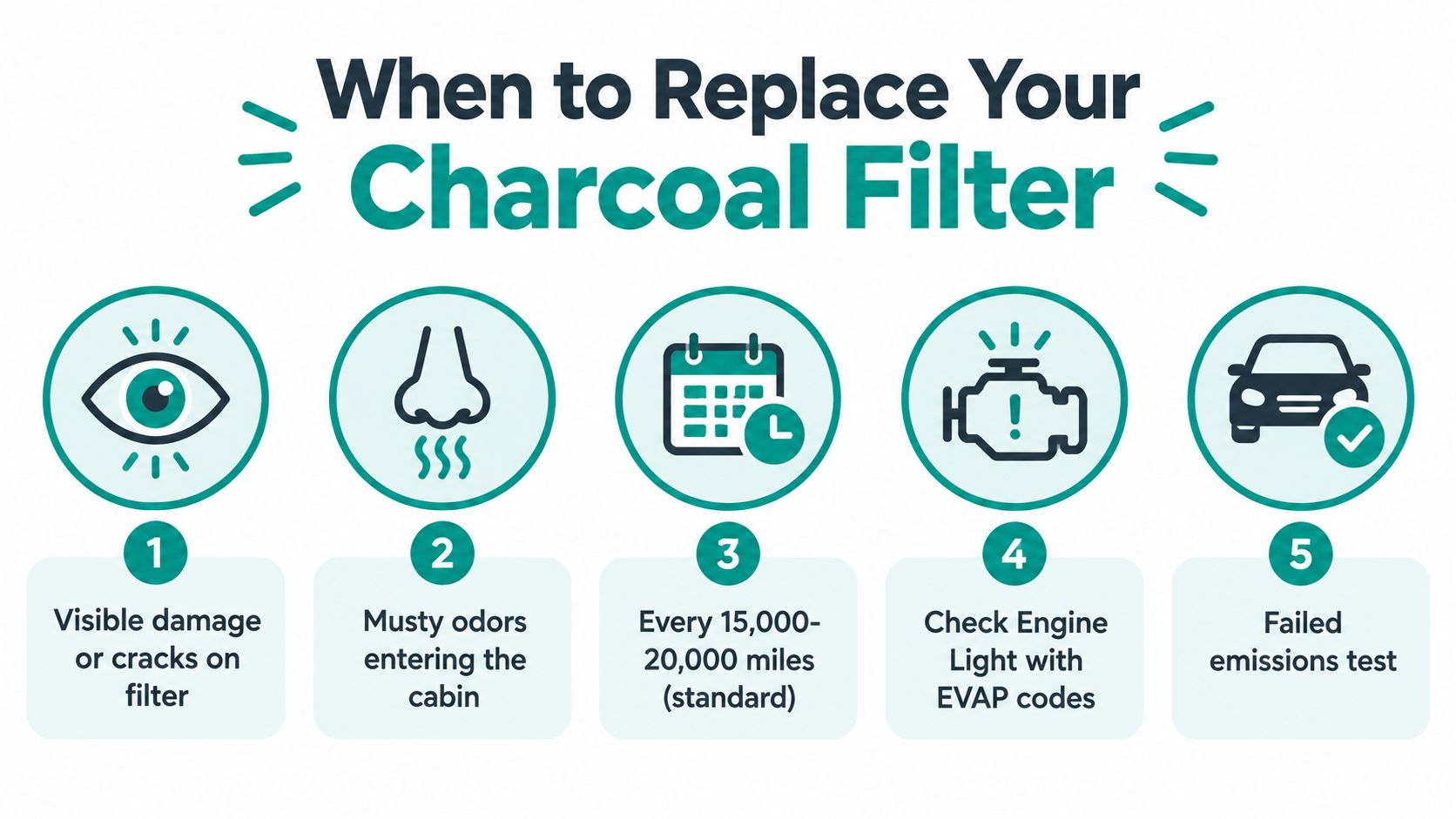
When to Replace a Charcoal Filter and What to Watch For
Mileage alone can't tell you whether a cabin filter's carbon layer still performs well. In a Birmingham, UK, vehicle-cabin study, new activated-carbon filters reduced in-cabin nitrogen dioxide by approximately 86.1%–94.3% compared with on-road concentrations, while NO2-removal performance declined by an average of 6.8% per month; the decay rate changed after the first six months, according to the peer-reviewed cabin-air research.
That evidence doesn't establish a universal replacement interval for every driver. It does show why a filter can look usable and still provide less gas-phase protection than when new.
Use three replacement triggers
- Calendar age: Replace according to the vehicle maker's maintenance guidance, then shorten the interval if odors or exposure suggest earlier loading.
- Mileage and use: High-mileage driving pushes more air through the cabin filter, but mileage doesn't measure traffic pollution or time spent in recirculation.
- Exposure intensity: Urban commuting, heavy traffic, wildfire smoke, dusty roads, and frequent operation in polluted conditions can load the filter faster than gentle rural use.
A useful decision is to inspect the filter and assess the environment together. Normal airflow doesn't prove that the carbon still removes gases effectively, just as a dirty appearance doesn't prove the filter has reached the end of its useful life.
For the EVAP system, use symptoms and diagnosis rather than a cabin-filter schedule. The EPA describes the canister's fuel-vapor storage role this way:
Hydrocarbon vapors adsorb onto activated carbon while the engine is off, then purge into the engine for combustion when the vehicle operates.
Fuel odor, an EVAP diagnostic code, or a failed emissions test calls for inspection of the canister, hoses, valves, and connections. A guide to a DIY EVAP system fix can help you understand the component, but sealed systems and fuel vapor deserve careful diagnosis before replacement.
Owners who already manage activated-carbon cartridges at home can compare the principles with this charcoal water filter replacement guide. The replacement logic differs because cabin exposure and fuel-system purge cycles aren't the same as household water use.
Troubleshooting Common Charcoal Filter Problems
Start with the symptom's location. A smell outside the vehicle, especially near the fuel system, belongs to the EVAP diagnostic path. A smell from the vents belongs to the cabin-air path, although a wet evaporator, dirty housing, or blocked drain can also create odor that carbon alone won't solve.
| Symptom | First component to check | Why |
|---|---|---|
| Fuel smell near the parked car | EVAP canister, hoses, and fuel-system connections | The canister stores fuel vapor and relies on sealed plumbing |
| Persistent odor through vents | Cabin filter and HVAC housing | The filter may be loaded, while the HVAC system may contain damp organic material |
| Check-engine light with an EVAP code | Canister, purge valve, vent valve, and hoses | Insufficient purge or a leak can disrupt vapor management |
| Reduced vent airflow | Cabin filter, blower, and intake path | Particulate loading can restrict air even when carbon performance is hard to see |
Don't replace the EVAP canister solely because you smell gasoline. A cracked hose, loose connection, or purge-valve fault can create similar symptoms. The EPA distinguishes evaporative emissions from tailpipe emissions, so a charcoal-canister repair won't replace a needed catalyst or particulate-filter repair.
Don't treat every musty smell as proof that the cabin filter is the only problem. A contaminated HVAC housing or moisture issue can keep producing odors after a new filter goes in. Check the filter, inspect the housing, and verify that the ventilation system drains moisture correctly.
The same adsorption principle appears in household equipment, but the maintenance products remain application-specific. If you also maintain a coffee maker, compatible water filters, reusable pods, and descaling tablets can support that separate system. PureHQ's coffee-maker charcoal filter guide explains the related household use without confusing it with automotive emissions control.
Quick Answers to Charcoal Filter Car Questions
Is an EVAP canister the same as a cabin air filter?
No. The EVAP canister stores gasoline vapor from the fuel tank and releases it into the engine during purge, while the cabin filter treats air entering the passenger compartment. They use activated carbon for different fluid paths and shouldn't be interchanged.
How can I tell which charcoal filter is failing?
Fuel odor around the vehicle, an EVAP code, or an emissions-test problem points toward the canister, hoses, valves, or related fuel-system plumbing. Vent odor or reduced airflow points toward the cabin filter and HVAC system, although persistent mildew can require HVAC cleaning as well.
Is automotive charcoal the same technology as a coffee-machine filter?
The underlying principle, adsorption, is related. The automotive parts use media and system designs for fuel vapor or cabin air, while coffee-machine filters treat water, so a household cartridge cannot replace either automotive component.
What replacement interval is safest for a typical commuter?
Use the vehicle manufacturer's cabin-filter guidance as a starting point, then replace sooner when traffic exposure, smoke, odors, or visible loading justify it. Don't rely on mileage alone, because gas-removal performance can decline while airflow still seems normal.
PureHQ Inc. offers activated-carbon water filters, reusable coffee pods, descaling solutions, and maintenance accessories for Keurig, Ninja, Breville, Cuisinart, and espresso machines. Visit PureHQ Inc. to choose compatible filtration and cleaning products for your home or workplace coffee setup.

