
Coffee Machine Care
2 Pack Keurig Water Filter Cartridge Refills Guide
Sep
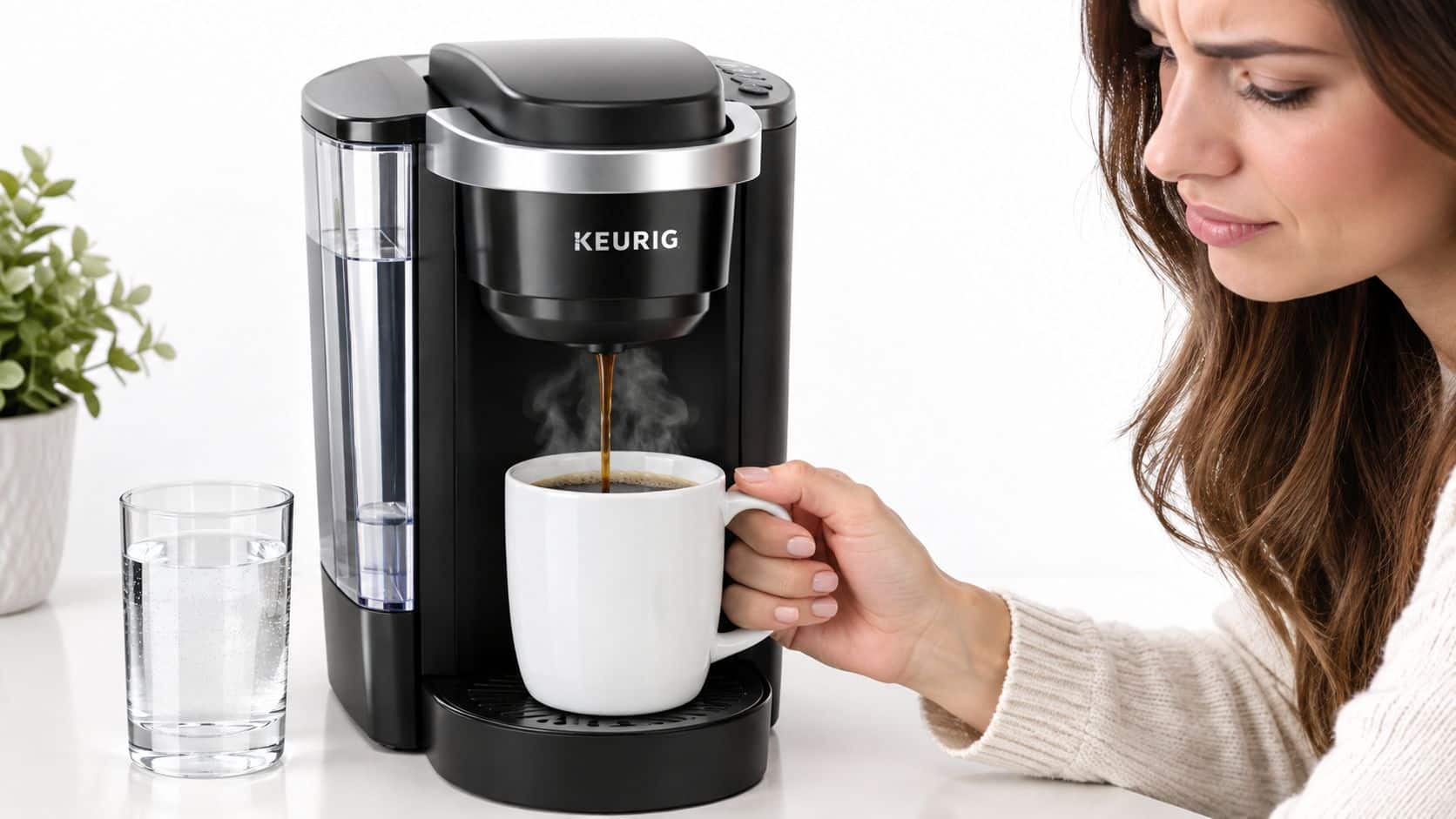
You've changed the pod, wiped the drip tray, and cleaned the outside of your Keurig, yet the coffee still tastes flat, bitter, or faintly like chlorine. The reservoir may be the overlooked part of the problem. A brewer can look spotless while the water entering every cup carries taste-and-odor compounds and minerals that affect flavor and contribute to scale.
A 2 pack Keurig water filter cartridge refill turns that hidden chore into a simple maintenance habit. The cartridges are replaceable, the setup is straightforward, and the service cycle gives you a practical reminder instead of leaving filter changes to guesswork. The important distinction is that filtration improves the water going into the brewer, while descaling addresses deposits already inside it.
This guide explains what the refill cartridge does, which Keurig systems may accept it, how to prepare and install it, and where premium cartridges differ from generic alternatives. If you're starting with the physical filter assembly, this coffee maker water filter replacement guide can help you identify the maintenance task before you buy.
Introduction Why Your Keurig Coffee Tastes Off
Fresh coffee pods can't compensate for water that already tastes unpleasant. If your first cup has a chlorine note, a dull finish, or a flavor that seems oddly harsh, the water reservoir deserves attention before you blame the pod or the brewer.
Water moves from the reservoir through the machine and into the cup. That makes the reservoir filter an upstream control point. An old cartridge may no longer provide the same taste support, while unfiltered water can continue sending chlorine-related compounds and hardness minerals into the brewing path. The machine may still turn on and produce coffee, so the issue can feel mysterious.
Practical rule: If the brewer works but the flavor has changed, inspect the water path before assuming the machine has failed.
The frustration grows when owners treat filtration and cleaning as the same job. They aren't. A cartridge primarily improves the water entering the brewer, while descaling removes calcium deposits that build up inside the machine. Keurig's descaling guidance says that descaling removes scale and that users should remove the water filter before starting the process.
Why the two-cartridge format is practical
A two-pack gives you a replacement ready when the first cartridge reaches the end of its service period. Keurig cartridge guidance uses two months or 60 tank refills, whichever comes first, as the replacement benchmark, as reflected in Keurig filter cartridge product guidance.
That schedule makes the refill a predictable consumable, not a permanent insert that owners can forget for years. The rest of this guide focuses on making that routine clear, from identifying the holder to choosing a cartridge that fits securely.
What 2 Pack Keurig Water Filter Cartridge Refills Are
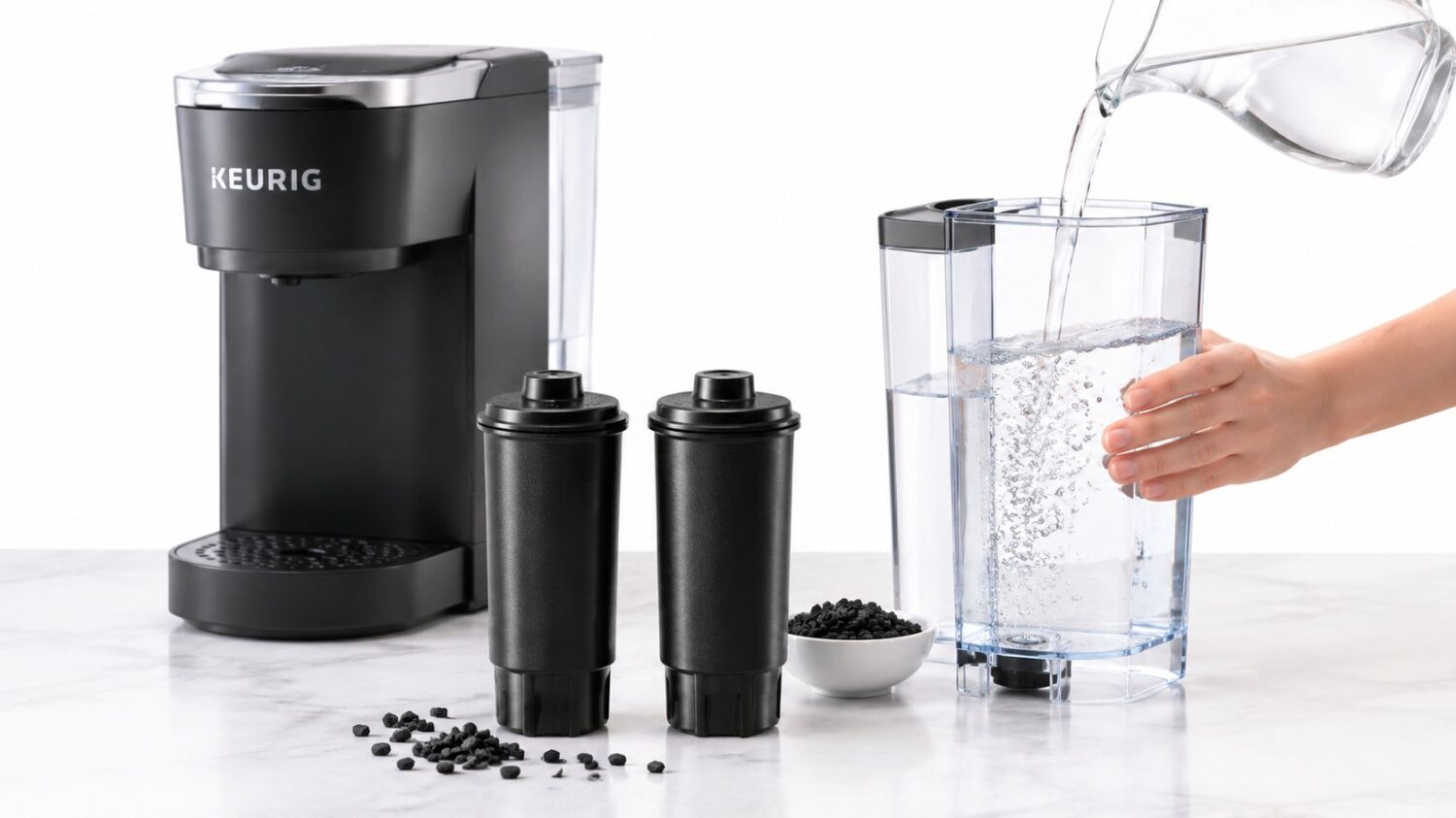
A Keurig water filter cartridge refill is a small replaceable cartridge, commonly filled with granular activated carbon, that fits inside a holder in the brewer's removable reservoir. The two-pack is a timed maintenance set: one cartridge serves the current cycle, while the second is stored for the next change. It belongs to the water path, not the entire appliance, so it does not replace the reservoir, pump, heater, or tubing.
The carbon bed works like a fixed-capacity trap. As reservoir water passes through, it captures chlorine-related compounds that can affect taste and odor. Once that capacity is used, the cartridge cannot keep performing at the same level indefinitely. Replacing it restores the filtration step, much as replacing a paper filter restores a fresh brewing surface.
The holder and preparation ritual
The holder keeps the cartridge aligned before water enters the brewing system. It usually sits inside the removable tank and may include a handle for lifting it out. The cartridge should not float freely in the reservoir or be installed without its holder.
A new cartridge also needs preparation before use. Follow the Keurig cartridge preparation instructions: soak it in fresh water for 5 minutes, then rinse it under running water for 60 seconds. Soaking wets the carbon bed, while rinsing removes loose particles that could otherwise appear as dark specks or affect the first water-only cycle.
How the two-pack fits a timed routine
Replace the cartridge every 2 months or after 60 tank refills, whichever comes first. Replacement guidance for Keurig cartridges uses both calendar time and usage because a lightly used brewer and a busy kitchen do not consume water at the same pace.
The two-pack works like a small maintenance calendar. Mark the installation date, track heavy use by tank refills, and keep the unopened cartridge in a clean, dry place until needed. The second refill is not a treatment for hard water or a substitute for descaling. It prepares the next carbon bed for water entering the brewer, while source-water choices, including pH balanced drinking water Dubai, may affect the water before it reaches the cartridge.
How Keurig Water Filtration Improves Taste and Protects Your Machine
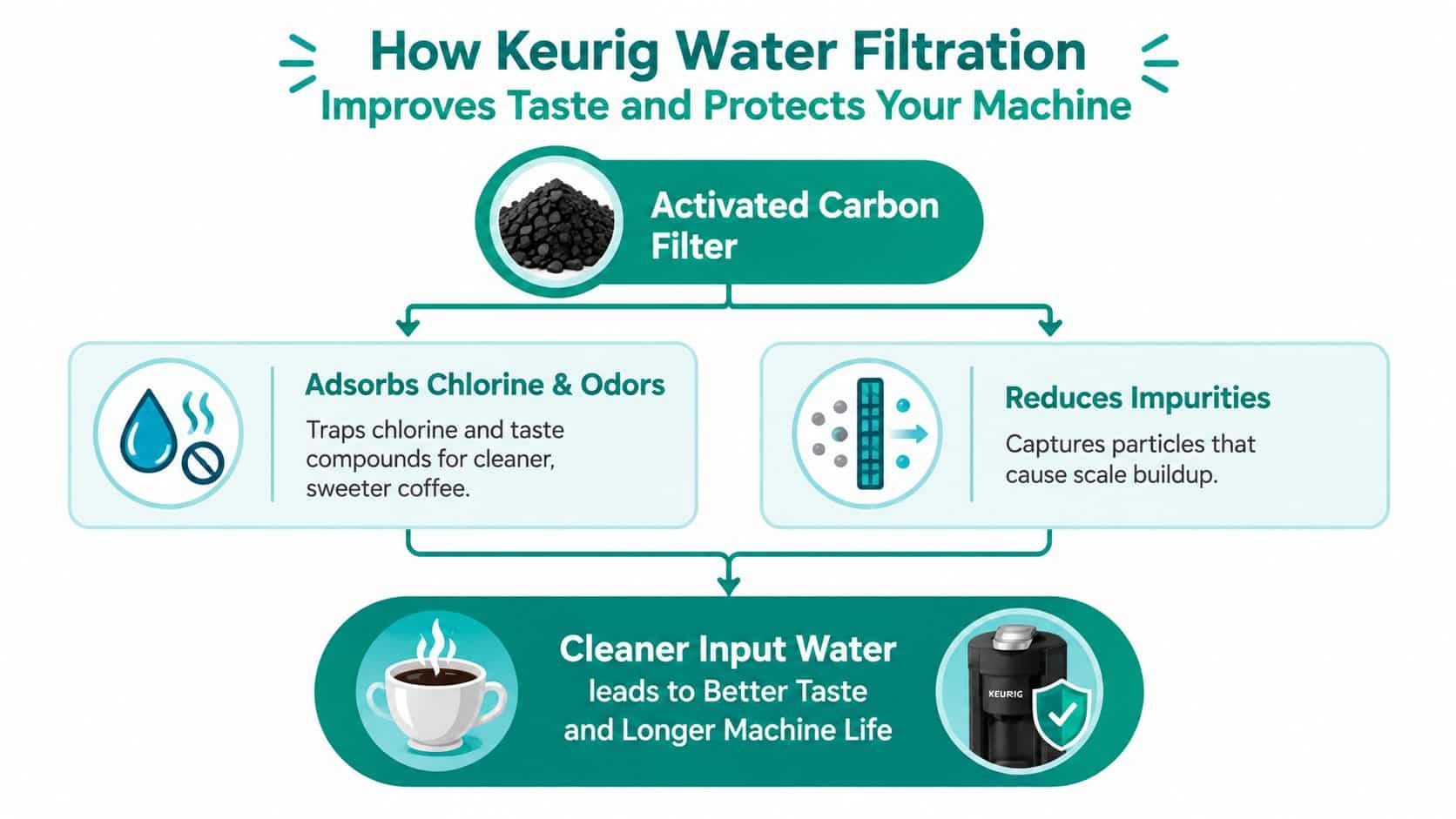
Activated carbon helps most when the complaint is about taste and odor. Keurig-style cartridges primarily use granular activated carbon, and the media adsorbs chlorine and related compounds that can make coffee smell or taste unpleasant. The technical role is adsorption, not broad mineral removal, as explained in this Keurig filter media overview.
That distinction prevents a common buying mistake. A filter can make the water taste cleaner without turning hard water into soft water. Calcium and magnesium can remain in the brew water, and those minerals can still contribute to scale inside the reservoir, heater, and tubing.
What carbon filtration can do
The cartridge acts before brewing begins. It treats incoming reservoir water, so the coffee starts with a cleaner-tasting water input. That can matter when tap water carries a noticeable chlorine character or other taste-and-odor compounds.
The filter's value is sensory and preventive:
- Taste support: Activated carbon adsorbs chlorine-related compounds that can interfere with coffee flavor.
- Water-path support: The cartridge provides a consistent filtration step before water reaches the brewer.
- Routine control: A defined replacement cycle gives owners a clear maintenance trigger.
For a deeper explanation of why water changes the cup, see this guide to how water filters affect coffee taste.
What carbon filtration cannot do
Carbon-only filtration doesn't significantly reduce total dissolved solids. It also doesn't reliably remove the calcium and magnesium that create mineral scale. That's why a filtered cup and a scaled machine can exist at the same time.
A cleaner-tasting cup doesn't prove that the brewer is free of mineral deposits.
Hard-water users should treat the cartridge and descaler as complementary tools. The cartridge manages the water entering the machine, while descaling removes calcium deposits that have accumulated inside it. For coffee systems that need both taste treatment and hardness reduction, commercial cartridges often combine activated carbon with ion exchange, a two-function approach documented in this coffee-water filtration guide.
Premium vs Generic Keurig Filter Cartridges Compared
A two-pack makes the replacement schedule easier to manage. If your routine is one cartridge for about 60 refills or two months, the second cartridge can serve as the next scheduled change rather than an emergency spare. The comparison between premium and generic options then comes down to how reliably each cartridge fits, rinses, and performs through that cycle.
A premium cartridge usually offers clearer compatibility information and more consistent construction. That can reduce concerns about leaks, loose fit, poor durability, or inconsistent filtration. A cartridge that sits crooked may let water pass around some of the carbon media. A holder that does not seat firmly can also shift when the reservoir is filled or removed.
| Feature | Premium Cartridge | Standard Generic |
|---|---|---|
| Fit and seating | Usually designed around a defined compatible holder shape | Fit can vary by manufacturer and batch |
| Taste consistency | More predictable when carbon media and construction are consistent | Results may vary between packs |
| Durability | Built for routine handling during replacement | Housing strength and consistency depend on the supplier |
| Compatibility | Listing normally identifies supported Keurig systems | Some listings use broad compatibility wording |
| Setup confidence | Clear preparation and replacement guidance is easier to follow | Instructions may be brief or incomplete |
| Scale control | Carbon-focused cartridges primarily support taste and odor control | Carbon-focused generics have the same basic limitation |
Price is not the only trade-off
A premium cartridge may justify its higher cost by reducing guesswork. Look for a listing that identifies the compatible holder or model families, explains preparation, and states the replacement interval. Those details make the cartridge easier to use as a timed maintenance system.
A standard generic can work well for a buyer who has confirmed the holder design and is willing to inspect the fit. Lower cost matters less if the cartridge shifts, leaks, releases excessive loose carbon, or requires repeated troubleshooting.
Carbon-only versus two-function designs
The word “filter” does not guarantee hardness reduction. Carbon-only cartridges mainly address chlorine-related taste and odor. They do not significantly reduce total dissolved solids or reliably remove the calcium and magnesium that form scale. A cleaner cup and a scaled brewer can therefore exist together.
Two-function cartridges add ion exchange to activated carbon. That combination addresses taste compounds and carbonate hardness, while carbon-only designs focus mainly on flavor and odor. Choose based on the problem you are solving: cup taste, mineral buildup, or both.
For a Keurig reservoir refill, verify the holder first. Then check the stated media, preparation instructions, and replacement guidance. A premium label alone cannot compensate for a poor fit, and a generic label alone does not prove poor performance.
Compatibility Guide for K-Classic K-Slim K-Duo and More
A refill works only when it matches the brewer's reservoir filter holder. Color, bundle name, and the word “Keurig” in a listing do not confirm compatibility. K-Duo and mixed-reservoir models cause extra confusion because sellers may mention tall or short handles without showing which assembly each model uses. This Keurig refill compatibility discussion illustrates why the holder matters more than the product title.
Inspect the reservoir first
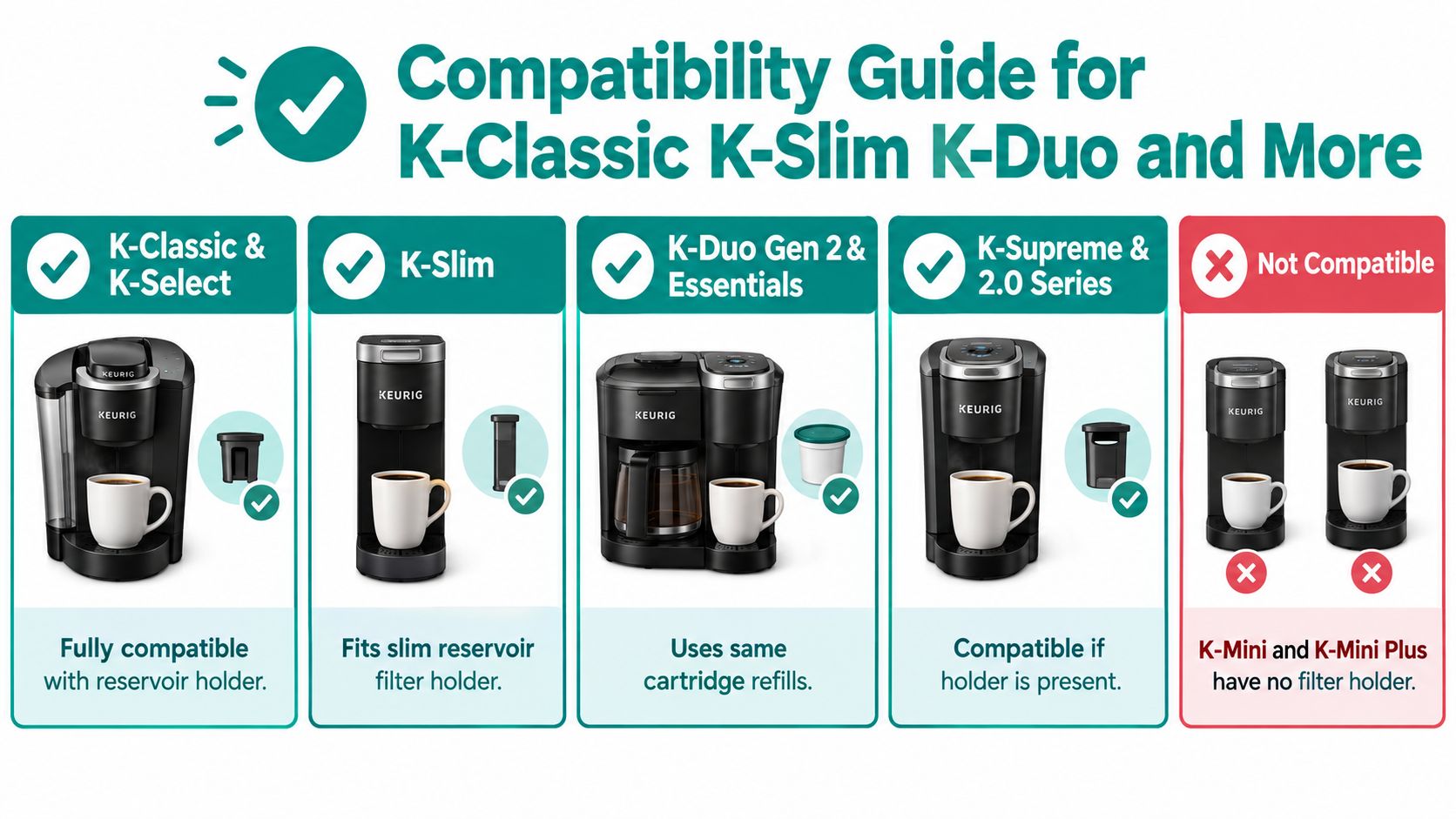
Remove the tank if the filter area is hard to see. Look for a removable plastic assembly with a handle or upper grip. It works like a dock that holds the cartridge in the water path. If you see only molded plastic, do not force a refill into the tank. K-Mini and K-Mini Plus, for example, do not have a filter holder.
Common model families still require a physical check:
- K-Classic and K-Select: Confirm that the reservoir includes a holder.
- K-Slim: Look for the slim holder in its side-mounted reservoir.
- K-Duo Gen 2 and Essentials: Compare the holder because the mixed-reservoir design can make handle descriptions confusing.
- K-Supreme and 2.0 series: Compatibility depends on the specific holder installed.
- Ninja DualBrew compatible options: Select a listing that names the relevant Ninja system rather than assuming a Keurig refill fits.
Match the handle and assembly
Tall and short handles identify different holder designs, but handle length alone cannot verify a model. Compare your existing assembly with the listing, then check cartridge dimensions or compatibility notes when provided.
Fit check: A brewer without a removable reservoir holder cannot use a refill cartridge by itself.
If the holder is missing but the brewer supports one, choose a starter kit containing the holder and cartridges. If the machine has no holder design, follow the manufacturer's maintenance guidance instead of improvising an insert. Once the fit is confirmed, a 2-pack can support a timed replacement routine, with one cartridge used first and the second kept ready for the next replacement point. Carbon filtration can improve chlorine-related taste and odor, but compatibility comes before any taste benefit.
How to Install and Replace Your Keurig Water Filter
A clean installation takes only a few deliberate steps. Begin with the brewer switched off, remove the reservoir, and lift the filter holder from the tank. Open the holder, discard the used cartridge, and rinse the holder if it contains loose carbon or reservoir debris.
Prepare the new cartridge
Place the replacement cartridge in fresh water for 5 minutes. Then hold it under running water for 60 seconds, following the Keurig refill preparation guidance. This preparation wets the activated carbon and helps flush loose particles before the cartridge enters the reservoir.
After rinsing, place the cartridge into the lower portion of the holder. Close the holder fully and check that the cartridge sits evenly rather than leaning to one side. A secure closure helps the cartridge remain in position as you fill and remove the tank.
Seat the assembly
Return the holder to the reservoir and press it into its intended position. The handle should remain accessible, and the assembly shouldn't wobble or float. Fill the reservoir with fresh water and run a water-only cycle if your brewer's normal setup calls for one.
If you're unsure where the holder sits, use this Keurig water filter location guide before applying pressure. The visual shape of the holder matters more than trying to force the cartridge into an opening near the reservoir base.
Track the replacement point
Record the installation date somewhere visible, or mark the next replacement on your household maintenance calendar. Replace the cartridge after 2 months or 60 tank refills, whichever comes first, using the established Keurig replacement interval.
Remove the filter before descaling. Keurig's maintenance guidance specifically calls for taking the filter out during that process because descaler and filtration serve different roles. A descaling solution handles mineral deposits inside the brewer, while the cartridge manages incoming water quality. Cleaning tablets can complement descaling when coffee residue and brew-path oils need separate attention.
Smart Buying Tips and Final Recommendation to Shop
Choose a two-pack by matching the cartridge to your holder first. Then evaluate the media description, preparation directions, replacement guidance, and seller support. A listing that clearly states compatibility and explains the service interval gives you more useful information than one that makes broad purification claims without explaining what the cartridge removes.
Your water conditions and usage pattern also matter. Carbon filtration is a practical choice when chlorine-related taste and odor affect the cup, but it doesn't replace descaling in areas where calcium and magnesium create scale. Heavy users should watch the 60-refill threshold, while lighter users can use the 2-month interval as the calendar reminder, based on Keurig cartridge replacement guidance.
A two-pack makes sense when you want the next replacement ready before the current one reaches its service limit. Confirm whether your brewer already has a holder, check whether the listing supports your model family, and compare the cartridge shape with the assembly in your reservoir. A descaler or cleaning tablets can round out the routine, because filtration and internal cleaning address different maintenance needs.
PureHQ Inc. offers Keurig-compatible water filter cartridges and related brewer-care accessories, including descaling products and cleaning tablets, so buyers can assemble a maintenance routine around their equipment. Select the cartridge format that matches your holder, prepare it properly, and treat the replacement date as part of normal coffee care.
Shop the 2 pack Keurig water filter cartridge refills from PureHQ Inc. to keep a replacement ready for your next maintenance cycle. Pair the cartridges with a compatible descaler or cleaning accessory if your brewer also needs mineral and residue care, then make the filter swap part of your regular brewing routine.

