
Coffee Machine Care
Your Guide to the Perfect Glass French Press Brew
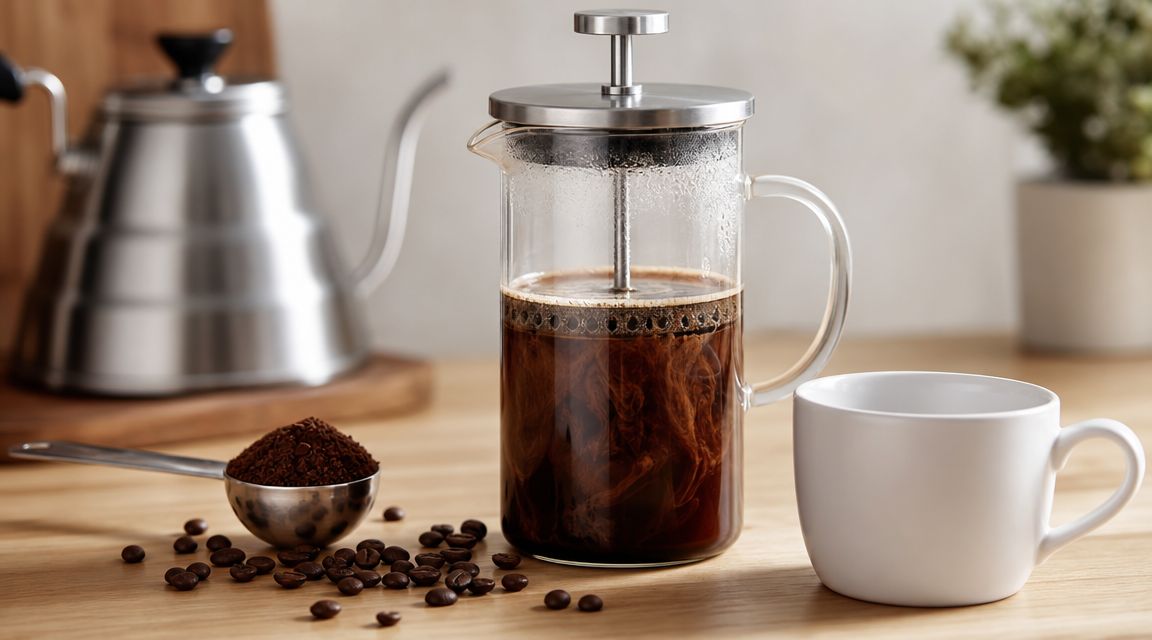
May
You're probably here because your current coffee routine feels flat. Maybe your drip machine is convenient but dull, maybe pods feel limiting, or maybe you've had French press coffee at a café and wondered why it tasted richer than what you make at home.
Then the hesitation kicks in. A glass French press looks breakable, cleanup seems messy, and almost everyone has heard a story about someone making a bitter, sludgy cup.
That fear is understandable. It's also fixable.
A glass French press isn't a fussy collector's item. It's one of the simplest ways to brew coffee with real body and character at home, and once you understand a few practical rules, it becomes easy to use with confidence.
Is a Glass French Press Right for You
If you want more flavor without buying a complicated machine, a glass French press makes a lot of sense. It gives you a direct, hands-on brew with very little between the coffee and the cup. You add grounds, add water, wait, press, and pour. That's the whole idea.
The catch is that beginners often treat it like either a delicate ornament or a foolproof dump-and-stir brewer. It's neither. It rewards a little attention, and in return it gives you a fuller, rounder cup than many automatic methods.
Who usually loves it
A glass model fits especially well if you care about these things:
- Visible brewing: You like seeing the bloom, the crust, and the liquid level as you brew.
- Straightforward gear: You want fewer moving parts and no electronics.
- Taste neutrality: You want the brewer material to stay out of the way.
- Flexible use: You want one brewer that can handle both a morning hot coffee and a chilled batch later on.
If you're still fuzzy on the basics, this short overview of what a French press coffee maker is gives a useful foundation before you shop.
The worries people have are real
Most objections come down to three things.
First, breakage. Glass can break if it's knocked, dropped, or stressed by rough handling. That doesn't mean it's unusable. It means you need a stable counter, a calm plunge, and sensible cleaning habits.
Second, sediment. French press coffee usually has more texture than paper-filter coffee. Some people love that body. Some don't. Filter design matters more than beginners expect.
Third, bitterness. This is usually a technique problem, not a French press problem. People let the coffee sit too long, pour too slowly, or leave brewed coffee in contact with the grounds.
Practical rule: Most “I guess French press isn't for me” complaints come from preventable mistakes, not from the brewer itself.
When it's the wrong choice
A glass French press may not be ideal if you need maximum heat retention, if you brew while rushing out the door, or if your kitchen tends to be rough on fragile items. In those cases, steel can be the better fit.
But if you brew at home, want a richer cup, and don't mind spending a few quiet minutes making coffee properly, a glass press is one of the most satisfying tools you can own.
Understanding the Magic of Immersion Brewing
French press coffee works a lot like steeping tea. Instead of water passing quickly through coffee, the grounds sit fully immersed in water, which gives the brew time to extract oils, aroma, and body more evenly.
That's why the cup often tastes rounder and heavier than paper-filter coffee. The method is simple, but the simplicity hides a lot of good brewing logic.
What the brewer is actually doing
A glass French press is typically a borosilicate-glass immersion brewer with a mesh plunger. Standard guidance places the water at 93–96°C (199–205°F) and uses about 30 g of coffee per 500 mL of water, or roughly a 1:16–1:17 ratio, and that same guidance says to decant immediately after pressing because extraction keeps going after the plunge in a French press brewing reference.
That tells you almost everything important:
- The glass carafe holds the slurry and lets you watch the brew develop.
- The plunger rod gives you controlled downward pressure.
- The mesh filter separates most of the grounds from the liquid, but not as completely as paper.
The borosilicate body matters because it's made for brewing use, not just display. You still need to treat it with care, but it's built for hot water and repeated use.
Why glass changes the experience
With glass, you can see whether all the grounds are wet, whether the bloom looks even, and where the plunger is sitting before you press. That visual feedback helps beginners correct mistakes fast.
It also makes the brew feel more intuitive. You're not guessing what's happening inside an opaque container.
For milk-based drinks, that body can be a real advantage. If you like the softer, fuller style of coffee and milk together, this guide for brewing perfect cafe au lait is a helpful next read because immersion coffee often stands up nicely in that format.
Heat matters more than people think
Glass is excellent for visibility and neutral taste, but it doesn't hold heat like insulated steel. That means temperature management matters during brewing and serving.
If you like understanding how heat consistency affects extraction, this explanation of temperature stability in coffee brewing helps connect the dots.
The French press is simple, not crude. When water temperature, ratio, and timing line up, simplicity becomes a strength.
The biggest beginner mistake is assuming the plunge finishes the brew. It doesn't. Once the grounds and brewed coffee remain together in the carafe, extraction keeps moving. Pressing is separation, not a pause button. Pouring the coffee out right away is what protects the cup from turning harsh.
Glass vs Steel The Ultimate Material Showdown
A common initial inquiry asks which French press tastes better. That's the wrong first question. The more useful question is which material fits your habits.
A glass French press gives you visibility, classic style, and a neutral-feeling brew experience. A stainless steel press gives you toughness and better heat retention. Ceramic sits in the middle for many buyers, with a different look and a more substantial feel.
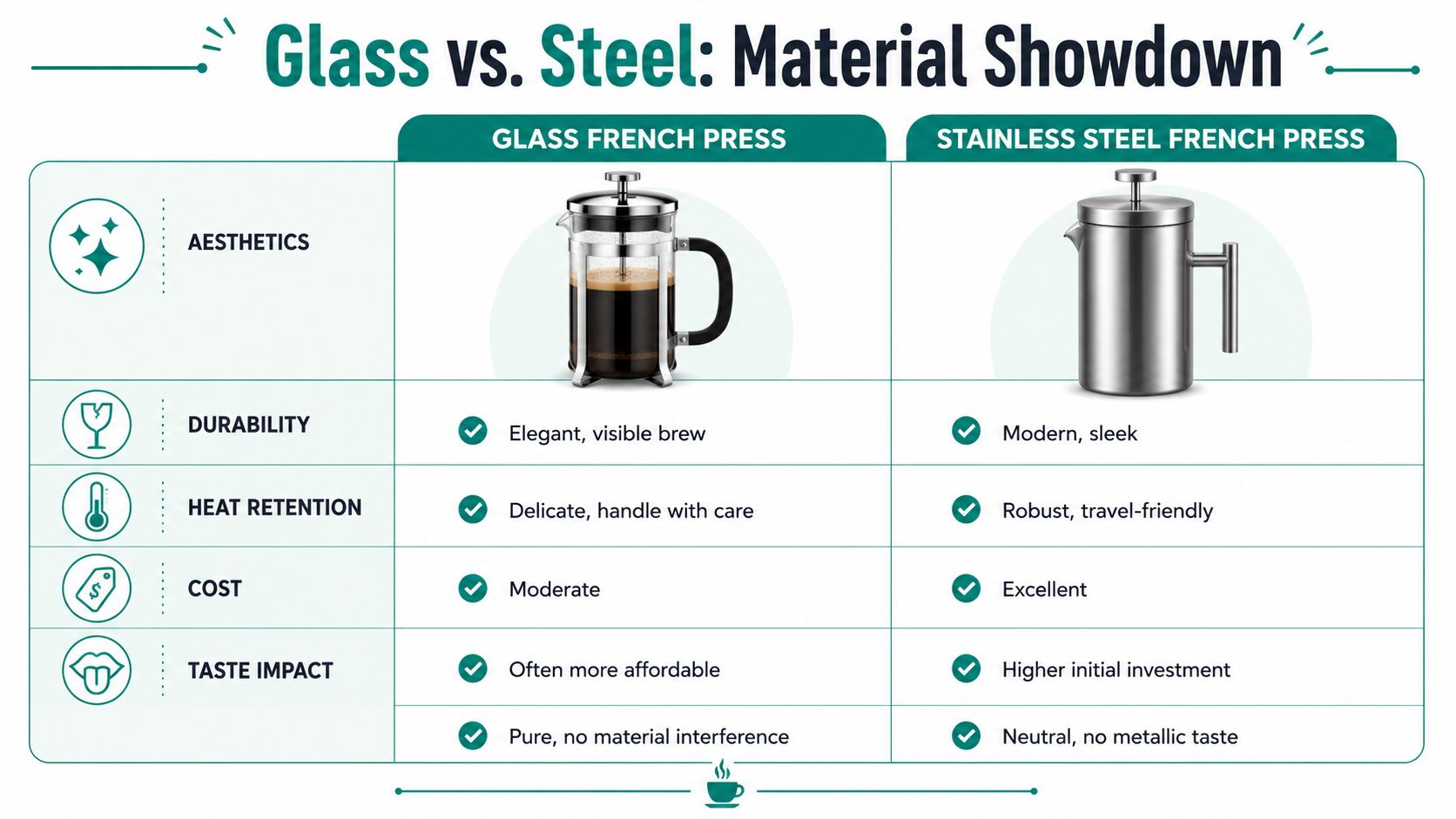
Quick comparison
| Material | Best fit | Main strength | Main drawback | Cup experience |
|---|---|---|---|---|
| Glass | Home brewers who like visibility | Easy to monitor brew, neutral presentation | More vulnerable to breakage, cools faster | Full-bodied, visually engaging |
| Stainless steel | Busy kitchens, travel, long sipping | Better heat retention, harder to damage | You can't see the brew | Full-bodied, warmer for longer |
| Ceramic | Style-focused home use | Solid feel, attractive serving piece | Heavier, still breakable | Full-bodied, calm and steady to pour |
What testing suggests in practice
Independent testing has shown that higher-end presses can reduce sediment through multi-layer filtration, while stainless-steel models avoid breakage and retain heat better. The tradeoff is that they are not necessarily better in taste, only different in sediment control and temperature stability, as discussed in this material comparison video on French press performance.
That lines up with what many home brewers notice after living with both styles. Steel solves practical problems. Glass improves visibility and often feels more connected to the brew itself.
If breakage is your main objection
This is the big one, and it's fair.
Glass models need gentler handling. A rushed plunge, a slippery sink, or bumping the carafe against a faucet can end the morning badly. But “glass breaks” is only half the story. A lot of people use glass presses for years because they build tiny habits around them:
- Keep the brewer on a dry surface: Wet counters and crowded sinks create most avoidable accidents.
- Press with patience: Forcing the plunger adds stress and often stirs up fines anyway.
- Wash with intention: Separate parts, rinse thoroughly, and avoid banging the carafe into hard surfaces.
- Store it where it won't get clipped: Open shelving looks nice, but safe spacing matters more.
Buyer objection answered: If you know you're hard on kitchen gear, steel is the safer call. If you're reasonably careful and value seeing the brew, glass is still a practical everyday choice.
Taste, sediment, and comfort
People often assume steel must add a metallic taste. In normal use, the issue is usually overstated. The more noticeable differences are sediment and temperature. Better filters can produce a cleaner cup, and insulated steel can keep coffee hotter while you sip.
Glass still wins for the ritual. Watching the coffee settle and pressing through a clear carafe is part of the appeal.
If you enjoy glass brewing gear in general, even outside coffee, products like this Wellness Apothecary infuser show why people keep coming back to transparent vessels. Being able to see the extraction changes how the whole process feels.
Your Step-by-Step Guide to the Perfect Cup
You buy a glass French press because you want coffee to feel simple. Then the first cup comes out muddy, bitter, or weirdly weak, and it is easy to assume the brewer is the problem. In practice, the press is usually doing exactly what your grind, water, and timing tell it to do.
That is the appeal of this brewer. It teaches you fast.
A visual guide helps before your first brew:
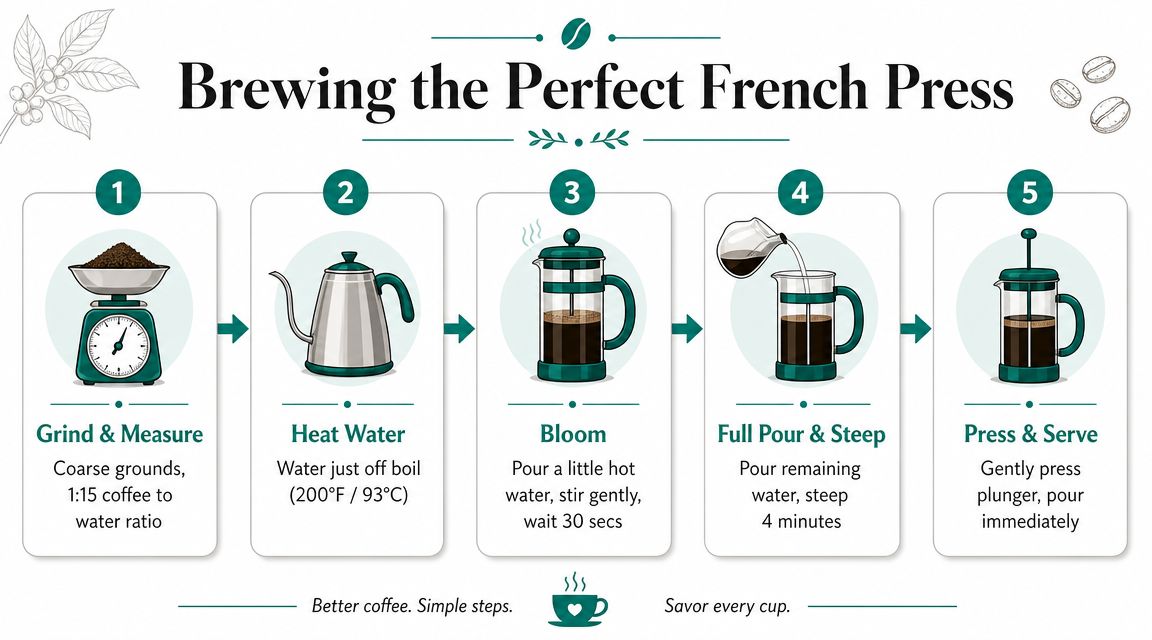
Start with the grind
French press coffee lives or dies on grind size. Too fine, and the mesh filter lets more sediment through, the plunger gets harder to press, and the cup turns heavy and harsh. Too coarse, and the brew can taste thin.
If you want a practical walkthrough, this guide on how to grind coffee for a French press is worth keeping handy.
For most beginners, this sequence gives you a reliable starting point:
- Measure your coffee and water. Consistency matters more than expensive gear.
- Heat your water just off the boil. Water that is too cool can leave the coffee flat. Water that is too hot can make mistakes in grind and timing show up harder.
- Saturate all the grounds. Dry pockets brew unevenly and leave you with a mixed cup.
- Steep, press gently, and serve right away. Good French press coffee is as much about the finish as the start.
Build the cup in stages
Add the grounds to the empty carafe first. Pour in a little hot water to wet everything evenly. If you see dry clumps floating on top, give it a gentle stir. Then add the rest of the water and set the lid on with the plunger fully raised.
Let it steep undisturbed. Glass helps here because you can watch the crust form and the grounds settle, which makes it easier to learn what a normal brew looks like. That visibility is one of the advantages of glass over steel. It does not just change the look of the brewer. It helps you make better small adjustments.
When it is time to press, use light, steady pressure. Never force it. If the plunger feels stubborn, your grind is probably too fine, or you stirred up too many fines before pressing.
A simple video demo can make the motion easier to copy:
Pouring changes the final taste
The press does not stop brewing just because the plunger reached the bottom. Grounds are still sitting in hot liquid, so the coffee keeps extracting and usually gets more bitter as it waits. Pour it into mugs or a separate server as soon as you press.
Water quality matters more in a French press than many people expect because there is no paper filter to soften rough edges. If your coffee tastes dull even with good beans and a decent grind, start with fresher water before you blame the brewer. That one change fixes a surprising number of disappointing cups.
Use the French press as a brewer and a filter, not a storage pot.
If you like comparing brew methods and dialing in a consistent daily routine, this article on mastering your daily performance coffee offers useful perspective on repeatable habits.
Cold brew works beautifully in the same brewer
A glass French press earns its keep beyond hot coffee. It is also one of the easiest ways to make cold brew at home, especially if you do not want another piece of equipment taking up counter space.
The process is simple. Add coarse grounds, pour in cold water, let it steep in the fridge, then press and decant. Sightglass includes French press cold brew in its French press brewing guide, which is a good reminder that the brewer is more versatile than many buyers realize.
Glass works nicely for cold brew because you can see how much space the grounds are taking up and whether the mixture looks evenly saturated. Steel still holds temperature better for hot coffee, but with cold brew that advantage matters a lot less. This is a good example of how material choice affects brewing style, not just durability.
Common mistakes that wreck the cup
- Grinding too fine: You get sludge, resistance, and a heavier cup than you wanted.
- Pressing too hard: The screen is a filter, not a shovel.
- Letting coffee sit in the carafe: The flavor keeps changing after the brew should be done.
- Skipping a full rinse after brewing: Old oils cling to the mesh and glass, then show up in tomorrow's cup.
- Using the same approach for hot brew and cold brew: Both need coarse coffee, but timing, temperature, and serving are different.
A glass French press rewards calm, repeatable habits. Once you get the grind right and stop overthinking the plunge, it becomes one of the easiest brewers to trust every morning.
How to Choose the Right Glass French Press
Buying the right press is less about chasing a premium label and more about matching the brewer to your routine. The wrong size, awkward handle, or flimsy filter will annoy you every day. The right one will naturally become part of your morning.
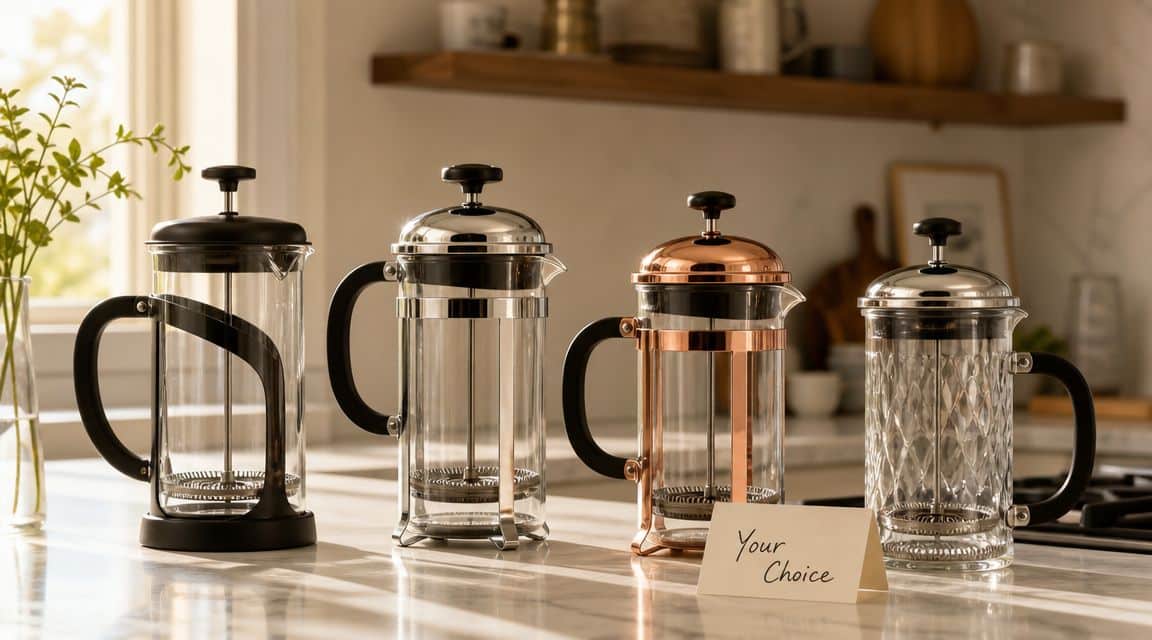
Capacity should match how you actually drink coffee
Common glass French press sizes cluster around 20 oz (5-cup) and 34 oz / 1 L. The smaller format brews about five 4-oz servings, while the larger format is meant for batch brewing at home or in small offices, according to this Lehman's product reference for a glass French press.
That sounds simple, but many buyers still choose poorly.
- Small format: Better if you brew for yourself or for two lighter servings.
- Larger format: Better if you share coffee, refill mugs, or want one batch instead of two.
- Don't buy by “cup” language alone: Think in terms of your actual mug habits.
Design details matter more than the listing photos
Some carafes look nearly identical online. In use, they can feel very different.
Check the handle shape. You want a secure grip when the brewer is full and hot. Look at the spout too. A neat pour is underrated because French press coffee already carries more body, so a clumsy spout makes the last part of serving messier than it needs to be.
Filter quality changes the cup
Not every mesh assembly performs the same way. A basic filter can work perfectly fine, but better-built systems usually fit more neatly and control fines more effectively.
Look for these clues:
- Tighter assembly: Parts should sit flush and move smoothly.
- Replaceable screens: This helps long-term maintenance and future cleaning.
- Stable plunger travel: A wobbling rod usually signals a cheaper build.
If sediment really bothers you, prioritize the filter more than the frame finish.
Replacement parts are a smart buy, not a boring one
Glass carafes are the most vulnerable piece of the brewer, so replacement availability matters. If a brand sells spare beakers, filters, and rods, the press becomes a longer-term tool rather than a disposable purchase.
That's one of the easiest ways to buy smarter. A pretty press with no parts support can become useless over a minor accident. A simpler model with available replacements often turns out to be the better value.
Care Durability and Essential Accessories
A glass French press lasts longer when you treat it like a working tool, not a sink accessory. Most damage happens after brewing, not during it. People rush cleanup, tap the carafe against the bin, or rinse hot glass with much colder water.
The first habit to build is gentle emptying. Scoop or tap out the grounds carefully, then rinse the carafe and filter parts separately. Cleaning the mesh well matters because trapped oils can make future brews taste stale.
Keep the glass safe
A few habits go a long way:
- Avoid thermal shock: Don't take a very hot carafe straight into very cold rinse water.
- Disassemble before deep cleaning: Filter plates and mesh trap residue if you leave them assembled too long.
- Dry parts fully: Moisture left in the filter stack can hold odors and old coffee residue.
- Use soft tools: A non-abrasive sponge is safer than anything harsh or scratchy.
For many people, the most useful accessories are not flashy. A good burr grinder improves consistency, and better water improves flavor. If your kitchen includes machines alongside your French press, a descaler and cleaning tablets are practical additions because scale and residue affect the rest of your coffee setup too.
Good French press maintenance is mostly about preventing stress, preventing residue, and replacing worn filter parts before they become annoying.
A brewer with real staying power
The French press isn't a trend piece. The modern glass French press has a documented patent history going back to 1852, was refined in 1929, refined again in 1958 by Faliero Bondanini, and Bondanini's Chambord design later became even more established after Bodum acquired the original distributing company in 1991, as outlined in this history of the French press design.
That history shows in the design. The basic format has lasted because it works. A glass carafe, a metal mesh plunger, and a simple immersion process still make excellent coffee when the user respects the method.
If you want to improve the rest of your coffee setup alongside your glass French press, shop PureHQ Inc. for practical brewing accessories and maintenance supplies that help keep everyday coffee cleaner, simpler, and more consistent.

