
Coffee Machine Care
Removable Filter Basket Guide: Models, Sizes and Cleaning
Oct
Your coffee can taste weak, gritty, or stale even when you've changed nothing about your beans, grind, or water. Often the culprit is sitting right under the lid. A clogged, warped, or poorly seated removable filter basket slows water, lets grounds slip past, and leaves old oils in the brew path. Removable only helps when you clean it, dry it, and match it to your exact model. If you treat the basket as a throwaway holder rather than a working part, you'll keep chasing flavor problems in the wrong place.
Why Your Basket Changes Every Cup You Brew
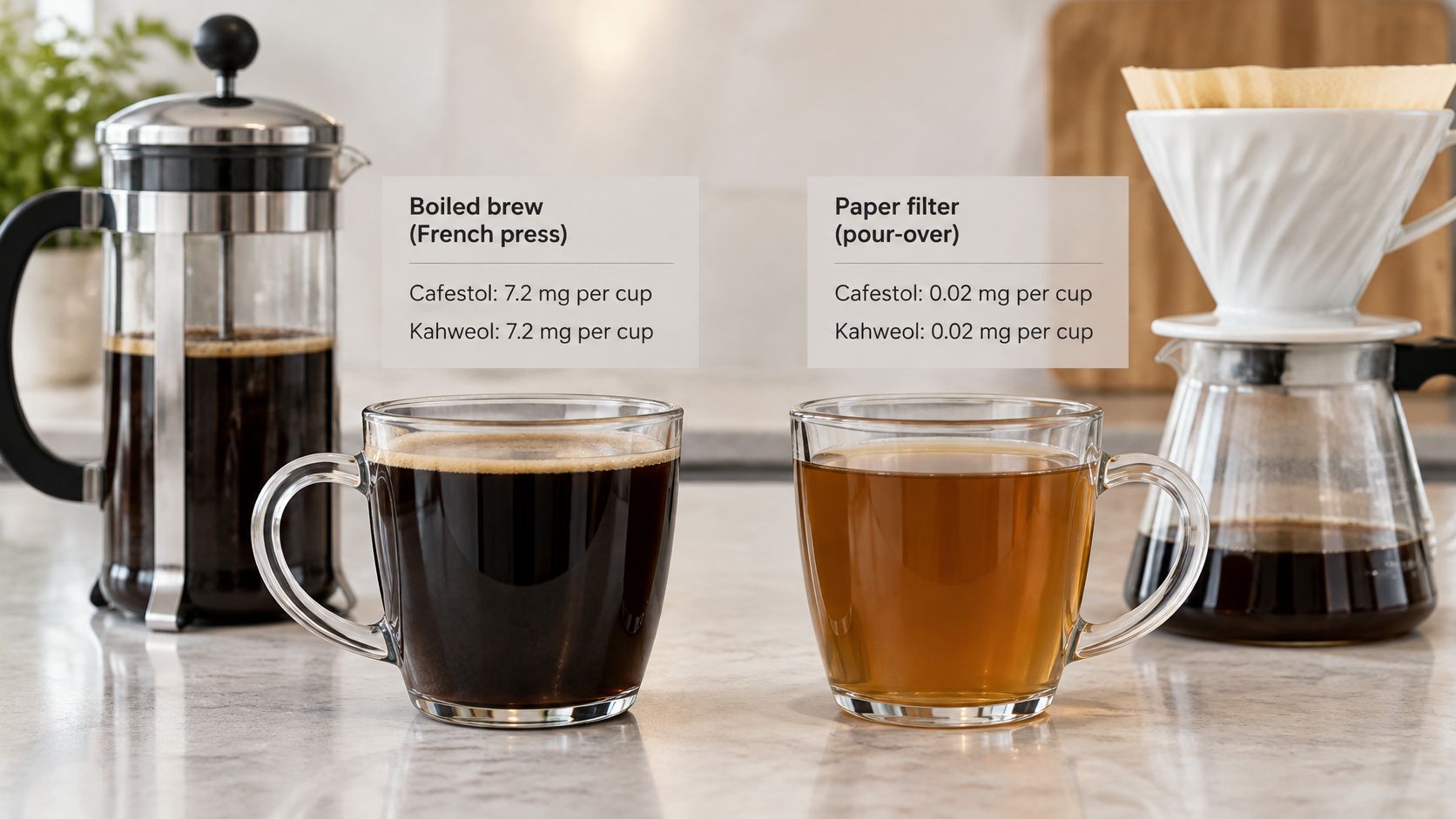
Boiled coffee carries far more cafestol and kahweol than paper-filtered coffee. The basket determines whether water passes through paper, mesh, or a perforated base, changing which coffee compounds and particles reach your cup.
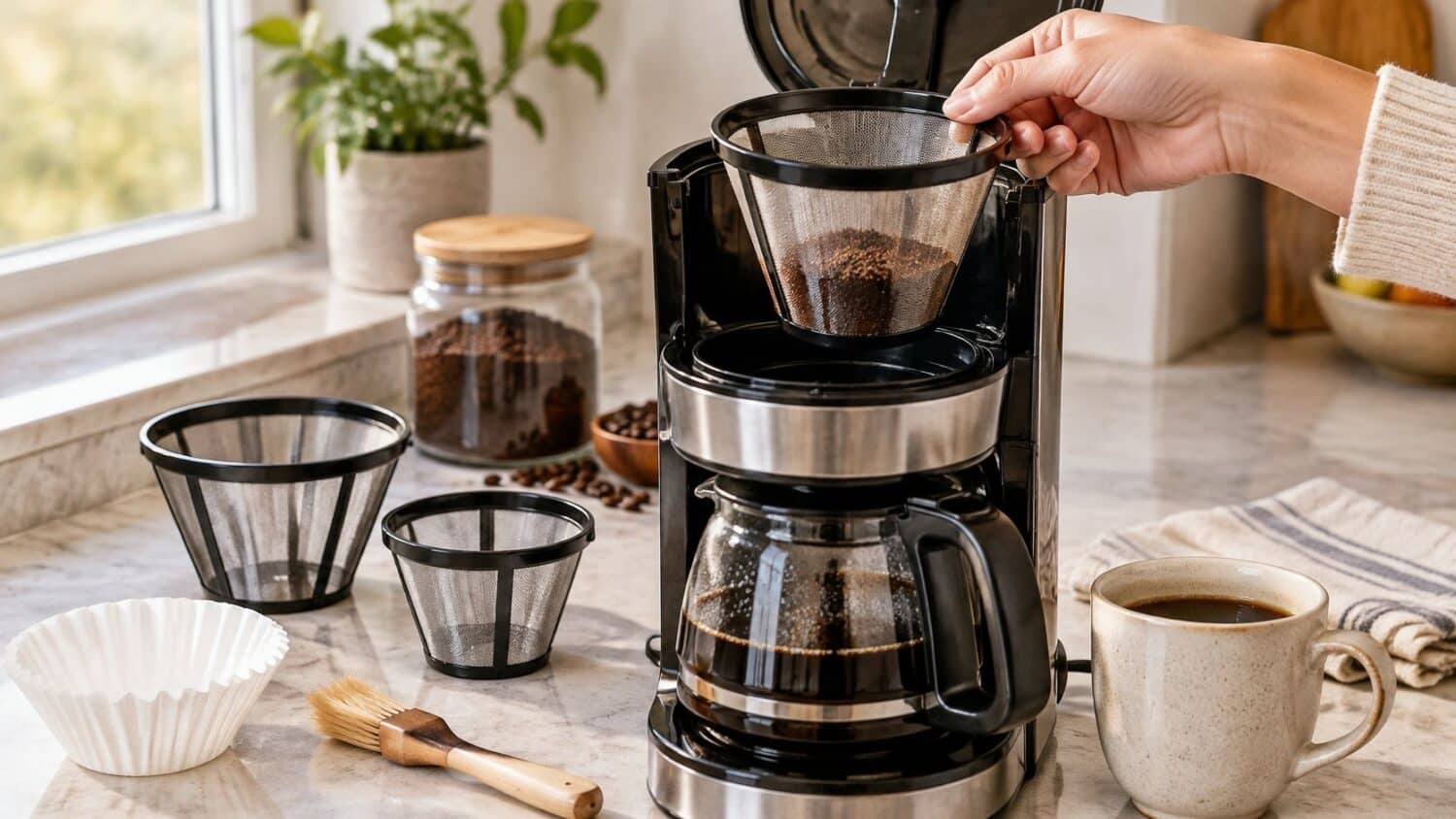
A removable filter basket is a lift-out holder inside the brewer. It carries the grounds or paper liner and lets you reach its openings for cleaning. It needs to sit correctly and stay clear of debris to maintain even flow.
Brew the same coffee on two mornings. With clean mesh, water drains through the grounds evenly. If fine residue blocks an outlet the next day, water may pool unevenly and produce a less balanced, more bitter cup. The recipe is unchanged, but restricted flow alters extraction.
Basket material and construction also affect filtration. Paper holds back more oils and fine particles than mesh, while a perforated base controls how brewed coffee drains. The coffee-filter reference describes how filter design affects what passes into the cup, but it does not support a specific study or measurements about basket dimensions.
You can put grounds directly in a reusable mesh basket or place a disposable paper liner inside it. Mesh is reusable, but needs thorough cleaning to remove residue; paper is discarded after brewing, but must fit the basket without folding over or blocking the outlet. For either setup, check the fit, keep the openings clear, and let the basket dry fully after washing. Removable only helps when care matches the basket's material and how it seats in the brewer.
Removable Filter Basket Models and Sizes at a Glance
Removable filter baskets by machine type and capacity
| Machine or basket | Basket type | Typical size or capacity | Removable for cleaning |
|---|---|---|---|
| Keurig K-Duo (Gen 2 and Essentials) | Mesh basket for grounds or paper liner | Use the grounds capacity stated for your exact model in the manual | Yes |
| Keurig K-Duo Plus | Mesh basket for grounds or paper liner | Use the grounds capacity stated for your exact model in the manual | Yes |
| Ninja DualBrew | Reusable pod or basket | Use the pod or basket capacity stated for your exact model in the manual | Yes |
| Breville espresso portafilter | Portafilter basket with perforated base | Single about 7 to 9 g, double about 14 to 18 g, 58 mm typical | Yes, lifts out of the portafilter |
How to Read Your Row
Choose a row by machine family and basket type, then confirm the capacity in the manual for your exact model. A K-Duo basket holds grounds for a carafe brew and may also take a paper liner. A Breville portafilter basket holds a tamped puck under pressure, so both dose and diameter need a closer fit check.
Capacity means dry grounds, not finished cup size. Filling a basket according to the mug size can lead to overflow or poor extraction if the dose exceeds what the basket is designed to hold. The single and double doses shown for Breville are typical ranges; check your machine manual for the specified basket and dose.
Practical rule: Find the model number on the machine base or in the manual, match it to the correct row, and only then buy a basket or liner.
Model names alone do not guarantee that a basket or reusable pod will fit. For a Ninja DualBrew, check the manual for the required basket type and capacity. Apply the same check across the K-Duo family: Gen 2, Essentials, and Plus models should not be assumed to use identical parts.
Fit depends on more than the outside diameter. Compare the basket's depth, rim shape, seating ledge, and outlet position with the brewer's original part. A basket that looks close in a product photo may still sit unevenly or fail to drain correctly. If the listing does not clearly name your machine family, choose one that does. Removability helps only when the basket seats properly and can be cleaned and dried according to its material.
Why Removable Baskets Make Cleaning and Replacement Easier
The biggest advantage is direct access. You can lift the basket out, turn it over, and see the mesh, rim, and outlet. A rinse cycle inside the machine can't show you a half-blocked opening or residue packed around a seam.
Three Advantages That Matter Daily
- You can inspect the problem: Carrying the basket to the sink lets you brush the spots water alone won't clear and check whether flow problems come from residue or damage.
- Cleaning takes minutes, not guesswork: Emptying and rinsing a lift-out basket is straightforward, while a fixed basket forces you to work around the brewer's internals with limited visibility.
- Replacement stays small and cheap: A worn basket or torn liner can be swapped for one matched to the same model, so you don't replace a whole machine for one failed part.
Take a hypothetical household that brews twice a day with loose grounds. Within a week, the coffee starts tasting weak and the brew runs slow. Because the basket lifts out, they find fine residue lodged in the perforations, brush it clear, rinse, and fix the problem in under five minutes. With a fixed basket, that same buildup stays hidden much longer.
That access also changes how you judge wear. You're not guessing from taste alone. You can hold the basket up, feel for roughness, and see whether the mesh is distorted.
Signs a Basket Is Due for Replacement
- Warping: The rim no longer sits flat or the basket rocks in its holder.
- Cracks: Any split in plastic or damage around the rim lets water bypass the intended path.
- Pitting: Rough, corroded spots on metal trap residue and are hard to clean fully.
- Clogged mesh: Openings stay blocked after brushing and soaking as the manual allows.
- Lingering odor: A stale smell remains after a full clean and complete drying.
Keep lifespan expectations tied to the manufacturer manual for your model and material. A removable design makes maintenance easier, but it doesn't make any basket permanent.
How to Remove, Clean and Dry a Basket Safely
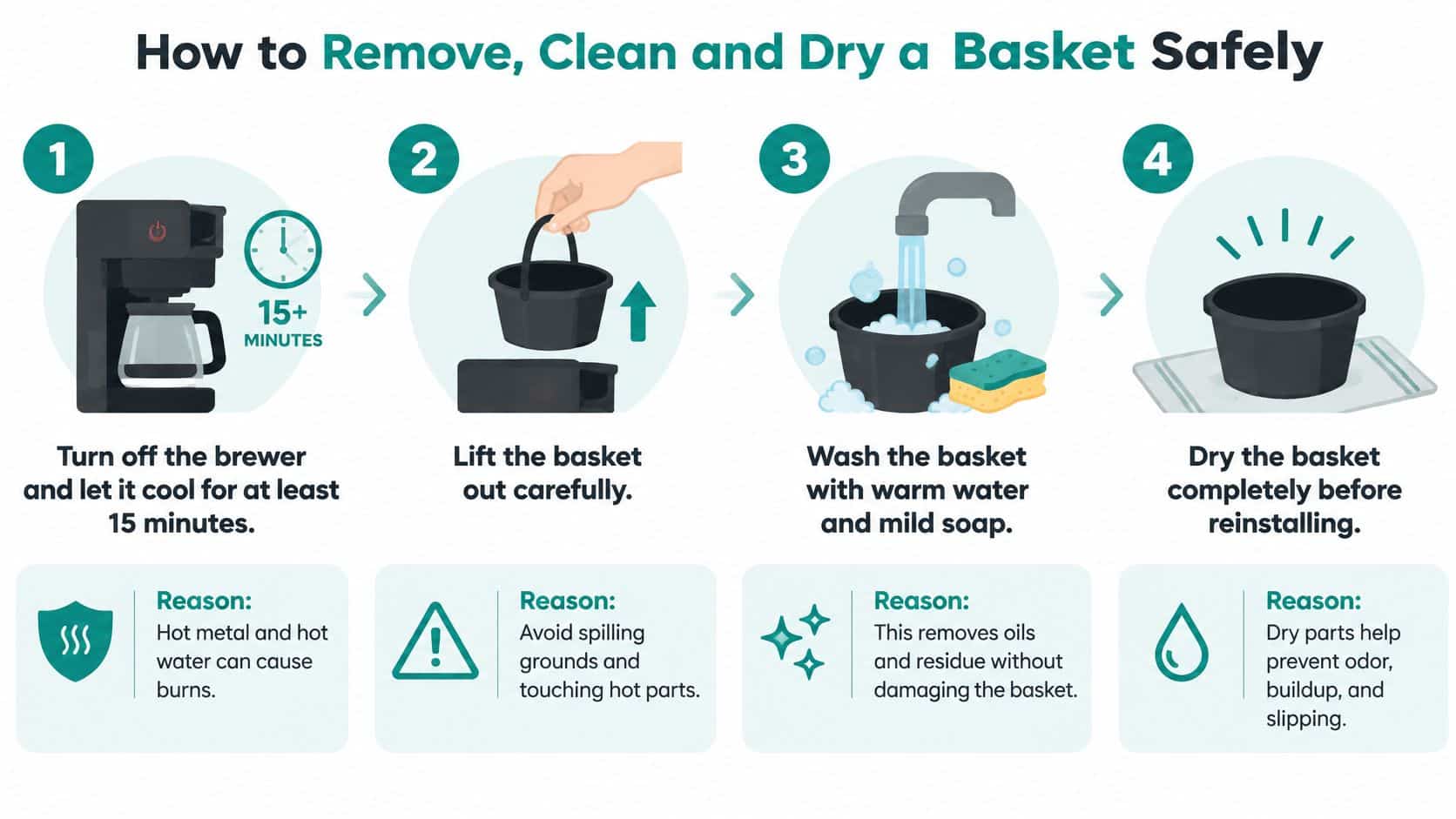
A removable basket is easier to clean only when it is removed, washed, dried, and returned to the brewer correctly. Grounds and coffee oils can collect around the rim, mesh openings, outlet, seams, and coatings. If the basket goes back damp, leftover moisture can carry an odor into the next brew. Match each cleaning step to the basket's material and how it fits in the brewer.
Daily and Periodic Cleaning Steps
- Turn off the brewer and let it cool as the manual directs. Hot metal, plastic, or trapped water can burn you when you remove the basket.
- Lift out the basket and discard the grounds or used paper liner. Wet grounds left behind can settle into mesh openings.
- Rinse with warm water, then brush the mesh, rim, seams, and outlet with a soft brush. A quick rinse may leave residue around these edges.
- Hold the basket up to a light and inspect the openings. Blocked or irregular holes can interfere with water flow even when the top looks clean.
- Soak only if the manufacturer's care instructions allow it. Stainless mesh may tolerate a soak that is unsuitable for a coated or plastic part.
- Let the basket dry fully before putting it back. Check the seams and outlet, where moisture can remain.
- Descale according to the machine manual, then inspect the basket again. Mineral deposits can restrict flow and contribute to overflow.
Empty and rinse the basket after brewing. Periodically, take more time to brush both sides and check the mesh, seams, and coatings. Follow the manual for how often to deep-clean and which methods are safe for that specific basket.
Good light and a soft brush make residue and blocked openings easier to spot.
“Dishwasher-safe” applies only when the manufacturer permits dishwasher cleaning for that model. Heat and detergent can warp plastic or damage coatings. For coated, gold-tone, or plastic baskets, hand washing is the safer choice unless the manufacturer says otherwise.
Avoid stiff metal tools and abrasive pads. They can distort perforations, damage fine mesh, and interfere with even flow. If residue remains after a soft-brush cleaning and an approved soak, replace the basket rather than scrubbing harder. For reusable pods, follow a similar empty, brush, rinse, and dry routine when cleaning reusable coffee pods properly.
Replacing a Basket and Fixing Leaks and Fit Problems
The objection I hear most is simple. The basket leaks over the rim or lets grounds into the cup, so the product must be faulty. Sometimes it is. More often, the basket isn't seated against the brewer's walls, the liner doesn't sit flush, or the outlet is clogged and water backs up until it escapes.
Leaks, flow and fit problems with likely causes and fixes
| Symptom | Likely cause | Fix |
|---|---|---|
| Coffee overflows over the rim | Basket or liner not seated against the walls | Reseat the basket, confirm liner size, rerun a water cycle |
| Grounds in the cup | Torn or missing liner, or clogged mesh | Replace the liner and brush the mesh |
| Slow or uneven flow | Blocked perforations or fine residue | Clean the outlet, inspect against light, descale |
| Basket will not seat | Wrong model or basket size | Match the model number and check the manual |
| Warping or cracks after washing | Heat or harsh cleaning on a material not built for it | Replace the basket and follow manual washing limits |
Replacement Steps That Prevent a Repeat
Confirm the exact model first. Then choose a basket or liner sized for that model, seat it fully before brewing, and run a short water-only cycle to check flow and check for leaks. Don't test a new basket with a full load of grounds.
Fit isn't cosmetic. In testing of paper filters from six countries, cafestol concentrations ranged from 1.62 to 2.98 mg/L, and the highest concentrations occurred with micro-perforated filters when similarly sized filters were compared. A liner that doesn't sit against the basket walls lets grounds and oils bypass the intended filtration path. A basket that sits high or low creates the same bypass problem.
That's why I'd distrust a vague "universal" label with no listed dimensions. If the basket still leaks after reseating and clearing the outlet, it's probably warped or matched to the wrong model, and replacement is the next step. For broader machine symptoms beyond the basket, work through structured coffee maker troubleshooting steps before you blame the pump or heater.
Paper Liner Versus Permanent Basket for Cleaner Coffee
If cleaner coffee is your priority, paper does work a permanent mesh can't match. In an experiment analyzing the distribution of cafestol, paper filters retained 12.41% of the cafestol originally present in roasted coffee, spent coffee retained 87.45%, and only 0.15% remained in the brewed coffee.
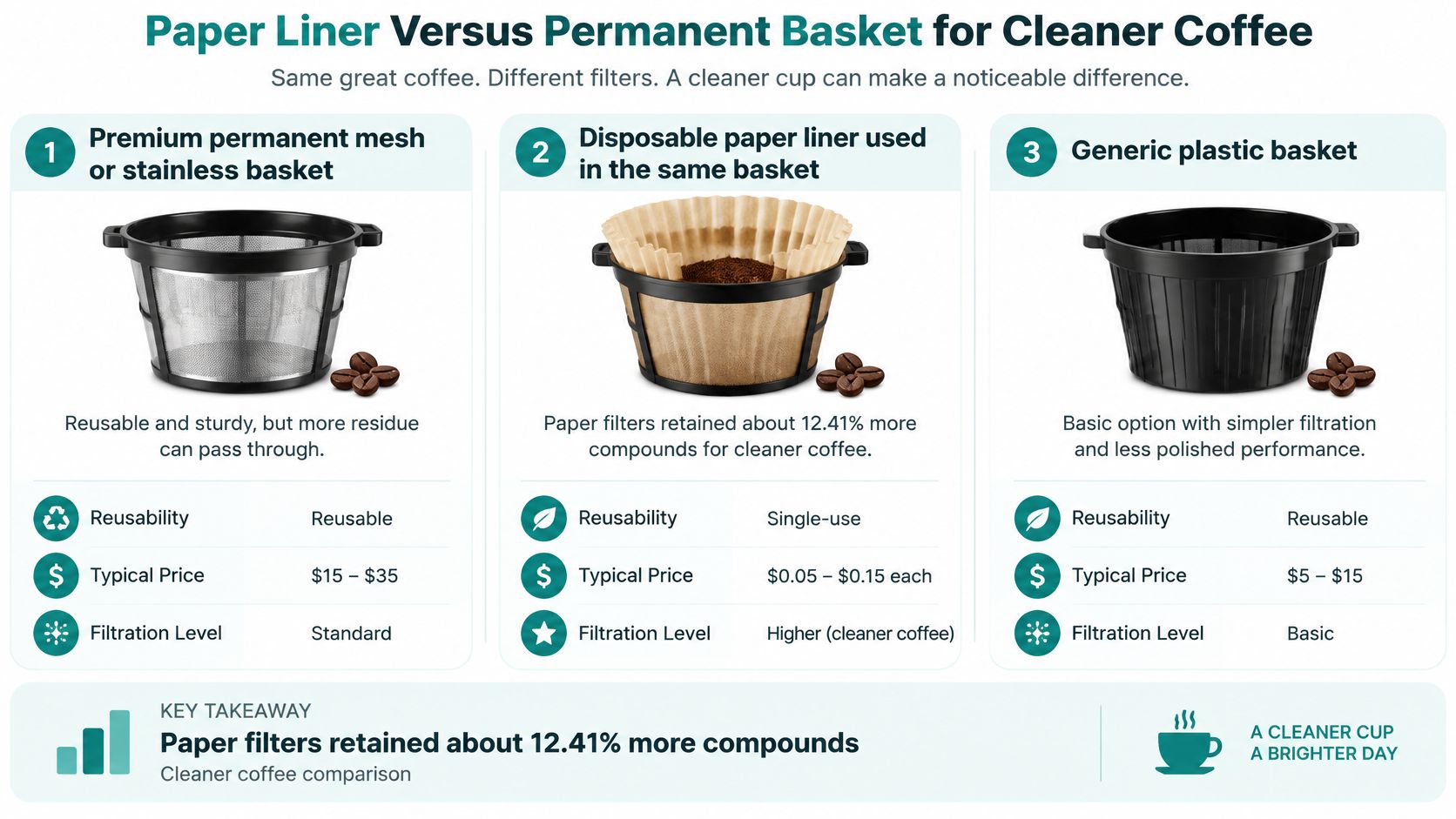
Premium permanent basket versus paper liner and generic basket
| Option | Oil and fine sediment in cup | Cleaning effort | Cost per brew | Durability |
|---|---|---|---|---|
| Premium permanent mesh or stainless basket | Higher oil than paper, set by mesh fineness | Rinse and dry after each brew | Lowest over time | Long if not warped or cracked |
| Disposable paper liner in the same basket | About 0.15% of cafestol remains in brew | Discard liner, rinse basket | Highest per brew | Single use |
| Generic plastic basket | Higher sediment than paper, set by screen design | Rinse after each brew, inspect for odor | Low upfront | Can warp under heat, confirm limits in the manual for that brand |
Watch how those filtration differences show up in a real brew before you decide.
A premium permanent basket isn't automatically worth its price, and that's a fair objection. Its value depends on material, fit, and how long it stays undamaged, so judge it on listed dimensions and care rules rather than finish. A generic plastic basket may cost less upfront, but plastic can warp under heat, which is why you should confirm temperature and washing limits in the manufacturer manual and treat any unverified durability claim with caution.
Filter performance also depends on the filter's porosity and your coffee grind size, so paper type and grind need to suit each other. My decision rule is simple. Choose a liner when you want the least oil and sediment, choose a permanent basket when you brew daily and want lower waste, and avoid any generic basket whose dimensions you can't confirm.
If you're comparing liner formats for pod brewers, disposable filters made for reusable K-Cups show how the same paper principle applies at single-cup scale. If you're managing cholesterol, follow a clinician's advice. Don't assume any basket or liner removes medical risk.
Matching Your Model to a Basket or Liner
Fit depends on the brewer's exact model and the way its basket or liner seats. Check the number on the machine base or in the manual, then match it to the listed machine family. A similar product photo or a broad listing title is not enough.
Accessory types by brand and what to verify
| Accessory type | Keurig | Ninja DualBrew | Breville espresso |
|---|---|---|---|
| Paper filter liner | Paper filters for mesh baskets in the K-Duo family, confirm model | Paper filters for reusable K-Cups, confirm model | Not typical, check manual |
| Replacement mesh basket | Model-specific basket, confirm model number | Model-specific basket or pod, confirm model | Portafilter basket matched to diameter and dose |
| Reusable refillable pod | Single-needle brewers, confirm model | Reusable pod, confirm model | Not applicable |
| Water filter | Model-compatible water filter, confirm brewer | Check model manual | Compatible replacement filters, 12-pack |
| Descaling supplies | Keurig descaling and cleaning tablets | Check model manual | Keurig and Breville descaling and cleaning tablets |
Brand by Brand Checks
For Keurig, mesh baskets and paper liners in this category commonly target the K-Duo family. Check whether your machine is K-Duo, K-Duo Plus, or K-Duo Essentials before ordering. Ninja DualBrew users should match reusable pods or paper filters to the exact model. For Breville espresso machines, compare the portafilter basket's diameter and dose capacity with the machine's requirements. A mismatch can affect puck compression and produce uneven extraction, even with careful tamping.
PureHQ offers compatible replacement water filters for Breville espresso machines in a 12-pack, as well as Keurig and Breville descaling and cleaning tablets. For any accessory, confirm the brewer model in the product details and the machine manual. A “universal” label alone does not establish fit. Check the machine family, basket dimensions or dose, and seating style. If those details are missing, there is not enough information to confirm compatibility.
Before you order: Match the model number, check dimensions and seating, then read the care rules. Compare price after fit is confirmed.
Your Four-Step Checklist
- Find the model number on the machine base or in the manual.
- Match the listed machine family to that exact model.
- Check basket diameter or dose capacity for your brewer type.
- Read the care notes before use, including dishwasher and soaking limits.
For a Keurig K-Duo, choose a paper liner listed for its mesh basket if you want to use a liner. PureHQ's Disposable Paper Filters for Reusable K-Cups come in a 100-pack and fit Keurig and Ninja DualBrew coffee makers. Its Water Filters for Breville Espresso Machines come as a 12-pack of compatible replacement filters. A correctly matched liner still needs a clean, dry basket that sits properly in the brewer. Confirm the model number before choosing a basket or liner.
Confirm your model number, then shop PureHQ Inc. for removable filter baskets, paper liners, reusable pods, water filters, and descaling supplies. Its product categories include accessories for Keurig, Ninja DualBrew, and Breville machines, with compatibility details to help you check fit before ordering.

