
Reusable K-Cups
Do Reusable K-Cups Need Paper Filters? (Honest Answer)
May
You brew your coffee, take that first sip — perfect. Then you get to the bottom of the mug and there it is. That dark, gritty layer staring back at you. If you've switched to a reusable K-Cup and this keeps happening, paper filters for reusable K-Cups might be exactly what you need. Here's the honest answer on whether they actually help.
The Right Pod Makes All the Difference
Whether you want stainless steel mesh or a paper filter setup — PureHQ makes pods built specifically for your Keurig model.
What Are Paper Filters for Reusable K-Cups?
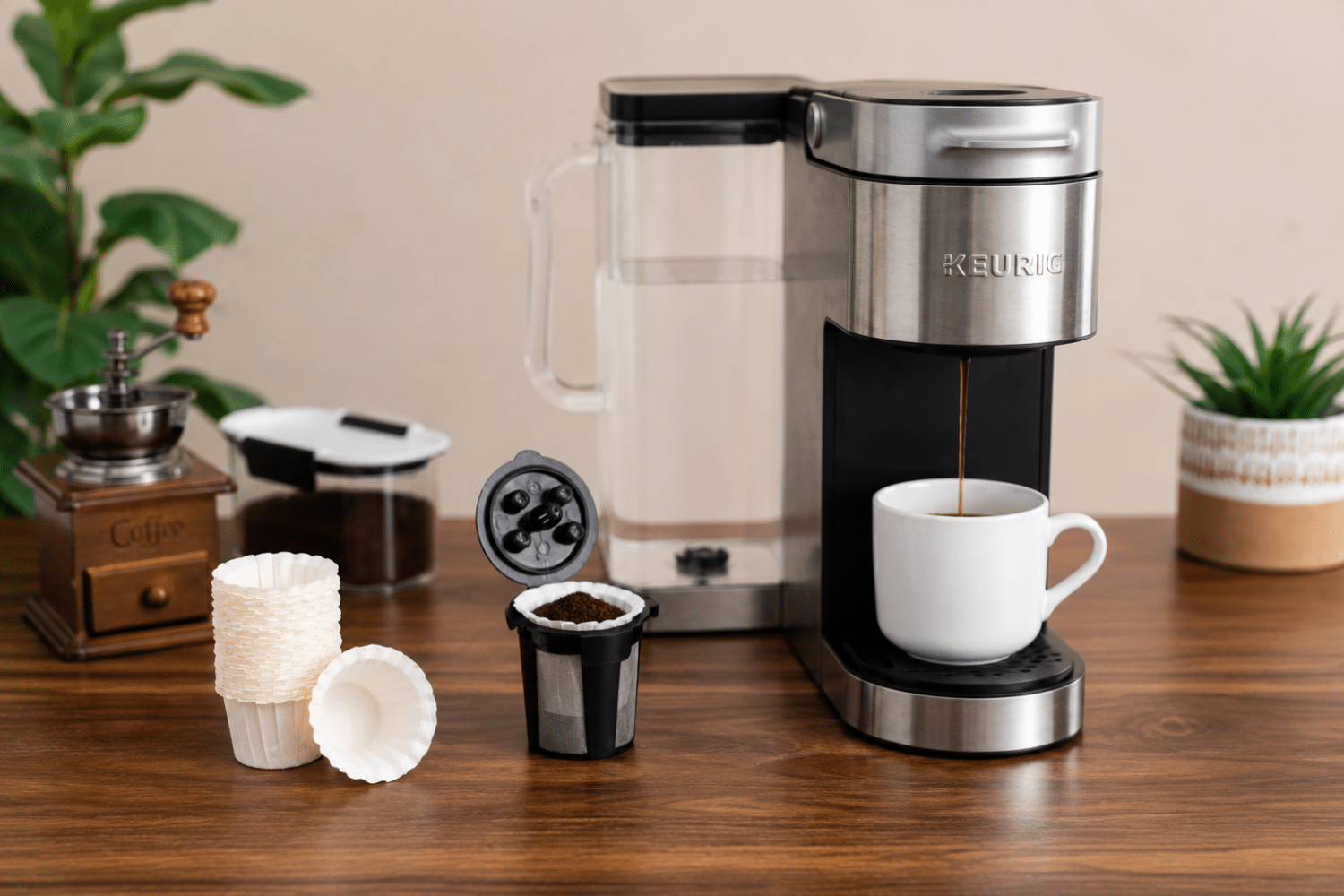
They're small, single-use paper inserts that sit inside your reusable K-Cup before you add the coffee. Think of them as the same paper filter that's already inside a disposable K-Cup — except you're adding it yourself.
Most reusable pods use a stainless steel or plastic mesh to hold the grounds and let water through. That works fine for most people. However, mesh has tiny gaps — and so do coffee grounds. The ultra-fine particles called "fines" that every grinder produces can slip through, and those are what end up as sludge in your mug.
A paper liner catches what the mesh misses, acting as a second, much tighter barrier between your coffee and your cup.
Why Does Sludge Happen in the First Place?
Coffee isn't ground perfectly uniform — even with an expensive grinder. Every batch produces a small percentage of "fines" — particles so tiny they're basically coffee dust. Your grinder can't avoid making them.
Stainless steel mesh is designed to let water flow freely through the pod. That's what makes extraction work. But that same openness means the finest particles can pass through too. Importantly, they don't affect the taste much — but they settle at the bottom of your mug and create that layer you have to either choke down or leave behind.

A paper liner is just a tighter net. It catches the fines the mesh lets through so the only thing in your mug is actual coffee.
If you grind your own beans or use a fine-medium grind, you're producing more fines and you're more likely to notice sludge. If you use standard pre-ground medium roast from a bag with a PureHQ stainless steel pod, you'll probably barely notice it — the fine mesh already filters more than most plastic pods.
The Thing Most Coffee Guides Won't Tell You
Here's something worth knowing — especially if you drink a few cups a day.
Coffee contains natural oils called diterpenes — specifically one called cafestol. Research published in the New England Journal of Medicine found that cafestol is one of the most potent dietary cholesterol-elevating compounds we know of. When you brew through a metal mesh filter, those oils go straight into your cup. When you brew through paper, most of them get trapped in the filter before they reach you.
This is exactly why drip coffee — always brewed through paper — is generally considered more heart-friendly than French press for people who drink several cups a day and keep an eye on their cholesterol. Same logic applies here.
How Your Coffee Actually Tastes — Mesh vs. Paper
Beyond the sludge, paper filters change what ends up in your mug. Not dramatically — but noticeably if you pay attention.
Why the Taste Actually Changes
The oils that pass through mesh give coffee its body and weight. That heavy, rich mouthfeel you get from a French press? Those are the oils at work. When you add a paper filter, those oils get absorbed by the paper before they reach your cup. As a result, the brew is lighter, cleaner, and brighter — individual flavor notes like chocolate, citrus, or nuttiness come through more clearly without the heavy coating masking them.
If you've ever had a pour-over at a good coffee shop and wondered why it tasted so much cleaner and more refined than your home brew — the paper filter is almost always the reason. In short, it's not magic. It's just chemistry.
| Brewing Method | Body | Clarity | Oils in Cup | Best For |
|---|---|---|---|---|
| Mesh only | Fuller, heavier | Lower — more texture | Yes — pass through | Bold, rich coffee drinkers |
| Mesh + paper liner | Lighter, cleaner | Higher — brighter notes | Mostly trapped | Clean, pour-over style drinkers |

Ultimately, neither is wrong. It comes down to how you like your coffee. The mesh-only cup is bolder and heavier. The paper-filtered cup is cleaner and more refined. Both are good — just different.
Stainless Steel Pod + Paper Liner = Best of Both
PureHQ stainless steel pods are built to work with or without paper liners. The food-grade silicone seal ensures all the water goes through the coffee — not around it — whether you use a liner or not.
The Real Reason Most People Switch to Paper Liners
Honestly? It's not the health stuff. Taste isn't even the main reason either. The thing that actually converts people is the cleanup.
Without a paper liner, finishing your coffee means tapping the pod against the trash can hoping the grounds fall out, rinsing what's left under the tap, and fishing wet coffee grounds out of the sink drain. In practice, it takes about 90 seconds — and it's annoying every single morning.

With a paper liner, cleanup is:
- Open the pod lid
- Grab the edges of the paper liner
- Lift out the whole thing — grounds and all — and drop it in the compost or trash
- Quick rinse of the pod if you feel like it — usually not even necessary
That's it. The paper contains everything. The pod stays clean. Your sink stays clear. It's the kind of small upgrade that makes you wonder why you didn't do it sooner.
PureHQ Paper Filter Liners — 100 Pack
Biodegradable paper liners made specifically for reusable K-Cups. Drop one in, brew, lift and toss. No scrubbing, no grounds in the drain, no mess. A few cents per cup for a completely painless morning routine.
Shop Paper Filter Liners — 100 Pack →Browse All Reusable K-Cups
When You Actually Don't Need a Paper Filter
Not everyone does — and we'd rather be honest about that than oversell it. In fact, for a lot of Keurig users, the mesh alone works perfectly fine.
Signs You Can Skip the Paper Liner
Skip the paper liner if:
- You use pre-ground medium roast coffee from a bag — the grind is consistent enough that sludge is usually minimal with a stainless steel mesh pod
- You already love the taste of your cup — if it's working, don't change it
- You prefer bold, full-bodied coffee — the oils that paper filters remove are exactly what gives coffee its richness and weight
- You have a PureHQ stainless steel pod — the fine mesh filters significantly more than plastic mesh pods, so sludge is less of an issue to begin with
Paper liners make the most difference for people who grind their own beans, use a finer grind, or want a cleaner lighter cup. If that's not you — mesh alone is perfectly fine.
How to Use Paper Filters in a Reusable K-Cup
It takes about 30 extra seconds. Here's the routine:

- Drop the liner in first. Place the paper filter inside the open pod so it sits flush against the bottom and sides. It should fit snugly — no bunching, no gaps at the edges.
- Add your coffee. Fill to just below the maximum fill line — about 3/4 of the pod. Use a medium grind, the same standard setting you'd use for drip coffee. The paper adds a small amount of resistance so you don't need to go coarser — but if you get overflow, go one step coarser on your grinder.
- Tuck the edges. If the paper extends above the rim, fold it slightly inward before closing the lid. This is important — if the paper catches on the lid it can break the seal and cause leaks.
- Brew at 6oz or 8oz. The paper slows extraction slightly, so a smaller brew size gives you better concentration. Top off with hot water if you want more volume in the mug.
- Cleanup in 5 seconds. Open the lid, grab the liner by the edges, lift and toss. Done.
Paper Filters vs. Stainless Steel Mesh — The Full Comparison
| Factor | Mesh Only | Mesh + Paper Filter |
|---|---|---|
| Sludge in mug | Possible with fine grinds | Eliminated ✅ |
| Coffee body | Fuller, oilier, heavier | Cleaner, lighter, brighter |
| Cafestol oils | Pass through into cup | Mostly trapped by paper ✅ |
| Cleanup | Rinse mesh, tap out grounds | Lift liner and toss ✅ |
| Cost per cup | Zero extra | A few cents per cup |
| Eco impact | Zero extra | Biodegradable paper |
| Best for | Bold coffee, simplicity | Clean cup, fine grinds, easy cleanup |
Get the Right Pod for Your Keurig
PureHQ stainless steel pods work with or without paper liners — and they're built specifically for your Keurig model so water goes through the coffee, not around it.
Frequently Asked Questions
Using Paper Filters
Practical Questions

