
Coffee Machine Care
Master Your New England Coffee K Cup Experience
Apr
You buy a bag of coffee because the flavor sounds great. You brew one pot, decide it isn’t for you, and then stare at the rest of the bag for weeks. That’s one reason single-serve coffee took off. It lets you try one cup at a time instead of committing to a whole pot.
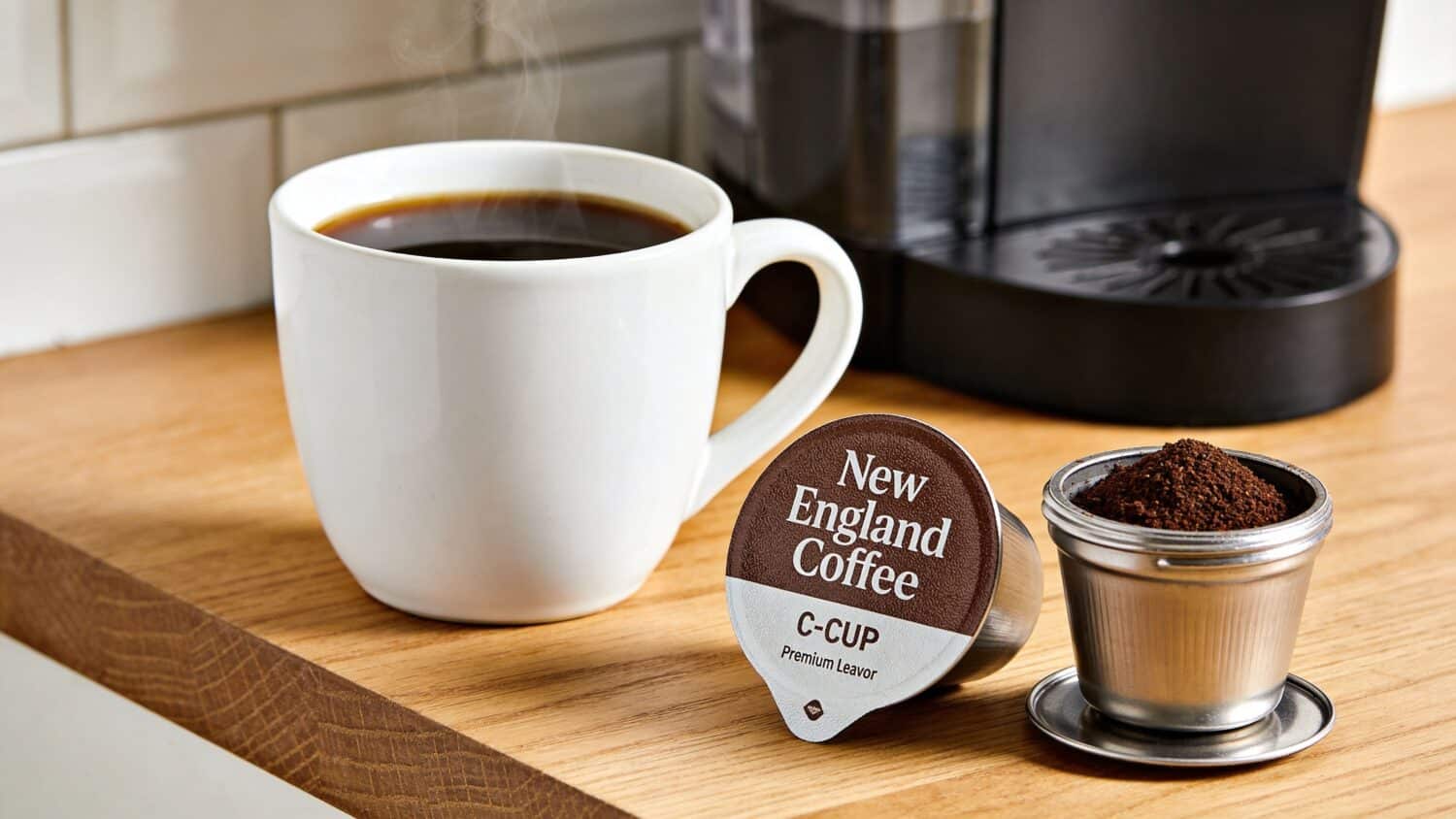
But convenience has its own annoyances. Pods cost more than brewing from ground coffee, and even good pods can leave you feeling like you’re trading flavor, waste, and money against each other. If you use a new england coffee k cup, you already know the upside is real. The cup is quick, consistent, and easy to keep in rotation on a busy morning. The hard part is building a routine that still feels smart.
Why Your Daily Coffee Routine Needs an Upgrade
Monday morning usually makes the problem obvious. You want one reliable cup before work, not a half-full pot going stale on the counter and not a pod routine that burns through money faster than expected. A new england coffee k cup solves part of that. The cup is fast, clean, and usually more satisfying than bargain single-serve options. The trade-off shows up later, when the trash fills up and the cost per cup starts to nag at you.
That tension is why so many Keurig owners eventually reconsider their setup. They are not trying to turn a quick morning brew into a hobby. They want the flavor and consistency of a good pod, with less waste and better control over what each cup costs.
The frustration comes from the compromises.
- Variety matters, especially if you like rotating between flavored coffee and a straightforward breakfast blend.
- Speed matters on workdays when there is no time to measure, grind, and clean up.
- Waste matters once you see how many pods a one-cup routine creates over a month.
- Cost matters because single-serve convenience is easy to underestimate until you start replacing boxes often.
- Control matters when one pod tastes too weak, another runs too strong, and your machine gives you only limited room to adjust.
I see this a lot with Keurig users who already buy better coffee. The machine is convenient, but the routine around it is inefficient. That is the gap worth fixing. Keep the ease of New England Coffee for the days when pods make sense, then cut waste and lower cost with a reusable setup for the cups that do not need a sealed pod. Users do not need to choose one system forever. They need a smarter mix.
Strength is part of the equation too. If a cup feels underpowered, the issue may be brew size, coffee dose, or your expectations around caffeine rather than the brand itself. This guide on how much caffeine is in your coffee is a useful reference if you are trying to match flavor, strength, and energy in a way that fits your routine.
Understanding The New England Coffee Legacy
New England Coffee has lasted because it built its reputation as a roaster first, not because it happened to sell pods. The company’s roots go back more than a century in the Boston area, and that history still shows up in the cup. You can taste the difference between a coffee company that adapted to single-serve brewing and a single-serve brand that treated the coffee itself as secondary.
That matters for Keurig owners who are trying to get convenience without settling for flat, generic coffee. A brand with real roasting experience usually gives you a better base to work with, whether you stay with K-Cups or later shift part of your routine to a reusable filter. If you want a useful comparison point on how ground coffee behaves in these brewers, this guide to the best ground coffee for Keurig helps frame why bean quality and grind compatibility matter so much.
Why the beans matter
New England Coffee centers much of its lineup on 100% Arabica beans. In practical terms, that usually means a cleaner, less harsh cup than bargain pods that chase price first. Flavored coffees benefit from that approach too, because the added flavor has a decent coffee base under it instead of covering defects.
Two blends show the brand’s style well:
- French Vanilla leans on a medium-roast base that keeps the flavoring from tasting syrupy or thin.
- New England Breakfast Blend aims for an easy, balanced cup that fits the way many Keurig owners brew, fast and often.
Neither blend is trying to be flashy. That is part of the appeal. They are built for repeat drinking, which is exactly what daily single-serve coffee needs.
Roasting decisions matter more than pod design
A Keurig can only extract what is already there. If the coffee is over-roasted, stale, or poorly balanced, the machine will expose those problems fast. New England Coffee tends to do better with medium-roast profiles for that reason. They hold onto enough character to taste like coffee, but they are forgiving enough for the short brew cycle of a pod machine.
I see this as one of the brand’s practical strengths. Darker coffees can work in a Keurig, but they often turn bitter or hollow once you stretch the cup size. Lighter coffees can taste sharp or underdeveloped unless the machine and water are dialed in. A well-built medium roast gives you a wider margin for error.
Good pod coffee starts with the roast. The brewer only finishes the job.
The sustainability angle is better, but not complete
New England Coffee also stands out because it has made a more serious effort on pod materials than many legacy grocery brands. Some of its single-serve options moved away from older all-plastic formats toward compostable pod designs, which is a step in the right direction for buyers who care about daily waste.
Still, compostable does not mean waste disappears. Disposal depends on local rules, and plenty of Keurig users do not have access to ideal composting options. That is the primary trade-off. New England Coffee gives you a stronger starting point than many pod brands on both taste and materials, but the lowest-waste setup still comes from mixing genuine pods with a reusable K-Cup for the cups where convenience is less important than cost and trash volume.
Perfecting Your Brew with New England K-Cups
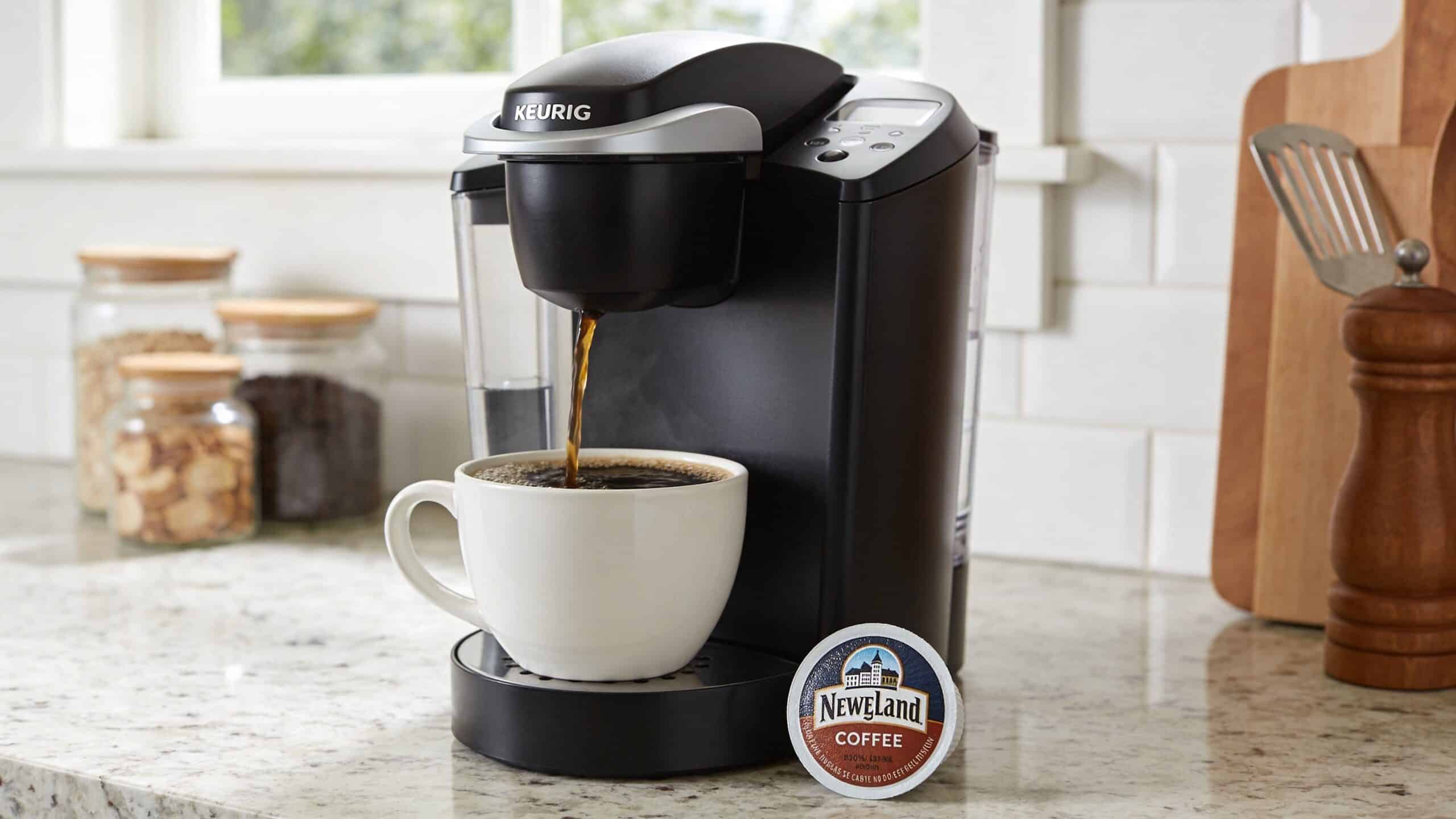
A quality pod still needs a decent setup. If your brewer has scale buildup, old water, or a worn needle, even a solid pod will taste flat.
Start with water, not the pod
Keurig owners often chase stronger coffee by changing pods first. I’d start with water. Chlorine-heavy or mineral-heavy water can mute sweetness and make flavored blends taste dull.
If you want a better match between coffee choice and machine behavior, this guide to the best ground coffee for Keurig is worth reading because it frames the same issue from the brew side rather than the marketing side.
Match cup size to the blend
New England Coffee’s Breakfast Blend is built for a smooth, medium-roast profile. According to the Publix product listing for New England Coffee Breakfast Blend K-Cup pods, these pods are engineered for Keurig brewing and typically reach 1.2 to 1.5% total dissolved solids at 192°F, while preserving up to 90% of volatile aroma compounds.
That tells you something useful. These pods are designed to extract cleanly in the machine they’re made for. But the cup size still changes the result.
- Smaller cup settings usually give you a fuller, more concentrated cup.
- Larger settings stretch the same pod further and can wash out flavor.
- Medium roasts like Breakfast Blend usually land best when you don’t push them too far with extra water.
If your coffee tastes thin, the first move is simple. Brew less water through the same pod before you blame the brand.
Keep the brewer clean enough to do its job
Needles clog. Exit paths collect residue. Reservoirs pick up mineral scale. Those problems show up in the cup as weak flavor, uneven flow, and odd bitterness.
This walkthrough is useful if you want to see pod brewing behavior in action before changing your routine:
A simple maintenance rhythm works better than occasional deep-clean panic.
- Use fresh water instead of topping off old reservoir water for days.
- Check the puncture area if brewing slows or splatters.
- Descale regularly so temperature and flow stay stable.
If a premium pod suddenly starts tasting hollow, assume the brewer changed before you assume the coffee did.
Weighing the True Cost of Single-Serve Coffee
Single-serve coffee saves time. It doesn’t save much else. Even when the pod itself is well made, the format locks you into a disposable cycle.
That’s the trade-off many people eventually hit with a new england coffee k cup routine. The cup is easy. The habit is expensive, and the waste never fully disappears.
Compostable is better, but it isn’t a free pass
New England Coffee deserves credit for moving away from older plastic pod formats, as covered earlier. But “compostable” doesn’t always mean simple in practice. Disposal depends on where you live, what your local system accepts, and whether you separate coffee waste correctly.
That matters because a lot of coffee buyers hear “compostable” and assume the problem is finished. It isn’t. The packaging is improved, but the product is still single use.
The information gap is real
Another frustration is how little practical help brands give once you want to move beyond sealed pods. New England Coffee’s single-serve catalog confirms compatibility with brewers that accept K-CUP packs, but it doesn’t give much hands-on guidance for reusable workflows, fill levels, or brew adjustments.
That gap isn’t just anecdotal. According to the product-category context summarized from New England Coffee’s single-serve collection page, 25% of top Amazon questions in 2025 to 2026 around New England K-Cups involve reusable compatibility or refill instructions, and many of those questions aren’t answered on product pages.
Why that matters in practice
When a brand leaves reusable brewing vague, people end up doing one of three things:
- They overfill a reusable pod, then complain about leaks or weak flow.
- They underfill it, then decide ground coffee “doesn’t work” in a Keurig.
- They buy a cheap reusable pod, get a bad result, and go back to disposables.
If that sounds familiar, this practical guide to reusable coffee pods helps fill in the missing middle. It addresses the kind of everyday setup issues that product pages usually skip.
The biggest barrier to switching from disposable pods isn’t motivation. It’s bad instructions and worse accessories.
That’s why many experienced Keurig users end up with a hybrid routine. They keep a few genuine pods on hand for speed or guests, then use ground coffee in a reusable setup for everyday cups. It’s usually the most realistic balance between convenience and waste reduction.
The Ultimate Guide to Reusable K-Cups for New England Coffee
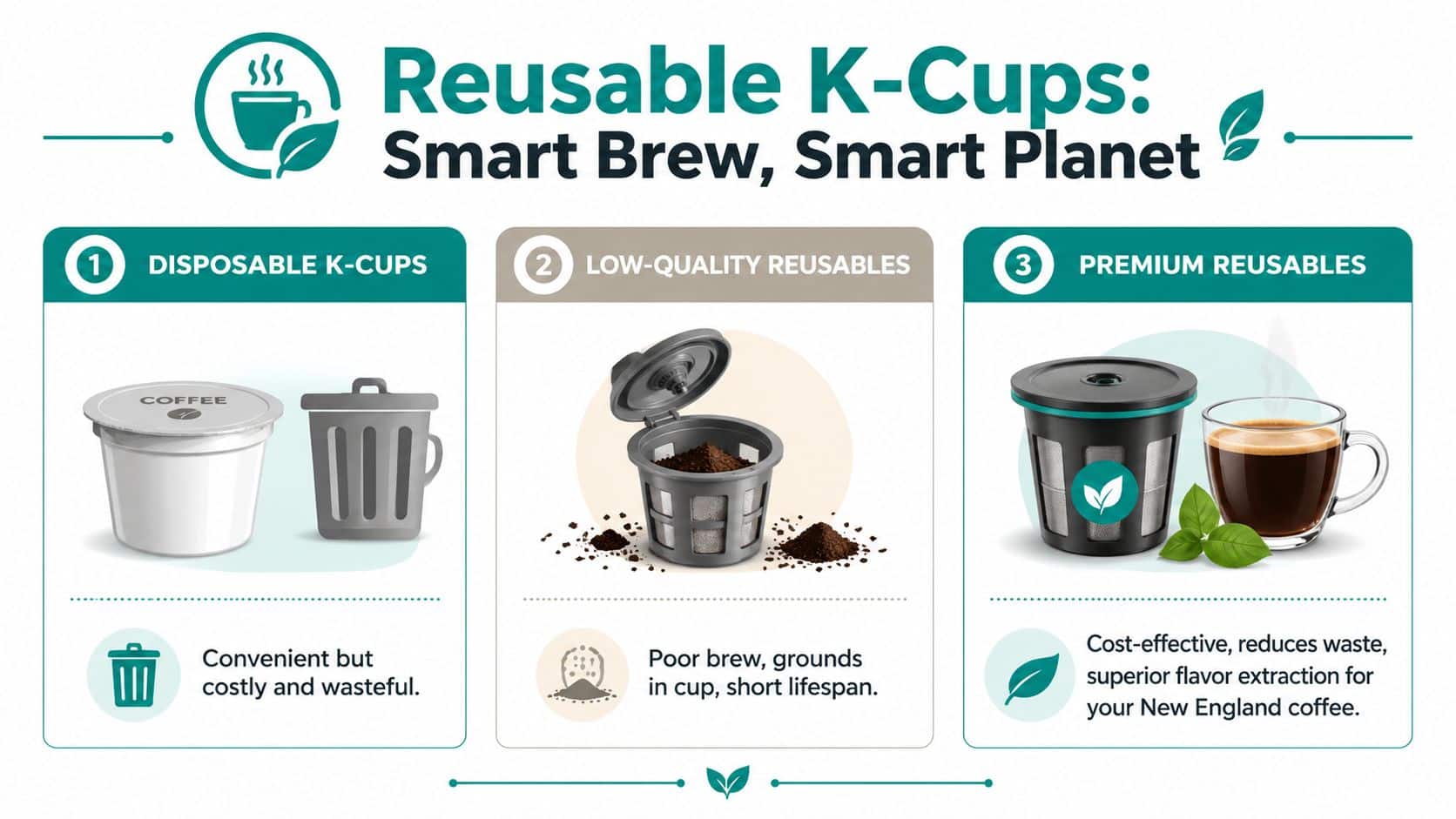
If you like New England Coffee but want more control over cost and waste, ground coffee plus a reusable pod is the smartest move. It lets you keep the flavor style you like while avoiding the single-use loop.
The mistake is assuming any reusable pod will do the job. A lot of generic versions don’t fit cleanly, don’t hold coffee evenly, or let water slip around the grounds instead of through them.
What a reusable pod has to replicate
If you want reusable brewing to taste like a strong branded pod, the pod has to hold enough coffee and control water flow properly. That isn’t guesswork. The New England Coffee Colombian Supremo single-serve product page notes a fill weight 21% above the standard, with 18 to 22 mg of caffeine and bypass flow under 5%. The practical lesson is simple. A reusable pod has to allow similar coffee mass and limit water short-circuiting if you want a fuller cup.
That’s where many cheap pods fail. They’re often too shallow, too loose in the brewer, or too open in the mesh.
What works and what doesn’t
For New England ground coffee, these habits usually work best:
- Fill the pod generously but don’t pack it hard. Water needs room to move through the bed.
- Level the top instead of mounding it. Overfilling causes sealing and puncture issues.
- Use a medium grind intended for drip-style brewing. Too fine can clog. Too coarse can taste weak.
- Brew a smaller cup first. Dial in flavor before stretching to a larger size.
What usually fails:
- Hard tamping like espresso.
- Flimsy lids that flex under pressure.
- Poorly fitted baskets that let water bypass the grounds.
- Ultra-cheap mesh pods that leave sediment in the cup.
A reusable pod should behave like a controlled brew basket, not like a scoop with a lid.
K-Cup options compared
| Feature | New England K-Cup | Generic Reusable Pod | PureHQ Reusable Pod |
|---|---|---|---|
| Convenience | Very easy. Open and brew. | Varies. Often fussier than expected. | Refill required, but routine becomes quick after a few uses |
| Flavor consistency | Strong if you match the right cup size | Often uneven because fit and flow vary | More dependable when the pod seals and flows cleanly |
| Waste profile | Better than older plastic pods, but still single use | Lower waste than disposables | Lower waste with a design focused on repeat use |
| Common complaint | Ongoing pod disposal | Leaks, grounds in cup, weak brewing | Needs basic filling technique, but fewer fit problems |
| Best use case | Fast mornings and guests | Budget experiments | Daily brewing with ground coffee |
| Long-term value | Convenience first | Low upfront quality can become frustrating | Better fit for repeated use and routine brewing |
If you want a deeper look at model-specific fit and materials, this guide to reusable K-Cups for Keurig is a good reference point.
The objection I hear most
“Reusable pods always leak or make weak coffee.”
Sometimes that’s true. Usually the pod is the problem, not the concept. A poorly designed reusable basket creates the exact issues people blame on all reusables. Better construction, a stable lid, and a proper fill volume make a major difference.
Machine care matters too. If your brewer has scale buildup, no pod format will perform at its best. A universal descaling routine is one of the few maintenance steps that improves both flavor and reliability at the same time.
Solving Common K-Cup Problems and Errors
Most Keurig problems look dramatic and have simple causes. Weak coffee, grounds in the cup, or a machine error usually comes down to fill level, flow restriction, or neglected cleaning.
When the coffee tastes weak
Start with the easy checks.
- Brew a smaller size. Too much water is the fastest way to flatten flavor.
- Inspect the pod or reusable basket. If water is bypassing the coffee bed, strength drops.
- Clean the needles and descale the machine. Restricted flow often shows up as watery coffee, not just slow coffee.
If you’re using ground New England Coffee in a reusable pod, adjust fill before changing beans. Most weak cups come from underfilling or using a grind that’s too coarse.
When grounds end up in the mug
Grounds usually point to one of three issues.
- The reusable pod mesh is too open or damaged.
- The lid didn’t seal cleanly.
- You used coffee that was too fine for the basket.
A paper liner can help if you’re dealing with persistent sediment in a reusable setup. It also makes cleanup easier on rushed mornings.
Use the least complicated fix first. Check fill, grind, and cleanliness before assuming your brewer is failing.
When the machine throws an error or makes a mess
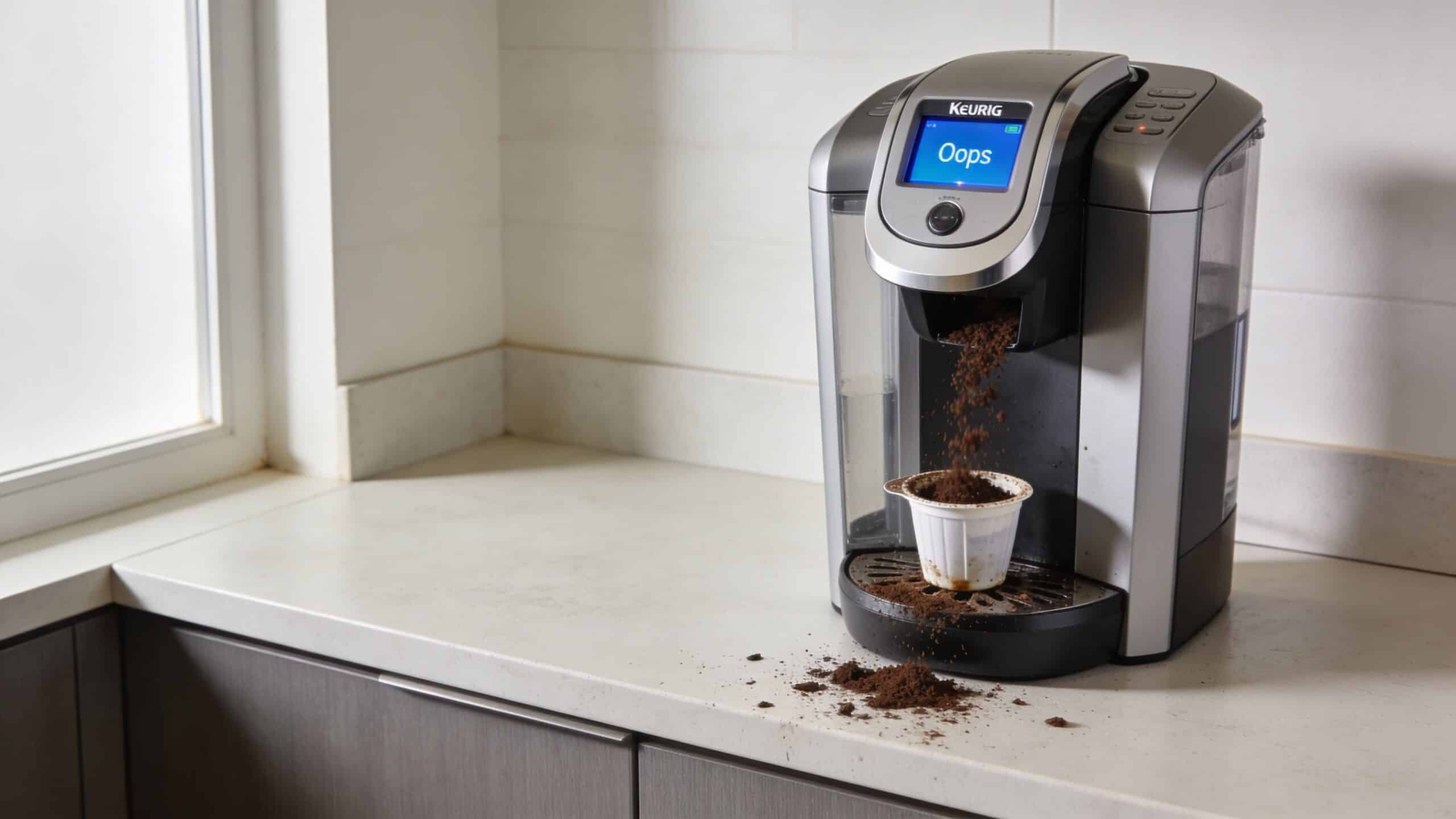
Overflow, splatter, or “Oops” messages often come from overfilled reusable pods or clogged puncture points. Don’t force the pod closed. Empty a little coffee, wipe the rim, and try again.
For genuine pods, inspect the lid after brewing. If the puncture looks ragged or the stream sputtered, clean the needle area. For reusable pods, fit matters. If the basket sits awkwardly in the holder, it can trigger poor piercing, bad sealing, or inconsistent flow.
Enjoy Premium Coffee Without the Premium Waste
The best part of a new england coffee k cup routine is easy to understand. You get a dependable cup from a brand with real roasting history, familiar blends, and better pod design than a lot of throwaway alternatives.
The weak point is the format itself. Even improved single-serve pods are still single-use products, and brand guidance around reusable brewing remains thin. That leaves many Keurig owners stuck between convenience and common sense.
The better answer is to separate the coffee from the delivery method. Keep New England Coffee in your lineup, but use the format that fits the day. Genuine K-Cups still make sense for speed, travel mugs, or serving guests. A well-made reusable pod makes more sense for daily home brewing when you want control over strength, less waste, and a routine that feels less expensive over time.
The routine that usually works best
- Use genuine pods when speed matters most
- Use ground coffee in a reusable pod for everyday cups
- Keep your machine clean so either format can brew properly
- Choose water quality and fill level carefully because both affect flavor more than typically expected
That’s the practical middle ground. You don’t have to turn every cup into a project, and you don’t have to accept waste as the cost of decent coffee.
Good coffee at home isn’t about doing more work. It’s about removing the few things that keep a good coffee from tasting the way it should.
If you're ready to build a cleaner, more cost-conscious Keurig setup around your favorite New England Coffee, shop PureHQ Inc. for reusable K-Cups, water filters, paper liners, and descaling essentials that help your brewer make better coffee every day.

