
Coffee Machine Care
Limescale Remover Guide: What Works and How to Use It
Nov
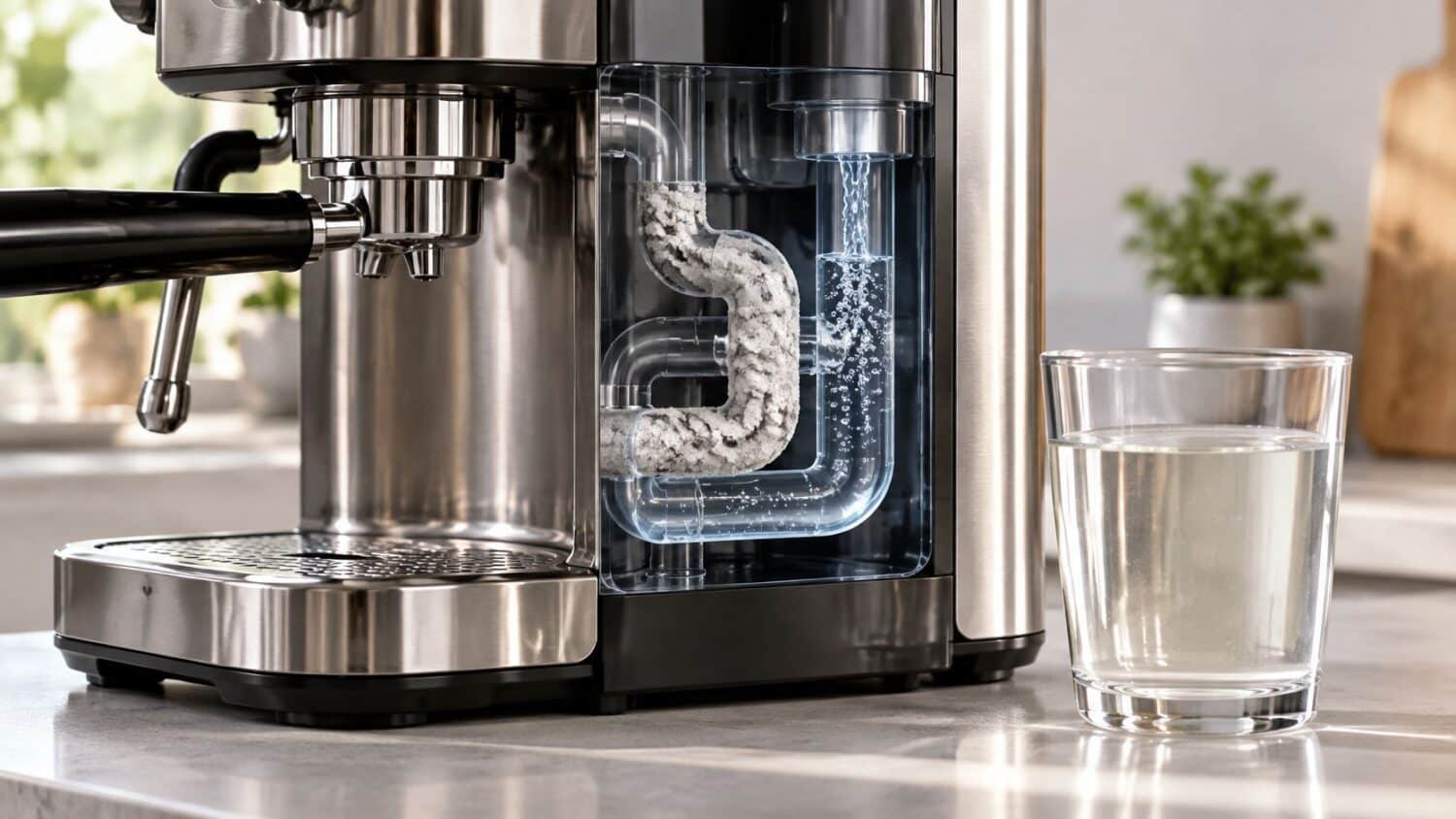
A full mug should not take twice as long as it did when the machine was new. When the pour slows, the cup cools early, and a chalky film shows up in the tank, the usual suspect is limescale, not a dying pump. Hard water carries dissolved calcium and magnesium. Heat turns those minerals into a hard white layer on heating elements and inside narrow tubes.
A limescale remover dissolves that layer. A stronger bottle is not automatically the better choice. Match the product and the contact time to your machine, and set the interval from the manual and your local hardness, not from a date on the calendar.
How Hard Water Creates Limescale in Your Machine
In a U.S. Geological Survey groundwater report of 54 samples, hardness ran from 17.6 to 516 mg/L as calcium carbonate, and 14 samples, or 25.9%, were very hard. Very hard water was common in that set, not a rare spike.
Hardness is the calcium and magnesium dissolved in water, stated as milligrams per liter of calcium carbonate (CaCO₃). That report sorts water as soft at 0–60 mg/L, moderately hard at 61–120 mg/L, hard at 121–180 mg/L, and very hard above 180 mg/L. Heating concentrates those minerals until they settle as a white calcium-carbonate film on hot metal and in tight passages. A drip machine, a Keurig, a Ninja, and a small espresso boiler all do the same thing. They heat the same water over and over, so the film thickens where the water is hottest.
What each class does inside a heated circuit
| Hardness class | Range (mg/L CaCO₃) | Scale risk for a coffee machine |
|---|---|---|
| Soft | 0–60 | Low; scale builds slowly |
| Moderately hard | 61–120 | Moderate; regular descaling keeps flow normal |
| Hard | 121–180 | High; scale returns between descaling cycles |
| Very hard | Above 180 | Very high; descaling needs to be more frequent and filtration helps |
A USGS technical note on hardness says hardness above 200 parts per million generally needs some softening before most uses. On a brewer, that load shows up as a slower cycle, uneven heat, and a thinner stream. The deposit is a performance and maintenance problem. USGS guidance on water hardness treats calcium and magnesium as a nuisance for pipes, heaters, and flow, not as a drinking-water poison at ordinary hard-water levels. The agency also notes that the EPA has not set a legal limit for hardness.
Pull your utility's latest hardness figure before you pick a schedule. The number moves by region and by season, so a neighbor's calendar is a weak guide.
A filter aimed at calcium can cut what enters the tank. Scale already stuck to the heater still has to come off with a descaler.
What Limescale Remover Dissolves and How the Acid Works
A limescale remover is a descaling solution, usually citric acid or another acid blend, that dissolves the calcium-carbonate deposit inside a heated water circuit so flow and heating can return to normal.
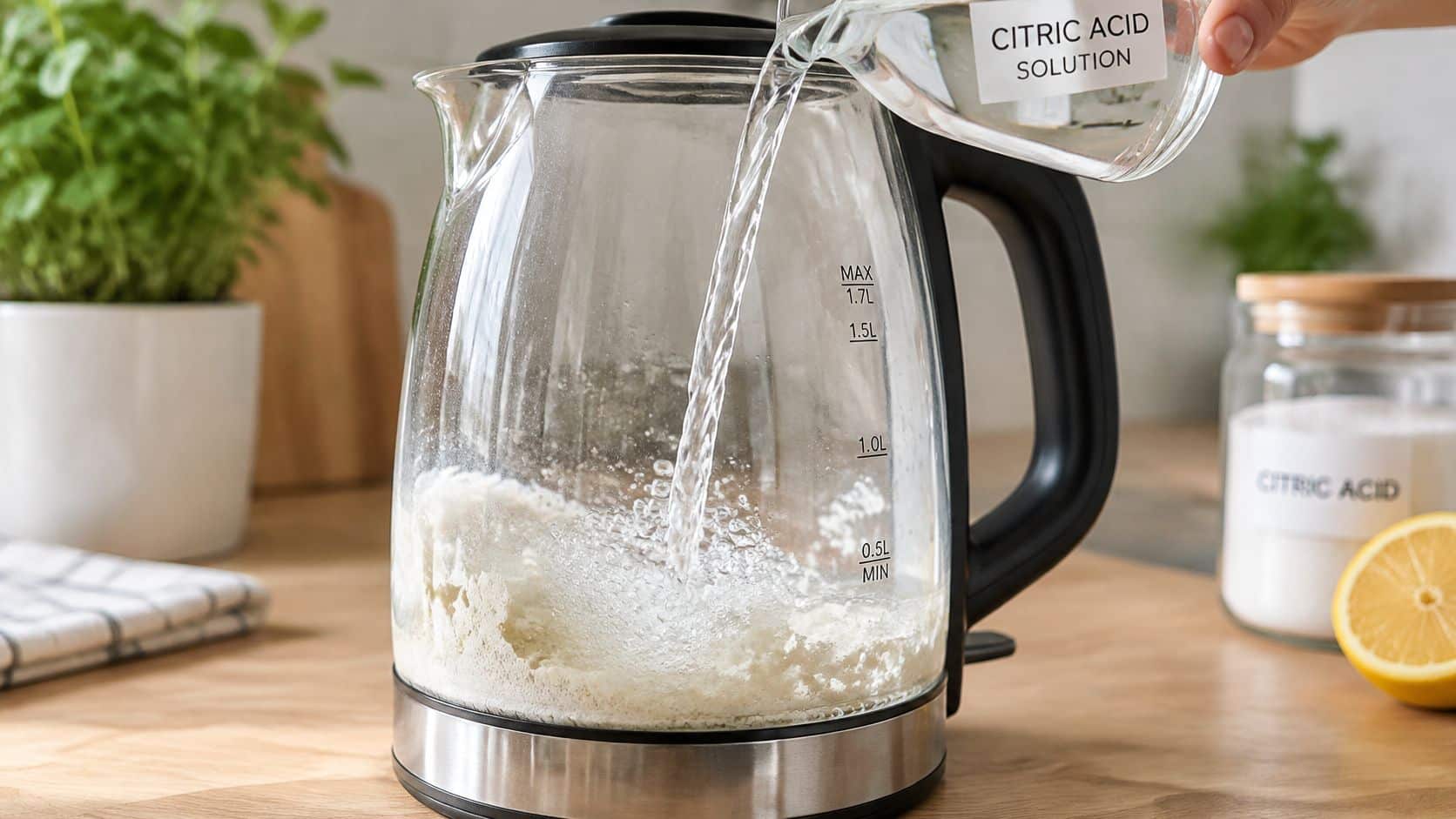
Think of the crust in a kettle. An acid bath softens it because the acid reacts with the mineral. It does not scrub the metal. The same reaction runs inside a coffee machine, only the surface is a heater, a valve, or a narrow tube you cannot reach with a brush.
Two steps, then a fizz
Citric acid works in two linked steps. First, the acid pulls calcium away from the carbonate. Then citrate binds that calcium into soluble calcium citrate. The simplified products are that soluble salt, carbon dioxide, and water. The fizz you see during a cycle is the carbon dioxide leaving the deposit. If the solution only sits on top of a dry crust, little of that reaction happens. Wetting and dwell time do as much work as the strength on the label.
A 2025 descaling study reported more than 98% scale solubility under immersion and found that a 5% citric-acid solution dissolved about 67.81% of calcium carbonate. Raising the mix to 10% did not significantly improve dissolution. A 20% mix lifted the reported result to 76%. Stronger was not proportionally better. The same paper describes a second organic-acid formulation with stable citrate and phosphate calcium complexes at pH 1–4, and a 39% lower corrosion rate than 0.1 M hydrochloric acid.
A hotter, harsher mix is not a shortcut. Adequate contact on a wetted surface beats a bottle that is simply more concentrated.
Aggressive acid is not automatically safer for the machine either. A review of heated-water chemistry links alkalinity below about 40 ppm as CaCO₃ with higher corrosion risk. High hardness plus high alkalinity speeds scale on boilers, elements, valves, and tubing. Stripping the water's buffering ability, or leaving acid in the circuit, trades one problem for another.
Use a descaler the machine maker allows, at the printed dilution and contact time. Rinse until the acidic taste is gone. Scale is gone, for practical purposes, when the pour is steady again and a fresh cup tastes like coffee, not like cleaner.
Citric Acid, Vinegar and Branded Descalers Compared
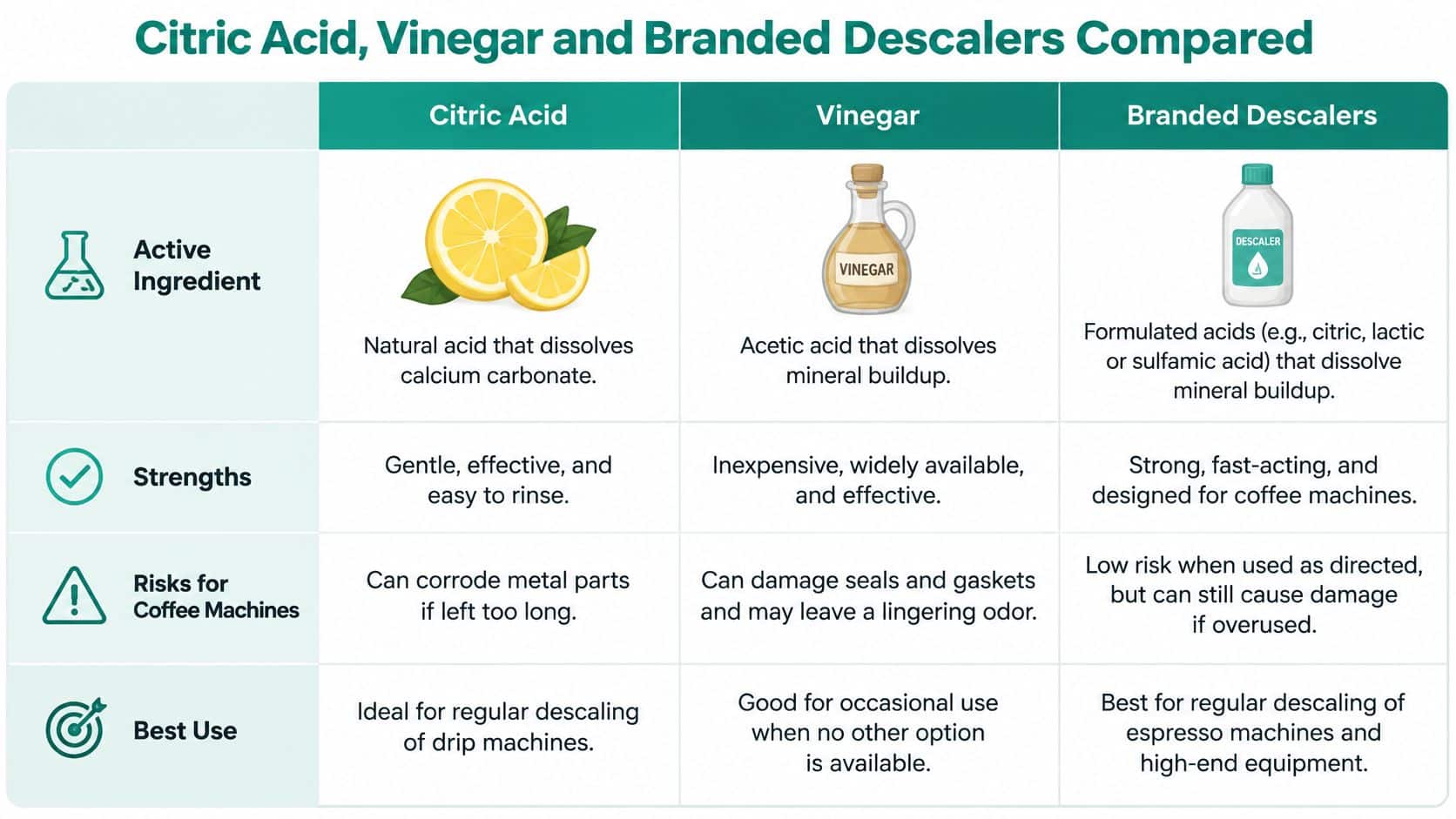
Buyers usually weigh three options. The useful comparison is active ingredient, what each one does well, what it can do to a coffee machine, and where it belongs.
| Option | Active ingredient | Strengths | Risks for coffee machines | Best use |
|---|---|---|---|---|
| Citric acid powder or solution | Citric acid | Dissolves calcium carbonate; low odor; easy to rinse | Strength must match the dilution; stronger mixes add little benefit; check seal compatibility | Regular descaling of heated water circuits |
| White vinegar | Acetic acid, typically about 5% | Inexpensive and easy to find | Lingering odor; possible gasket and coating damage; irritates skin and eyes | Only where the manufacturer's manual permits it |
| Branded coffee machine descaler | Acid blend formulated for machines | Printed dilution, stated number of uses, rinse and contact-time guidance | Costs more per use; confirm the label lists your machine brand | Machines where the label names a compatible product |
Citric acid powder is cheap and low in odor, which matters in a small kitchen. You still have to weigh it and dissolve it to the strength the job needs. Pushing the mix higher adds little dissolving power and raises the chance you leave acid on a seal. It fits a heated circuit when you can measure carefully and the manual does not forbid citric acid.
White vinegar wins on price and on being already in the cupboard. The smell lingers in tanks and carafes, and acetic acid can bother skin and eyes. It can also soften or harden rubber parts and mark some coatings. Treat it as allowed only when that machine's manual says so. A quiet "it's just kitchen vinegar" is not permission.
A branded coffee machine descaler costs more per use. What you pay for is a tested dose, a stated number of uses, a contact time, and a label that names compatible machines. You are not buying a fiercer chemical. You are buying instructions a loose powder leaves to you.
Match the type to the manual first, then to the hardness class of your tap water. Soft water can live with a milder, less frequent treatment. Hard and very hard water need a product with clear repeat-use directions, not a stronger guess.
Choosing a Limescale Remover for Your Machine
Stand in the aisle and run five checks. A yes on each one is enough to buy. A no on the first two is enough to put the bottle back.
Does the label name your machine? Look for Keurig, Nespresso, Breville, a drip brewer, or espresso, and for the materials it claims to spare. A blank "for all appliances" line does not tell you about aluminum, brass, or a coated thermoblock.
Is the dilution and the contact time printed? Skip any product that never states a strength. You cannot repeat a dose you cannot read, and an unnamed strength is how people overshoot.
What is the cost per use? Count the uses in the pack and divide the price by that number. That is the fair comparison between a branded bottle and a bulk powder, because the powder's price per pound hides the measuring and the waste.
Does the rinse call for at least two full tanks of fresh water? Dissolved mineral and leftover acid both have to leave the heater path. A label that stops at "rinse" is thinner than one that says how many tanks.
Does the product fit your hardness class? Hard and very hard water need repeat treatment with those same clear instructions. Soft water does not need the most aggressive bottle on the shelf.
A mineral descaler is not a substitute for a wash that targets coffee residue. Food-grade cleaning products cover oils and everyday soil. The descaler covers the white mineral film. Carry the five checks to the shelf and compare each label before you pay.
Will Descaling Damage My Coffee Machine?
"Vinegar is natural, so it must be safe for every coffee machine" is the claim that gets owners into trouble. BBC reporting on vinegar as a cleaner notes that acetic acid can irritate skin and eyes, may damage rubber gaskets in dishwashers and washing machines, and can harm some coffee-machine parts or coatings. Food-safe does not mean material-safe.
A gasket that swells or hardens can let water escape at the brew head. That leak is the objection people raise after a homemade cycle. If water appears where it did not before, stop. Do not run extra acid cycles to "finish the job." Rinse with fresh water and let the seal recover before you brew again.
Three checks before any cycle
- Find the materials in the manual. Note rubber seals, aluminum, brass, and coated surfaces. If the manual bars vinegar or unnamed acids, that bar stands even when a forum says otherwise.
- Separate outside scale from inside scale. A white ring on a removable tank can be wiped or soaked. Scale inside a boiler or thermoblock only meets the solution you pump through it, so the product has to be one that circuit can tolerate.
- Confirm the printed dilution and contact time. Too strong, or left in too long, is what marks coatings. Too weak mostly wastes a cycle.
Miele's coffee-machine descaling guidance ties how often you descale to the hardness of the supply, and technical maintenance guidance warns that unnecessary, very frequent acid exposure wears elastomeric seals and gaskets sooner. An aggressive acid is not automatically kinder to the machine.
Descaling removes mineral deposits. It does not disinfect the brewer, and it does not lift coffee oils. Those oils need a detergent cleaning on the maker's normal schedule. Acid for stone, detergent for residue, rinse for both.
How to Descale a Coffee Machine Step by Step
Work from the label and the manual together. The order below is the one that keeps solution off loose parts and gets acid back out of the heater.
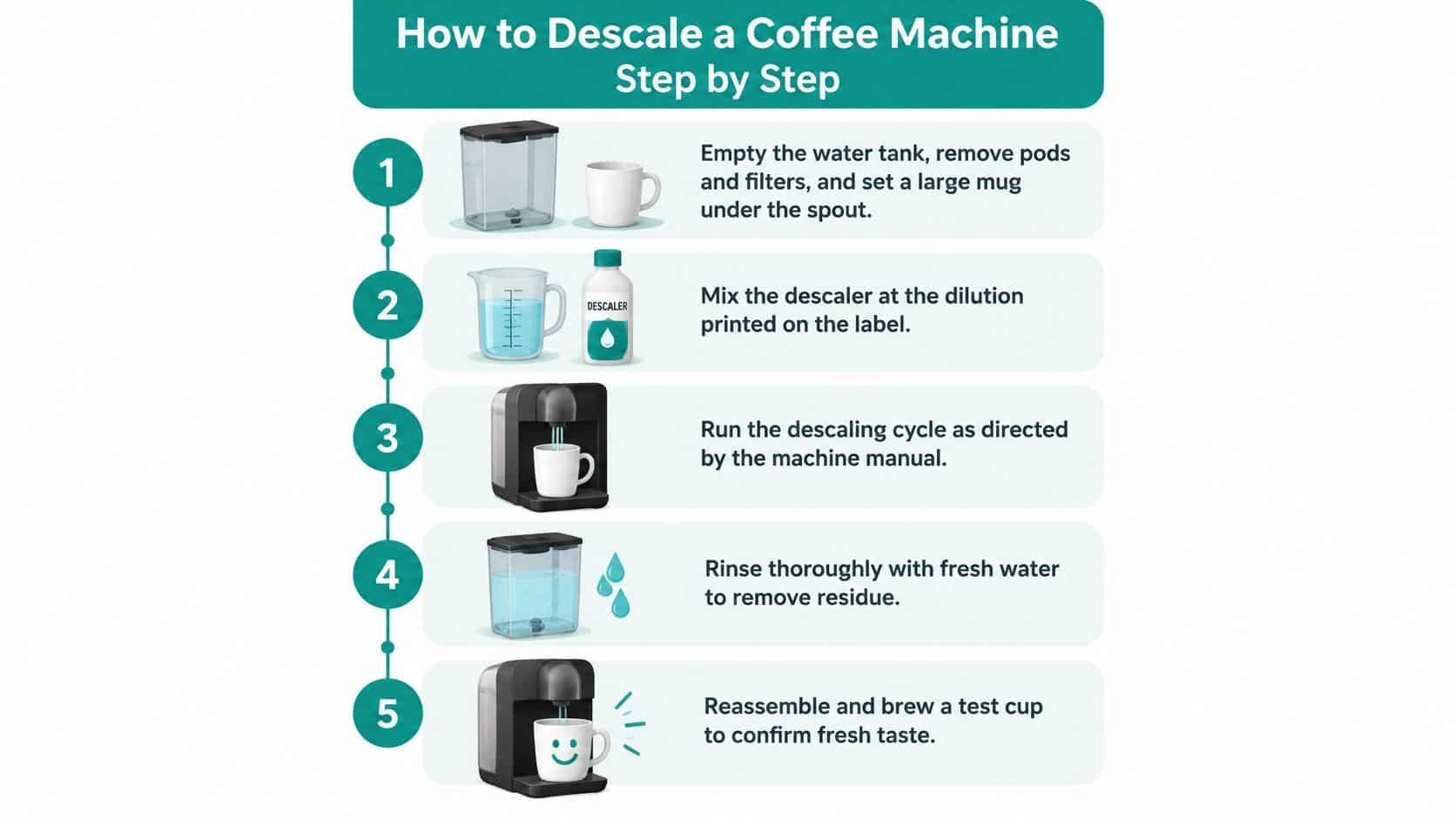
- Empty the tank, pull pods and filters, and set a large mug under the spout. Loose mesh and old grounds can clog the brew path once liquid starts moving. You want a clear route and a place for the used solution to land.
- Mix the descaler at the dilution printed on the label, with fresh water. A heavier mix does not speed the job in proportion, and a thin mix leaves scale in place. Measuring is the step people skip.
- Pour the solution into the tank and start a brew with no pod. Collect what comes out. You are pushing acid across the heater, not making a drink.
- Pause for the contact time on the label. The deposit needs to stay wet. A cycle that rushes straight through gives the acid less time on the crust than the bottle planned.
- Finish the cycle so the rest of the solution runs through the heating path. Stopping halfway leaves a pocket of acid in a tube you cannot see.
- Rinse with at least two full tanks of clean fresh water, and discard every run. The first tank carries off dissolved mineral. The second clears the acidic taste. One quick splash is not a rinse.
- Brew a plain cup and watch the flow. Steady volume and no acidic smell mean the cycle worked. If the pour is still weak, repeat the full cycle only as the label allows.
- Wipe the drip tray and outer surfaces with detergent. The acid cycle never touches coffee oils on those parts.
Never put a chlorine bleach product in the same tank as the acid. A finished descale looks ordinary. The stream is steady, the mug fills to the usual line, and the coffee smells like coffee.
A short walk-through of the same sequence is easier to follow on screen if this is your first time.
How Often to Descale Based on Water Hardness
Soft water lays scale down slowly. Hard and very hard water put it back between cycles, so the gap between treatments follows that class, not a single month printed on a generic bottle.
Use the interval in your manual as the baseline. Machine requirements change with the hardness of the supply and with how many cups you pull. Two identical machines on different taps are not on the same clock.
Descale when the machine tells you, in symptoms, that scale is back.
- Slower flow means the passage is narrowing.
- Lower brew volume means the heater path is restricting the shot.
- Unstable temperature or new noise means the machine is working around a layer it did not have before.
Waiting too long lets that layer cut flow. Descaling far more often than the manual and the water justify exposes seals to acid they do not need. After each cycle, confirm that flow and taste are normal, and write down the gap you used. A hardness test tells you which class you are in if the utility report is vague. A water filter lowers the mineral load between treatments. It does not replace descaling, and a descaler does not revive an exhausted filter.
Shop the PureHQ Coffee Machine Descaler
The right bottle names your machine, prints its dilution and contact time, and tells you to rinse thoroughly. Our Coffee Machine Descaler is a universal descaling solution for Keurig, Nespresso, Breville, and espresso machines. It gives 10 uses for $23.95, about $2.40 a use, and it is made in the USA. Check that machine list and the rinse steps against your owner's manual before the first cycle.
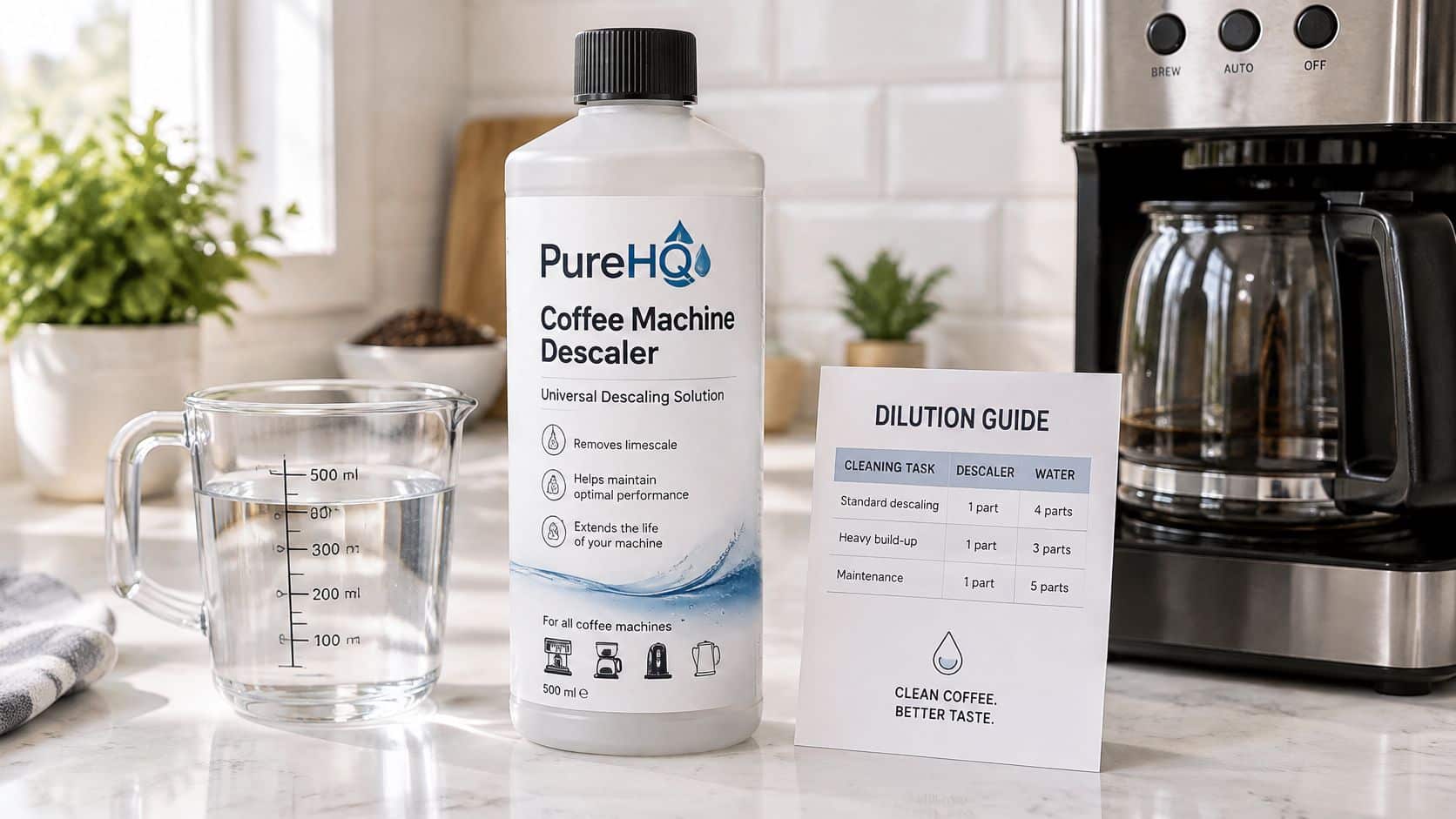
Where the water is hard, our water filters and cleaning tablets can sit beside that routine, filters for incoming mineral and tablets for coffee residue. Descale when flow drops, rinse with two full tanks, and keep the manual as the reference. Shop the PureHQ Coffee Machine Descaler and run the cycle this week, before the next slow pour becomes the normal one.
PureHQ Inc. makes coffee-machine descalers, water filters, and cleaning supplies for Keurig, Ninja, Breville, and espresso brewers used at home and in small offices. Matching a limescale remover to your water and your manual keeps the heater clear without extra acid cycles. Visit PureHQ Inc. to choose a descaler and the filters that fit your machine.

