
Coffee Machine Care
Best Kona Coffee for Keurig: Authentic Pods & Perfect Brews
Jul
You bought Kona because you wanted a smooth, rich cup that feels a little special. Then you ran it through a Keurig and got something thin, flat, or oddly sour.
That result usually comes from two problems at once. First, Keurig machines are built for speed, not for the slower extraction premium coffee needs. Second, the Kona market is full of labels that sound authentic but aren't. If you want great Kona coffee for Keurig, you need to fix both issues: buy authentic coffee, then brew it in a way that suits the coffee.
Why Your Kona Coffee Tastes Watery in a Keurig
A Keurig can make a decent cup fast. That's the point of the machine. The problem is that premium Kona doesn't reward speed.
Most weak Kona cups come from under-extraction. Water moves through too quickly, the coffee bed offers too little resistance, and the machine finishes before the cup develops any depth. That's why expensive beans can taste surprisingly ordinary in a single-serve brewer.
Fast brewing works against premium coffee
Kona is the kind of coffee that shows its quality when extraction is controlled. A Keurig's default behavior pushes in the opposite direction. It prioritizes convenience, which is great for a weekday rush, but not for a coffee you paid a premium to enjoy.
A lot of people also dose reusable pods like they would any generic single-serve cup. That's usually not enough coffee, and it often isn't the right grind either. If the grind is too coarse or the pod is underfilled, the brew gets watery fast.
Practical rule: If your Kona tastes weak in a Keurig, the machine probably isn't “bad.” The coffee is just being brewed too fast, too cool, or with too little resistance in the pod.
Water quality can make the problem worse. Off-tasting water strips away the nuance you paid for in the beans. If you want a cleaner base before you even adjust your recipe, these Keurig coffee rules on filtered water and coffee-to-water ratio are worth keeping in mind.
The label might be the bigger problem
There's another reason your “Kona” cup might disappoint. It might not contain real Kona in any meaningful sense.
The authenticity problem is serious enough that an ongoing class-action lawsuit alleges some “10% Kona Blend” products contained 0% actual Kona coffee. That's a trust problem for buyers, and it explains why so many people think they dislike Kona when they've never brewed authentic 100% Kona at all.
That matters because technique can only do so much. You can dial in grind, dose, and settings perfectly, but you still won't get a true Kona cup from a misleading blend. If the coffee isn't authentic, the brew never had a fair shot.
How to Choose Authentic Kona Coffee for Your Keurig
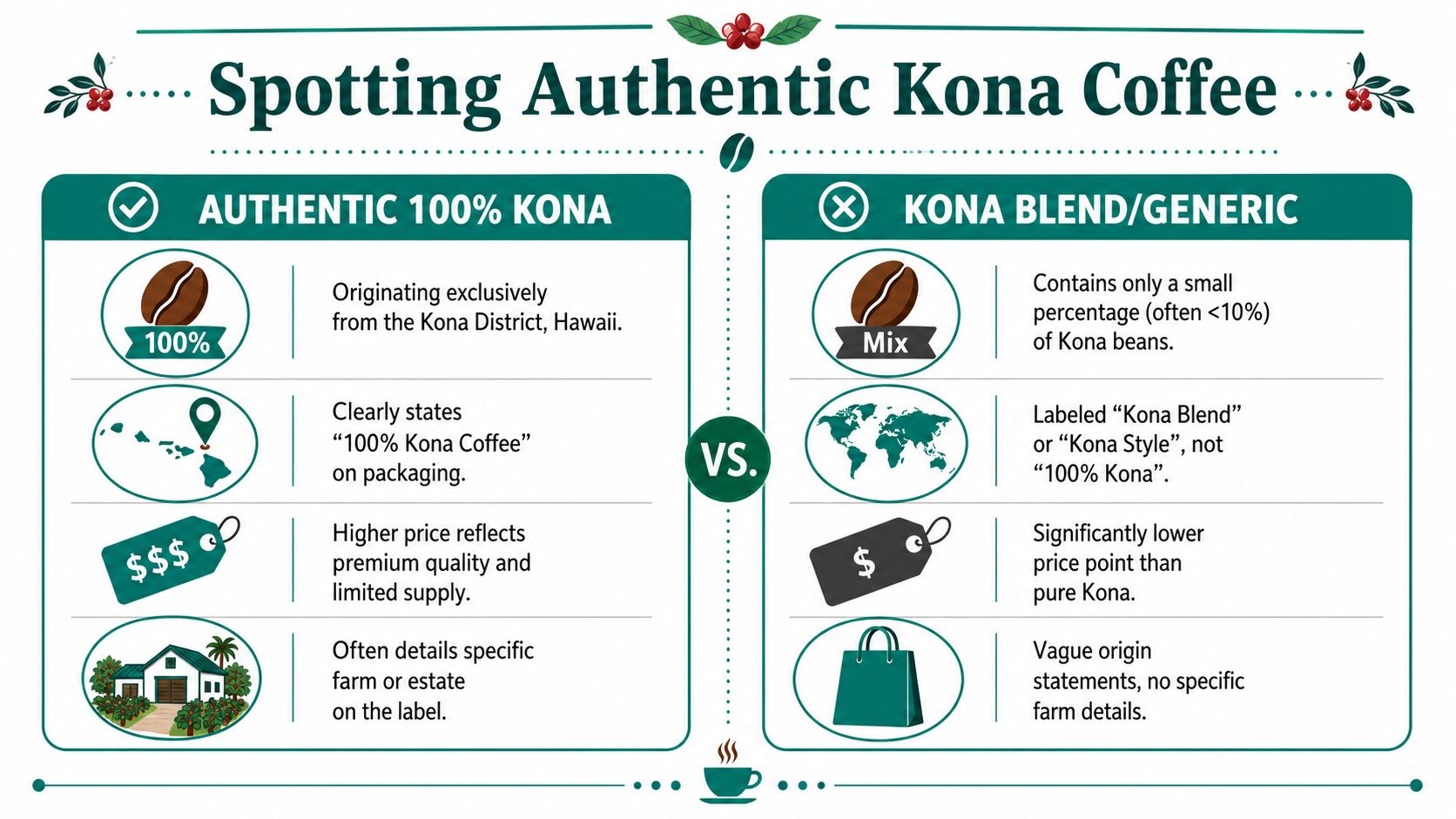
Shopping for Kona gets confusing fast because the words on the bag often do more marketing than explaining. The safest move is simple. Look for 100% Kona Coffee stated clearly on the package, not “Kona blend,” “Kona roast,” or anything similarly vague.
Authentic pods also cost more for a reason. The typical price for real 100% Kona pods runs from $1.60 to $2.10 per pod, and that pricing ties directly to limited production in a 200-acre region on Hawaii's Big Island. If a product is priced like a bargain pod, treat that as a warning sign, not a lucky find.
What to look for on the label
Some signs are much more useful than others when you're buying Kona coffee for Keurig use.
- Clear purity claim. The front should plainly say 100% Kona Coffee.
- Specific origin details. Better products usually identify a farm, estate, or at least a more precise source.
- Grade language. Terms like Extra Fancy point to a higher tier in the Kona market.
- Pod compatibility details. If you want ready-made pods, brands such as Blue Horse and San Francisco Bay Coffee are noted as commercially available 100% Kona options compatible with Keurig 2.0 systems in the same market overview linked above.
For general coffee buying, this guide on how coffee bean quality affects the cup is useful because it trains your eye to notice sourcing and labeling details that generic listings often hide.
100% Kona vs. Kona Blend vs. Standard K-Cup
| Attribute | 100% Kona Coffee | Kona Blend (10%) | Standard Coffee Pod |
|---|---|---|---|
| Label wording | Clearly says 100% Kona Coffee | Usually says Kona Blend | No Kona claim |
| Price | Premium pricing, typically $1.60 to $2.10 per pod in the authentic pod market | Lower than pure Kona | Usually lowest-cost option |
| Origin | Kona district only | Mixed origin | Varies widely |
| Flavor expectation | Distinct Kona character when brewed well | Often diluted by non-Kona coffee | Depends on brand, not Kona-specific |
| Buyer risk | Higher cost, but clearer authenticity target | Highest confusion risk | No authenticity issue because it makes no Kona claim |
| Sourcing ethics | Supports verified Kona production when legitimate | Can blur what you're actually buying | Standard commodity or specialty sourcing |
The common objection about pods
A lot of buyers assume there must be dozens of authentic Kona pods on the market. There aren't. That's one reason misleading listings keep winning clicks.
If you can't verify a pod, buying whole bean or ground 100% Kona and using a reusable pod is often the safer route. It puts the coffee in your hands, not a vague marketplace listing.
Real Kona isn't a convenience category first. It's a scarce premium coffee first. Buy it that way.
Preparing Your Reusable Pod for Authentic Kona Flavor
Reusable pods are the practical sweet spot for Kona. They let you buy verified coffee, control the dose, and avoid paying premium pod prices every time you brew.
The key is packing the pod correctly. Most bad results come from the wrong grind, too little coffee, or an overfilled pod that leaks and leaves sludge in the cup.
The Kona dose that actually works
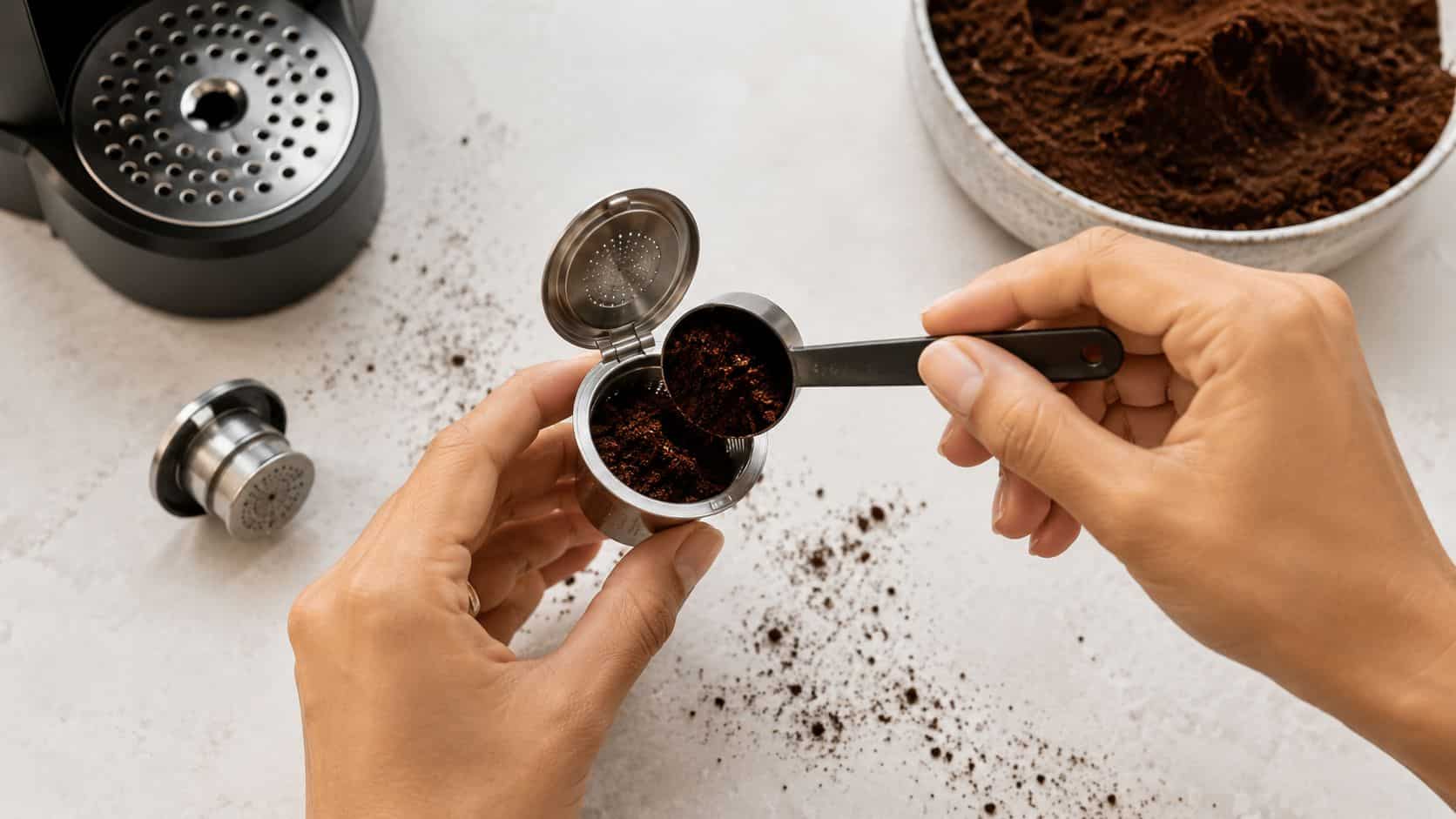
For stronger flavor in a reusable pod, Kona growers recommend 11 grams, or about 2 flat tablespoons, with a medium-fine grind. That's about 10% more coffee than standard K-Cups use, and it helps slow water flow for richer extraction.
That single detail fixes a lot of disappointing brews. Too little coffee leaves the water with almost no resistance. Too much coffee can choke the pod and create overflow or leaking.
How to fill the pod without making a mess
A reusable pod should be full, but not crammed.
- Grind slightly finer than standard drip. You want medium-fine, not espresso-fine.
- Measure the coffee. Start with the 11-gram target instead of eyeballing it.
- Level the top. Use a flat edge or spoon to even the bed.
- Press lightly only if needed. Don't tamp hard. A dense puck can block flow and force grounds around the seal.
Leaks and sediment usually trace back to one of three things: coffee ground too fine, the pod packed too tight, or the pod filled above its intended line. A quality stainless steel reusable pod helps, but technique still matters more than people think.
If you're troubleshooting fit, fill level, or grounds in the cup, this walkthrough on how to use coffee grounds in a Keurig covers the practical mistakes that cause the messiest brews.
A cleaner option for busy mornings
Paper liners can make cleanup much easier, especially if you brew before work and don't want to rinse a pod immediately. They won't fix a bad recipe, but they do reduce mess and make premium coffee less annoying to use daily.
Here's a quick visual on reusable pod handling and fit before you load your Kona.
A reusable pod should slow the brew, not fight the machine. If it gushes, your grind is likely too coarse. If it leaks, you probably packed it too tight.
The Right Keurig Settings for Rich Kona Coffee
Once the pod is right, the machine becomes the next bottleneck. Often, the cup is still lost at this stage.
A Keurig's default cycle is built for convenience. Premium Kona needs a slower, hotter brew to taste balanced instead of sharp or watery.
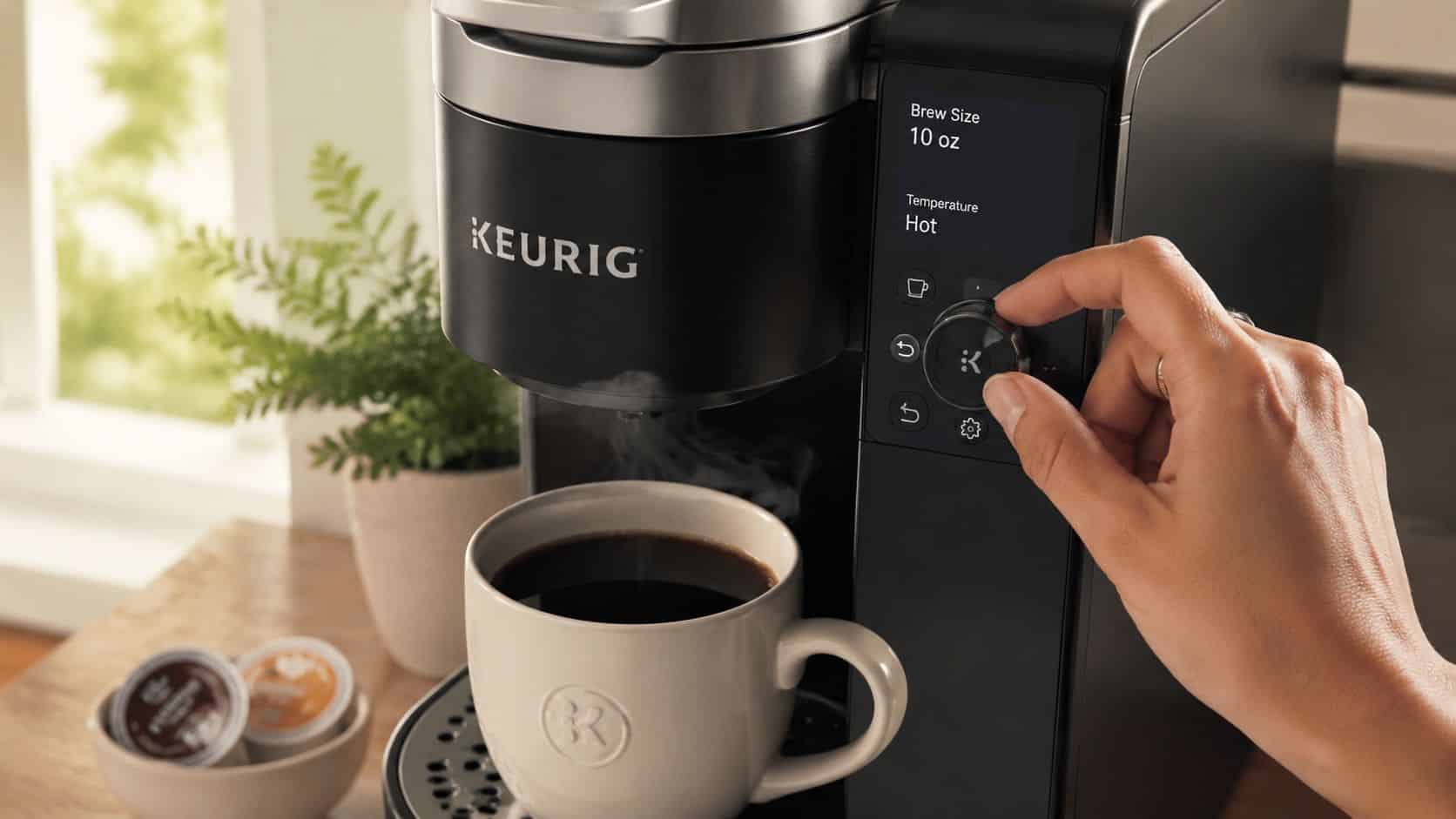
Use Strong and High Temp every time
That's the closest most home Keurig owners can get to a brew profile that respects the coffee. If your machine offers cup-size choices, the smaller setting usually helps too because it keeps the ratio tighter.
What works and what doesn't
What works
- Strong mode to lengthen contact time
- High Temp if your machine offers it
- Smaller cup sizes when the coffee tastes washed out
- Fresh, clean-tasting water so chlorine or mineral taste doesn't cover the coffee
What doesn't
- Default quick brew with a premium bean
- Large cup sizes with the same pod fill
- Treating Kona like grocery-store dark roast
- Assuming the machine knows best just because it automates the process
A small machine tweak with a big flavor payoff
Good water matters more with Kona because the coffee itself is subtle. If your water tastes flat or chemical, the cup will too. A charcoal filter is one of the easiest upgrades you can make because it improves the brew before the water ever reaches the coffee.
Kona doesn't need fancy hacks. It needs enough heat, enough time, and water that tastes clean.
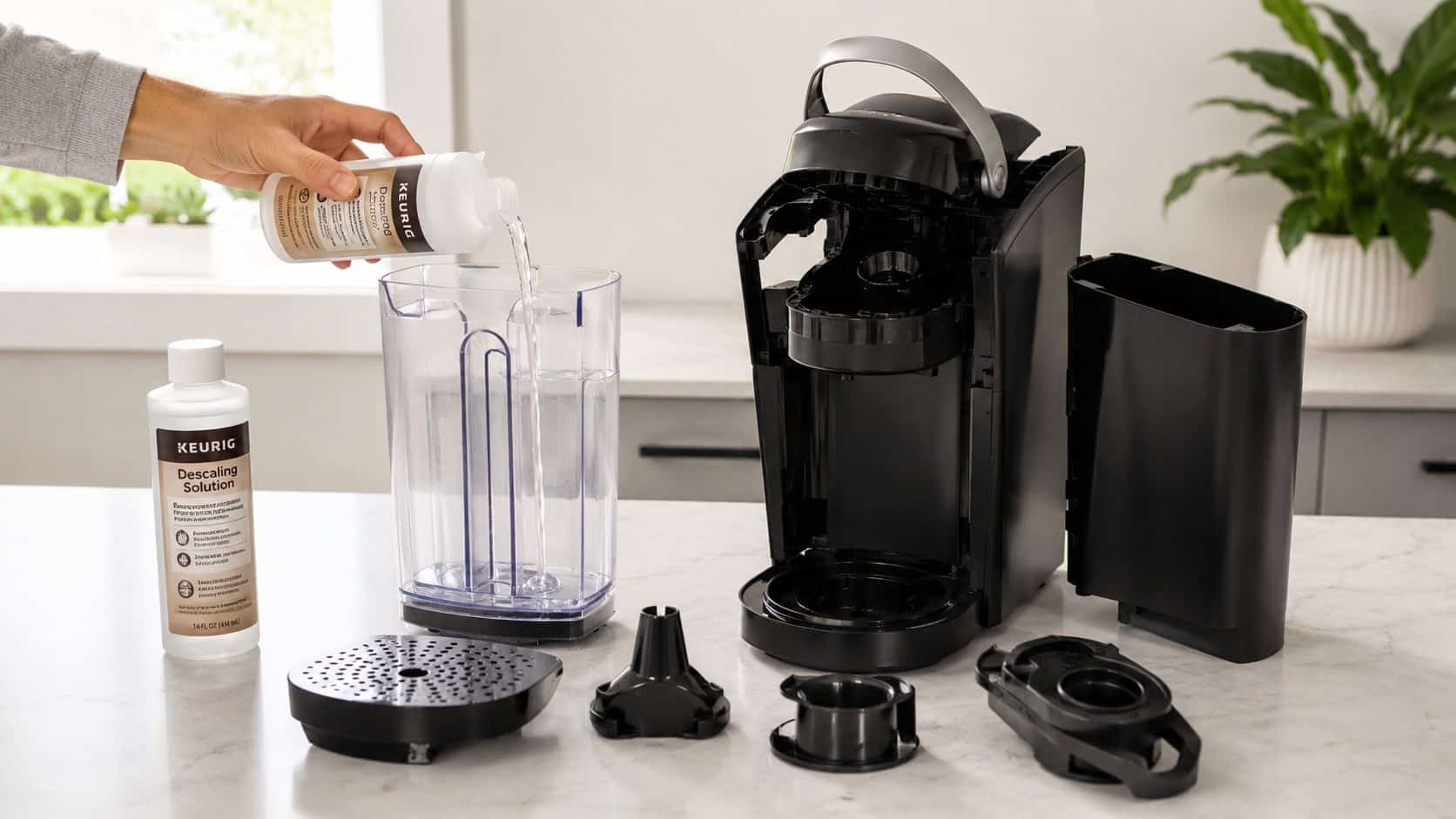
Why Descaling Is Crucial for Premium Coffee
A dirty machine can make good coffee taste bad. People often blame the beans when the actual issue is scale inside the brewer.
Mineral buildup forms in the heating path and narrow internal lines over time. That buildup interferes with temperature consistency and water flow, which are exactly the two things Kona needs most from a Keurig.
Why filtered water isn't the whole answer
Filtered water helps, but it doesn't make descaling unnecessary. Your machine still deals with dissolved minerals, and those minerals still collect where heat is highest.
When scale builds up, three things usually happen:
- Heat becomes less reliable. The machine may not deliver the temperature profile your coffee needs.
- Flow becomes less predictable. Brew speed can drift, which wrecks consistency.
- Flavor gets dull or chalky. Even a clean coffee can taste rough if the machine internals aren't clean.
Maintenance protects the cup and the brewer
If you're spending extra on authentic Kona, skipping maintenance makes no sense. You're asking a compromised machine to handle a delicate coffee with precision.
A universal descaling solution is the simplest fix. It's not glamorous, but it keeps the heating system cleaner and helps your brewer perform the way it should. That also reduces the temptation to overcompensate with darker roasts, larger doses, or repeated brew cycles that still won't solve the root problem.
Clean machines brew cleaner cups. Premium coffee makes that difference obvious fast.
Your Kona Keurig Brewing Checklist
A great Kona cup from a Keurig isn't complicated once you stop guessing. Most failures come from one bad purchase decision or one lazy machine setting.
Use this as your quick reset before brewing:
Brew checklist
- Verify the coffee. Buy clearly labeled 100% Kona Coffee, not a Kona blend.
- Use the right grind. Medium-fine works better than a coarse drip grind in reusable pods.
- Measure the dose. Start with 11 grams, about 2 flat tablespoons, for a stronger, slower extraction.
- Fill the pod correctly. Level it off and avoid overpacking.
- Choose better machine settings. Use Strong and High Temp if your Keurig has them.
- Keep water clean. Good coffee can't hide bad-tasting water.
- Descale regularly. Machine buildup quietly sabotages flavor.
There's also a practical upside to doing Kona this way. A reusable pod gives you more control over taste and usually makes premium coffee easier to justify over time than chasing questionable single-use pods.
If you want Kona coffee for Keurig to taste like a premium purchase instead of an expensive mistake, focus on authenticity first, then extraction, then maintenance. That order works.
PureHQ Inc. makes the small upgrades that help this whole process run smoothly. If you want to brew authentic Kona with less waste and better consistency, shop PureHQ Inc. for reusable K-Cups, water filters, paper liners, and descaling solutions that keep your Keurig clean and ready for better coffee.

