
Coffee Machine Care
Kduo Water Filter Guide: Setup, Replacement and Coffee Taste
Oct
The advice to “add a charcoal filter and change it every couple of months” leaves out the most important question: what problem are you trying to solve? A K-Duo water filter can help with unpleasant brewing-water taste, but activated carbon isn't a universal purifier, as the University of Massachusetts Amherst's drinking-water guidance makes clear. Start with the water problem, then choose and maintain the cartridge.
Why a K-Duo Water Filter Matters for Every Brew
A disappointing morning cup can send you looking for different beans. Before replacing the bag, consider the water. If your cold tap water has an obvious smell or unpleasant aftertaste, it deserves attention alongside the coffee.
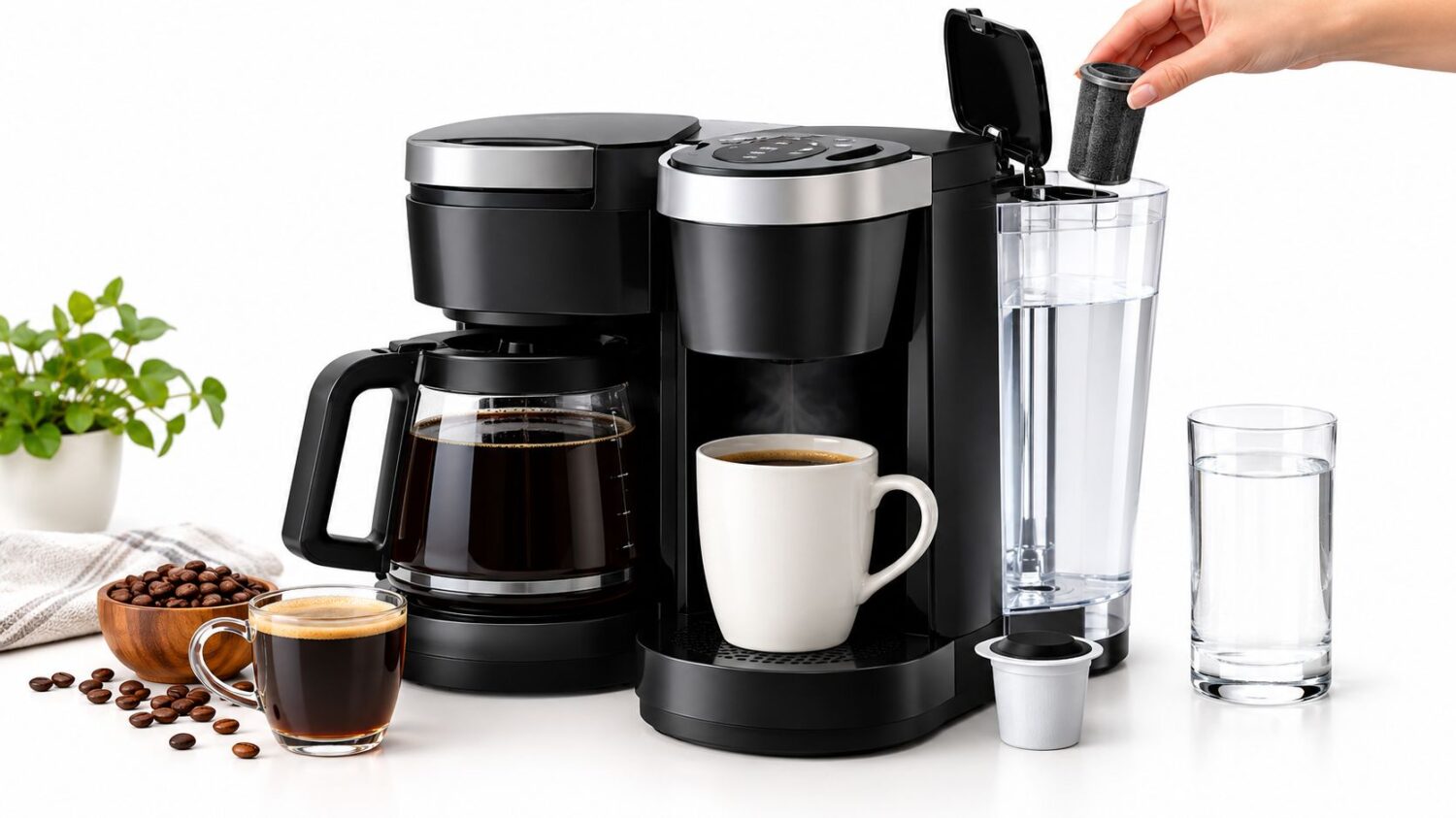
Keurig introduced the K-Duo portfolio on September 16, 2019, as its first product family combining single-serve pod brewing with conventional drip-carafe brewing. The launch included K-Duo Essentials, K-Duo, and K-Duo Plus, with 12-cup carafes and one shared water reservoir supplying both brewing methods, according to Keurig's official portfolio announcement.
That shared reservoir makes water care relevant whether you're filling a travel mug or preparing coffee for a meeting. You don't have separate source water for each side of the brewer. Think of the reservoir as the common starting point, not merely a storage tank.
Practical rule: Treat water taste, water safety, and machine scale as separate questions. A satisfactory answer to one doesn't settle the others.
The stakes extend beyond coffee preferences. The EPA's national drinking-water regulations cover more than 90 contaminants, which is a good reason to demand precise filtration claims rather than promises of universally clean water.
For an owner, the useful questions are straightforward: Is the source water safe? Does it have a taste problem? Is the machine accumulating scale? Answering those questions gives you a better starting point than buying a cartridge just because it contains charcoal.
What a K-Duo Water Filter Can and Cannot Remove
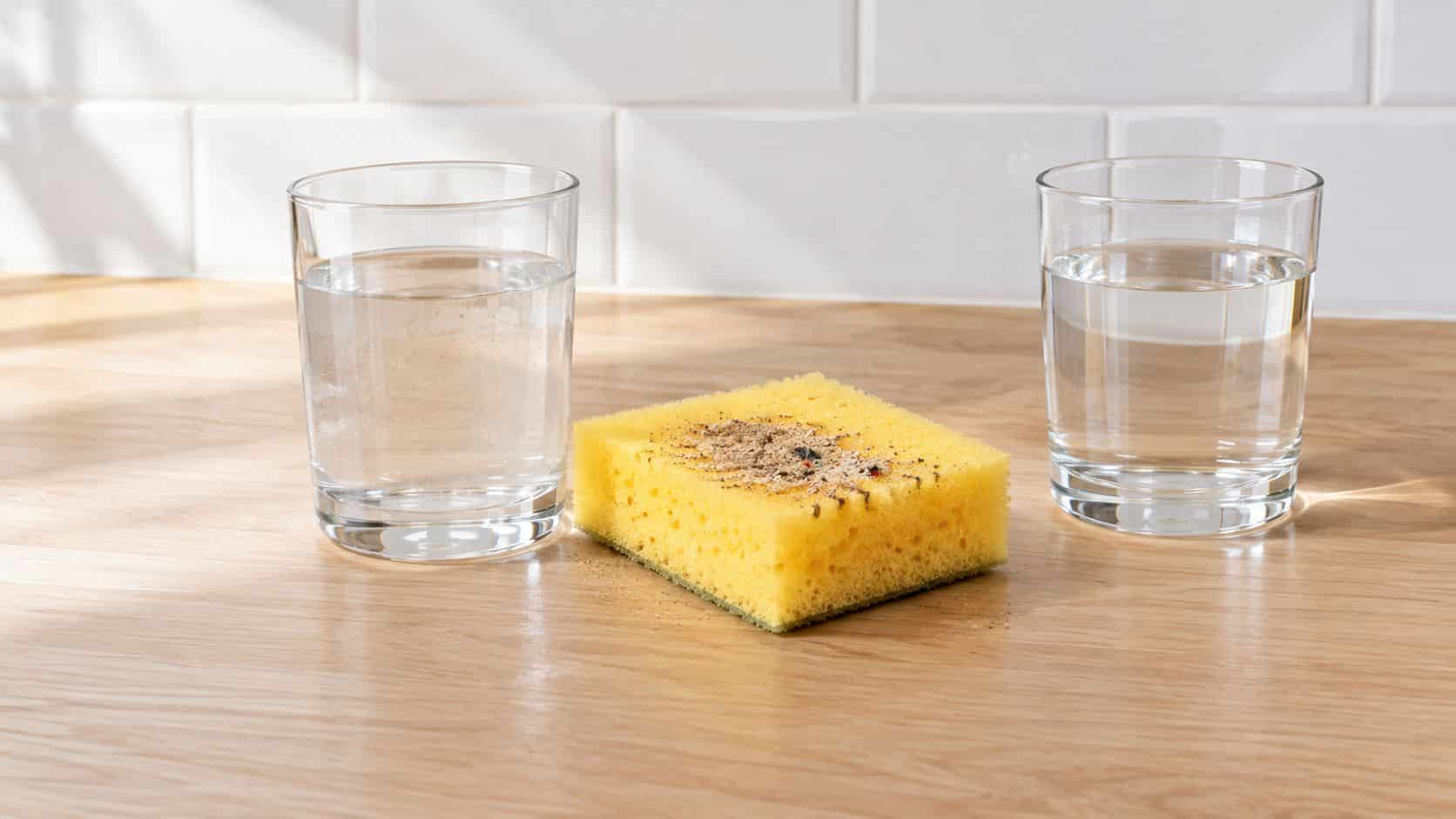
Think of activated carbon loosely as a kitchen sponge that picks up some residues but leaves others behind. The analogy has a limit: carbon works through adsorption, meaning certain substances adhere to its surface rather than soaking into it.
The sponge image is a reminder that selective cleaning isn't the same as removing everything.
Separate general carbon capabilities from cartridge claims
The UMass guidance cited above explains that activated carbon can reduce unwanted tastes, odors, chlorine, radon, and some synthetic organic chemicals. It also says activated carbon isn't effective against microbial contamination, sodium, nitrate, fluoride, or lead. Those are general treatment characteristics, not proof that every small coffee-machine cartridge achieves every listed reduction.
The EPA's consumer water-filtration guidance likewise distinguishes carbon's taste-and-odor uses from its limitations. Carbon generally doesn't remove bacteria, calcium and magnesium hardness minerals, fluoride, nitrates, or chlorides. For PFAS concerns, consult your utility and select a filter certified for PFAS reduction rather than assuming an ordinary charcoal cartridge qualifies.
Choose the response that matches the problem
- Chlorine taste in otherwise safe water: A carbon cartridge may be an appropriate taste-treatment option. Check its actual reduction claims.
- Hard-water deposits in the brewer: Address existing scale through descaling. Don't expect the reservoir cartridge to perform that job.
- A documented contaminant concern: Arrange suitable testing and choose treatment certified for that specific contaminant.
Start with a known-safe cold-water source and review your local water-quality report. A pleasant cup isn't a water-safety test, and a better smell doesn't establish that a contaminant has been removed.
Installing a K-Duo Water Filter in the Rear Reservoir
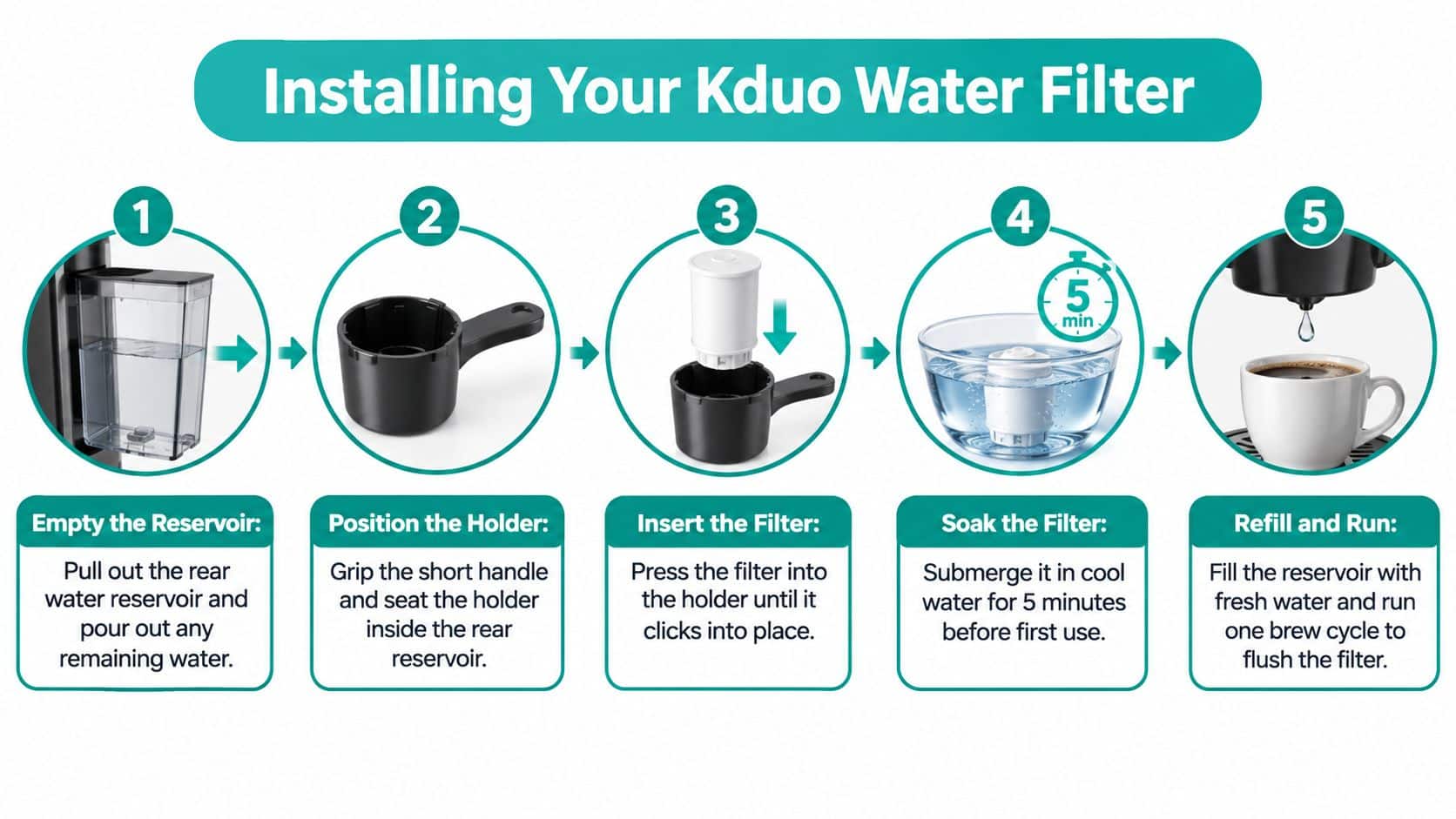
Before opening the cartridge, locate the water-filter holder in the rear reservoir. Brewer models and cartridge kits can differ, so use the parts and fit guidance supplied for your exact K-Duo and filter. The K-Duo-compatible cartridge listing can help identify a compatible cartridge, but it is not a substitute for your brewer's instructions.
Use the visual below to identify the parts. Follow your cartridge kit's instructions for preparation order and timing.
Prepare the cartridge before seating it
- Remove and empty the reservoir. Set it on a stable surface so you can inspect where the holder fits.
- Soak the cartridge in clean water. Use the duration given in its instructions.
- Rinse the cartridge thoroughly. This helps wash away loose carbon fines that may appear as black particles at first.
- Clean the holder's mesh. Check it before placing the prepared cartridge inside.
- Seat the assembly firmly. It should fit in its intended position without force.
These steps help water pass through the carbon rather than around it. A poorly seated assembly can allow bypass, limiting contact with the carbon and reducing the cartridge's intended taste benefit.
For another general reference, see this water-filter installation walkthrough. Keep the instructions for your specific kit nearby, especially when fitting a holder you have not used before.
This video provides another view of the installation process.
Finish with the specified flushing procedure
Refill the reservoir with fresh water and follow the starter kit's flushing directions before brewing. The required procedure depends on the kit, so don't guess by choosing a number of reservoir fills. If black particles remain visible, check the cartridge's rinsing and preparation instructions before making your first pot.
Comparing Premium and Generic Filter Cartridges
A higher price does not prove a cartridge filters better, and a lower price does not prove it performs poorly. Check the evidence behind each claim instead of relying on the label “premium.”
NSF's explanation of water-treatment standards explains the difference between NSF/ANSI Standard 42, which covers aesthetic effects such as taste and odor, and Standard 53, which covers specific contaminants with health effects. A certification applies to the listed reduction claims. It does not mean a cartridge removes every contaminant.
Premium Compatible Filter Compared With Generic Charcoal Cartridge
| Buying Factor | Premium Compatible Filter | Generic Charcoal Cartridge |
|---|---|---|
| Documented certification claims | Look for an identifiable certification and the exact reduction claim | Require the same evidence; “charcoal” alone isn't verification |
| Named K-Duo compatibility | Confirm your exact brewer generation and holder are listed | Don't infer compatibility from a similar appearance |
| Replacement guidance | Check for clear preparation and replacement instructions | Check whether usable instructions accompany the cartridge |
| Fit verification | Look for holder details and installation guidance | Compare cartridge and holder requirements before ordering |
| Support | Review available fit help, return terms, and warranty details | Check what assistance the seller actually provides |
Use this table as a buying checklist, not as proof that every premium cartridge beats every generic option. A generic cartridge with clear documentation may meet your needs. An expensive one without evidence deserves the same scrutiny.
Answer the price and fit objections directly
If premium filters seem overpriced, ask what the added cost gets you. Clear compatibility details, useful instructions, and accessible support are practical points to compare. Marketing language about broad purification is not a substitute for specific evidence.
For fit, start with your brewer model and holder. A cartridge that looks right in a product photo may still be incompatible. If its fit is uncertain, check the listing or ask the seller before ordering rather than forcing it into place.
PureHQ is one brand you can compare against these criteria. Check the specific cartridge listing for documented claims, K-Duo compatibility, instructions, and fit details. A brand name alone does not confirm that a cartridge suits your brewer or reduces a particular contaminant.
How Often to Replace Your K-Duo Water Filter
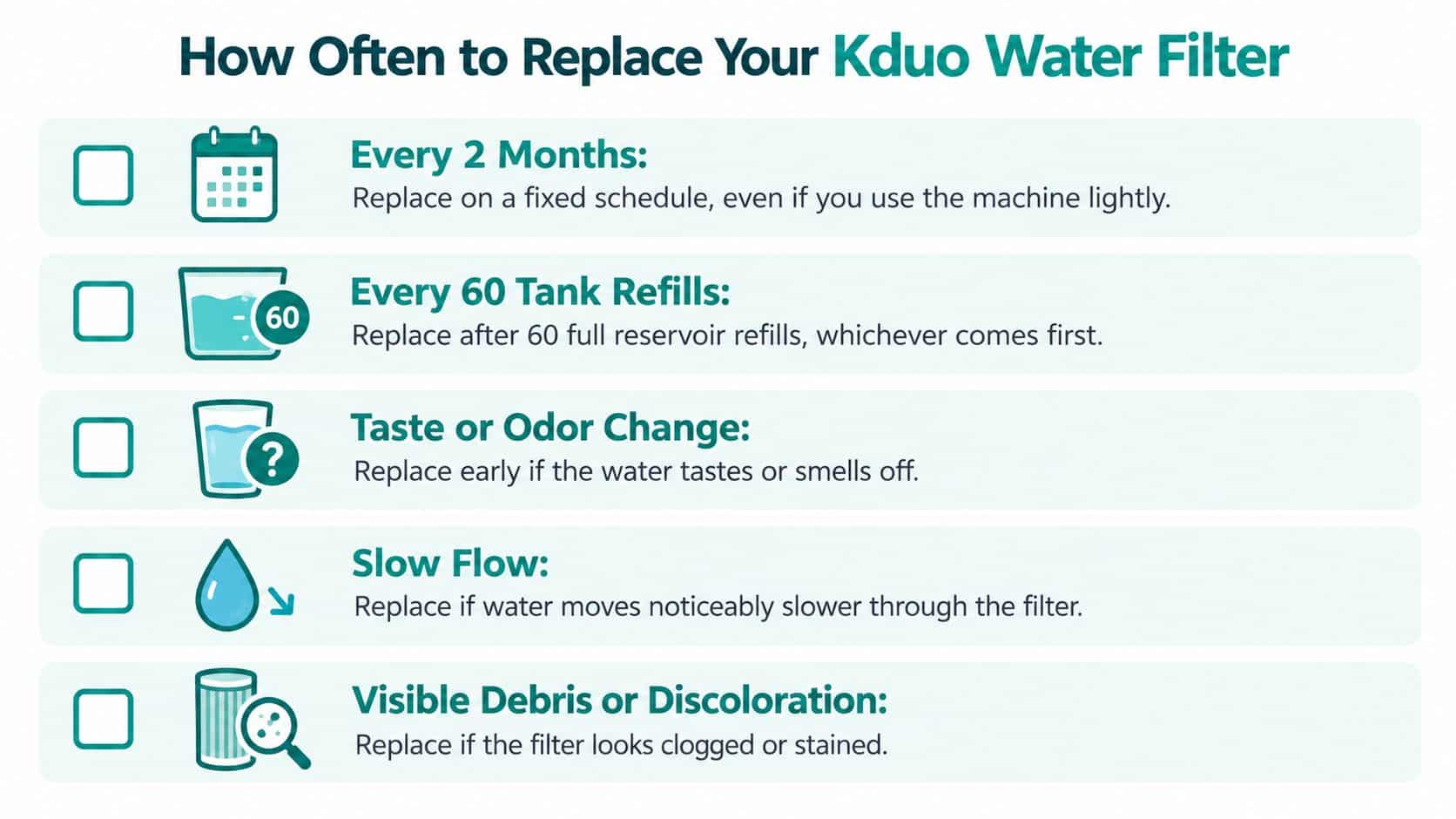
A filter does not run on one universal calendar. Follow the replacement interval printed in your cartridge's instructions or in Keurig's K-Duo Use and Care Guide. Usage and water conditions can differ, so a date copied from another cartridge may not fit yours.
A lightly used kitchen brewer and a busy breakroom use their filters at different rates. Keep track of when you install the cartridge, then follow its stated replacement interval. If the instructions give no refill count, don't treat one as an official limit.
Track use instead of guessing
Activated carbon has a limited capacity to adsorb certain taste-and-odor substances. As it collects them, its ability to do so declines. The filter may improve taste, but it is not a general purifier, and a change in taste cannot confirm that water is safe.
- Record the installation date. Add it to a maintenance card or phone reminder.
- Note how often you refill the reservoir. This gives you a practical picture of use without counting every cup.
- Check the reservoir and holder during routine care. Visible sediment or buildup can signal that the water or equipment needs attention.
- Pay attention to unexpected changes in taste or flow. Treat these as prompts to inspect the brewer and check the cartridge instructions, not as proof of contaminant breakthrough.
- Replace the cartridge according to its instructions. Contact the cartridge maker if the recommended interval is unclear.
The K-Duo-compatible replacement guidance offers product-specific replacement information. Compare it with the instructions supplied with your own cartridge before setting a reminder.
Don't wait for a bad-tasting cup
Taste and flow are useful clues, not water-quality tests. A cup that tastes normal cannot show whether a filter still performs as intended. If you have a concern about contaminants, use appropriate water testing rather than relying on coffee flavor.
A simple installation log helps you follow the cartridge instructions. Taste alone cannot confirm filter performance.
Keurig's guide directs owners to install the accessory using its starter-kit instructions and replace the cartridge according to the filter instructions. Keep those directions with your log so the schedule comes from the cartridge guidance, not a guess.
Routine Cleaning and Descaling Between Filter Changes
A fresh cartridge does not clean the whole brewer. The reservoir, filter holder, and internal water passages need separate care. Use the K-Duo manual for the machine and the cartridge starter kit for filter preparation.
Rinse the reservoir and clean the holder's mesh. Before installing a replacement, follow its soaking, rinsing, and flushing instructions. Check that the holder sits securely in place, like a lid that needs to fit properly before the brewer runs.
Follow the cartridge's flushing instructions
Use the starter kit's directions for preparing each cartridge. They apply to that filter and its holder. A charcoal cartridge can improve taste and odor, but it is not a disinfectant. If you have concerns about bacteria or other contaminants, check your local water-quality report and consult a certified laboratory or EPA guidance. Coffee flavor cannot confirm whether water is safe.
Descale the brewer separately
A cartridge and a descaling solution do different jobs. The cartridge treats water as it enters the reservoir holder. Descaling addresses mineral scale inside the brewer, including in water passages and heating components. Follow the machine's descaling instructions and use a solution appropriate for your brewer. For a step-by-step overview, see this Keurig descaling walkthrough.
Keep the routines separate:
- Reservoir care: Rinse the reservoir and clean the holder's mesh.
- Cartridge care: Prepare and replace the filter according to its instructions.
- Scale care: Descale the brewer according to its manual.
PureHQ sells descaling solution and cleaning tablets as separate maintenance accessories. Choose products and procedures that suit your brewer. A new cartridge is one part of upkeep, not a substitute for cleaning the machine.
Taste and Performance Changes You Can Expect
A fresh cartridge can change how the water tastes. It cannot promise a completely different cup. Its role is to reduce some taste and odor interference, especially if your source water has a noticeable chlorine note. That difference is easier to judge through a careful comparison than by expecting the filter to improve every brew.
Keep the recipe steady. Use the same safe source water, grounds, brew size, and cups. Change only whether the properly prepared reservoir filter is installed.
Compare aroma and aftertaste
- Prepare a baseline cup. Brew without the optional cartridge, using the brewer as usual.
- Install and flush the fresh filter. Follow its preparation steps before making the comparison cup.
- Compare the cups. Notice aroma, any chlorine-like note, and the aftertaste. This is a taste check, not a laboratory test.
If someone can serve the cups without telling you which is which, you may find it easier to judge your preference. The comparison cannot prove what the cartridge removed from the water. It only helps you notice whether the treated water changes the cup for you.
Keep expectations grounded: A cartridge changes water treatment. Your beans, roast, and grind still shape the coffee.
If the result disappoints, review the recipe before trying another cartridge. Water quality and the amount of coffee used both affect flavor. This guide to filtered water and coffee-to-water ratio explains those factors.
Treat performance changes as clues
A cartridge will not repair a brewer that needs care. If flow changes, check the warning signs described earlier and inspect the machine according to its care instructions. The filter may be due for replacement, but a flow problem alone does not confirm that.
Think of the cartridge as one part of the brewing setup, not a fix for every change in taste or performance. The useful result is a cup you enjoy and a routine you can repeat, with no promise that the filter will improve extraction or restore the machine.
Getting Started with the Right Filter Today
A filter that fits the machine may still be the wrong choice for your water. Start with the brewer and the problem you want to address. Check your K-Duo model information and inspect the reservoir holder, since a general “fits Keurig” label may not confirm compatibility with your specific brewer.
Use this short checklist:
- Identify the water concern. Review your local water-quality report. Decide whether your priority is taste, scale, or a documented contaminant. A charcoal cartridge may improve taste, but that alone does not show that it reduces a particular contaminant.
- Confirm the exact fit. Match the cartridge and holder to your K-Duo model and generation.
- Set up a usage record. Leave room to note the installation date, refill tally, and changes you notice. Refill counts and warning signs give you more useful clues than a calendar date alone.
PureHQ Inc. offers K-Duo-compatible water-filter accessories, replacement cartridges, and separate machine-maintenance supplies. Compare its K-Duo filter listing with your brewer's model and holder. If the generation is unclear, check the product FAQs or contact support before opening or forcing an unfamiliar component into place.
Keep the cartridge instructions when it arrives. Prepare and flush the filter as directed, then begin counting reservoir refills. That tally is easier to maintain than trying to recall the installation date later.
If you also need scale-control supplies, choose a descaling solution separately. A filter and descaler serve different purposes, so follow each product's instructions and keep their maintenance steps distinct.

