
Coffee Machine Care
Coffee Pot Filter Basket Types Compared and How to Choose

Sep
You load the coffee maker, press brew, and walk away. A few minutes later, coffee is spilling around the lid, the basket is holding a muddy pool, or fine grounds have reached the carafe. The frustrating part is that the coffee pot filter basket often gets blamed first, even when the cause is a folded paper filter, an overly fine grind, or a spray head that isn't distributing water evenly.
A basket does matter. It supports the filter, holds the coffee bed, and controls how quickly brewed coffee reaches the carafe. But replacing it before testing the filter, grind, seating, and water path can waste money and leave the original problem untouched. The comparison below gives you a quick starting point before the deeper diagnosis.
| Basket choice | Best fit | Main advantage | Main trade-off |
|---|---|---|---|
| Gold-tone reusable mesh | Frequent drip brewing and lower-waste routines | Reusable, fuller body, no paper purchase | More sediment and more cleaning |
| Stainless steel mesh | Durable everyday use | Rigid construction and easy visual inspection | Can pass more fines than paper |
| Paper-lined basket | Clean, bright drip coffee | Strong sediment control and simple cleanup | Ongoing paper use and filter fit matters |
| Standard generic basket | Like-for-like replacement | Usually affordable and widely available | Fit, rim strength, and drainage can vary |
Why Your Coffee Pot Filter Basket Causes Overflow and Grit
The usual failure happens at the worst possible time. You add grounds before work, place the basket in a Keurig K-Duo, Ninja DualBrew, or conventional drip pot, and expect a quiet brew cycle. Instead, the machine slows to a crawl, the basket rises toward the lid, and the finished coffee tastes weak despite the mess on the counter.
That scene makes a replacement basket feel like the obvious answer. Yet overflow and grounds in the cup frequently result from several parts working badly together. A basket that sits slightly off-level can press the paper against the outlet. A filter with the wrong shape can fold inward. A grind that's too fine can restrict drainage, while a clogged spray head can concentrate water in one area and push grounds through a weak spot.
Practical rule: Diagnose the water path and filter before buying a new basket.
The basket still influences flavor and flow. A flat-bottom basket spreads grounds across a broad bed, but overfilling can encourage uneven water movement. A deeper basket gives more room for a larger dose, but the paper must match its geometry and remain open at the sides. Reusable mesh lets more oils and fine particles pass than paper, which can create a heavier cup while increasing grit and demanding more cleaning.
What the morning mess costs
An overflow wastes coffee, soils the brew basket area, and can push wet grounds into places that are difficult to rinse. A slow drain also changes contact time. The machine may deliver a cup that tastes hollow in one part and harsh in another because water has found an uneven route through the coffee bed.
The practical fix might be as small as switching paper, grinding slightly coarser, reseating the basket, or clearing the spray head. The replacement decision comes later, after a dry-filter test and a water-only cycle show whether the basket itself is failing.
What a Coffee Pot Filter Basket Does and How It Evolved
A filter basket performs a simple job with several consequences. It holds the ground coffee, supports paper or mesh, keeps the bed aligned under the spray head, and lets filtered liquid drain toward the carafe. Its shape, depth, outlet, and material determine how water meets the grounds and how much sediment reaches the finished drink.
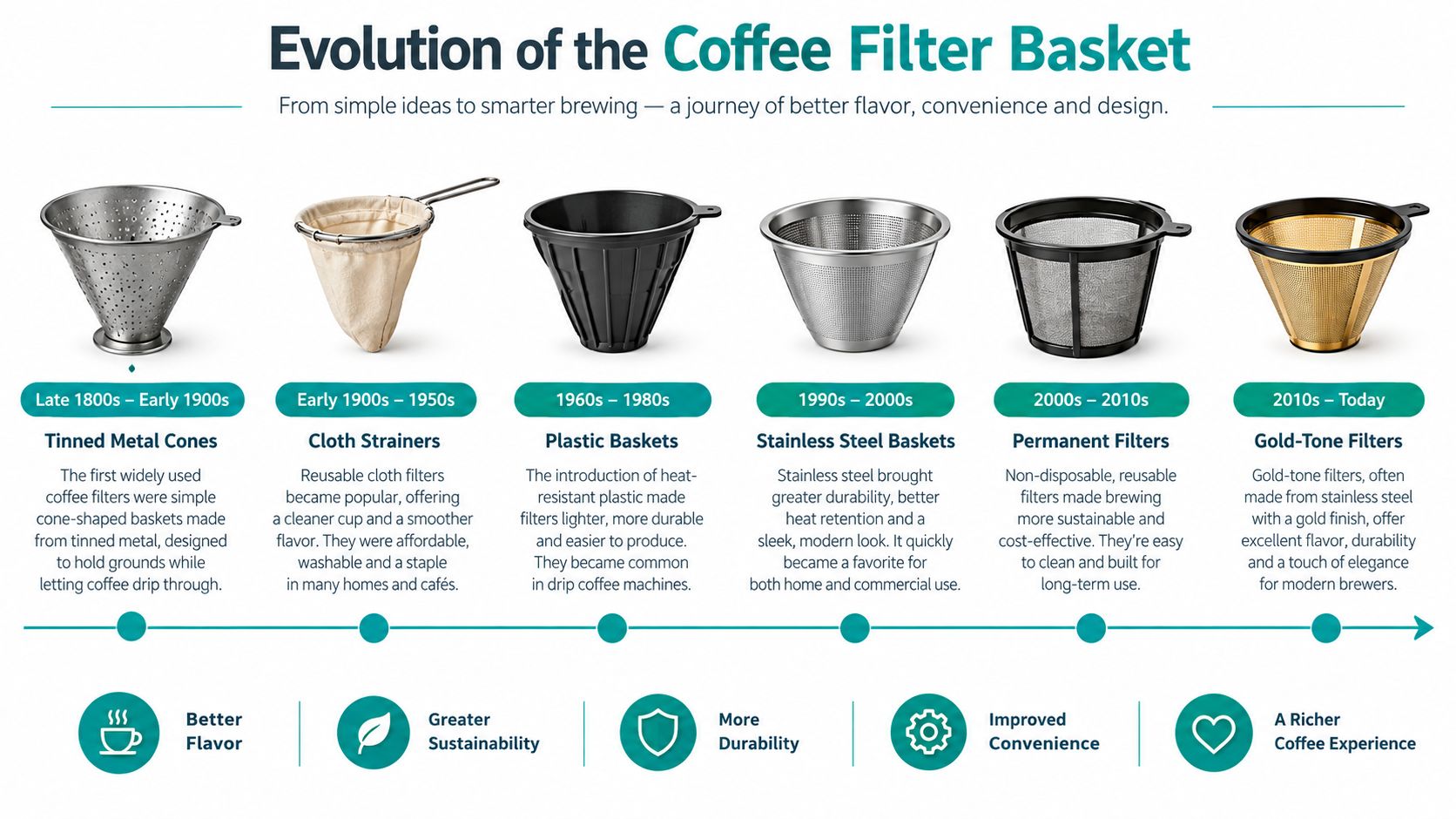
The modern format has a longer history than many owners realize. Historical accounts describe earlier coffee preparation with boiled grounds and cloth strainers, while an account of an 1782 method by Johann Georg Krünitz describes blotting paper inside a tinned metal filter cone, placing filter concepts within an older European brewing tradition. The history of the coffee filter and its early precursors also identifies the 1780 Biggin pot, which gave the coffee pot a dedicated place for cloth filtration.
Melitta Bentz brought the paper filter into a scalable commercial format. She filed a patent application for a filter-top device lined with filter paper on 20 June 1908, received the patent on 8 July 1908, and began commercial production in December 1908, according to this historical account of Melitta Bentz and the coffee filter. Her approach reduced sediment and avoided the repeated washing associated with cloth.
Why geometry still matters
By the 1930s, the original flat-bottomed metal unit had developed into the cone-shaped paper format many people recognize today. Accounts place the cone and matching paper-bag patent shift in 1936 or 1937, a small difference that reflects how quickly the design became standardized during the interwar period.
That evolution explains a familiar modern trade-off. Flat-bottom baskets work naturally in many automatic drip pots because they create a broad coffee bed. Cone designs encourage water toward a narrower point and require paper that holds its shape. Reusable metal baskets preserve the basic separation function while removing the disposable paper layer, but they change the amount of oil and fine sediment that reaches the cup.
The basket isn't just a plastic holder beneath the lid. It represents the point where brewing geometry, filtration, cleanup, and machine compatibility meet.
Comparing Coffee Pot Filter Basket Materials and Performance
Material changes the cup before grind adjustments do. Paper generally provides the cleanest separation of brewed coffee from fines and oils, while mesh tends to produce more body and a heavier mouthfeel. Neither approach is automatically superior. The right choice depends on whether you prioritize clarity, texture, low waste, or the quickest cleanup.
Commercial basket paper commonly uses 90 mm and 110 mm base formats, a 250 mm pleated profile, and a basis weight of about 51 g/m², as shown in this basket-filter paper specification. That paper weight balances structural strength with flow resistance. Lighter paper usually drains faster, while thicker paper slows the flow and can add body.
| Material type | Flavor and flow | Cleaning and cost |
|---|---|---|
| Gold-tone metal mesh | Fuller body, more oil, and more fine sediment than paper. Flow depends heavily on mesh condition and grind. | Rinse after use and deep-clean regularly. Reusable construction avoids buying a paper filter for every brew, but the basket requires labor. |
| Stainless steel mesh | Rigid and durable, with a direct flow path that can feel lively when the grind is appropriately coarse. Fine particles may reach the cup. | Simple to inspect and rinse. Long service depends on mesh and rim condition. |
| Paper-lined basket | Clean flavor separation and minimal sediment. Paper resistance affects drawdown, so a poor fit can slow drainage. | Fast disposal and little basket scrubbing, but paper is an ongoing consumable. |
| Gold-tone basket with paper liner | Combines the basket's rigid support with paper's filtration. It can stabilize the paper and reduce folding when correctly sized. | Requires paper replacement plus ordinary basket rinsing. |
The objection I hear most often is that reusable baskets always taste better. They can taste richer, but richer isn't the same as clearer or more consistent. Paper often wins when you want a clean cup, fewer fines, and easy disposal after a busy morning. For a fuller-bodied office brew, mesh may be the more practical compromise.
For a detailed side-by-side discussion of reusable and paper systems, see this reusable coffee filter versus paper comparison. The useful lesson is to choose filtration deliberately instead of treating waste reduction or body as the only measure of quality.
Flavor distinction: Mesh emphasizes texture. Paper emphasizes separation. Grind and water distribution decide whether either one performs well.
Finding the Right Size and Compatibility for Your Brewer
A basket can look close enough and still fail. The rim may catch on the lid, the base may sit above the outlet, or the paper may collapse because the basket is too shallow for the dose. Match the basket to the brewer's actual cavity, not just the brand printed on the front.
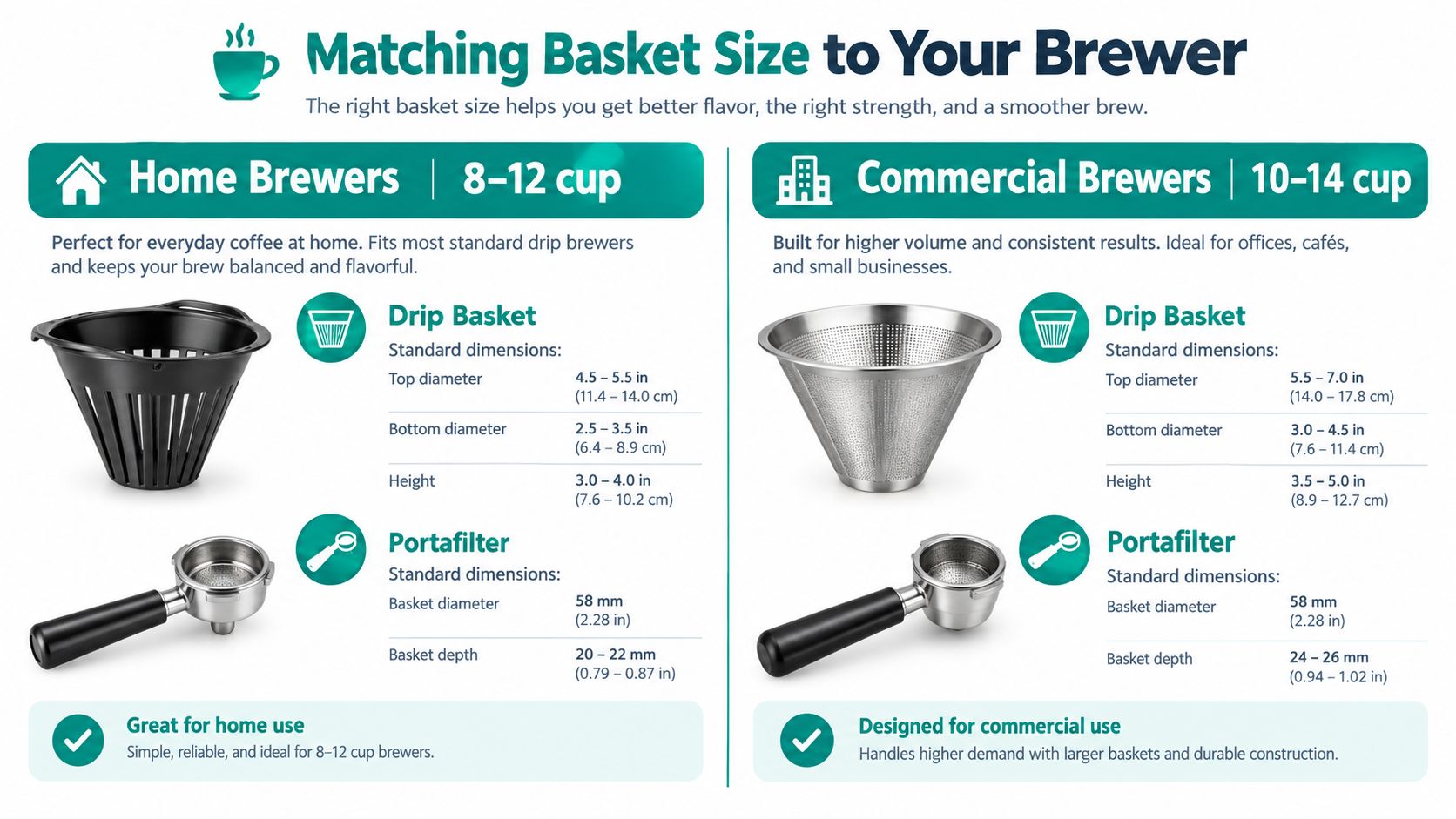
For drip equipment, basket-style filters are commonly associated with 8 to 12 cup home brewers and 10 to 14 cup commercial brewers, according to this coffee filter size guide. Treat those volume ranges as starting points rather than permission to overfill. The basket must hold the full dose while leaving enough room for the grounds to swell without touching the lid or blocking the outlet.
A flat-bottom design gives the coffee bed broad support and can encourage even coverage. The same shape can channel if the basket is packed too high, because water may find a narrow route through the upper grounds instead of moving uniformly through the bed.
Espresso fit uses more than diameter
Espresso baskets require tighter mechanical matching. Common portafilter diameters include 51 mm, 54 mm, and 58 mm, with 58 mm widely treated as the commercial standard, 54 mm common in Breville home machines, and 51 mm common in entry-level De'Longhi models, as outlined in this espresso basket size guide.
Diameter alone doesn't guarantee compatibility. The basket and portafilter also need the correct ear configuration. Two-ear systems use a 90-degree twist, while three-ear systems use a 120-degree twist, so a basket with the right diameter but the wrong ear layout can leak or refuse to lock, as explained in this portafilter compatibility guide.
Use these fit checks before ordering:
- Dry paper test: Place the filter in the empty basket. Confirm that the rim stays open and the paper doesn't fold across the outlet.
- Seating check: Install the basket without coffee and verify that it sits level, with no rocking or lifted edge.
- Water-only cycle: Run the brewer without coffee. Water should spread and drain without pooling on one side.
- Lock test for espresso: Insert the portafilter gently and confirm that the ears engage without force or leakage.
If you're uncertain whether the existing part has reached the end of its useful life, this coffee filter basket replacement guide offers a useful fit-focused reference. Compatibility beats a promising material description every time.
How to Diagnose Basket Problems Before You Replace It
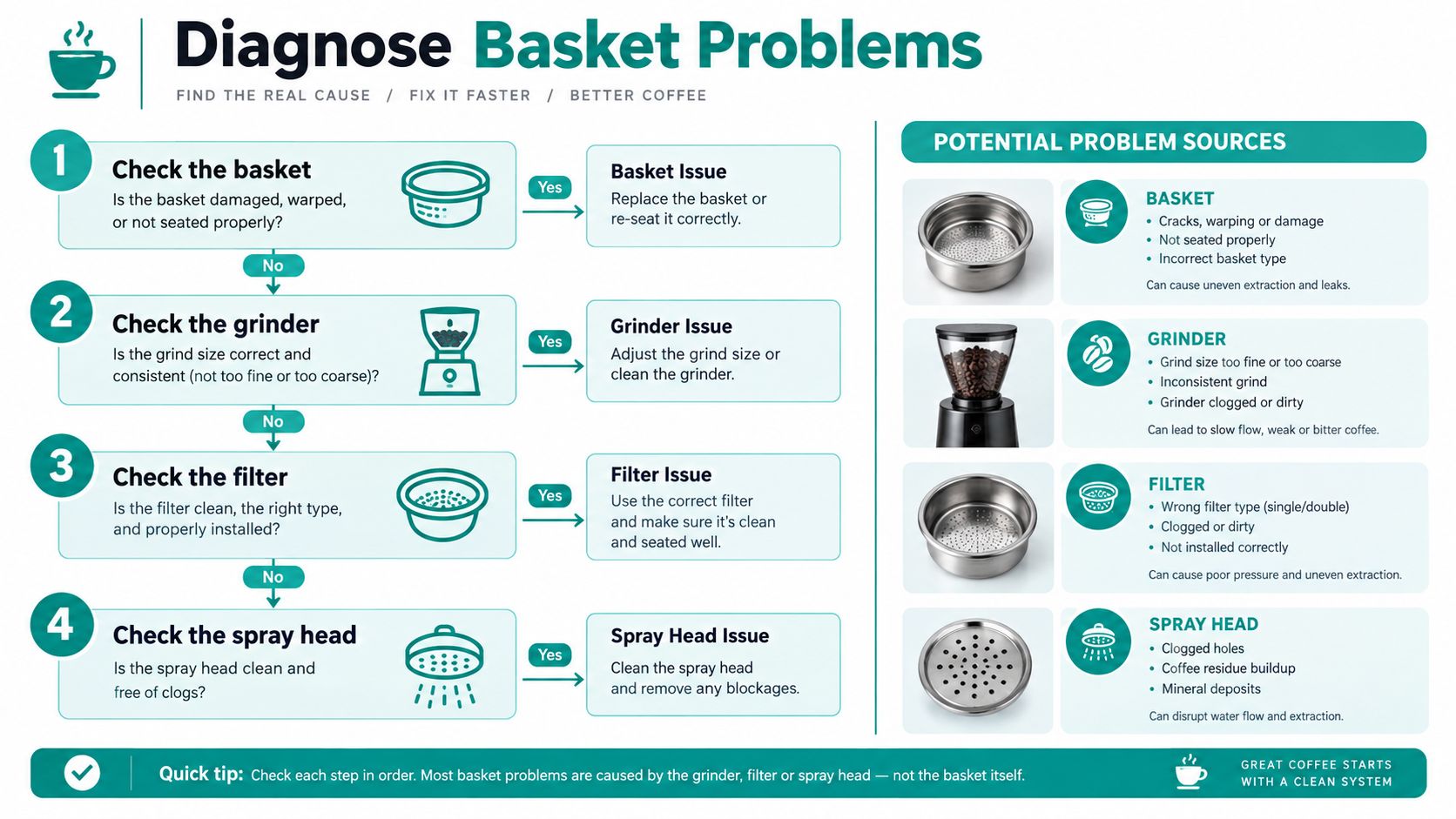
A new basket won't correct a grinder that produces excessive fines or a spray head that sends water through one blocked opening. Use a short isolation process instead of changing several variables at once.
Start with the basket and filter
Remove coffee and inspect the basket on a flat surface. The rim should sit evenly, the outlet should remain clear, and the basket shouldn't rock. Bent plastic, a distorted metal edge, or a damaged outlet points toward a basket problem.
Next, place a dry paper filter inside. Don't add grounds. Watch the sidewalls. If the paper folds inward, blocks the outlet, or lifts away from the basket, the paper shape and basket geometry don't agree. Try the correct filter size before you alter the coffee recipe.
Separate drainage from water distribution
Run a water-only cycle with the empty basket and paper installed. If water drains slowly but spreads evenly, paper resistance or the outlet may be restricting flow. If water lands in one concentrated stream, inspect the spray head for scale or blocked holes.
Use the symptom map below:
- Overflow with a clean, dry basket: Check paper fit, grind fineness, and dose height before replacing the basket.
- Grounds in the carafe with normal drainage: Check a torn filter, an unsupported paper edge, or an overly aggressive spray pattern.
- Pooling after a water-only cycle: Inspect the basket outlet and its seating surface.
- One-sided wetting: Clean the spray head and confirm that the basket sits level.
- Leak around an espresso portafilter: Check diameter and ear layout, not just the basket label.
A cheaper filter or a small grind adjustment often solves the complaint faster than a replacement basket.
The interaction matters more than any single component. Basket fit, filter shape, grind size, dose, and spray distribution create the final flow path. Change one item, test again, and only replace the basket when the evidence points to physical damage or persistent incompatibility.
Cleaning Durability and When to Replace Your Basket
A reusable basket can look clean while holding old coffee oils and scale inside its mesh. Those residues can create stale or rancid flavors and slow drainage, even when the basket appears visually intact. Daily rinsing handles loose grounds, but it doesn't replace a deeper cleaning routine.
Rinse the basket immediately after brewing, brush the rim and outlet, and let it dry fully. At least weekly, soak reusable metal parts in an appropriate coffee-equipment cleaner, then rinse thoroughly. For a broader machine routine covering the surrounding brew path, use this guide to cleaning a coffee maker.
Cleaning should match the material
Gold-tone and stainless mesh need particular attention around the rim and tiny openings. Don't use a sharp object to enlarge blocked holes, because that changes the designed filtration pattern. A soft brush, warm water, and a suitable cleaning solution remove residue without deforming the mesh.
Paper-lined baskets simplify cleanup because you discard the liner with the grounds. The support basket still needs a rinse, especially if coffee has bypassed the paper or oils have reached the rim.
After the routine rinse and weekly deep clean, inspect the parts under bright light. Replace a basket when you find a bent rim, torn mesh, a degraded seal, persistent odor, or a leak that remains after correct seating. Replacement guidance commonly places home-basket service life around 12 to 24 months, with commercial use wearing baskets sooner, as described in this basket replacement and durability guide.
A compatible descaling solution helps address mineral buildup in the brewer's water path, while cleaning tablets can target coffee oils in equipment designed for tablet cleaning. Neither product repairs a warped basket, so maintenance and replacement solve different problems.
This maintenance video shows the kind of hands-on cleaning sequence that keeps coffee-contact parts from becoming an afterthought.
Choosing the Best Coffee Pot Filter Basket for Your Brewing Style
Choose based on the drink you make most often, not the material that sounds most premium. A daily drip drinker who wants clean flavor and fast cleanup will usually prefer a correctly fitted paper-lined basket. Someone who wants heavier body and less disposable material may prefer gold-tone or stainless mesh, provided they accept regular deep cleaning.
For a small office, fit stability and repeatable drainage matter more than maximum flavor complexity. A rigid basket paired with correctly sized paper can reduce folding and simplify end-of-pot cleanup. For a home enthusiast, paper offers a cleaner baseline for tasting, while mesh gives a fuller profile when the grinder produces an appropriate particle distribution.
Premium versus generic choices
A premium basket should earn its place through precise fit, a stable rim, dependable drainage, and easy cleaning, not a decorative finish alone. A generic replacement can work well when its dimensions match the original and its filter support remains level. The objection is usually leakage or compatibility, and the answer is fit-testing before brewing, especially for Keurig, Ninja, Breville, and Cuisinart systems with different basket cavities.
PureHQ Inc. offers gold-tone carafe baskets, compatible paper liners, stainless refillable pods, descaling solutions, and cleaning tablets for home and small-workplace coffee equipment. Choose the accessory only when its stated shape and brewer compatibility match your machine.
If your basket passes the dry-paper and water-only tests, keep it and adjust the filter or grind. If the rim is bent, the mesh is torn, or the basket leaks after correct seating, replace it rather than forcing the machine to compensate.
PureHQ Inc. offers compatible coffee baskets and maintenance accessories designed for everyday Keurig, Ninja, Breville, Cuisinart, and espresso-machine care. Visit PureHQ Inc. to shop the specific gold-tone carafe basket, matching paper liners, descaler, or cleaning tablets for your brewer.

