
Coffee Machine Care
Cafe Latte K Cups Explained: Brewing, Pairing, and Better
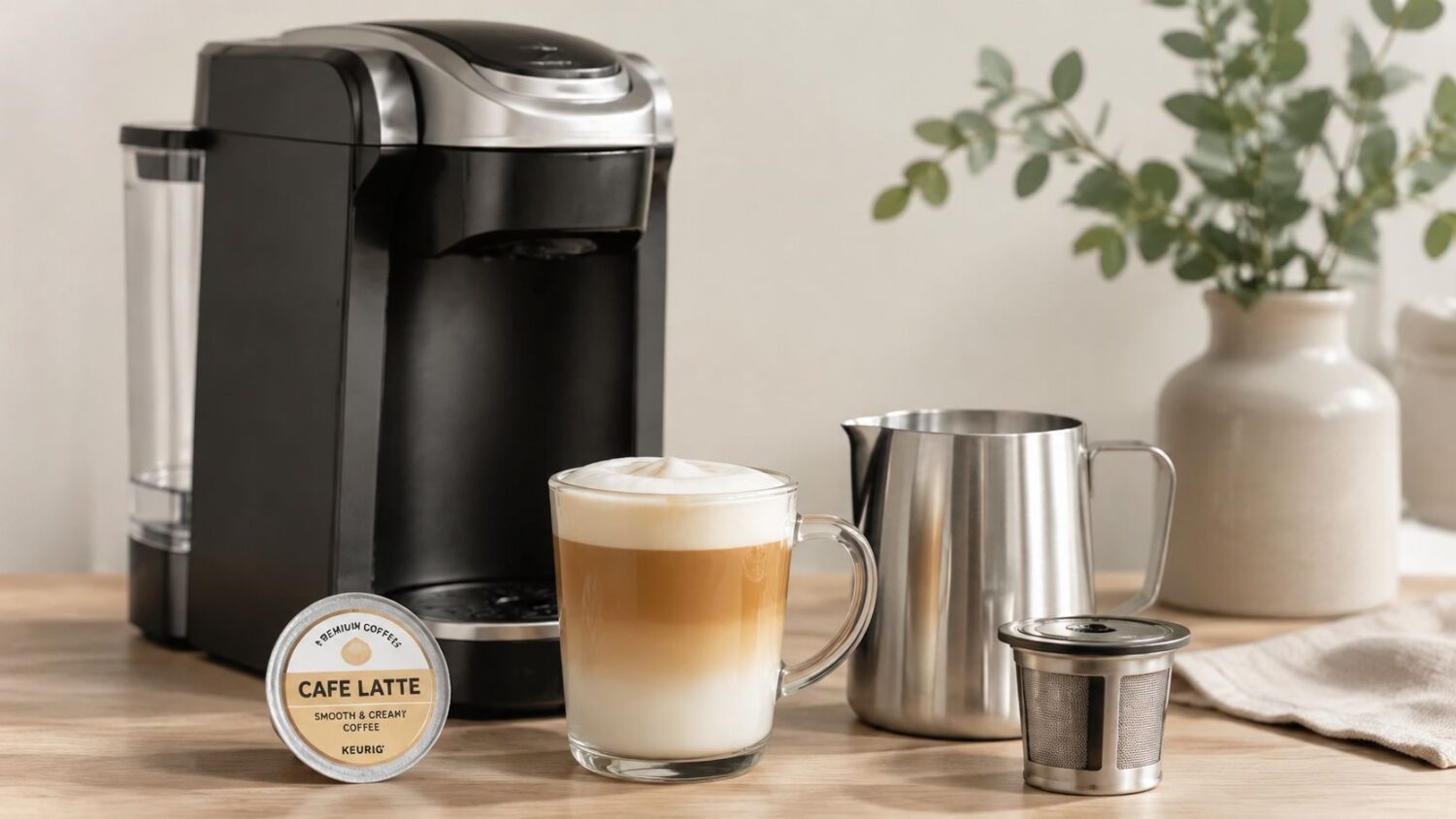
Aug
Most advice about cafe latte K-Cups starts with flavor. That's the wrong place to start. A pod labeled “latte” often isn't espresso blended with fresh steamed milk, and it may deliver a very different amount of sugar, calories, and caffeine from what a regular coffee drinker expects.
Keurig's format began as an office convenience in 1998, reached home brewers in 2004, and grew from 1.8 million U.S. pod machines sold in 2008 to 11.6 million in 2013 as single-serve coffee moved into mainstream kitchens (Keurig's format history). The convenience is real. The café equivalence is not.
The Surprising Truth About Cafe Latte K Cups
A café latte traditionally depends on a concentrated coffee base and heated, textured milk. A latte K-Cup usually takes a different route. One major product uses a two-part system, with a ground-coffee pod plus a sweetened dairy packet, according to its retail ingredient and nutrition listing (Starbucks Mocha Caffè Latte K-Cup product details).
That distinction changes the drink before you even press Brew. The coffee capsule supplies brewed coffee, while the second component supplies sweetness, dairy solids, body, and flavor. You're buying convenience, not a miniature espresso machine sealed inside plastic.
The latte label hides the method
The commercial formula can include sugar, nonfat dry milk, dried cream, chocolate or cocoa flavor components, and salt. One listed serving contains 160 calories, 24 grams of sugar, and 5 grams of protein per K-Cup serving (retail product listing).
That profile behaves more like a flavored, shelf-stable dairy beverage than black coffee with a splash of milk. It may taste smooth and dessert-like, but the smoothness comes partly from the creamer system and its formulation, not from properly steamed milk.
Practical rule: Treat “latte” on the box as a recipe description, not proof that the pod contains espresso and fresh milk.
Caffeine can disappoint regular coffee drinkers
A vanilla latte K-Cup retailer listing reports approximately 33.58 milligrams of caffeine per pod, while standard K-Cup coffee is commonly cited at about 100 milligrams per 8-ounce serving in the same retailer material (vanilla latte K-Cup listing and Q&A). The exact amount depends on the product, but the buying lesson is simple: a latte pod may not provide the strength you associate with ordinary brewed coffee.
The same listing shows shoppers asking whether the product contains sugar or sucralose. That confusion exposes a useful gap in most flavor reviews. Before choosing a pod, check the sweetener type, added sugar, serving calories, dairy ingredients, and caffeine. A recall affecting more than 80,000 McCafé Decaf K-Cup pods in 2026 also demonstrates why decaf and caffeine claims deserve careful label checking (retailer information on the latte product).
What Is Inside a Latte K Cup Pod
Start by checking whether the box contains one pod or two components. Many latte-style systems separate the coffee capsule from a sweetened milk or creamer packet. The coffee brews through the machine, while the second component dissolves afterward or follows a separate dispensing step.
That format explains the drink's creamy body without delivering espresso extraction. Keurig-style brewers use a relatively low-pressure, fixed-flow path, commonly described at roughly 10 to 15 psi, rather than the pressure profile of an espresso machine (technical discussion of K-Cup brewing). The capsule therefore depends on a carefully matched grind, filter resistance, and contact time. Small changes in the machine or brew setting can leave the coffee tasting thin before the creamer is added.
Read the label before judging the flavor
Verified product information provides detailed calorie, sugar, and protein figures for one Starbucks mocha latte listing. It does not provide a complete nutrition panel for every Starbucks, Dunkin', Green Mountain, or standard black-coffee product, so filling those gaps with estimates would be misleading.
| Brand / Product | Calories | Sugar (g) | Sodium (mg) | Caffeine (mg) | Key Additives |
|---|---|---|---|---|---|
| Starbucks Mocha Caffè Latte K-Cup | 160 | 24 | Not provided in verified data | Not provided in verified data | Sugar, nonfat dry milk, dried cream, cocoa or chocolate flavor components, salt |
| The Original Donut Shop One-Step Latte Vanilla | Not provided in verified data | Sweetener details are a shopper question | Not provided in verified data | About 33.58 | Retail Q&A addresses sugar or sucralose confusion |
| Standard K-Cup coffee reference | Not provided in verified data | Not provided in verified data | Not provided in verified data | Commonly about 100 per 8 oz | Regular brewed coffee format |
A package that says “creamy vanilla” describes the sensory experience, not the recipe. Flavor language describes the experience. The ingredient panel describes the beverage.
Creamer ingredients shape the result
Latte-style packets may contain dairy solids, sugar, fats, emulsifying agents, and stabilizers for a thicker texture. Commercial creamer systems can include corn syrup solids, dipotassium phosphate, mono- and diglycerides, hydrogenated oils, artificial sweeteners, and sodium caseinate. Formulas vary, so check the individual package rather than assuming every latte pod uses the same ingredients.
These components support shelf stability and quick dissolution. They can also make a drink taste sweet and rounded when the coffee base lacks depth. Compare the ingredient list with the caffeine and serving information before buying, especially if you prefer the strength of standard brewed coffee.
For households storing several varieties, Simply Hospitality's Joseph Joseph storage can keep coffee capsules and milk packets separated while leaving labels easy to inspect.
Brewing Latte Pods on Keurig and Ninja Machines
The most reliable starting point is a small coffee volume. A latte pod brewed with too much water produces a diluted base that can't stand up to the creamer packet. Use the smallest practical setting your machine provides, commonly 6 ounces, and use a strong or bold option when the brewer offers one.
Keurig machines don't all behave identically. K-Classic, K-Elite, and K-Supreme models can differ in button names, flow behavior, and pod recognition. Ninja DualBrew machines add another variable because the pod adapter must seat correctly before the brewer can puncture and extract the capsule.
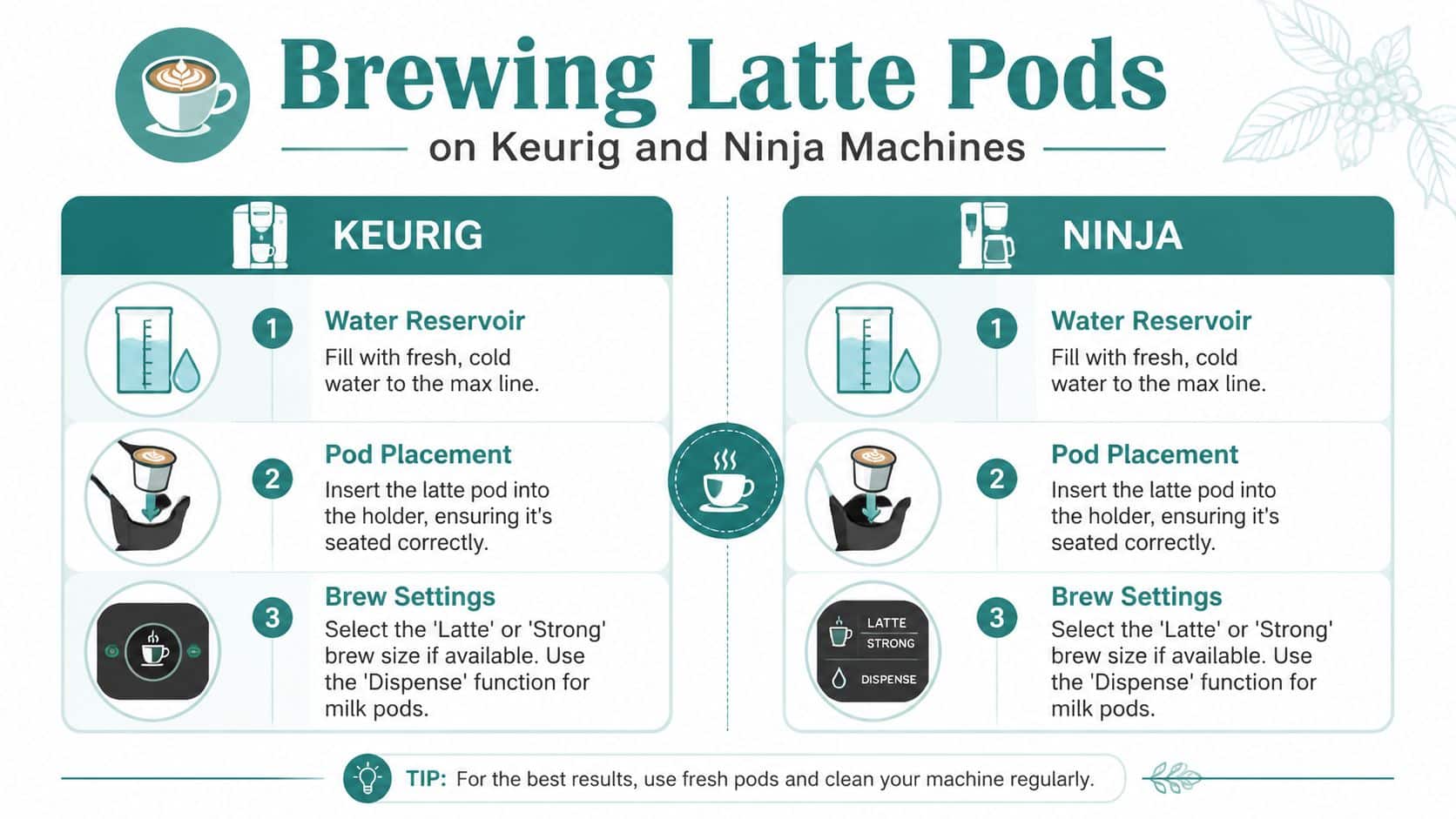
Keurig workflow
- Fill the reservoir with fresh water. Avoid stale tank water, especially if the machine sits overnight.
- Seat the coffee pod firmly. Close the lid completely so the entrance and exit needles puncture the capsule as designed.
- Choose the small brew size. Select Strong or Bold if available. A large default cup can wash out the coffee before the milk component adds flavor.
- Prepare the milk packet according to its packaging. Some systems require a separate packet, while others use a dispense sequence.
- Stir thoroughly. Powder can settle at the bottom, so scrape around the base of the mug rather than relying on a quick surface swirl.
K-Cup extraction depends on consistent flow resistance. Finer grounds or a restricted filter can slow the brew and encourage bitterness, while a more uniform, less restrictive grind supports the short-contact design (K-Cup extraction discussion). If the brewer stops early, spits, or produces a weak trickle, inspect the needles and pod holder before changing every other variable. For a deeper compatibility and brew-setting reference, use this guide to latte pods for Keurig.
Ninja DualBrew workflow
Insert the pod adapter fully, confirm that the machine recognizes the pod format, and use the regular pod-brew setting first. Specialty modes can push a latte capsule outside the intended liquid volume or timing, so judge the result by taste and concentration rather than by the impressive name of the setting.
If the coffee tastes thin, reduce the water volume. If the milk powder clumps, add the packet to the mug before brewing or stir immediately after dispensing, depending on the product instructions. Clean a clogged needle promptly, because a partially blocked puncture point can produce an inconsistent cup from the same box.
Premium Latte Pods Versus Standard Coffee and Milk
Premium latte pods sell a finished flavor profile, not coffee with milk. A Starbucks or Dunkin' branded latte product can provide sweetness, dairy character, and coffee flavor without a separate milk jug, frother, or measuring step. That convenience suits an office, a rushed kitchen, or a household where several people want different drinks.
The hidden trade-off is the ingredient list. Many latte pods rely on powdered creamer, sugar, or flavoring to create body and sweetness. The drink may taste fuller than black coffee, but that texture comes from the formula rather than freshly steamed milk. Caffeine also varies by product, and a sweet, creamy cup can taste stronger than its coffee content suggests.
Standard dark-roast coffee brewed into heated milk gives you more control. You choose the milk, sweetness, serving size, and coffee intensity, and you can skip a creamer packet when a shorter ingredient list matters. A stronger pod or a smaller brew volume can also produce a more coffee-forward latte.
A practical side-by-side view
| Factor | Premium Latte Pods | Standard Pod + Milk |
|---|---|---|
| Workflow | Fast, packaged, repeatable | Requires heating and frothing milk |
| Ingredient control | Limited to the product formula | You choose coffee, milk, and sweetener |
| Texture | Powdered creamer body | Freshly frothed milk can provide better texture |
| Sweetness | Often built into the packet | Adjustable from unsweetened to dessert-like |
| Waste | Coffee pod plus possible milk-packet packaging | Coffee pod, with milk stored separately |
| Caffeine choice | Product-specific and sometimes lower than expected | Easier to choose a stronger standard coffee pod |
| Best use | Speed and consistency | Taste control and customization |
The premium option earns its place when the packaged workflow removes a real obstacle. If you already own a frother and prefer unsweetened milk, the extra formulation may offer less value. Specialized pod products continue to attract demand. The global hard or capsule pod segment generated more than USD 18.5 billion in 2024, while the caffeinated coffee-pod segment generated USD 30,779.9 million and is projected to reach USD 43,886.6 million by 2030 (coffee pods market analysis).
Value and waste deserve equal billing
A reliable cost-per-cup comparison requires the current price and serving count for the exact boxes you are considering. Retail prices change, and milk costs vary by location. Divide the box price by its number of coffee servings, then add milk only to the standard-pod calculation.
Packaging belongs in that decision too. A latte pod may involve a coffee capsule plus a liner or sachet, while a regular pod with separately stored milk avoids that second component but still creates pod waste. Market coverage places convenience alongside sustainability pressure, with biodegradable and compostable pods projected to grow at an 11.2% CAGR, while one estimate projects the overall coffee-pod market from USD 30.4 billion in 2025 to USD 58.3 billion by 2036 (coffee pods market forecast).
For anyone considering coffee as a profession, fastest café career path offers a more structured route than trial-and-error with flavored pods. At home, the choice is practical. Select premium latte pods for speed and consistent sweetness. Select coffee with fresh milk for ingredient control, stronger caffeine customization, and a more café-like result.
Milk Pairing and Frothing Techniques for Better Lattes
Fresh milk is where a pod-based drink can gain the most quality. Whole milk generally gives the richest, most stable foam because its fat and protein balance supports a smooth texture. Oat milk can foam well when it's a barista-style formulation, while almond milk often produces lighter foam and may separate more readily.
A café latte uses more milk than coffee, often around a one-to-three espresso-to-steamed-milk relationship. A K-Cup machine doesn't produce true espresso, so use a concentrated coffee volume rather than trying to recreate that ratio with a large mug of watery coffee.
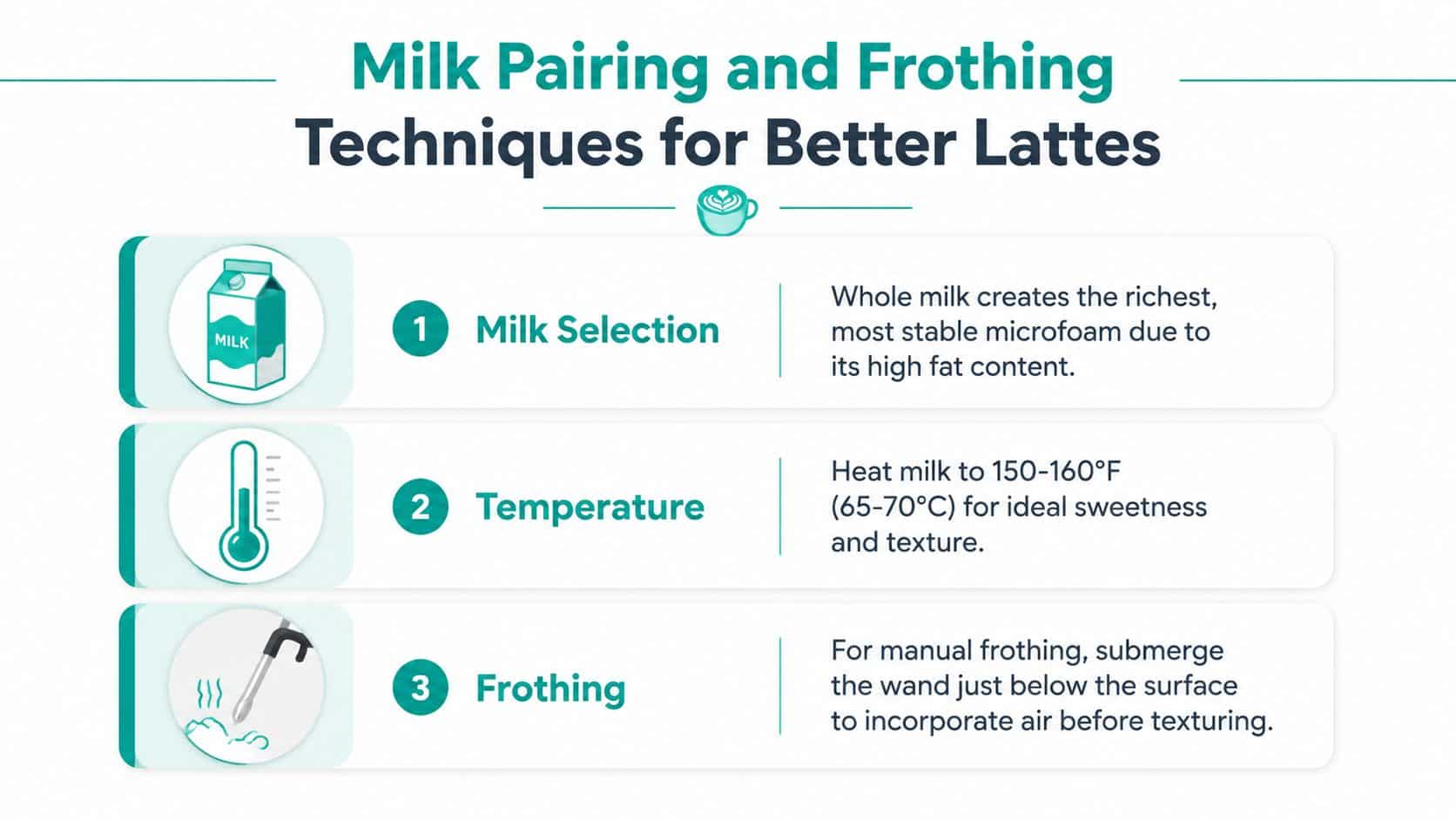
Heat for sweetness, not maximum temperature
Heat milk to approximately 150 to 160°F, or 65 to 70°C, for a sweet flavor and workable texture. Once milk moves beyond 160°F, proteins and sugars can scorch, leaving a flat taste and damaged foam.
A handheld wand gives the most control. Keep the tip just below the surface at first to introduce air, then lower it slightly and create a whirlpool that folds the bubbles into the milk. Stop before the foam becomes stiff and dry.
Three methods that work at home
- Steam wand: Stretch the milk briefly at the surface, then texture it with a rolling motion. Tap the pitcher on the counter and swirl before pouring.
- French press: Heat the milk separately, pour it into the press, and pump the plunger until the texture becomes finer. Don't fill the vessel too high because foam expands.
- Microwave and whisk: Warm the milk in short intervals, whisk vigorously, and let large bubbles settle before pouring. This method is less silky, but it's better than adding cold milk to a weak coffee base.
Pour the coffee first, then add the milk in a controlled stream. Hold back the foam initially, blend the liquid milk into the coffee, and finish with the finer foam. That sequence creates more separation and a cleaner surface than dumping everything into the mug at once. Keep a thermometer, pitcher, and small whisk near the machine, or use this guide to coffee bar accessories for home when building a compact setup.
Reusable K Cups and Homemade Latte Alternatives
A reusable K-Cup doesn't turn a Keurig into an espresso machine. It can, however, give you control over the coffee, grind, dose, and freshness that prepackaged latte systems take away. Brew a concentrated dark or espresso-style roast, add properly textured milk, and you'll get a more convincing homemade latte base than most powdered latte packets provide.
Use a stainless-steel reusable pod or a compatible reusable filter that seals correctly in your brewer. Keurig's official My K-Cup materials emphasize compatibility, and retail listings distinguish between 1.0 and 2.0 compatibility while naming models such as K-Classic, K-Duo, and K-Supreme (reusable filter compatibility information). Ninja DualBrew users must also verify that the filter works with the machine's pod adapter.
A repeatable homemade method
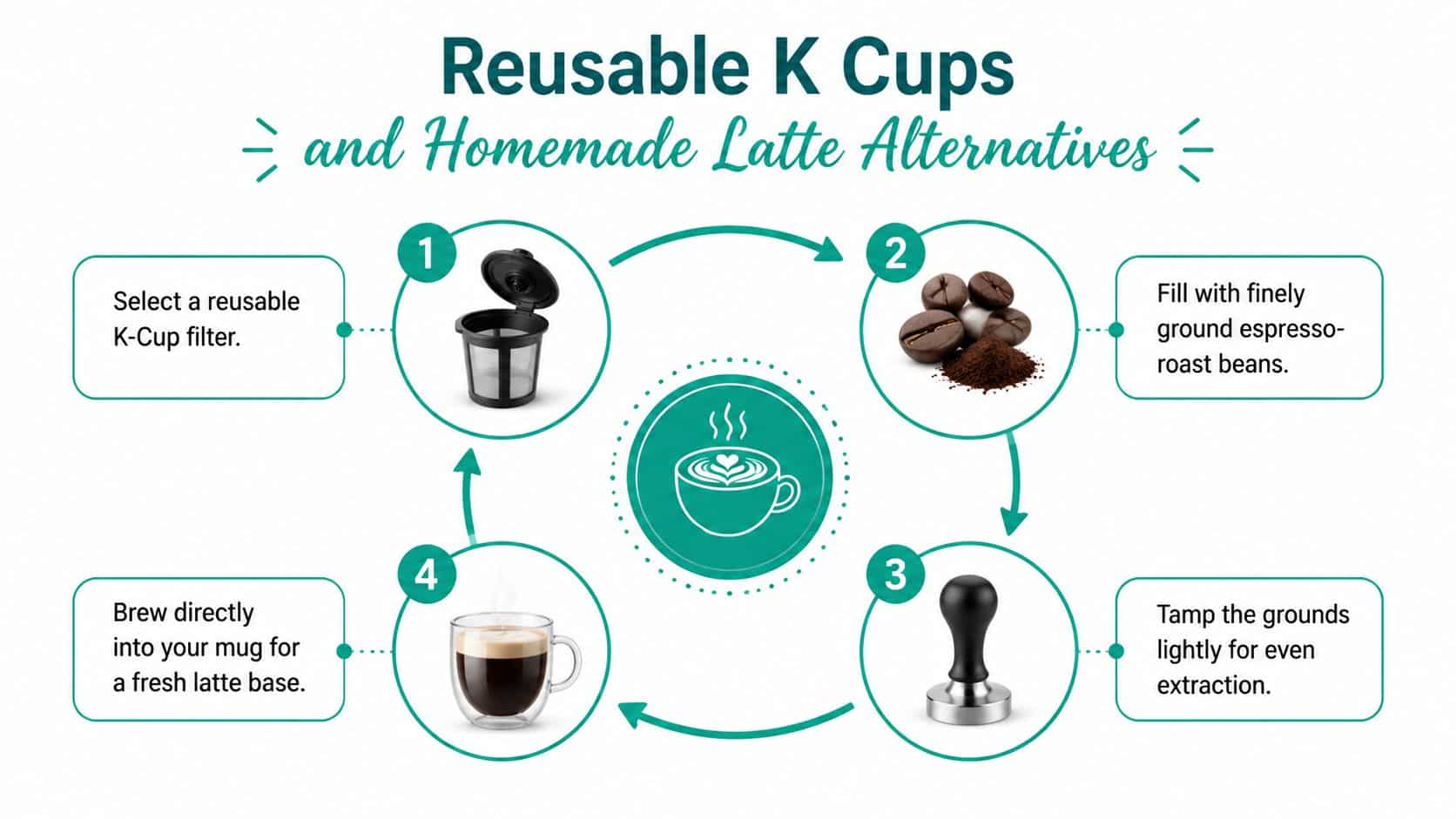
Start with a fine to medium-fine grind rather than an ultra-fine espresso grind. K-Cup systems use a fixed-flow path, so packing the filter too tightly can restrict water and create a bitter, stalled brew.
A practical workflow is:
- Choose the filter. Confirm the model and sensor compatibility before buying.
- Add your coffee. Use the amount recommended by the filter manufacturer, then adjust gradually for taste.
- Level the grounds. Tamp lightly only if the filter design allows it. Heavy compression can cause flow problems.
- Brew a small volume. Use a concentrated setting, then add hot or frothed milk separately.
- Clean immediately. Empty the grounds, rinse the filter, and wipe the holder before residue dries.
The common objections are valid. Reusable pods create loose grounds, some generic filters fit poorly, and a mismatched lid can leak or trigger recognition problems. A paper liner can reduce cleanup, but it also adds a consumable component. Compatibility should come before price.
PureHQ Inc. sells reusable K-Cup filters, stainless-steel refillable pods, paper liners, water filters, descaling solutions, and cleaning tablets for compatible Keurig and Ninja systems. Its reusable K-Cups for Keurig guide is useful when you're comparing fit, cleanup, and machine compatibility.
Maintenance determines whether this setup stays enjoyable. Keurig's official descaling guide says to remove and set aside the water filter before descaling (Keurig descaling instructions). Some Keurig workflows require a full bottle of descaling solution, a descale cycle, a thorough rinse, and a standing period of at least 30 minutes (Keurig use-and-care instructions). A clean brewer protects taste and prevents a reusable setup from becoming a messy downgrade.
Your Next Steps for Better Home Lattes
A latte K-Cup is convenient, but the label may conceal a sweetened creamer system and a caffeine level below regular brewed coffee. Check the ingredients before judging flavor, brew the coffee component at a concentrated volume, and froth fresh milk when texture matters.
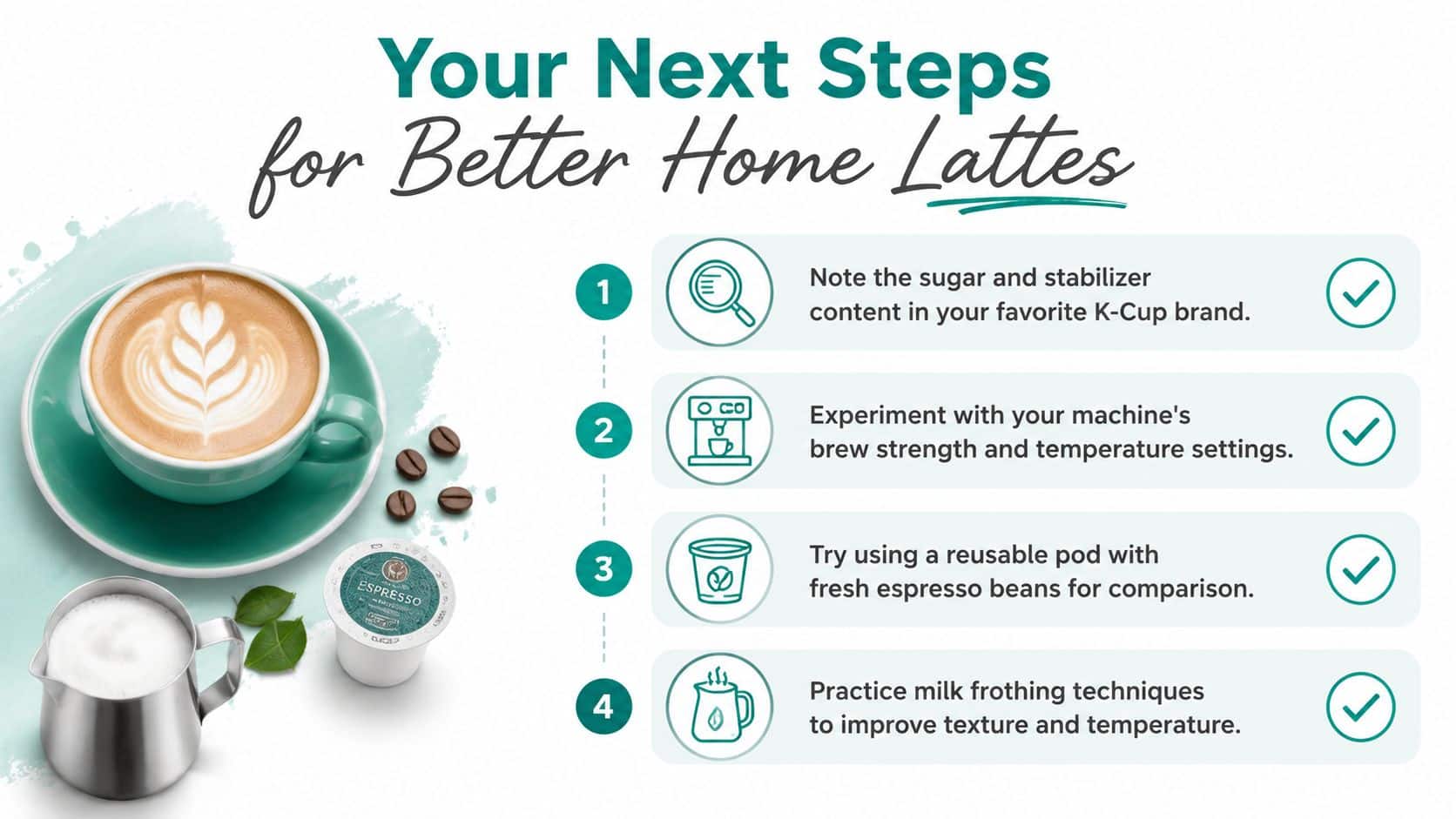
Use this short checklist:
- Read the label: Note sugar, sweeteners, dairy solids, and stabilizers.
- Adjust the brew: Test the strongest practical setting and a smaller volume.
- Try a reusable filter: Compare fresh grounds with your usual latte pod.
- Improve the milk: Practice whole milk or barista-style oat milk frothing.
PureHQ Inc. offers compatible reusable pods, water filters, descaling solutions, and cleaning tablets for home and small-office coffee machines. Visit PureHQ Inc. to shop reusable K-Cup options and maintenance accessories that can help you build a cleaner, more controllable latte routine.

