
Coffee Machine Care
Latte Pods for Keurig Your Guide to Perfect Brews
Apr
Keurig pods used in 2014 alone could circle the Earth more than 10 times, according to TheStreet’s reporting on K-Cup sales and waste. That number influences perspectives on latte pods for Keurig. The problem usually isn’t just taste. It’s taste, cost, fit, cleanup, and the nagging feeling that you’re paying for convenience while settling for a drink that still doesn’t feel like a real latte.
A lot of Keurig owners know this frustration well. You buy a box that says “latte,” brew it, and end up with something sweet, thin, and oddly flat. Then you start wondering whether your machine is the issue, the pod is the issue, or whether Keurig just can’t make a proper latte at all.
It can. But only if you stop treating every “latte pod” as the same thing.
The High Cost of Lattes and the Keurig Promise
Keurig became a kitchen staple because it solved a real problem. It brought fast, low-mess coffee into everyday life. Keurig launched its first brewers in 1998 for offices, then put K-Cup pods into U.S. supermarkets by 2008, and today reaches nearly 40 million U.S. households. That huge installed base is why there are now so many latte pods for keurig, along with frothers, reusable cups, filters, and other add-ons.
The promise sounds simple. Brew at home. Skip the coffee shop line. Get something close to café style without learning espresso.
Often, the promise is not fully realized.
Where many get disappointed
Many shoppers expect a Keurig latte pod to do one of two things:
- Mimic a café latte: Strong coffee base, creamy milk texture, balanced flavor.
- Save effort: Drop in a pod, press brew, and drink something satisfying.
What they often get is a compromise. Some pods rely heavily on powdered dairy and sweeteners. Others make a decent coffee but still need help from a frother or fresh milk to taste complete. If you don’t know which type you’re buying, it’s easy to end up with a cup that tastes more like flavored coffee than a latte.
Practical rule: If your home latte tastes watery, the issue usually isn’t your standards. It’s that the brew was designed for convenience first and structure second.
That’s why machine setup matters almost as much as the pod itself. The right accessories can make a much bigger difference than many realize. If you’re upgrading your coffee corner alongside other essential kitchen appliances, it helps to think of your Keurig as part of a system, not a one-button miracle.
What works better
The best at-home results come when you match three things:
- The right brew style
- The right pod type
- The right milk method
If you’ve only used disposable latte pods, you’ve probably seen just one narrow slice of what your machine can do. A reusable approach opens far more control over strength and flavor, especially if you already understand the basics in this guide to reusable coffee pods.
That control is the difference between “close enough” and “I’d drink this every morning.”
Understanding the Different Types of Latte Pods
The phrase latte pods for keurig causes more confusion than it should. Stores use it loosely. Shoppers use it loosely. Brands often blur the line between a sweet specialty drink and a latte-building base.
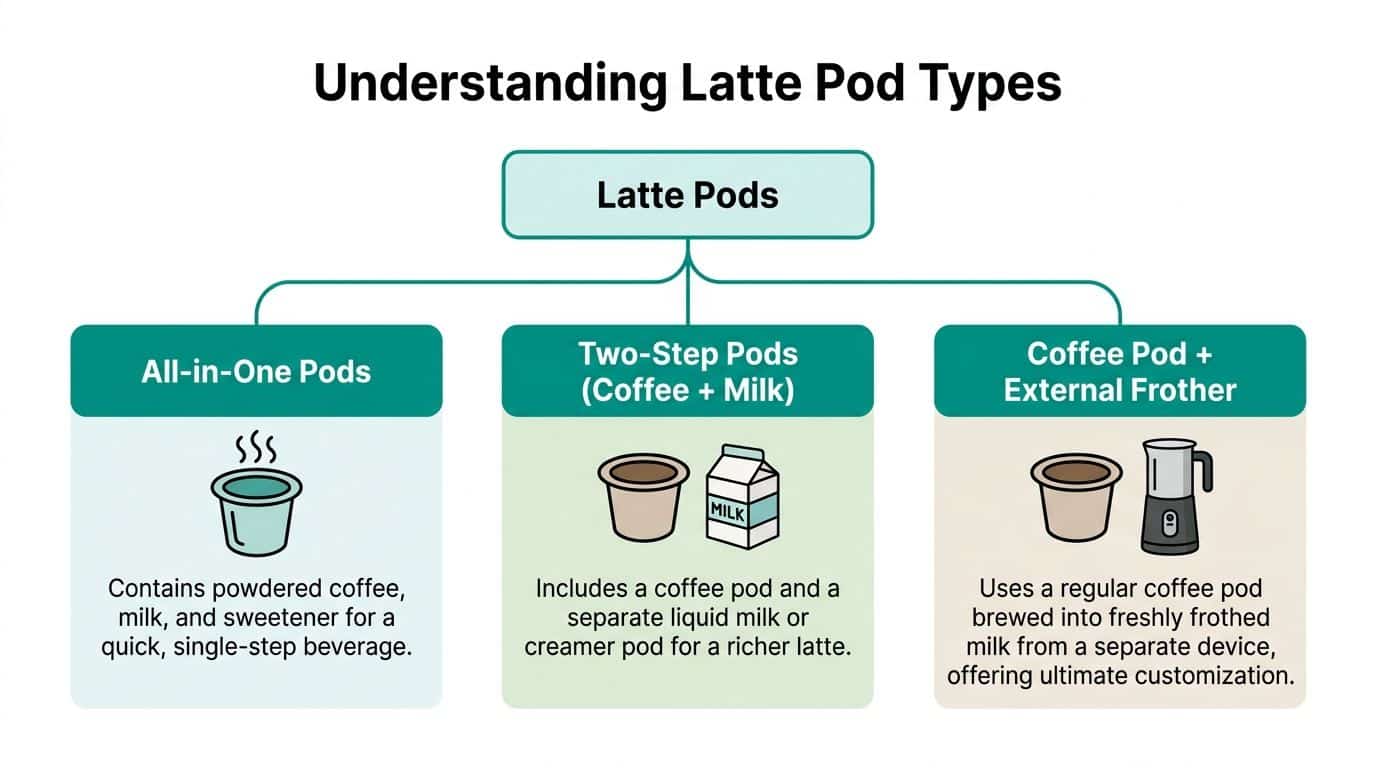
All-in-one pods
These are the easiest to use and the most misunderstood.
Inside, you usually get a preblended mix that aims to create a full drink in one brew. That means the pod is trying to handle coffee, creamy body, sweetness, and flavor all at once. Convenience is the win. Control is the loss.
They work best for people who want a fast flavored drink and don’t care much about adjusting sweetness or milk texture.
What usually doesn’t work:
- Dialing back sweetness: You’re stuck with the manufacturer’s formula.
- Building a stronger base: The pod can’t adapt to your milk choice later.
- Getting fresh dairy character: Powdered ingredients rarely taste like steamed milk.
Think of this as the microwave brownie version. It can hit the craving. It won’t fool anyone into thinking it was made from scratch.
Two-step latte systems
These sit in the middle.
You brew one component, then add a separate milk or froth element. That extra step often improves texture, but the drink still depends on packaged ingredients instead of fresh milk. You get more body than an all-in-one pod, but not much freedom to tailor the drink.
For some households, that’s a fair trade. It’s more involved than a single pod, yet still simpler than using your own grounds and milk.
Better texture doesn’t always mean better flavor. Many two-step products improve mouthfeel but still leave the coffee base tasting weak.
Coffee pod plus fresh milk or frother
This is the category that usually gives the best result.
Here, the pod’s job is only to make a concentrated coffee base. You add fresh milk separately, either frothed by hand or with a machine. That keeps the coffee and milk doing what they each do best.
It’s the homemade brownie approach. More effort, far better upside.
A strong dark roast pod, or a reusable pod filled with espresso-style grounds, gives you a much better shot at a real latte profile because you’re not asking one disposable capsule to do everything.
A simple way to choose
Use this if you’re stuck between options:
| Type | Best for | Main downside |
|---|---|---|
| All-in-One | Fast flavored drinks | Sweetness and texture are fixed |
| Two-Step | Convenience with a little more richness | Still limited by packaged milk component |
| Coffee Pod + Frother | Best flavor control and fresh milk texture | Requires one extra step |
If your goal is a drink that tastes closer to a coffee shop latte, the third option is the one to focus on.
Is Your Keurig Model Ready for a Real Latte
A Keurig can only brew within the limits of its design. Some models make latte-style drinks much easier. Others need a workaround.
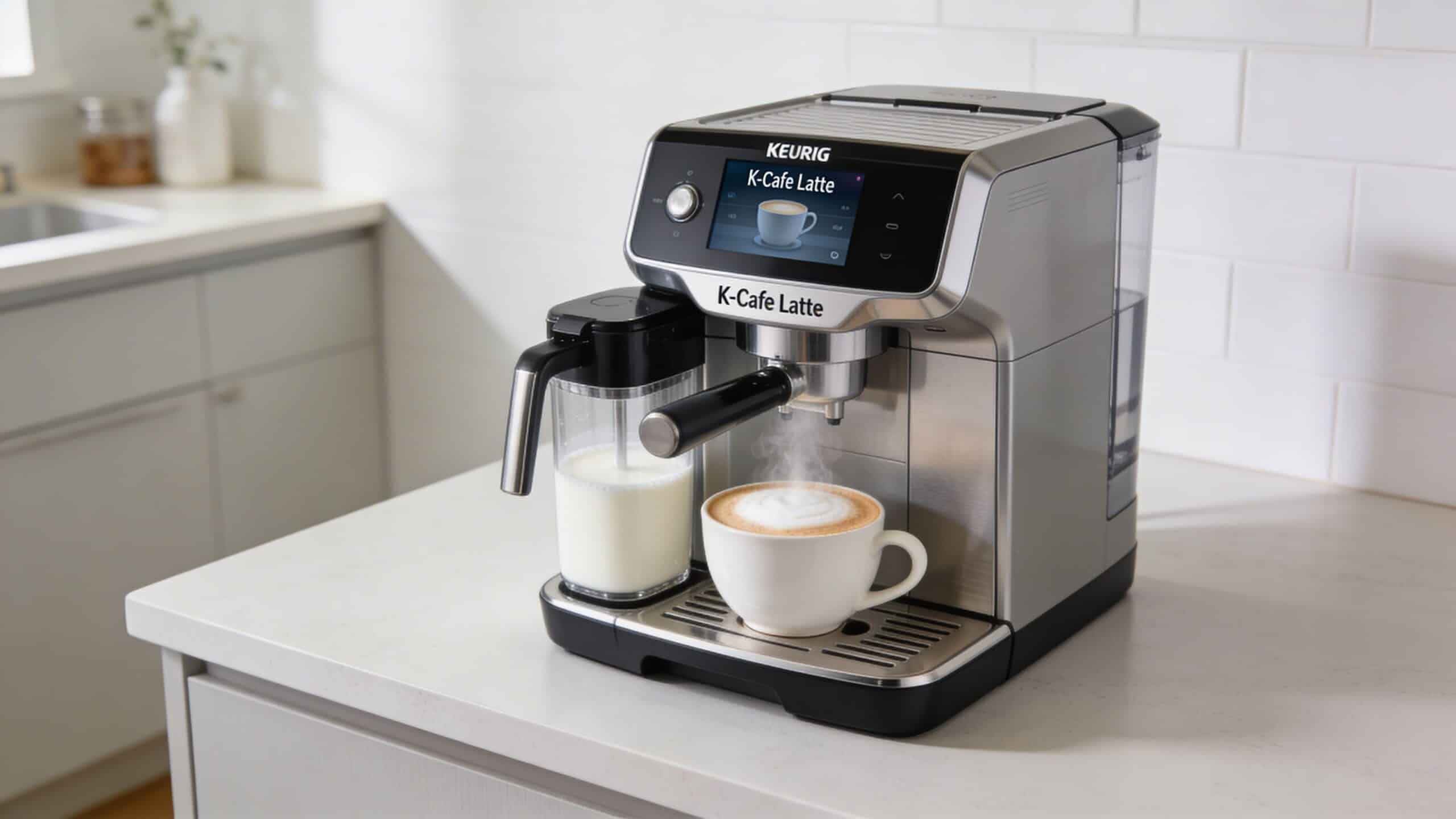
The biggest feature to look for is a concentrated brew option. On machines like the K-Latte, the coffee SHOT mode brews 4 to 6 oz of concentrated coffee, which increases the grounds-to-water ratio and creates a stronger base to combine with frothed milk.
Best-case machines
If you own a K-Latte or K-Cafe, you’re in the easiest lane.
These machines were built with latte-style drinks in mind. The shot setting gives you a shorter, stronger coffee base, and the frother handles the milk side without extra tools cluttering the counter. You still won’t get true espresso pressure, but you can get a balanced, satisfying latte-style drink.
What works well on these models:
- Use dark roast coffee: It holds up better under milk.
- Brew the smallest concentrated serving: Don’t stretch it into a full mug first.
- Froth fresh milk separately: Then pour the coffee into the milk or vice versa, depending on your texture preference.
Standard Keurig models
K-Classic and K-Slim owners can still make a good homemade latte. You just have to fake the shot.
Brew on the smallest cup size your machine allows. Use a bold coffee. Keep the total brew volume short so the coffee doesn’t wash out when milk is added. If the first try tastes thin, the fix is usually less water, not more coffee syrup.
A standard machine doesn’t need to be perfect. It needs to make a compact, strong base.
K-Supreme, K-Duo, and similar brewers
These models reward a little experimentation.
The K-Supreme’s stronger brew options can help deepen the base. K-Duo models add flexibility for households that switch between pod coffee and larger batches. Ninja DualBrew users often have a specialty-focused setting that can also work well for latte-style drinks.
Fit matters more on these brewers because pod shape and puncture alignment affect flow. If you’re unsure what reusable option matches your brewer, this model-by-model guide on which reusable K-Cup fits your Keurig and multistream brewer helps avoid the wrong purchase.
Quick machine reality check
- Built-in frother model: Easiest route to a creamy latte.
- Small-cup standard model: Still workable with a concentrated brew.
- Wrong expectations: The fastest way to disappointment.
A Keurig makes the best latte-style drinks when you treat it like a concentrated coffee brewer, not a full espresso machine.
The Hidden Tradeoffs of Disposable Latte Pods
Disposable latte pods sell convenience first. That convenience is real. So are the compromises, and they usually show up after the first few boxes.
I hear the same complaint from Keurig owners all the time. The drink is easy, but it never quite tastes like the latte they wanted. That usually comes down to how these pods are built. They are designed for shelf life, speed, and broad appeal. A good latte needs something more specific.
The tradeoffs most buyers feel later
The first tradeoff is control.
A disposable latte pod locks in the recipe before it ever reaches your kitchen. The roast level, flavoring, sweetness, and powdered milk component are already decided. If the drink tastes too sweet, too thin, or too artificial, there is no real fix beyond adding extra coffee or diluting it with milk and hoping for a better balance.
The second tradeoff is ingredient quality.
Many latte-style pods rely on sweeteners, stabilizers, and dried dairy or non-dairy powders to create that creamy effect. That can be convenient, but it often gives the cup a flat sweetness instead of the fresh, round texture people expect from a café latte. In testing, that is where many pod lattes lose me. They smell promising, then taste more like flavored coffee than an actual milk drink.
The third tradeoff is cost over time.
A box can look reasonable on the shelf, especially compared with café prices. The math changes once you realize you are paying for a prebuilt recipe and a disposable format every single time. If you drink lattes several mornings a week, fresh milk plus your own coffee base usually gives better flavor for less money per cup.
Then there is the waste factor. One pod here and there does not feel like much. Daily use adds up fast, especially with latte systems that require separate coffee and milk or flavor components.
Why this matters for latte drinkers
Milk hides flaws and exposes them at the same time. If the coffee base is weak, milk makes it taste weaker. If the flavoring is harsh, warm milk spreads that flavor through the whole cup.
That is why disposable latte pods disappoint so many people who are trying to get a true latte experience from a Keurig. The problem is not just the machine. It is the fixed recipe inside the pod.
For anyone who wants a better home latte, the primary goal is not finding a slightly better disposable pod. It is getting control over strength, freshness, and milk choice so the drink tastes like yours.
The Reusable Pod Solution for Custom Lattes
Reusable pods solve the part of the latte problem that disposable options can’t. They give you control over the one variable that matters most: the coffee itself.
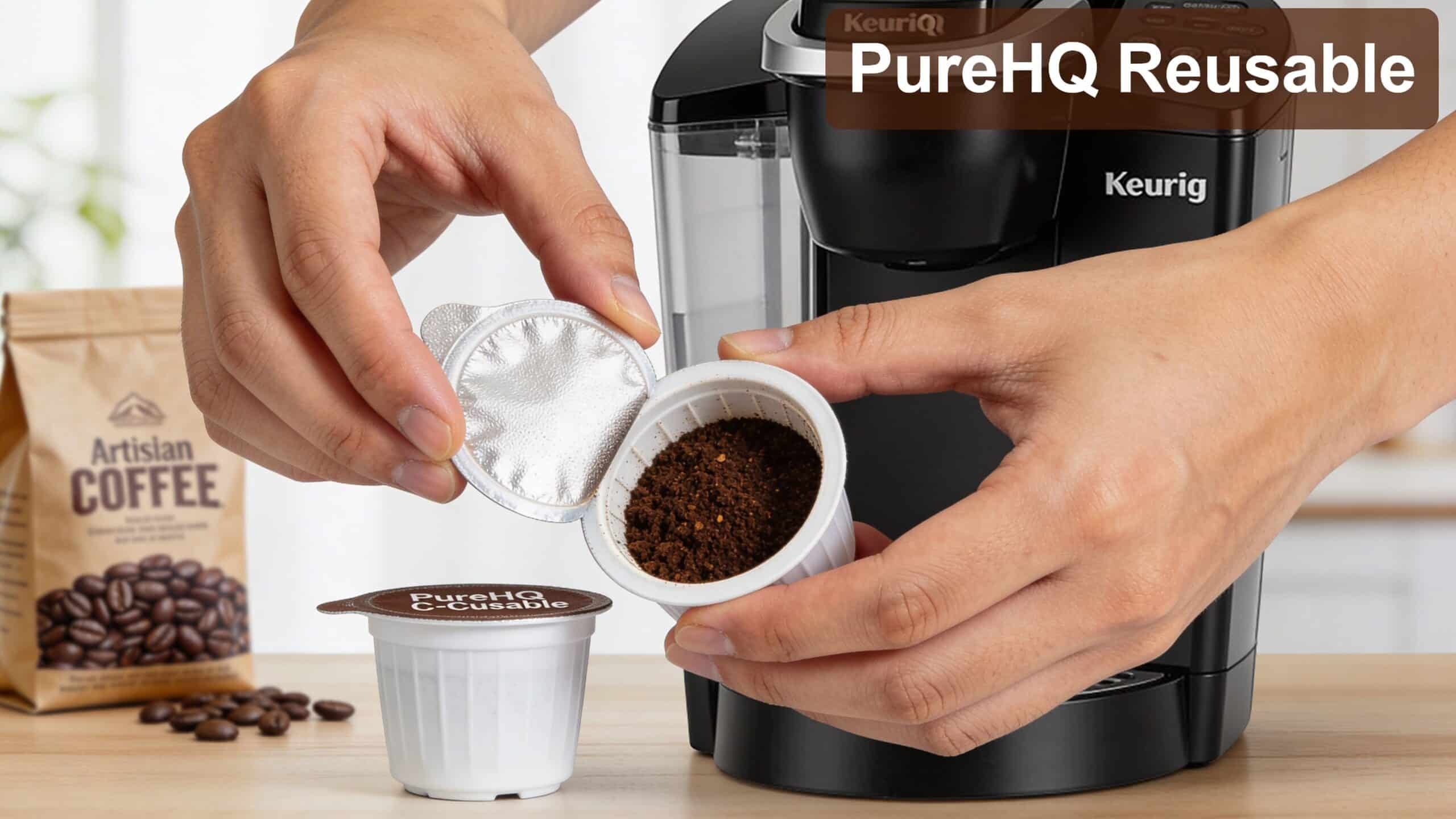
That control matters because a latte lives or dies on the base. If the coffee is weak, stale, or too lightly roasted, milk flattens everything. If the base is compact, bold, and clean, the whole drink tastes more intentional.
A lot of people give up on reusable pods too early because they buy one that doesn’t fit correctly. A common complaint is poor performance, but reusable K-Cups engineered to match standard Keurig pod dimensions, about 1.75 inches high and 2 inches in diameter, allow the brewer’s needles to puncture correctly for proper flow and fewer leaks or errors.
What makes a reusable latte setup better
A reusable system lets you choose:
- Your roast: Go darker for more punch under milk.
- Your grind: Fine enough for strength, but not so fine that it clogs.
- Your milk: Dairy, oat, almond, soy, or whatever froths the way you like.
- Your flavoring: Vanilla, cinnamon, cocoa, or nothing at all.
That’s a major upgrade from buying a pre-scripted drink in a pod.
A simple method that works
Use this sequence for better latte pods for keurig results at home:
- Fill the reusable pod with fresh coffee grounds suited to a strong brew.
- Level the top without packing it too tightly.
- Brew the smallest practical serving on your machine so the base stays concentrated.
- Froth fresh milk separately.
- Combine and taste before adding syrup or sugar.
Most weak homemade lattes come from stretching the brew too long, not from a lack of flavoring.
If you want a latte, build the drink in layers. Brew short. Add milk second. Sweeten last.
A quick visual walkthrough helps if you’re more of a see-it-once person:
Small upgrades that improve the cup
Water quality changes flavor more than many people expect. Using filtered water can make dark coffee taste cleaner and less harsh. Regular descaling also keeps brew flow steady, especially if your machine has started sputtering or slowing down.
Paper liners can help if you want a cleaner cup with fewer fines. They’re especially handy when you’re experimenting with finer grinds for a richer latte base.
PureHQ Stainless Steel Pods vs Plastic Alternatives
Reusable pods aren’t all equal. Material changes the experience.
Cheap plastic versions often look fine on day one. Then heat, repeated closing, and constant rinsing start to show up in the cup. The lid alignment gets less precise. The seal gets less reliable. Grounds start sneaking through, and the brew tastes muddier.
Stainless steel pods usually hold their shape better and clean up more thoroughly. That matters when you’re brewing bold coffee for lattes because dark roasts leave oils behind, and those oils can turn stale.
Reusable Pod Comparison Stainless Steel vs. Generic Plastic
| Feature | PureHQ Stainless Steel Pod | Generic Plastic Pod |
|---|---|---|
| Material feel | Rigid and sturdy | Lighter, often more flexible |
| Heat response | Holds shape well under repeated hot brewing | More likely to wear or distort over time |
| Seal consistency | Typically more dependable when correctly fitted | More prone to fit issues as parts age |
| Odor retention | Easier to remove lingering coffee oils and smells | Can hold onto odors and old flavors |
| Cleaning | Scrubs clean with less staining | Can stain and trap residue in seams |
| Long-term value | Higher upfront cost, better durability | Lower upfront cost, more replacement risk |
The objection people raise
The usual pushback is simple. Why spend more on a reusable pod when a plastic one is cheaper?
Because fit and durability affect the cup every day. If the pod leaks, flexes, or stops sealing cleanly, you’ll notice it in weak extraction and messy cleanup. That frustration costs more than the difference in purchase price.
For a closer look at the material tradeoff, this guide on stainless steel vs plastic reusable K-Cups and which is safer lays out the practical pros and cons.
What usually works best
If you make latte-style drinks often, stainless steel is usually the smarter long-term choice. The stronger your coffee and the more often you brew, the more those durability differences show up.
The best reusable pod is the one you don’t have to fuss with every morning.
Troubleshooting Your Homemade Keurig Latte
Most failed homemade lattes come down to a small mistake, not a bad machine. That’s good news because small mistakes are fixable.
One of the clearest pain points shows up in forum chatter. An analysis of online discussions found that up to 70% of complaints about making lattes with reusable pods involve weak froth or a watery base. That tracks with what many Keurig owners run into first.
Weak or watery latte base
If your latte tastes diluted, start with the brew, not the milk.
Try these fixes:
- Use a darker coffee: Light roasts often disappear under milk.
- Choose a smaller cup size: A shorter brew keeps the base concentrated.
- Adjust the grind: Slightly finer grounds usually increase strength.
If you’re packing the pod too loosely, water can move through too fast. If you pack it too tightly, flow can choke. Level and lightly settle the grounds rather than compressing them hard.
Grounds in the cup
This is usually a fill problem or a grind problem.
Check these first:
- Don’t overfill the pod: The lid needs room to close properly.
- Back off ultra-fine grinding: Powdery coffee pushes more sediment through.
- Use a paper liner if needed: It helps create a cleaner cup.
If your drink tastes good but looks muddy, a liner is often the easiest fix.
Sputtering, drips, or brewing errors
That points to maintenance more often than people expect. Fine residue from flavored pods, dark roasts, and latte-style mixes can build up around the needle area and internal pathways.
Clean the pod holder. Wipe visible residue. Run a maintenance cycle when the machine starts acting inconsistent.
A machine that suddenly seems “bad at lattes” is often just overdue for cleaning.
Take Control of Your Morning Latte Ritual
A better Keurig latte usually comes down to one repeatable formula. Brew a short, strong coffee through a reusable pod, then add milk you frothed separately and sweeten only if the cup needs it.
Here’s a recipe I keep coming back to for an oat milk latte on a K-Supreme with a stainless reusable pod. Fill the pod with a dark roast ground a little finer than standard drip, level it, and brew the smallest cup size. Froth 4 to 6 ounces of barista-style oat milk until it turns glossy, not stiff. Pour the coffee into your mug first, add the milk slowly, then finish with cinnamon or a small amount of vanilla syrup if you want sweetness.
That method fixes the two problems that make Keurig lattes disappointing. The coffee stays concentrated enough to taste like coffee, and the milk adds body instead of covering up a weak brew.
Disposable latte pods promise convenience, but they lock you into someone else’s idea of sweetness, texture, and flavor. A reusable setup gives you control over the bean, the strength, the milk, and the waste you create each week. For anyone who wants an actual latte habit at home instead of a sugary shortcut, that trade-off is usually worth it.
If you’re ready to brew stronger, cleaner latte-style drinks at home, shop reusable pods, filters, and maintenance essentials from PureHQ Inc..


Pingback: Vanilla Latte K Cups: A Guide to Cafe-Quality at Home