
Coffee Machine Care
Breville Coffee Machine Pods: 2026 Compatibility Guide
Jun
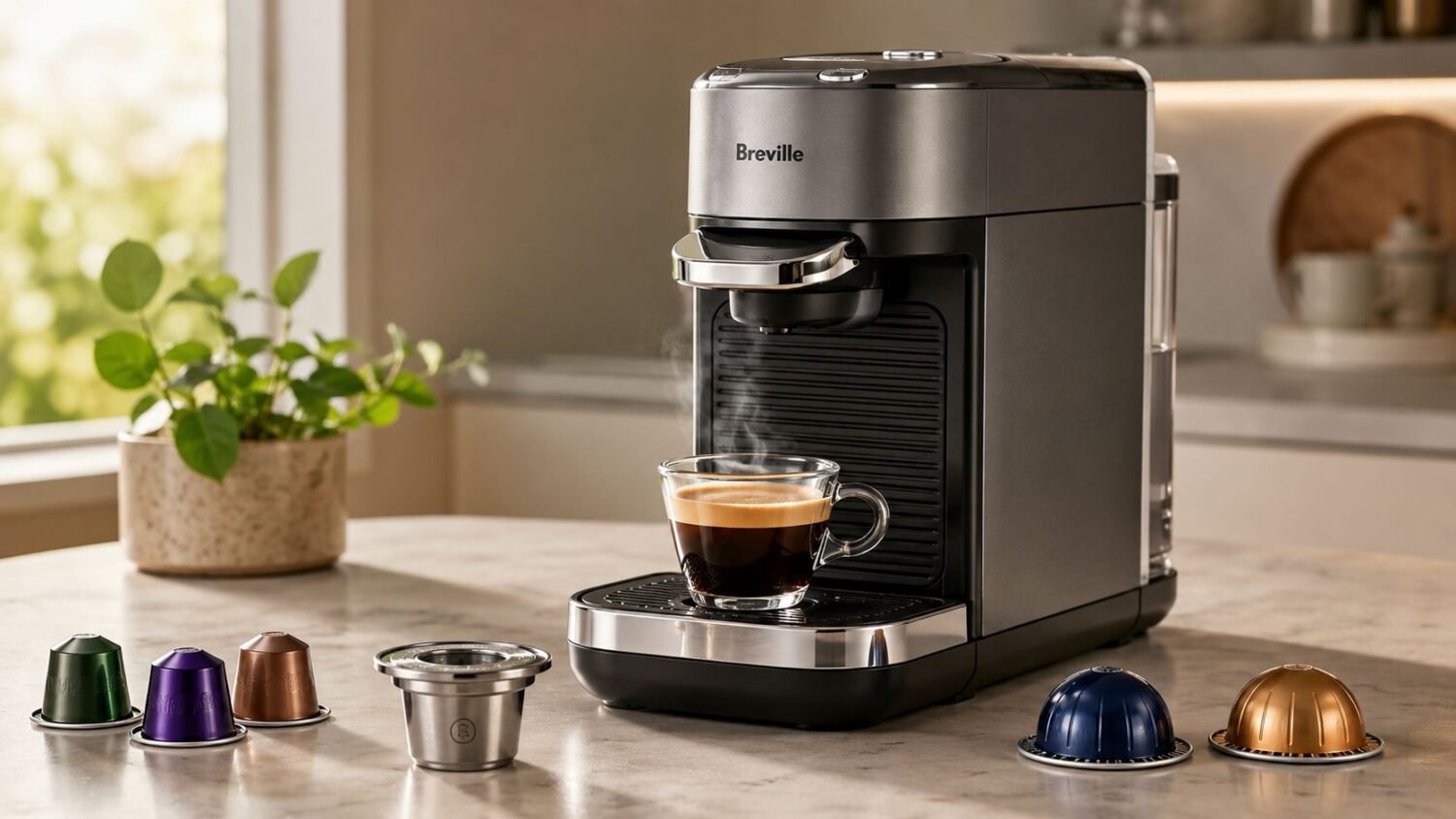
You bought a Breville for the opposite reason people buy cheap pod machines. You wanted better engineering, better coffee, and less fuss. Then you stood in front of a shelf full of capsules and realized the pod world is a mess.
That confusion is fixable. The key is understanding that Breville coffee machine pods are really a compatibility question first, and only a coffee question second. Once you know which system your machine uses, the rest gets much easier. And if you're tired of paying for single-use capsules, reusable pods open up a much better path.
The Breville Paradox Why Your Premium Machine Is Confusing
A lot of Breville owners run into the same problem. The machine looks polished, the buttons are simple, and the first few drinks are easy. Then it's time to restock pods, and suddenly everything gets fuzzy. Some boxes say Nespresso, some say Vertuo, some say compatible, and some don't clearly say much at all.
That's where people waste money. They buy the wrong capsule shape, force a pod that doesn't fit, or end up stuck with coffee they don't even like. With a premium machine on the counter, that feels especially annoying.

Why the confusion gets expensive fast
Single-use pods solve one problem and create two more. First, they lock you into whatever capsule format your machine accepts. Second, they remove most of your control over freshness, roast choice, and grind.
The frustration builds in practical ways:
- Fit anxiety: You're never fully sure whether a third-party pod will seat properly.
- Waste guilt: Used capsules pile up quickly in a way many owners notice almost immediately.
- Coffee compromise: You may like the machine but not love the limited coffees available for it.
Practical rule: If you don't know your exact pod system, don't buy in bulk.
What actually helps
The fastest way out of the confusion is to stop thinking in terms of “Breville pods” and start thinking in terms of which pod platform your Breville machine was built for. That sounds like a small distinction, but it changes everything.
Once you identify the system, you can choose between disposable capsules that fit correctly or move to a refillable option that gives you more freedom. For many owners, that second route is the one that finally makes the machine feel like a smart purchase instead of an expensive subscription to convenience.
Cracking the Code Breville and the Nespresso Connection
The biggest source of confusion is simple. Breville doesn't run a standalone pod ecosystem here. Breville manufactures certain machines for the Nespresso system, which means compatibility starts with Nespresso, not with the Breville logo on the front.
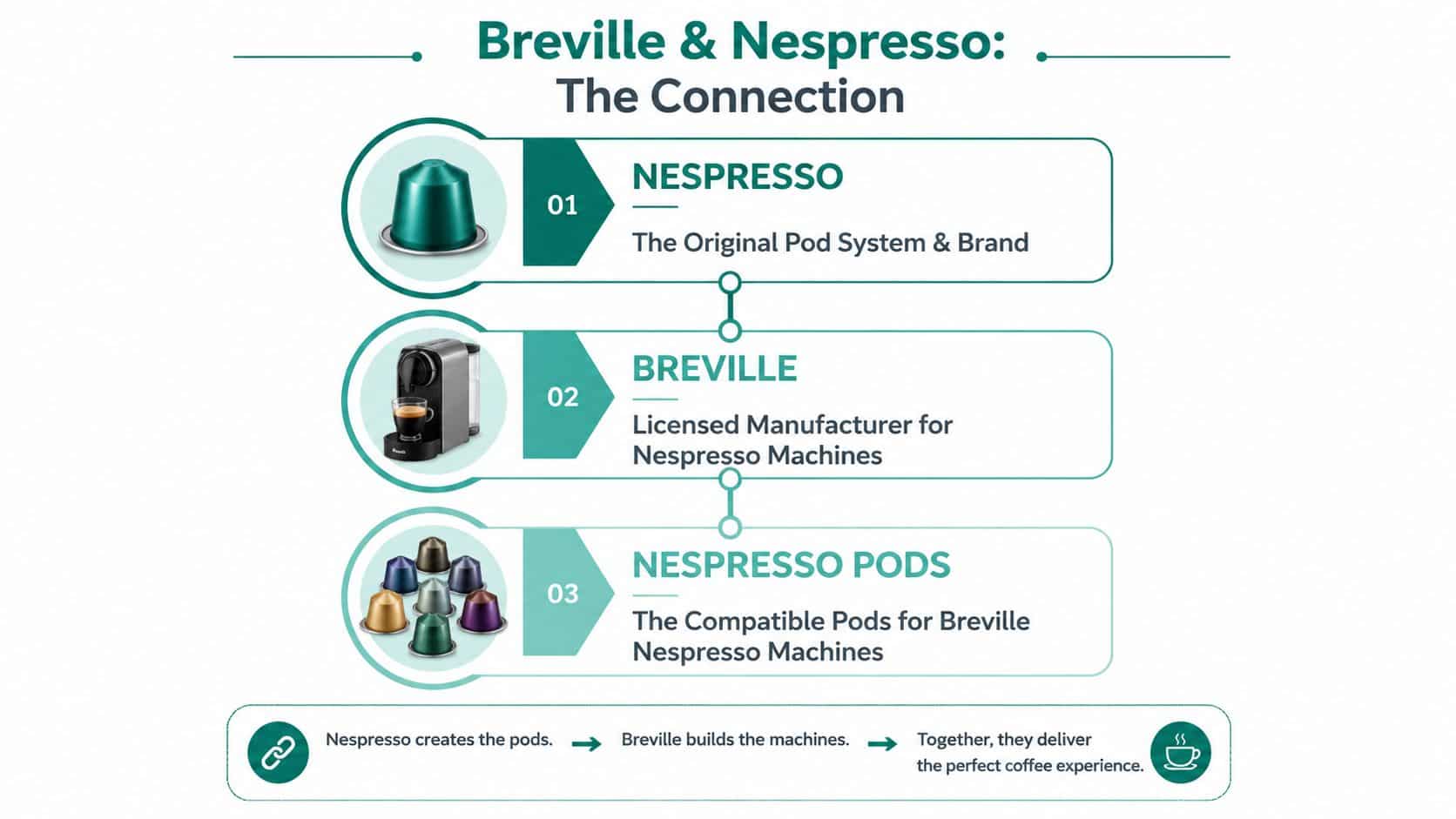
Original and Vertuo are not interchangeable
This is the part that saves people the most trouble. There are two different pod families in the Nespresso world, and they do not cross over.
Original machines use the smaller classic capsule shape. On Breville-built models in this line, the brewing system is designed around a 19-bar extraction system, and the Creatista Plus materials list a 1.5 L water tank and a 12-capsule used pod container. That pressure-focused design is one reason Original-compatible capsules and refillables need to fit cleanly and puncture correctly.
Vertuo machines use a different capsule format entirely. If you're sorting through Vertuo options and want a plain-language compatibility breakdown, Beans Without Borders Vertuo pods offers a useful overview of what those machines accept.
How to identify your machine quickly
If your Breville machine is part of families such as Creatista, Pixie, or Inissia, you're generally looking at the Original ecosystem. Those machines are where reusable pod discussions usually make the most sense, because that format has more third-party compatibility.
If your machine is branded as VertuoPlus or Vertuo Next, you're in the Vertuo ecosystem. Those machines use the larger dome-style capsules and follow a different logic.
A quick visual check usually works:
| What you see | Likely system | What it means |
|---|---|---|
| Small capsule chamber | Original | More third-party and refillable discussion |
| Larger rounded pod format | Vertuo | More limited pod choices |
| Creatista-style espresso focus | Original | Better fit for refillable experimentation |
Buy pods by system name, not by appliance brand name.
If you already have spent capsules at home, compare shape first. That's often faster than hunting for the serial label.
For readers who want to push beyond disposable capsules, this guide on how to reuse Nespresso capsules is a helpful next step because it focuses on the practical handling side, not just the theory.
Escaping the Single Use Cycle with Refillable Pods
Once you know which capsule family your machine uses, the next question is more interesting. Do you want to keep buying throwaway pods, or do you want more control?
For a lot of owners, reusable pods are the turning point. They take a machine that feels closed and make it flexible again. You choose the coffee, you control the fill, and you stop treating every cup like a branded consumable.
Why refillables make more sense over time
The broader home-coffee context supports that shift. Breville's reported 2024 turnover reached AU$1.53 billion, up 3.5% year over year, while the same reporting noted that at-home coffee consumption held steady for four years and out-of-home consumption fell from 45% in 2020 to 36%. In plain terms, people are building more of their coffee routine at home, and they care more about convenience without giving up control.
That's exactly where refillable pods fit. They keep the speed of the machine while removing a lot of the lock-in.
Here's what changes when you switch:
- You choose the beans: supermarket blend, local roaster, decaf, single origin, darker roast, lighter roast.
- You reduce capsule waste: you empty grounds instead of tossing another used shell.
- You stop guessing about flavor: if the coffee tastes flat, you can change the coffee instead of changing the machine.
Freedom matters more than novelty
The biggest benefit isn't only sustainability. It's that your Breville becomes more useful. A refillable pod lets you tune the coffee toward your taste instead of adapting your taste to whatever capsule packs are available.
If you're weighing pod coffee against ground coffee more generally, choosing your performance coffee gives a practical comparison that helps clarify why many people eventually prefer brewing with their own grounds.
A good starting point is to focus on refillables made specifically for the Nespresso format your machine accepts. This overview of refillable espresso pods is useful if you want to understand the trade-offs before buying.
Refillable pods aren't a downgrade. They're what many owners buy after they realize convenience alone isn't enough.
A Practical Guide to Using Reusable Breville Pods
Reusable pods work well when you treat them like a brewing tool, not just a cheaper capsule. Most disappointing results come from one of three problems: the wrong pod material, the wrong grind, or overpacking.
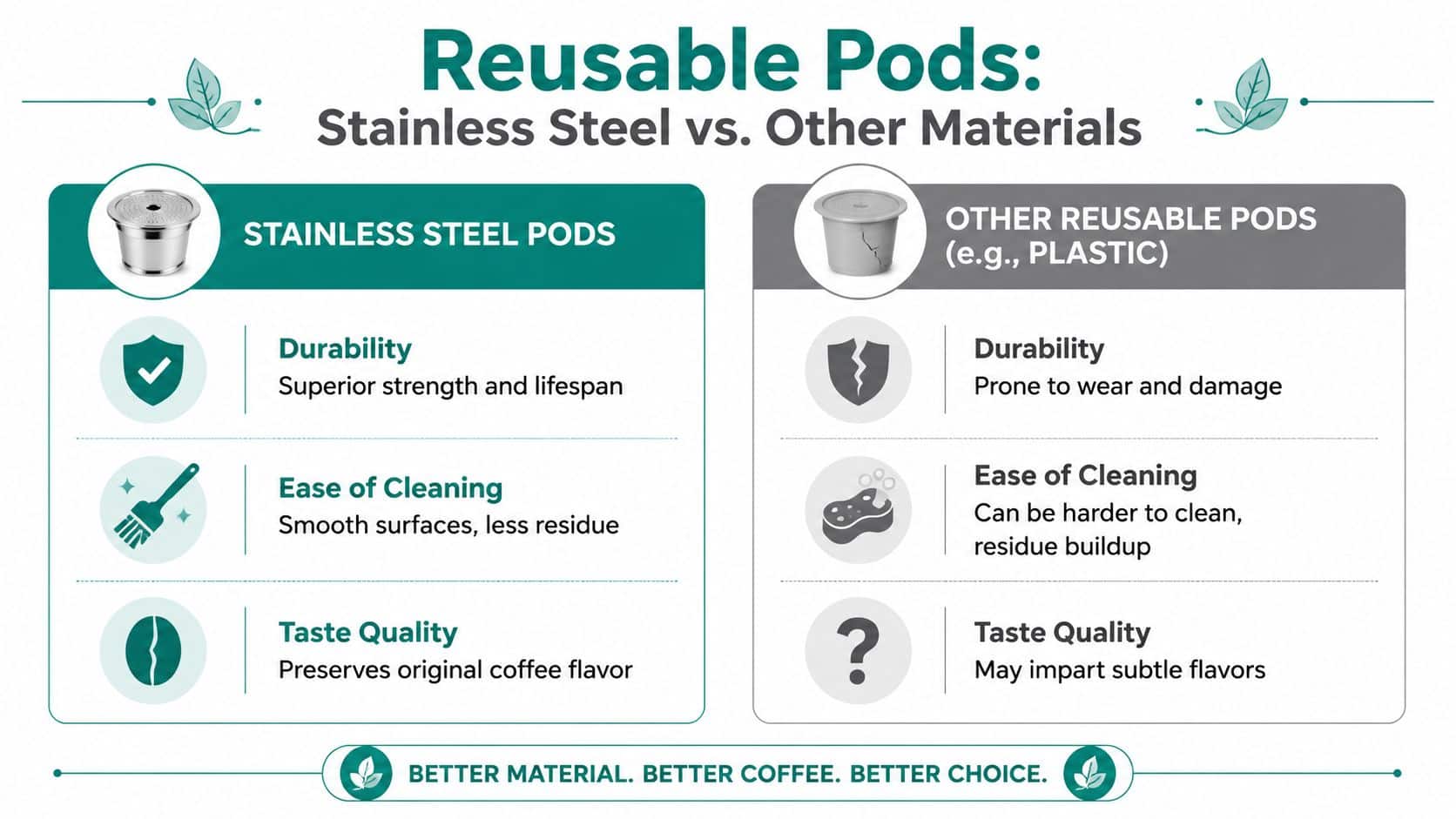
Stainless steel or plastic
I usually steer people toward stainless steel if they plan to use refillables regularly. It's sturdier, it cleans up better, and it tends to hold its shape more reliably over repeated use. BPA-free plastic can still be a workable budget option, but fit and longevity matter more with refillables than with sealed disposable pods.
Here's the practical comparison.
| Feature | Stainless Steel Pods | BPA-Free Plastic Pods |
|---|---|---|
| Durability | Better for repeated use | More wear over time |
| Cleaning | Usually easier to rinse thoroughly | Can hold onto residue more easily |
| Fit stability | Often more consistent when well made | Depends heavily on build quality |
| Long-term use | Better choice for frequent users | Better choice for testing the concept |
| Taste neutrality | Generally a safer bet | Varies by product quality |
A common objection is fit. That concern is valid. A bad reusable pod can leak, jam, or brew weak coffee. The answer isn't to avoid refillables entirely. It's to buy one that clearly states compatibility with the exact Nespresso system your Breville machine uses.
How to fill a reusable pod so it brews properly
Breville's own espresso guidance says a typical target is an 18–22 gram dose, 25–30 seconds of extraction, and a 1:2 brewing ratio. A reusable pod won't hold that same full espresso-machine dose, but the principle still applies. Dose and grind control determine whether your cup tastes balanced or disappointing.
Use this workflow:
- Start with a fine to medium grind. If the coffee pours too fast and tastes thin, go finer.
- Fill the pod evenly. Don't mound one side higher than the other.
- Tamp lightly. You want a level bed, not a compressed brick.
- Check the lid or seal. A crooked seal causes more problems than people expect.
- Pull a test shot and adjust one thing at a time. Change grind first, then fill level.
For context, independent Breville-focused brewing guidance often lands in a similar zone for espresso fundamentals, such as about 10 grams for a single shot, 18 grams for a double shot, roughly 30 seconds of extraction, and about 40 grams out for a double. Those aren't pod-fill targets, but they're useful reference points for judging whether your refillable is running too fast or too slow.
This walkthrough gives a visual sense of the process before you start:
What works and what doesn't
What works:
- Fresh coffee with a consistent grind
- A light tamp
- Cleaning the pod right after brewing
What doesn't:
- Overfilling until the lid strains
- Using drip-coffee grind
- Ignoring weak flow and hoping the next cup fixes itself
If you want easier cleanup, paper liners can help keep fines out of the pod and reduce residue. Brands such as PureHQ Inc. also sell reusable coffee pod accessories and liners that fit into this kind of maintenance-first workflow.
Protect Your Machine with Proper Water and Maintenance
A reusable pod can improve your coffee, but bad water will still drag the result down. It also shortens the useful life of the machine if you ignore scale.
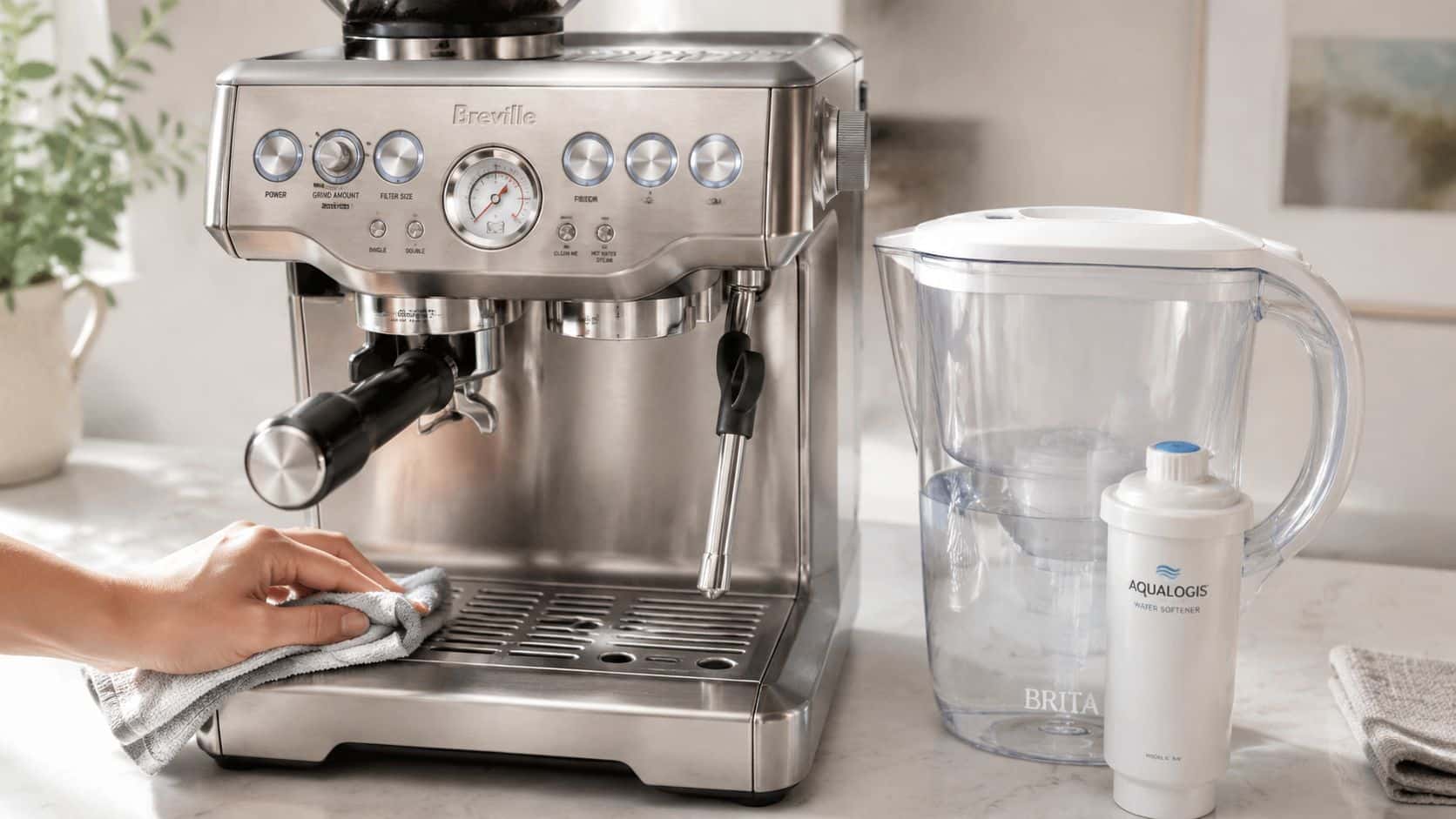
Water hardness changes everything
For Breville pod machines, water hardness is a key control variable, and some machines include a hardness test strip so descaling reminders match local conditions; the same walkthrough notes presets of about 25 mL ristretto, 40 mL espresso, and 110 mL lungo, while also warning that actual output can run beyond those defaults unless adjusted. That matters because scale buildup doesn't just affect longevity. It changes temperature behavior and shot consistency.
If your coffee starts tasting dull or your volume drifts, don't blame the pod first. Check the water and the maintenance history.
Simple maintenance habits that prevent bigger problems
Good maintenance is boring, and that's exactly why it works. Small routine actions prevent the weird issues that feel expensive later.
- Program hardness correctly: If your machine supports it, use the included strip and set the machine up properly.
- Descale when the machine asks: Waiting usually means more buildup, not less.
- Keep the brew area clean: Pod residue and stray grounds can affect seating and flow.
- Use filtered water when appropriate: It helps with taste and can reduce some impurities that make coffee taste rough.
If a pod machine starts acting inconsistent, the cause is often water or scale before it's the capsule itself.
If your machine uses tank filtration, a guide to Breville coffee machine water filters can help you sort out the maintenance side without guessing.
The mistake many owners make
Many people keep chasing new pods when the machine is really asking for care. They assume a different capsule will restore crema or fix short pours. Sometimes the machine needs proper descaling and a better water setup.
That's especially true with Breville coffee machine pods because the whole system depends on controlled flow through a small capsule chamber. Once scale interferes with that flow, every coffee choice becomes harder to evaluate fairly.
Your Path to Smarter Sustainable Breville Brewing
Most of the frustration around Breville coffee machine pods comes from a branding misunderstanding. People think they need to find “Breville pods,” when the actual job is identifying the Nespresso system their Breville-made machine uses.
Once that clicks, the decision tree gets much simpler. Buy the correct capsule format if you want maximum convenience, or move to a reusable pod if you want lower waste, broader coffee choice, and more control over flavor.
The smartest trade-off for most owners
Disposable pods still have a place. They're quick, tidy, and predictable when you buy the right format. But they also keep you inside someone else's coffee menu.
Reusable pods ask for a little more involvement. In return, they give you something pod users often miss most. Freedom. You can choose better beans, adjust your grind, and make the machine work more like a coffee tool than a locked appliance.
That's the upgrade that matters. Not more branding. Better control.
What to do next
If your machine takes Original capsules, a quality refillable pod is usually the most flexible long-term move. Pair it with fresh coffee, sensible tamping, and proper water maintenance, and your machine becomes much more satisfying to live with.
If you're still sorting out compatibility, check your exact model first, then shop the pod type that matches it. That one step prevents most of the frustration people blame on the machine itself.
Frequently Asked Questions About Breville Pods
Will a reusable pod void my Breville warranty
Using a third-party accessory doesn't automatically mean your warranty disappears. What matters in practice is whether the accessory caused the problem. A properly fitted reusable pod used as intended is a very different situation from forcing an incompatible capsule into the brew chamber.
Why does coffee from my reusable pod taste weak
Weak coffee usually points to brew setup, not to the idea of refillables itself.
Check these first:
- Grind size: Too coarse, and water runs through too quickly.
- Fill level: Too little coffee leaves the shot underpowered.
- Tamping: If the bed is uneven or too loose, extraction gets messy.
- Pod fit: A poor seal can reduce pressure and consistency.
If you change one variable at a time, you'll usually find the problem quickly.
Can I use K-Cups in a Breville Nespresso machine
No. K-Cups and Nespresso capsules are different in shape, size, and brew mechanics. They aren't interchangeable.
Are reusable pods worth the effort
For many owners, yes. If you care about cutting waste, choosing your own coffee, and reducing dependence on branded capsules, they're worth it. If you want zero input and identical convenience every time, disposable capsules may still suit you better.
What's the biggest mistake people make with Breville coffee machine pods
They buy based on the machine brand instead of the capsule system. Once you identify Original versus Vertuo, most compatibility mistakes disappear.
If you're ready to stop guessing and build a cleaner, more flexible setup, shop accessories from PureHQ Inc. for reusable pods, liners, filters, and maintenance essentials that support smarter home brewing.

