
Coffee Machine Care
Reusable Stainless Steel Cups for Coffee Pods
Oct
You press brew, hear the familiar pump, and expect a rich cup. Instead, the mug fills with thin coffee that carries a faint plastic taste, while the reusable pod leaves wet grounds around the rim. The problem usually isn't your beans alone. A poorly matched pod can restrict flow, leak around the lid, or lose heat before the coffee reaches the cup.
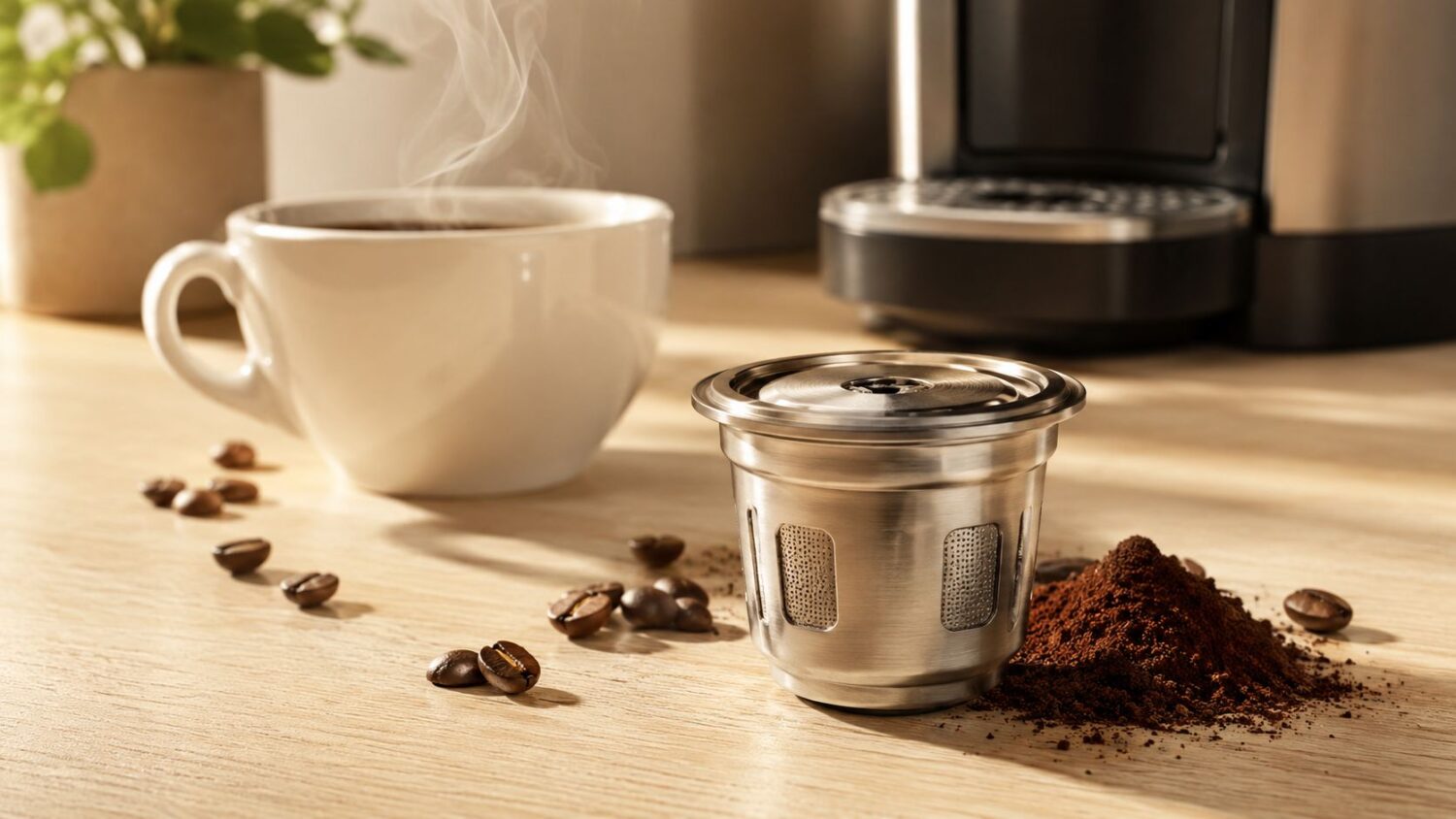
Reusable stainless steel cups and refillable coffee pods address that failure at the brewing component itself. A metal basket holds your ground coffee in a stable shape, resists repeated exposure to hot water, and lets you control dose, grind, and freshness. But stainless steel isn't automatically the right choice. The pod must fit your brewer, the filter must manage pressure and grounds, and the material needs sensible care.
The Problem with Plastic Pods and Weak Brews
A weak pod coffee often begins with a small mismatch. You fill a cheap reusable capsule with the same grind that works in a drip machine, close the lid, and expect the brewer to do the rest. The machine may push water through too quickly, or the basket may pack too tightly and restrict flow. Either way, the cup tastes hollow, bitter, or both.
Thin plastic pods can also become unpleasant over time. Hot water, coffee oils, repeated bending, and aggressive cleaning gradually make low-quality components less dependable. That doesn't mean every plastic pod is unsafe or unusable, but it does mean the material, filter geometry, lid, and brewer must work together. Readers comparing household materials can also use this best plastic alternatives guide for broader context beyond coffee accessories.
A stainless refillable pod changes the job from disposable convenience to controlled brewing. The basket holds your chosen grounds, the mesh determines how water moves through the coffee bed, and the lid needs to engage the machine's puncture mechanism without distorting. That makes the pod a precision brewing component, not just a small metal cup.
What actually improves the cup
Stainless steel won't rescue stale coffee or an unsuitable grind. It can, however, provide a firm, reusable basket that supports repeatable preparation. Use fresh grounds, avoid overfilling, and leave enough space for the coffee bed to expand as water enters.
The most useful upgrade is often the combination of correct pod fit, appropriate grind, and consistent fill level. A good reusable pod should empty cleanly, keep grounds out of the drink, and survive normal washing without its lid or seal becoming loose.
For a practical explanation of refillable capsule design and use, compare the preparation advice in this guide to reusable coffee pods. The key lesson is simple: a stainless pod works best when you treat it like part of the machine's hydraulic path rather than an interchangeable container.
Practical rule: If the brew is weak, change one variable at a time. Check fit first, then grind, then dose. Replacing the pod without diagnosing the flow problem can leave the original fault untouched.
Sustainability and Cost Benefits of Stainless Steel
Stainless steel has a larger manufacturing footprint than a disposable cup or lightweight capsule, so the environmental argument depends on repeated use. A life-cycle assessment published through the United Nations Environment Programme found that a reusable stainless steel beverage cup reached its environmental breakeven at about 140 uses compared with the single-use cups considered in the assessment. The same analysis placed the global-warming breakeven at around 100 uses when the cup went through a dishwasher. The assessment details the reuse and washing scenarios.
That result doesn't mean every stainless product has the same impact. Wall thickness, manufacturing, transport, washing habits, and end-of-life recycling all matter. The report also found that increasing recycled material by 25% lowered environmental impacts by 35% to 56%, which makes recycled content a meaningful purchasing criterion rather than a marketing footnote.
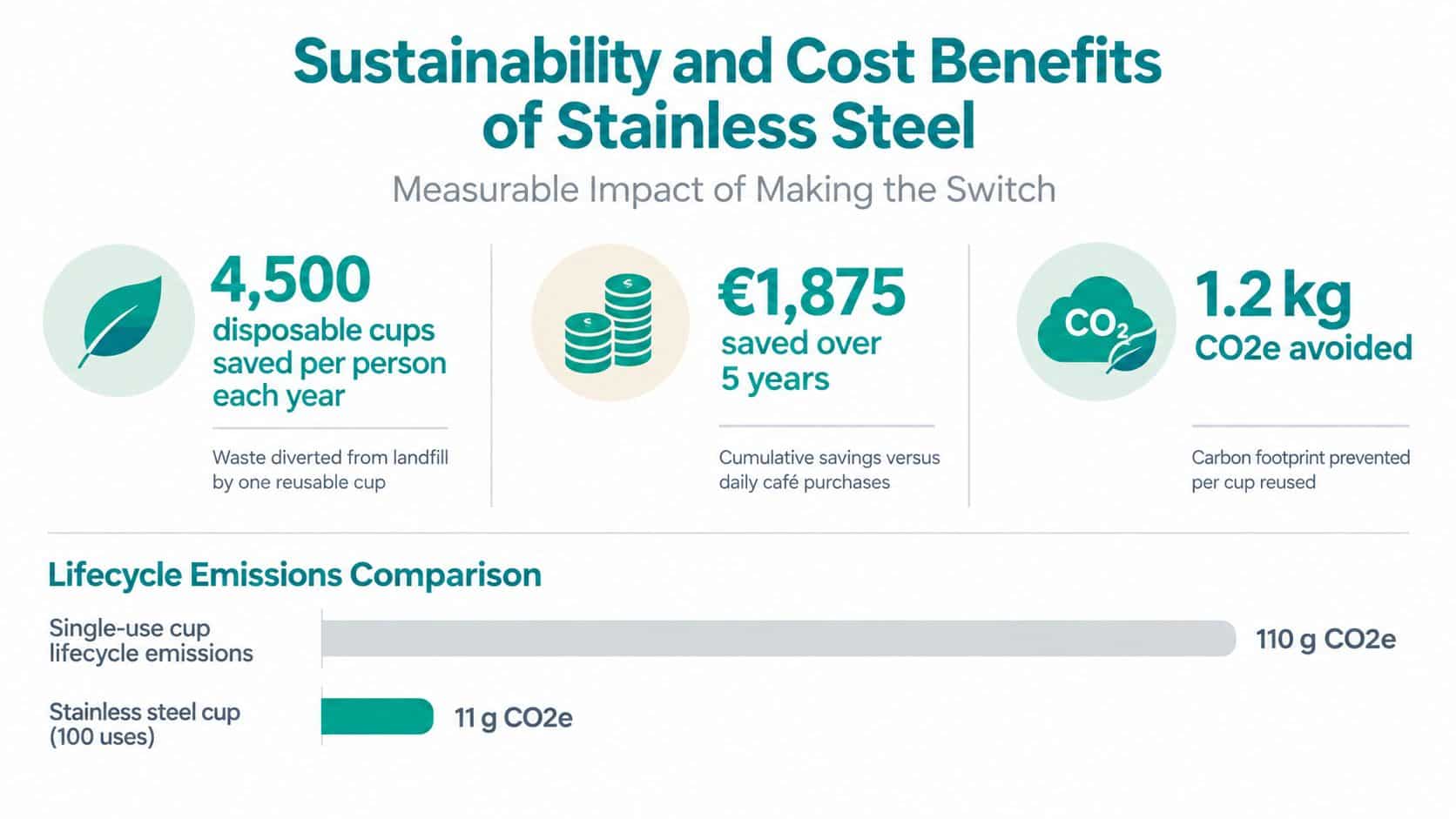
A separate Australia and New Zealand life-cycle assessment found that reusable stainless steel-base containers became preferable to the modeled single-use takeaway containers after approximately 22 reuses. In the same assessment, a reusable stainless steel cup washed in a consumer dishwasher, with optimized end-of-life recycling assumed, had the lowest overall climate impact among the alternatives studied. The full UNEP beverage-cup report explains the modeled conditions.
The financial calculation you should make
A reusable pod can reduce purchases of proprietary single-use capsules, but a responsible calculation needs the price of your current pods, your coffee dose, and the price of the beans or grounds you plan to use. Since those prices vary by household and aren't fixed in the available evidence, it would be misleading to promise a universal annual saving.
You can calculate your own result with three inputs:
- Current capsule cost: Multiply the price of one single-use pod by your normal weekly consumption.
- Ground-coffee cost: Divide the package price by the number of servings your chosen dose produces.
- Replacement allowance: Include the reusable pod's purchase price and any replacement seal or filter component.
The environmental case becomes stronger as you keep using the pod and avoid unnecessary replacements. For offices and busy kitchens, a durable refillable system also reduces the number of empty capsules staff must store, sort, and discard. Reworx Recycling offers useful background for teams looking to implement sustainable business practices beyond one coffee accessory.
Material Safety and Heat Transfer Dynamics
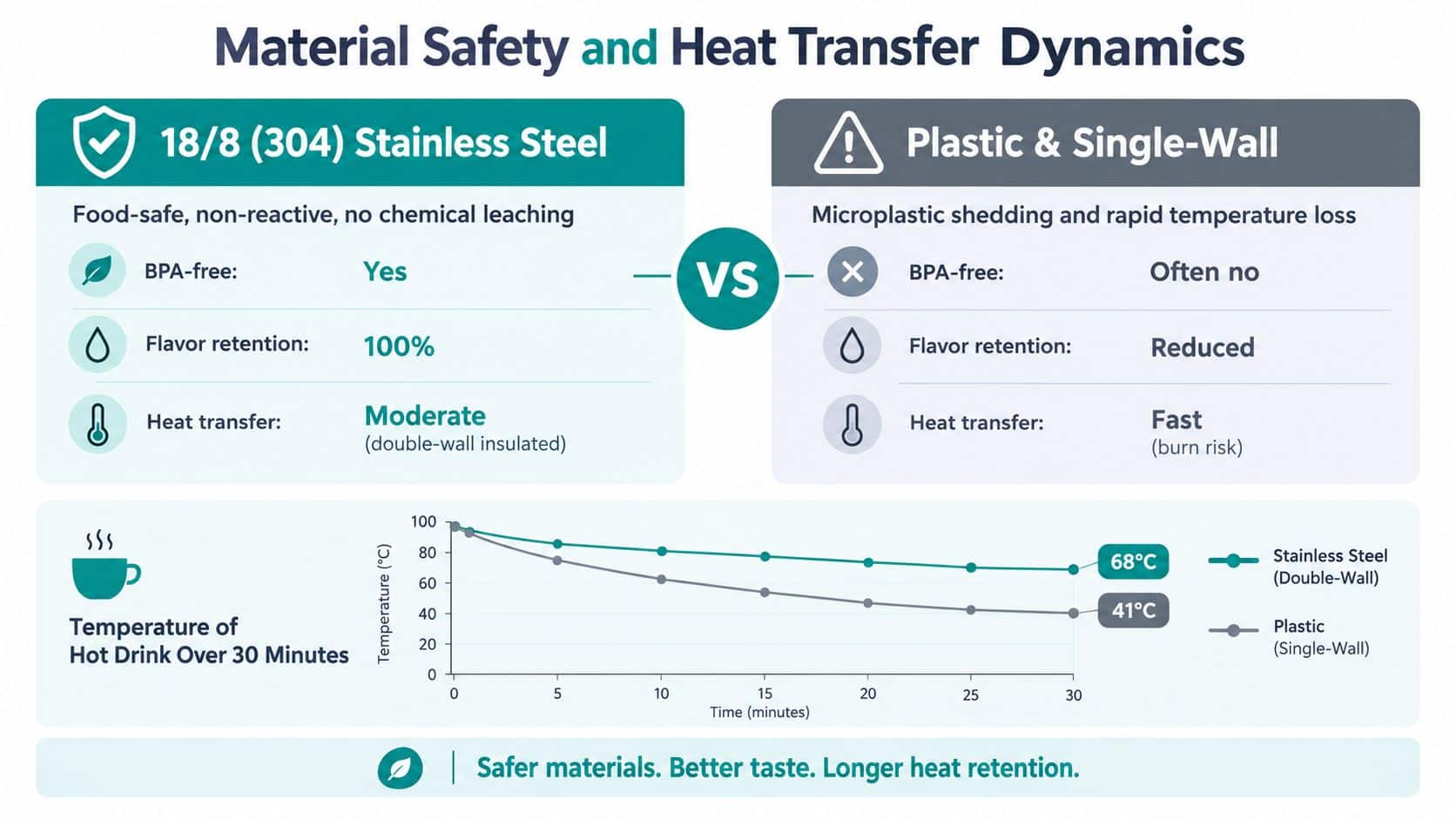
Food-grade 18/8 or 304 stainless steel is widely used for drinkware because it resists corrosion and behaves as a relatively non-reactive surface under normal use. That doesn't mean the material has zero interaction with every beverage. Acidity, temperature, contact time, and alloy composition influence whether metals migrate into a drink.
Independent testing summarized by NonTox U reported that iron, chromium, and nickel can leach from stainless steel into acidic and slightly acidic foods and beverages, while distilled water showed none. The summary also noted chromium release from coffee and tea and increased nickel release with acidic foods. Those findings support a nuanced buying rule: ordinary water use and normal coffee service aren't the same exposure scenario as storing hot, acidic drinks against a damaged or unsuitable surface for a long period. The testing summary discusses stainless steel leaching in food and beverages.
Safety depends on condition and use
The protective chromium oxide film gives stainless steel much of its corrosion resistance. Acidic residues, salt, and high-alkaline dishwasher detergents can challenge that passive layer, especially when residue remains on the surface or the pod stays wet. Scratches, dents, and harsh chemicals can also damage the surface and increase the possibility of corrosion or migration over time. Guidance from Ecolab recommends prompt rinsing, avoiding prolonged wet storage, and thorough drying when protecting stainless food-contact equipment. Its dishwashing guidance covers corrosion risks from acids, chlorides, and chemicals.
Heat transfer creates a separate issue. Single-wall stainless steel conducts heat far more readily than polypropylene. The material data in one engineering analysis places 304 stainless steel at about 15 W/m·K, roughly 15 times the conductivity of borosilicate glass and porcelain and about 150 times that of polypropylene. The analysis found that coffee in a single-wall stainless reusable cup can approach room temperature in as little as 20 seconds after serving. The engineering analysis explains why insulation changes the cooling curve.
That observation applies most directly to drink cups, but it gives pod buyers an important distinction. A pod doesn't need to retain beverage heat for hours. It does need to avoid unnecessary heat loss while water passes through the coffee bed. A well-designed basket, suitable lid, and correct machine fit matter more than choosing the thickest metal.
Machine Compatibility and Fit Guide
A reusable stainless steel pod is a precision brewing component, so physical fit matters as much as the metal itself. Keurig brewers use different lid, needle, and water-flow arrangements. Ninja, Breville, and Cuisinart machines may require different baskets or adapters. A pod can sit in the holder and still brew poorly if its lid blocks the puncture needle, its rim prevents full closure, or its geometry disrupts the intended water path.
Find the exact model name printed on the brewer, rather than relying on the brand alone. Check the documentation for pod dimensions, supported reusable capsules, and any required adapter. Never force the handle closed. Avoid a lid that requires the needle to pierce thick stainless steel unless the manufacturer or pod maker designed that configuration for the machine.
Coffee Maker Compatibility Matrix
| Machine Brand | Required Lid Type | Sensor and Adapter Needs |
|---|---|---|
| Keurig K-Classic | Single-needle-compatible reusable lid | Confirm the lid presents the correct puncture point and seats below the holder rim |
| Keurig 2.0 | 2.0-compatible lid or approved adapter | The brewer may require a compatible lid profile, so test closure and recognition before brewing |
| Keurig K-Supreme and K-Slim | MultiStream-compatible lid and pod geometry | Use a capsule designed for the specific MultiStream arrangement, not a generic single-needle pod |
| Keurig K-Duo | Model-specific reusable basket or pod configuration | The carafe and single-serve sides use different brewing paths, so verify which side the accessory supports |
| Ninja DualBrew | Ninja-compatible reusable pod or adapter | Confirm the pod is intended for the DualBrew holder and that the brewer closes without resistance |
| Breville espresso machines | Portafilter basket, not a K-Cup-style capsule | Use the machine's correct basket and dose method; a single-serve pod adapter isn't automatically compatible |
| Cuisinart single-serve models | Model-specific reusable capsule or filter basket | Check the needle position, lid clearance, and holder dimensions before filling the pod |
Keurig K-Classic and other single-needle machines generally need a lid that leaves a clean puncture path. K-Supreme and K-Slim owners should choose MultiStream-specific geometry because their water-entry pattern differs from a basic single-needle brewer. K-Duo owners must identify whether the accessory supports the single-serve side, the carafe side, or both.
A stainless steel pod also needs to preserve the intended relationship between the lid, coffee bed, and machine needle. A lid that sits too high can interfere with closure, while one that seals poorly can allow water to bypass the grounds. These fit issues affect extraction and can create leaks, regardless of the pod's material quality.
For a model-by-model decision process, use this Keurig reusable K-Cup fit guide. It is also sensible to verify Made in USA labeling separately from compatibility. Manufacturing origin doesn't establish fit, material grade, or needle design.
Fit check: Place the empty pod in the holder, close the brewer gently, and inspect whether the lid sits level. If the handle needs force, stop there. A leak or damaged needle costs more than a missed brew.
Cleaning and Maintenance Best Practices
A reusable pod collects coffee oils in places a quick rinse won't reach. The mesh, lid seam, silicone seal, and underside of the rim can retain fine particles, and those residues can affect the next cup even when the pod looks clean. Stainless steel tolerates regular use, but it still rewards a consistent routine.
A routine that protects the pod
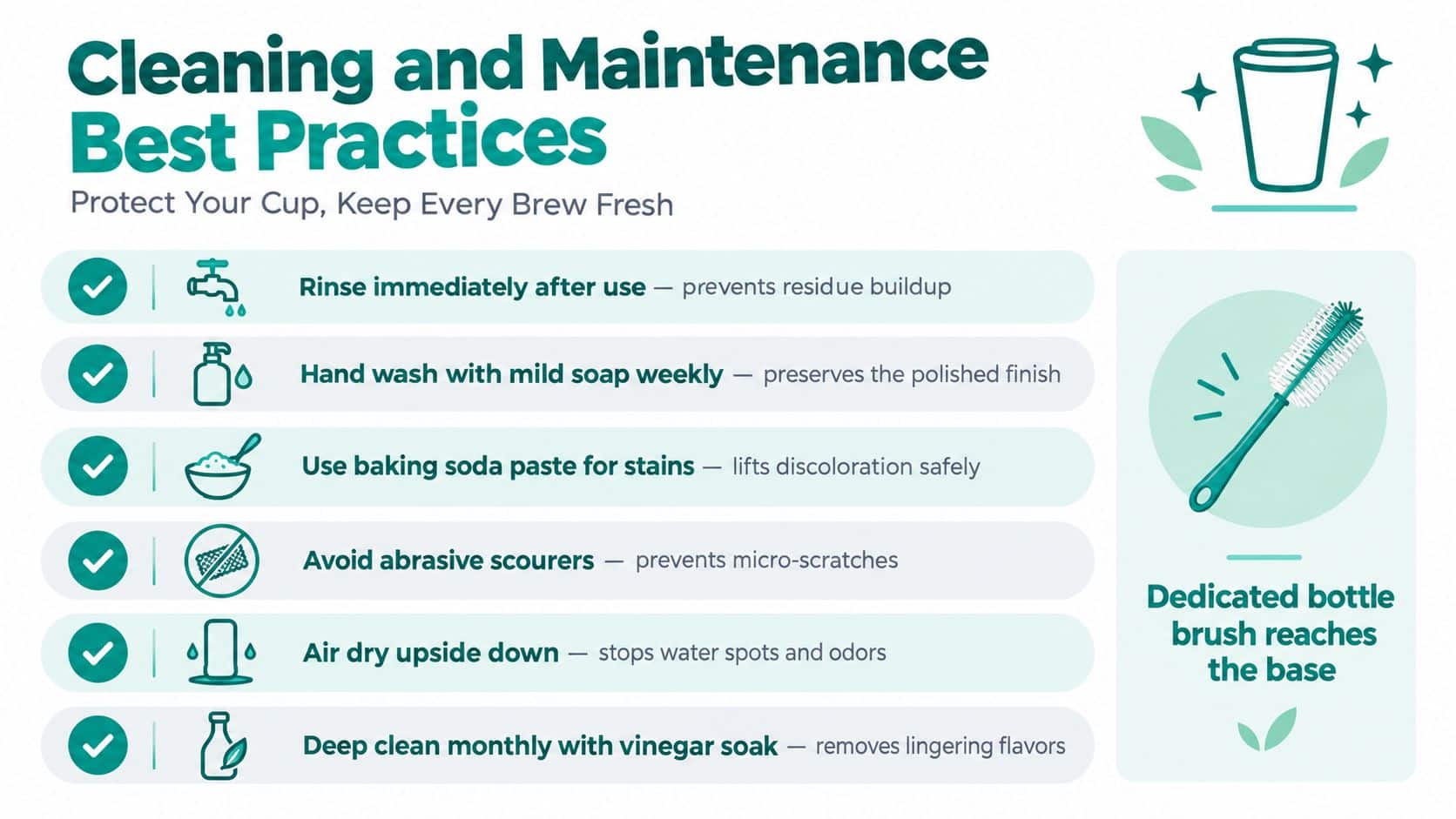
- Rinse immediately. Empty the spent grounds, flush the basket with warm water, and clear the lid and seal. Prompt rinsing removes acidic coffee residue before it dries onto the surface.
- Wash gently. Use mild dish soap and a soft brush. Push the brush through the mesh from the clean side, rather than grinding coffee particles deeper into the openings.
- Inspect the seal. Look for flattening, cuts, or movement around the lid. A sound seal helps prevent water from bypassing the coffee bed.
- Dry completely. Leave the pieces separated until they are dry. Storing a closed, damp pod encourages odors and leaves minerals concentrated on the metal.
- Deep-clean the machine separately. Coffee oils belong to the pod, while scale belongs mainly to the brewer's water path. Use a compatible descaling solution or cleaning tablet according to the machine and accessory instructions.
Don't use abrasive scourers on the basket. Micro-scratches can hold residue and dull the finish, while aggressive dishwasher chemistry can accelerate corrosion when it remains on the metal. If staining persists, a mild baking soda paste can lift discoloration without the aggressive abrasion of a scouring pad.
For a more detailed pod-washing sequence, follow this guide to clean reusable coffee pods. A dedicated narrow bottle brush is useful for reaching the base and corners, and a machine-safe descaler helps address mineral buildup that washing the pod cannot remove.
Brewing habit: Clean the pod when you finish the drink, not when you prepare the next one. The few minutes saved by postponing the rinse usually become a longer scrubbing job later.
Addressing Leaks and Metal Leaching Concerns
Leaks usually come from fit or assembly, not from stainless steel as a category. A lid can sit slightly off-center, a silicone seal can twist, or coffee grounds can land on the sealing surface. The brewer then pushes water around the basket instead of through it, sending diluted coffee into the cup and leaving grounds behind.
A precision mesh filter helps keep particles contained, but it can't compensate for a warped rim or incompatible holder. Before brewing, check that the mesh is seated, the lid is fully closed, and no grounds remain between the seal and the rim. Brew a water-only test after installing a new pod, then inspect the cup and holder for stray water.
The leaching question needs a precise answer
Food-grade stainless steel is generally used for daily drinking, and health-focused reviews describe modern drinkware as releasing only trace nickel and chromium under normal conditions, typically below stated safety thresholds. The relevant caution is not a blanket claim that every stainless product is risk-free. Acidic liquids, high temperatures, long contact times, surface damage, and alloy quality can change the migration conditions. This safety overview discusses normal use and the effect of acidic liquids and contact time.
The same principle applies to reusable coffee pods. A short brew cycle is different from storing hot citrus, flavored coffee, or tea in a damaged vessel for an extended period. Choose a product that identifies its food-contact material, retire it if it develops deep damage or persistent corrosion, and rinse coffee residue promptly.
High-quality 18/8 or 304 stainless steel is widely used because it resists corrosion and remains stable under ordinary use. This materials guide explains the role of grade, scratches, dents, and harsh chemicals. The practical conclusion is balanced: don't treat a generic material label as proof of perfect safety, but don't reject a properly designed food-grade pod solely because it is metal.
Upgrade Your Daily Brew Today
A reusable stainless pod makes sense when your priorities include controllable coffee, fewer disposable capsules, and a component that can tolerate repeated heat and washing. The improvement comes from the entire setup: suitable grounds, a compatible lid, a clean mesh basket, and a brewer that closes without pressure or guesswork.
The sustainability case depends on continued use, while the flavor case depends on preparation. Stainless steel won't correct a stale roast or an unsuitable grind, but it gives you a stable basket from which to diagnose those variables. It also avoids the false choice between convenience and control. You can keep the push-button workflow while choosing your own coffee.
Reusable stainless steel coffee pods can outlast disposable options because stainless steel tolerates heat and moisture well. One industry report estimates that premium reusable stainless steel K-Cup pods typically last about 500 to 1,000 brews, equivalent to roughly 1.5 to 3 years of daily use under that report's assumptions. Review the report's stated lifespan estimate and compare it with the care and replacement terms for the specific pod you buy.
For easier upkeep, pair the pod with a universal descaling solution or cleaning tablets suited to your machine. Disposable paper liners can also simplify spent-ground removal, although they add a consumable component and should be chosen only when they fit the reusable basket correctly.
PureHQ Inc. offers reusable stainless steel K-Cups, compatible coffee-machine filters, disposable pod liners, and descaling supplies for home and small-workplace brewing. Visit PureHQ Inc. to choose a stainless refillable pod that matches your machine and build a maintenance bundle for cleaner, more consistent coffee.

