
Coffee Machine Care
K Carafe Pods: Compatibility, Reusable Options, and Tips
Aug
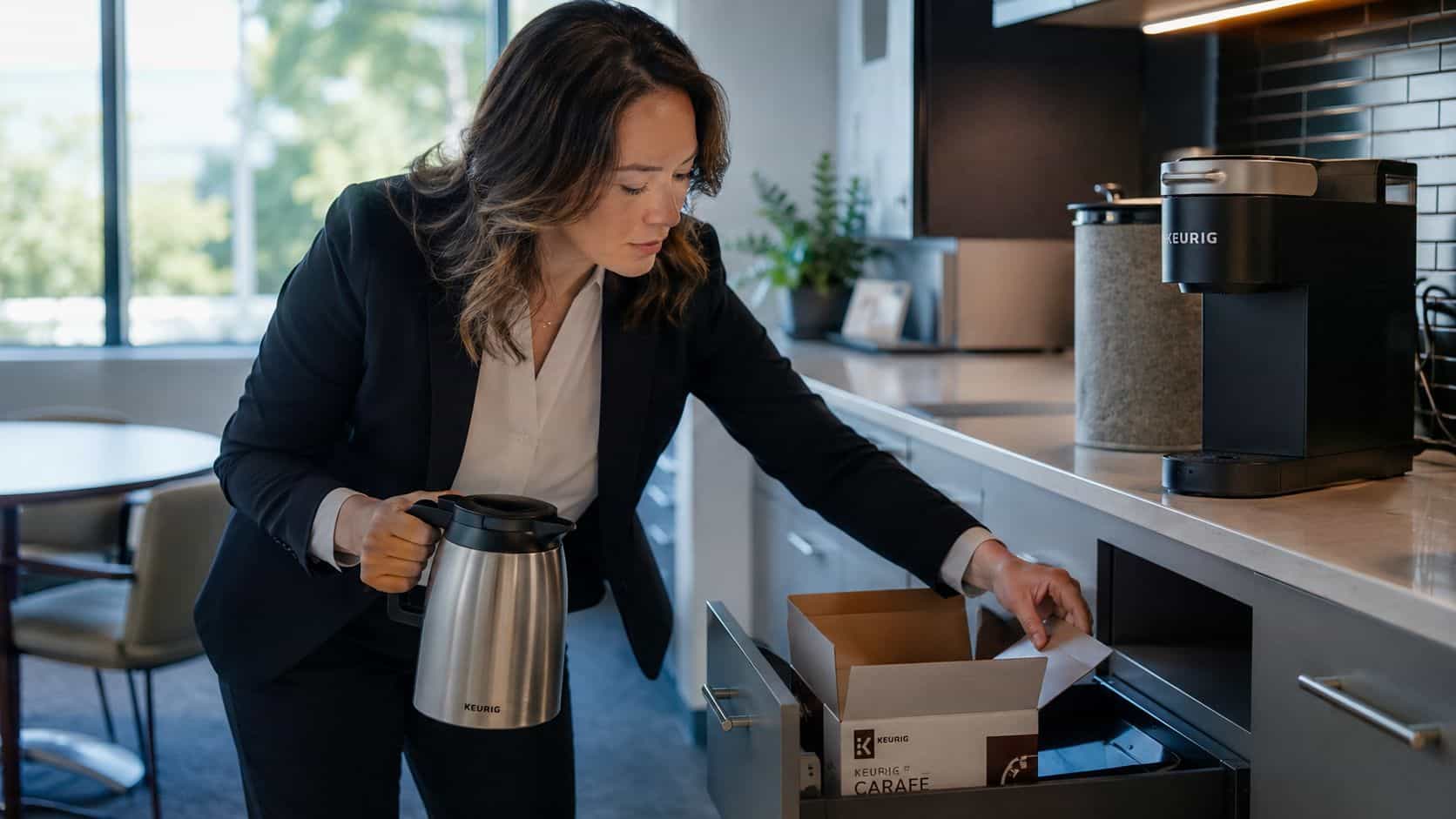
Monday morning is when K Carafe Pods stop being an abstract accessory and become a real problem. The office manager reaches for a full-pot brew before a meeting, opens the drawer, and finds either an empty box or the wrong generation of pods, then the brewer refuses the pack anyway. That failure usually isn't about coffee quality, it's about format mismatch, and Keurig 2.0 made that mismatch a hard stop by design, not an inconvenience.
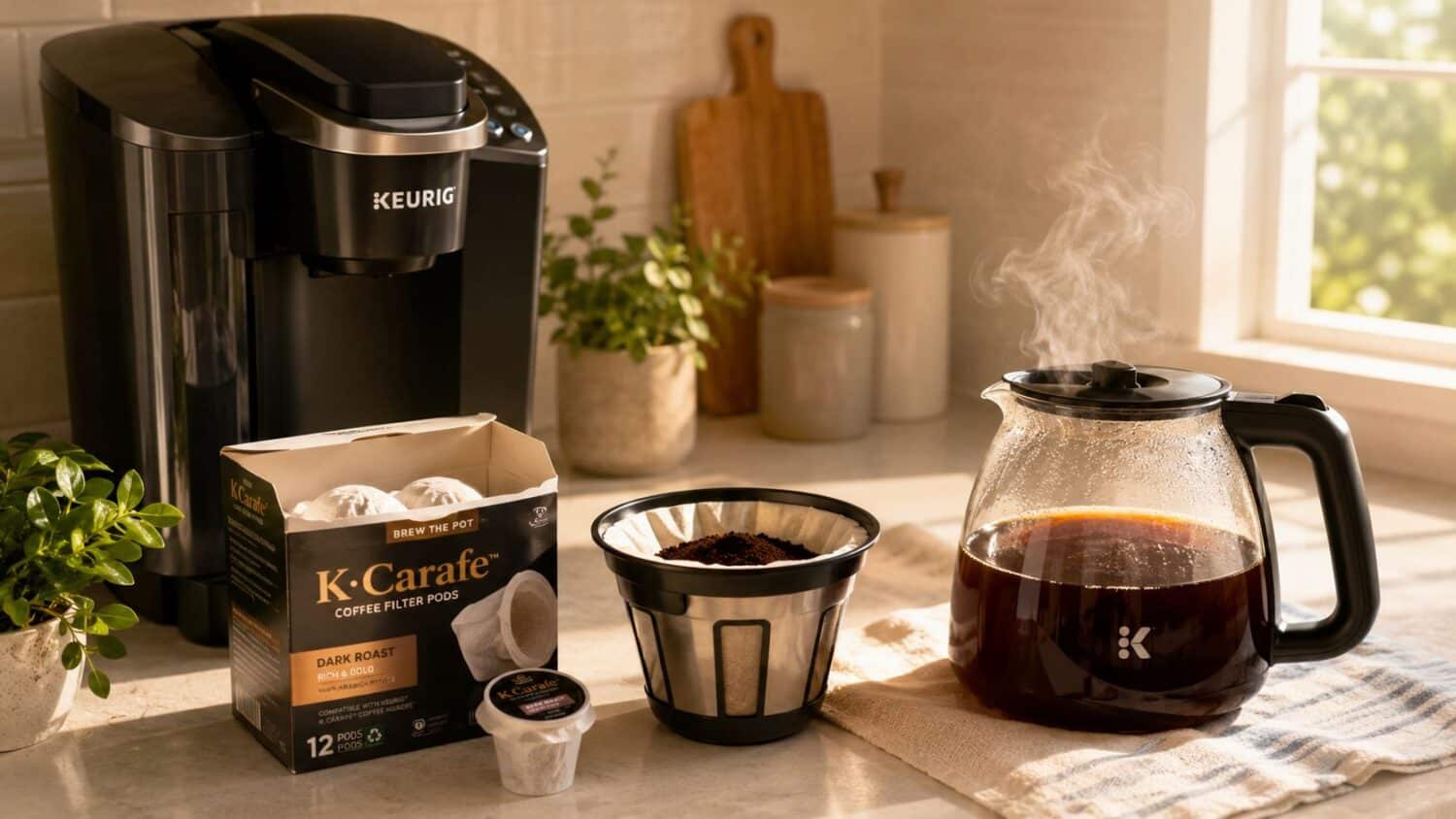
K-Carafe was Keurig's attempt to move single-serve convenience into multi-cup brewing, with a format that could brew a shared carafe instead of one mug. Independent descriptions place the brew size in the 18 to 30 ounce range, and later reporting tied the format's fade to limited demand, which makes leftover inventory, compatibility checks, and substitute planning the practical issues now. If you've still got sealed stock, the right 2.0 brewer can still use it. If not, the cleanest path is usually a reusable insert or a move to ground-and-basket brewing.
For small workplaces, the compatibility problem gets old fast, which is why a resource like simple coffee solutions from Allied Drinks Systems can be useful when you're deciding whether pods, reusable inserts, or a different brewing layout makes more sense. The main question is no longer whether K Carafe was clever, it's what still works in a kitchen or breakroom today.
The Morning You Reach for a Carafe Pod
The problem usually shows up with no warning. Someone planned ahead, stocked the drawer, and assumed the carafe routine would be simple. Then the brewer either won't accept the pod, or the pod isn't the right format for the machine on the counter, and the whole pot turns into a delay.
K-Carafe solved a real gap in its day, because it let one Keurig platform do single-cup and carafe brewing without a separate drip machine. That mattered in homes and offices that wanted more than a mug or two, but not a full traditional coffee setup. Today, though, the format is a discontinued-format problem space, which means the issue is less about learning a new habit and more about matching old inventory to the right machine.
What breaks first in real kitchens
In practice, there are three failure points. The stock is gone. The brewer doesn't support the format. Or the machine recognizes the pod family but still won't activate carafe mode because the brewer generation isn't right.
Practical rule: If the box says K-Carafe, the first thing to verify isn't roast or flavor, it's whether the brewer can actually read and accept that format.
That's why the path forward is usually one of three choices. Use remaining inventory on a compatible Keurig 2.0 brewer. Move to a reusable carafe insert if you still want the same brew path. Or stop trying to force pods into the workflow and switch to K-Duo ground-and-basket brewing for a cleaner long-term setup.
A lot of readers are really asking the same thing in different words, which brewer do I have, and what can I still buy for it? The short answer is that the pod itself matters, but the machine matters more.
What K Carafe Pods Actually Are
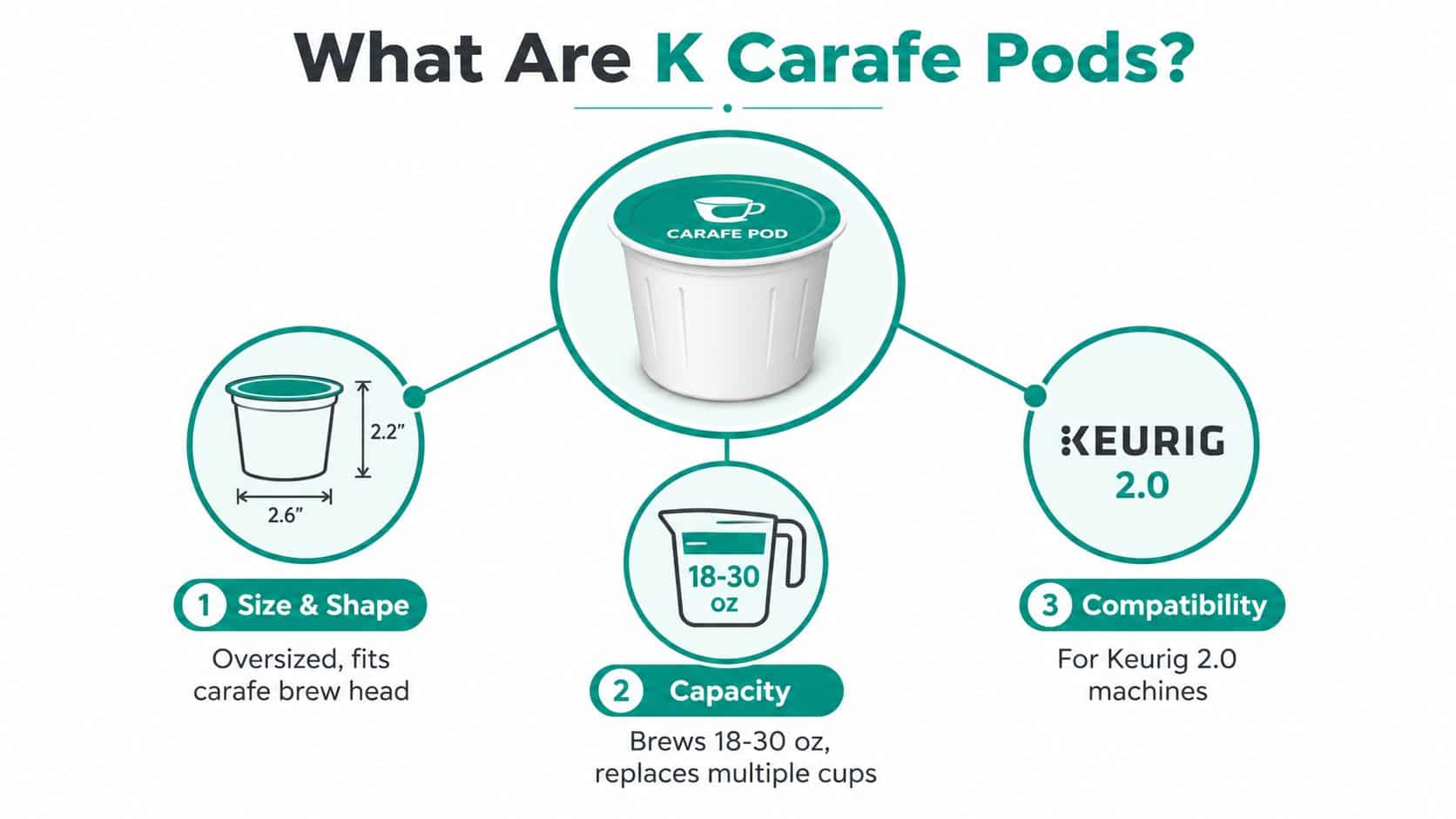
K-Carafe pods are oversized coffee packs made for the carafe brew head on compatible Keurig 2.0 machines. They're not just bigger K-Cups, they're a different format built for a larger water pass-through, which is why they brew a shared carafe instead of a single mug.
The format in plain language
A K-Carafe pack is designed to fill the brewer's multi-cup setting, not the standard cup setting. Independent descriptions say the format typically brews about 18 to 30 ounces, which lands in the same general range as roughly two to five cups depending on cup size and brew strength, and the Keurig 2.0 rollout in 2014 introduced that second brew path alongside pod recognition technology. The important point is not the label, it's the workflow. The brewer reads the pack, confirms the format, then initiates the carafe cycle only when it recognizes the right capsule family.
That makes K-Carafe a separate category from standard K-Cups and from K-Mug packs. A standard K-Cup is built for one mug. A K-Mug pack is larger, but it's still not the same thing as a carafe pack. The brewer slot and the brew logic are different enough that people who buy by shape alone often end up with the wrong accessory.
Why the confusion sticks around
The names are part of the problem. “K-Carafe” sounds close enough to K-Cup that shoppers assume interchangeability, then the machine proves otherwise. Reusable carafe inserts add a second layer of confusion because they're physically similar enough to look like a substitute, even though they're really a different brew method.
A carafe pod is not just about volume. It's about how the machine recognizes the pack and chooses the brew path.
The next practical question is compatibility, because the same pod can be a perfectly good product and still be useless in the wrong brewer family. For background on model fit and accessory confusion, the compatibility notes in this Keurig carafe guide are useful.
Which Keurig Brewers Use K Carafe Pods
K-Carafe pods belong to the Keurig 2.0 line, with the clearest fit in the K200, K300, K400, and K500 series. These brewers use sensor-based recognition to read the pack format and allow carafe brewing only when the right marking is present. If the machine does not recognize the pod, the carafe cycle stays locked out, even if the pod shape looks close.
The brewer family matters more than the logo
That recognition logic creates a narrow compatibility window. A brewer can look like a normal single-serve machine and still reject K-Carafe packs if it does not support the 2.0 carafe workflow. That is where a lot of buyers get stuck, especially with listings that say “works with Keurig” but never identify the actual brewer family. The question is whether the machine supports the carafe brew head, not whether it accepts a round pod in general.
The K200 through K500 series are the main match point for these pods. Some later Keurig machines have carafe functions too, but many use a different brew path, and some rely on ground coffee plus a basket instead of a pod. K-Duo owners run into this often, because those brewers use a separate carafe system and do not treat K-Carafe packs the same way.
If you are sorting old inventory against a brewer on the counter, model family matters more than the marketing copy. This Keurig carafe overview is a useful reference for the model names people usually confuse.
Comparison of brewer fit
| Brewer Family | Carafe Capacity | K Carafe Pod Support | Reusable Insert Option |
|---|---|---|---|
| K200 series | Keurig 2.0 carafe brewing | Yes, on compatible units | Yes, if the insert is made for 2.0 carafe use |
| K300 series | Keurig 2.0 carafe brewing | Yes, on compatible units | Yes, if the insert matches the brew path |
| K400 series | Keurig 2.0 carafe brewing | Yes, on compatible units | Yes, with the correct reusable accessory |
| K500 series | Keurig 2.0 carafe brewing | Yes, on compatible units | Yes, with the correct reusable accessory |
| K-Duo family | Separate carafe system with grounds | No | Use the ground basket, not a K-Carafe pod |
Compatibility check: If the brewer family does not support K-Carafe, forcing the pod or fiddling with the tray will not make it work.
The practical takeaway is straightforward. K-Carafe sits inside a narrow machine set, and compatibility is the first filter, not the last one.
K Carafe Pods vs Reusable Inserts and Basket Brewing
Once a format is discontinued, the smartest comparison isn't nostalgia versus replacement, it's convenience versus control. K-Carafe pods, reusable carafe inserts, and K-Duo basket brewing all solve the same basic need, but they do it with different trade-offs in prep time, waste, and flavor tuning.
What each method does well
K-Carafe pods still win when you want the fastest possible path from cabinet to cup, especially if you've got leftover stock and a compatible brewer. Reusable stainless inserts and paper-filter models win when you want to use the coffee you already buy and stop relying on a shrinking proprietary format. Basket brewing on a K-Duo is the cleanest fit when the household or office is already moving toward ground coffee and doesn't want to think about pod detection at all.
The main objection people raise against reusable inserts is fit. That's fair, because Keurig 2.0 machines are picky, and a third-party insert that seems fine on the counter can still fail in the brew head or trigger a bad recognition response. The more the accessory depends on “close enough,” the more likely it is to create frustration.
Comparison of brewing methods
| Method | Cost Per Carafe | Waste Profile | Flavor Control | 2.0 Compatibility |
|---|---|---|---|---|
| K-Carafe pods | Higher recurring cost | More single-use packaging | Fixed by the pod | Only on compatible 2.0 brewers |
| Reusable stainless insert | Lower after the first purchase | Less disposable waste | High, because you choose the grounds | Depends on the exact insert and brewer |
| Paper-filter refillable insert | Low to moderate | Lower plastic waste, more paper waste | High, with simple cleanup | Depends on the exact insert and brewer |
| K-Duo basket brewing | Usually the most flexible for ground coffee | Grounds and paper, if used, are easy to manage | High, especially for larger batches | Built into the K-Duo brew path |
A reusable insert is often the best middle ground for daily brews, while disposable pods still make sense for hosts who don't want to measure or clean. Basket brewing becomes the obvious choice in small offices when the priority is serving several people without sorting through old pod stock. For readers comparing refillables, this reusable K-Cup guide helps frame the accessory side of the decision.
Brewing a Clean Full Carafe Every Time
A clean carafe brew depends on three things, the right fill, the right grind, and the right seating. If one of those is off, the machine usually tells you through weak coffee, drips that stall mid-cycle, or grounds that escape into the carafe.
The setup that actually works
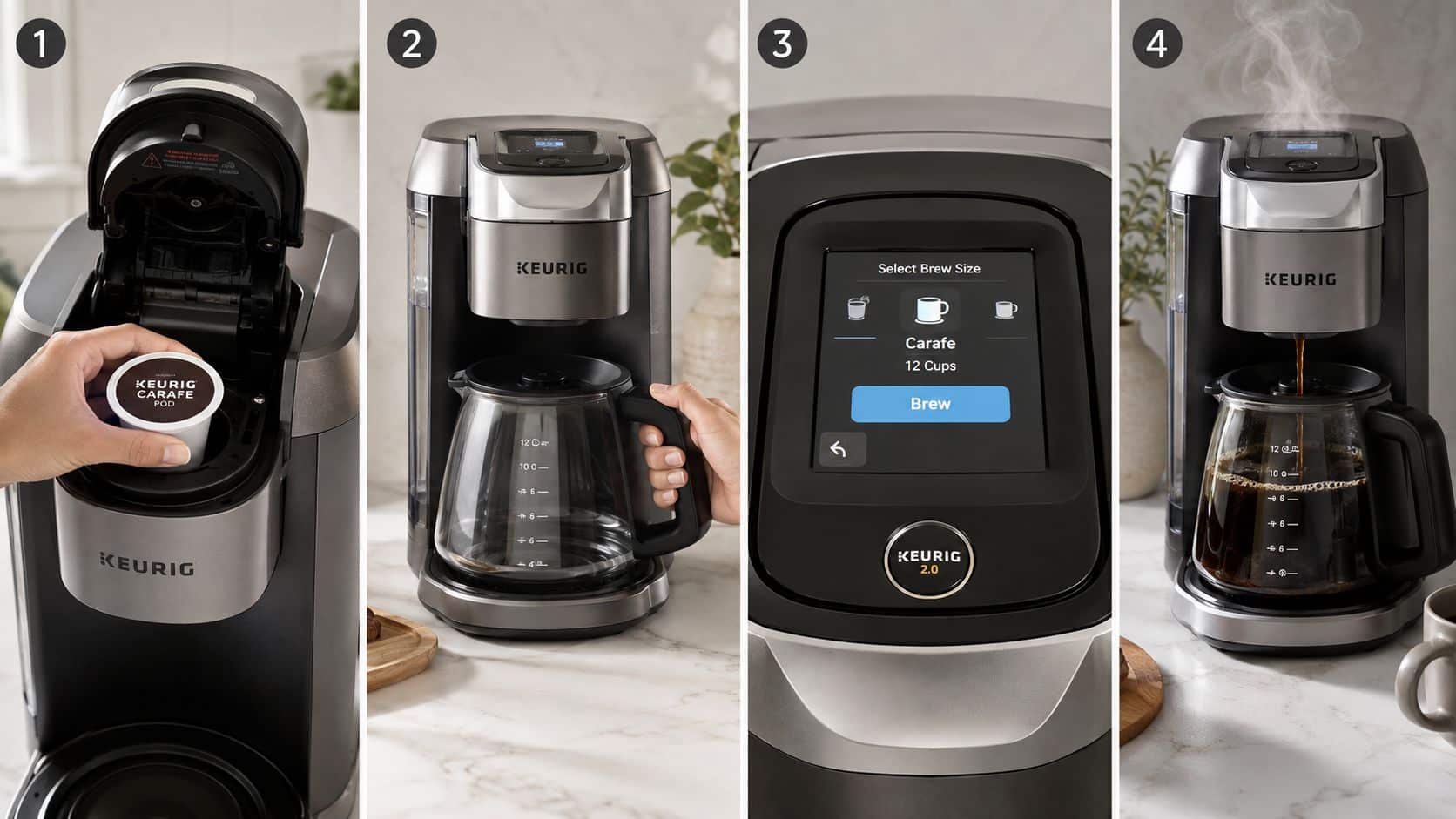
Start with the carafe and the brewer on a level surface. Fill the reservoir fully if you're brewing a larger batch, because a partial fill can leave the machine short of water before the cycle finishes. Then match the pod or refillable insert to the carafe setting, not the standard cup setting, because the brew path has to be aligned with the pack size.
For reusable stainless inserts, use a medium grind that runs slightly coarser than what you'd use for a standard drip basket. Pack the grounds lightly, don't tamp them down, and avoid overfilling. A tight puck can cause bitter extraction or slow flow, while a loose underfill can make the pot taste thin.
Practical rule: A carafe brew should be built around extraction balance, not just capacity. Too little coffee makes the batch watery, and too much pressure from tamped grounds makes it harsh.
The video below is useful if you want to watch the sequence once before trying it yourself.
Common mistakes to avoid
Carafe overflow usually comes from the wrong tray setup or a mismatch between the selected brew size and the actual pod format. Weak brews usually point to underfilled inserts or a grind that's too coarse for the carafe path. If the machine hesitates partway through, check for cold-start issues, alignment, and residue near the reading area before blaming the coffee itself.
For people using reusable parts, a simple cleaning routine matters as much as grind choice. If the insert stays oily or the brewer needle stays dirty, the next pot suffers even when the grounds are right.
Cost Per Carafe and the Waste Equation
The money question becomes obvious once a household or office starts brewing daily. Disposable K-Carafe pods keep the workflow simple, but the recurring purchase adds up, while reusable inserts and basket brewing shift more of the cost into the first purchase and routine cleanup.
The ownership picture over time
If you drink carafe coffee every day, a reusable stainless insert usually pays for itself quickly compared with buying sealed pods over and over. Paper-filter refillables sit in the middle, because they lower disposable plastic use but add a continuing consumable. Basket brewing can be the most economical path in a breakroom, especially when the group is already buying ground coffee in bulk and wants fewer packaging layers.
The waste side is just as important. A disposable pod creates packaging waste every brew. A reusable insert cuts that down sharply, but it still needs cleaning and occasional parts replacement, especially if the gasket wears out. Basket brewing with grounds and paper filters can be easier to sort at end of day, because the spent coffee and paper separate cleanly from the machine.
Comparison of cost and waste
| Method | Cost per Carafe | Annual Cost (Daily Use) | Monthly Waste |
|---|---|---|---|
| K-Carafe pods | Highest recurring expense | Highest over time | Highest packaging volume |
| Reusable stainless insert | Lower after the initial purchase | Lower over time | Minimal, mostly spent grounds |
| Paper-filter refillable insert | Lower than pods, higher than stainless over time | Moderate | Paper liners plus spent grounds |
| K-Duo basket brewing | Variable, based on ground coffee choice | Often the easiest to control | Grounds and paper, easy to separate |
A good rule is to think in five-year terms, not just the checkout screen. The cheapest accessory in the cart isn't always the cheapest setup once you count repeat purchases, liners, descaling supplies, and replacement seals.
Care, Cleaning, and Long Term Maintenance
Carafe brewing gets inconsistent fast when the parts touching coffee stop getting cleaned. Oil buildup, mineral scale, and damp storage all show up in the cup before they show up as obvious machine failure.
A routine that keeps the brew steady
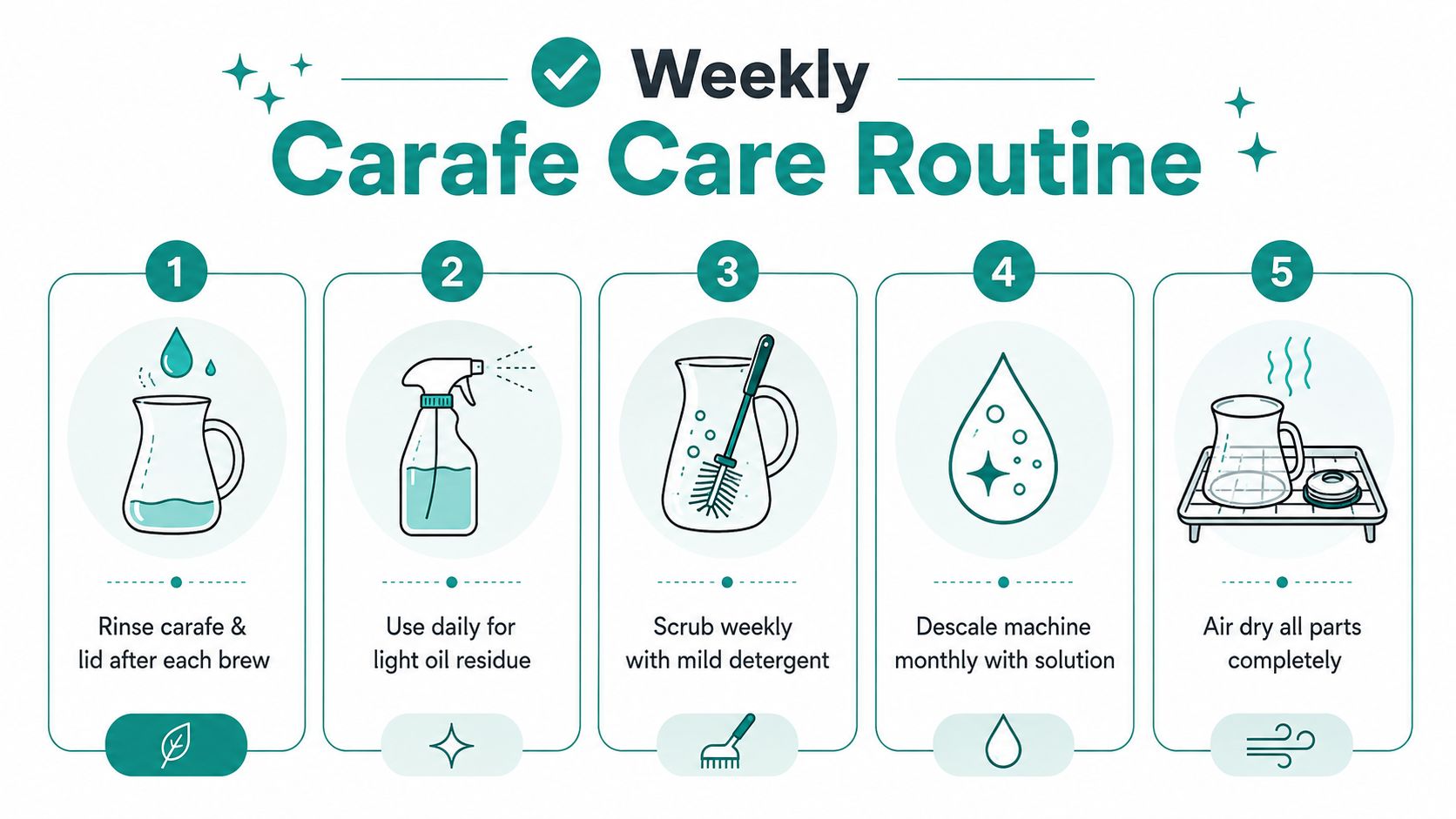
Rinse the carafe and lid after every brew so coffee oils don't collect into a cloudy film. Wash reusable inserts with warm water and a drop of dish soap, and don't assume a heavy dishwasher cycle is kind to mesh or sealing parts. Paper liners and silicone gaskets should be replaced as soon as they crease, stiffen, or stop seating cleanly.
The brewer itself needs attention too. Descale it on a regular schedule with a citric acid or commercial descaler, especially if carafe use has become a daily habit. Wipe the needle area and the K-Cup holder dry after cleanup, because residue there can affect flow and recognition on the next brew.
What the symptoms usually mean
Slow drip, cloudy glass, and a bitter aftertaste usually point to maintenance, not bad beans. If the brewer is clean but the coffee still tastes off, then the grind, fill level, or pod choice deserves a second look. If the machine is letting moisture sit in the system, the next pot often starts tasting stale even before the grounds are exhausted.
For readers maintaining refillables, this reusable coffee pod cleaning guide is a useful reference for keeping the insert from becoming the weak link.
Clean parts don't make coffee taste fancy. They just stop old residue from flattening a fresh brew.
For sealed leftover K-Carafe pods, store them in a cool, dry cabinet away from humidity so the foil lids stay intact until use.
Choosing the Right Path for Your Setup
The right choice depends on what's already in your kitchen, not what looks neat in a product photo. If you own a K200, K300, K400, or K500 and still have genuine K-Carafe pods, use them while the stock lasts, then plan for a reusable insert before the last box disappears. If your brewer is a K-Duo or any model that uses a ground basket, skip the pod path and brew with ground coffee instead.
Three practical outcomes
A small office that still has pod inventory should use it up on the compatible brewer first, then decide whether it wants to keep the same workflow with a refillable insert or move away from the format entirely. A home that brews a carafe every morning usually benefits more from a stainless reusable insert than from hunting down old stock. A buyer starting fresh gets the most flexibility from a basket-based setup, because it sidesteps the compatibility traps that made K-Carafe confusing in the first place.
Comparison of the decision paths
| Option | Best For | Cost Per Cup | Maintenance |
|---|---|---|---|
| Use remaining K-Carafe pods | Owners with compatible 2.0 brewers and leftover stock | Moderate to high | Low day to day, but limited by inventory |
| Switch to a reusable carafe insert | Daily brewers who want ground coffee control | Lower over time | Rinse, clean, and replace wear parts |
| Move to K-Duo ground-and-basket brewing | Small offices and homes wanting a simpler long-term setup | Depends on ground coffee choice | Basic basket and machine cleaning |
A sensible buying decision usually comes down to four triggers, pod inventory left, brewer model, daily cup count, and how much cleanup you're willing to tolerate. If your answer keeps pointing away from pods, the cleaner setup is usually a matching carafe basket, a refillable pod, and a descaler bundle that keeps the brewer performing the way it should.
PureHQ Inc. makes coffee accessories for Keurig systems, including reusable carafe baskets, refillable pods, and descaling supplies that fit the kind of workflow K-Carafe users are trying to preserve. If you're replacing discontinued pods or simplifying a carafe setup, visit PureHQ Inc. to find the carafe brewing accessories that match your brewer and the way you make coffee.

