
Coffee Machine Care
Flavored Coffee Pods Guide: Taste, Health, and Reusable
Aug
You've found the flavor you want, loaded the pod, pressed brew, and waited for vanilla, hazelnut, or toasted coconut to fill the kitchen. Instead, the cup tastes flat, the aroma disappears quickly, or the pod doesn't fit your machine at all. Flavored coffee pods make a convenient morning feel special, but the best result depends on more than a label. Packaging, roast chemistry, machine compatibility, freshness, and cleaning all shape what reaches your cup.
The Allure and Hidden Costs of Flavored Coffee
A flavored pod can turn an ordinary brew into a small ritual. Vanilla can soften a darker roast, hazelnut can add a dessert-like impression, and coconut can make a light roast feel brighter without requiring syrups, frothing, or a second appliance. That simplicity explains the appeal. You insert the pod, select a cup size, and get a repeatable drink with very little preparation.
The same convenience creates a disposal problem. Global pod consumption was estimated at 48 billion units in 2014, with about 576,000 metric tons of waste in one year, according to reporting summarized by The Guardian's examination of single-use coffee pod waste. Later reporting continued to describe tens of thousands of pods entering landfill every minute globally. The figures apply to coffee pods broadly, but flavored varieties use the same single-serve infrastructure and contribute to the same end-of-life challenge.
Why flavor quality can fade
A flavored pod also has a technical weakness: its most noticeable notes often depend on volatile aroma compounds. Those compounds can escape or change during storage, especially when packaging allows oxygen or moisture to reach the coffee. A pod can remain sealed and still produce a less expressive cup if its barrier materials don't protect the contents well.
Many drinkers also worry about plastic contact and flavor oils. The practical issue isn't that every pod is automatically unsafe. The more useful question is whether the manufacturer has designed, tested, and labeled the pod for its intended brewing system and storage conditions. Home users should avoid assuming that an attractive flavor name guarantees freshness, material quality, or compatibility.
Practical rule: Treat flavor, packaging, and machine fit as separate buying decisions. A delicious-sounding pod can't compensate for a brewer that rejects it or coffee that has lost its aroma.
Reusable systems change the waste conversation by letting you brew your own grounds rather than discarding a complete pod after every cup. They also introduce responsibility. Flavored grounds can leave oils behind, and a reusable pod needs prompt washing so those residues don't affect later brews. If you want to understand the household economics behind single-serve brewing, this guide to the cost of daily coffee pods and practical alternatives offers useful context.
Why Flavor Dominates the Coffee Pod Market
A plain medium roast may suit a busy morning, while a caramel or mocha pod can make the same routine feel like a small treat. That contrast helps explain why flavor has grown from a novelty into a defining part of the coffee pod market. One industry estimate places flavored varieties at roughly 40% of coffee pod sales, with particular popularity among urban, younger, and premium consumers, according to the Fortune Business Insights coffee pods market overview. Vanilla, caramel, mocha, seasonal spice, nut, fruit, and dessert-inspired profiles give shoppers reasons to browse beyond roast strength.
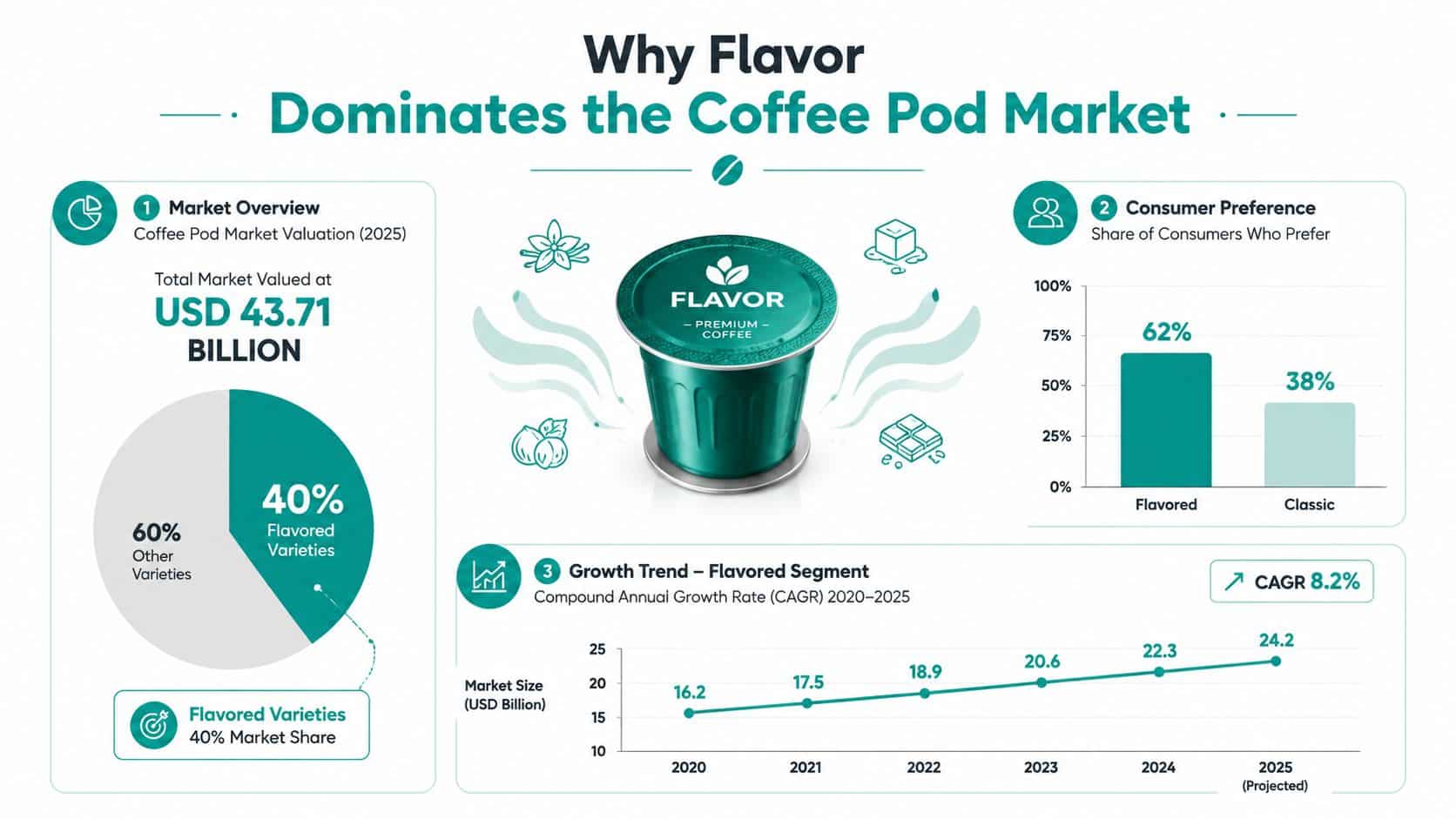
The broader coffee pods market was valued at about USD 43.71 billion in 2025 and is projected to reach USD 75.16 billion by 2034, implying a 6.21% compound annual growth rate over 2025 to 2034, according to the market valuation and forecast in Fortune Business Insights' coffee pods market analysis. A large installed base allows flavored products to expand within an established habit. Consumers can try a new aroma without learning another brewing method.
Variety creates a reason to return
Pod buyers often want different experiences across the week. A plain coffee can provide a reliable starting point, while a flavored option can answer a craving without adding syrup or sweetener. The choice resembles changing toppings on a familiar dessert. The base remains recognizable, but the aroma changes the perceived experience.
A 2026 consumer study cited by Fact.MR found that, among regular pod users aged 25 to 44, flavor variety and coffee-origin sourcing ranked as the top brand-loyalty driver at 44%, ahead of price at 31% and convenience at 25%, according to Fact.MR's coffee pods market report. Price and convenience still influence purchases. A wider flavor and sourcing story can give consumers another reason to remain with one brand.
Plain coffee continues to represent a large share of demand. Plain pods held 74.83% of the market in 2025, while flavored pods are forecast to grow fastest at a 7.42% CAGR from 2026 to 2031, according to the same Fact.MR report. These figures fit together: standard coffee remains dominant, while flavored products attract growth by offering sensory variety that roast labels alone may not communicate.
Indulgence meets changing expectations
Convenience now sits alongside questions about materials, waste, and wellness. Market reporting describes interest in compostable materials, recyclable capsules, and functional or premiumized single-serve products. Convenience remained the leading purchase criterion for 67% of drinkers in 2025, while specialty and functional pods reached 23% of total pod sales from 8% in 2020, according to MarketIntelo's coffee pod market report.
For home brewers, the practical choice is between ready-made flavor and greater control. A flavored pod offers a consistent sensory profile, while a reusable system lets you adjust the coffee, flavor intensity, and amount of discarded material. Reusable brewing also creates a cleaning task, because flavor oils and aromatic ingredients can remain in the basket and affect later cups. Understanding that tradeoff makes it easier to choose a system that matches your routine.
Compatibility Guide for Keurig Nespresso and Ninja
A flavored pod only helps if your brewer can puncture it, read it when necessary, and move water through it correctly. Buyers often see phrases such as “compatible with Keurig” and assume every Keurig machine will accept the same capsule. That assumption can lead to a pod that won't lock in place, won't brew, or produces a poor flow rate.
Keurig's ecosystem isn't universally open. Some brewing systems accept only officially licensed K-Cup pods, while other Keurig models accept a wider range of K-Cup-style pods and reusable pods, as explained in this Keurig compatibility guide. Check the model manual and the pod packaging before buying a large quantity.
A practical system-by-system check
| Brewing system | What to verify | Common mistake |
|---|---|---|
| Keurig | Confirm the machine model, pod format, and any licensing language | Assuming every K-Cup-style pod works in every Keurig brewer |
| Nespresso | Match the capsule to the machine's specific Nespresso system | Treating Nespresso capsules as interchangeable with K-Cups |
| Ninja DualBrew | Check whether the selected brew setting uses a soft pod, a compatible K-Cup-style pod, or an adapter | Buying a pod without confirming the required holder or adapter |
Standard K-Cups are designed for Keurig brewers. Soft pods use a different construction and are intended for dedicated soft-pod brewers or dual-system machines. A useful comparison of Keurig pod types explains why formats that look similar in a product photo may not be physically interchangeable.
Nespresso deserves special caution because its capsule systems use their own formats. A capsule made for a Nespresso brewer isn't a K-Cup, and a K-Cup-style pod won't automatically work in a Nespresso machine. Read the system name first, then compare the capsule shape and the brewer's instructions.
How to read the package
Look for the official system name, model-specific language, and any Keurig marking or certification statement. Official or licensed pods typically display Keurig marking or certification language, while generic products may use broader “works with Keurig” wording. Packaging guidance from this compatibility reference can help you distinguish a brand mark from a general compatibility claim.
If you prefer to control the grounds yourself, a reusable option can be more flexible, but it still needs the correct shape and lid design for your brewer. Read this guide to refillable espresso pods only as a format reference, then confirm that the product itself matches your machine rather than assuming all refillable pods share one standard.
The Science Behind Coffee Pod Aroma Retention
A flavored coffee pod can contain excellent coffee and still taste disappointing. The problem often begins before brewing, inside the package. Coffee aroma depends on volatile compounds, including furans and pyrazines, while added flavor notes can introduce additional volatile molecules that need protection from oxygen and moisture.
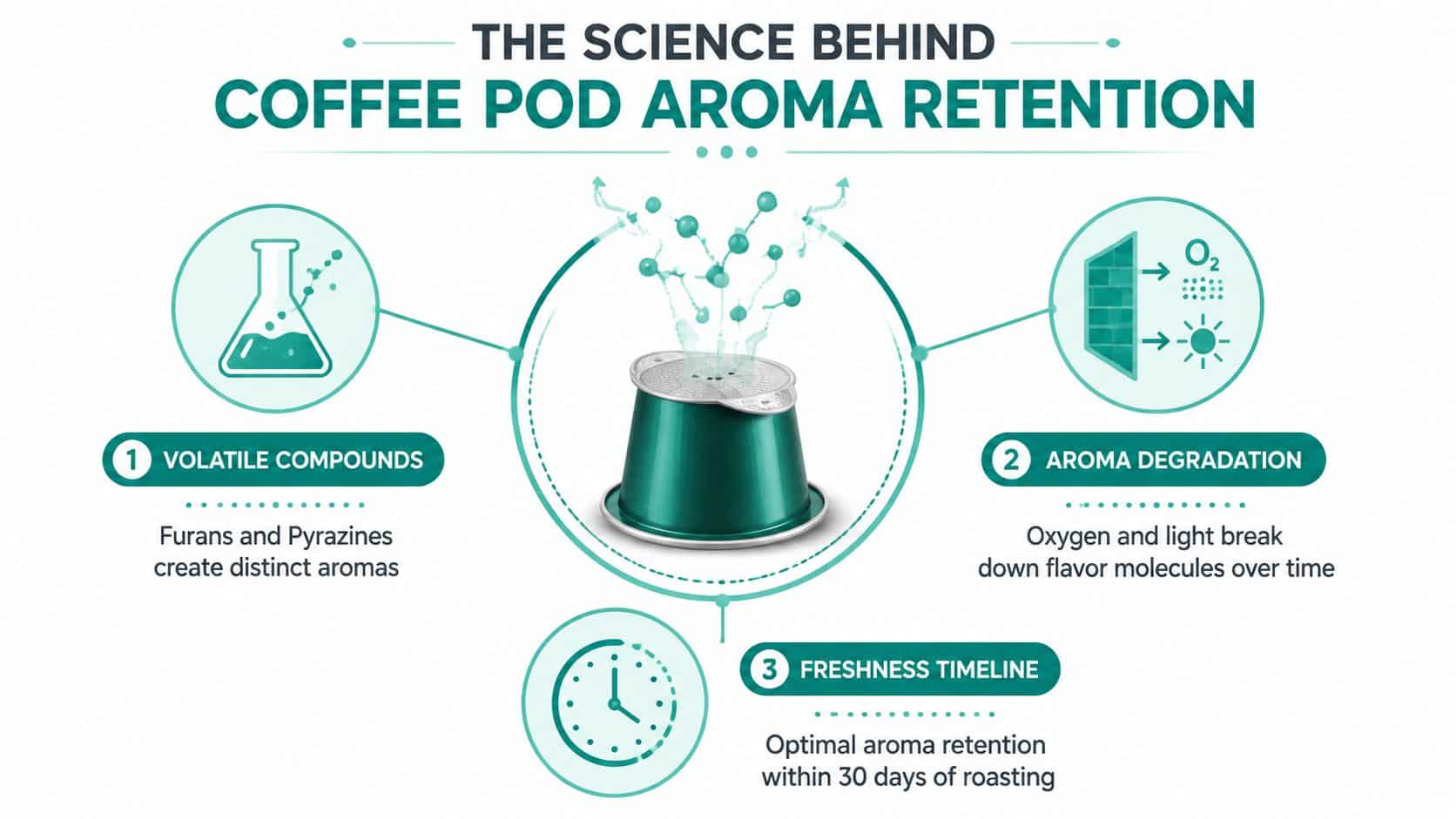
A peer-reviewed study on coffee pod packaging found that materials with stronger barriers against oxygen, moisture, and oxidation preserved coffee quality for 12 months, while oxygen entering the pod accelerated freshness loss by oxidizing aroma molecules. You can review the research in the peer-reviewed study on coffee pod aroma retention.
Three variables shape the aroma
Roast severity changes the starting profile. Increasing roast time and temperature shifts aroma chemistry. Pleasant pyrazine-, aldehyde-, and ketone-driven notes can move toward bitter or sour impressions when roasting becomes more severe. A delicate vanilla or nut note may therefore seem unbalanced if the base coffee already carries excessive roast bitterness.
Headspace oxygen controls the pace of decline. Research on pod chemistry reports that 2-furfurylthiol, a key coffee aroma compound, declines faster at oxygen levels at or above 5% and degrades more slowly near 2% oxygen, as detailed in the Basile and colleagues' coffee pod chemistry research. Manufacturers can't control every storage condition, but they can reduce oxygen exposure through packaging design and protective atmospheres.
Storage decides how much of that protection survives. Heat, moisture, damaged seals, and long exposure after opening can reduce aroma quality. You can't inspect the internal oxygen level at home, so use intact packaging, store pods in a cool and dry cupboard, and avoid transferring them into unsealed containers.
Brewing insight: A flat flavored cup doesn't always mean the flavoring is weak. The roast, oxygen exposure, and packaging barrier may have changed the balance before water ever touched the grounds.
When comparing pods, look beyond the flavor name. Choose packaging that protects individual servings, inspect seals for damage, and favor products with clear roast or freshness information when available. If a pod tastes harsh, try a smaller brew volume before adding sweetener. A concentrated extraction can exaggerate bitterness, while a more moderate volume may let the added flavor read more clearly.
Flavored Pods vs Flavored Grounds Making the Right Choice
The central choice is simple. Pre-flavored pods prioritize speed and consistency, while flavored grounds give you more control over freshness, intensity, and the coffee base. Neither option is automatically superior for every morning.
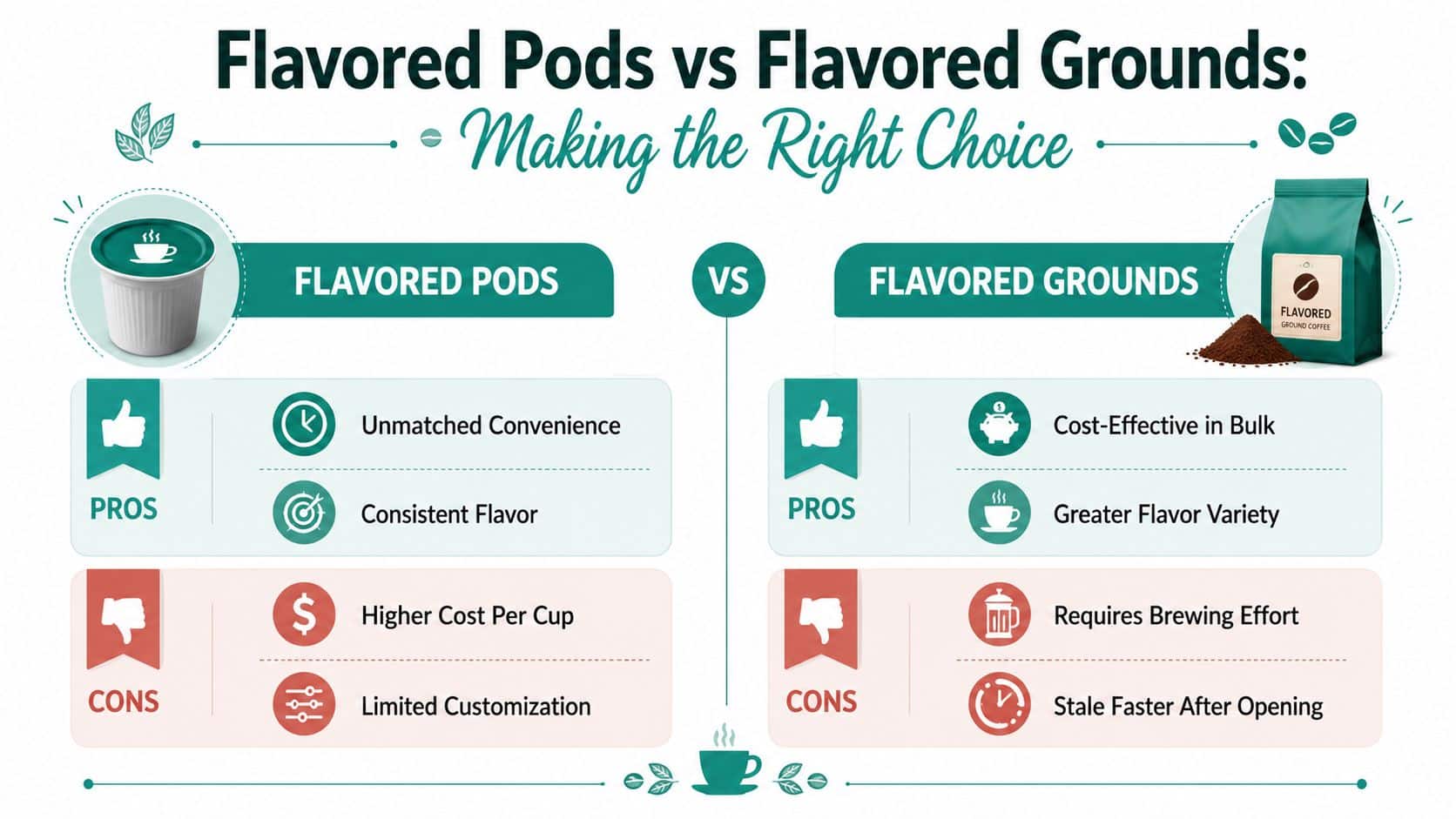
A sealed pod removes measuring and dosing decisions. You don't need to handle loose grounds, and every serving arrives in a defined format. That convenience suits busy mornings, shared offices, and anyone who wants a predictable process.
Flavored grounds offer a different kind of flexibility. You can select a light, medium, or dark base, combine it with a food-grade flavoring, and adjust the amount until the cup tastes balanced. Buying grounds in bulk can also reduce packaging per serving, although the coffee can lose aroma faster after opening if you don't seal it well.
Compare the tradeoffs
| Decision factor | Flavored coffee pods | Flavored coffee grounds |
|---|---|---|
| Preparation | Insert and brew | Measure, load, and clean a reusable pod |
| Customization | Limited to the manufacturer's recipe | Adjust the coffee, flavor intensity, and blend |
| Freshness control | Depends on the sealed package and storage | Depends on the grounds' packaging and how quickly you use them |
| Cleanup | Discard the used pod, then maintain the brewer | Empty and wash the reusable pod after brewing |
| Waste profile | Creates a used single-serve container | Avoids a complete disposable pod when paired with a reusable system |
| Flavor selection | Easy access to branded flavor profiles | Broad choice of coffees and food-grade flavorings |
A reusable K-Cup can combine the two experiences. You keep the push-button brewing process, but you choose the grounds and flavor rather than accepting a fixed recipe. The compromise is that you must load the pod carefully and clean it after use.
Which option fits your routine
Choose pre-flavored pods if you value speed, don't want to measure coffee, or share a machine with people who need a straightforward process. Choose flavored grounds if you enjoy experimenting, want to use a particular roast, or want more control over sweetness and aroma without relying on a ready-made blend.
A common objection is mess. Grounds can spill, and reusable pods may appear slower than disposable options. A snug-fitting reusable pod, a small scoop, and a paper liner can reduce handling, while consistent cleaning prevents old flavor oils from affecting the next cup. The small amount of extra work buys control that a sealed pod can't provide.
DIY Flavoring and Maintenance for Reusable Pods
Start with plain coffee grounds and a food-grade flavoring designed for beverage use. Add the flavoring sparingly, mix it evenly, and let the grounds distribute before loading a stainless steel or plastic reusable K-Cup. Vanilla, hazelnut, and coconut are easy starting points because they pair with many roast profiles.
Avoid pouring liquid flavoring directly into the brewer or soaking grounds until they become wet. Excess moisture can interfere with flow and create a sticky mess. Test a small batch first, then adjust the flavor level instead of changing several variables at once.
A clean reusable-pod routine
- Empty the pod immediately. Knock used grounds into compost or waste before they dry around the mesh.
- Rinse with warm water. Run water through the lid, basket, and filter openings.
- Wash with mild soap. Use a soft brush to remove oily residue without damaging the filter surface.
- Rinse thoroughly. Soap residue can alter the next cup's aroma.
- Air-dry completely. Store the pod only after the basket and lid are dry.
Flavored coffee leaves more oil behind than an unflavored brew, and old residue can taste bitter or stale. For broader machine care, Peak Performance's guide to how to clean your coffee pod machine provides a useful maintenance reference.
Descaling also matters because mineral buildup can affect water flow and brewing consistency. Use a compatible descaler according to your machine's instructions, and consider a water filter where your brewer supports one. PureHQ Inc. offers reusable K-Cups, water filters, descaling solutions, and cleaning tablets for home and small-workplace coffee systems. For a flavor-specific example, explore vanilla latte K-Cups before deciding whether a ready-made pod or a DIY blend better suits your routine.
PureHQ Inc. offers reusable coffee pods, filtration products, descalers, and cleaning accessories that help you brew flavored grounds with more control and maintain your machine between cups. Visit PureHQ Inc. to choose the reusable pod or maintenance product that matches your Keurig or compatible Ninja system.

