
Coffee Machine Care
Pods for Single Serve Coffee Makers: A 2026 Guide
Aug
The single-serve category is already too big to treat like a casual purchase. One market report says the global installed base of single-serve coffee maker systems exceeded 78 million units in 2025 and was still growing at about 4.2% annually (MarketIntelo). That scale matters because every brewer you own creates years of recurring pod, filter, cleaning, and replacement-accessory decisions, not just a one-time coffee choice.
Most shoppers still buy pods like they're buying snacks. They grab a familiar box, assume the fit will be fine, then get stuck with weak brews, leaks, or piles of waste they didn't plan for. The decision is simpler and harsher than the marketing copy says, pods for single serve coffee makers are a compatibility-plus-total-cost decision, and if you ignore machine fit, you'll pay for it in taste, cleanup, and money.
Why Pod Choice Is a Bigger Decision Than Most Buyers Realize
The numbers make the category hard to ignore. One U.S.-focused source found that 40% of American coffee drinkers owned a single-serve machine in 2020, which explains why pod sales became a durable consumer habit rather than a novelty (MarketIntelo). Another sustainability source says North America already had more than 25 million single-serve brewers and that consumers purchased 12 billion plastic single-serve pods in a single year, enough to circle the Earth 13 times (Club Coffee).
That's why pod choice isn't a flavor preference. It's a long-run decision about what each brewer can accept, how much each cup costs, and how much trash each cup creates. A machine can look interchangeable from the outside and still reject the wrong pod format, especially when the market is split across hard capsules, paper-filter pods, soft pads, and reusable inserts.
The first mistake buyers make
They assume every pod is basically the same because the cup looks small and the coffee is pre-measured. It isn't. A Keurig-style pod, a Nespresso capsule, and an E.S.E. pod solve the same convenience problem in different physical ways, and those differences decide whether the brewer seals, punctures, and extracts properly.
Practical rule: buy for the machine family first, then pick the pod path that gives you the lowest total cost per cup with the least waste.
That's the right lens for a kitchen, a breakroom, or a small office. If you own one brewer for years, the wrong pod choice doesn't stay small, it keeps charging you every morning.
How a Single-Serve Pod Works
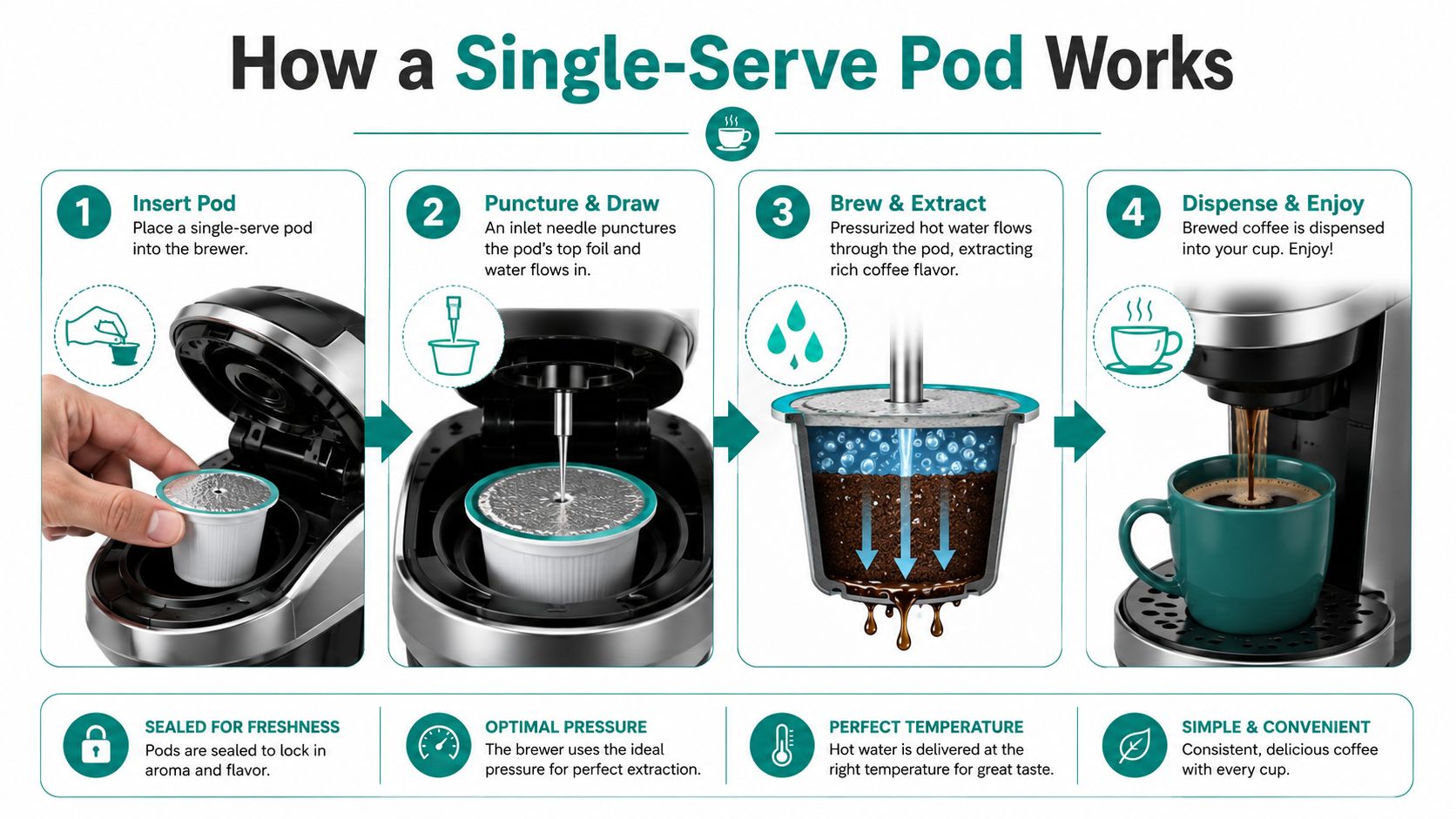
A pod is a pre-measured coffee container until the brewer turns it into a cup. The user drops it in, the machine punctures it, and hot water passes through the grounds under pressure before the coffee exits into the cup. The UCSB engineering wiki describes pods as pre-measured coffee powder containers used in open-system machines, and that basic mechanical sequence is the part buyers need to understand before they compare formats (UCSB Engineering Wiki).
The shape matters because the brewer is not gentle. A pod has to stay aligned while needles pierce it, water moves through it, and the shell holds up under heat and pressure long enough to extract without collapsing or clogging.
Why dimensions and materials matter
One product listing for a smooth coffee pod gives a 2-inch diameter, 1.75-inch height, and 51 mm standard diameter, with polypropylene (PP #5) and an EVOH barrier layer (Amcor Packaging Solutions). That combination tells you a lot. The PP shell has to survive puncture, and the EVOH layer helps block oxygen so the coffee doesn't stale as fast in storage.
The 51 mm footprint also matters for manufacturing consistency. A tight, repeatable diameter helps filling lines keep the pods uniform enough for sealing and machine fit. That is not marketing fluff, it is the difference between a pod that seats cleanly and one that throws off flow or leaks around the edges.
If you want one simple takeaway, use this one. Pod geometry is not trivia. It is the reason one product brews smoothly in one machine and fails in another.
The Main Pod Formats Side by Side
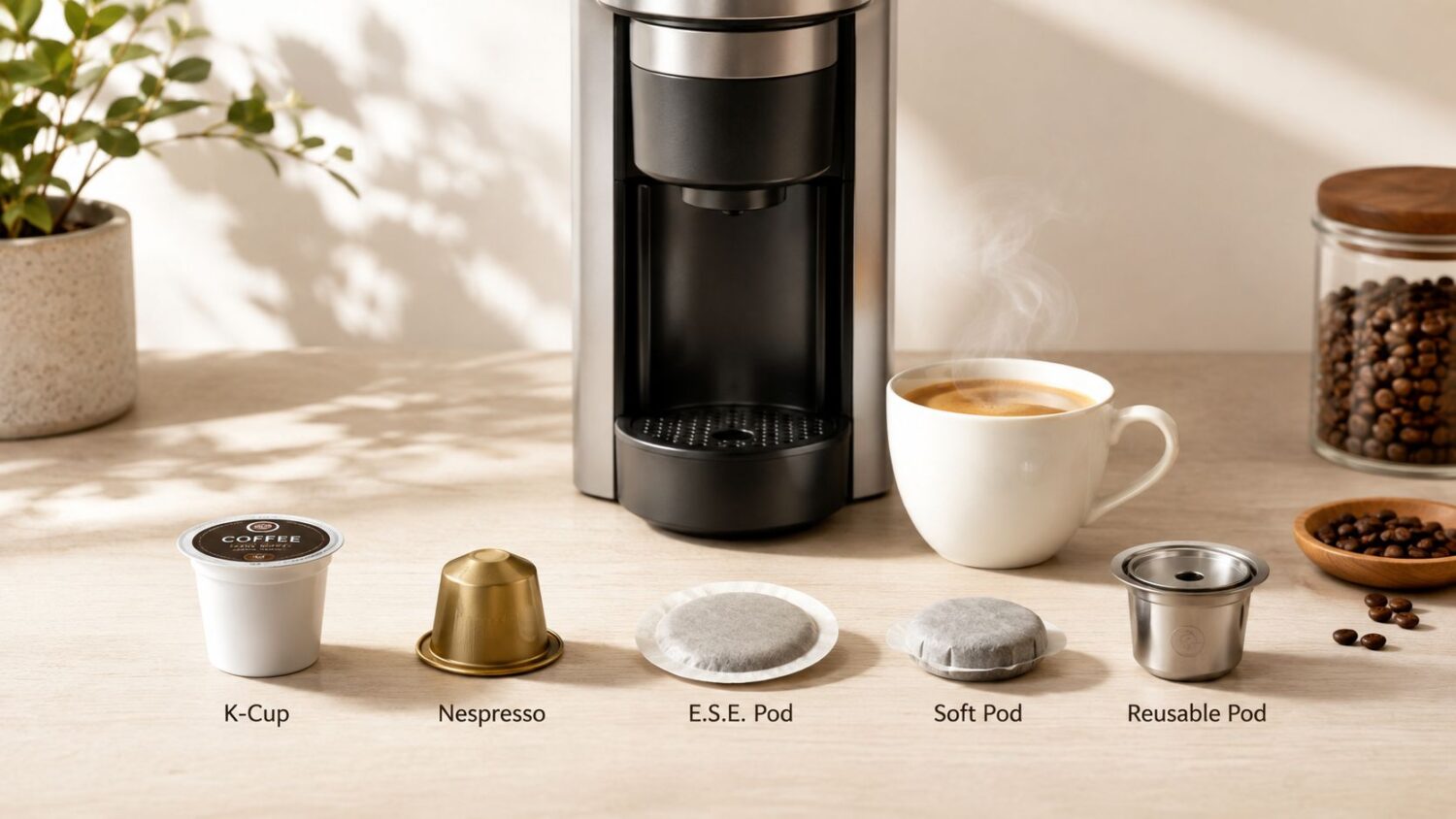
The category looks crowded because it is crowded. Buyers mostly run into five pod families, and each one solves the same problem differently.
K-Cup pods
K-Cup-style pods are rigid plastic pods built for Keurig-family brewers and many compatible third-party machines. They win on convenience and shelf availability. They lose on waste, and they're only the right answer if your brewer is designed for that format.
Nespresso capsules
Nespresso Original and Vertuo capsules are proprietary hard capsules, and their geometry is not interchangeable with K-Cups or E.S.E. pods. They're strong choices for espresso-style drinks and fast cleanup, but the buyer has to stay inside the correct system or the capsule won't fit.
E.S.E. pods
E.S.E. pods use a 44 mm paper-filter format and contain about 7 grams of coffee (Easy Serving Espresso Pod). They fit machines built for that standard, not random pod brewers. For espresso users, they're attractive because the format is simple and less wasteful than rigid plastic, but only if the machine accepts them.
Soft pads and reusable pods
Soft pads show up in select European and pour-over style systems, while reusable pods let the buyer fill a pod with their own grounds. Those reusable options are the cleanest path for people who care about cost and waste, but they demand better grind control and a little more discipline during cleaning.
Straight answer: if the machine rejects the format, the pod is useless no matter how cheap or eco-friendly it looks on the box.
Quick comparison
| Format | Typical machine fit | Main strength | Main weakness |
|---|---|---|---|
| K-Cup pods | Keurig-style brewers, some compatible machines | Easiest purchase and broad availability | Higher waste, machine-specific |
| Nespresso capsules | Nespresso Original or Vertuo only | Fast espresso-style brewing | Proprietary fit, locked ecosystem |
| E.S.E. pods | E.S.E.-capable espresso machines | Paper-based and simple | Narrow machine compatibility |
| Soft pads | Select European and pad-based systems | Low-friction convenience | Limited ecosystem |
| Reusable pods | Specific single-serve brewers with the right basket | Lowest waste potential | More maintenance and grind sensitivity |
If you're still asking which is “best,” ask a better question. Which one fits your brewer, your budget, and your tolerance for cleanup?
Matching Pods to Your Machine Family
The cheapest pod is the one that fits your brewer and pulls cleanly every time. That is the decision here, not brand loyalty or shelf appeal. Keurig-family brewers, Ninja DualBrew machines, Breville units, and Cuisinart machines all ask for different pod hardware, and some of them only perform well with the right insert or reusable basket.
Ninja's single-serve Pods & Grounds brewer is rated at 1,550 watts, 120 volts, and 12.5 amps, and Target lists the same class of machine at 1500 watts with support for K-Cup-style pods and ground coffee (SharkNinja). That power level means fast heating and short brew cycles, so the pod has to stay sealed, centered, and structurally sound under a quick burst of hot water rather than long drip exposure.
What fits what
Keurig owners should start with K-Cup compatibility, then look at reusable inserts if they want to cut waste and lower their per-cup cost. That is usually the cheapest path for a household that drinks pods every day. Ninja DualBrew owners need to separate the pod side from the grounds side, because the machine is built to handle both and the best-value setup depends on which side they use most. Breville and Cuisinart owners need to be more specific, since some machines prefer branded capsules, some accept E.S.E. pods, and some only work cleanly with a dedicated reusable basket or adapter.
If you own a Breville machine and are trying to sort out which pod path makes sense, a focused guide like Breville coffee machine pods is the right place to start. The key point stays the same across brands. Buy for the brewer first, then optimize for cost and waste.
Practical rule: if a brewer needs an insert, buy the insert made for that machine family, not a generic pod that “looks close enough.”
Here's the compatibility cheat sheet most shoppers wish they had before checkout.
| Machine family | Accepts K-Cup pods | Accepts Nespresso capsules | Accepts E.S.E. pods | Works with reusable pods |
|---|---|---|---|---|
| Keurig K-Classic, 2.0, K-Supreme, K-Slim, K-Duo Gen 2, Essentials | Yes | No | No | Yes, with the right reusable basket |
| Ninja DualBrew Pods and Grounds | Yes | No | No | Yes |
| Breville single-serve models | Some do, depending on model | Some do, depending on model | Some espresso models do | Yes, when the machine or adapter supports it |
| Cuisinart single-serve models | Often yes | No | Some models do not | Yes, with the correct basket or insert |
| E.S.E.-capable espresso machines | No | No | Yes | Usually no, unless the machine specifically supports it |
If you want a recurring supply instead of one-off packs, coffee Subscribe & Save options can make sense for households that already know their format and drink count. That only helps after the fit question is settled. No subscription fixes a bad pod-matching decision.
Using and Caring for Reusable Pods
Reusable pods are where cost control gets real, but they punish lazy habits. The two things that separate a clean cup from a mess are grind size and how hard you pack the basket.
Use the right grind and fill correctly
Start with a medium grind, something close to table salt. Fine espresso-style grounds clog too easily and can trigger overflow or slow, weak extraction. Fill the pod to the max line and tamp lightly, or skip tamping if the basket is designed for loose fill, because over-packing makes the machine work too hard and raises the odds of leakage.
That's also where paper liners help. PureHQ's disposable paper liners reduce sediment in the pod and keep cleanup faster, while stainless refillable pods hold up better over time if you're willing to rinse them right away after brewing. I'd choose liners for the mess-averse household and stainless for the person who wants a sturdier routine.
Clean it before grounds dry
Rinse the pod right after use. If you leave spent grounds in the basket, they dry into the mesh and the next brew gets uglier. A soft brush once a week clears the fines that water alone doesn't remove.
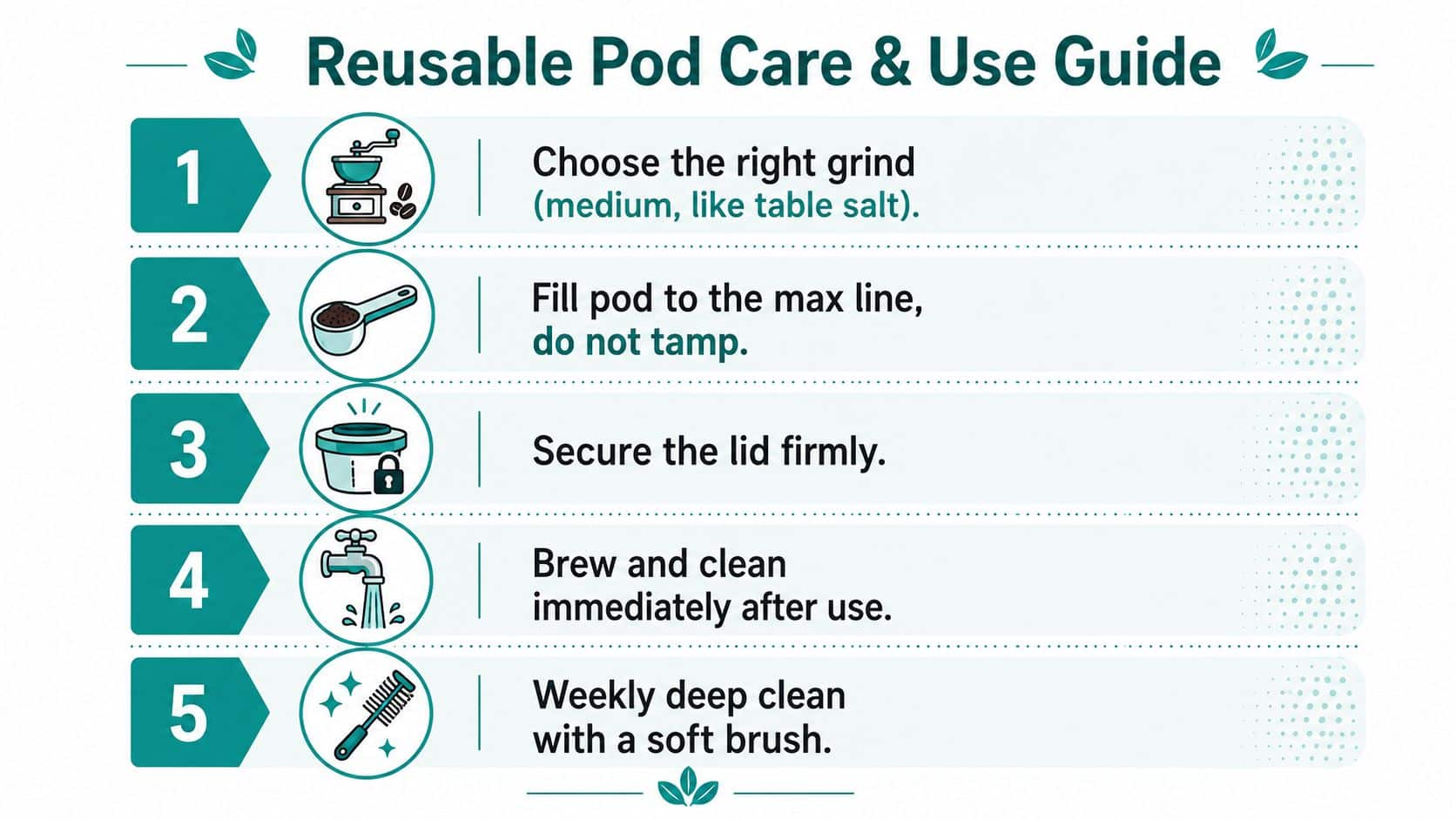
Useful habit: seat the reusable pod firmly every single time. Half the leak complaints I hear come from a basket that wasn't aligned all the way before the brewer closed.
If you're getting grounds in the cup, the grind is usually too fine or the basket is worn. If the brew tastes weak, the grind is often too coarse or the fill is too light. If it overflows, stop blaming the machine first and check whether the grounds are choking the exit path.
Cost Per Cup and the Waste Equation
The choice is about two things, what each cup costs your household over time and what each cup leaves behind.
North America alone is buying 12 billion plastic single-serve pods in a single year, and that volume creates a waste stream many local recycling programs still won't handle because the pods use mixed materials. That is the environmental side of the equation, and it is ugly. The financial side is cleaner, because reusable pods ask for an upfront buy and disposable pods keep billing you every time you brew.
The math you should actually use
If you brew one cup a day, disposable pods can look inexpensive until you stack the cost across a month, then a year, then the life of the brewer. If you brew two or three cups a day, the gap widens fast enough that a reusable pod usually pays for itself on cost alone, especially in households that already buy ground coffee in larger bags.
The better question is how fast a reusable pod pays back for your exact machine and drinking volume. That is the compatibility-plus-total-cost decision that matters. For a household that cares about both budget and trash, the answer usually points the same way, use reusable pods for daily brewing and keep disposable pods for rare convenience runs or guests.
Bottom line: the more often you brew, the faster reusable pods pull ahead, and the more disposable pods turn into ongoing waste you have to live with.
If your local recycling program does not take mixed plastic and foil, disposable pods become even harder to justify. Many owners end up with a hybrid setup, reusable pods for weekday coffee, sealed disposable pods only when convenience beats cleanup.
Troubleshooting and Keeping Your Brewer Healthy
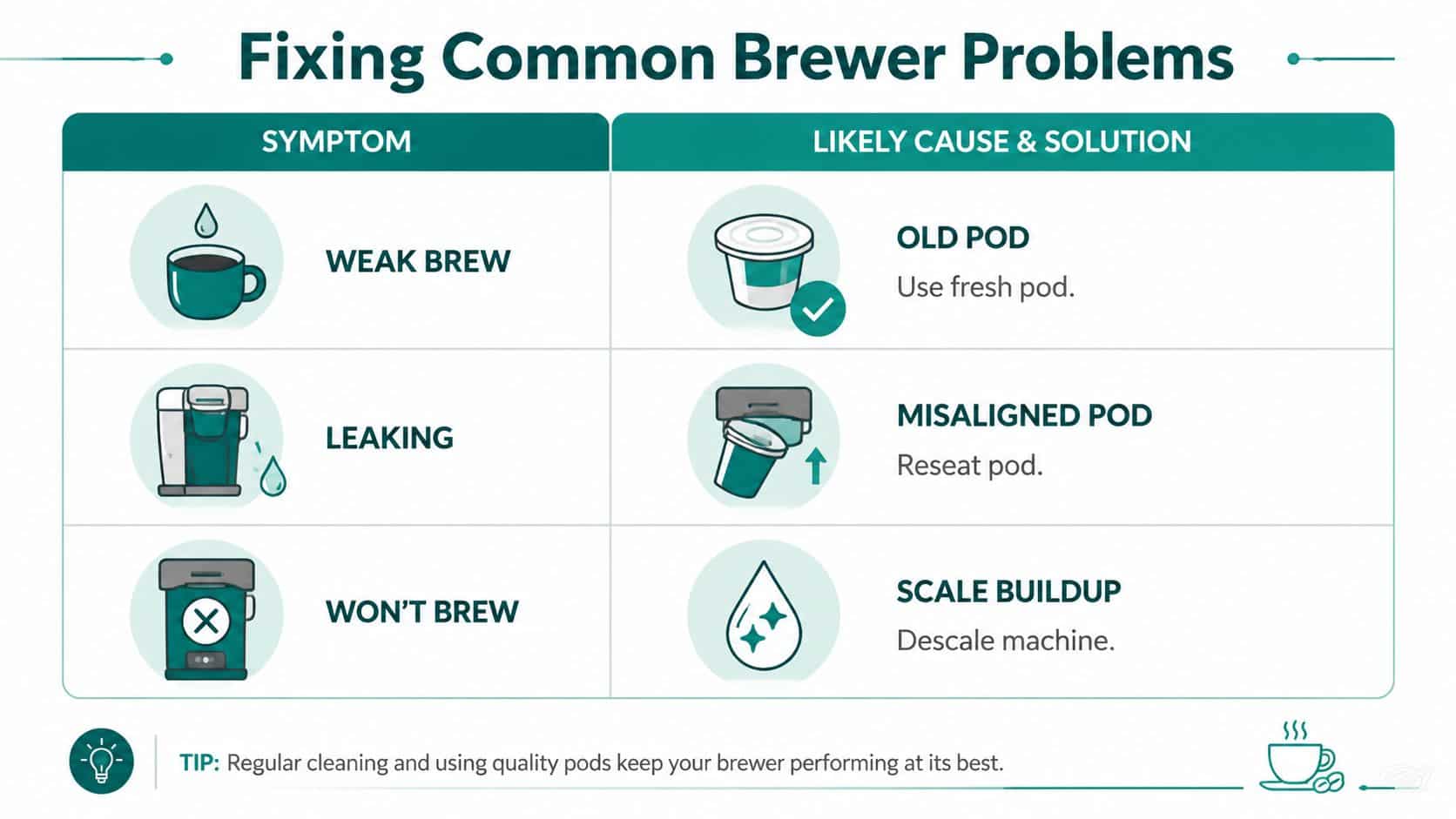
Most pod complaints are really machine-maintenance complaints in disguise. Weak coffee, leaks, and failed brews usually point to stale pods, a bad fit, or a machine that has not been cleaned in too long.
Match the symptom to the cause
Weak brews usually come from old pods or the wrong grind. Leaks usually come from a pod that is not seated right or a worn gasket in a reusable basket. Overflow usually means the grounds are too fine and the exit needle is getting clogged. If the machine is flashing a descale light, scale buildup has already started to interfere with water flow.
Descaling every three to six months is the habit that protects both the brewer and the flavor path, especially if you use filtered water so mineral buildup starts slower. PureHQ descaling solutions, cleaning tablets, and water filters are the accessories that keep the machine flowing the way the pod was meant to brew.
The math you should use
A brewer that runs clean keeps pods performing consistently. A brewer that is scaled up or clogged forces the pod to fight the machine, and the cup gets weaker before the owner notices why.
If your setup keeps going sideways, fix the water quality first, then clean the needle path, then test a fresh pod or a different grind. That order solves more problems than random part-swapping ever will. If you want predictable restocking, coffee Subscribe & Save options make sense only after the machine family is settled, because the point is matching the right format to the brewer you already own.
Choosing the Right Pod Setup and Where to Buy It
For Keurig and Ninja DualBrew owners who want their own grounds and less trash, the best value is a reusable K-Cup with paper liners plus regular descaling. That setup keeps costs down, cuts disposable waste, and still fits the brewers those owners use. For Nespresso owners, stay with the OEM capsule system or a compatible third-party capsule matched to the exact Original or Vertuo machine. For espresso owners with E.S.E.-capable machines, keep a steady supply of 44 mm paper pods and stop forcing the wrong format into the wrong brewer.
The smartest buying decision is compatibility first, total cost second, flavor third. If a pod seals badly, jams the needle, or leaves too much wet grounds behind, the cup costs more than the label price suggests. Keurig and Ninja owners usually spend less over time with refillable pods and a cleaner machine. Nespresso buyers avoid headaches by sticking to the capsule family their brewer was built for. E.S.E. users get the most predictable result by buying paper pods made for that standard and nothing else.
If you want predictable restocking, choose the coffee format you already use and keep it there. That is why coffee Subscribe & Save options make sense once the machine family is settled, because the gain is a steady supply of the right pod, not another box of the wrong one.
PureHQ Inc. makes reusable K-Cups, stainless refillable pods, water filters, descaling solutions, and cleaning tablets for Keurig and Ninja owners who want tighter control over cost, fit, and cleanup. If you want fewer disposable pods and a brewer that keeps doing its job, visit PureHQ Inc. and pick the accessories that match your machine.

