
Coffee Machine Care
The Vertuo Reusable Pod Problem: A 2026 Guide
Jul
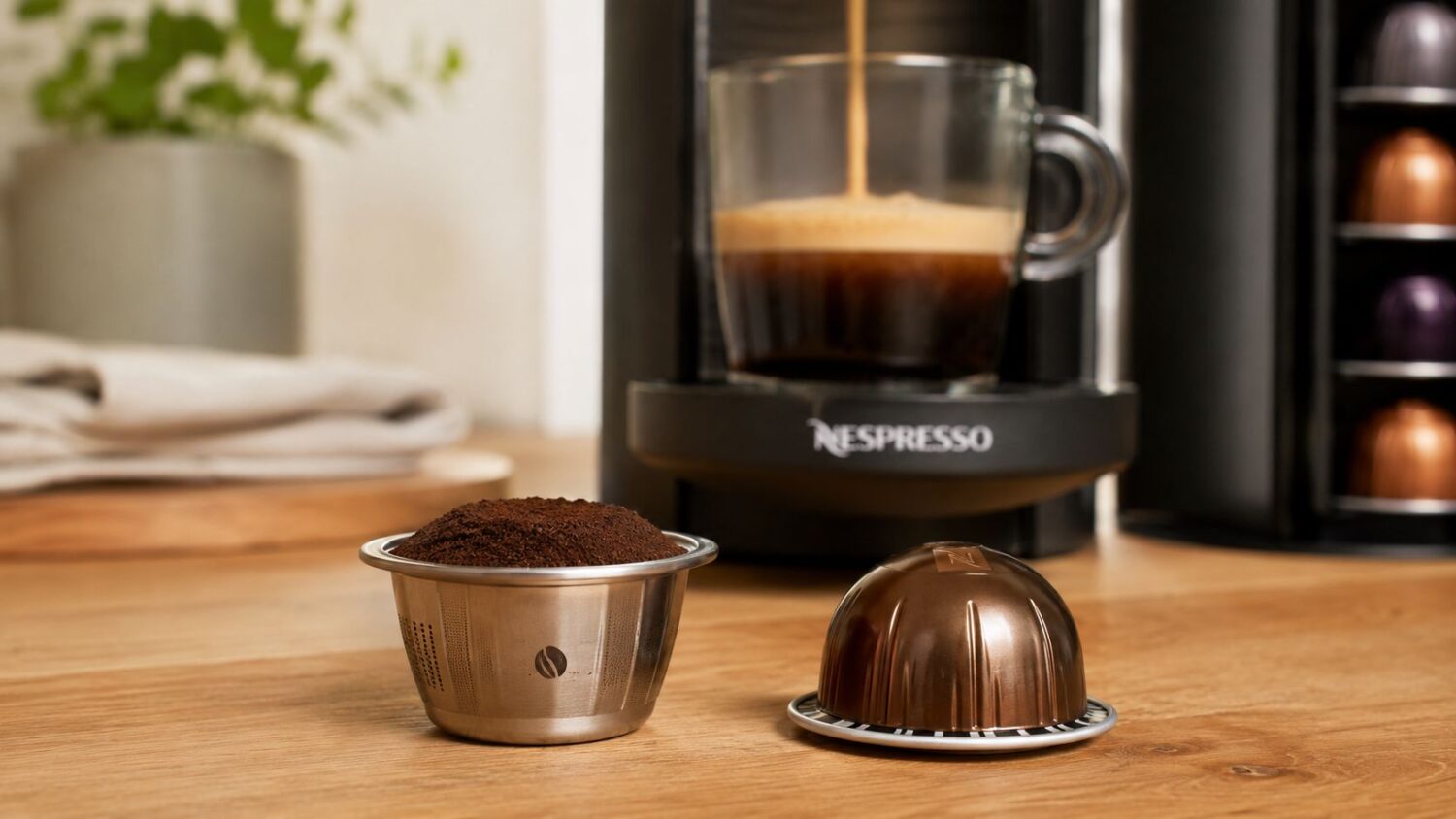
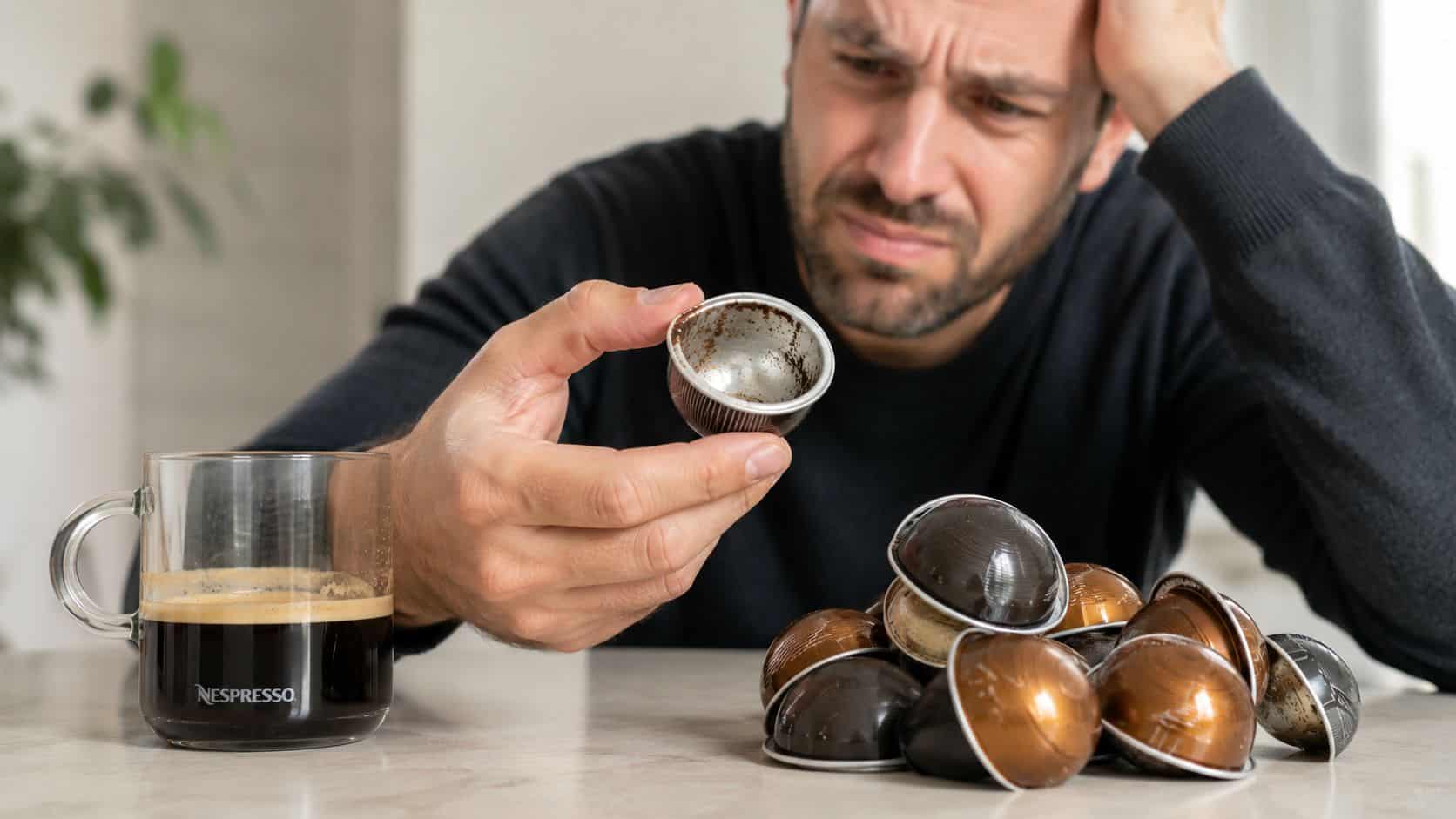
You're probably looking at a stack of spent Vertuo capsules, thinking the same two thoughts most owners have. The coffee is good, and the system is expensive to keep feeding. Add the trash can full of single-use pods, and searching for a Vertuo reusable pod feels like the obvious fix.
That instinct makes sense. Saving money and cutting waste are good reasons to look for an alternative.
The trouble is that Vertuo isn't built like an open coffee platform. It's a proprietary system with tight tolerances, brew logic that depends on capsule geometry, and very little margin for error when a third-party pod doesn't fit, seal, or vent the way the machine expects. That's where the glossy “easy refill” pitch usually falls apart. You can get a drinkable cup. You can also get weak coffee, grounds in the mug, leaks inside the head, or a machine that refuses to brew.
Why Finding a Vertuo Reusable Pod Is So Frustrating
A typical Vertuo owner starts in the same place. You buy the machine for convenience, crema, and the wider drink sizes. A few weeks later, the recurring pod habit becomes impossible to ignore. The used capsules pile up. The replacement orders keep coming. You search “Vertuo reusable pod” and expect to find the same kind of simple answer Keurig owners get.
Instead, you run into a mess of half-solutions.
The promise sounds simple
Most shoppers want three things:
- Lower running cost: They want to use their own beans instead of buying proprietary capsules every time.
- Less waste: They'd rather compost grounds than throw away another used pod.
- More control: They want to choose roast, origin, and grind instead of staying locked into prefilled options.
That logic works well in more open pod ecosystems. It doesn't translate cleanly to Vertuo.
The system pushes back
Vertuo machines were designed around Nespresso's own capsule format, not around universal compatibility. That matters because a pod in this system isn't just a container for coffee. It also has to fit the chamber correctly, behave correctly under brewing pressure, and signal the machine in a way the machine accepts.
Hard truth: A Vertuo reusable pod isn't a simple accessory purchase. It's a workaround inside a system that wasn't designed to welcome workarounds.
That's why shoppers find conflicting reviews. One person says a stainless pod works fine. Another says it leaked on day two. Another says the machine stopped recognizing it. All three can be telling the truth.
Most guides skip the real risks
The internet usually frames this as a money-saving hack. The better question is whether the result is worth the compromise. With Vertuo, the risk isn't just a mediocre cup. You also have to think about:
- Fit problems: Small dimensional errors can cause failed brews or poor sealing.
- Mess: Loose grounds and imperfect seals can leave residue in the cup or machine head.
- Wear and tear: Third-party accessories can stress parts that were designed around original capsules.
- Warranty headaches: If a machine develops issues while you're using nonstandard pods, you may not get much sympathy.
That's the hidden conflict behind the search. You want a reusable pod because the official system feels restrictive. The machine behaves as if that restriction is the point.
How Nespresso's Vertuo System Really Works
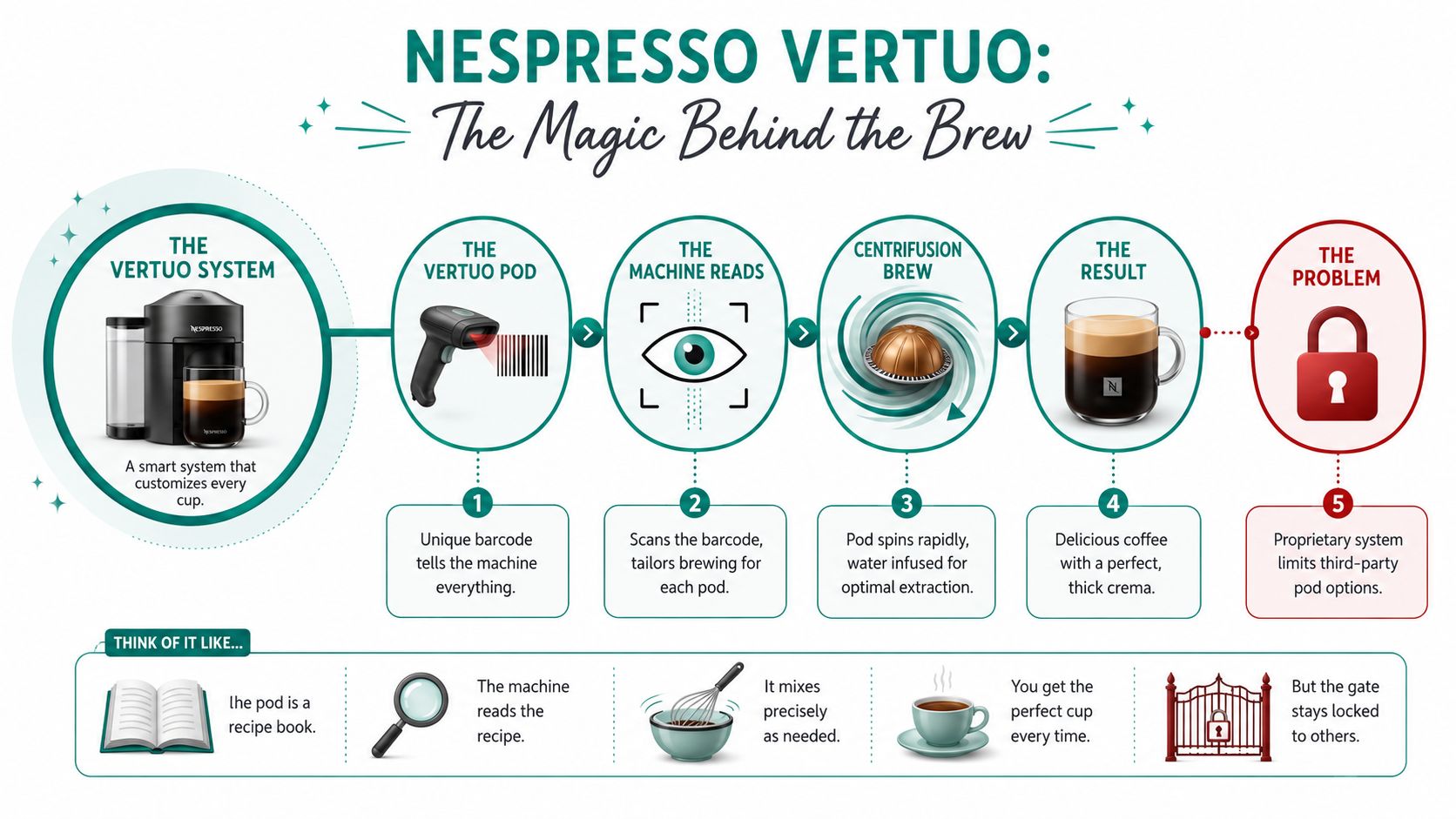
A Vertuo machine doesn't treat every capsule the same. It identifies the pod type, then brews according to what the machine thinks is in front of it. That's why compatibility is touchier here than it is in simpler pod systems.
A turntable expects not just a record, but the right size and the right playback setting. If the record is off-spec, playback gets weird fast. A Vertuo machine works the same way with capsule dimensions and brew logic.
Recognition depends on pod geometry
One detail trips up a lot of buyers. Vertuo reusable options don't work the way Keurig-style reusable pods work. According to AFPAK's Vertuo reusable pod overview, the Vertuo system identifies capsules based on the diameter of the pod's rim, and properly sized refillable capsules can function without a digital barcode if the outer dimensions match original Nespresso specifications. The same source notes that reusable pods are commonly made from food-grade PP plastic, Stainless Steel 304, or Aluminum alloy, and that the system's size recognition is tied to the rim dimensions that correspond to the selected cup size.
That single design detail explains why some refillable pods technically “work” and still produce inconsistent results. Recognition is only the first hurdle. Brewing well is another.
For shoppers who want a general primer on refill concepts before getting deep into Vertuo quirks, this overview of whether you can refill Nespresso capsules gives useful background.
Fill amount changes with cup size
Pod size matters because the coffee dose changes with it. AFPAK states that Vertuo reusable pods are engineered to hold between 7 and 13 grams of coffee depending on cup size, from Espresso up to Alto, which affects brew strength across the machine's five brew volumes in Vertuo Plus, Next, and Creatista models. That's a wide range for a refillable format to handle consistently.
Here's why that matters in practice:
| Cup size logic | What it means for the user |
|---|---|
| Smaller pod format | Less room for grind errors |
| Larger pod format | More chance of underfilling or uneven extraction |
| Different fill capacities | One “perfect recipe” won't work across every pod size |
A reusable solution that behaves acceptably for one drink size can perform badly in another.
Recognition is not the same as good brewing
A pod can be recognized and still brew poorly. That's the part many product listings blur together.
A machine accepting the capsule only proves the dimensions are close enough to start. It doesn't prove the seal, flow, extraction, or cup quality are right.
The machine still has to deal with the lid seal, coffee bed resistance, water flow, and spinning brew process. If any of those are off, you'll taste it immediately. Sometimes you'll see it before you taste it, with sputtering flow, excessive foam, or drips around the capsule area.
That's why a steel capsule with the right rim can feel like a win on day one and a nuisance by week two. The engineering challenge isn't just getting past recognition. It's matching the behavior of a proprietary disposable pod closely enough that the machine doesn't punish the difference.
Reusable Vertuo Pods The Good The Bad and The Messy
Reusable Vertuo pods do have real upsides. You can use your own beans, reduce dependence on branded capsules, and cut down on single-use waste. If you enjoy dialing in coffee and don't mind trial and error, the process can even be satisfying.
But the practical downsides are bigger than most product pages admit.
What works
The best-case scenario is straightforward. A reusable pod fits correctly, seals correctly, and you use coffee that matches the brew size well enough to produce a cup you want to drink. That's possible.
The biggest advantages are easy to understand:
- Bean choice: You're not locked into one capsule catalog.
- Roast control: You can go lighter, darker, decaf, or single-origin as you please.
- Waste reduction: Grounds are simpler to discard responsibly than disposable capsules.
What breaks down first
The hidden issue is freshness. Many users like the idea of batch-prepping reusable pods for the week. That sounds efficient, but it introduces a storage problem that gets ignored in a lot of refill guides. A video demonstration discussing reusable pod freshness limits notes that sticker-style lids stay airtight for only up to 7 days, and that seal integrity degrading within 7 days can lead to stale coffee and mold risk.
That changes how you should think about prep.
Practical rule: If you're using sticker lids, treat prefilled pods as short-term convenience, not long-term storage.
If you prep too far ahead, you lose the thing that made using your own coffee appealing in the first place. The cup tastes flatter, and hygiene becomes part of the conversation.
The cup quality can swing wildly
Reusable Vertuo setups ask a lot from the user. Grind too coarse and the coffee runs thin. Grind too fine and flow can get messy or choked. Overfill the capsule and you can interfere with proper closure. Underfill it and the brew often tastes hollow.
The most common disappointments are familiar:
- Weak body: The cup looks fine at first glance but drinks watery.
- Patchy crema: You get foam, but not the stable texture people expect from Vertuo.
- Sediment or grounds: The lid or filter setup doesn't contain fines well enough.
- Flavor drift: One brew is decent, the next tastes harsh or under-extracted.
The warranty question isn't small
For cautious owners, it's advisable to proceed slowly. If your machine is new, or if you'd be upset by an expensive repair, third-party pod experiments may not be worth it. Nespresso builds the system around its own capsules. Once you introduce nonstandard pods, lids, or reused components, you're taking responsibility for what happens next.
That doesn't mean every machine will fail. It means you're leaving the safest operating path.
A lot of buyers want a reusable pod to make ownership simpler. On Vertuo, it often makes ownership more demanding.
Comparing Your Reusable Pod Options
If you still want to try a Vertuo reusable pod, the smartest move is comparing formats objectively instead of chasing the cheapest listing. The three real paths are official pods, stainless steel reusable pods, and reusable systems that depend on a refillable base plus adhesive or sticker-style lids.
A broader roundup of reusable coffee pod reviews can help if you're comparing coffee systems beyond Vertuo.
Vertuo Pod Options At a Glance
| Pod Type | Initial Cost | Ease of Use | Brew Quality & Consistency | Machine Risk |
|---|---|---|---|---|
| Official Nespresso Vertuo pods | Ongoing purchase cost each time | Easiest. Insert and brew | Most consistent. Designed for the machine | Lowest |
| Stainless steel reusable pod | Higher up-front accessory cost | Moderate to difficult. Fill, level, seal, clean | Can be acceptable, but consistency depends heavily on grind, fill, and fit | Moderate to high |
| Reusable base with sticker or foil-style lids | Lower to moderate up-front cost plus replacement lids | More fiddly. Filling is easy, sealing is the weak point | More variable. Seal quality affects extraction and mess | Moderate to high |
Which one leaks most often
“Do they leak?” is the objection I hear most, and it's the right question.
The answer is yes, they can. Leaks usually come from one of three causes:
- Bad sealing: Sticker lids wrinkle, shift, or fail to bond fully around the rim.
- Wrong fill level: Overpacked coffee prevents proper closure or changes pressure inside the capsule.
- Fit mismatch: A reusable shell that's even slightly off can sit badly in the chamber.
Stainless pods usually leak less from the lid surface when they're well made, but they can still create trouble if the fit is too tight, too loose, or if the coffee bed is packed incorrectly. Sticker-lid systems are usually more vulnerable to top-side sealing failures. That doesn't make them unusable. It makes them less forgiving.
Which type suits which user
A simple decision guide helps:
- Choose official pods if you want reliable coffee and don't want to troubleshoot.
- Choose stainless steel if you enjoy tinkering and accept a steeper learning curve.
- Choose sticker-lid systems if low entry cost matters more than convenience, and you're willing to watch sealing carefully.
The cheapest route on day one often becomes the most irritating route after a month of filling, sealing, cleaning, and redoing bad brews.
The premium option in this category is still the original capsule made for the machine. Generic and reusable options can reduce dependence on proprietary pods, but they ask for patience and a much higher tolerance for inconsistency.
A Practical Guide to Using Reusable Vertuo Pods
If you're going ahead anyway, treat the process like a maintenance routine, not a drop-in swap. Small mistakes stack up quickly with Vertuo. The goal is to reduce variables so the pod behaves as predictably as possible.
Build a repeatable routine
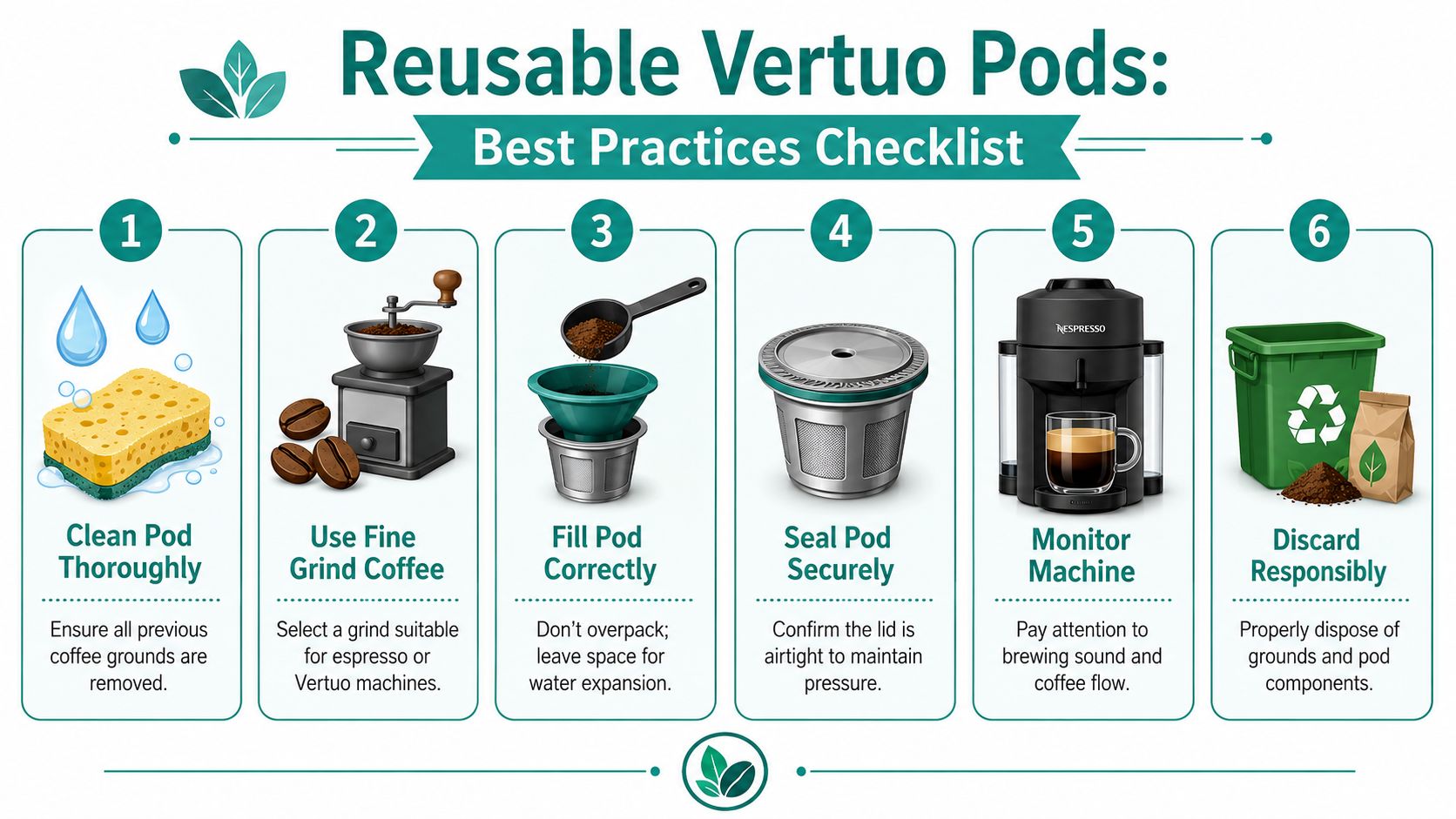
Start with the pod itself. Clean it completely after every use. Old oils cling to metal and mesh surfaces, and stale residue ruins flavor surprisingly quickly.
Then keep the fill process boring and consistent:
- Use a medium-fine grind. Too coarse often leads to weak coffee. Too fine can slow flow and increase mess.
- Match the pod size carefully. A larger Vertuo format needs a different fill level than a smaller one.
- Level the coffee bed. Don't mound it up on one side.
- Avoid hard tamping. You want the grounds settled, not compressed like a traditional espresso puck.
- Seal the lid evenly. With sticker systems, edge contact matters. With rigid lids, seating matters.
- Check the rim before brewing. Any dent, coffee dust, or lid wrinkle can change the result.
This video gives a useful visual reference for handling and filling the format in practice:
Troubleshooting common failures
Most failed reusable brews fall into three buckets.
Weak coffee
The likely causes are an underfilled pod, grind that's too coarse, or a poor seal that lets the brew run too freely. Start by changing one variable at a time. Don't adjust grind, dose, and lid style all at once or you won't know what fixed it.
Grounds in the cup
This usually points to sealing issues, damaged mesh, or coffee dust sitting on the rim before you close the capsule. Clean the edge before sealing. If you're using adhesive lids, inspect the full perimeter after pressing it down.
Machine refuses to brew
The first suspects are fit and closure. Remove the pod, inspect the rim, and look for deformation or lid interference. If the machine has seen a lot of mineral buildup, maintenance can also affect performance. Whether you use official or reusable pods, regular descaling with a universal solution helps protect internal components and keep brewing behavior stable.
Rinse immediately after brewing. Waiting until later makes old grounds stick harder, and oil buildup gets much harder to remove from fine screens and seams.
What not to do
A short list of avoidable mistakes saves a lot of frustration:
- Don't batch-prep too far ahead: Freshness and seal quality become problems faster than people expect.
- Don't force the machine closed: If a pod resists, stop and inspect it.
- Don't chase crema alone: Foam can look impressive while the cup tastes thin.
- Don't ignore strange sounds: A harsher spin or uneven sputter often means the setup isn't behaving normally.
If the routine already sounds like work, that's useful information. For many owners, that's the point where reusable Vertuo pods stop looking like a convenience and start looking like a hobby.
Smarter Alternatives to Vertuo Reusable Pods
For some people, the best answer is to stop fighting the design of the machine they own.
The simplest path inside the Vertuo ecosystem is using official capsules and participating in Nespresso's recycling program where it's available. That keeps brew quality consistent and avoids most of the fit and sealing problems that reusable setups introduce. You still live with the proprietary system, but you remove most of the technical risk.
A second option is more strategic. If your real goal is pod flexibility, a Nespresso OriginalLine machine usually makes more sense than Vertuo. The accessory market around OriginalLine has had more time to mature, and compatible options are generally less awkward than what Vertuo owners deal with. If you want perspective on that side of the category, this look at a refillable stainless steel Nespresso capsule is a useful contrast.
The third option is the one I recommend most often for people whose priorities are practical rather than brand-specific. If you mainly want to use your own coffee, reduce waste, and keep the workflow simple, a Keurig paired with a high-quality reusable K-Cup is usually the cleaner solution. The system is less fussy, the reusable ecosystem is more established, and the daily routine doesn't ask nearly as much of the user.
That doesn't mean Vertuo is bad. It means Vertuo is optimized for Vertuo pods. Once you accept that, the decision gets easier. Either stay in the official lane and enjoy the machine as designed, or switch to a system that supports reuse without constant compromise.
If you're done wrestling with proprietary pod headaches and want a simpler reusable setup, shop PureHQ Inc. for dependable reusable K-Cups, filters, and descaling accessories built for everyday brewing.

