
Coffee Machine Care
Pesticide in Coffee: A 2026 Guide to Safer Brewing
Jul
If you drink coffee every day, one finding deserves your attention. As noted earlier, a recent report found hazardous pesticide residues in a meaningful share of green coffee samples, which is enough to make this more than a niche food-safety concern.
The practical question is not whether coffee is automatically unsafe. It is how much residue survives from farm to cup, and which choices still change the outcome in your kitchen. In my experience, that is where people get tripped up. They hear that roasting reduces contaminants and assume the problem is finished.
Roasting does help. Heat changes many compounds and can lower some residues. But roasting is not a clean-slate process, and it does not fix poor sourcing or low-grade brewing gear.
That is why the cleanest cup usually starts before the beans ever hit the grinder. Coffee from stronger sourcing programs, brewed with well-made reusable pods and reliable filters, gives you more control over what ends up in the final cup.
That Morning Coffee Might Have a Hidden Ingredient
Pesticides are part of modern agriculture on a massive scale. The Food and Agriculture Organization reports that global pesticide use now measures in the millions of tonnes per year, which helps explain why residue questions do not stop at produce and extend to crops like coffee.
Coffee starts on farms that have to manage leaf rust, berry borer, weeds, moisture, and the quality demands of export buyers. Those pressures push many producers toward chemical controls at some stage of cultivation or processing. That does not mean every bag of coffee carries the same risk. It does mean residue is a realistic supply-chain issue, not an edge case.
For everyday drinkers, the useful question is practical. How much of that farm-level exposure still matters by the time coffee is roasted, brewed, and poured into a mug?
The answer is mixed. Roasting reduces many residues, sometimes substantially, but it does not wipe the slate clean. A cleaner cup usually comes from several choices working together: better sourcing, fresher coffee, and brewing equipment that does not add avoidable problems of its own.
That last part gets overlooked. I see plenty of people focus on the bean and ignore the brew path. Low-grade prefilled capsules, poorly made reusable pods, and weak filters can limit your control over what ends up in the cup. If reducing pesticide exposure is the goal, roasting helps, but sourcing and brewing still carry real weight.
What this means for everyday drinkers
Consumers often hear two simplified stories. One says coffee is contaminated and risky. The other says heat fixes the problem. Neither is precise enough to be useful.
A better way to look at it is this:
- Farm practices set the baseline: residue risk starts with how the coffee was grown and handled before export.
- Roasting lowers some residues: heat changes many compounds and can reduce part of the load.
- Some residues or breakdown products can remain: that is why roasting should be treated as a reduction step, not a guarantee.
- Brewing choices still matter: well-made filters and quality reusable pods give you more control than cheap, inconsistent brewing materials.
That balance is what matters in a real kitchen. You do not need to treat coffee like a lab sample. You do need to stop assuming the roast alone solved everything.
The Global Scale of Pesticide Use in Coffee Farming
Coffee supports the livelihoods of millions of producers worldwide, and much of it is grown in climates where insects, fungal disease, and weed pressure are constant. That reality pushes many farms toward pesticide use to protect yield, bean quality, and export grades.
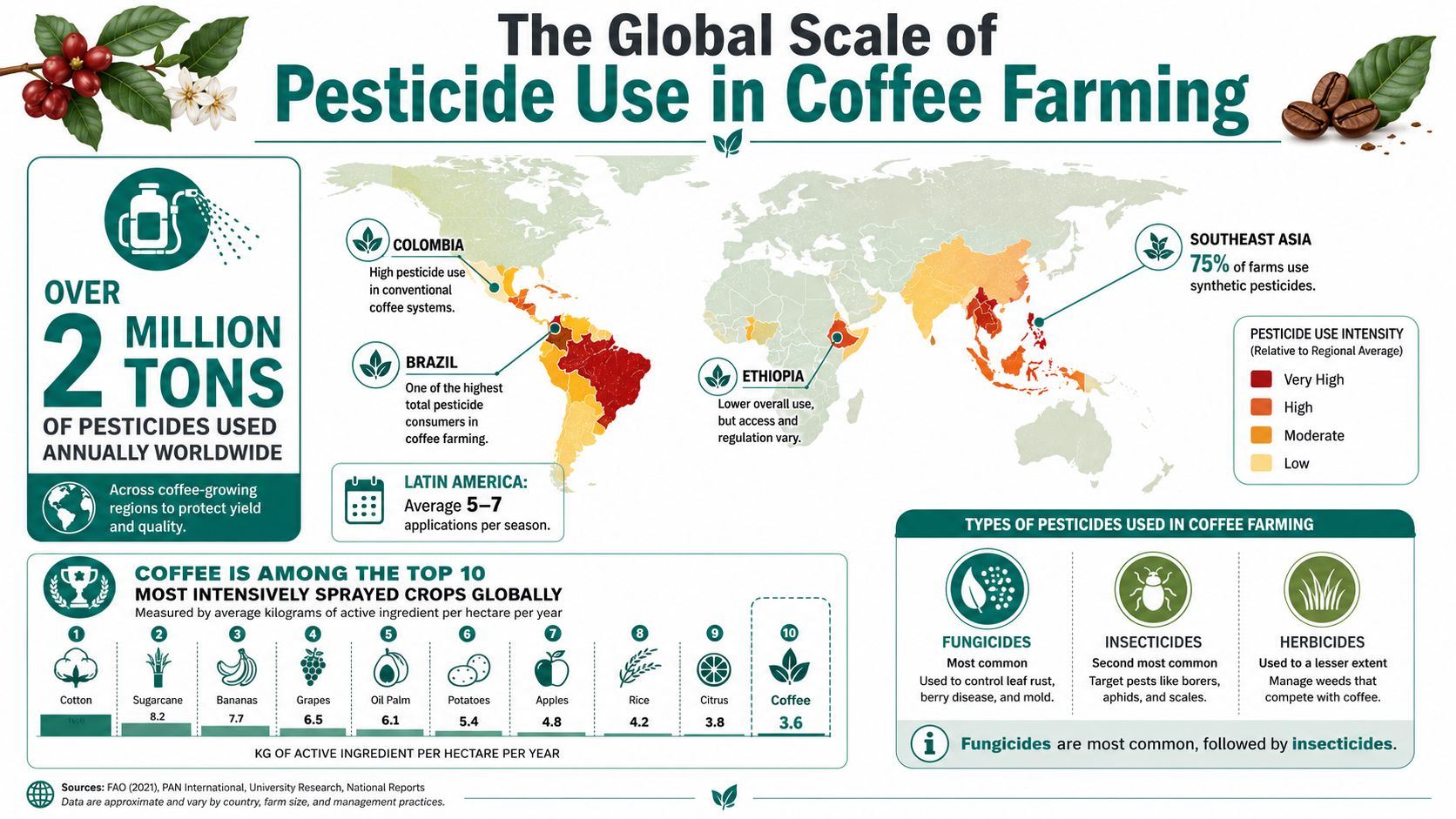
The problem is not limited to a few bad actors. Across coffee-producing regions, farmers face coffee leaf rust, berry borer, and other threats that can wipe out income if they are not controlled. Some producers use integrated pest management and keep chemical use low. Others depend more heavily on synthetic inputs because labor is expensive, oversight is uneven, or buyers reward volume and visual consistency more than farming method.
That matters for two reasons. First, residue risk starts long before roasting or brewing. Second, the heaviest burden often falls on farm workers and nearby communities, not only on the person drinking the coffee.
The broader reporting on coffee supply chains has also raised concern about hazardous pesticides still being used in some producing countries even after those same chemicals have been restricted or banned elsewhere. For buyers, that makes origin transparency more than a nice extra. It is one of the few practical signals you can check before the bag ever reaches your kitchen.
A short explainer is worth watching here:
Why this matters when you shop
If roasting were a complete fix, sourcing details would not matter much. They do. Roasting can reduce many residues, but it does not erase poor farm practices at the start of the chain. That is why I put more weight on transparent sourcing than on broad marketing claims.
A coffee with clear information about producer, region, importer relationship, and handling gives you a better basis for judgment than a bag that says little beyond roast level. It also tends to track with better green buying standards and better defect control, which usually improves the cup for reasons beyond residue concerns. If you want a practical benchmark, this guide to coffee bean quality and how to taste the difference pairs well with label-reading and sourcing questions.
A few signs are useful:
- Origin detail: country, region, farm, cooperative, or named importer
- Production standard: organic certification or clear low-input farming language
- Roaster transparency: direct information on sourcing and quality control
- Freshness: a roast date and packaging that protects the beans
None of those signals promise a residue-free cup. They do help you avoid buying blind, which matters because roasting helps, but it is only one part of lowering what ends up in the final brew.
How Roasting Transforms and Cleans Coffee Beans
Roasting changes more than flavor. It also reduces many pesticide residues before coffee ever reaches your brewer.
Research in the Journal of Agricultural and Food Chemistry found that roasting cut some pesticide residues by up to 99.8%. That is a meaningful reduction, and it is one reason roasted coffee is generally a better outcome than raw agricultural product handled with no further processing.
What roasting actually changes
High heat lowers moisture, drives off volatile compounds, and breaks down many less stable residues. Roasting also changes the bean's structure, which affects how compounds behave later during grinding and extraction. In practical terms, the bean that goes into the roaster and the bean that ends up in your grinder are chemically very different.
The process usually looks like this:
- Green coffee is cleaned and sorted: defects, debris, and some physical contaminants are removed.
- Roasting applies sustained heat: many residues fall sharply at this stage.
- Beans rest after roasting: gas release and stabilization improve cup quality and extraction consistency.
- Grinding and brewing determine what gets pulled into the cup: home preparation starts to matter at this stage.
That last step gets overlooked. Roasting does a lot of cleanup work, but it does not act alone.
If you want a practical way to connect sourcing, roast development, and cup results, this guide to coffee bean quality and how to taste the difference is a useful reference.
Why roasting helps so much
As a roaster, I would rather start with cleaner green coffee every time, but roasting still matters because many agricultural chemicals are not especially heat-stable. The roast curve exposes beans to temperatures that can degrade or reduce a wide range of residues while also removing water weight and changing bean density. That combination helps lower what remains.
Consumers should find that reassuring. A lot happens between the farm and the mug.
Where the limit is
Roasting improves the picture. It does not give every compound the same outcome, and it does not replace careful buying decisions. The practical takeaway is simple: roasting is one filter, not the whole system.
That is why I treat roast level, sourcing transparency, and brewing setup as connected choices. A cleaner bean going through a well-managed roast and brewed with good filters or quality reusable pods gives you a better margin than relying on heat alone.
Why Roasting Is Not a Complete Safeguard
The most common mistake I see is simple. People hear that roasting destroys residues, then conclude that the pesticide problem disappears in the roaster drum. It doesn't.
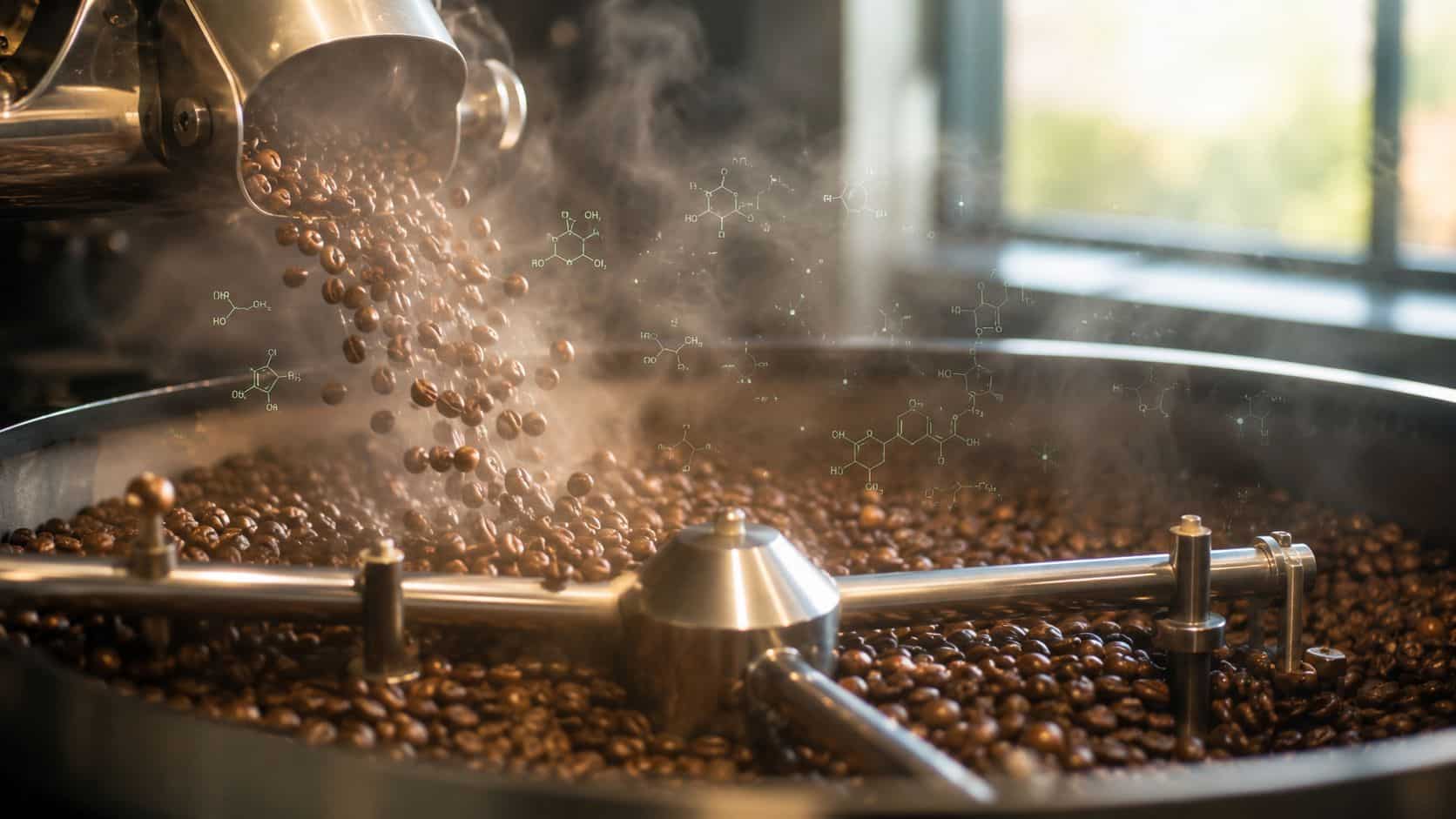
A 2024 review on pesticide-free coffee and roasting limits noted that glyphosate survives roasting with a 73% reduction, leaving measurable residues in the final brewed cup. That's the nuance a lot of mainstream coffee advice skips.
The problem with the "heat fixes it" assumption
Roasting is highly effective against many residues. Glyphosate shows why that statement can't be stretched into "all residues are gone." Some compounds remain stable enough to survive washing, drying, roasting, grinding, and brewing at meaningful levels.
That changes the decision tree for consumers. If a chemical can persist through processing, then the cleaner strategy starts earlier. Bean sourcing becomes the first filter. Brewing method becomes the second.
What actually works better
If you're trying to reduce exposure, the strongest combination usually includes:
- More transparent sourcing: beans from roasters that disclose origin and standards.
- Better certifications: not because they're perfect, but because they limit direct pesticide use.
- Fresh-ground brewing: this gives you more control than sealed generic pods.
- Reliable filtration: both for water quality and for keeping fines and residue pathways more consistent.
What doesn't work as well is assuming dark roast alone solves the problem, or treating any "premium" marketing language as proof of cleaner coffee. Roast level, package design, and trendy tasting notes don't tell you much about agricultural inputs.
Some pesticide questions can be reduced in the roaster. They can't all be solved there.
That's why cleaner coffee isn't just about what happened at the roastery. It's about the entire chain, from farm practices to the brew basket on your counter.
A Practical Guide to Choosing Cleaner Coffee
If you want the biggest improvement with the least guesswork, start at the point of purchase. Sourcing is where you can make the most meaningful change before brewing even begins.
One complication is regulation. The Clean Label Project's coffee study notes that the United States has not established Maximum Residue Limits for pesticides on coffee beans, and the same study found that 100% of USDA Organic coffee samples tested still contained AMPA, a toxic breakdown product of glyphosate. That doesn't make organic meaningless. It shows that environmental persistence can contaminate even coffee grown under stricter rules.
What organic does well, and where it stops
Organic certification still matters because it restricts direct use of many synthetic pesticides. That's a strong first screen, especially compared with anonymous conventional coffee. But "organic" shouldn't be treated as a perfect shield.
The better view is this:
- Organic lowers one major risk: it limits what can be applied directly in production.
- It doesn't control the whole environment: drift, water contamination, and persistence can still matter.
- It works best with traceability: organic plus clear origin information is stronger than organic alone.
If you're curious how lower-input farming systems work in broader agriculture, The Green Advantage for green pest control offers a practical overview of environmentally friendly pest control methods and why reducing chemical dependence takes more than swapping one spray for another.
Better signals to look for on a coffee bag
I put more trust in a combination of indicators than in any single badge. One useful signal is shade-grown coffee, which often aligns with more ecologically balanced farming. This overview of shade-grown Arabica coffee is a good starting point if you want to understand why growing environment can matter for both quality and farming intensity.
When you're shopping, look for a mix of these cues:
- Certified organic: a meaningful baseline, even with limits.
- Single-origin or farm-traceable: not automatically cleaner, but much easier to verify.
- Shade-grown language with substance: better when it's explained, not just printed as decoration.
- Roaster transparency: details about sourcing relationships, importer standards, or testing practices.
- Freshness: a visible roast date and packaging that protects the beans.
A common objection is price. Cleaner, more traceable coffee often costs more. That's true. But if coffee is something you drink daily, upgrading the bean itself usually has a bigger effect than spending extra on trendy gear while keeping low-visibility coffee in the hopper.
How Your Brewing Method Affects Final Exposure
Once you've bought better coffee, your brewing setup decides how much control you keep. Many people, however, relinquish that control by using generic single-serve pods with unclear coffee quality, inconsistent fit, and no say over grind freshness.
Fresh grounds brewed at home usually give you more control. You choose the coffee, the dose, and the filter path. That matters if your goal is reducing pesticide in coffee while also improving taste.
Why pod quality and filtration matter
A low-quality disposable pod creates several trade-offs. You don't know how fresh the grounds are, you often don't know much about sourcing, and the pod itself may not fit cleanly in every machine. Poor fit can lead to leaking, grounds in the cup, or weak extraction.
A well-made reusable pod changes that. You fill it with coffee you selected yourself, and a better-designed pod seats more consistently so water moves through the grounds instead of around them. That's the practical answer to a common objection about reusable pods. Good ones don't have to be messy or unreliable if the fit and mesh are designed properly.
If you're comparing filter styles, this guide on reusable coffee filters versus paper gives a useful breakdown of how material choice affects flavor, cleanup, and daily use.
Comparing methods to reduce pesticide exposure
| Strategy | Effectiveness | Key Consideration |
|---|---|---|
| Buy more transparent, better-sourced whole bean or ground coffee | High | This addresses the problem earlier in the chain, before brewing starts |
| Choose certified organic coffee | Moderate to high | Helpful, but not a complete guarantee because environmental contamination can persist |
| Brew with a quality reusable pod and fresh grounds | High | You control bean choice, freshness, and dose instead of relying on anonymous prefilled capsules |
| Use generic disposable pods | Lower | Convenience is high, but sourcing transparency and freshness are often limited |
| Brew with filtered water | Moderate | This won't remove farm residues from beans, but it can reduce other impurities affecting taste and cup cleanliness |
| Keep your brewer clean and descaled | Moderate | A clean machine improves consistency and prevents off-flavors that can mask coffee quality |
The cleanest practical setup for most homes
For Keurig and Ninja users, the most sensible setup is usually simple:
- Start with coffee you trust: ideally organic plus transparent sourcing.
- Use a reusable pod with a solid fit: this helps prevent grounds leakage and uneven extraction.
- Filter your water: a quality water filter won't fix poor beans, but it does improve final taste and reduce extra impurities.
- Maintain the machine: fresh filters, occasional descaling, and regular rinsing keep the brew path cleaner.
If you're already using a reusable pod, adding a fresh water filter or replacing an overdue one is one of the easiest upgrades you can make. In homes with hard water, a descaling routine also helps preserve flavor consistency and machine performance.
Your Checklist for a Cleaner Cup of Coffee
You don't need a perfect coffee supply chain to make better choices. You need a repeatable routine that reduces the biggest risks without making your morning harder.
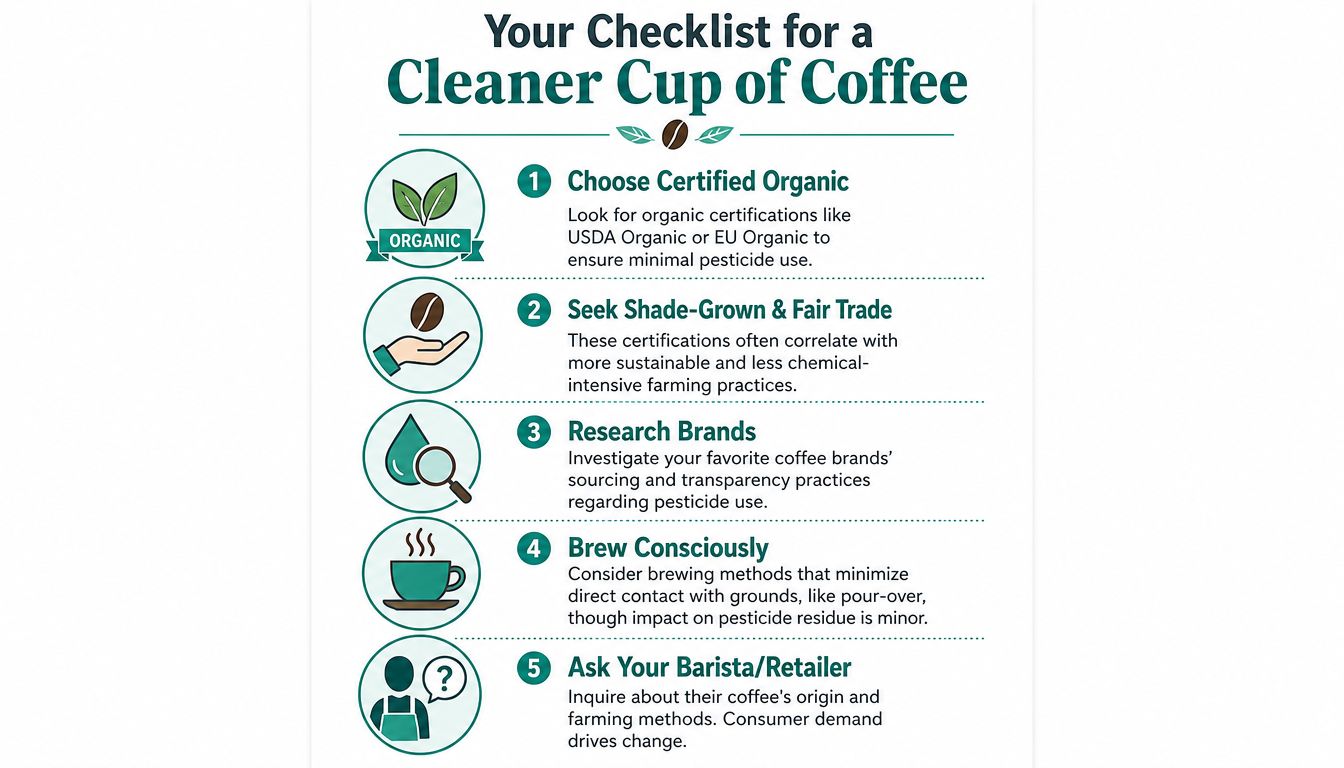
Keep this list simple
- Choose better beans: look for organic coffee with clear sourcing details.
- Prefer traceability over vague branding: single-origin or farm-linked coffees give you more visibility.
- Don't rely on roasting alone: it helps a lot, but it isn't a complete safeguard.
- Brew with fresh grounds when possible: reusable pods and refillable filters give you more control than generic capsules.
- Use filtered water and a clean machine: this improves the final cup and cuts down on other avoidable contaminants.
- Ask questions: a good roaster should be able to tell you where the coffee came from and how they source it.
The cleanest realistic cup usually comes from three habits working together: buy better coffee, brew it in a better system, and keep that system clean.
For daily coffee drinkers, that's the practical path. Better sourcing handles the farm side. Roasting does important cleanup. Careful brewing helps you finish with a cup that's cleaner, tastier, and more consistent.
If you're ready to put that into practice, shop PureHQ Inc. for reusable K-Cups, stainless steel refillable pods, water filters, paper liners, and descaling supplies that help you brew your own trusted coffee with better control, less waste, and a cleaner everyday cup.

